
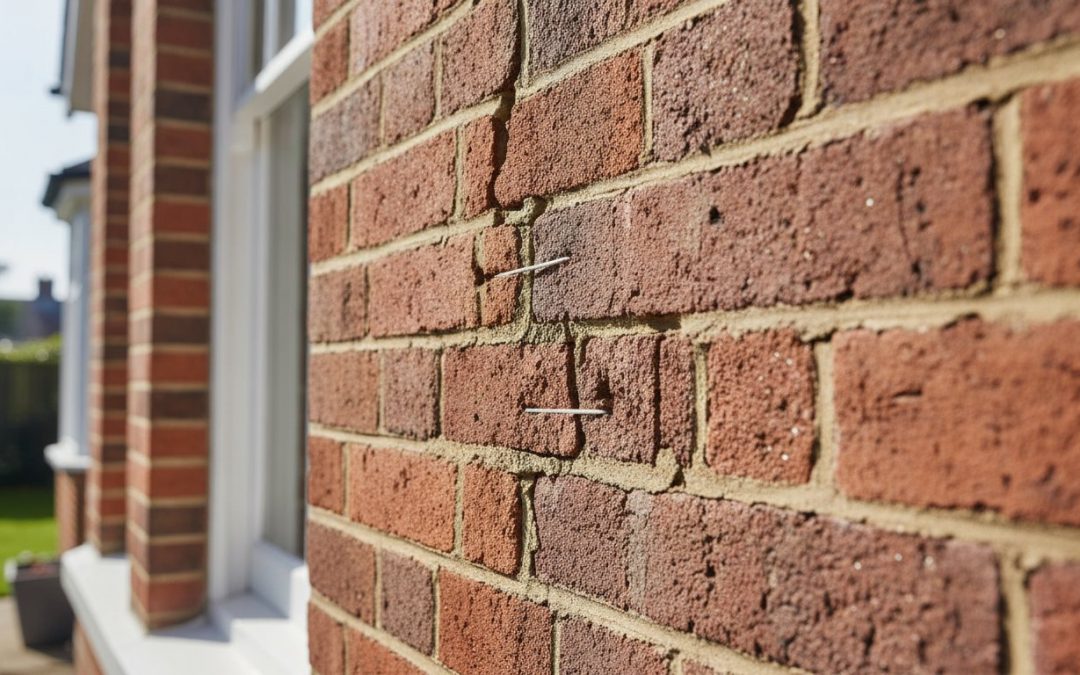
Installing new wall ties is only half the battle; without specialist masonry restoration, your property’s structural skin remains compromised. You’ve likely spent weeks watching unsightly horizontal or stepped cracks, worrying that your house is still moving despite the recent repairs. It’s frustrating to invest in remedial work only to be left with visible reminders of past structural failure. Successfully repairing cracks after wall tie replacement requires more than a quick patch; it demands a methodical approach to restore the building’s original strength.
This guide reveals the professional methodology for restoring both structural integrity and a flawless aesthetic finish to your property. We’ll examine why simple repointing often fails and how technical solutions like helical crack stitching provide the necessary reinforcement. You’ll also learn the precision required for mortar matching, ensuring your property looks as solid as it feels. By following these industry standards, you can protect your long-term asset health and finally enjoy the peace of mind you deserve.
Key Takeaways
- Understand that wall tie replacement is a preventative measure that stops further movement but does not automatically correct existing masonry gaps.
- Learn why structural crack stitching using stainless steel helical bars is required to reconnect the building’s skin, as simple repointing often fails within a year.
- Discover the precise professional methodology for repairing cracks after wall tie replacement to restore both structural strength and weatherproofing.
- Identify the importance of technical mortar matching to prevent unsightly scarring and ensure the new finish blends seamlessly with 50-year-old brickwork.
- Recognize why a holistic approach to masonry restoration is a vital investment in your property’s long-term asset health and structural integrity.
Why masonry cracks remain after wall tie installation
Many homeowners assume that once a specialist installs remedial ties, the property’s external appearance will naturally return to its original state. This is a common misconception. Wall tie replacement is a preventative structural intervention designed to stop the outer leaf from moving further; it is not a corrective measure for existing masonry gaps. Because the new ties are installed alongside the old ones, they provide the necessary lateral stability but cannot pull the separated bricks back into their original position. Consequently, repairing cracks after wall tie replacement remains a critical second stage of any professional restoration project.
The mechanics of wall tie ‘blow-out’
The primary cause of horizontal cracking in older properties is the corrosion of original mild steel cavity wall ties. When these ties oxidize, the resulting iron oxide occupies a significantly larger volume than the original metal. This expansion exerts immense upward pressure on the mortar joints, leading to what is commonly known as a ‘blow-out’. You will typically see stepped cracks following the mortar lines or, in severe cases, vertical fractures through the bricks themselves. Isolating these failing ties stops the expansion from worsening, but the physical displacement of the brickwork is permanent. Gravity and the accumulation of debris within the cavity mean these gaps will never close on their own. Once the bricks have shifted, the structural “memory” of the wall is altered.
Assessing the stability of the masonry skin
Before you begin the process of repairing cracks after wall tie replacement, you must confirm that the masonry skin has reached a state of equilibrium. It’s essential to distinguish between ‘live’ movement, which suggests ongoing structural failure, and ‘historic’ settlement that occurred before the remedial work. A comprehensive wall tie survey is the only reliable way to confirm the outer leaf is now fully secure. Leaving these cracks unaddressed poses significant risks to the building’s fabric. Open fissures allow water to penetrate the cavity, which leads to several issues:
- Water Ingress: Moisture bypasses the external leaf, potentially leading to internal dampness.
- no-obligationze-Thaw Damage: Water trapped in cracks expands when frozen, widening the gaps and causing brick faces to spall.
- Accelerated Corrosion: Increased moisture levels within the cavity can accelerate the degradation of other structural components.
This cycle of water ingress and expansion can eventually compromise the integrity of the property. Professional masonry repair is an essential investment in your property’s future health, ensuring that the structural gains of tie replacement are matched by a weather-tight and aesthetically sound finish.
Structural crack stitching vs. cosmetic repointing
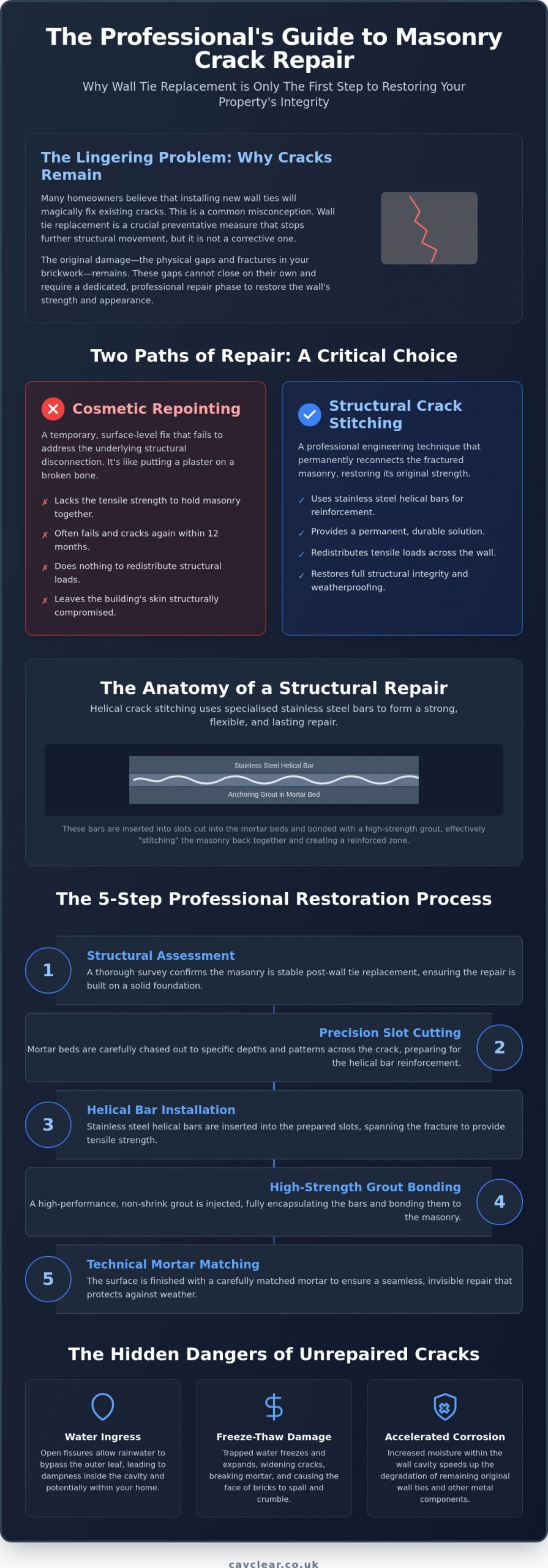
Many property owners assume that a simple application of mortar is enough to fix a fractured wall. It isn’t. While repointing addresses the surface appearance, it fails to resolve the underlying structural disconnection. When repairing cracks after wall tie replacement, you must choose between a cosmetic patch and a structural repair. Simple repointing often fails within 12 months because mortar lacks tensile strength. As the building undergoes natural thermal expansion and contraction, the rigid mortar cannot accommodate the movement, causing the crack to reappear in the exact same location. Structural crack stitching provides a permanent solution by inserting stainless steel helical bars across the fracture to redistribute tensile loads.
This methodology effectively “stitches” the masonry back together. By using high-performance resin anchors to bond these reinforcements into the brickwork, the wall regains its collective strength. This approach aligns with the principles of conservative repair of brickwork, where the goal is to preserve as much of the original fabric as possible while ensuring long-term stability. If you’re concerned about the depth of fractures in your masonry, a professional wall tie survey can determine if structural stitching is required to safeguard your home’s value.
What is a helical bar (Helibar)?
A helical bar is a cold-worked stainless steel reinforcement characterized by its unique finned design. These fins provide an exceptional mechanical bond when embedded in structural grout or resin. Unlike the original carbon steel ties that likely caused your masonry issues through corrosion, these stainless steel bars are impervious to rust. Their twisted profile allows for a degree of “spring” or elastic movement. This ensures that the masonry can breathe and shift slightly without the stress concentrating at a single point and causing a new fracture. It’s a precise technical solution that offers far superior longevity compared to traditional methods.
The limitations of traditional mortar repair
Mortar is designed to handle compressive loads, meaning it’s great at being squashed. However, it has almost zero tensile strength and cannot resist being pulled apart. When a wall has been displaced by failing ties, the internal stresses remain even after the ties are isolated. “Patch-pointing” over these areas often creates a moisture trap. If the underlying crack isn’t stabilized, the new mortar will eventually separate, allowing water to sit in the gap. This leads to accelerated decay of the surrounding brickwork. Professional repairing cracks after wall tie replacement ensures that the structural integrity is restored before the final aesthetic finish is applied, protecting the long-term health of your property.
Step-by-step: How to repair structural cracks in brickwork
Restoring a property’s facade requires a methodical approach that goes beyond surface-level repairs. Once the remedial ties are secure, the process of repairing cracks after wall tie replacement moves into the structural reinforcement phase. This systematic procedure ensures the masonry leaf functions as a single, cohesive unit once again. Each step must be performed with technical precision to guarantee the long-term health of the building fabric.
The restoration begins with preparation. Technicians rake out the horizontal mortar joints to a specific depth, typically between 30mm and 40mm. This depth is essential to accommodate both the reinforcement and the bonding agent. After raking, the slots must be cleaned thoroughly. Using compressed air or water to remove every trace of dust and debris is vital; any residual material will compromise the bond between the grout and the brickwork.
Once the joints are prepared, a bead of thixotropic cementitious grout is injected into the back of the slot. This specialized grout remains stable and doesn’t slump, providing a firm bed for the reinforcement. The stainless steel helical bar is then pressed into the grout. A second layer of grout is applied to fully encapsulate the bar, creating a structural “sandwich” within the wall. Finally, the joint is re-pointed using a matched mortar to restore the property’s original aesthetic. This careful finishing ensures the repair is virtually invisible while providing permanent structural stability.
Tooling and materials for a professional finish
Using the correct equipment is non-negotiable for a high-quality result. Specialists utilize dedicated mortar rakes instead of standard angle grinders. This preference protects the delicate edges of the bricks from chipping or scarring. The bonding agent is equally important; non-shrink grouts are required because they maintain their volume as they cure, unlike standard sand and cement mixes which can pull away from the masonry. Embedment depth is the specific measurement of how far a reinforcement bar is seated within the masonry to ensure maximum structural load transfer.
Spacing and frequency of reinforcement
The distribution of helical bars depends on the severity of the fractures. For most domestic properties, technicians install bars every 4th to 6th course of brickwork. This frequency provides a balanced redistribution of tensile forces across the affected area. It’s also a standard industry requirement to extend each bar at least 500mm beyond the crack on either side. This overlap ensures that the load is transferred into sound masonry, preventing the crack from simply bypassing the repair. Correct spacing is a hallmark of professional repairing cracks after wall tie replacement, ensuring the fix is as durable as the house itself.
Matching mortar and preventing future water ingress
A common issue following structural work is the “scarring” effect, where new mortar stands out against the weathered facade of a property. This visual distraction occurs when contractors use a generic sand and cement mix without considering the original materials. When repairing cracks after wall tie replacement, achieving a seamless finish is as important as the structural reinforcement itself. A poorly matched repair negatively impacts a property’s kerb appeal and resale value. Specialists avoid this by performing a detailed mortar match, which involves analyzing the aggregate size, sand colour, and binder type of the original mix to ensure the new pointing blends perfectly.
Technical success also depends on the pointing profile. Whether your home features a weather-struck, bucket handle, or recessed joint, the new work must mirror the existing style. Maintaining a consistent profile ensures that water sheds away from the masonry correctly. If you’ve noticed disparate mortar colours on your elevations, it’s often a sign of previous low-quality repairs that may have overlooked the underlying structural issues.
Lime vs. Cement: Which is right for your home?
Choosing the correct binder is a critical decision for the long-term health of your masonry. Properties built before 1930 typically require breathable lime mortar. Lime allows moisture to evaporate through the joints rather than the bricks. If you use hard Portland cement on soft, historic bricks, you risk causing “face-blowing” or spalling. This happens because the cement is harder than the brick, forcing moisture to escape through the brick face and causing it to crumble during frost cycles. This choice is intrinsically linked to the health of the wall cavity, as a breathable outer leaf prevents moisture from becoming trapped within the structure.
Addressing penetrating damp after repair
Open fractures act as funnels for rainwater, directing moisture deep into the building fabric. This leads to internal mould growth and damp patches that persist even after the structural movement has stopped. Professional repairing cracks after wall tie replacement effectively seals these entry points. However, if water has already entered the system, a specialist damp survey is recommended to ensure the cavity is clear of debris. Accumulations of mortar or old ties can bridge the cavity, allowing moisture to travel to the inner leaf. Property preservation requires a holistic approach that addresses both the structural fracture and the environmental consequences of the original failure.
Ensuring long-term structural integrity with CavClear
Structural restoration must be viewed as a holistic project rather than a series of isolated tasks. It begins with a detailed diagnostic phase and concludes only when the final pointing has cured. By choosing a nationwide specialist, you ensure that every stage of the process adheres to rigorous technical standards. CavClear provides service coverage across the entire United Kingdom, delivering a consistent level of expertise to property owners facing structural concerns. Our clean and non-disruptive methodology respects the sanctity of your home while performing essential remedial works. For readers in North America seeking similar professional construction and renovation expertise, HMJ Contracting offers high-quality services designed to maintain and improve building integrity.
A significant benefit of professional intervention is the formal documentation provided upon completion. When repairing cracks after wall tie replacement, having a comprehensive technical report is vital for future property sales or insurance requirements. This paperwork serves as empirical evidence that the structural leaf of the building has been correctly reconnected and stabilized. It transforms a necessary repair into a documented investment in the building’s future, providing certainty for both current owners and prospective buyers.
The value of a specialist structural survey
A general building survey often lacks the specialized equipment required to detect the subtle, early signs of oxidation within a cavity. CavClear technicians utilize high-resolution borescopes to inspect the condition of ties directly. This precision ensures that any recommendation for wall tie replacement is based on factual evidence rather than visual guesswork. Our specialists don’t just identify the presence of fractures; they analyze the underlying cause to provide a permanent remedy that stops the cycle of damage.
Protecting your asset for the future
Structural repairs are a vital investment in your property’s long-term health and efficiency. Opting for permanent technical fixes over temporary cosmetic cover-ups prevents the recurrence of masonry failure and maintains the building’s structural integrity. By correctly repairing cracks after wall tie replacement, you protect the asset’s market value and ensure a weather-tight finish. This proactive approach to property preservation is the most cost-effective way to manage a building’s lifecycle. To secure the future of your home, you can book a specialist survey with CavClear today.
Restoring structural confidence and property value
True masonry restoration requires a transition from preventative stabilization to active structural reinforcement. As we’ve explored, simply installing new ties doesn’t correct the historic displacement of your brickwork. Successfully repairing cracks after wall tie replacement involves a specialized methodology that combines helical crack stitching with technical mortar matching. This dual approach ensures your home remains weather-tight while regaining its original aesthetic finish. Ignoring these fractures allows moisture to bypass the outer leaf, which leads to internal dampness and accelerated masonry decay.
CavClear provides nationwide UK service coverage, utilizing accredited technicians to deliver permanent structural solutions. Our clean, methodical approach includes detailed professional reporting that serves as an essential record for future property transactions. Don’t settle for temporary cosmetic patches that fail within a year. You can secure your property’s future; book a specialist wall tie survey with CavClear today. We look forward to helping you restore the lasting comfort and integrity of your home.
Frequently Asked Questions
Will the cracks in my wall close up naturally after the ties are replaced?
No, the cracks won’t close on their own. Once the brickwork has been displaced by the expansion of corroding ties, the movement is permanent. Gravity and the accumulation of mortar debris within the cavity act as physical blocks that keep the fissures open. Repairing cracks after wall tie replacement is an essential secondary step to restore the building’s original structural profile and prevent further environmental damage to the masonry.
Is crack stitching necessary or can I just use mortar?
Simple mortar repairs are usually insufficient for structural fractures. While mortar handles compression well, it lacks the tensile strength to resist the natural thermal expansion and contraction of a building. Without stainless steel helical bars to distribute these loads, the cracks will likely reappear within a single season. Crack stitching provides the mechanical bond necessary to reconnect the masonry skin and ensure a permanent, long-term fix for your property.
Can I repair the cracks myself using a DIY kit?
DIY kits are available, but we don’t recommend them for structural repairs. Professional restoration requires precise technical knowledge regarding embedment depths, grout thixotropy, and load-bearing capacities. Incorrect installation can lead to further masonry failure or unsightly scarring that’s difficult to fix later. Hiring a specialist ensures the work meets building standards and provides the necessary documentation to prove the property’s structural health to future buyers or insurers.
How do I make sure the new mortar matches my existing bricks?
Achieving a perfect match requires a technical analysis of the original materials. Specialists examine the aggregate size, sand source, and binder type used in your property’s existing joints. This process prevents the “scarring” effect where new repairs stand out against weathered brickwork. Using a dedicated mortar match service ensures the repair is virtually invisible, preserving the aesthetic value of your home while providing a weather-tight and durable finish.
How long does the structural crack repair process take?
A standard crack repair project typically takes between one and three days to complete. The exact duration depends on the total linear meters of cracking and the number of helical bars required for stabilization. This timeframe includes the preparation of joints, the installation of reinforcements, and the final pointing. Because our methodology is clean and non-disruptive, you can remain in the property while the work is being carried out by our technicians.
Could the cracks in my masonry be caused by something other than wall ties?
Yes, masonry fractures can stem from several underlying issues. While wall tie failure is a primary cause in cavity walls, other factors include foundation subsidence, lintel failure, or significant thermal movement. A professional structural survey is vital to diagnose the specific cause before any work begins. This diagnostic approach ensures that you aren’t just treating a symptom, but are investing in a comprehensive solution for the building’s actual structural fault.
What happens if I replace the ties but don’t repair the cracks?
Leaving cracks unaddressed after tie replacement invites significant environmental risks. Open gaps act as conduits for rainwater, leading to penetrating damp, internal mould, and the decay of wall plates. In winter, trapped moisture undergoes expertze-thaw cycles, which can cause the faces of your bricks to blow out or spall. Completing the restoration process is the only way to protect your long-term asset health and maintain a dry, comfortable living environment.
Does repairing cracks after wall tie replacement increase property value?
Yes, repairing cracks after wall tie replacement significantly protects and can increase your property’s market value. Visible structural cracks are a major red flag for surveyors and prospective buyers, often leading to reduced offers or failed sales. By providing a professional report that documents the structural reinforcement and aesthetic restoration, you offer tangible proof of the building’s integrity. This documentation is a vital asset during any future property transaction or insurance assessment.
Recent Comments