
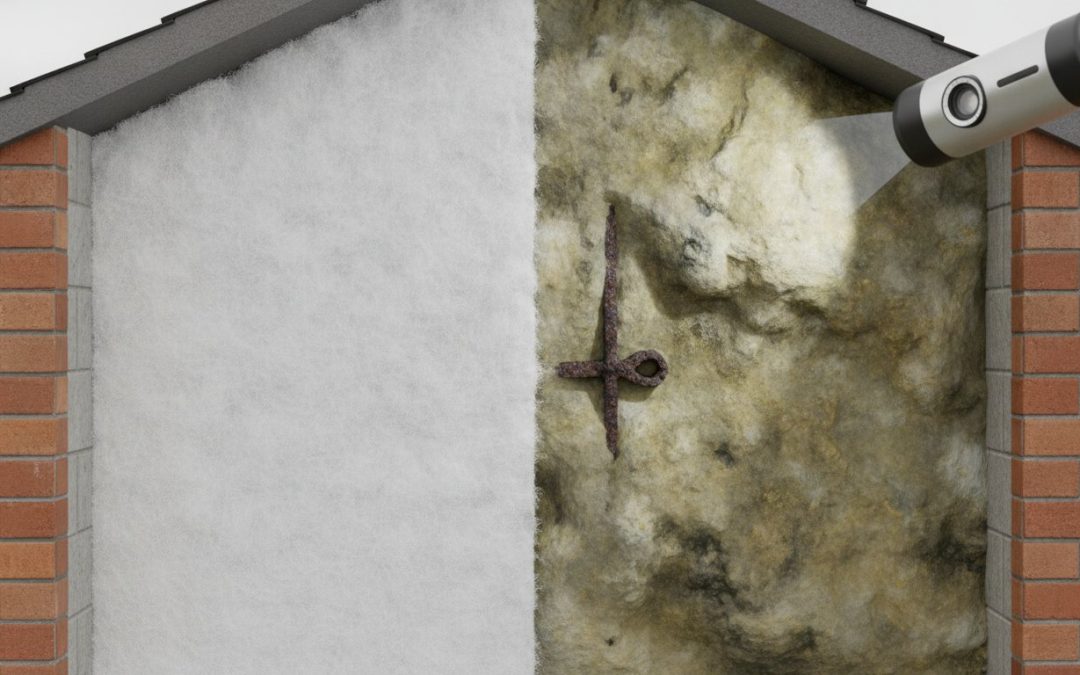
What if the material installed to protect your home is actually the silent catalyst for structural decay? For many property owners, persistent damp and unexplained mould growth aren’t just aesthetic issues; they’re symptoms of a failing system hidden within the building’s fabric. If you suspect your property’s thermal layer is compromised, an independent cavity wall insulation survey is the only way to obtain an unbiased, technical assessment of the situation. This diagnostic process moves beyond guesswork, using specialist equipment to identify exactly where the installation has failed and how it’s affecting your wall ties and masonry.
We understand the anxiety that comes with trusting a contractor only to face potential property devaluing later. It’s a stressful position, but identifying the root cause is the first step toward restoring your home’s comfort and safety. In this guide, you’ll discover how professional surveys identify hidden defects and provide a clear, actionable path for remediation. We’ll outline the specific methodology used by accredited technicians, from borescope inspections to detailed structural reporting, ensuring you have the definitive facts needed to safeguard your property’s future.
Key Takeaways
- Understand why an unbiased assessment is critical for identifying structural faults without the conflict of interest often found in sales-led inspections.
- Discover how non-disruptive borescope technology provides high-definition visual evidence of saturated insulation and debris bridges within your property’s cavities.
- Learn the direct link between failing insulation and accelerated wall tie corrosion, which can lead to significant structural instability if it’s left unaddressed.
- Gain the expertise to interpret technical survey reports, allowing you to prioritise necessary remedial actions based on clear, evidence-based severity levels.
- Realise why commissioning an independent cavity wall insulation survey is a proactive investment in your property’s long-term asset health and structural integrity.
What is an Independent Cavity Wall Insulation Survey?
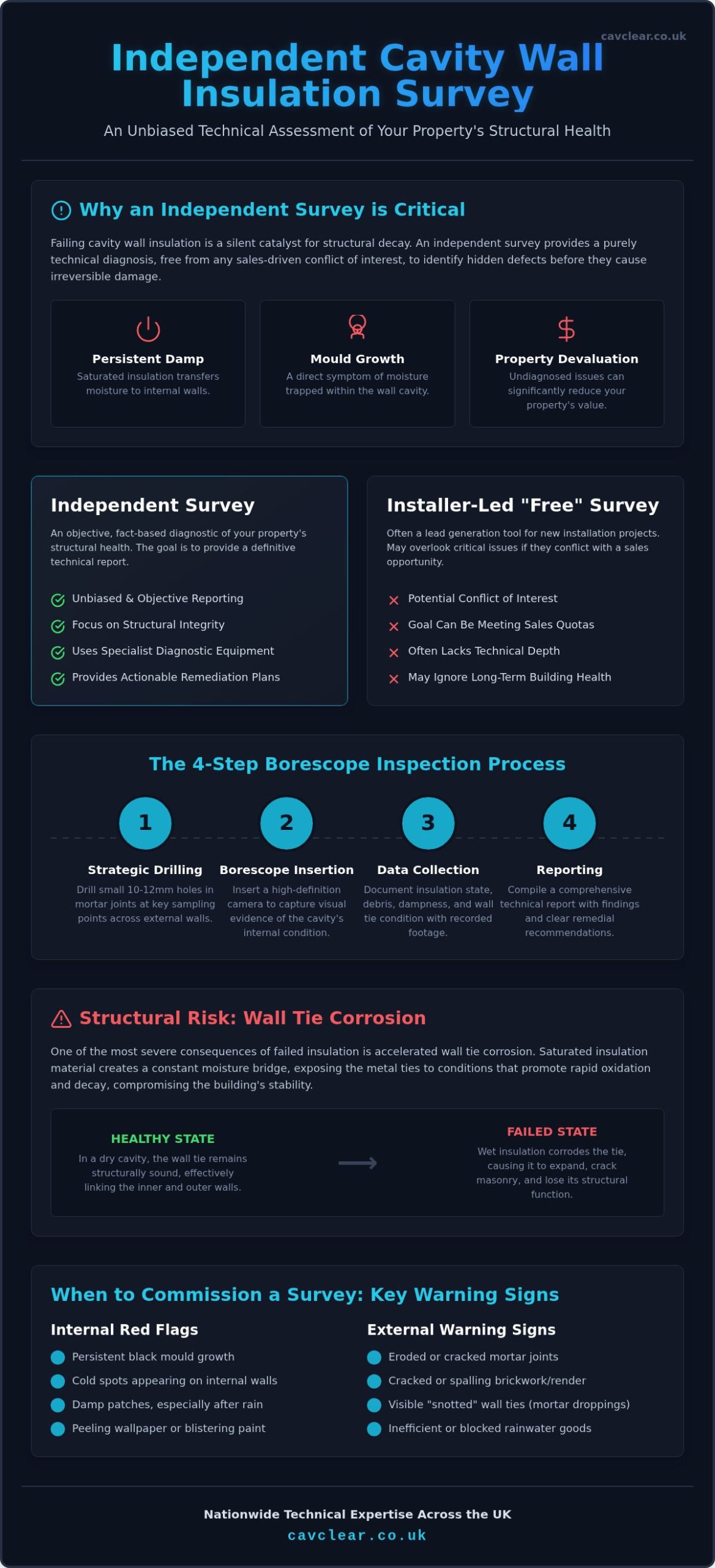
An independent cavity wall insulation survey is a comprehensive technical assessment of your property’s external walls. Unlike standard inspections, this process is conducted by a third-party specialist who has no vested interest in selling you insulation products. To understand the necessity of this service, it helps to first define what a cavity wall is; it’s a dual-leaf masonry structure designed to prevent moisture ingress. When insulation is introduced into this void, it must function perfectly to avoid bridging damp. The primary goal of an independent survey is to provide an objective diagnostic of the cavity’s current state and the performance of any existing fill material.
Independence is the cornerstone of reliability. Property managers, prospective buyers, and homeowners dealing with persistent damp often find themselves caught between conflicting advice. By removing the sales element, an independent cavity wall insulation survey focuses purely on structural health. It’s a vital tool for those overseeing older housing stock or anyone concerned that their property’s integrity is being compromised by failing materials. This diagnostic approach ensures that every recommendation is based on technical data rather than a desire to sell a specific commodity.
The Difference Between Independent and Installer-Led Surveys
The main distinction lies in the desired outcome. Installer-led surveys often function as lead generation tools for new insulation projects. Because we maintain a strong stance against retrospective insulation due to the high risks of damp and corrosion, these “expert” surveys can be fundamentally flawed. They might overlook saturated fill or wall tie oxidation because their goal is to meet installation quotas. In contrast, an independent survey prioritises unbiased reporting. You receive a detailed technical report based on facts, not a sales pitch. no-obligation inspections frequently lack the depth of a paid professional audit, often resulting in incomplete data that ignores the long-term health of the building.
When to Commission a Professional Cavity Inspection
Timing is critical to prevent permanent structural damage. You should consider a professional inspection if you notice external warning signs like eroded mortar joints or “snotted” wall ties, where mortar droppings have bridged the cavity. Internal red flags are equally telling. Persistent black mould, cold spots on internal walls, or damp patches that appear after heavy rain suggest the insulation is no longer fit for purpose. For those purchasing a home, a pre-purchase survey is often a requirement to ensure the property isn’t hiding costly defects. It’s an essential step in protecting your investment and ensuring the building remains a safe, dry environment.
The Technical Process: How a Borescope Inspection Works
The technical phase of an independent cavity wall insulation survey begins with a strategic audit of the building envelope. Our accredited technicians identify the most vulnerable elevations, typically those most exposed to prevailing winds and driving rain. We assess external factors such as the condition of the mortar joints, the presence of cracked render, and the efficiency of the rainwater goods. These external elements are often the primary cause of water ingress, which leads to the saturation of internal insulation materials and the eventual failure of the thermal barrier.
Specialist borescope technology provides the visual evidence needed to understand the cavity’s internal environment. We use high-definition flexible cameras to see exactly what’s happening inside the wall without the need for invasive structural work. This allows us to record the specific state of the insulation, the presence of rubble or mortar debris, and the current oxidation levels of the wall ties. By documenting these findings, we provide a definitive diagnostic that moves beyond the surface-level checks performed during general building surveys, ensuring every structural risk is identified.
The Diagnostic Steps for a Comprehensive Survey
A thorough inspection follows a methodical four-step sequence to ensure no defect is overlooked:
- Step 1: Strategic drilling of small, 10-12mm holes into the mortar joints at specific sampling points across different elevations of the masonry.
- Step 2: Insertion of the borescope camera to capture high-definition visual evidence of the cavity’s internal condition and the distribution of insulation material.
- Step 3: Thermal imaging assessment to detect temperature variations that indicate cold spots, gaps, or saturated zones within the wall structure.
- Step 4: Compiling all visual and thermal findings into a formal, evidence-based technical report that outlines the necessary remedial actions for the property.
Non-Disruptive Methodology and Property Care
We prioritise the preservation of your home’s aesthetic and structural integrity throughout the inspection. Borescope inspection is the industry standard for non-invasive cavity diagnostics, allowing for a deep internal view with minimal physical impact. All boreholes are professionally made good using colour-matched mortar to ensure the repair is virtually invisible once the technician finishes. The onsite phase is clean and efficient, with minimal noise and mess. This methodical approach ensures we gather the necessary data to plan a cavity wall tie inspection or extraction without compromising your daily routine or the property’s appearance.
Structural Risks: Linking Failing Insulation to Wall Tie Corrosion
The integrity of a masonry building relies on the hidden metal components that bind its inner and outer leaves together. When these components fail, the results are often visible and costly. An independent cavity wall insulation survey is specifically designed to identify the chemical and physical processes that lead to such structural failures. The most common mechanism of failure involves saturated insulation material. When insulation becomes wet, it acts as a moisture reservoir, holding water directly against the metal wall ties for extended periods.
This constant exposure triggers accelerated corrosion. Older properties often use galvanised steel ties. These are particularly susceptible to the chemical reaction between wet insulation and metal. As the ties oxidise, they expand to several times their original thickness. This expansion exerts immense pressure on the mortar joints, leading to horizontal cracking along the external leaf. In severe cases, the pressure causes wall bulging and can eventually result in leaf separation, where the outer wall physically detaches from the inner structure.
Another critical issue identified during a survey is the ‘Cold Bridge’ effect. This occurs when debris or snotted mortar within the cavity bypasses the insulation’s thermal barrier. These bridges allow moisture to travel directly from the outer leaf to the inner wall, causing localized damp patches and black mould growth regardless of how much insulation is present. Identifying these bridges is a core part of the diagnostic process, ensuring that the source of damp is correctly attributed to structural faults rather than lifestyle factors.
Why Saturated Insulation is a Structural Threat
Initially installed to improve efficiency, failing insulation quickly transitions from an energy-saving asset to a moisture-wicking liability. Saturated material loses its thermal properties and instead facilitates the transfer of rain moisture into the building’s fabric. Professional cavity wall insulation removal is often the only way to halt this cycle and prevent further structural decline. A professional survey also identifies ‘slumping’. This occurs when the insulation settles at the base of the cavity, leaving the upper sections of the wall unprotected and creating significant temperature differentials that lead to internal condensation.
The Vital Role of Wall Tie Inspection
Structural safety cannot be guaranteed without a comprehensive assessment of the binding hardware. Every professional survey must include a wall tie replacement assessment to ensure the building remains stable. Signs of tie corrosion, such as heavy oxidation or thinning of the metal, are often invisible from the outside and can only be confirmed through borescope inspection. Addressing these tie issues during the insulation extraction phase is highly cost-effective, as it restores the property’s structural integrity in a single, coordinated remedial action plan that protects your long-term asset health.
Interpreting Your Survey Report: What the Findings Mean
Once the onsite inspection is complete, you receive a detailed technical report. This document translates visual evidence into a clear assessment of structural health. You’ll encounter technical terms such as “saturated fill,” which indicates insulation that’s absorbed significant moisture and lost its thermal properties. “Debris bridges” refer to rubble or mortar snots that provide a path for water to bypass the cavity. “Tie oxidation levels” measure the extent of rusting on your wall ties, a critical indicator of structural stability. This data allows us to categorise the severity of any faults, ranging from “monitor” for minor issues to “urgent remedial action required” for immediate structural threats.
A professional independent cavity wall insulation survey provides more than just a list of faults; it offers a Remedial Action Plan. This roadmap is essential for property valuations and insurance disclosures, as it proves you’ve taken proactive steps to identify and mitigate risks. Having a formal report from an accredited specialist ensures that any remedial work is based on technical necessity rather than guesswork. It’s a vital document for property managers and homeowners alike, providing a transparent record of the building’s condition and a clear path toward restoring its integrity.
Common Findings in UK Cavity Walls
Many properties suffer from interstitial condensation. This occurs when warm, moist air from inside the home meets the cold outer leaf and traps moisture within the insulation. Another frequent issue is debris accumulation at the Damp Proof Course (DPC) level. Rubble or mortar snots at the base of the wall can bridge the DPC, leading to symptoms that mimic rising damp. These bridges allow ground moisture to bypass your home’s natural defences. For a deeper look at moisture diagnostics, refer to our professional damp survey guide.
Why Remediation is Often the Only Permanent Solution
Attempting to “patch” failing insulation is rarely effective. Once the material is saturated or has slumped, it cannot be easily repaired in situ. Extraction is typically the only way to stop the cycle of damp and prevent further structural decay. This process ensures the what is a wall cavity remains clear, restoring its intended ventilation purpose. Maintaining this void is essential for the long-term health of the masonry. If you need a definitive assessment of your property’s condition, you can book a cavity wall survey today to secure your home’s future.
The CavClear Advantage: Nationwide Technical Expertise
Choosing a specialist is about more than just finding a contractor; it’s about securing technical precision for your property’s future. CavClear operates as a nationwide specialist, providing expert coverage across the entire United Kingdom. Our accredited technicians are specifically trained in the latest borescope and structural diagnostic techniques. When you commission an independent cavity wall insulation survey with us, you aren’t just getting a visual check. You receive a comprehensive analysis backed by specialist equipment designed to identify faults that general building surveys often miss.
Our reporting process is designed for maximum clarity. We deliver detailed, easy-to-understand reports that don’t just list problems but provide clear remedial paths for restoration. Because we offer an end-to-end service, we guide you from the initial diagnostic phase through to specialist extraction and structural repair. This continuity ensures that the technical standards established during the survey are maintained throughout the remediation process, giving you a single point of professional accountability.
A Commitment to Structural Integrity
We prioritise the long-term health of your building’s fabric above all else. Our no-nonsense approach means we identify the underlying technical fault and provide the specific professional remedy required. We understand that property owners face significant stress when dealing with structural or environmental issues. By focusing on reliability and structural integrity, we restore the comfort of your home while protecting its future asset value. Our professional standards exceed those of general building surveys because we specialise specifically in the complexities of cavity maintenance and wall tie health.
Book Your Independent Survey Today
Preparing your property for a cavity inspection is a straightforward process. You should ensure there is clear access to the external elevations of the building so our technicians can reach strategic sampling points. On the day of the survey, our specialist will conduct the non-disruptive borescope inspection as detailed in previous sections, ensuring all boreholes are professionally made good and colour-matched. This methodical diagnostic approach is a vital investment in your property’s future health. To begin the process of safeguarding your home, you can contact the specialists at CavClear today. Our team is ready to provide the definitive, technical answers you need to resolve your property’s issues permanently.
Securing Your Property’s Structural Future
Protecting your home starts with accurate, unbiased information. We have explored how saturated insulation can compromise your building’s fabric and how specialist borescope diagnostics reveal the hidden condition of your wall ties. By commissioning an independent cavity wall insulation survey, you remove the guesswork from property maintenance and gain a definitive technical report. This document acts as a vital roadmap, allowing you to address structural risks like oxidation and damp before they lead to permanent damage.
CavClear provides the expertise needed to restore your home’s comfort and safety. With our nationwide UK coverage and team of accredited technical surveyors, we ensure every inspection meets the highest professional standards. Our focus remains on the long-term health of your property, providing the clarity required to make informed decisions about remediation. You don’t have to face structural concerns alone. Book your independent cavity wall survey with CavClear today and take the first step toward a dry, stable, and secure home. We are here to help you protect your most valuable asset.
Frequently Asked Questions
What is an independent cavity wall insulation survey?
An independent cavity wall insulation survey is a technical diagnostic assessment performed by an unbiased third party. It evaluates the condition of the cavity and insulation using specialist borescope equipment. The goal is to provide a fact-based report on structural integrity and thermal performance without the pressure of a sales pitch. This ensures property owners receive reliable data to protect their long-term asset health and building fabric.
How much does a cavity wall insulation survey cost in 2026?
Professional survey fees are determined by the scale of the property and the complexity of the inspection required. Because every building structure varies, costs reflect the time taken for a comprehensive diagnostic assessment and the production of a formal technical report. We recommend contacting an accredited specialist for a tailored quote based on your specific property type and the number of elevations that require technical inspection.
Can a cavity wall survey detect wall tie failure?
Yes, a professional cavity inspection is the primary method for identifying wall tie oxidation and failure. Using high-definition borescope cameras, technicians visually inspect the metal ties for signs of corrosion or thinning. This diagnostic process is essential because tie failure is often invisible from the exterior until significant structural cracking or bulging occurs. Identifying these issues early prevents much more costly structural repairs and leaf separation later.
Is the survey disruptive to my home’s interior?
The inspection process is designed to be entirely non-disruptive to your home’s interior. Technicians perform the survey from the outside by drilling small, 10-12mm holes into the external mortar joints. There is no need to remove plasterboard or disturb internal decorations. Once the data is collected, the technician makes the holes good using colour-matched mortar, ensuring the external appearance of your property remains unchanged and clean.
How long does a professional cavity inspection take?
A standard inspection typically takes between two and four hours to complete. This timeframe allows the technician to strategically sample multiple elevations and conduct a thorough visual assessment of the cavity’s internal condition. The duration may vary depending on the size of the property and the accessibility of the external walls. Following the onsite phase, a detailed technical report is compiled to provide a clear roadmap for any necessary remedial work.
What happens if the survey finds saturated insulation?
If an independent cavity wall insulation survey identifies saturated material, the report will typically recommend professional extraction. Saturated insulation acts as a moisture bridge, holding water against the inner leaf and metal wall ties. This leads to persistent damp, mould, and accelerated structural decay. Removing the failing material is the only permanent solution to restore the cavity’s original ventilation purpose and protect the building’s long-term structural integrity.
Do I need a survey if I don’t have visible damp?
Yes, because structural issues like wall tie corrosion and insulation slumping often occur long before damp patches appear inside. A proactive survey identifies hidden defects that could lead to significant property devaluing or future structural failure. For properties built with specific cavity types, regular inspections are a vital investment in asset health. It ensures that the building fabric remains dry and structurally sound even if symptoms aren’t yet visible.
Can the survey report be used for property sales?
A formal technical report is a powerful asset during property transactions. It provides prospective buyers and mortgage lenders with documented evidence of the building’s structural condition. By disclosing the findings of an independent survey, you demonstrate transparency and proactive maintenance. If remediation is required, having a clear action plan from an accredited technician can prevent sales from falling through due to concerns over hidden damp or cavity issues.
Recent Comments