
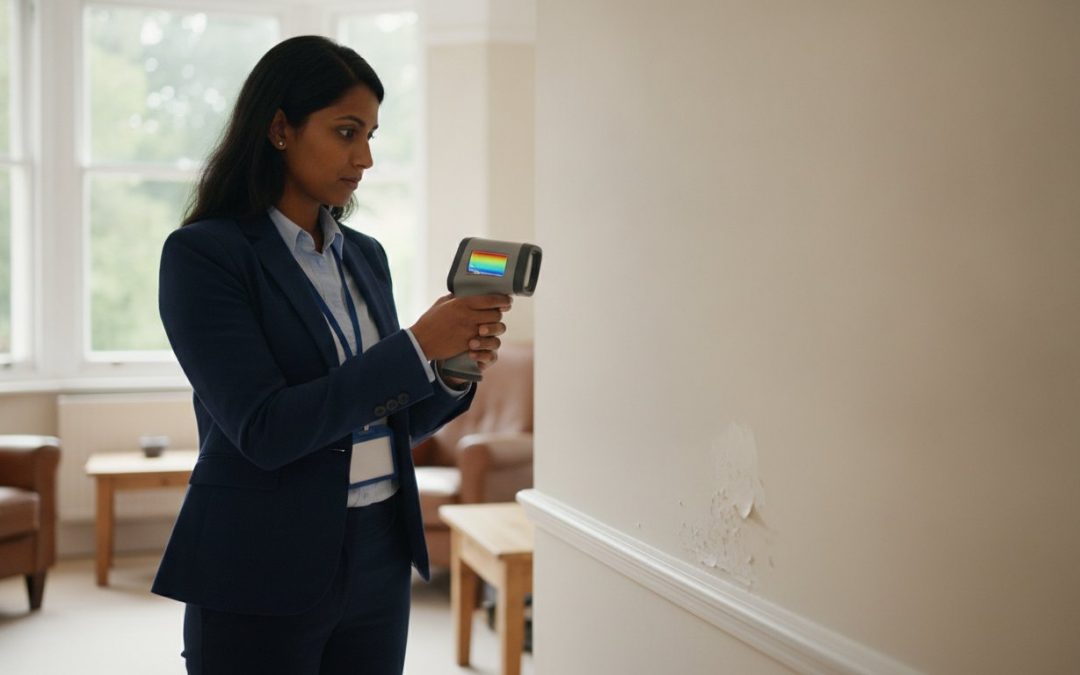
What if the recurring salt stains and peeling plaster on your ground floor aren’t just cosmetic issues, but a signal that your property’s structural defences have been compromised? It’s incredibly frustrating to follow the conflicting advice of general builders only to see the same mould return six months later. You deserve a home that feels dry and safe, and you’re right to be concerned about the long-term impact of moisture on your property’s asset value. Under the Building Safety Act 2022, managing these environmental hazards with rigour is no longer optional; it’s a necessity for structural health.
This specialist guide clarifies the technical nuances of rising damp vs penetrating damp, helping you distinguish between groundwater capillary action and external water ingress. You’ll learn why a permanent fix requires more than just a surface treatment. We’ll explore how compromised wall cavities often create a bridge for moisture, effectively bypassing your damp proof course. By the end of this article, you’ll understand how restoring the structural hygiene of your walls protects your investment and ensures your property remains a healthy, compliant environment for years to come.
Key Takeaways
- Identify the fundamental differences between rising damp vs penetrating damp to avoid the costly mistake of misdiagnosing your property’s moisture issues.
- Learn how structural defects within the wall cavity, such as mortar “snots” or debris, can bridge moisture and render your damp proof course ineffective.
- Understand why chemical injections and surface treatments often provide only temporary relief if the underlying structural hygiene of the wall is not restored.
- Gain insight into the specialist diagnostic process, including the use of thermal imaging and carbide meters to locate hidden technical faults.
- Discover how professional insulation extraction and cavity cleaning provide a non-disruptive, permanent solution to protect your property’s long-term asset value.
Identifying Rising Damp vs Penetrating Damp: Key Differences
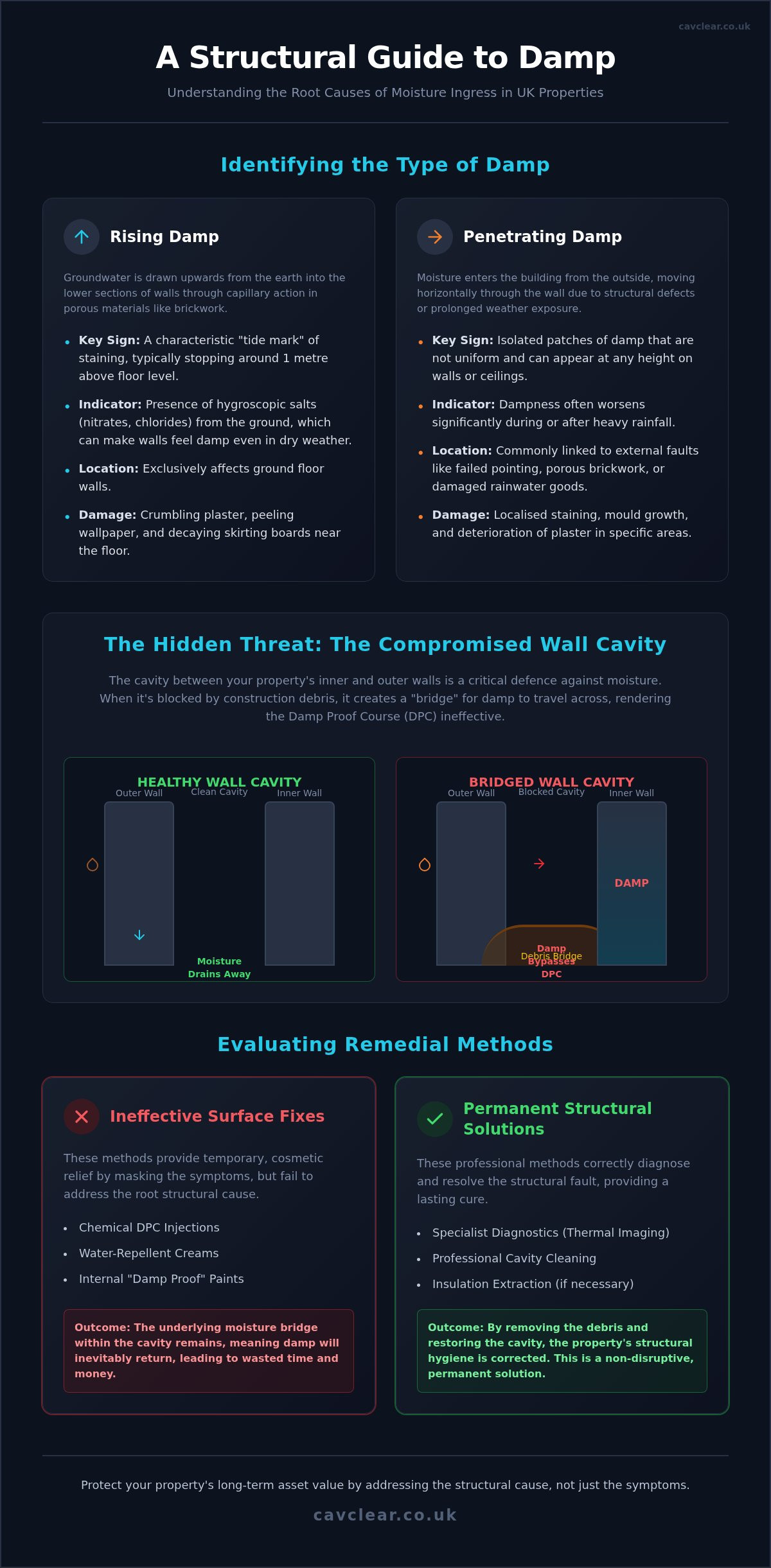
Accurate diagnosis is the foundation of effective property maintenance. Distinguishing between rising damp vs penetrating damp requires an understanding of how moisture interacts with different parts of a building’s structure. Rising damp occurs when ground moisture moves upward through porous masonry via capillary action. This process functions much like a sponge soaking up liquid, drawing groundwater into the brickwork. In contrast, penetrating damp is the result of water ingress through the external wall leaf, usually caused by specific structural defects or prolonged exposure to severe weather.
A primary diagnostic indicator for rising moisture is the “tide mark” phenomenon. Because gravity eventually counteracts the upward capillary pull, the visible staining typically stops at a height of approximately one metre above the floor level. Penetrating damp rarely follows such a uniform pattern. Instead, it often presents as isolated patches that can appear at any height on the wall. These patches frequently correlate with external triggers such as porous brickwork, failed pointing, or damaged rainwater goods that allow water to saturate the masonry.
Visual Symptoms and Diagnostic Markers
The presence of hygroscopic salts, specifically nitrates and chlorides, is a definitive sign of rising moisture. These salts are drawn from the ground and deposited into the internal plasterwork. Because they are hygroscopic, they continue to absorb moisture from the air, which means the wall may feel damp even during dry periods. You might also notice peeling wallpaper or crumbling skirting boards at the base of the wall, where the moisture concentration is highest. Efflorescence is the crystalline salt deposit left after water evaporates. While efflorescence is often harmless on its own, it acts as a clear visual warning that moisture is moving through the substrate.
When investigating penetrating damp, look for localized damage. Staining around window frames, damp ceilings, or patches that darken significantly after heavy rain point toward an external breach rather than a ground-level issue. Identifying whether the damp is isolated or continuous is essential for determining the correct remedial path.
The Role of the Damp Proof Course (DPC)
In modern UK properties, a physical Damp Proof Course (DPC) serves as an impermeable barrier designed to block the upward movement of groundwater. This is typically a layer of plastic or bitumen installed during construction. For the DPC to remain effective, UK building standards require it to be positioned at least 150mm above the external ground level. If the ground level is raised through new paving or landscaping, the DPC can be “bridged,” allowing moisture to bypass the barrier entirely.
DPC failure isn’t always about the material itself degrading. Frequently, the barrier is compromised by structural bridging within the wall cavity. When mortar droppings or construction debris accumulate at the base of the cavity, they create a physical bridge that moisture uses to cross from the external leaf to the internal skin. This technical fault renders even a perfect DPC useless, as the water simply finds a different route into your living space.
The Structural Link: How Cavity Wall Hygiene Dictates Damp Risk
Understanding the technical distinction between rising damp vs penetrating damp requires an investigation into the internal hygiene of your property walls. A standard UK what is a wall cavity acts as a vital moisture break, designed to separate the wet external masonry from the dry internal skin. When this space is clear, water that enters the outer leaf simply drains away and exits through weep holes. However, when this cavity becomes compromised by debris, the structural design fails to protect your home from moisture transfer.
Construction debris, frequently referred to as mortar “snots,” often builds up on wall ties or at the base of the cavity during the construction phase. These solid accumulations create a physical bridge that allows moisture to travel directly across the gap. Surface treatments like water-repellent creams or internal paints are ineffective in these cases. They don’t address the underlying technical fault within the wall. If a physical bridge exists, moisture will continue to bypass your defences regardless of external coatings or decorative finishes.
Bridged Damp Proof Courses (DPC)
A bridged DPC occurs when the physical moisture barrier is bypassed by internal or external factors. Internally, debris can accumulate against the DPC, allowing groundwater to skip the barrier and saturate the inner leaf. Externally, homeowners often bridge the DPC by building patios or flowerbeds above the required 150mm threshold. This allows ground moisture to enter the masonry above the protected zone. When this happens, internal floor joists can become damp, leading to timber rot and compromising the structural integrity of the property.
The Danger of Saturated Cavity Wall Insulation
Retrospective insulation often creates significant moisture problems if the external leaf is not perfectly watertight. When the insulation material becomes wet, it holds moisture against the inner wall skin like a damp sponge. This creates a thermal bridge that leads to cold spots and persistent black mould growth. In many instances, cavity wall insulation removal is the essential first step in damp remediation. This process restores the cavity’s function and allows the structure to dry out naturally. Restoring the air gap is often the primary step in resolving complex moisture issues; you can learn more about the process of cavity wall insulation removal to see if it’s the right technical solution for your home.
Evaluating Remedial Methods: Why Surface Fixes Often Fail
Property owners often seek immediate relief from moisture through surface-level applications. However, applying a cosmetic fix to a structural technical fault is rarely a permanent solution. When evaluating rising damp vs penetrating damp, it’s essential to understand that the source of the moisture must be neutralized before any internal repairs can succeed. Relying on “damp-proof paint” is a common mistake; these products merely mask the symptoms and often trap moisture within the masonry, which can accelerate the decay of your brickwork and internal plaster.
The technical process of creating a hydrophobic barrier involves injecting silicone-based creams into the mortar course. These creams line the pores of the masonry, preventing water from rising via capillary action. While this is a scientifically sound method for treating rising damp, its success depends entirely on the condition of the wall cavity. If the cavity is still full of construction debris or wet insulation, moisture will simply bridge the newly injected course. A “whole-house” approach is required, combining DPC restoration with comprehensive structural maintenance to ensure the property remains dry.
Chemical Injections vs Structural Extraction
A chemical DPC injection is an appropriate technical solution only when the physical structure allows it to function. If your wall cavity is blocked, injecting chemical creams is often a waste of resources. The moisture will use the debris as a ladder to bypass the treated area. Professional remediation requires the extraction of all foreign material to restore the original “clear” cavity design. Clearing the cavity base allows the existing DPC to breathe and function correctly, providing a long-term fix rather than a temporary patch. This methodical approach ensures that your investment in property maintenance actually delivers the intended result.
Restoring Structural Integrity
Prolonged exposure to moisture doesn’t just damage your wallpaper; it threatens the very skeleton of your home. Wet masonry can lead to significant corrosion, often necessitating wall tie replacement to maintain structural stability. Furthermore, successful remediation must include the removal of hygroscopic salts from the internal plaster. These salts will continue to re-absorb moisture from the air even after the damp source is fixed, leading to recurring “phantom” damp patches. Specialists must also factor in a technical “dry-out” period. Redecorating too soon traps residual moisture, which will inevitably lead to the failure of the new finishes and a return of mould growth.
The Diagnostic Process: Why a Professional Survey is Essential
Relying on a visual guess often leads to expensive, ineffective repairs. A specialist damp survey provides the technical data needed to differentiate accurately between rising damp vs penetrating damp. General builders often lack the specific instrumentation required for a definitive diagnosis, which is why conflicting advice is so common. Our technicians use protimeters to map surface moisture, but they also employ carbide meters to measure the actual moisture content within the masonry. Thermal imaging cameras allow us to see cold bridges and moisture patterns that are invisible to the naked eye.
A technical structural inspection differs significantly from a sales-led visit. We don’t just look for where to apply a treatment; we investigate why the moisture is present in the first place. A comprehensive report should include detailed moisture profiles and a prioritized remedial action plan. This methodical approach ensures you aren’t paying for chemical injections that won’t resolve a penetrating moisture issue. It’s about finding the technical fault and providing a permanent remedy that protects your property asset value.
Borescope Inspections and Internal Mapping
Surface-level moisture readings are often misleading. They tell you a wall is wet, but they don’t explain the mechanism of transfer. Specialists use borescope cameras to look directly inside the wall cavity through small, discreet drill holes. This allows us to identify construction debris, mortar “snots,” or saturated insulation that is bridging the gap between the external and internal leaves. This non-destructive testing is a hallmark of modern property preservation. It provides visual confirmation of technical faults before any remedial work begins, ensuring the proposed solution is evidence-based.
Identifying Secondary Structural Issues
Moisture rarely acts in isolation. Prolonged dampness in masonry often affects adjacent materials and structural components. We assess the risk of wet rot in floor timbers and skirting boards that sit against damp walls. High moisture levels also accelerate the corrosion of metal wall ties, which can lead to structural instability or wall bulging over time. Ventilation must also be evaluated alongside damp-proofing measures. If a property is too airtight, internal condensation can mimic the symptoms of penetrating damp. If you’re concerned about the hidden condition of your masonry, booking a professional cavity wall survey is the most reliable way to secure your property’s future.
Professional Remedial Contracting: Permanent Solutions for UK Properties
Executing a permanent fix requires moving beyond the diagnostic phase and into high-precision technical delivery. Once a specialist has determined the mechanism of moisture transfer, whether it is rising damp vs penetrating damp, the remedial work must address the root structural cause. Professional contracting in this field is not about general building work. It is a specialized discipline that focuses on restoring the structural hygiene of your property walls through methodical extraction and barrier restoration. Our approach prioritizes the long-term health of the building, ensuring that once a technical fault is rectified, it does not return to compromise your comfort or safety.
Modern remediation methodology is designed to be clean and non-disruptive. We use specialized suction equipment and high-velocity air tools to remove cavity debris or saturated insulation without the need for extensive scaffolding or internal demolition. This precision allows us to clear “bridges” at the base of the wall that often cause DPC failure. By choosing specialist labour, you ensure that the remedial work follows the exact technical specifications required to protect your property asset value. This isn’t just a repair; it’s a vital investment in the future stability of your home.
The Remediation Timeline
Ensuring the structural stability of your home is a vital step toward maintaining a safe living environment. For families looking to further adapt their interiors to support residents with cognitive challenges, Find Memory Care provides expert guidance and products for creating dementia-friendly environments.
A structured remedial action plan is essential for maintaining site safety and ensuring insurer compliance. The process typically begins with site preparation and the creation of discreet access points in the external masonry. During the extraction phase, technicians remove all foreign material, such as mortar snots or failed insulation, to restore the clear air gap. Following this, we install the hydrophobic DPC barrier or perform necessary structural repairs, such as wall tie replacement. Choosing a nationwide specialist with accredited technicians ensures that every phase is documented, providing a clear audit trail of the work performed. This methodical progression avoids the pitfalls of rushed, generalist repairs that often fail within a few seasons.
Protecting Long-Term Property Value
Professional damp-proofing serves as a critical safeguard for your property’s marketability. When you eventually come to sell your home, formal documentation of specialist remediation becomes a vital asset during the structural survey process. It demonstrates that you have addressed environmental hazards with rigor rather than masking them with cosmetic finishes. This transparency builds trust with lenders and buyers alike, protecting the financial equity you have built in your home. If you are ready to secure your property’s future, book your nationwide specialist damp and mould survey with CavClear today to receive a definitive technical assessment.
Securing Your Property’s Structural Future
Effective moisture management is a technical challenge that requires more than surface-level masking. You’ve seen how correctly identifying rising damp vs penetrating damp is the first step toward a permanent fix. By addressing structural hygiene and clearing the wall cavity of debris or saturated insulation, you restore your property’s natural defences. This methodical approach ensures that your damp proof course functions exactly as intended, protecting both your living environment and your financial investment.
Choosing a specialist who understands the nuances of cavity maintenance is vital for long-term success. Our accredited technicians provide nationwide UK coverage, specializing in the structural cavity hygiene necessary to rectify poor previous workmanship and structural faults. We focus on delivering a dry, safe property through non-disruptive methodology and transparent, evidence-based reporting. Don’t let recurring moisture compromise your home’s integrity any longer. Book your nationwide specialist damp and mould survey with CavClear to secure a definitive solution. You can move forward with confidence, knowing your property is in the hands of dedicated structural experts.
Frequently Asked Questions
How do I know if I have rising damp or just condensation?
Rising damp typically leaves a distinct horizontal tide mark and salt deposits on ground floor walls. In contrast, condensation often manifests as black mould in areas with poor air circulation, such as corners or behind furniture. While condensation can occur at any height, rising moisture is limited to the lower metre of a wall. A specialist survey is the only reliable way to confirm the technical fault and provide a permanent remedy.
Can rising damp be fixed permanently without chemical injections?
Yes, permanent remediation is possible without chemicals if the issue is a bridged damp proof course. Removing construction debris or mortar “snots” from the base of the wall cavity often allows the existing physical DPC to function correctly. Restoring the structural hygiene of the cavity is frequently more effective than adding new barriers. We focus on clear air gaps to ensure the property remains dry without unnecessary and expensive chemical interventions.
Do I need to remove my cavity wall insulation to fix a damp problem?
Insulation removal is essential if the material has become saturated or is bridging the cavity. Wet insulation acts like a damp sponge, transferring moisture from the external leaf directly to the internal skin. This technical fault leads to persistent mould and cold spots. Extracting the compromised material restores the cavity’s original design, allowing the masonry to breathe and dry out naturally while protecting your property’s long-term asset health.
How long does it take for a wall to dry out after damp treatment?
The standard technical guidance suggests one month of drying time for every inch of wall thickness. For a typical UK cavity wall, this process can take several months depending on the property’s orientation and internal heating levels. It is vital to wait until the masonry is fully dry before attempting internal redecoration. Trapping residual moisture behind new plaster or paint often leads to secondary failure and the return of hygroscopic salt damage.
What is the average cost of treating rising damp in a UK home?
Costs for remediation vary based on the property size and the required technical solution. According to 2026 industry data, a chemical DPC injection for a standard terraced house typically ranges between £500 and £2,500. However, if structural work such as insulation extraction or cavity cleaning is needed, the investment will be higher. A professional survey provides an evidence-based quote that addresses the root cause of the moisture rather than just the visible symptoms.
Is penetrating damp more dangerous than rising damp?
Both types of moisture ingress pose risks, but penetrating damp can cause more rapid structural decay if it enters at height. While rising damp is usually localized to the ground floor, penetrating moisture can rot roof timbers and floor joists. When assessing rising damp vs penetrating damp, both require urgent specialist attention. Ignoring these technical faults leads to the degradation of masonry and significantly increased repair costs over time as the structural integrity weakens.
Can I treat rising damp myself using a DIY kit?
DIY kits are rarely a permanent solution because they don’t address the underlying structural cause. Without a borescope inspection, you cannot know if debris is bridging your DPC inside the wall cavity. Applying a surface cream won’t stop moisture if the internal technical fault remains. Professional remediation ensures the work meets high industry standards and provides the long-term assurances needed to protect your property’s value and your family’s health.
Does rising damp affect the structural integrity of my home?
Persistent moisture causes the gradual degradation of mortar and bricks, eventually compromising the stability of the wall. High moisture levels also accelerate the corrosion of metal wall ties, which are essential for holding the two leaves of a cavity wall together. If left untreated, this can lead to wall bulging or structural instability. Addressing the issue through professional remediation protects your property’s long-term asset value and restores the safety and comfort of your home.
Recent Comments