
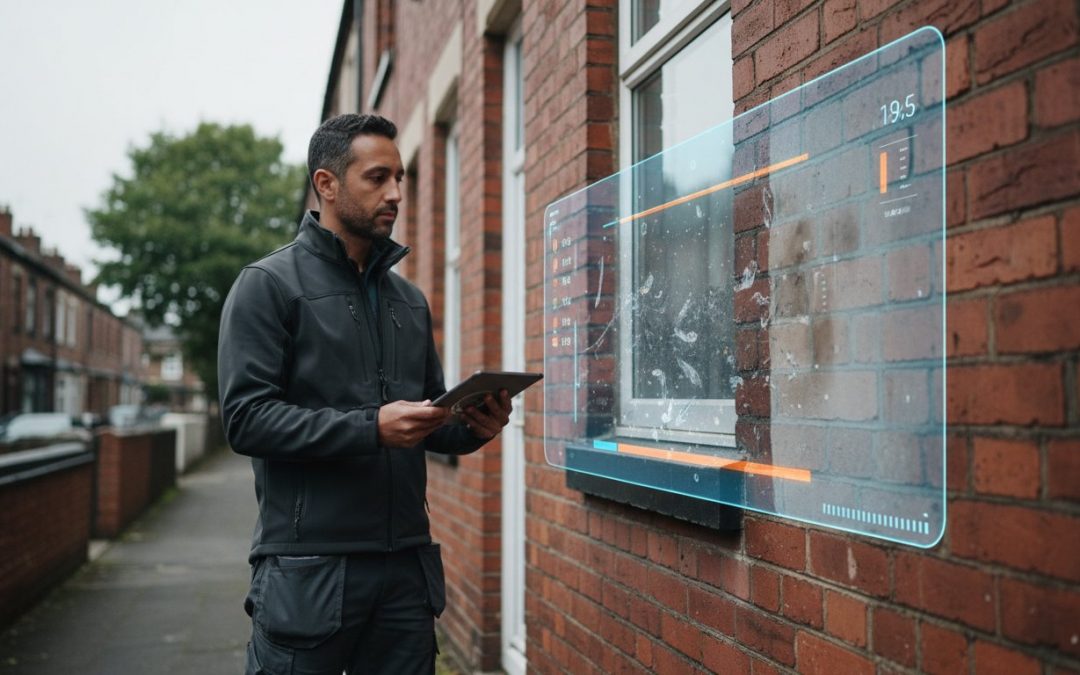
What if the material installed to keep your home warm is the exact reason your walls are now damp and cold? Many homeowners across the UK find that despite keeping the heating on, black mould continues to spread across internal walls. It’s a common frustration that often points to a failure within the wall itself. Arranging a professional survey for cavity wall insulation removal is the first step to diagnosing these underlying faults. This technical assessment identifies whether debris, moisture, or poor installation is the root cause before any extraction work begins.
You need a clear, evidence-based plan to restore your property’s structural integrity. This guide details the professional diagnostic process, including borescope inspections and moisture mapping, which provides the necessary documentation for insurance or structural records. You’ll discover how a specialist assessment outlines a reliable path to rectify insulation failure and ensures your home becomes dry and safe again. We’ll explain the methodical steps our nationwide team takes to move your property from a state of dampness to long-term health.
Key Takeaways
- Understand why a technical survey is the mandatory first step to safeguard your home’s structural integrity before any extraction work begins.
- Learn the step-by-step methodology specialists use during a professional survey for cavity wall insulation removal to accurately identify damp, debris, and material failure.
- Discover the specific markers of failing foam, wool, and bead insulation that indicate your property’s thermal performance has been compromised.
- Find out how to interpret a specialist survey report to understand the recommended scope of works required to restore your property to a dry, healthy state.
- Gain insight into how a professional diagnostic process ensures a permanent, guaranteed solution for long-term property health.
The Role of a Technical Survey in Cavity Wall Insulation Removal
A technical survey for cavity wall insulation removal is a non-invasive diagnostic procedure. It serves as the foundation for any successful extraction project. Before a single piece of material is removed, a specialist must assess the internal condition of the wall. This step isn’t optional; it’s the only way to ensure the structural preservation of your home. While a general home survey focuses on property value and visible defects, a specialist cavity inspection targets the 50mm to 100mm gap between your masonry layers.
A professional survey provides a factual basis for remedial recommendations. It removes the guesswork that often leads to incomplete extractions or unnecessary property damage. By using high-definition equipment, technicians can see exactly what’s happening inside the wall. Understanding What is a Cavity Wall? helps clarify why this matters. These structures were designed to keep moisture out, but failing insulation turns that protective gap into a bridge for dampness. The survey identifies these bridges and maps out a precise plan for restoration.
Why Visual Inspections Alone Are Insufficient
Relying on external symptoms like damp patches or peeling paint is a mistake. These signs are often misleading. A damp patch on an internal wall might suggest a leak, but it often indicates a specific point where insulation has slumped or become saturated. Thermal imaging cameras are useful for identifying heat loss, yet they have limitations. They can’t distinguish between a lack of insulation and wet insulation. A specialist uses a borescope to verify the physical state of the material. This tool identifies hidden debris, mortar droppings, or “voids” that cause cold bridging. Without this internal data, any attempt at removal is likely to leave behind pockets of problematic material.
Determining the Root Cause of Insulation Failure
Identifying why the insulation failed is critical for preventing future issues. Failure typically falls into three categories: poor initial installation, material degradation, or external property faults like cracked rendering. Specialists check if the insulation was suitable for the property type at the time of install. Some properties in high-exposure zones across the United Kingdom should never have been filled with certain materials. Failing mineral wool is inherently hygroscopic, meaning it acts like a sponge by drawing moisture from the external leaf and holding it against the internal wall. The survey confirms if the material has reached this stage of failure, allowing for a guaranteed, long-term solution that restores your home’s thermal efficiency and structural health.
The Inspection Process: How Specialists Assess Cavity Conditions
A professional survey for cavity wall insulation removal follows a precise, technical sequence to ensure the structural integrity of your home remains intact. Accredited technicians begin by conducting a full perimeter walkaround of the property. Homeowners should ensure that all elevations are accessible by clearing away garden furniture, ladders, or overgrown vegetation before the specialist arrives. This allows for a comprehensive audit of the property’s exterior health, ensuring no hidden defects are missed during the site visit.
During this stage, the surveyor examines critical external factors like the condition of the pointing, the efficiency of the guttering, and the height of the damp proof course (DPC). Faulty rainwater goods or cracked mortar joints often allow water to penetrate the cavity, saturating the insulation material inside. This diagnostic process aligns with the Official Government Guidance which highlights how external maintenance failures frequently lead to internal damp issues. Modern inspection techniques are designed to be clean and non-invasive, providing a clear picture of the internal wall environment without causing any structural damage to the property.
Borescope Investigation: Seeing Inside the Cavity
Specialists use high-definition borescope cameras to look directly into the wall void. This involves drilling small, discreet holes, typically 12mm in diameter, at strategic points across different elevations. The surveyor isn’t just looking for the type of material present; they’re searching for specific warning signs. These include material settlement, where insulation has slumped to the bottom of the wall, and “debris bridges” caused by mortar droppings left during the original construction. Every finding is captured with photographic evidence. This data forms the core of the technical report, proving exactly why the insulation is failing and where the wet spots are located.
External Wall Assessments and Thermal Mapping
The assessment extends beyond what the naked eye can see. Specialists use thermal imaging technology to identify “cold spots” on the internal walls. These thermal anomalies often correlate directly with areas where insulation is missing, slumped, or saturated with moisture. On the exterior, the surveyor looks for spalling brickwork. This occurs when moisture trapped within the insulation expertzes and expands, causing the brick faces to flake off. Identifying these patterns early is vital for the long-term health of the building. If you’ve noticed patches of damp or unusually cold walls, a professional inspection can provide the clarity needed to resolve the issue permanently.
Identifying Defective Materials: Foam, Wool, and Bead Failure
Every property presents a unique challenge based on the specific material installed during its construction or subsequent renovation. In the UK, we primarily encounter three types of insulation: Urea-Formaldehyde foam, mineral wool, and bonded polystyrene beads. A professional survey for cavity wall insulation removal identifies which material is present and assesses its current physical state. This diagnosis is critical because the extraction method for saturated wool differs significantly from the process required to remove brittle, degraded foam. Our nationwide teams use this data to ensure the property’s structural integrity remains the priority throughout the process.
The Risks of Deteriorating Urea-Formaldehyde Foam
Foam insulation was widely installed across the UK during the 1970s and 1980s. Over several decades, this material often loses its structural stability. It shrinks by as much as 10%, leaving significant gaps or voids within the wall. These voids create cold spots where internal condensation thrives. As the foam breaks down, it releases a fine, acrid dust that can permeate the inner leaf. This chemical breakdown is often acidic, which accelerates the corrosion of metal wall ties and threatens the building’s stability.
Saturated Mineral Wool and Debris Accumulation
Loose-fill mineral wool behaves like a sponge when it encounters moisture. Whether through failing mortar joints or leaking gutters, once water enters the cavity, the wool absorbs it and holds it against the inner wall. This leads to slumping, where the heavy, wet material settles at the base of the cavity, leaving the upper walls uninsulated. Specialists also look for mortar snots, which are lumps of dried cement from the original build. These obstructions trap the wool and create bridges that transport damp directly into your living space.
Polystyrene beads are the third common material found during a survey for cavity wall insulation removal. While beads are often more resilient to moisture than wool, they fail if the bonding agent breaks down. This causes the beads to become loose, meaning they can pour out of any wall opening, such as during window replacements or electrical work. The survey report dictates the specific machinery needed for the job. We use high-volume vacuum extraction systems and specialised compressed air tools that are calibrated based on the material density found during the inspection. This targeted approach ensures a 100% clear cavity, restoring the building’s natural ventilation and protecting its long-term health. It’s a methodical process that prioritises a clean, non-invasive result for every homeowner.
Assessing Structural Integrity and Secondary Issues
A comprehensive survey for cavity wall insulation removal extends far beyond simply identifying the type of material present. Our specialists view the cavity as a critical component of the building’s breathing mechanism. When insulation becomes saturated, it ceases to be a thermal barrier and instead becomes a conduit for moisture, directly threatening the structural stability of your home. A professional assessment identifies how this moisture has affected the hidden components of your walls, ensuring all secondary issues are resolved during the extraction process.
The relationship between moisture-laden material and the masonry is a primary focus during the inspection. Saturated mineral wool or urea-formaldehyde foam can hold thousands of litres of water against the inner leaf of a property. This constant dampness doesn’t just affect temperature; it changes the chemical and physical environment of the wall cavity itself. A professional survey for cavity wall insulation removal must account for these variables to prevent long-term structural decline.
The Link Between Wet Insulation and Wall Tie Corrosion
Metal wall ties are the essential anchors that hold the outer leaf of your masonry to the inner structure. Standard galvanised ties in properties built before 1981 often have a finite lifespan, which is significantly shortened by constant contact with damp insulation. This moisture accelerates oxidation, leading to rust. As ties corrode, they expand, often reaching several times their original size. This expansion exerts upward pressure on the mortar, resulting in visible horizontal cracking along the external brickwork.
During a survey for cavity wall insulation removal, our technicians use borescope cameras to inspect the condition of these ties. If we detect significant thinning or “pitting” of the metal, we will recommend wall tie replacement as a vital remedial step. Ignoring this can lead to the outer wall bowing or, in extreme cases, collapsing under wind loads. We ensure the stability of the outer leaf is confirmed before and after the extraction is performed.
Identifying Penetrating Damp and Internal Mould Growth
Saturated insulation creates a bridge that allows rainwater to travel from the external brickwork directly to your internal plaster. This process often results in interstitial condensation, where water vapour traps within the wall structure and cools, leading to persistent damp patches. This environment is the primary catalyst for black mould, which poses documented risks to respiratory health and ruins internal decorations.
Our surveyors are trained to differentiate between these issues and other forms of moisture ingress. While rising damp typically presents as a tide mark below 1.2 metres from ground level, damp caused by defective insulation often appears in patches higher up the wall or around window reveals. By isolating the cause, we ensure the extraction plan addresses the root of the problem rather than just the symptoms. Restoring the clear air gap is the only way to ensure your home remains dry and safe for the long term.
Protect your property from the hidden costs of damp insulation. Speak with a CavClear specialist to schedule your professional cavity assessment.
Interpreting Your Survey Report and Planning Extraction
Receiving your completed survey for cavity wall insulation removal marks the transition from uncertainty to a clear, actionable plan. This document is a technical blueprint that outlines the exact state of your property’s hidden voids. It serves as a diagnostic record that proves the necessity of the intervention, ensuring that every step taken is data-driven and precise. A professional specialist uses this report to eliminate guesswork, protecting the structural integrity of your home while addressing the root causes of damp and cold spots.
What a Professional Survey Report Should Include
A comprehensive report isn’t a simple summary; it’s a detailed evidence log. You should expect a checklist of essentials that includes high-resolution borescope logs. These logs provide visual proof of the insulation’s condition inside the walls. The report must also include elevation maps that pinpoint areas of high moisture and debris accumulation. These maps are vital for the technicians during the extraction phase.
Every professional report includes a transparent, fixed quotation for the cavity wall insulation removal. This document is a vital asset for your property’s permanent records. When you decide to sell your home, RICS surveyors or mortgage lenders often require documented proof that failing insulation was professionally removed. Having this evidence on hand can prevent delays in property transactions and confirms that the building’s thermal health has been restored to modern standards.
Transitioning from Diagnostic to Remedial Action
The transition from the survey to the physical extraction is a methodical process. The findings from your survey for cavity wall insulation removal dictate the logistics of the project. Specialists use the data to calculate the precise placement of extraction points, typically using 12mm holes drilled into the mortar joints. They also determine the specific vacuum pressures required to clear the cavity without putting undue stress on the wall ties or the inner leaf of the masonry.
The timeline from receiving your report to the start of the extraction usually spans 7 to 14 days. During the extraction, specialists use industrial-grade HEPA-filtered vacuums and compressed air tools to ensure the cavity is 100% clear of all debris and saturated material. This process is clean, non-invasive, and designed to cause minimal disruption to your daily life. By following the survey’s specific recommendations, the specialist ensures the home’s natural ventilation is restored. This is a permanent fix that allows your walls to breathe again, stopping the cycle of damp and protecting your property’s value for the long term. Choosing an accredited specialist for this phase is the only way to guarantee the work meets the rigorous safety standards required for UK homes.
Protect Your Property With Specialist Technical Insight
A professional survey for cavity wall insulation removal acts as the essential blueprint for restoring your home’s structural integrity. It identifies whether saturated mineral wool, slumped beads, or degraded foam is causing damp issues within your walls. Our accredited specialist technicians provide a comprehensive technical report that details the exact condition of your property’s cavities. This evidence-based approach ensures that the extraction process is targeted and effective, preventing further damage to your masonry or internal decorations. We operate with nationwide UK service coverage, bringing professional standards to every corner of the country.
Removing defective materials is the only way to stop the cycle of moisture bridge formation and wall tie corrosion. Our team uses non-invasive diagnostic tools to assess the internal cavity space before any work begins. This transparency gives you total peace of mind that your home’s health is the priority. It’s time to resolve these insulation problems for good and return your living environment to a dry, comfortable state. Taking the right steps now prevents more expensive repairs to your property’s fabric later.
Book a professional cavity wall survey with CavClear today to secure your home’s future.
Frequently Asked Questions
How long does a survey for cavity wall insulation removal typically take?
A professional survey for cavity wall insulation removal typically takes between 60 and 120 minutes to complete. Our specialists conduct a thorough external inspection and internal damp assessment during this time. For a standard three-bedroom semi-detached property, 90 minutes provides enough time to inspect all elevations and identify specific failure points. The duration depends on the size of the building and the accessibility of the walls.
Is it necessary to have a survey before the insulation is extracted?
Yes, a pre-extraction survey is essential to ensure the safety and structural integrity of your home. This diagnostic phase allows specialists to map the density of the failed material and identify hidden obstructions like mortar droppings or rubble. Skipping this step often leads to incomplete extractions. This leaves 15% to 20% of debris trapped in the cavity, which causes ongoing damp issues and prevents the wall from breathing correctly.
Will the survey cause any damage to my external or internal walls?
The survey is a non-invasive procedure that won’t damage your property. Specialists drill small inspection holes, typically 12mm in diameter, directly into the mortar joints rather than the bricks themselves. Once the borescope inspection is finished, we seal these holes with matching mortar. This process ensures your external facade remains intact while providing a clear view of the internal cavity conditions without affecting the aesthetics of your home.
What tools do specialists use to inspect the cavity?
Specialists use high-definition borescopes and thermal imaging cameras to perform a detailed internal inspection. The borescope enters the cavity through 12mm pilot holes to capture video evidence of slumped or wet insulation. Additionally, we use calibrated moisture meters to record damp levels in the inner leaf. These tools provide 100% visual confirmation of the cavity’s condition before any extraction equipment is deployed to the site.
Can I stay in the property while the survey is being conducted?
You can remain comfortably inside your home while the specialist conducts the survey. Most of the technical work happens on the exterior of the building as we inspect the elevations. We only require brief access to internal rooms to check for damp signatures or cold spots using thermal sensors. The process is quiet and doesn’t create significant dust or disruption to your daily routine or your family’s comfort.
What is the average cost of a professional cavity wall survey in the UK?
The survey scope and fee are agreed before booking. The report records the findings, photographs, limitations and recommendations, with a quotation for extraction or other relevant remedial work where required.
How do I know if my cavity wall insulation has actually failed?
Visible signs of failure include persistent damp patches on internal walls and the appearance of black spot mold in room corners. You might also notice localized cold spots where the insulation has slumped or become saturated with water. Statistics show that many properties with retrofitted insulation suffer from these issues due to poor installation. If your heating bills have increased by 10% or more, it often indicates the material is no longer thermally efficient.
What happens if the survey identifies wall tie corrosion?
If the specialist identifies wall tie corrosion, it must be addressed alongside the insulation extraction. Saturated insulation holds moisture against the metal ties, which can lead to structural instability over a 5 to 10 year period. We provide a detailed report on the condition of the ties and recommend a remediation plan. Removing the wet debris is the first step in stopping the oxidation process and protecting your home’s structural skeleton for the long term.
Recent Comments