
What if the only thing standing between you and your dream home isn’t the mortgage offer itself, but a hidden metal component inside the walls? It’s a common moment of panic when a mortgage survey flagged wall ties as a potential structural concern. You’ve likely spent months searching for the right property, only to feel the entire purchase is now at risk of falling through. We understand that technical jargon like “corrosion levels” or “BRE Digest 401” can feel overwhelming when you’re simply looking for security and a clear path forward.
The good news is that a flagged wall tie issue is a manageable structural maintenance task, not a reason to abandon your investment. You’ll learn exactly how to resolve these findings to satisfy your lender and ensure the long-term structural integrity of the building. This guide explains the technical standards surveyors use, the diagnostic process involving specialized borescopes, and the professional remedial plans required to secure mortgage approval. We walk you through the practical steps of a wall tie survey and the subsequent replacement process so you can move toward completion with total confidence.
Key Takeaways
- Understand why a mortgage survey flagged wall ties by identifying the primary indicators of structural instability, such as horizontal mortar cracking and masonry bulging.
- Discover the technical process of wall tie corrosion and how metal expansion can lift masonry to compromise the long-term integrity of your property.
- Learn what to expect during a professional inspection, including the use of high-sensitivity metal detectors and non-disruptive borescope cameras for visual verification.
- Secure your property purchase by using specialist remedial quotes to resolve lender retentions and facilitate informed price negotiations between buyers and sellers.
- Recognize why employing a nationwide specialist for wall tie replacement is vital for ensuring professional structural restoration and the future health of your home.
Why Your Mortgage Survey Flagged Wall Ties: Understanding the Structural Risk
A cavity wall consists of two separate leaves of masonry, usually an inner load-bearing wall and an outer decorative leaf. What is a cavity wall tie? It is the essential metal component that binds these two leaves together, ensuring they act as a single, stable structural unit. Without these ties, the external wall lacks the necessary support from the internal structure of the building. When a mortgage survey flagged wall ties as a concern, it indicates that the surveyor has detected signs that this internal bond is compromised.
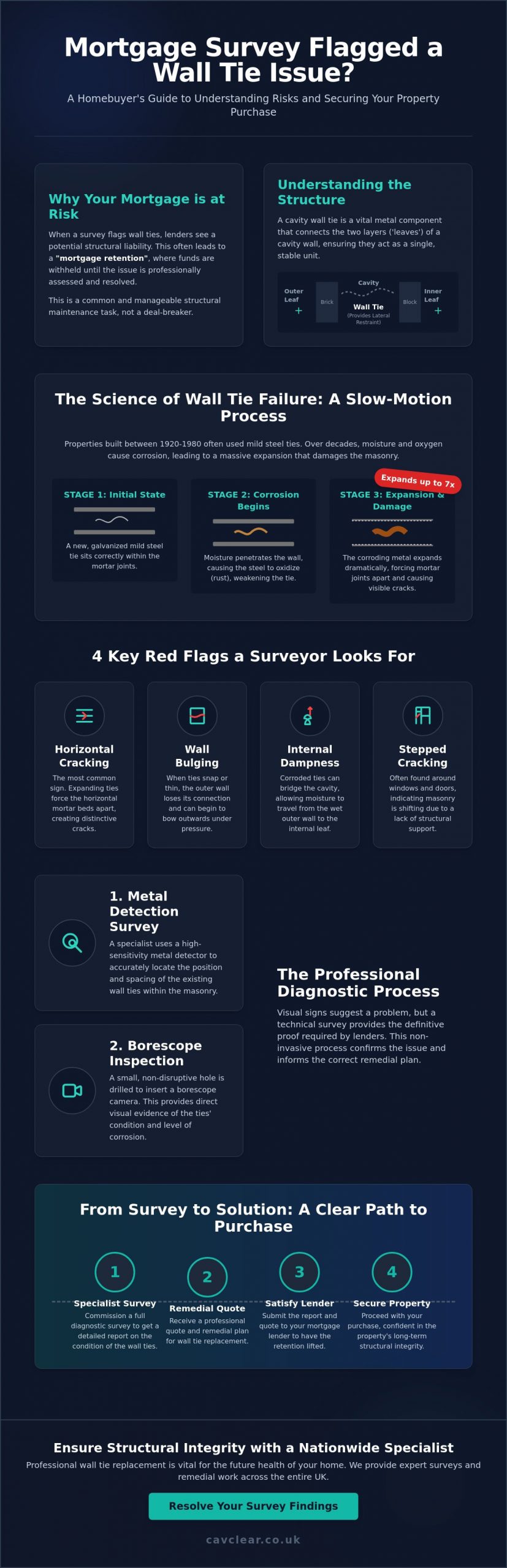
Lenders view wall tie failure as a significant structural liability. The mortgage valuation process is designed to protect the lender’s investment, and any evidence of masonry instability suggests future costs and safety risks. If a surveyor identifies potential issues, the lender will likely place a “retention” on the mortgage. This means a portion of the loan is withheld until a specialist wall tie survey is conducted and any required remedial work is completed. It is a standard procedure that ensures the property is structurally sound before the financial commitment is finalized.
The Importance of Lateral Restraint
Lateral restraint is the structural force that prevents the external leaf of a house from bowing outward or collapsing. Wall ties provide this restraint by anchoring the outer brickwork to the inner frame. Properties built between 1920 and 1980 are under particular scrutiny from modern lenders. During this period, mild steel ties were the industry standard, but they often lack the longevity of modern stainless steel alternatives. If these ties corrode, the property loses its structural cohesion. Lenders are strict because the safety of the occupants and the long-term health of the asset depend entirely on these small but vital components.
Common Red Flags for Surveyors
Surveyors are trained to spot specific visual indicators of tie distress during a brief external appraisal. You can often identify these red flags yourself if you know what to look for:
- Horizontal Bed-Joint Cracking: This is the most common sign. As metal ties rust, they expand significantly, forcing the mortar joints to crack and lift.
- Wall Bulging: If the ties have snapped or thinned due to corrosion, the outer leaf may begin to bow away from the property.
- Internal Dampness: Corroded ties can collect debris or sag, creating a “bridge” that allows moisture to travel from the outer leaf to the inner walls.
- Stepped Cracking: While horizontal cracks are classic signs of tie expansion, stepped cracks around windows and doors can indicate that the masonry is shifting due to a lack of support.
Distinguishing between minor settlement and genuine structural failure requires professional expertise. If your mortgage survey flagged wall ties, it is a signal to move from visual observation to a technical diagnostic process.
The Science of Wall Tie Failure: Corrosion, Expansion, and Integrity
Wall tie failure is a chemical process that leads to physical structural damage. Most properties built before 1981 rely on mild steel ties protected by a thin layer of galvanization. Over time, exposure to oxygen and moisture causes the steel to oxidize, forming ferrous oxide, commonly known as rust. This isn’t just a surface issue. As the metal corrodes, it expands to as much as seven times its original thickness. This massive increase in volume exerts immense pressure on the surrounding masonry, acting like a slow-motion hydraulic jack within your walls.
When a mortgage survey flagged wall ties, the surveyor likely observed the external symptoms of this internal expansion. The thickened metal physically lifts the courses of brickwork, which results in the characteristic horizontal cracking in the mortar joints. Environmental factors play a major role in how quickly this happens. Properties in coastal or industrial regions face accelerated decay due to salt-laden air and atmospheric pollutants. These elements penetrate the porous outer leaf, reaching the ties and speeding up the oxidation cycle. This progressive failure eventually compromises the lateral restraint of the building.
The Danger of Retrospective Insulation
Adding insulation to older cavities often worsens existing structural issues. Retrospective cavity wall insulation can trap moisture against the metal ties, preventing the cavity from “breathing” and drying out naturally. This saturated material creates a permanent bridge for dampness to cross from the outer leaf to the inner wall. It ensures the ties remain in a constant state of moisture, which significantly accelerates the corrosion process. We maintain a firm stance against installing retrospective insulation in vulnerable properties because it frequently hides or exacerbates these underlying structural faults.
Material Fatigue in UK Housing
The history of UK construction explains why certain properties are at higher risk. Properties built before 1981 typically feature mild steel ties with a limited lifespan of 15 to 20 years. Modern construction now uses stainless steel, which offers a lifespan exceeding 50 years. Understanding what is a cavity wall and the materials used in its construction helps homeowners appreciate why older buildings eventually require intervention. Seeking professional guidance on wall tie failure is essential for identifying these material risks. If you’re concerned about hidden damage, a specialist cavity wall tie inspection can provide the technical data needed to plan a permanent remedy.
What to Expect During a Professional Wall Tie Survey
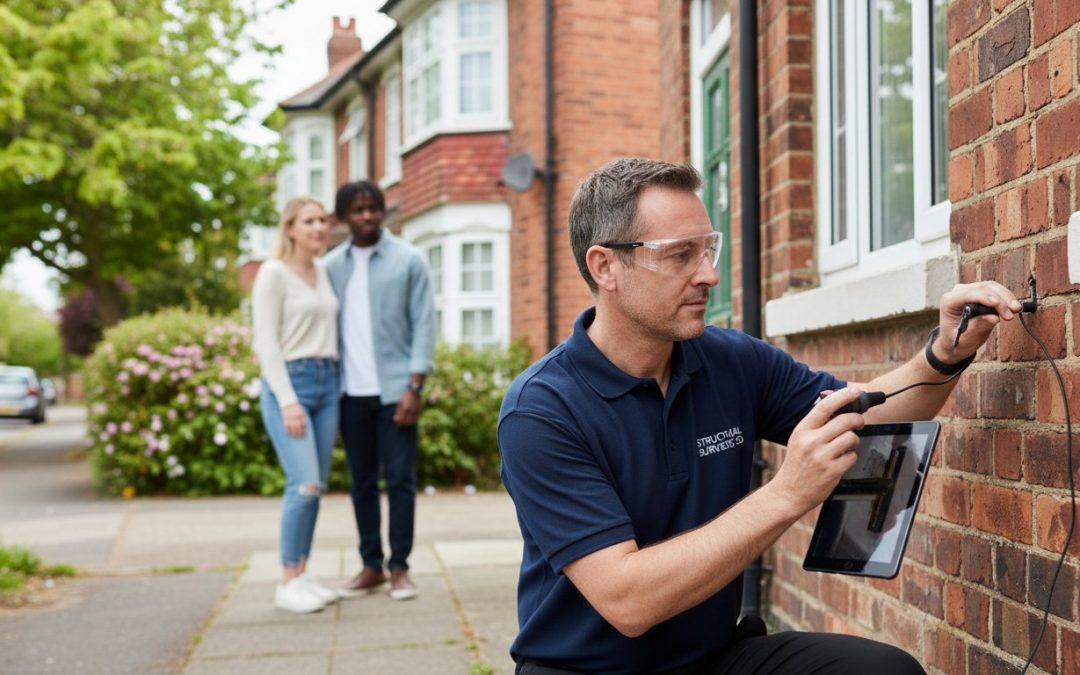
A professional wall tie survey is a methodical diagnostic process designed to provide absolute clarity regarding the internal condition of your property’s masonry. When a mortgage survey flagged wall ties, it often relies on visual cues like cracking or bulging. Our specialist inspection goes deeper, using a technical approach to verify the actual state of the metal within the cavity. We begin by using high-sensitivity metal detectors to map the existing tie pattern across all elevations. This allows us to confirm if the original installation met the required density standards essential for structural stability.
Once we map the ties, we perform strategic drilling of small pilot holes, typically only 10mm to 12mm in diameter, directly into the mortar joints. This methodology is specifically chosen to be clean and non-disruptive, ensuring the aesthetic of your brickwork remains intact. These holes serve as entry points for high-definition boroscope cameras. By inserting these fiber-optic tools into the cavity, we can visually inspect the ties for signs of corrosion, loss of section, or the presence of “snots”. These are deposits of excess mortar that can bridge the cavity and lead to dampness issues. This level of detail is vital for a successful mortgage survey flagged wall ties resolution.
Boroscope Technology and Visual Proof
The use of boroscope technology is the only way to provide the visual proof required by modern lenders. These cameras allow us to see the hidden side of the masonry, identifying exactly where corrosion has started. We capture photographic evidence of the ties in situ, which forms the core of our technical report. This evidence removes the guesswork, showing whether the ties are still providing effective lateral restraint or if they have reached a state of failure. It provides a transparent record that protects the interests of both the buyer and the lender.
The Accredited Surveyor Advantage
Lenders rarely accept a general builder’s verbal assessment of structural issues. A specialist wall tie survey provides a formal technical report that categorises ties into industry-standard grades, typically ranging from Grade 1 to Grade 4. This report includes a clear remedial action plan and a specialist quote for any necessary wall tie replacement. Having this professional documentation is often the only way to satisfy a mortgage retention. It proves to the lender that the issue is being handled by a nationwide specialist with the expertise to restore the property’s long-term asset health.
Resolving Survey Flags: Remedial Installation and Mortgage Approval
A technical survey report serves as more than just a diagnostic tool. It acts as a critical instrument for price negotiation between buyers and sellers. When a mortgage survey flagged wall ties, the resulting specialist report provides a clear, quantified cost for the necessary repairs. This transparency allows both parties to reach a fair agreement, often involving a reduction in the sale price or a requirement for the seller to resolve the issue before the exchange of contracts. Lenders typically insist on seeing a formal specialist quote and a signed contract from an accredited contractor before they’ll consider lifting a mortgage retention.
Effective resolution requires the installation of 316-grade stainless steel remedial ties. We select this material because its high chromium and nickel content provides superior resistance to corrosion, even in aggressive coastal environments. This transparency is essential when a mortgage survey flagged wall ties, as it provides the lender with a clear path to approval. It isn’t enough to simply add new ties; the original, failing ties must be addressed. We use specialist isolation techniques, such as foam sleeving or physical removal, to ensure the old rusting metal stops expanding. If left unmanaged, the existing ties will continue to oxidize and lift the masonry, eventually causing new cracks to appear even after the remedial work is complete.
The Remedial Installation Process
Our technicians use either mechanical or resin-fix stainless steel ties, depending on the density and condition of the masonry leaves. We ensure all work complies with modern standards by installing the new ties at a minimum density of 2.5 per m2. This spacing provides the necessary lateral restraint to stabilize the structure permanently. A key part of our methodology is the aesthetic finish. We use colour-matched mortar to point over the entry holes, ensuring the repair is virtually invisible and the property’s exterior remains clean and undisturbed. This meticulous approach protects the visual appeal of your home while restoring its structural integrity.
Securing Your Mortgage Valuation
Lenders require long-term assurance that the property is a safe asset. Providing a specialist guarantee for the remedial work is the final step in securing your mortgage valuation. This documentation proves to the lender that the structural fault has been rectified using professional methodology and high-grade materials. The timeline from the initial survey to the completion of the installation is typically streamlined to keep your property sale on track. For those requiring a deeper understanding of the technical specifications involved, our guide on wall tie replacement offers comprehensive details on installation patterns and material science. To secure your purchase today, you can book a professional wall tie survey with our nationwide team.
Why Specialist Contractors are Vital for Property Preservation
When a mortgage survey flagged wall ties, the temptation to hire a general builder for a quick patch-up is often high. However, structural repairs require a level of technical precision that non-specialists simply cannot provide. Poor workmanship in this area doesn’t just fail to satisfy lenders; it can actively accelerate property decay. We’ve seen numerous cases where incorrect tie specifications or poor installation patterns led to further masonry instability. CavClear maintains a nationwide commitment to restoring structural integrity across the UK, ensuring that every repair is a permanent investment in the property’s future.
Our methodology focuses on the long-term health of the asset. We don’t believe in superficial fixes that merely hide the symptoms of corrosion. Instead, we use a clean and efficient diagnostic process to identify the root cause of the failure. This proactive approach ensures that your home remains safe and structurally sound for decades. By choosing a specialist, you’re opting for a professional remedy that follows correct technical standards rather than a temporary solution. Our technicians work with a safety-conscious mindset, ensuring our presence causes zero disruption to your daily life.
A Comprehensive Approach to Cavity Health
True property preservation often requires looking beyond the ties themselves. In many instances, we recommend cavity wall insulation removal alongside tie replacement. Saturated or degraded insulation frequently traps moisture against metal components, fueling the corrosion cycle. By extracting this material, we restore the property to its original design specification. A clear cavity allows for natural ventilation. This is the most effective way to keep your walls dry and your new stainless steel ties protected. This synergy between clear cavities and structural stability is essential for a healthy home.
Professional Integrity and Reporting
Transparency is the foundation of our service. We provide detailed technical reports and transparent pricing based on the specific scale of your property and the volume of work required. This honest approach has made us a trusted specialist for homeowners and insurers nationwide. When your mortgage survey flagged wall ties, the goal was to identify a risk. Our role is to eliminate that risk with professional rigor and provide the long-term assurances your lender demands. Protect your investment and secure your property purchase by booking a comprehensive wall tie survey with our expert team today.
Securing Your Property and Future Peace of Mind
A structural concern doesn’t have to mean the end of your property journey. When a mortgage survey flagged wall ties, it simply identifies a technical fault that requires a professional remedy. You now understand the science of corrosion and the importance of using high-grade stainless steel to restore lateral restraint. By following a methodical path from diagnostic boroscope inspection to specialist replacement, you can satisfy lender requirements and protect the long-term health of your home. This process ensures the building remains a safe, stable asset for decades to come.
Our accredited specialist technicians provide the comprehensive boroscope reporting and technical data needed to resolve mortgage retentions quickly. We offer nationwide UK coverage, delivering a clean and non-disruptive service that prioritizes structural integrity. Don’t let a survey finding stall your progress. Book a Professional Wall Tie Survey with CavClear today to receive an expert action plan and move toward completion with total confidence. Your dream home is within reach, and we’re here to provide the expert support to secure it.
Frequently Asked Questions
What happens if my mortgage survey says “further investigation of wall ties required”?
This phrase indicates that the surveyor has identified visual red flags such as horizontal cracking or masonry bulging. It means the lender has likely placed a retention on your loan; they won’t release the full funds until a specialist confirms the structural condition. You’ll need to instruct a technician to perform a technical appraisal using borescope cameras to provide the visual proof the lender requires.
How much does a professional wall tie survey cost in the UK?
Professional fees for this service depend on the size of the property and the number of elevations that require inspection. A technical survey involves the use of high-sensitivity metal detectors and fiber-optic cameras to map the internal cavity. You should check with a nationwide specialist for a specific quote that covers the detailed reporting necessary to satisfy a mortgage lender’s requirements.
Can I still get a mortgage if the wall ties are failing?
You can still secure a mortgage even if your mortgage survey flagged wall ties as a structural concern. Lenders typically require a specialist report and a remedial contract to proceed with the application. Once you provide a professional quote for the replacement work, the lender can often adjust the retention or release funds based on the expert recommendation provided.
How long does it take to replace wall ties in a standard semi-detached house?
Most standard semi-detached properties can be completed within one to two working days. This timeline includes the mapping of existing ties, the installation of new stainless steel replacements, and the isolation of the original failing metal. This efficient methodology ensures the structural integrity is restored quickly, helping to keep your property purchase or sale on track without unnecessary delays.
Will wall tie replacement leave visible marks on my brickwork?
Professional replacement is designed to be aesthetically seamless and non-disruptive. Technicians drill small pilot holes into the mortar joints rather than the bricks themselves to preserve the masonry. Once the new ties are secured, the holes are pointed with color-matched mortar. This ensures the structural repair is virtually invisible and doesn’t affect the external appearance or value of the property.
Do I need to move out of the property during the remedial work?
You don’t need to move out or vacate the building during the installation process. All work is performed externally, meaning your internal living environment remains completely undisturbed. Because the methodology is clean and efficient, there is no need to move furniture or cover internal surfaces. This makes the process convenient for both current residents and prospective buyers.
What is the difference between a boroscope survey and a general structural survey?
A general structural survey is a visual appraisal that identifies surface-level symptoms of failure. A boroscope survey is a technical diagnostic that uses fiber-optic cameras to look inside the wall cavity. It allows a specialist to see the actual condition of the metal ties and identify debris; this provides the definitive proof of integrity that a visual check simply cannot offer.
How long do remedial stainless steel wall ties last?
Modern 316-grade stainless steel remedial ties have an expected lifespan exceeding 50 years. This is a significant improvement over the mild steel ties used in properties built before 1981, which often fail after just 15 to 20 years. Installing stainless steel components is a permanent fix that restores the property’s structural bond and ensures long-term asset health for future owners.
Recent Comments