
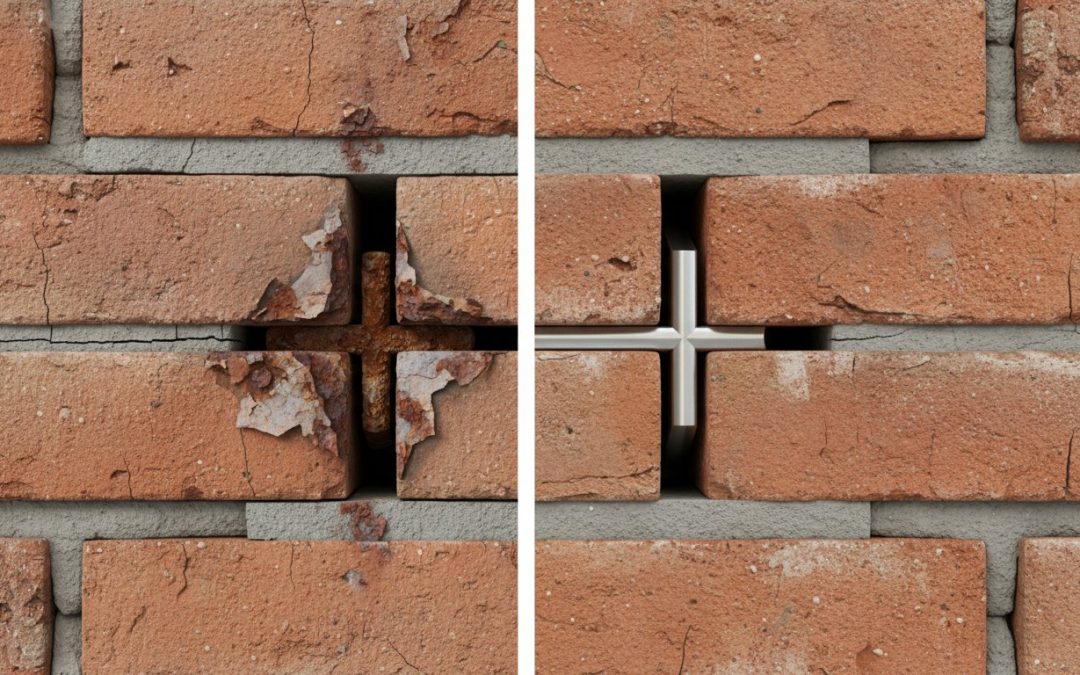
Did you know that galvanised wall ties in UK properties built before the 1980s often have an expected lifespan of just 15 to 20 years? If your home belongs to this era, the hidden metal components holding your masonry together could already be reaching a point of critical failure. Deciding on stainless steel vs galvanised wall ties isn’t just a technical preference; it’s a vital choice that dictates the long-term structural health of your property.
We recognize the stress of receiving conflicting advice from builders while worrying about the invisible threat of wall tie rot. You need a permanent solution that guarantees stability without the need for repetitive, disruptive repairs. This guide clarifies the material differences to help you protect your home from structural collapse and moisture-driven corrosion. We’ll examine the current standards established in PD 6697:2019, explain why stainless steel offers a reliable lifespan exceeding 50 years, and show you how to identify if your current ties pose a significant risk to your investment.
Key Takeaways
- Understand why wall ties act as the essential structural anchors holding your property’s masonry together to prevent outer leaf collapse.
- Learn the technical differences between stainless steel vs galvanised wall ties and why your choice of material dictates the long-term health of your home.
- Discover the mechanics of the corrosion cycle, where expanding iron oxide creates significant force that compromises structural integrity from within.
- Identify the visual red flags of wall tie failure, including horizontal cracking, and learn to spot the signs of “silent” failure before it escalates.
- Explore professional methodologies for non-disruptive wall tie replacement using high-grade stainless steel to ensure a permanent and secure fix.
Understanding the Role of Wall Ties in UK Cavity Walls
Wall ties are the essential structural anchors that connect a property’s inner and outer masonry leaves. While they remain hidden within the cavity, their role is fundamental to the safety and stability of your home. Without these connectors, the external brickwork stands as a thin, independent skin, vulnerable to wind loads and gravitational forces. In the UK, cavity wall construction became the standard in the 1920s to combat dampness. This design shift introduced a total reliance on these small metal components to prevent the outer leaf from bowing or collapsing entirely. For properties built during this era, the ties were often made of mild steel with a basic zinc coating, a choice that didn’t account for the long-term corrosive effects of the British climate.
What are Cavity Wall Ties?
A wall tie is the structural bridge that allows two separate walls to act as one stable unit. Their primary function involves transferring lateral loads from the external leaf to the internal load-bearing leaf. This shared strength ensures the building remains rigid under environmental pressure. Most ties include a specific ‘drip’ feature, usually a twist or a plastic washer in the centre. This design prevents rainwater from migrating across the tie from the outer brickwork to the inner wall, which protects your interior from penetrating damp. Understanding the Role of Wall Ties is the first step in recognizing why their degradation is such a significant concern for homeowners.
The Hidden Importance of Material Selection
The environment inside a wall cavity is naturally aggressive toward metal. Condensation forms frequently as warm air from the home meets the cold outer leaf, creating a high-humidity zone that accelerates oxidation. When comparing stainless steel vs galvanised wall ties, the choice of material determines whether your home stays secure for decades or faces a structural crisis within twenty years. Standard galvanised ties used in older properties rely on a thin zinc coating for protection. Once this layer inevitably wears away, the underlying steel begins to rust and expand.
Modern standards, specifically PD 6697:2019, now emphasize more resilient materials because the ‘standard’ materials of the past simply don’t survive the damp conditions found in UK cavities. If you ignore these silent components, you risk serious structural damage. Wall tie failure rarely shows itself until the damage is advanced. By the time you notice a bulge in your brickwork, the internal ties may have already snapped or expanded enough to crack your mortar. This is why regular wall tie inspections are vital for any property older than thirty years, ensuring your home remains a safe investment for the future.
Galvanised Steel vs Stainless Steel: The Technical Breakdown
Selecting the right material for masonry reinforcement involves more than just comparing upfront prices. In UK residential construction, the debate between stainless steel vs galvanised wall ties centers on how these metals interact with the harsh environment inside a cavity. One relies on a temporary surface treatment, while the other is an inherently corrosion-resistant alloy. Understanding these technical differences is vital for any property owner who wants to avoid the high costs of future structural repairs.
Properties of Galvanised Mild Steel
Galvanised ties consist of a mild steel core dipped in a protective layer of zinc. This coating provides what engineers call sacrificial protection; the zinc is designed to corrode slowly to shield the steel underneath. While this was the industry standard until the late 20th century, it has proven insufficient for long-term durability. The thin zinc layer remains highly vulnerable to the acidic environment created by certain types of mortar and the salt-laden air common across the United Kingdom. Once the zinc is depleted, the mild steel core is exposed to moisture, leading to rapid oxidation and the eventual expansion of the tie. This process often limits the effective lifespan of galvanised ties to just 15 to 20 years in many pre-1980s properties. For a detailed look at how these materials are categorised, you can review Wall Tie Specifications and Failure to understand the regulatory context.
The Superiority of Grade 304 and 316 Stainless Steel
Stainless steel differs from galvanised steel because its resistance to rust is built into its molecular structure. The addition of chromium and nickel creates a passive, self-healing oxide layer that reforms even if the surface is scratched. Stainless steel requires no additional coating to remain structurally sound for the life of the building. In most UK locations, Grade 304 stainless steel is the professional standard for remedial work. However, for properties located in industrial areas or within five miles of the coast, Grade 316 is preferred. Grade 316 contains molybdenum, which provides enhanced protection against pitting and chloride-induced corrosion. If you suspect your property still relies on aging mild steel connectors, arranging a professional wall tie survey can provide the clarity needed to protect your home’s stability.
The Reality of Cost-Benefit Analysis
When evaluating stainless steel vs galvanised wall ties, the initial saving offered by galvanised options is a false economy. While the individual components are cheaper, the labour costs for installation remain the same. More importantly, using galvanised ties in a modern context ignores the risk of “wall tie rot,” which can cost thousands of pounds to rectify later. Stainless steel ties are expected to last over 60 years, effectively matching the design life of the masonry itself. This makes them a one-time investment in the permanent structural integrity of your property, ensuring you never have to face the stress of wall tie failure again.
Why Galvanised Ties Fail: The Corrosion Cycle and Structural Risks
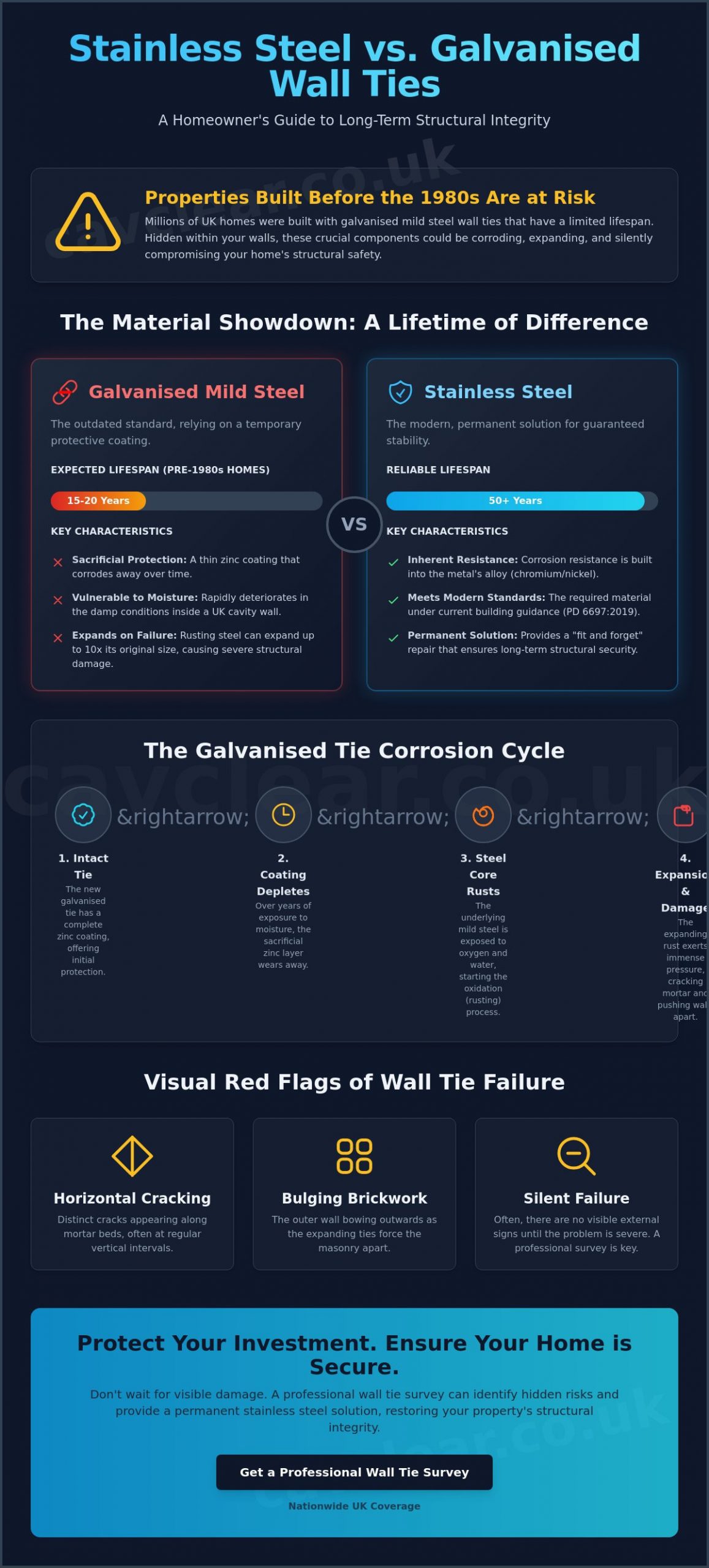
The failure of masonry connectors is rarely a sudden event. It is a slow, chemical degradation often referred to as ‘wall tie rot.’ While we previously discussed the material properties of stainless steel vs galvanised wall ties, understanding the mechanics of failure reveals why galvanised steel is fundamentally unsuitable for long-term structural health. When the protective zinc layer on a galvanised tie eventually breaks down, the underlying mild steel is exposed to oxygen and moisture. This triggers an oxidation process that doesn’t just weaken the metal; it physically alters it.
The Chemistry of Wall Tie Corrosion
Once the corrosion cycle begins, iron oxide (rust) forms on the surface of the tie. This rust occupies up to seven times the volume of the original steel. In the confined space of a mortar joint, this expansion generates immense internal pressure. It’s a common misconception that a tie only fails when it snaps. In reality, a tie can lose up to 50% of its structural strength before any external signs of distress appear on the brickwork. Chemical attacks are often accelerated by the presence of black ash mortar, which contains high levels of sulphates that aggressively corrode mild steel. Adhering to UK Building Standards for Wall Ties is the only way to ensure that the materials used in your home can withstand these subterranean chemical reactions.
Impact of Retrospective Cavity Wall Insulation
A critical factor often overlooked in structural surveys is the presence of retrospective cavity wall insulation. We maintain a firm professional stance against the installation of these materials because of their impact on wall tie longevity. When insulation is pumped into a cavity, it can act as a sponge, trapping moisture directly against the metal ties. This constant dampness prevents the wall ties from drying out, creating a permanent micro-climate that accelerates ‘wall tie rot’ at an alarming rate.
Properties with existing insulation require extra care during a specialist wall tie inspection. If the insulation has become wet due to driving rain or poor installation, the corrosion of galvanised ties becomes inevitable. In such cases, the correct methodology involves cavity wall insulation extraction alongside the installation of new stainless steel ties. This dual approach removes the source of the moisture and restores the structural integrity of the masonry leaves.
The Structural Consequences
The expansion force of rusting ties manifests in several distinct ways that property owners should monitor closely. You might notice:
- Horizontal Cracking: These cracks usually appear every 6th course of bricks where the ties are embedded in the mortar joints.
- Bulging Walls: This occurs as the outer leaf is forced away from the inner leaf by the expanding metal, compromising the stability of the entire wall.
- Lifting of the Roof Line: In extreme cases, the cumulative expansion of ties throughout the wall height can physically lift the eaves or the roof line.
These symptoms indicate a property in distress. Because the environment in the UK is naturally damp, these triggers are present in almost every aging property built with galvanised components. Identifying these risks early is vital for maintaining long-term asset health and preventing a total structural failure.
Identifying and Rectifying Wall Tie Failure in Your Property
Recognizing the transition from a theoretical risk to a practical structural concern is vital for any property owner. While the technical debate of stainless steel vs galvanised wall ties often focuses on material science, the real-world application involves identifying failure before it results in a partial collapse. Early detection allows for non-disruptive remedial action, preserving both the safety of the occupants and the long-term value of the building. Ignoring these signs often leads to more invasive and expensive repairs later.
Visual Signs of Failing Wall Ties
The most common indicator of ‘wall tie rot’ is the appearance of horizontal cracks in the external mortar joints. These cracks typically manifest every sixth course of brickwork, corresponding with the original installation pattern of the ties. As the internal metal expands, it exerts an upward force that lifts the masonry, often causing a ‘stepping’ effect in the brickwork. You might also notice a visible bowing or bulging of the outer leaf, a symptom particularly common on large, exposed gable ends where wind pressure is highest. Another subtle red flag is the separation of window or door frames from the surrounding masonry, suggesting that the external skin is no longer securely anchored to the internal structure.
It is a dangerous mistake to view repointing as a solution to these cracks. Simple repointing acts as a ‘sticking plaster’ that hides the underlying structural fault without addressing the cause. Filling the gaps with new mortar can actually accelerate the problem by trapping more moisture inside the joint and providing more resistance against the expanding tie, which leads to deeper masonry damage. If you observe these symptoms, the priority must be a professional assessment rather than a cosmetic repair.
The Professional Wall Tie Survey Process
Identifying failure isn’t always straightforward because of the risk of ‘silent’ failure. This occurs when thinner wire ties snap or corrode away completely without expanding enough to crack the mortar. In these cases, the wall appears perfectly healthy while actually being completely detached from the inner leaf. A professional survey involves physical inspection of the tie’s condition within the cavity, not just an external visual check. Our specialist methodology uses high-sensitivity metal detectors to locate existing ties with precision. Once located, we perform endoscopic inspections by drilling small, discrete holes in the mortar joints. This allows us to see inside the cavity and document the actual level of corrosion on the ties.
The remedial process involves two distinct steps to ensure a permanent fix. First, we isolate or remove the existing failing ties to prevent further masonry damage. Second, we install new, high-grade stainless steel ties to restore the structural bridge between the leaves. This approach ensures the property meets modern safety standards without the need for rebuilding entire walls. If you are concerned about the stability of your masonry, arranging a comprehensive wall tie survey is the first step toward restoring your property’s structural integrity.
Ensuring Long-Term Stability with CavClear Specialist Solutions
Structural integrity is the foundation of property safety and value. When we evaluate the choice between stainless steel vs galvanised wall ties, we prioritize long-term asset health over the temporary savings offered by inferior materials. Our approach focuses on rectifying the outdated material choices of the past with modern, permanent solutions that withstand the test of time. As a nationwide specialist, we provide expert structural services across the entire United Kingdom. This national reach allows us to understand how different regional environments, from coastal salt air to industrial pollutants, impact masonry longevity.
Why We Exclusively Use Stainless Steel Remedial Ties
We refuse to install galvanised ties for remedial work because they don’t offer the permanence our clients deserve. Stainless steel is the only material that ensures a maintenance-expert future for the homeowner. By choosing high-grade alloys, we provide a solution that remains structurally sound for the life of the building, typically exceeding 50 or 60 years. This commitment ensures your property remains compliant with modern structural standards while preventing the return of ‘wall tie rot.’ For a deeper look at the technical process and why material choice is non-negotiable, read our Wall Tie Replacement: The Essential Guide to Structural Stability in 2026.
The CavClear Methodology: Non-Disruptive Excellence
Our methodology is characterized by a clean and non-disruptive approach to structural repair. We recognize that property owners often fear the mess and chaos of traditional building work. We use precision methodology to isolate failing ties and install new stainless steel replacements with minimal impact on your masonry. This process stops the expansion of existing rust immediately, preventing further cracking or bowing. We don’t just fix a fault; we restore the comfort and safety of your home using a methodical flow that respects your living space. This proactive service positions us as a capable provider dedicated to the restoration of structural health.
The Value of Professional Remedial Action
Investing in specialist remedial action does more than just secure a wall. It protects the market value of your home by providing documented, professional repairs that satisfy surveyors and future buyers. The peace of mind that comes from a permanent, specialist-led solution is invaluable when dealing with the stress of structural damage. Understanding the fundamental design of your home is key to making these informed decisions. You can learn more about the unique challenges of UK masonry in our article What is a Cavity Wall? The Homeowner’s Guide to UK Property Structure.
We see our role as more than just contractors; we are guardians of your property’s future. By focusing on high-level standards and the correct methodology for technical tasks, we rectify the poor workmanship often found in older properties. Our signature is the long-term assurance we provide with every project. When we finish a job, the property isn’t just repaired; it’s reinforced against the inevitable failure of galvanised steel, ensuring stability for decades to come.
Securing Your Property’s Future with Professional Structural Standards
Protecting your home requires a shift from temporary fixes to permanent structural solutions. We’ve detailed how the expansion force of rusting mild steel compromises masonry leaves, often failing silently before visible cracks appear. Understanding the technical superiority of stainless steel vs galvanised wall ties is the first step toward protecting your property’s long-term asset health and stability. By choosing high-grade stainless steel, you eliminate the ongoing threat of corrosion and ensure your building meets modern safety standards for decades.
Our company provides nationwide UK coverage, utilizing a specialist remedial methodology that prioritizes a clean and non-disruptive experience for every homeowner. With accredited technicians and advanced diagnostic tools, we identify hidden faults and restore structural integrity with precision. Don’t leave your property’s safety to chance or outdated materials. You can regain comfort and protect your investment by choosing a specialist partner dedicated to permanent results.
Book a Professional Wall Tie Survey with CavClear Today and take the first step toward a secure, maintenance-expert future for your home.
Frequently Asked Questions
How long do galvanised wall ties last before they need replacing?
Galvanised wall ties typically have an expected lifespan of 15 to 20 years in properties built before the 1980s. This limited durability occurs because the thin zinc coating eventually wears away, exposing the mild steel core to moisture and oxygen. Once oxidation begins, the structural integrity of the tie diminishes rapidly. You should consider a professional inspection if your property falls into this age bracket to ensure the masonry leaves remain secure.
Can I replace just one or two failing wall ties myself?
You shouldn’t attempt localized DIY wall tie replacement because failing ties usually indicate a systemic issue across the entire elevation. Wall tie replacement requires specialist equipment and precise tensioning to ensure the masonry leaves are correctly anchored as a single unit. Individual repairs don’t address the underlying corrosion of adjacent ties. A comprehensive remedial plan ensures the whole structure meets modern safety standards rather than providing a temporary cosmetic fix.
Is stainless steel significantly more expensive than galvanised steel for wall ties?
While individual stainless steel components have a higher unit cost, the overall project price remains comparable because labor and access costs stay the same regardless of material. When evaluating stainless steel vs galvanised wall ties, the long-term value of stainless steel is far superior. It provides a permanent fix that lasts over 60 years, whereas cheaper galvanised ties may require replacement again within two decades, leading to much higher lifetime costs.
What happens if I ignore signs of wall tie corrosion in my house?
Ignoring corrosion leads to progressive structural damage, including horizontal cracking, bulging brickwork, and eventual outer leaf collapse. As ties expand, they exert immense pressure on the mortar joints, which can physically lift the roof line or detach window frames from the masonry. This compromises the safety of the occupants and significantly reduces the property’s market value. Early intervention with a specialist survey prevents these costly and dangerous structural failures.
Will my home insurance cover the cost of wall tie replacement?
Most standard home insurance policies don’t cover wall tie replacement because they view corrosion as a gradual maintenance issue rather than sudden, accidental damage. It’s essential to check your specific policy wording, but most providers exclude wear and tear or structural degradation over time. Investing in a professional survey and replacement is a vital part of property maintenance that preserves your asset’s value and prevents uninsurable structural collapse in the future.
Does retrospective cavity wall insulation cause wall ties to rust faster?
Yes, retrospective cavity wall insulation can significantly accelerate the corrosion of galvanised wall ties by trapping moisture within the cavity. This insulation often acts as a sponge, holding dampness against the metal components and preventing them from drying out naturally through airflow. We strongly advise property owners to consider cavity wall insulation extraction if they suspect the material is compromised, as this restores the necessary environment to protect the structural wall ties.
How can I tell if my existing wall ties are stainless or galvanised?
Identifying the material usually requires a specialist endoscopic inspection or a high-sensitivity metal detector. Visually, galvanised ties often appear grey or heavily rusted, while stainless steel maintains its metallic luster even in damp conditions. However, because ties are hidden within the masonry, you can’t determine their condition or material from the surface. A professional survey provides a definitive assessment by viewing the ties directly inside the cavity to check for oxidation.
What is the difference between Grade 304 and Grade 316 stainless steel wall ties?
Grade 304 is the standard professional choice for most UK properties, offering excellent corrosion resistance for typical residential environments. Grade 316 contains molybdenum, which provides enhanced protection against pitting in coastal or highly industrial areas. If your property is within five miles of the sea or in a zone with high chemical pollutants, Grade 316 is the necessary specification to ensure the permanent structural integrity of the masonry leaves against salt-laden air.
Recent Comments