
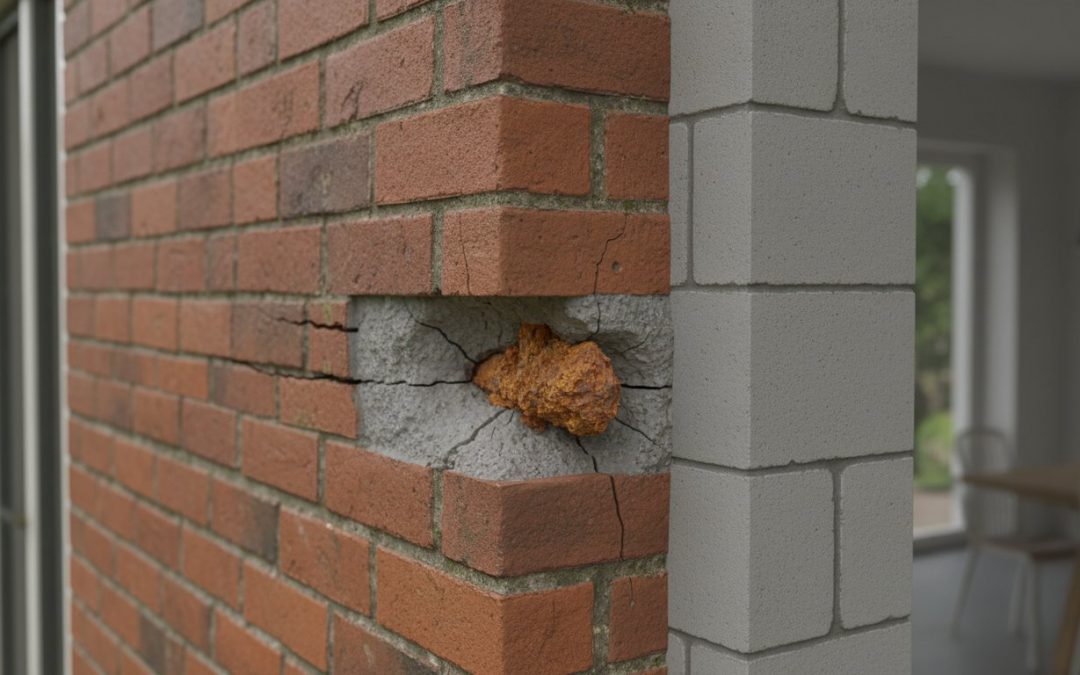
Nearly two million homes in the United Kingdom suffer from cavity wall tie corrosion or failure every single year, yet many property owners remain unaware of the silent chemical reaction occurring within their masonry. If you’ve noticed horizontal cracking or bulging brickwork, it’s natural to feel anxious about the stability of your home and the potential cost of structural repairs. Understanding what causes wall tie corrosion is the first step toward securing your property’s future. This decay often stems from a combination of aging materials and environmental moisture, particularly in the ten million British homes built before 1981.
We understand that conflicting advice regarding cavity health can be confusing and stressful. This specialist guide identifies the technical triggers behind metal fatigue and explains how modern standards protect your structural integrity. You’ll learn how to spot the early warning signs specific to your property type and discover a logical, non-disruptive path to a permanent solution. By focusing on the underlying science of masonry failure, we help you transition from uncertainty to a clear plan for long-term asset health and safety.
Key Takeaways
- Learn why the mild steel components used in pre-1981 properties are naturally susceptible to failure and how they impact masonry stability.
- Understand exactly what causes wall tie corrosion, from moisture ingress in the cavity to the acceleration caused by specific environmental factors.
- Discover the timeline of structural decay so you can identify the early signs of expansion before they lead to costly brickwork damage.
- See why a technical wall tie survey is the only reliable way to diagnose internal faults without causing unnecessary disruption to your home.
- Explore the professional methodology for isolating original ties and performing a permanent wall tie replacement to protect your property’s structural integrity.
The Mechanics of Wall Tie Corrosion in UK Properties
Wall ties are the essential structural connectors that bridge the gap between the inner and outer leaves of a masonry cavity wall. They ensure that the external leaf, which faces the elements, remains securely anchored to the internal load-bearing structure. For millions of UK properties built before 1981, these ties were typically manufactured from mild steel. While this material provided sufficient initial strength, it lacks inherent resistance to the damp conditions often found within a wall cavity. Without a permanent barrier against moisture, the metal eventually begins to degrade.
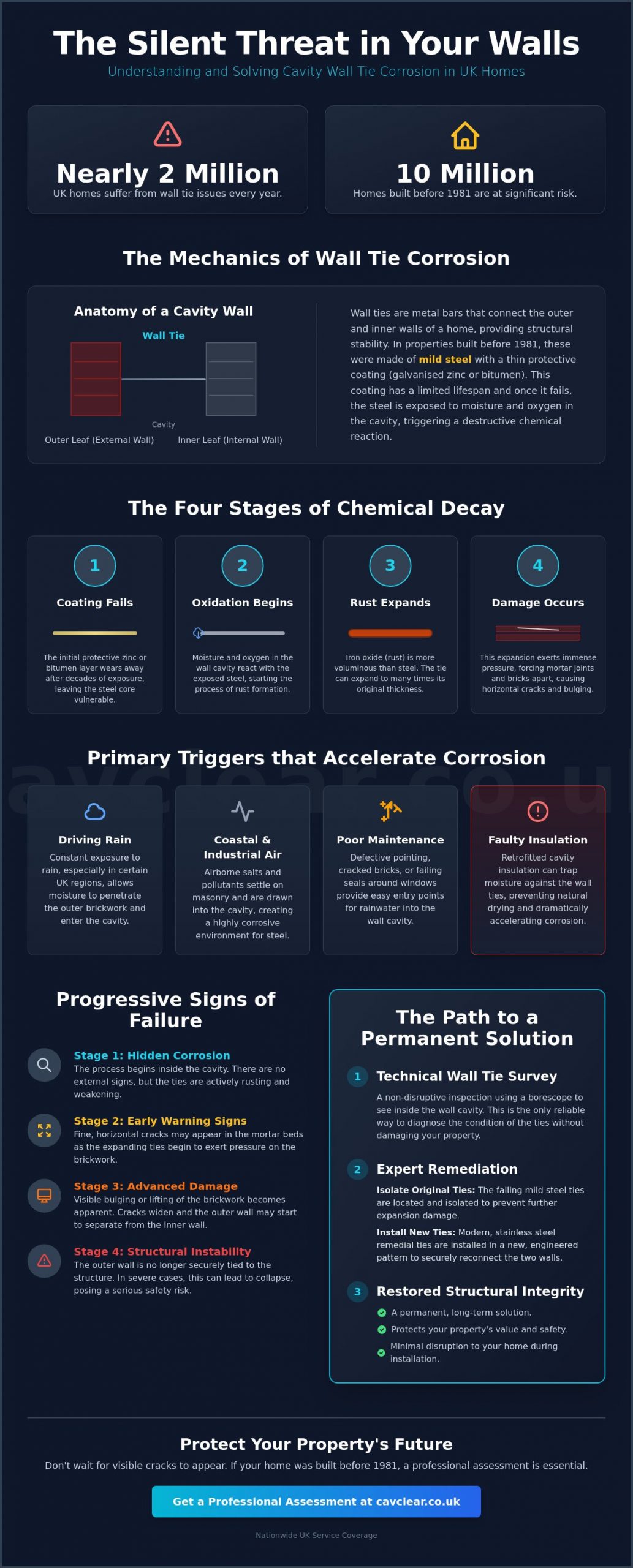
Understanding what causes wall tie corrosion requires looking at the failure of the protective coatings used in early construction. Most ties were galvanised with a layer of zinc or coated in bitumen to prevent rusting. These coatings have a limited design life, and their eventual breakdown is the primary reason why what causes wall tie corrosion is such a common concern for older UK homes. Once the protective barrier reaches its limit, the mild steel core becomes exposed to moisture and oxygen. This transition marks the beginning of structural decline, as the “bridge” between the two wall leaves starts to weaken and lose its grip.
Understanding Galvanisation and Protective Zinc Coatings
Zinc acts as a sacrificial layer; it corrodes in place of the steel it covers. Unfortunately, pre-1981 building standards often allowed for thinner zinc coatings that simply couldn’t withstand decades of exposure. While the high alkalinity of cement-based mortar initially provides a chemical environment that prevents corrosion, this protection isn’t permanent. Over time, carbonation reduces the mortar’s alkalinity, leaving the Tie (cavity wall) vulnerable to the surrounding environment. Once this chemical shield vanishes, the zinc layer quickly depletes, leaving the structural steel core completely unprotected.
The Chemical Process of Oxidation and Rust Expansion
The core chemical process involves a reaction between steel, oxygen, and water to form iron oxide. This isn’t a passive change. Rust is significantly more voluminous than the metal it replaces, often expanding to many times its original thickness. This physical growth exerts immense “jacking” pressure on the mortar joints. It’s this internal force that leads to the visible horizontal cracking and bulging that signal a property is at risk. By the time these signs appear, the structural integrity of the wall is already being compromised by the hidden oxidation process. This expansion doesn’t just weaken the tie; it actively pushes the bricks apart, creating further paths for water to enter.
Primary Environmental and Structural Triggers of Corrosion
While the previous section covered the chemical transition of metal, we must examine the external conditions that accelerate this decay. Moisture ingress acts as the primary catalyst for the oxidation process. In the United Kingdom, geographic exposure plays a significant role. Properties located in areas subject to high levels of driving rain face a higher risk of water penetrating the outer leaf through the brickwork or mortar. This environmental pressure is often exacerbated in coastal or industrial environments, where salt contamination or airborne pollutants settle on the exterior surfaces. These aggressive salts can be drawn into the cavity by capillary action, where they significantly speed up the rate of metal degradation.
Poor masonry maintenance often provides the initial entry point for these triggers. Defective pointing, cracked bricks, or failed seals around window frames allow rainwater to bypass the protective outer layer. Once water enters the cavity, it should naturally drain away or evaporate. However, if the cavity is blocked or contains specific materials, this moisture becomes trapped. Understanding the history of wall tie failure shows that localized dampness is often the deciding factor in how quickly a property’s structural health declines. Identifying these triggers early through a specialist damp survey ensures that moisture issues are resolved before they compromise your home’s stability.
The Impact of Defective Cavity Wall Insulation
Retrospective insulation can create severe complications for older properties. When material becomes saturated due to flooding or driving rain, cavity wall insulation removal becomes a necessary step to protect the structure. Wet insulation acts as a physical bridge, allowing moisture to sit directly against the mild steel ties for extended periods. This constant dampness prevents the metal from drying out, accelerating the corrosion process far beyond typical rates. We frequently see properties where the presence of damp insulation has turned a slow aging process into a rapid structural failure.
Mortar Quality and Chemical Contaminants
The chemical composition of the mortar itself is a major factor in what causes wall tie corrosion. Some older properties utilize “black ash” mortar, which contains high levels of sulphates that aggressively attack steel once moisture is present. Even with standard mortar, carbonation eventually reduces the protective alkaline environment that shields the metal core. Additionally, construction debris or mortar droppings often accumulate at the base of the cavity during the original build. This creates a moisture reservoir that keeps the lower ties in a perpetual state of dampness; this prevents the metal from ever drying out and leads to localized failure that can eventually compromise the entire wall leaf.
Identifying the Progressive Stages of Wall Tie Failure
Wall tie failure follows a predictable but often invisible timeline. It begins the moment the protective zinc or bitumen layer is compromised, exposing the reactive steel core to the elements. This progression from a hidden chemical reaction to a structural emergency can take decades, which is why what causes wall tie corrosion is often a legacy issue stemming from the property’s original construction standards. Early detection remains the most effective way to reduce remedial costs and prevent the need for major masonry reconstruction. Structural movement is typically the final stage of a long-term problem that has been developing silently within the cavity for years.
The type of tie originally installed dictates how the failure manifests. Vertical fishtail ties, common in older UK properties, are made from thick steel strips. When these corrode, the resulting iron oxide expansion is powerful enough to lift the heavy brickwork above it. In contrast, thinner wire ties have a much smaller surface area. While they are equally susceptible to the factors that define what causes wall tie corrosion, their failure mode is far more subtle and significantly more dangerous for the building’s occupants.
Visual Indicators: Cracking and Masonry Distortions
Characteristic horizontal cracking in mortar joints is the most common warning sign of fishtail tie failure. These cracks typically appear at regular intervals, often every six courses of brickwork, aligning precisely with the internal tie positions. As the metal expands, it acts like a slow-motion hydraulic jack, forcing the bed joints apart. Homeowners should look for the following secondary indicators of distress:
- Visible bulging or “bowing” of the external brick leaf.
- Sagging window lintels where the lack of lateral support allows masonry to settle.
- Separation of the outer leaf from internal window and door frames.
- Cracks that widen during periods of high wind or temperature fluctuations.
Hidden Failure: Why Wire Ties Offer No Warning Signs
It’s vital to understand that the absence of cracks does not guarantee structural safety. Thinner wire ties, frequently used in properties built between 1940 and 1980, can corrode away completely without ever exerting enough pressure to crack the mortar. This creates a “hidden” failure where the outer leaf remains visually perfect but is effectively detached from the building’s main structure. Such properties are at risk of sudden instability or total wall collapse during high winds because the ties have simply snapped or disintegrated. Because visual inspection of the brickwork is insufficient for these ties, a professional survey is the only reliable way to confirm the safety of the structure before considering a permanent wall tie replacement.
The Necessity of a Professional Wall Tie Survey
A professional assessment is the only way to move from visual guesswork to technical certainty. A damp survey or dedicated wall tie inspection uses non-destructive methods to evaluate the internal condition of your masonry. While many homeowners investigate what causes wall tie corrosion only after spotting cracks, the internal decay often precedes any external signs by several years. You should avoid “expert” surveys that lack technical depth. These often fail to identify the specific grade of corrosion or the exact tie type installed, which can lead to inadequate or unnecessary recommendations.
An accredited specialist brings the necessary expertise to identify building eras and original material specifications. Their findings are essential for property transactions; mortgage lenders and insurers often demand a detailed report before approving a sale or coverage. This report establishes a factual record of the building’s structural health and offers long-term assurance to the owner. If you suspect your home is at risk, you can schedule a professional Wall Tie Survey to receive a definitive diagnostic report and a clear path toward a resolution.
Diagnostic Techniques: Borescopes and Metal Detectors
Specialists use high-resolution borescopes to see inside the wall cavity through small, 10mm holes drilled into the mortar. This method allows for a clear view of the ties without removing bricks or causing disruption to the residents. High-sensitivity metal detectors then map the tie density and layout across the entire elevation. This ensures the original build followed correct spacing standards and identifies any areas where the wall leaf is unsupported. A “sample and inspect” methodology follows, where several ties are visually examined to provide an accurate condition assessment across the whole property.
Grading Tie Condition: From Sound to Critical
Specialists use a standard grading system to categorize corrosion levels. This ranges from ties in a “sound” condition with no visible rust to “critical” failure where the metal has completely disintegrated. Each grade determines the urgency of the remedial action plan. For example, a grade indicating significant expansion requires immediate intervention to prevent the outer leaf from moving. Understanding what causes wall tie corrosion in your specific property helps the surveyor recommend a tailored solution that addresses both the metal failure and any underlying moisture issues.
Restoring Structural Integrity with Expert Remediation
Once a specialist survey confirms the extent of the damage, the focus shifts from diagnosis to restoration. A professional wall tie replacement is the only permanent method to halt structural decline and secure the building’s outer leaf. While the previous sections identified what causes wall tie corrosion, the remedial phase focuses on neutralizing these triggers and installing modern, corrosion-resistant components. This process is remarkably clean and non-disruptive, as specialists perform the majority of the work from the building’s exterior without requiring internal access or major masonry removal.
A critical part of the remediation process involves addressing the original failed metal. Simply installing new ties is insufficient if the old, expanding steel remains active. Specialists typically isolate the original ties by using physical sleeves or foam to decouple them from the outer leaf. This stops the “jacking” pressure that causes horizontal cracking. In some cases, we remove the original ties entirely to ensure no further expansion occurs. We exclusively use stainless steel for all replacement works. This material provides an indefinite lifespan and is entirely immune to the oxidation processes that affect the mild steel found in pre-1981 properties.
The Precision of Specialist Wall Tie Replacement
Remedial ties are installed using either mechanical expansion or resin-bonded fixings, depending on the strength and type of the existing masonry. These new ties are precisely positioned to restore the structural bond between the inner and outer leaves. We adhere to strict density and spacing standards, ensuring the wall can withstand modern wind loading and lateral pressure. This methodical approach ensures that the load-bearing responsibility is safely transferred to the new stainless steel grid, providing immediate stability to the structure. Every installation is tailored to the specific masonry type, whether it involves traditional brickwork or a more complex stone facade.
Protecting Long-Term Asset Health and Property Value
Viewing structural repair as a vital investment rather than a mere cost is essential for long-term asset health. A property with a certified history of professional wall tie remediation is far more attractive to future buyers and mortgage lenders. This documentation proves that the building’s core stability has been addressed using the correct technical standards. There is also a significant synergy between this work and cavity wall insulation extraction. If wet or defective material is present, removing it ensures that the new ties remain in a dry environment, further protecting the property’s thermal efficiency and structural longevity. By choosing a nationwide specialist, you ensure that your property receives a permanent fix that restores both safety and peace of mind across the United Kingdom.
Securing Your Property’s Structural Future
Understanding what causes wall tie corrosion allows you to move from structural uncertainty to a proactive plan for long-term preservation. We’ve established that the combination of aging mild steel and environmental moisture triggers a silent chemical reaction that eventually compromises masonry stability. Whether your property shows obvious horizontal cracking or hides the subtle failure of thinner wire ties, early intervention is the most effective way to safeguard your investment. Ignoring these signs can lead to more complex issues; however, a technical assessment provides a clear path forward.
Our accredited technicians offer nationwide UK coverage, delivering a precise and non-disruptive diagnostic methodology that prioritizes the long-term health of your home. By addressing these faults now, you ensure the safety of your structure and the future value of your asset. Secure your property’s future. Book a professional Wall Tie Survey with CavClear today. Taking this logical step provides the permanent assurance that your home remains a stable and secure environment for years to come. We’re here to help you restore comfort and structural integrity with expert precision.
Frequently Asked Questions
How long do wall ties typically last before they start to corrode?
Lifespans vary significantly based on the tie type and the era of construction. Wire ties installed between 1940 and the mid-1960s typically last between 15 and 30 years, while strip ties from the same period may last up to 60 years. Properties built in the 1970s often feature wire ties with an even shorter estimated lifespan of 13 to 26 years. These durations depend heavily on local environmental conditions and the level of moisture present within the wall cavity.
Can I see wall tie corrosion from the outside of my house?
You can often identify distress in properties with thick strip ties by looking for horizontal cracks in the mortar joints. These cracks occur because the metal expands as it rusts, which generates enough force to lift the brickwork. However, thinner wire ties frequently disintegrate without leaving any external marks. This hidden failure means a visual inspection of the brickwork isn’t a reliable way to confirm structural safety; your walls could be unstable without showing a single crack.
Does cavity wall insulation cause wall ties to rust faster?
Retrospective insulation can significantly accelerate the decay process if the material becomes saturated by driving rain or flooding. Wet insulation acts as a physical bridge that holds moisture directly against the metal, which is a primary factor in what causes wall tie corrosion. This constant dampness prevents the metal from drying out and creates an ideal environment for rapid oxidation. We often find that removing compromised insulation is a necessary step to protect the longevity of the building’s structure.
What happens if I ignore the signs of wall tie failure?
Ignoring structural distress can eventually lead to the total collapse of the external wall leaf. As the ties fail, the outer wall loses its connection to the main building structure and becomes vulnerable to wind suction and gravitational pull. You may notice worsening bulges, sagging window lintels, or internal damp issues as the leaves separate. Addressing the problem early prevents the need for full masonry reconstruction and ensures the long-term safety of everyone in the property.
Is wall tie corrosion covered by standard UK buildings insurance?
Most standard UK buildings insurance policies exclude wall tie corrosion because they categorize it as a gradual wear and tear issue rather than a sudden accidental event. Insurers generally expect property owners to maintain the structural integrity of their homes through regular inspections. It’s best to check your specific policy wording, but most owners find that remedial works are considered a necessary maintenance investment in the property’s future rather than an insurable loss.
How much does a specialist wall tie survey cost in 2026?
Fees for a specialist inspection typically reflect the complexity of the building and the equipment required for a non-destructive assessment. You should check with a specialist for a quote tailored to your property’s specific requirements. A high-quality survey provides the technical evidence needed for mortgage lenders or insurance providers, making it a vital part of responsible property maintenance. Prioritize reports that include borescope imaging to ensure you receive a factual assessment of the internal cavity condition.
Can wall tie corrosion be fixed without removing the bricks?
Yes, professional remediation is a non-destructive process that doesn’t require removing large sections of your masonry. Specialists install remedial stainless steel ties through small pilot holes drilled into the mortar joints. Once these new ties are secured with resin or mechanical fixings, the original corroded ties are isolated to prevent further expansion. This methodology is clean and efficient; it restores structural stability without altering the external appearance or the character of your home.
Are all houses built with cavity walls at risk of tie failure?
Properties built before the 1981 update to British Standards face the highest risk because they often contain mild steel ties with inadequate protective coatings. While modern homes use stainless steel, older structures rely on materials that eventually succumb to what causes wall tie corrosion. If your home was built between 1920 and 1981, it’s highly likely the original ties are approaching the end of their intended design life. A specialist survey is the only way to confirm if your specific property remains structurally sound.
Recent Comments