
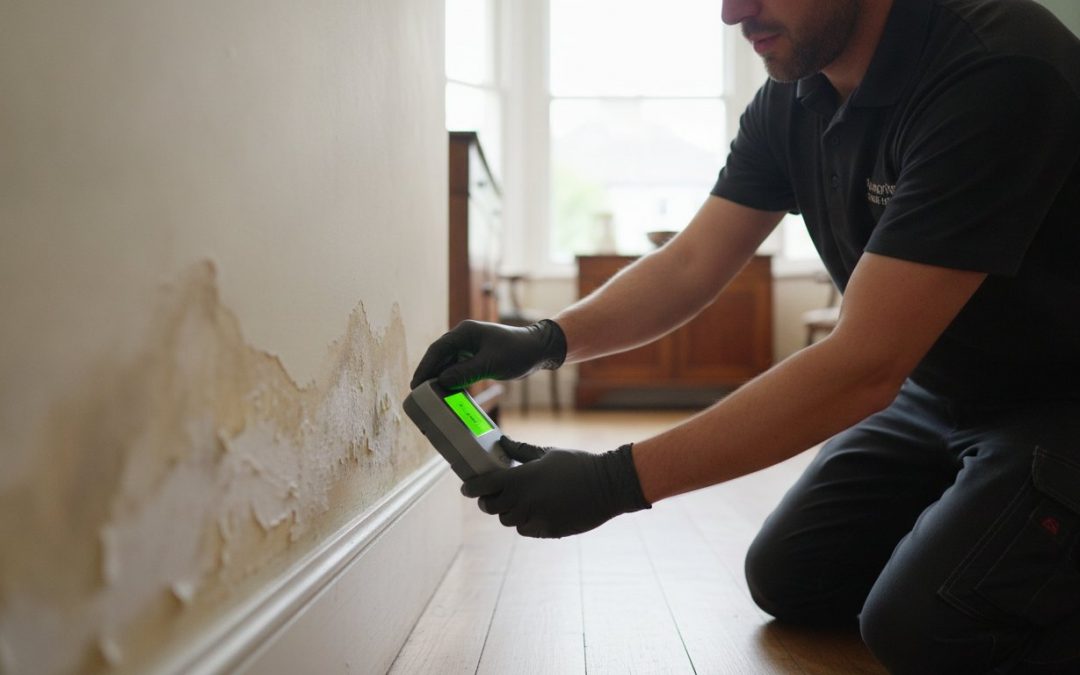
According to the English Housing Survey 2023-24, 5% of all dwellings in England now have a damp problem, marking the highest level in five years. It’s incredibly frustrating to watch a musty smell take over your living room or see damp patches return just weeks after you’ve repainted. Most homeowners feel a genuine sense of dread when they can’t distinguish between surface condensation and a failing damp proof course. Booking a professional rising damp survey is the essential first step to move past the guesswork and identify the technical faults compromising your masonry.
We understand that your home is your most significant investment, and seeing its structural integrity decline is understandably stressful. This guide provides the clarity you need for a permanent resolution. You’ll discover the technical causes of moisture capillary action and the specialist remedial treatments required to restore your walls to a dry, salt-expert state. We’ll outline the current standards for DPC injections and explain how professional certification ensures your property remains protected, healthy, and structurally sound for years to come.
Key Takeaways
- Understand the “tide mark” phenomenon and why groundwater typically stops rising at 1.2 metres above ground level.
- Learn why a professional rising damp survey is the only way to distinguish structural moisture from common condensation and avoid costly misdiagnosis.
- Discover how capillary action turns porous masonry into a wick, particularly in period properties with failed or non-existent damp proof courses.
- Explore the two-step remedial process involving the removal of salt-contaminated plaster and the injection of modern, high-performance chemical DPCs.
- Recognize how integrating specialist structural repairs ensures the long-term health and investment value of your property.
Identifying Rising Damp: Visual Signs and Structural Symptoms
Rising damp occurs when groundwater travels upwards through the pores of bricks and mortar. This physical process, known as capillary action, acts much like a wick in a lamp. Without a functioning damp proof course, moisture continues to rise until it reaches a point where gravity and evaporation prevent further travel. According to this Structural Damp Overview, this typically results in the “tide mark” phenomenon, where damage is concentrated at a height of approximately 1.2 metres above the floor level. This height is a technical threshold where the rate of evaporation balances the upward pressure of the groundwater.
As the water evaporates from the wall surface, it leaves behind hygroscopic salts. These white, powdery residues are more than just an aesthetic issue. They are chemically active and continue to draw moisture from the air, meaning your walls can feel damp even during dry summer months. A professional rising damp survey identifies these specific salt profiles to confirm the source of the ingress and distinguish it from other moisture types.
Visual Markers on Internal vs. External Walls
On internal surfaces, you’ll often see blistering paint or peeling wallpaper that refuses to stick. Dark, wavy patches are common indicators. Externally, look for white salt efflorescence on the brickwork and mortar that has turned soft or crumbly. It’s easy to mistake low-level penetrating damp for rising damp. However, a specialist inspection looks for the continuous upward path of moisture from the ground level to make an accurate diagnosis. Penetrating damp typically presents as isolated patches rather than a consistent horizontal band at the base of the wall.
The Sensory Signs: Smell and Texture
The smell of rising damp is distinct. It’s a heavy, earthy, and musty odour that persists regardless of ventilation. While many walls feel cold to the touch due to poor insulation, rising damp creates a specific texture of saturation. Plaster may feel soft or “mushy” under pressure. Because hygroscopic salts remain embedded in the masonry, these tide marks don’t disappear when the rain stops. They remain a permanent fixture until the underlying structural fault is rectified.
Ignoring these symptoms leads to secondary structural issues. Timber skirting boards and floor joists in contact with damp masonry are at high risk of fungal decay. Wet rot can quickly compromise the strength of your flooring, leading to expensive structural repairs. Identifying these signs early through a rising damp survey prevents a manageable moisture issue from becoming a full-scale structural failure that threatens your property’s long-term health.
The Mechanics of Moisture: Why Ground Water Rises in UK Walls
Understanding why moisture travels up a wall requires a look at the physical properties of masonry. Most UK properties are constructed from porous materials like brick, stone, and mortar. These materials contain a network of microscopic pores that act like a wick, drawing liquid water upwards from the ground. This process is known as capillary action. While gravity eventually limits how high the water can travel, the presence of groundwater creates a constant upward pressure against the base of your home. Without a functional barrier, the masonry remains in a state of permanent saturation.
In many period properties, the original Damp Proof Course (DPC) was constructed from slate, bitumen, or even dense engineering bricks. Over decades, these materials can fracture or degrade, creating gaps in the barrier. Once the DPC fails, there is nothing to stop the masonry from absorbing groundwater. This is a fundamental structural failure of the building fabric. It cannot be resolved through improved ventilation or heating alone because the source of the moisture is external and constant. A professional rising damp survey is necessary to determine if the DPC has reached the end of its functional life or if external factors are bypassing it.
Cavity Wall Bridging: The Hidden Cause
A significant number of damp issues in modern UK homes stem from cavity wall bridging. During the construction process, mortar droppings and rubble often fall to the bottom of the wall cavity. If this debris accumulates to a height that exceeds the DPC, it creates a physical bridge. Moisture then travels across this rubble from the external leaf to the internal leaf, bypassing the protective barrier. This problem is frequently exacerbated by saturated or incorrectly installed insulation. In these cases, cavity wall insulation removal becomes the primary remedial action to restore the air gap and stop the moisture transfer. Clearing the cavity ensures that the DPC can function as intended without interference from internal debris.
External Ground Level Breaches
External ground level breaches occur when the ground outside a property is raised above the level of the internal DPC. This often happens during home improvements, such as the installation of a new patio, driveway, or raised flower bed. When the soil or paving sits higher than the DPC, groundwater simply flows over the barrier and into the walls. This bypasses the structural protection entirely. Additionally, high ground levels often block air bricks, which are essential for ventilating the sub-floor area. Restricting this airflow leads to stagnant, humid air under floorboards, which encourages timber decay. As highlighted in Shelter’s Guide to Damp and Mould, these external factors are common contributors to domestic moisture problems. If you suspect your DPC has been compromised, you should request a specialist inspection to verify the ground levels and structural integrity of your property.
Professional Rising Damp Survey: Accurate Diagnosis vs. DIY Misconceptions
Accurate diagnosis is the most critical stage of property restoration. Homeowners often mistake simple condensation or minor plumbing leaks for structural rising damp. This misdiagnosis leads to wasted expenditure on unnecessary treatments while the actual cause remains unaddressed. Handheld moisture meters, while common, have significant limitations. These devices measure electrical conductivity rather than actual moisture content. Consequently, they can produce high readings due to the presence of metallic wall ties or hygroscopic salts rather than liquid water. A specialist rising damp survey moves beyond these surface-level indicators to identify the precise source of moisture ingress.
A technical damp survey provides a comprehensive remedial action plan based on empirical evidence. This professional report serves as a vital document during property transactions, offering reassurance to lenders and buyers that the building’s structural integrity is verified. Our accredited technicians follow a methodical diagnostic process that differentiates between rising damp, penetrating damp, and internal atmospheric moisture. This clarity ensures that any recommended work is necessary, targeted, and effective for long-term property protection.
Technical Diagnostic Tools and Methods
Specialists use advanced equipment to see what is happening inside the building fabric. Thermal imaging cameras track moisture paths by identifying temperature differentials within the masonry. For the highest level of accuracy, we utilize calcium carbide testing. This method is the gold standard for measuring actual moisture by weight within a masonry sample, effectively ruling out false positives from surface salts. We also use borescope inspections to examine the internal conditions of the property. Understanding what is a wall cavity and how it should function allows our technicians to spot debris or mortar droppings that bridge the damp proof course.
Why DIY Damp Paints and Sealants Fail
Surface-level “quick fixes” like damp-proof paints or sealants are often counterproductive. These products create an impermeable barrier on the plaster surface, which traps moisture inside the wall. Instead of evaporating, the water is forced deeper into the masonry or pushed higher up the wall. This trapped moisture accelerates the decay of structural timbers and can cause internal plaster to blow or crumble. Curing rising damp requires addressing the source of the groundwater rise through professional remedial action rather than masking the symptoms with aesthetic sealants. True restoration involves a dry, salt-expert environment that only a specialist methodology can provide.
Effective Rising Damp Treatment: Remedial DPC and Specialist Plastering
Executing a permanent fix for rising damp requires a methodical, five-step process that addresses both the source of moisture and the secondary damage it causes. Following the findings of your rising damp survey, the first priority is removing all salt-contaminated plaster back to the original masonry. This is a non-negotiable step because hygroscopic salts embedded in old plaster will continue to draw moisture from the atmosphere even after a new barrier is installed. A specialist rising damp survey identifies the exact drilling pattern required for your specific brick type. Once the brickwork is exposed, technicians drill into the mortar course at specific intervals to inject a high-performance chemical Damp Proof Course (DPC).
Structural bridging remains a common reason for treatment failure. If debris or failed insulation inside the wall cavity remains untouched, moisture will simply bypass the new DPC. This is why clearing the wall cavity of mortar droppings and rubble is essential for a permanent resolution. After the wall is cleared and injected, we apply a salt-neutralising remedial plaster. This specialist render acts as a final safeguard, preventing any residual salts from staining the new decorative finish. The process concludes with a natural drying period, allowing the building fabric to breathe and shed its moisture load over several months.
The Science of Chemical DPC Injections
Modern chemical DPCs utilize high-strength silicone emulsions that penetrate the mortar joint to create a permanent hydrophobic barrier which lines the internal pores of the masonry, thereby preventing the upward migration of liquid groundwater through capillary action. These silicone-based creams are far more effective than older liquid-pressure systems. Our technicians ensure correct hole spacing and injection depth to create a continuous, unbroken barrier along the entire length of the wall. This precision prevents “weak spots” where moisture could potentially find a path to rise again. Modern silane or siloxane-based injection creams migrate through the mortar bed to line the capillaries with a water-repellent silicone resin, effectively reversing the surface tension of the masonry pores to prevent liquid water from being drawn upwards.
The Role of Specialist Remedial Plastering
Standard gypsum plaster is highly porous and acts like a sponge for moisture and salts. It must never be used on walls following a damp treatment. Instead, we use salt-retardant renders that are specifically engineered to block moisture while allowing the wall to dry out. This drying period is a slow, natural process. As a general rule, a standard masonry wall takes approximately one month for every 25mm of thickness to dry completely. During this time, the remedial plaster protects your internal environment while the structural masonry returns to its original, dry state. To ensure your treatment follows these technical standards, you should book a technical damp survey to secure a comprehensive remedial plan.
Restoring Property Comfort: Nationwide Specialist Remedial Solutions
Choosing a nationwide specialist ensures your property receives a consistent standard of care regardless of its location in the United Kingdom. CavClear operates across the entire country, providing access to accredited technicians who specialize specifically in masonry health and structural repairs. This level of expertise is vital for complex remedial projects where multiple structural issues often intersect. For instance, chronic moisture ingress often accelerates the corrosion of metal components within the building fabric. Consequently, wall tie replacement frequently complements damp proofing work to ensure the outer leaf of the property remains securely attached to the internal structure. Addressing these issues simultaneously prevents future structural instability and avoids the need for repeated disruptive work.
Ensuring Long-Term Structural Integrity
Investing in professional remedial work is a commitment to your property’s future asset health. A quick aesthetic fix might hide a damp patch for a few months, but it won’t stop the underlying decay of masonry and timber. Specialist work provides genuine peace of mind, knowing the building is protected against the rising prevalence of damp issues currently affecting roughly 900,000 homes in England. A detailed technical report from a rising damp survey also maintains the marketability of your asset. When the time comes to sell, you’ll be able to provide prospective buyers and lenders with certified proof that the property has been professionally restored to high technical standards.
Next Steps for UK Homeowners
Arranging a comprehensive property inspection is the first step toward a dry, comfortable home. Before the technician arrives for a rising damp survey, ensure that the base of the affected walls is accessible and that any external ground-level obstructions are cleared. This allows for a thorough visual and technical investigation of the DPC and any potential cavity bridging. Our diagnostic process follows the BS 6576:2005+A1:2012 code of practice, ensuring every recommendation is rooted in established technical standards. You can Secure your property’s future with a professional damp survey from CavClear to move from a temporary patch-up to a permanent structural solution. Professional intervention is the only reliable way to restore comfort and protect your long-term investment.
Securing Your Property’s Structural Future
Protecting your home from moisture ingress is a vital investment in its long-term health and efficiency. We’ve established that surface-level fixes fail because they don’t address the underlying capillary action or the physical bridging within your wall cavity. A comprehensive rising damp survey remains the only reliable method to differentiate between atmospheric condensation and a genuine structural failure of your damp proof course. Our accredited technical surveyors provide the detailed reports required by both homeowners and insurers, ensuring your property remains marketable and sound.
By choosing a nationwide specialist, you benefit from a methodical and clean approach that prioritizes structural integrity over aesthetic quick fixes. This professional rigor not only restores your living comfort but also protects your asset against the rising prevalence of damp issues across the United Kingdom. You don’t have to tolerate musty smells or recurring wall patches when a permanent, technical solution is available. Secure your property’s future with a professional damp survey from CavClear and take the first step toward a dry, healthy home. Our team is ready to provide the expert guidance and remedial work your property deserves.
Frequently Asked Questions
Is rising damp a serious problem for my property’s structure?
Rising damp causes significant structural decay if it’s left unaddressed. Constant groundwater ingress leads to the fungal decay of timber floor joists and skirting boards, commonly known as wet rot. Over time, the structural integrity of the masonry itself can decline as the mortar turns soft and crumbly. This saturation also reduces the thermal efficiency of your walls, making the property harder and more expensive to heat.
Can I treat rising damp myself with a DIY kit?
DIY kits are available, but they often lead to failure due to inaccurate diagnosis. Most homeowners lack the technical equipment to distinguish between rising damp and other moisture issues like condensation or cavity bridging. A professional rising damp survey is essential to ensure the correct remedial path is taken. Professional treatment also includes the removal of salt-contaminated plaster, which is a step frequently overlooked in DIY attempts.
How much does professional rising damp treatment cost in the UK?
The cost of treatment depends on the linear meterage of the affected walls. A chemical DPC injection typically costs between £70 and £120 per linear metre in the UK market. For a standard semi-detached property, this often equates to a total cost between £1,200 and £2,500. You must also factor in the cost of specialist replastering, which usually ranges from £50 to £80 per square metre.
What is the difference between rising damp and penetrating damp?
Does home insurance usually cover the cost of rising damp treatment?
Standard home insurance policies rarely cover rising damp. Insurers typically categorize dampness as a maintenance issue or gradual wear and tear rather than a sudden, accidental event. While they might cover the cost of repairing the damage caused by a burst pipe, they don’t pay for the installation of a new damp proof course. It’s best to review your individual policy documents for specific exclusions.
How long does it take for a wall to dry out after a DPC injection?
The standard drying time for masonry is one month for every 25mm of wall thickness. For a typical 225mm solid brick wall, the process takes approximately nine months to complete. While the surface may look dry sooner, the internal core of the masonry holds moisture for much longer. You should avoid applying permanent decorations like waterproof wallpaper until this drying period is finished.
Why is my wall still damp after a new damp proof course was installed?
Ongoing dampness is usually caused by hygroscopic salts that weren’t removed during the remedial process. If the old, salt-contaminated plaster remains on the wall, it will continue to draw moisture from the air even if the rising damp has stopped. Another common cause is bridging, where high external ground levels or internal cavity debris allow moisture to bypass the newly installed DPC barrier.
Can failed cavity wall insulation cause rising damp symptoms?
Saturated or slumped cavity insulation frequently creates a bridge that allows moisture to travel from the outer leaf to the inner leaf. This transfer often happens at the base of the wall, creating tide marks that look identical to rising damp. A rising damp survey using a borescope can confirm if the issue is actually related to defective insulation, in which case specialist extraction is the required solution.
Recent Comments