
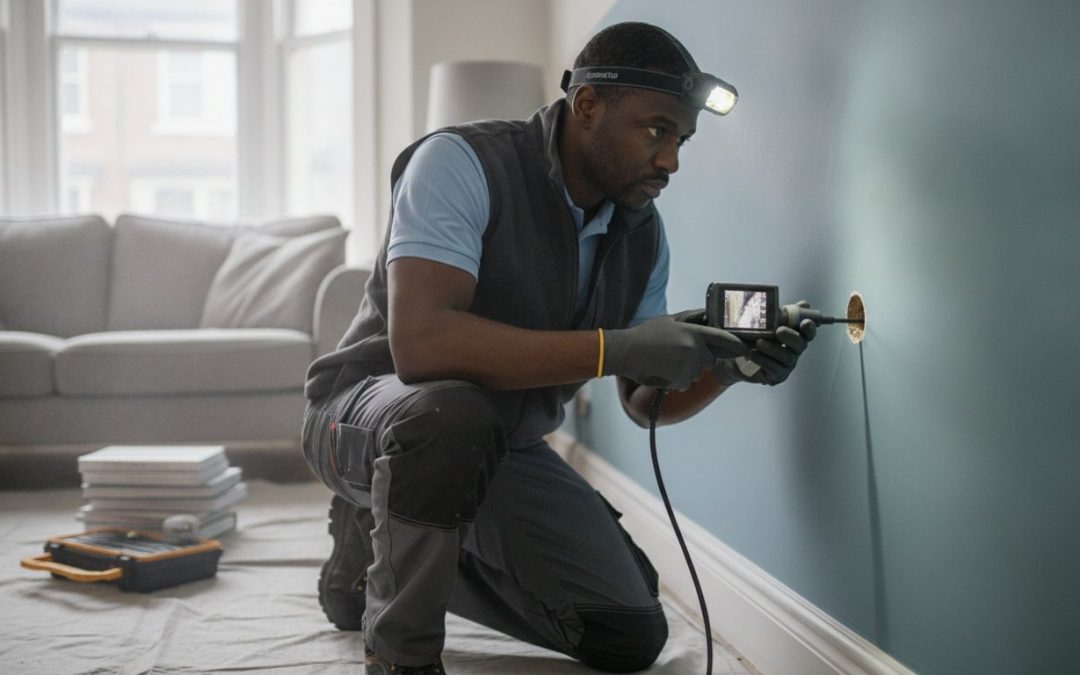
With over 1.3 million UK households currently struggling against damp conditions, it is clear that surface cleaning is rarely a permanent solution. If you are searching for a professional damp and mould survey to address issues in your property, you have likely already followed conflicting advice from general builders, only to see black mould return within weeks. This recurring cycle often leads to genuine anxiety regarding structural safety and the fear that hidden moisture is devaluing your property. It is a stressful position, but identifying the specific technical fault is the first step toward a lasting restoration.
A specialist investigation must go much deeper than a basic moisture meter reading. We promise to show you how a structural damp survey identifies the specific root cause of moisture ingress to protect your property’s long-term integrity. At CavClear, we understand the importance of this expertise. This article previews the essential criteria for selecting a specialist in 2026, the necessity of borescope inspections to view internal cavity conditions, and how a clear technical report delivers the peace of mind you require for a healthy, secure home.
Key Takeaways
- Understand why a specialist damp and mould survey manchester is superior to a general builder’s assessment by focusing on technical structural diagnostics rather than surface-level fixes.
- Learn how defective cavity wall insulation can act as a moisture bridge, necessitating a thorough internal inspection of the building envelope using specialist equipment.
- Discover the critical differences between independent experts and remedial contractors to ensure your survey is unbiased, transparent, and evidence-based.
- Gain insight into the professional diagnostic process, from external building envelope checks to internal moisture mapping using calibrated hygrometers.
- Recognize the value of a specialist structural survey as a vital investment that protects your property’s future asset health and structural integrity.
Finding a Damp Surveyor: Why Specialist Expertise Matters in 2026
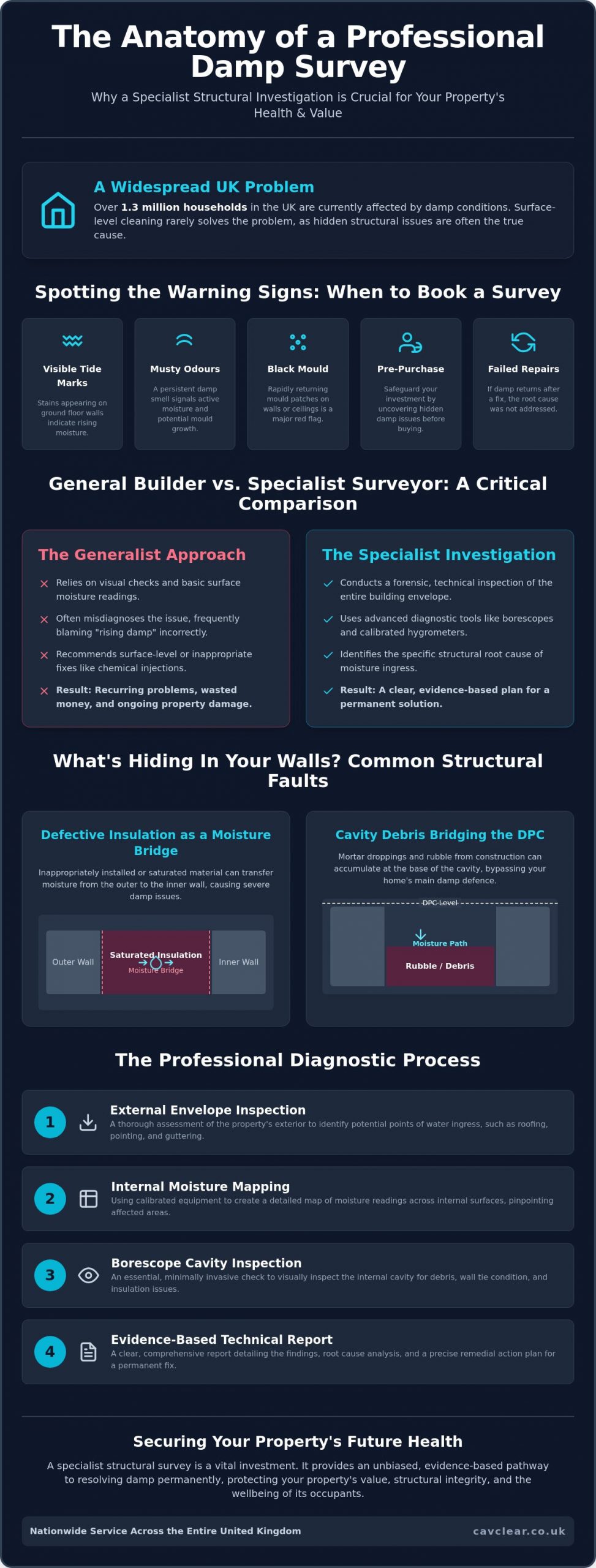
A professional damp survey is a forensic technical inspection designed to uncover the fundamental cause of moisture ingress within a building. Many property owners start their search by looking for a damp and mould survey manchester based on local convenience. However, addressing complex structural issues requires a level of specialist expertise that often goes beyond what a local generalist can provide. National specialists bring a methodical, safety-conscious approach to identifying structural dampness, ensuring that the root cause is treated rather than just the visible symptoms. This depth of investigation is vital for protecting the long-term value of your property and the respiratory health of its occupants. By moving beyond surface-level checks, a surveyor acts as a technical gatekeeper for your property’s future.
The Difference Between a General Builder and a Specialist Surveyor
General contractors typically rely on visual observations and basic surface readings. This often leads to a common misdiagnosis where rising damp is blamed, and a chemical DPC injection is recommended as a catch-all fix. This approach ignores the reality that moisture often enters through more complex routes, such as bridged cavities or failing wall ties. A specialist uses advanced diagnostic equipment, such as borescope cameras, to look inside the structure itself. Securing a formal, written damp survey provides a clear remedial action plan based on technical evidence, not guesswork. This prevents the high costs associated with incorrect repairs that fail to stop the moisture and eventually lead to further decay.
When Should You Book a Professional Damp Inspection?
You should arrange a professional inspection as soon as you notice “red flag” symptoms. These include visible tide marks on ground floor walls, persistent musty odours, or the rapid growth of black mould on internal surfaces. These signs indicate that moisture is already compromising the building envelope and could be affecting the structural timber or masonry. For those in the pre-purchase phase of home buying, a specialist survey is an essential safeguard against inheriting expensive, hidden structural faults. If you have already attempted repairs and the damp has returned, it is a clear signal that the underlying structural cause remains unaddressed. A forensic investigation is the only way to break this cycle, ensuring the permanent restoration of your home’s comfort and safety.
Beyond Surface Moisture: Investigating Structural Causes of Damp
While surface condensation is a frequent issue, many property owners overlook the “hidden” causes of moisture residing within the building’s fabric. A specialized damp and mould survey manchester must look beyond the wallpaper to examine the internal cavity. When a property’s structural integrity is compromised, moisture often finds a path through the wall system itself. This is particularly relevant when considering the health implications of living in such environments, as highlighted in the UK government guidance on damp. Identifying these deep-seated issues is the only way to ensure a permanent resolution rather than a temporary aesthetic fix.
Debris accumulation at the base of the wall or within the cavity itself is another significant risk factor. When mortar droppings or rubble collect at the bottom of the void, they can bridge the damp proof course (DPC). This allows ground moisture to bypass your home’s primary defence, leading to rising damp symptoms that are often incorrectly attributed to DPC failure. A forensic investigation uses borescope technology to see these obstructions clearly, providing the evidence needed for a targeted extraction and repair strategy.
The Role of Cavity Walls in Property Preservation
Understanding what is a cavity wall is fundamental to recognizing how moisture enters a home. Originally designed to act as a barrier against the driving rain of the UK climate, the cavity provides an air gap that prevents water from traveling from the outer leaf to the inner leaf. However, this system fails when “bridging” occurs. This happens when debris or defective retrospective cavity wall insulation fills the gap. These materials act as a physical conduit, pulling moisture across the void and into your living space. Thermal bridging occurs when a specific area of the wall is significantly colder than the surrounding structure, leading to localized condensation. If you suspect your wall cavities are compromised, a professional cavity wall survey is the most effective diagnostic step.
Wall Tie Failure and Damp Penetration
Metal wall ties are essential components that bind the internal and external leaves of a masonry wall together. Over time, exposure to moisture can cause these ties to corrode and expand. This expansion exerts significant pressure on the surrounding mortar, often resulting in visible horizontal cracks along the external brickwork. These cracks then serve as entry points for further water ingress, accelerating the decay of the structure. Professional wall tie replacement is required to restore structural stability and maintain a dry internal environment. Signs of structural movement, such as bulging walls or lintel failure, often stem from these moisture-related tie issues. A forensic survey identifies these faults before they lead to catastrophic failure, preserving both the asset’s health and the safety of its inhabitants.
Comparing Damp Survey Options: Independent Experts vs. Remedial Specialists
Choosing between an independent surveyor and a specialist contractor is a common dilemma for property owners. While independent experts are often marketed as the only source of unbiased advice, the reality is more nuanced. A truly unbiased survey is defined by technical evidence, accredited methodology, and transparency, not just the surveyor’s business model. Specialist contractors often hold a practical advantage because they possess the advanced equipment and direct experience required to plan complex structural repairs. When you commission a damp and mould survey manchester, you should prioritize a provider who offers borescope inspections and calibrated moisture mapping. This technical depth ensures the report is based on physical proof rather than subjective opinion.
Be wary of “expert surveys” offered by general damp-proofing firms. These sessions are frequently used as sales opportunities and often lack the diagnostic rigor needed for structural faults. A comprehensive investigation takes time and utilizes expensive, specialized machinery. If a provider doesn’t charge for their time, they’re unlikely to perform a deep-dive forensic check of your wall cavities or structural ties. Professional diagnostics require an investment, but they prevent the far greater costs of misdiagnosis and failed repairs.
What to Look for in a Specialist Damp Company
A reputable specialist should demonstrate nationwide UK coverage and maintain established physical offices. This indicates a level of stability and accountability that local “one-man” operations may lack. You should specifically look for expertise in niche structural areas, such as cavity wall insulation removal and wall tie surveys. These fields require specific technical knowledge that general builders don’t possess. Always verify that the company uses non-destructive testing methods. A professional surveyor will use small, non-disruptive entry points for borescopes to inspect the internal cavity before suggesting any invasive remedial work.
The Myth of the “Quick Fix” Damp Treatment
Applying damp-proof paint or a new layer of render is a cosmetic response to a structural problem. These methods often mask the underlying moisture ingress, allowing internal decay to continue unnoticed. If the root cause, such as a bridged cavity or corroded wall ties, isn’t addressed, the damp will inevitably return. A professional report must focus on long-term asset health. It should provide a clear, logical progression from the technical fault to a permanent remedy. This approach ensures your property remains a safe, dry environment for years to come, rather than offering a temporary fix that fails within a single season.
The Damp Inspection Process: What to Expect from a Professional Survey
The diagnostic process for a professional damp and mould survey manchester follows a methodical sequence designed to eliminate variables and pinpoint technical faults. A specialist does not simply walk through a property with a moisture meter; they conduct a forensic investigation of the building’s performance. This systematic approach ensures that every potential entry point for moisture is evaluated, from the roofline down to the foundations. By following a logical diagnostic path, the surveyor can differentiate between simple condensation and more serious structural failures.
Before engaging a professional for an on-site visit, property owners can benefit from using preliminary assessment tools. For example, HYPERSEC provides an online humidity diagnostic that helps identify potential issues based on specific symptoms, offering a helpful starting point for the technical investigation process.
A comprehensive survey typically consists of five distinct steps:
- Step 1: External Inspection. The surveyor examines the building envelope, checking the condition of pointing, gutters, downpipes, and the damp proof course (DPC) for signs of bridging or failure.
- Step 2: Internal Moisture Mapping. Using calibrated hygrometers and moisture meters, the technician maps moisture levels across internal walls to identify patterns of ingress.
- Step 3: Forensic Investigation. This stage involves looking inside the structure. The surveyor uses borescope cameras to inspect sub-floor voids and the internal cavity.
- Step 4: Environmental Analysis. The surveyor assesses ventilation systems and lifestyle factors to determine if internal humidity levels are contributing to mould growth.
- Step 5: Technical Reporting. The process concludes with a detailed report that outlines specific remedial recommendations based on the gathered evidence.
Specialist Tools: Seeing Behind the Brickwork
Borescope cameras are the gold standard in modern diagnostics. These tools allow a surveyor to inspect the internal void without causing significant disruption to the masonry. It is a critical step because a what is a wall cavity inspection is incomplete without checking for structural debris or saturated insulation. Thermal imaging cameras are also utilized to identify cold spots and insulation gaps that are invisible to the naked eye. These cold spots are often the primary cause of localized condensation. To secure a precise diagnosis of your property’s condition, you can book a professional cavity wall survey with our accredited team.
Understanding Your Damp Survey Report
Your technical report should be transparent and easy to interpret. It will typically categorize moisture readings into “at-risk” zones, often using a color-coded system to highlight areas of immediate concern. High-quality photographic evidence is essential; it provides physical proof of the issues identified during the damp and mould survey manchester. A professional report must clearly separate urgent structural repairs, such as wall tie replacement or insulation extraction, from general maintenance tasks like gutter cleaning. For assistance with these routine upkeep requirements, you can discover J&T Building & Maintenance Services for specialized property maintenance. This clarity allows you to prioritize investments that protect the long-term integrity of your home.
Securing Your Property’s Future with a Specialist Structural Survey
A specialist damp and mould survey manchester is a vital investment in your property’s preservation. Property owners often view surveys as a hurdle, but they are the most effective way to prevent the compounding costs of mould and rot. When you address internal cavity issues and corroding wall ties early, you stop the progression toward catastrophic structural failure. These faults are often invisible from the surface, yet they compromise the very fabric of the building. Investing in a forensic inspection ensures that your remedial budget is spent on permanent solutions rather than temporary aesthetic repairs.
Choosing a nationwide specialist provides a level of reliability and standardisation that local generalists cannot match. This approach guarantees that the technical reporting and remedial methodology adhere to strict industry standards. Early action is the most cost-effective strategy for any property owner. Delaying an inspection allows moisture to settle deeper into the masonry, which leads to more complex and expensive extraction processes later. Restoring the structural dry-state of your property is essential for maintaining its market value and ensuring the safety of its inhabitants.
National Standards, National Reliability
Expert surveying and remedial contracting are delivered across the UK with a focus on technical accuracy. A specialist company understands the nuances of different property eras, from early 20th-century brickwork to modern developments. This knowledge is crucial because moisture behaves differently depending on the construction materials used. Modern remedial methodologies, such as specialist cavity extraction, are clean and non-disruptive. Technicians use precise entry points to remove saturated materials or debris, ensuring that the property’s aesthetic is maintained throughout the process. This combination of regional expertise and national standards provides a robust framework for property restoration.
Next Steps: Booking Your Specialist Inspection
Preparing your property for a specialist surveyor’s visit is a straightforward process. Ensure that the technician has clear access to both the external perimeter and the internal walls where symptoms are present. You should also have any records of previous damp treatments available for review. To move toward a permanent fix, contact our technical team for a professional structural consultation. This initial step provides the clarity needed to resolve recurring moisture issues once and for all. Restoring comfort and structural integrity is possible through expert diagnosis and a commitment to long-term asset health. By following an evidence-based remedial plan, you secure the future of your home and provide peace of mind for all occupants.
Restoring Your Property’s Structural Health
A property is a significant asset; protecting its integrity requires more than masking surface symptoms. A professional damp and mould survey manchester provides the technical evidence needed to address root causes such as bridged cavities or failing wall ties. By utilizing forensic tools like borescope cameras, you move past visual guesswork and into a clear, evidence-based remedial plan. This methodical approach ensures that your maintenance budget is directed toward permanent fixes that restore long-term comfort and safety.
As accredited technical experts with nationwide UK service coverage, we specialize in non-disruptive structural repairs that prioritize asset health. You can Book a Professional Specialist Survey Today to begin the process of securing your home’s future. Our team provides the diagnostic clarity required to resolve moisture issues once and for all. Taking proactive steps now ensures your property remains a dry, secure, and healthy environment for your family.
Frequently Asked Questions
How much does a professional damp survey cost in the UK?
Industry data indicates that independent damp surveys in the UK typically range from £300 to £600 for a standard residential property. More complex investigations involving specialist diagnostic equipment or larger building footprints can exceed £1,000. These fees reflect the technical expertise and professional indemnity insurance required to produce a legally robust and accurate report.
What is the difference between a damp survey and a standard homebuyer report?
A standard homebuyer report is a general visual inspection that lacks the technical depth of a specialist structural investigation. While a general surveyor might identify a high moisture reading, they rarely investigate the underlying cause, such as bridged cavities or wall tie corrosion. A specialist uses forensic tools to provide a definitive diagnosis and a specific remedial action plan.
How long does a specialist damp inspection take to complete?
A thorough damp and mould survey manchester usually takes between two and four hours to complete on-site. This timeframe allows the surveyor to inspect the external building envelope, conduct internal moisture mapping, and perform borescope investigations within the wall cavities. Larger properties or those with complex structural layouts may require additional time for a comprehensive forensic assessment.
Can a damp surveyor find the cause of mould inside my cavity walls?
Yes, a specialist surveyor uses borescope cameras to inspect the internal void of your walls for hidden mould growth and debris. This technology allows us to see if saturated insulation or mortar droppings are acting as a moisture bridge, which is a frequent cause of internal dampness. Identifying these issues within the cavity is the only way to ensure the root cause is permanently addressed.
Do I need to move furniture or lift floorboards for a damp survey?
Professional surveys are designed to be non-disruptive, so you rarely need to lift floorboards or move heavy furniture. We use non-invasive technology like thermal imaging and small borescope entry points to gather data without damaging your home’s interior. If specific access is required for a sub-floor inspection, the surveyor will discuss this with you before any work begins.
Will a damp survey help me with my insurance company?
A detailed technical report provides the professional evidence often required by insurance companies to assess property damage. It establishes a clear link between a structural fault and the resulting moisture damage, which is vital for verifying the necessity of a repair. Having a report from an accredited nationwide specialist adds significant weight to your documentation during any assessment process.
Is black mould always a sign of a structural problem?
Black mould isn’t always a sign of a structural fault, as it can be caused by internal condensation and poor ventilation. However, persistent mould in specific areas often indicates a “cold bridge” or moisture ingress through the building envelope. A damp and mould survey manchester differentiates between lifestyle factors and technical defects, such as failing wall ties or compromised cavity insulation.
What happens if the surveyor finds failing wall ties?
If the surveyor identifies failing wall ties, they will recommend a specific wall tie replacement strategy to restore structural stability. Corroding ties expand and cause horizontal cracking, which allows water to penetrate the building fabric and causes the outer leaf to become unstable. Addressing this issue promptly prevents further masonry damage and ensures the long-term asset health of your property.
Recent Comments