
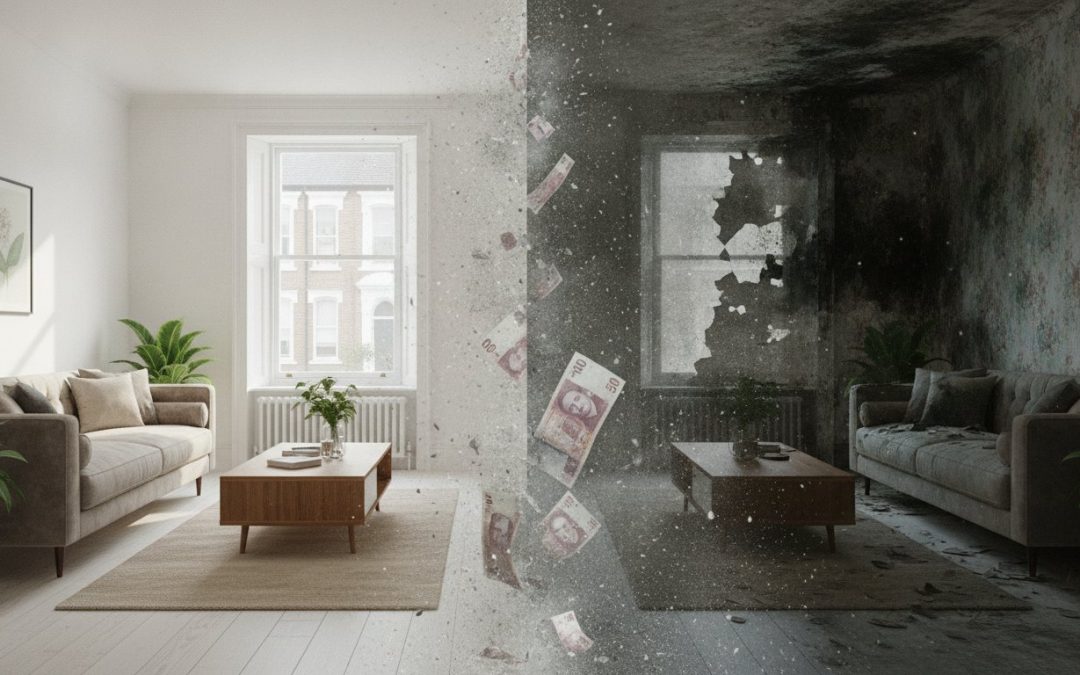
Did you know that 22% of collapsed property transactions in the UK are traced back to poorly documented or uncertified damp issues? For many homeowners, discovering a tide mark or a patch of mould is the start of a stressful period of financial uncertainty. You’re right to ask, can damp issues devalue a property? The reality is that structural moisture is viewed by lenders as a significant liability rather than a simple cosmetic flaw.
We understand that the fear of losing up to 20% of your home’s value or facing a mortgage rejection is overwhelming. This article provides a professional breakdown of the precise financial impact damp has on UK properties in 2026. We’ll outline the specific devaluation percentages associated with different types of moisture and provide a clear roadmap to resolving these faults permanently. By identifying the root cause, such as failing cavity wall insulation or wall tie corrosion, you can take the necessary steps to protect your investment and approach a RICS survey with total confidence in your property’s structural health.
Key Takeaways
- Learn why structural moisture can lead to a 10-20% reduction in market value and how this creates a “double hit” for sellers through lower offers and repair costs.
- Understand the precise mechanics of how can damp issues devalue a property by triggering mortgage retentions or zero valuations that can stall a sale.
- Distinguish between minor condensation and structural “value killers” like penetrating damp often caused by compromised or failing cavity wall insulation.
- Discover the importance of a specialist technical investigation using borescope inspections to identify root causes rather than just masking surface symptoms.
- Gain a clear roadmap for restoring your home’s financial integrity and passing a RICS survey through professional remedial actions and expert certification.
The Financial Impact of Damp: How Much Does It Devalue a UK Property?
Industry data suggests that structural moisture can reduce a home’s market value by 10% to 20%. Homeowners frequently ask, can damp issues devalue a property, and the answer lies in the “Double Hit” effect. This phenomenon occurs when a seller must accept a lower asking price while also funding professional remedial works to satisfy a lender’s requirements. For a property valued at £250,000, a 20% devaluation represents a significant financial loss of £50,000. These figures aren’t merely theoretical; they are a direct reflection of the risk profile lenders assign to damp homes.
Buyer psychology is a powerful driver of property value. Visible Structural dampness or the presence of mould spores creates an immediate negative impression during viewings. Most buyers lack technical expertise, so they perceive damp as a sign of broader structural neglect. They often overestimate the cost of repair, which leads to aggressive under-offering or a total loss of interest in the property.
Professional surveyors identify these faults through the RICS Home Survey Standard. Damp is almost always categorised as a “Condition 3” issue. This rating indicates a serious defect that requires urgent attention before a sale can proceed. Once a surveyor marks a property with this rating, mortgage lenders typically pause the application until a specialist report is provided. This delay often results in the buyer losing their mortgage offer or withdrawing from the sale entirely.
The Direct Costs of Ignoring Damp
Moisture issues never remain static. A small patch of penetrating damp can evolve into structural timber rot, which is far more expensive to rectify. Ignoring the root cause also affects buildings insurance. Some providers may increase premiums or exclude damp-related damage from the policy if the property hasn’t been maintained. Sellers who try to hide issues with “patch-and-paint” solutions often face legal action after the sale. Transparency and professional remediation are always the safer financial paths.
Market Liquidity: Why Damp Houses Stay on the Market Longer
Damp issues significantly reduce the number of eligible buyers. Many mortgage lenders won’t release funds for a property with active moisture ingress. This limits your market to cash buyers or investors, who usually expect a substantial discount for the risk they’re taking. Properties with visible damp often stay on the market for months longer than dry homes. The risk of a sale collapsing is also high. A surveyor’s moisture meter reading can derail a transaction just days before completion, leaving the seller with a failed sale and a devalued asset.
Structural vs. Surface Damp: Identifying the Real ‘Value Killers’
Not all moisture is created equal in the eyes of a surveyor. While surface condensation is often a result of lifestyle factors like drying clothes indoors, structural ingress is a far more serious concern. When homeowners ask, can damp issues devalue a property, they’re usually dealing with penetrating damp. This occurs when water bypasses the external leaf of a building. It’s a major red flag for valuers because it indicates a failure in the property’s primary weather defence. It isn’t just a patch of mould; it’s a breach in the building’s envelope.
One of the most significant yet hidden threats in 2026 is defective cavity wall insulation. Originally intended to save energy, retrospective insulation often becomes a “damp bridge.” It allows moisture to travel from the wet outer wall to the dry inner wall. This doesn’t just cause aesthetic damage. It creates a permanent environment for structural decay. Unlike condensation, which you can fix with a dehumidifier, structural damp requires technical intervention to prevent long-term devaluation.
Failed Cavity Wall Insulation and Property Value
Retrospective insulation is increasingly viewed as a liability by RICS surveyors. If the material was installed in an unsuitable property or has slumped over time, it traps water against the inner leaf. This leads to cold spots and persistent dampness that no amount of heating can resolve. To restore the building’s natural breathability, cavity wall insulation removal is often the only viable solution. We identify these issues using non-invasive borescope inspections and thermal imaging. These tools reveal “wet” insulation that a simple visual check would miss. If you suspect your insulation is failing, a specialist cavity wall survey can provide the technical evidence needed to plan a resolution.
Wall Tie Failure: A Structural Devaluation Trigger
Prolonged moisture within a cavity leads to a critical structural issue: wall tie corrosion. These metal components are vital for holding the internal and external walls together. When they rust, they expand. This expansion causes horizontal cracking or even bulging of the masonry. This is a severe defect that surveyors never ignore. In these cases, wall tie replacement is essential to ensure the building’s stability. Addressing this fault early prevents the risk of structural collapse and protects the long-term asset value of your home. It’s an investment in the property’s future that restores both safety and marketability.
Why Damp Issues Block Sales: Mortgage Lenders and RICS Surveys
A mortgage lender’s primary concern is the security of their investment. When a RICS surveyor flags a property with a “Condition 3” rating, it signals that the asset is deteriorating. This triggers a mortgage retention, where the lender holds back a portion of the loan until the moisture issue is rectified. It’s a common way can damp issues devalue a property during the final stages of a sale. The buyer is suddenly faced with a funding gap, which often forces the seller to reduce the price by the exact amount of the retention plus the cost of the works.
In more severe cases, a property may receive a “Zero Valuation.” This doesn’t mean the house is worthless, but it indicates the building is currently unmortgageable. Severe structural dampness, often caused by failing wall ties or saturated cavity insulation, makes the property an unacceptable risk for traditional banks. This shifts the sale away from the open market and toward cash buyers who demand significant discounts, often up to 25% below the market rate.
If you are navigating the financial complexities of a property purchase or remortgage, visit Charlie Bridges Mortgages & Protection for professional advice.
Modern Automated Valuation Models (AVMs) often fail to detect these issues because they rely on local price trends and data. However, a physical survey remains the industry standard. A surveyor’s moisture meter and visual inspection will always uncover hidden ingress. Sellers also have a legal obligation to be transparent. The Property Information Form (TA6) specifically asks about known damp issues. Failing to disclose these can lead to legal action for misrepresentation after the sale is completed, which is why professional remediation is the only secure path forward.
The Role of the Specialist Damp Survey
A standard valuation survey only identifies the presence of moisture; it doesn’t diagnose the cause. To satisfy a lender’s concerns, you’ll need a professional damp survey. This technical inspection provides a definitive remedial plan. Lenders trust reports from accredited technicians who use advanced diagnostic tools like borescopes to inspect the cavity. A comprehensive report from a nationwide specialist provides the technical weight needed to move a mortgage application from “declined” to “approved.”
Satisfying Underwriters and Insurers
Proving a damp issue is resolved requires more than just a fresh coat of paint. Underwriters and buildings insurers require a full paper trail of the works performed. This includes the initial specialist survey, a detailed methodology of the extraction or replacement process, and a certificate of completion. DIY fixes are rarely accepted by financial institutions because they lack the professional oversight required to ensure long-term structural integrity. Providing a professional documentation pack is a vital investment in your property’s future marketability.

Restoring Property Value: Effective Remedial Strategies
Rectifying damp is a methodical process that moves beyond surface-level aesthetics. While many homeowners attempt to treat mould with chemical sprays, these actions don’t address the underlying structural faults that lead to devaluation. If you’re concerned about how can damp issues devalue a property, the solution lies in a structured diagnostic and remedial approach. This begins with a specialist investigation to identify the root cause, such as bridge points within the cavity or failing structural components that allow water to bypass the building’s envelope.
Why Insulation Extraction is Often Mandatory
The physics of moisture transfer is simple. A clean cavity wall acts as a natural barrier to water ingress; however, a cavity filled with saturated material creates a direct bridge for moisture to reach the internal leaf. This compromised state leads to persistent cold spots and internal dampness that heating alone cannot fix. Removing this saturated material restores the internal environment by allowing the wall to breathe and dry naturally. Our methodology for extracting defective insulation is clean and non-disruptive, using high-powered vacuum technology to remove debris through small, existing mortar joints. This process is often a mandatory requirement for lenders before they’ll reconsider a property’s valuation.
Structural Repairs and Wall Tie Integrity
Once the cavity is clear, we focus on structural stability. Prolonged exposure to moisture often leads to the corrosion of original wall ties, which are the metal components connecting your home’s inner and outer leaves. We replace these failing components with remedial stainless steel alternatives using a methodical, non-invasive process. It’s vital that these structural repairs are completed before any internal re-decoration begins. If you paint over a damp patch while the wall ties are still rusting and the cavity is still blocked, the cracks and moisture will return. Investing in a dry, stable cavity wall ensures the long-term asset health of your home and provides the permanent fix that surveyors look for.
After the structural work is finished, we implement permanent damp proofing measures and restore internal finishes to their original standard. The final, and perhaps most important, step is securing expert certification. This documentation proves to potential buyers and lenders that the property is structurally sound and expert from moisture ingress. By following this roadmap, you address the core reasons why can damp issues devalue a property and provide the technical evidence financial institutions demand. You can book a professional cavity wall survey with our nationwide team to start this restoration process and protect your property’s market value.
Professional Damp Investigations: Securing Your Property’s Future
Many homeowners encounter “expert surveys” that are little more than visual inspections designed to sell a specific damp-proofing product. A professional technical investigation is fundamentally different. It’s a diagnostic process that uses scientific tools to identify the exact mechanism of moisture ingress. When people ask, can damp issues devalue a property, the answer often depends on the quality of the evidence provided to the lender. A specialist report provides the technical proof required to move a property from “high risk” to “manageable,” protecting your investment from arbitrary price reductions.
A CavClear report provides a comprehensive overview of your building’s health. We use borescope cameras to inspect the internal condition of the cavity, looking for slumped insulation, mortar snots, or wall tie corrosion. This is combined with moisture mapping to track the movement of water through the structure. This level of detail acts as a vital negotiation tool. For a seller, it demonstrates a proactive approach to maintenance. For a buyer, it provides a clear, costed roadmap for remediation, preventing the stress of hidden structural damage. This transparency is often what keeps a property chain together when a standard RICS survey flags a moisture problem.
Eliminating the root cause of dampness is also a matter of health and safety. Surface treatments rarely solve the problem of black mould if the cavity remains blocked or saturated. By identifying the structural fault, we help you remove the environmental conditions that allow spores to thrive. This ensures the long-term health of the occupants and restores the comfort of the home.
The Value of Specialist Expertise
Our accredited technicians don’t provide “quick fixes.” We focus on permanent structural solutions that restore the building’s original design intent. An accurate diagnosis is the only way to avoid unnecessary remedial costs. Many owners spend thousands on internal tanking when the real issue is a blocked cavity that needs extraction. We support property owners across the UK with nationwide coverage, bringing high-level technical standards to every inspection. Our role is to provide the clarity you need to make informed decisions about your property’s future.
Taking the Next Step Toward Restoration
There’s a significant sense of peace of mind that comes from a logical progression from fault to remedy. You don’t have to guess why your walls are damp or how much it will cost to fix. Early intervention is the most effective way to preserve property value and prevent the escalation of repair costs. By addressing the core reasons why can damp issues devalue a property, you take control of the sale process and protect your equity. Don’t leave your property’s value to chance. Book your professional survey today and secure a permanent solution for your home.
Protecting Your Property’s Financial Integrity
Securing the future of your home requires a shift from temporary fixes to permanent structural solutions. We’ve explored how structural moisture, particularly when caused by defective cavity insulation or failing wall ties, acts as a significant liability during a RICS survey. While it’s clear that can damp issues devalue a property by up to 20%, this financial loss isn’t inevitable. By identifying the root cause through technical mapping and borescope inspections, you provide the precise documentation that mortgage underwriters and insurers demand.
Our team of accredited specialist technicians provides comprehensive structural reports that serve as a definitive roadmap for remediation. With nationwide UK service coverage, we ensure that every property owner has access to high-level diagnostic expertise. Taking proactive steps today ensures that your home remains a dry, stable, and marketable asset. You have the power to rectify these faults and restore your investment to its full potential.
Protect your property value with a professional damp survey from CavClear. Our nationwide UK service coverage and accredited specialist technicians provide the comprehensive structural reports you need to satisfy lenders and buyers alike.
Frequently Asked Questions
How much does damp typically devalue a house in the UK?
Damp typically devalues a UK property by 10% to 20% of its market value. While minor condensation might only lead to a 5% reduction, severe structural ingress often results in much larger price drops. This happens because buyers factor in both the cost of professional remedial works and the significant risk of hidden structural decay.
Can I sell my house if it has a damp problem?
You can sell a property with moisture issues, but it’s often more difficult and less profitable. Sellers have a legal obligation to disclose known faults on the TA6 Property Information Form. If you don’t resolve the issue, your market is often limited to cash investors who expect a substantial discount for taking on the structural risk.
Will a mortgage lender reject a property with damp?
Mortgage lenders will often reject an application or place a retention on funds if a surveyor flags active moisture. They view structural damp as a threat to their investment’s security. To satisfy an underwriter, you’ll usually need to provide a specialist report and a certificate of completion from an accredited technician proving the fault is resolved.
Is it worth fixing damp before putting my house on the market?
It’s almost always worth fixing moisture problems before listing your home for sale. Resolving the issue prevents buyers from negotiating aggressive discounts and ensures the property passes a RICS survey without a “Condition 3” rating. People often ask, can damp issues devalue a property, and the reality is that professional remediation is usually far cheaper than the 20% value loss you might otherwise face.
What is the most expensive type of damp to fix?
Structural damp involving cavity wall failures or wall tie corrosion is typically the most expensive to rectify. These issues require technical intervention, such as insulation extraction or stainless steel tie replacement, rather than simple surface treatments. Unlike condensation, these faults threaten the building’s stability and require specialist diagnostic equipment to resolve permanently.
How long does a specialist damp survey take to complete?
A specialist damp survey typically takes between two and four hours to complete for a standard residential property. Our technicians use advanced tools like borescopes and moisture mapping to inspect the internal cavity and wall tie integrity. This methodical approach provides a detailed technical report that identifies the root cause of the moisture rather than just observing surface symptoms.
Does black mould affect the value of my property?
Black mould significantly affects property value because it’s a visible indicator of structural failure and a recognised health hazard. In 2026, lenders and surveyors treat mould as a high-priority defect that requires urgent attention. It often signals that can damp issues devalue a property by deterring families and triggering mortgage retentions until the underlying moisture bridge is professionally removed.
What is the difference between rising damp and penetrating damp?
Rising damp involves moisture travelling upwards from the ground through capillary action, whereas penetrating damp occurs when water enters through the walls. Penetrating damp is frequently caused by external defects or blocked cavities that allow water to bridge to the internal leaf. Both types are structural issues that require professional diagnosis and permanent remedial action to protect the building’s long-term integrity.
Recent Comments