
Ignoring a horizontal crack in your masonry today could lead to a structural repair bill that quadruples in just five years. While it’s easy to dismiss minor brickwork separations as simple settlement, these marks often signal a deeper, more corrosive issue hidden within your cavity walls. If you’re wondering how to check for corroded wall ties without dismantling your home, you aren’t alone. Most property owners fear that a structural assessment requires heavy machinery and significant disruption, but modern diagnostic techniques allow us to verify the health of your masonry with surgical precision.
We understand that the prospect of structural instability is stressful, especially when your home’s safety is at stake. This guide provides the technical clarity you need to distinguish between harmless movement and active tie failure. You’ll learn the specific visual symptoms to look for and the professional methodology we use to inspect wall ties across the United Kingdom. We’ll also explain why certain factors, like poorly installed cavity insulation, often accelerate this damage and how a non-invasive survey restores your peace of mind.
Key Takeaways
- Identify the early warning signs of structural instability, including horizontal mortar cracks every four to six courses and visible wall bowing.
- Discover how to check for corroded wall ties using a professional methodology that combines systematic metal detection with non-disruptive endoscopic inspections.
- Understand how retrospective cavity wall insulation can accelerate corrosion by trapping moisture against metal connectors, necessitating extraction to preserve the wall’s integrity.
- Learn why a comprehensive wall tie survey is a vital investment for securing mortgage approvals and maintaining the long-term value of your property.
Understanding Wall Tie Corrosion in UK Properties
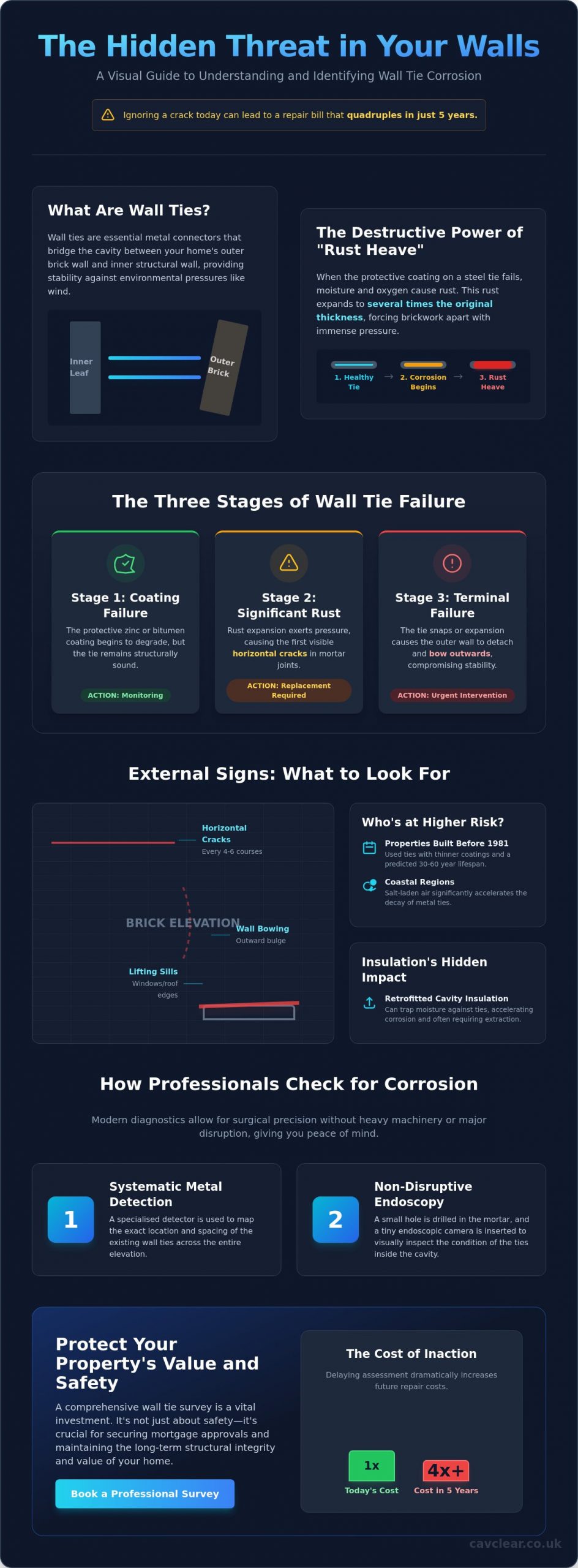
Wall ties are fundamental to the structural integrity of a cavity wall. They act as metal bridges that secure the external brick leaf to the internal load-bearing leaf. When these connectors function correctly, they provide the necessary stability to resist wind loads and environmental pressure. However, Understanding Wall Tie Corrosion is the first step in protecting your property’s long-term health. Corrosion occurs when the protective zinc or bitumen coating on mild steel ties degrades, usually due to age or moisture exposure. Once the raw steel meets oxygen and water, a chemical reaction begins that transforms the metal into iron oxide.
This oxidation process is physically destructive. As the steel rusts, it expands to several times its original thickness. This phenomenon, often called “rust heave,” exerts incredible pressure on the surrounding mortar joints. Because the expanding metal has nowhere to go, it forces the brickwork apart. This is why learning how to check for corroded wall ties is a priority for many homeowners; catching this expansion early prevents the need for extensive masonry reconstruction later. If left unchecked, the cumulative pressure from hundreds of expanding ties can compromise the stability of an entire elevation.
The Three Stages of Wall Tie Failure
Professional diagnostics categorize the degradation of these connectors into three distinct phases. In Stage 1, the protective coating begins to fail, though the tie remains structurally sound. Stage 2 involves significant rust expansion. During this phase, the increasing volume of the tie causes the first visible horizontal cracks to appear in the mortar joints. Finally, Stage 3 represents terminal failure. At this point, the tie has either snapped entirely or the expansion has caused the outer leaf of the wall to detach and bow outward. Each stage requires a specific level of intervention, ranging from monitoring to urgent replacement.
Why Older Properties are at Higher Risk
Properties built before 1981 are particularly vulnerable because historical building standards allowed for thinner galvanised coatings on mild steel ties. These coatings often have a predicted lifespan of only 30 to 60 years. In coastal regions across the United Kingdom, salt-laden air accelerates this decay, often shortening the lifespan of ties significantly. If your property is over 40 years old, understanding how to check for corroded wall ties becomes an essential part of your maintenance routine. We provide nationwide inspections to ensure these hidden faults don’t compromise your home’s safety or its future market value.
External Signs: Identifying Visible Symptoms of Failure
Visual symptoms of wall tie failure often appear subtle at first. However, as the internal oxidation progresses, the external evidence becomes undeniable. The most common indicator is horizontal cracking in the mortar joints. These cracks typically occur every 4 to 6 courses of brickwork, which corresponds directly to the original spacing of the installed ties. Because the rusting metal expands, it physically lifts the bricks above it, creating a uniform fracture line across the elevation. Property owners often ask how to check for corroded wall ties using only visual cues, and the answer lies in the geometry of these cracks.
Beyond cracking, you might notice the lifting of window sills or roof edges. As the cumulative expansion of dozens of ties pushes the masonry upward, it can displace secondary structural elements. In severe cases, rust staining may appear on the brick faces. This happens when water leaches through the saturated mortar, carrying iron oxide from the decaying tie to the surface. Adhering to a Professional Inspection Methodology ensures that these visual cues are correctly interpreted before any remedial work begins. If these signs are present, it’s a signal that the internal structural connectors are no longer performing their primary function.
Distinguishing Corrosion from Structural Settlement
It is vital to differentiate between foundation settlement and tie failure. Settlement cracks usually follow a vertical or stepped diagonal pattern, often widening as they move toward the ground. In contrast, wall tie cracks are strictly horizontal and frequently widen at the top of the building where the masonry weight is lowest. Thermal movement can also cause cracking, but these fractures typically appear at weak points like window corners rather than in a repetitive vertical frequency. If you’re unsure about the origin of a fracture, a specialist wall tie survey can provide a definitive diagnosis without the need for guesswork.
Bulging Walls and Lateral Movement
When wall ties fail, the external leaf of the masonry loses its connection to the internal structure. This leaves the outer wall effectively expert-standing. Under the pressure of wind suction, the brickwork may begin to bulge or bow outward. You can identify these subtle “waves” in the brickwork by looking along the face of the wall during sunrise or sunset, when long shadows highlight surface irregularities. This lateral movement is a serious safety concern; a detached leaf is vulnerable to sudden collapse during high winds. Identifying these symptoms early allows for proactive remediation before the structural integrity reaches a critical point, ensuring the long-term health of your property across the UK.
Technical Methodology: How Professionals Check for Corrosion
While external symptoms provide strong clues, a professional diagnostic process relies on internal verification to determine the exact state of your property’s structural connectors. We follow a methodical four-step process to ensure accuracy without causing unnecessary damage to your brickwork. This technical approach is the industry standard for how to check for corroded wall ties effectively across our nationwide service area. Our technicians focus on precision, ensuring that every assessment is backed by visual evidence rather than guesswork.
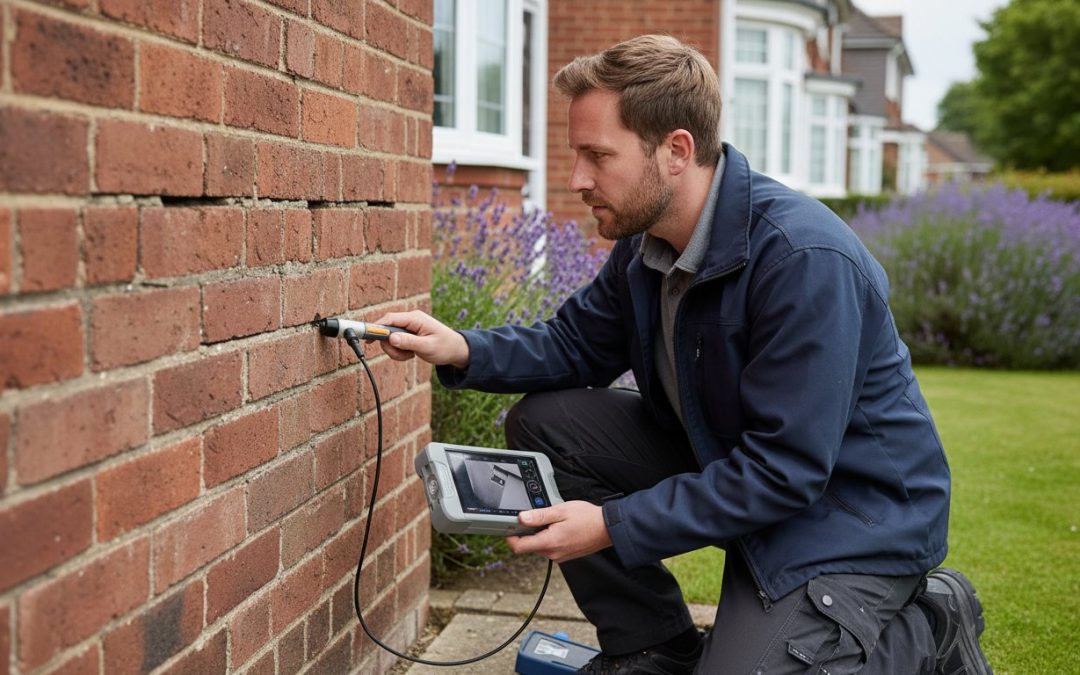
The process begins with high-precision metal detection to map the location of existing ties. Once we’ve identified the grid, we drill small, non-disruptive pilot holes into the mortar joints. These holes are typically no larger than 12mm, allowing for the insertion of an endoscopic borescope. This tool provides a clear, illuminated view of the cavity. Finally, we sample the mortar to check for corrosive agents like chlorides, which can accelerate metal decay. This diagnostic journey is essential for Identifying Signs of Failure that aren’t yet visible on the surface of the masonry.
The Role of the Borescope in Visual Verification
Visual confirmation is the only definitive way to grade the condition of a wall tie. A borescope allows us to examine the inner leaf connection, which is frequently the first part of the tie to fail due to condensation buildup on the internal wall. We also look for “mortar snots,” which is the term for excess mortar that dropped during original construction. These bridge the cavity and trap moisture against the tie, creating a localized environment that accelerates rust. By seeing the tie directly, we can assign an accurate condition grade, helping you understand if immediate replacement is necessary or if future monitoring is sufficient.
High-Precision Metal Detection
Locating ties accurately is vital for maintaining the aesthetic of your home. We use advanced detectors to find ties hidden behind the masonry, ensuring we don’t have to remove bricks just to find where the connectors are. This mapping allows us to verify tie density. Current UK standards generally require a minimum of 2.5 ties per square meter, but older properties often fall short of this requirement. By mapping the entire elevation, we can identify missing ties or areas where the original construction didn’t meet safety standards. This data-driven approach ensures that our recommendations are based on the actual structural state of your building, providing a reliable foundation for any necessary remediation.
The Impact of Cavity Wall Insulation on Tie Longevity
Retrospective cavity insulation often acts as a catalyst for structural decay. While intended to improve thermal performance, these materials frequently trap moisture against the metal ties within the cavity. Instead of allowing the wall to breathe and dry naturally, saturated insulation creates a permanent damp environment that prevents the masonry from ever fully drying out. This moisture retention can triple the rate of corrosion compared to a clear, well-ventilated cavity. Consequently, cavity wall insulation removal is often an essential prerequisite for any meaningful structural repair or tie replacement project.
Saturated insulation doesn’t just hold water; it forces it into direct contact with the mild steel ties. This constant exposure breaks down the protective zinc or bitumen coatings much faster than atmospheric humidity alone. When homeowners ask how to check for corroded wall ties in properties with filled cavities, they must realize that the insulation itself often hides the severity of the problem until the damage is advanced. The material acts as a mask, absorbing the rust stains that would otherwise appear on the external brickwork, which can lead to a false sense of security regarding the building’s stability.
The Hidden Danger of Wet Insulation
Certain hygroscopic insulation materials, such as mineral wool or urea-formaldehyde foam, actively pull moisture through the external brick leaf via capillary action. Once this moisture reaches the cavity, it saturates the insulation material, leading to an electrochemical reaction with the older tie coatings. This accelerated process leads to rapid oxidation and the “rust heave” that forces mortar joints apart. Because this dampness often migrates to the internal leaf, causing decorative spoiling and mould, a damp survey is a vital diagnostic step when you suspect your wall ties are failing in an insulated property. We look for specific moisture patterns that indicate the insulation is compromised and directly contributing to metal decay.
Inspection Challenges in Filled Cavities
Filled cavities present unique obstacles for professional diagnostics. Standard borescope cameras cannot see through mineral wool or bonded beads, making it impossible to grade the condition of the ties accurately without physical intervention. To overcome this, we must perform a specialist extraction of small insulation sections at key tie locations to gain a clear line of sight. Without this physical clearance, any report on how to check for corroded wall ties would be incomplete and potentially misleading. Removing these obstructions ensures we can identify “bridging,” where wet insulation allows water to bypass the cavity and attack the internal structure directly. If your home has retrospective insulation and shows signs of cracking, we recommend booking a comprehensive cavity wall survey to assess your property’s structural health.
Securing Your Property: Professional Surveys and Remediation
Professional diagnostics are the only way to transform structural uncertainty into a clear, actionable plan. While identifying external cracks is a vital first step, understanding how to check for corroded wall ties correctly requires a formal survey conducted by nationwide specialists. This process provides a definitive condition grade for every elevation of your property, removing the guesswork often found in DIY guides. In the United Kingdom, these reports aren’t just for maintenance; they’re frequently a mandatory requirement for mortgage approvals and property sales. Lenders need the assurance that the building is structurally sound before they release funds. If a survey identifies widespread failure, a structured wall tie replacement programme offers a permanent, non-disruptive fix that restores lateral stability without the need for a full masonry rebuild.
DIY guides frequently suggest that a few horizontal cracks are the only signs to worry about, but this perspective significantly underestimates the risk of misdiagnosis. Without internal visual evidence, it’s impossible to know if the remaining ties are nearing terminal failure or if the inner leaf connection has already snapped. Investing in a professional check prevents the catastrophic and sudden cost of a leaf collapse. Such events often occur with little warning during high winds when the external leaf is no longer supported by the internal structure. Our methodology ensures that your home remains a safe environment, protecting both the occupants and the long-term value of the asset.
What a Professional Wall Tie Report Includes
Our professional wall tie reports provide more than just a summary of faults. They include clear photographic evidence of the tie condition inside the cavity, captured during the endoscopic phase of the inspection. We provide a mapped layout that distinguishes between failed and stable ties across the entire property. This transparency ensures you don’t pay for unnecessary work while focusing resources where they’re needed most. Every report concludes with accredited recommendations for structural stabilization, giving you a clear roadmap for remediation that meets current building standards and safety regulations.
Long-Term Asset Health and Efficiency
Addressing tie issues today protects the future resale value of your home. A property with a certified remedial installation is a much more attractive asset to future buyers and surveyors. It provides the peace of mind that only comes from working with specialist contractors who offer long-term assurances on their workmanship. By maintaining the integrity of the structure, you ensure that the what is a wall cavity remains a functional, dry, and stable part of your home’s design. This proactive approach frames structural repair as a vital investment in your property’s long-term health, ensuring it remains an efficient and secure shelter for decades to come.
Protecting Your Property’s Structural Future
Early identification of horizontal cracking and masonry bulging is the first step toward safeguarding your home. However, visual cues only tell half the story. Understanding how to check for corroded wall ties with technical accuracy requires moving beyond surface observations and utilizing professional diagnostic tools like endoscopic borescopes and high-precision metal detection. These methods ensure that your property remains secure without the need for invasive or disruptive brickwork removal. Our technicians provide nationwide coverage across the UK, delivering the reliable data required to manage your property’s structural health effectively.
Don’t let hidden corrosion compromise your home’s integrity or future resale value. Our accredited technicians are ready to provide the clear, technical answers you need to restore your peace of mind. We specialize in expert reporting for homeowners and insurers, focusing on the correct methodology to ensure a permanent fix. Book a professional wall tie survey with CavClear today to secure your investment with a proactive, specialist solution. Taking action now prevents the high cost of structural failure and ensures your property remains a safe, stable asset for years to come.
Frequently Asked Questions
Can I check for corroded wall ties myself without specialist equipment?
You cannot definitively verify the internal condition of wall ties without specialist diagnostic tools. While you can identify external symptoms like horizontal cracking, confirming the actual state of the metal requires an endoscopic borescope to see inside the cavity. Professional diagnostics prevent the risk of misidentifying simple settlement cracks as structural tie failure, ensuring you only invest in repairs when they’re truly necessary for your home’s safety.
How much does a professional wall tie survey cost in the UK?
The cost of a professional wall tie survey varies based on the property size, its location, and the complexity of the access required for the inspection. While some general contractors might offer a basic visual assessment, a specialist survey involves technical grid mapping and endoscopic verification. This investment provides a detailed condition report essential for mortgage approvals and long-term property maintenance, ensuring you have an accurate roadmap for any required structural stabilization.
Will checking my wall ties involve removing bricks from my house?
A professional inspection is a non-disruptive process that specifically avoids the need to remove bricks. Technicians use high-precision metal detectors to locate the ties and then drill small pilot holes, usually about 12mm in diameter, into the mortar joints. These holes allow for borescope insertion and are easily filled with matching mortar afterward. This methodology leaves your property’s aesthetic completely intact while providing a clear, illuminated view of the cavity.
How long do wall ties usually last before they start to corrode?
The lifespan of wall ties depends on the type of protective coating used and the property’s environment. Older mild steel ties with thin galvanised coatings often show signs of failure after 30 to 60 years. Properties in coastal regions or those with high exposure to wind-driven rain often see faster degradation. Understanding how to check for corroded wall ties is particularly important for homes built between the late Victorian era and the early 1980s.
Can failing wall ties cause damp and mould inside my home?
Failing wall ties can indirectly lead to internal damp and mould issues. As ties corrode and expand, they fracture the mortar joints, allowing rainwater to penetrate the cavity more easily. If the cavity is also filled with retrospective insulation, this moisture is held against the internal leaf, resulting in cold spots and damp patches on your interior walls. Addressing tie failure is often a critical step in restoring a dry, healthy living environment.
What happens if I ignore the signs of wall tie corrosion?
Ignoring the symptoms of corrosion can lead to catastrophic structural failure, including the collapse of the external masonry leaf. As the ties continue to expand and eventually snap, the outer wall loses its connection to the building’s main structure. This makes the wall vulnerable to wind suction, which can cause it to bow outward or detach completely. Early intervention prevents these dangerous outcomes and avoids the significantly higher costs of complete wall reconstruction.
Does home insurance cover the cost of checking or replacing wall ties?
Most standard home insurance policies don’t cover the cost of wall tie replacement as they consider it a gradual maintenance issue rather than sudden accidental damage. However, because failing ties pose a significant structural risk, many insurers require a professional survey before providing coverage for older properties. Learning how to check for corroded wall ties through a specialist survey provides the technical documentation needed to satisfy these requirements and maintain your property’s insurable status.
Is wall tie corrosion common in houses built with cavity wall insulation?
Corrosion is significantly more common in properties where retrospective cavity wall insulation has been installed. This material often traps moisture within the cavity, creating a permanently damp environment that accelerates the oxidation of metal ties. Saturated insulation acts like a wet sponge against the steel, causing it to rust much faster than it would in a clear, ventilated cavity. In these cases, we often recommend insulation extraction alongside tie remediation to ensure long-term stability.
Recent Comments