
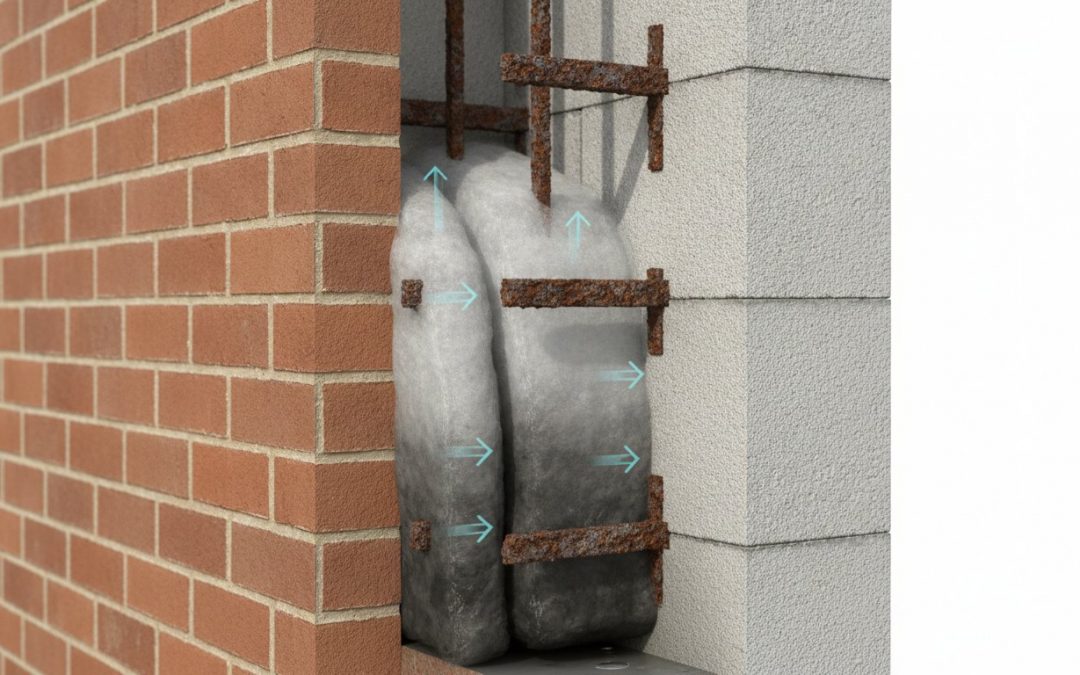
What if the persistent mould on your internal walls isn’t a simple ventilation problem, but a warning sign of failing structural components hidden deep within the cavity? If you’ve spent months cleaning surfaces only for the damp to return, or if you’re growing increasingly anxious about horizontal cracks appearing in your brickwork, you’re likely dealing with more than just a cosmetic issue. It’s frustrating to receive conflicting advice from general builders who only look at the surface, leaving you unsure if your home is truly safe.
We understand that your property is your most significant asset, and seeing its condition deteriorate causes genuine stress. This guide explains how a professional damp and wall tie survey provides the technical clarity you need by investigating the hidden environment of your cavity walls. You’ll discover how we identify the root causes of moisture ingress and wall tie corrosion, moving beyond temporary fixes to ensure long term structural safety.
In this guide, we’ll outline the specific diagnostic tools used in a specialist inspection and the actionable remedial steps required to protect your property’s value for 2026 and beyond. By the end, you’ll have a clear path toward a permanent solution that restores both your comfort and your peace of mind.
Key Takeaways
- Understand why a specialist damp and wall tie survey is essential for identifying the technical link between moisture ingress and the structural health of your masonry.
- Learn how corroding wall ties cause mortar expansion and cracking, compromising the stability of your cavity walls and allowing damp to penetrate.
- Identify how saturated or defective cavity wall insulation creates a bridge for moisture to bypass your home’s natural defences and reach internal surfaces.
- Discover the role of advanced diagnostic tools, such as borescopic inspections, in providing a clear and non-disruptive view of hidden structural faults.
- Gain clarity on how to interpret a specialist technical report to ensure remedial actions prioritise long-term asset health and permanent structural safety.
What is a Specialist Damp and Structural Survey?
A specialist damp and structural survey is a rigorous diagnostic procedure. It evaluates the critical relationship between moisture ingress and the masonry health of your property. While many people view damp as a simple cosmetic nuisance, it’s actually a technical fault that can compromise the building’s stability. This type of survey moves beyond surface-level observations to identify exactly how water is interacting with your home’s internal components.
There is a significant difference between a standard homebuyer report and a specialist contractor investigation. General surveyors often use basic moisture meters that only provide a snapshot of surface conditions. They rarely have the equipment or the specific mandate to look inside the wall. In contrast, a damp and wall tie survey uses technical tools to inspect the Tie (cavity wall) system. This is the only way to confirm if the metal components connecting your walls are still fit for purpose or if they’ve succumbed to corrosion.
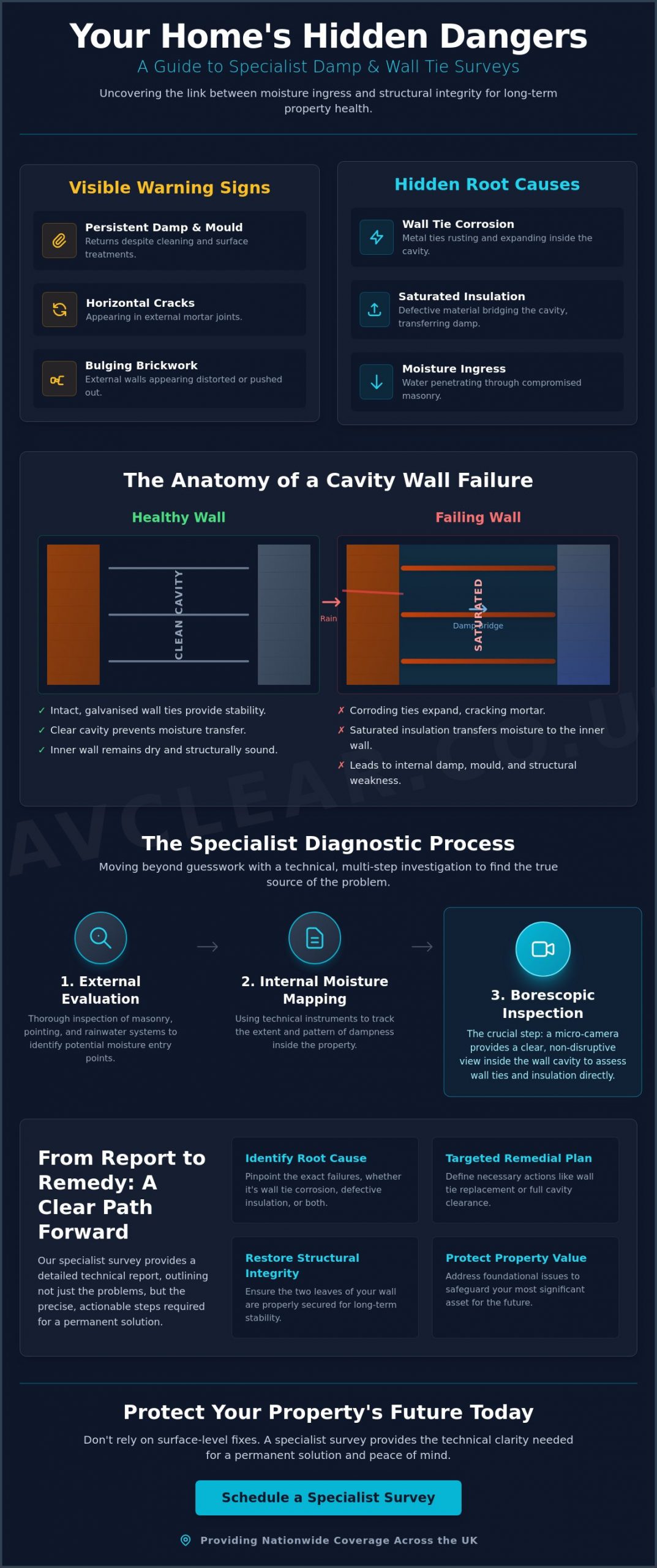
Assessing both environmental factors and structural components is essential because moisture acts as a catalyst for masonry failure. When water enters a cavity, it often causes metal wall ties to oxidize. As these ties rust, they expand to several times their original size. This expansion exerts immense pressure on the surrounding mortar, leading to cracks that allow even more water to enter. Visual inspections alone are insufficient for modern cavity wall properties. You cannot see the state of a wall tie or the condition of hidden insulation without looking inside the void itself.
When to Commission a Specialist Property Inspection
You should consider a specialist inspection if you notice recurring dampness that persists after traditional surface treatments. If you’ve cleaned mould or applied specialist paints only for the problem to return, the source is likely a hidden defect within the wall structure. You should also act if you recognize structural red flags. These include horizontal cracking in mortar joints or visible bulging in the external brickwork. If you’re buying a property and a general survey has flagged high moisture readings, consulting experts like South Surveyors for a specialist damp and wall tie survey is a vital investment to avoid unforeseen repair costs later.
The Scope of a Comprehensive Structural Investigation
A thorough investigation covers every aspect of the building’s protective envelope. We begin by evaluating the external masonry, checking the integrity of the pointing and the efficiency of rainwater goods like gutters and downpipes. Internally, we perform moisture mapping to track how dampness moves through the walls and analyze any hygroscopic salts present on the surface. Crucially, the survey includes a detailed assessment of the cavity void. We check for the presence of defective insulation and evaluate whether it’s bridging moisture from the outer leaf to the inner skin of your home, ensuring a permanent fix for your property’s health.
The Structural Link: How Failing Wall Ties Impact Dampness
Wall ties are the invisible anchors that secure the outer leaf of your masonry to the inner structural skin. In a healthy cavity wall, these components provide essential lateral stability, ensuring the two layers of brickwork act as a single unit. However, when these metal ties begin to degrade, the consequences extend far beyond simple structural movement. A comprehensive damp and wall tie survey often reveals that what appears to be a moisture problem is actually a direct result of physical wall failure.
The primary cause of this degradation is oxidation. Most older properties in the United Kingdom were constructed using mild steel ties that were only lightly galvanised. Over time, exposure to moisture and oxygen causes the metal to rust. As iron converts to iron oxide, it expands to several times its original thickness. This physical growth creates a powerful levering effect within the mortar joints. This process, known as Wall tie failure, forces the brickwork apart and creates horizontal fractures along the bed joints.
These structural cracks act as direct conduits for rainwater. Once the external envelope is breached, gravity and wind pressure drive water into the cavity. If the ties are severely corroded, they can even act as a bridge, allowing liquid water to travel across the void and soak the internal plaster. This is why wall tie replacement is often the most critical first step in any remedial strategy. You cannot solve a dampness issue if the very structure of the wall is facilitating water ingress through thousands of micro-cracks.
Signs of Cavity Wall Tie Failure
Homeowners should look for distinct horizontal cracks that typically appear every six to eight courses of brickwork. These cracks align with the placement of the ties within the mortar. You might also notice the lifting of window sills or lintels as the expanding metal pushes the masonry upward. If you ignore these red flags, the risk of the outer leaf bulging or even collapsing increases significantly during high winds. Arranging a professional wall tie inspection can identify these risks before they become emergency repairs.
The Impact of Corrosion on Property Health
Corrosion doesn’t just threaten the bricks; it ruins the internal environment. Rusting ties transfer moisture and hygroscopic salts from the outer leaf to the inner leaf, leading to “salt damp” and persistent mould. For properties built before 1981, the risk is particularly high because building standards at the time did not require the same level of corrosion protection used today. Structural instability also has a severe impact on property valuation. Most lenders will refuse a mortgage if a damp and wall tie survey suggests the building is unsafe, making a specialist report vital for protecting your asset’s future value.
Investigating the Cavity: The Role of Defective Insulation
The cavity within a masonry wall serves a vital technical purpose. It acts as a physical break that prevents moisture from migrating from the external brickwork to your internal living space. When homeowners opt for retrospective cavity wall insulation, they often inadvertently compromise this defensive void. If the insulation material becomes saturated due to external defects or poor installation, it transforms from a thermal barrier into a moisture bridge. This allows water to seep directly into your structural leaf, causing persistent dampness that surface treatments simply cannot resolve.
During a professional damp and wall tie survey, we frequently discover that wet insulation is the hidden catalyst for both environmental and structural deterioration. Saturated material doesn’t just create a cold, damp home; it fosters a permanently humid environment within the wall itself. This constant moisture significantly accelerates the oxidation of metal components. While a clear cavity allows wall ties to remain dry and functional for decades, the presence of wet debris or insulation can cause them to corrode and fail prematurely. This link between insulation and structural health is why a comprehensive inspection is so critical.
Remediating these issues requires more than just fixing a leak. Once insulation is wet, it rarely dries out on its own due to the lack of airflow within the cavity. This makes cavity wall insulation removal a necessary step in restoring your property’s health. By clearing the void, we re-establish the building’s natural ventilation and stop the continuous transfer of moisture to your internal walls.
Why Cavity Insulation Fails
Insulation failure typically occurs when the material is installed in properties unsuitable for the system. Houses in areas of high exposure to driving rain are particularly at risk. If the external masonry has even minor cracks or porous bricks, water enters the cavity and is absorbed by the insulation. We also find that construction debris, often called “mortar snots,” can accumulate at the base of the wall. This rubble traps moisture against the insulation, leading to localized failure. Over time, some materials also settle or degrade, creating gaps that result in cold spots and internal condensation.
Symptoms of Saturated Cavity Insulation
You can often identify defective insulation by observing internal damp patches that appear to mirror the pattern of your external brickwork. These patches often darken after heavy rainfall. You might also notice a persistent, musty odour that doesn’t go away even with improved room ventilation. Because wet insulation loses its ability to retain heat, your energy bills may remain high despite the installation. If you’re experiencing these issues, a specialist damp and wall tie survey can confirm if the insulation is compromised and provide a clear plan for extraction and restoration.
The Specialist Survey Process: Advanced Diagnostic Techniques
A standard visual check cannot diagnose the internal health of a cavity wall property. To provide a definitive assessment, we employ advanced diagnostic techniques that reveal what lies beneath the surface. A damp and wall tie survey is a technical investigation that utilizes precision equipment to map moisture and inspect structural components without the need for invasive demolition. This data-driven approach ensures we identify the root cause of a fault rather than just treating the visible symptoms.
The cornerstone of our methodology is the borescopic inspection. This is the only way to visually confirm the state of your wall ties and the condition of any insulation material. By inserting a high-resolution optical probe into the cavity, we can identify corrosion levels, mortar obstructions, or saturated debris. We also use electronic moisture mapping to create a detailed profile of dampness across your walls. This data allows us to distinguish between localized leaks and widespread structural ingress. Thermal imaging cameras further support this by detecting cold bridges and hidden structural anomalies that aren’t visible to the naked eye.
Finally, we perform salt analysis on masonry samples. This test identifies the presence of nitrates and chlorides, which is essential for distinguishing between rising damp from the ground and penetrating moisture caused by cavity defects. If you’re concerned about the integrity of your home, you can book a wall tie survey to get a professional, data-backed diagnosis that restores your peace of mind.
Non-Disruptive Cavity Investigations
We prioritize the cleanliness and security of your property throughout the diagnostic phase. Our technicians drill small, discreet holes into the mortar joints, usually no larger than 12mm. These access points allow for a full borescopic view of the cavity void while remaining virtually invisible once we seal them with matching mortar. It’s vital to check multiple points across different elevations of the building. This ensures we gather a representative sample of the wall’s health, as corrosion or insulation failure often occurs in specific patterns based on weather exposure and prevailing winds.
Moisture Profiling and Data Collection
Our surveyors use calibrated hygrometers to measure relative humidity and dew points within your living spaces. This helps us understand the environmental conditions that contribute to surface mould. We also record deep-wall readings. These measurements are crucial because they differentiate surface condensation from deep-seated structural damp. All findings are documented meticulously. This provides a robust evidence base for structural repair specifications, ensuring that any remedial work is targeted, efficient, and provides a permanent fix for your property’s future.
From Report to Remedy: Protecting Your Property’s Future
Receiving the results of a damp and wall tie survey is the first step toward restoring your home’s structural integrity. The technical report provides a clear hierarchy of needs, distinguishing between urgent structural failures and secondary environmental issues. Understanding this priority is essential. If you treat internal mould without addressing a corroding wall tie, the moisture will return, and the masonry will continue to degrade. A methodical approach ensures that your investment addresses the root cause rather than just the symptoms.
Choosing a specialist contractor to manage both the damp proofing and the structural repairs provides a single point of accountability. When one expert oversees the entire process, from cavity extraction to wall tie installation, you avoid the common pitfalls of using multiple general builders. This integrated strategy protects your property’s long-term value and prevents the recurring devaluations that happen when a home has a history of unresolved dampness or visible structural cracking. For those whose projects involve broader civil engineering or site preparation, you can also check out GCS Contractors Ltd.
Developing a Remedial Action Plan
A professional remedial plan begins by addressing the cavity void. We prioritise the extraction of saturated or defective materials to allow the inner structural leaf to dry out naturally. This is a technical prerequisite for any internal re-plastering or decoration. We then specify the exact grade and density of remedial wall ties required for your specific masonry type, whether it’s traditional brick or stone. Finally, we address external defects. Repairing failed pointing and ensuring lintels are structurally sound creates a holistic fix that seals the building envelope against future weather exposure.
The Value of Specialist Documentation
The technical documentation we provide serves as a vital asset for any property owner. Mortgage lenders and structural engineers often require a specialist damp and wall tie survey to confirm a building’s safety before approving a loan or purchase. By holding a comprehensive report, you possess a clear audit trail that proves the property has been professionally maintained. This transparency is invaluable during a future sale, as it reassures potential buyers that the structural health of the home is documented and restored. Ensure your property is structurally sound. Book your specialist damp and structural survey with CavClear today.
Securing Your Property’s Structural Future
Identifying the link between moisture ingress and structural stability is the only way to achieve a permanent fix for your home. Surface treatments often fail because they ignore the hidden environment within your cavity walls. A professional damp and wall tie survey provides the technical data required to stop corrosion and moisture bridging in its tracks. By addressing defective insulation and failing ties, you restore the natural defensive void that keeps your masonry healthy.
Our accredited technicians provide nationwide UK coverage, specializing in non-disruptive cavity extraction and structural repairs that restore your building’s integrity. Choosing a specialist approach is a vital investment in your property’s long-term asset health and efficiency. You can Book Your Specialist Damp and Structural Survey with CavClear today to receive a clear, actionable remedial plan.
You don’t have to live with the stress of recurring dampness or structural uncertainty. Taking proactive steps now ensures your home remains a safe, dry, and valuable asset for 2026 and beyond.
Frequently Asked Questions
How long does a specialist damp and structural survey take?
A specialist damp and wall tie survey typically takes between two and four hours to complete. The exact duration depends on the size of the property and the number of elevations that require technical inspection. Larger detached homes with multiple cavity issues may require more time to ensure a representative sample of wall ties is assessed across the entire structure.
Will the surveyor need to remove floorboards or plaster?
No, our diagnostic process is designed to be non-disruptive. We don’t need to remove floorboards or strip back plaster to see inside your walls. Instead, we use high-resolution borescopes inserted through small 12mm holes in the external mortar joints. This allows us to inspect the cavity void and wall ties without causing any damage to your internal decorations or the building fabric.
What is the difference between a damp survey and a structural survey?
A damp survey focuses on moisture ingress and environmental conditions like condensation. A structural survey evaluates the physical stability of the masonry, including wall ties and lintels. A combined damp and wall tie survey is essential because it identifies how structural failures, such as cracked mortar from rusting ties, are directly causing your dampness issues.
Can I get a specialist survey if I am just buying a house?
Yes, commissioning a specialist inspection during the house-buying process is a common and proactive step. General RICS surveys often flag high moisture readings but cannot diagnose the underlying cause. A technical report provides the clarity needed to understand potential repair costs before you commit to the purchase, protecting your future investment and providing peace of mind.
Does the survey report include the cost of remedial works?
Yes, a professional survey report includes a detailed remedial action plan along with an estimate for the necessary repairs. This documentation outlines the exact technical steps required, such as cavity extraction or wall tie replacement, to restore the property. Having this clear schedule of works allows you to understand the full scope of the project from the outset.
How much does a specialist survey typically cost in the UK?
In the UK, a basic visual damp survey often costs between £150 and £300, while more comprehensive inspections involving thermal imaging can range from £200 to £500. If the inspection is part of a broader RICS property purchase report, costs typically fall between £400 and £800. Specialist technical investigations vary based on the specific diagnostic tools and access required for the property.
What happens if the survey finds failing wall ties and wet insulation?
If the survey identifies both failing wall ties and saturated insulation, the priority is to clear the cavity void. Saturated material acts as a moisture bridge and accelerates metal corrosion. We typically recommend cavity extraction followed by the installation of remedial wall ties to restore structural stability and allow the masonry to dry out naturally and permanently.
Is a damp survey necessary if I only have a small amount of mould?
Yes, even a small amount of mould can indicate a significant hidden defect. Mould is often the first visible sign of a cold bridge or a moisture path within the cavity. Investigating the issue early prevents the problem from escalating into a major structural fault, such as widespread wall tie failure or extensive masonry damage that requires more costly repairs later.
Recent Comments