
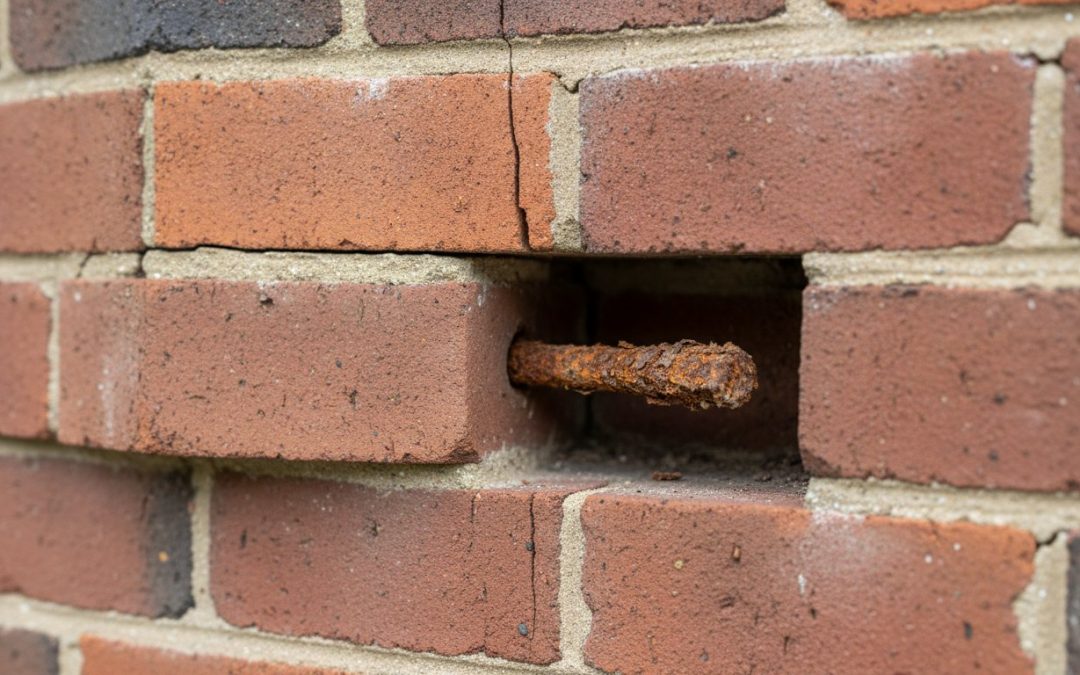
An estimated 10 million homes across the UK are currently at risk of structural damage because of failing masonry components. It is a sobering figure that highlights a hidden crisis within our housing stock, particularly for properties built between 1920 and 1981. If you have noticed a new crack in your mortar or a slight bulge in your external brickwork, it is natural to feel a sense of structural anxiety. You want to know if these are just minor settling marks or the more serious signs of wall tie failure that could compromise your property’s long-term value and safety.
We understand the confusion that often arises from conflicting advice regarding cavity treatments and the fear of hiring contractors who lack specialist expertise. This guide provides a clear framework for identifying the subtle and serious indicators of internal corrosion. You will learn exactly why these metal components fail; we also explain how modern survey techniques can diagnose the issue without disrupting your daily life. By understanding the underlying causes and the correct methodology for a permanent fix, you can restore your home’s structural integrity and ensure its health for decades to come.
Key Takeaways
- Learn to identify the subtle and serious signs of wall tie failure, from hairline mortar cracks to visible external brickwork bulging.
- Understand why retrospective cavity wall insulation often acts as a catalyst for corrosion by trapping moisture against original metal ties.
- Discover the methodical process of a professional wall tie survey and why non-disruptive borescope inspections are the only way to confirm internal conditions.
- Explore the permanent solution of installing remedial stainless steel ties and why the isolation of existing corroded ties is vital for structural stability.
- Gain clear, expert guidance on restoring your property’s value and structural health through certified, long-term remedial methodologies.
What is Wall Tie Failure and Why Does it Threaten Your Home?
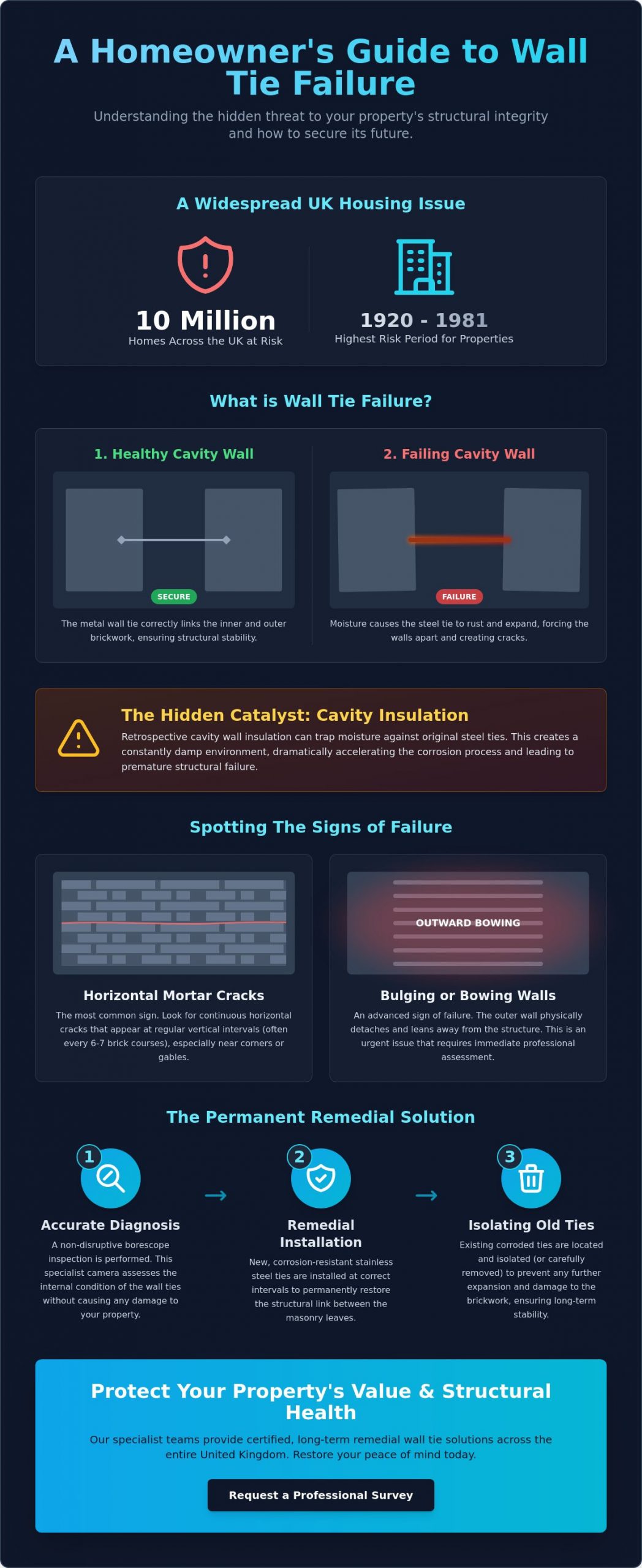
Across the United Kingdom, wall tie failure is the progressive loss of the structural bond between a property’s internal and external masonry leaves. Recognising the signs of wall tie failure is difficult because the process occurs deep within the wall cavity, remaining hidden until damage manifests as external defects. A cavity wall tie is a small but critical component designed to lock the two skins of a building together. In older properties, these were typically manufactured from mild steel or inadequately galvanised metal. Over time, these materials succumb to corrosion, especially when moisture is present. Modern standards mandate the use of stainless steel, but millions of UK homes still rely on original, vulnerable hardware.
The Vital Role of Ties in UK Cavity Wall Construction
A cavity wall consists of two separate layers of masonry. The inner leaf usually supports the weight of the roof and floors, while the outer leaf provides a weather-resistant shell. These layers must act as a single unit to maintain stability. Wall ties provide this lateral connection. They distribute wind loads across both leaves and prevent the outer wall from bowing under pressure. Properties constructed between 1930 and 1980 are at the highest risk. The lifespan of the original ties was often shorter than the building itself, meaning they don’t offer the same security they once did.
The Mechanism of Failure: Corrosion and Expansion
The primary cause of failure is oxidation. When mild steel ties are exposed to oxygen and moisture, they begin to rust. This chemical reaction creates iron oxide, which occupies a much larger volume than the original steel. In many cases, the rust grows to several times the thickness of the initial tie. This phenomenon, known as iron oxide expansion, creates immense internal pressure. Because the ties are embedded into the mortar joints, this expansion forces the brickwork apart. This mechanical force produces the characteristic horizontal cracking often seen in failing walls.
Identifying the early signs of wall tie failure is essential for preventing long-term damage. If you ignore these symptoms, the corrosion continues until the tie snaps or the expansion forces the masonry to bow outward. This movement compromises the entire structure’s integrity. In extreme cases, the outer leaf can detach from the inner leaf entirely, leading to catastrophic wall collapse. Addressing the problem early with a professional survey is a vital investment in the property’s future health and market value.
Identifying the Key Visual Signs of Wall Tie Failure
Monitoring your property for the early signs of wall tie failure is the first step toward preventing a structural crisis. While a single hairline crack might suggest minor settlement, a recurring pattern often points to a deeper systemic issue. Understanding What is wall tie failure? involves looking beyond the surface to see how internal corrosion forces external masonry to shift. Homeowners should look for specific patterns of movement that indicate the internal metal components are no longer providing the necessary lateral stability.
Horizontal Cracking in External Mortar Joints
Horizontal cracks in external mortar joints are the most common indicator. These typically appear at regular vertical intervals, often every six to seven courses of bricks. This specific spacing corresponds to the original placement of the ties during the construction process. As the metal expands through oxidation, it exerts significant upward pressure on the mortar bed, causing it to split. You will often see these cracks starting at the corners of the building or near gable ends. These areas are most exposed to wind-driven rain, which accelerates the corrosion process.
Bulging Brickwork and Outward Wall Movement
Bulging or bowing brickwork represents a more advanced stage of structural failure. This occurs when the outer leaf physically detaches and leans away from the inner leaf because the ties have either snapped or lost their grip. To spot this, stand at the corner of your house and look along the line of the wall from a side angle. Any noticeable curve or “belly” in the brickwork is an urgent warning sign. If you leave this unaddressed, the lack of connection can lead to the total collapse of the outer masonry skin.
Secondary Signs: Windows, Doors, and Lintels
Don’t ignore the more subtle indicators that suggest masonry movement. Separation between window frames and the surrounding brickwork often signals that the wall is shifting outward. Similarly, you might notice lintels above doors or windows appearing to sag or drop as the supporting bricks move. In some cases, internal “ghosting” or hairline cracks on plasterwork may appear. While rarer than external symptoms, these internal signs often reflect significant movement in the cavity.
Homeowners often make the mistake of simply repointing these cracks to improve the building’s appearance. This is a purely cosmetic fix that hides the ongoing decay within the cavity. Hiding the problem doesn’t stop the corrosion; it only delays the necessary structural intervention. If you notice these symptoms, arranging a professional Wall Tie Survey is the only way to confirm the condition of your masonry connections and protect your property’s long-term health.
The Hidden Catalyst: How Retrospective Insulation Accelerates Damage
Many property owners find that the emergence of signs of wall tie failure often follows the installation of retrospective cavity insulation. While these products were intended to improve thermal efficiency, they fundamentally alter the micro-climate of the wall structure. A traditional cavity wall relies on a clear air gap to prevent water from migrating from the external brickwork to the internal leaf. By filling this void, the insulation provides a physical bridge that allows wind-driven rain to travel across the cavity. This moisture often settles directly on the metal ties, initiating or accelerating the oxidation process.
When insulation becomes saturated, it acts as a damp reservoir. It holds water against the ties for extended periods, preventing the metal from ever drying out. This constant state of dampness is a primary catalyst for rapid corrosion. In many cases, Cavity wall insulation removal is a necessary prerequisite for structural health. Removing the wet material allows the cavity to dry naturally and stops the accelerated decay of your property’s wall ties.
Moisture Trapping and the Cavity Micro-Climate
The Risk of Ignoring Defective Insulation
Replacing failing ties without addressing the presence of wet insulation is a short-sighted measure. If the cavity remains filled with damp material, the new ties will be subjected to unnecessary environmental stress from the outset. We advocate for a “clear cavity” approach to ensure long-term asset health. This methodology restores the building’s original design intent, allowing the structure to breathe and remain dry. Before proceeding with any remedial work, a professional cavity wall survey is essential to determine the extent of insulation saturation and its impact on your wall ties. This diagnostic step ensures that the repair is permanent and provides the protection your home requires.
Professional Diagnosis: What Happens During a Wall Tie Survey?
A visual inspection from ground level can suggest a problem, but it cannot confirm the structural condition of the hidden steel components. The presence of visual signs of wall tie failure requires a methodical diagnostic response rather than guesswork. Many general builders offer a “expert check,” which often amounts to little more than a subjective glance at the brickwork. In contrast, a specialist structural inspection utilizes forensic equipment to provide an evidence-based assessment. This professional approach is essential for property owners who require a definitive report for insurance providers or mortgage lenders. It transforms structural anxiety into a clear, actionable plan for preservation.
Forensic Tools: Borescopes and Metal Detection
Technicians begin the process by using deep-scan metal detectors to locate the exact position of every tie within the masonry. This is a critical step because original ties are often hidden by mortar or were improperly spaced during the building’s construction. Once we map the ties, we use high-resolution borescopes to inspect the cavity micro-environment. By drilling a small, non-disruptive hole (typically 10mm to 12mm), we insert a camera to view the ties directly. This allows us to grade the failure accurately, moving from Grade 1, which indicates early surface rust, to Grade 4, which signifies severe iron oxide expansion or a total loss of the metal section. This grading system ensures that the recommended solution is proportionate to the actual risk.
Structural Analysis and Remedial Action Plans
The resulting report details the density of the ties and compares this against current building regulations. Modern standards, specifically PD 6697:2019, generally require a minimum density of 2.5 ties per square metre. If the survey reveals fewer ties or widespread corrosion, we produce a formal remedial action plan. This document specifies the exact type and number of stainless steel replacements required to restore lateral stability to the structure. Because moisture is the primary driver of metal decay, damp surveys are often conducted concurrently. This holistic view ensures that we address root causes, such as saturated insulation or defective mortar, alongside the structural repair. This methodical approach protects the long-term health of the asset and provides a permanent resolution.
If you suspect your property is at risk, booking a professional Wall Tie Survey across our nationwide service area provides the technical clarity needed to protect your home’s structural integrity and value.
Remedial Solutions: Replacing Failing Wall Ties Permanently
Confirming the signs of wall tie failure through a professional survey is the necessary first step toward restoring your property’s structural safety. Once we identify the extent of the corrosion, we implement a permanent engineering solution to re-establish the bond between the masonry leaves. Modern remedial techniques have evolved significantly; we no longer require the intrusive and messy masonry removal methods of the past. Instead, we utilize high-precision, non-disruptive technologies that restore lateral stability without compromising the aesthetic of your home’s exterior. This approach ensures that your property remains a safe, long-term asset.
The Installation of Stainless Steel Remedial Ties
The choice of remedial tie depends on the specific masonry type and the condition of the cavity. We typically deploy three primary types of ties to ensure a secure fix:
- Helical Ties: These are driven into small pilot holes and rely on a mechanical grip within the brickwork.
- Resin-Bonded Ties: These use a high-strength chemical anchor to secure the tie, which is ideal for weaker or perforated masonry.
- Mechanical Expansion Ties: These utilize a torque-controlled expansion mechanism to lock into the inner and outer leaves.
Our technicians use a “drill and fix” methodology. We create small, precise entry points that are easily camouflaged upon completion, avoiding the need for large-scale masonry dismantling. We exclusively use 304 or 316-grade stainless steel for all replacements. These materials offer lifetime resistance to corrosion, ensuring that the new ties will never succumb to the oxidation issues that plagued the original mild steel components.
Old Tie Isolation: Preventing Future Damage
Installing new ties is only half of a professional remedial process. If the original corroding ties remain active within the mortar bed, they will continue to expand. As we discussed in earlier sections, this iron oxide expansion exerts immense pressure that can continue to crack your brickwork even after new ties are fitted. To prevent this, we perform “old tie isolation.” This involves locating the original hardware and either “sleeving” them or using foam isolation to decouple them from the masonry. This step stops the mechanical force of the rust from causing further decorative or structural damage.
Our methodology prioritizes a clean workspace and minimal disruption to your daily life. We take pride in rectifying the structural faults caused by historical building standards or the installation of damp-trapping insulation. By following these rigorous technical standards, we provide property owners with the long-term assurances they need. Professional wall tie replacement is the only reliable path to ensuring the permanent stability and future value of your home. Our nationwide team is equipped to deliver these specialist services across the United Kingdom, restoring comfort and security to every property we treat.
Protecting Your Property’s Structural Future
Addressing structural defects requires a methodical approach that prioritizes long-term asset health over cosmetic repairs. We’ve explored how identifying the initial signs of wall tie failure is the first step in preventing catastrophic masonry movement. Whether the damage was triggered by the natural aging of galvanized steel or accelerated by saturated retrospective insulation, the solution remains a professional diagnostic survey. This process moves beyond surface-level observations to provide the technical clarity needed for a permanent fix.
Our accredited specialist technicians provide nationwide UK coverage, delivering detailed structural reporting that removes the guesswork from property maintenance. By replacing compromised ties with high-grade stainless steel and isolating existing corrosion, we restore the lateral stability your home depends on. Every remedial project is backed by long-term guarantees; this ensures your property remains a safe and valuable investment for decades to come. Taking action now prevents minor cracks from evolving into significant structural liabilities.
Don’t let structural anxiety compromise your peace of mind. Book Your National Wall Tie Survey with CavClear Today and take the first step toward a permanent, professional resolution. Restoring your home’s integrity is a vital investment in its future, and we’re here to guide you through every step of the process.
Frequently Asked Questions
How much does a wall tie survey cost in the UK?
The cost of a wall tie survey depends on several factors, including the property’s size, its location, and the ease of access for technicians. While prices vary across the industry, the fee reflects the use of specialist forensic equipment like high-resolution borescopes and deep-scan metal detectors. Investing in a professional survey provides a detailed technical report that is often essential for mortgage approvals and long-term property preservation.
Can I sell a house with wall tie failure?
You can sell a property with structural issues, but failing masonry connections often complicate the transaction. Most surveyors will identify signs of wall tie failure during a standard homebuyer’s report, which can lead to a reduced valuation. Lenders typically require a specialist structural survey and a documented remedial plan before they will approve a mortgage. Addressing these issues before listing your home protects its market value and prevents sales from falling through.
Does home insurance cover the cost of wall tie replacement?
Standard home insurance policies rarely cover the cost of replacing wall ties. Insurers generally categorize metal corrosion as “wear and tear” or gradual deterioration rather than a sudden, accidental event. Because the oxidation process happens over many years, it falls outside the scope of most building cover. Maintaining the structural integrity of the masonry is considered the homeowner’s responsibility, which makes early detection through regular inspections a vital part of asset management.
How long do remedial wall ties last?
Modern remedial ties manufactured from 304 or 316-grade stainless steel are designed to last for the remaining life of the building. These materials are highly resistant to oxidation and chemical attack, unlike the mild steel or poorly galvanized ties used in the mid-20th century. When installed according to professional technical standards, stainless steel ties provide a permanent fix that restores the building’s lateral stability indefinitely.
Is wall tie failure dangerous?
Structural failure of this nature is a serious safety concern. When the connection between the inner and outer masonry leaves is lost, the external wall can bow or lean outward, losing its lateral support. In extreme cases, high winds or structural vibrations can cause the entire outer leaf to collapse. Identifying signs of wall tie failure early is essential to prevent catastrophic damage and ensure the safety of everyone in and around the property.
Can I replace wall ties myself?
Wall tie replacement is a specialist structural task that you shouldn’t attempt as a DIY project. The process requires specific diagnostic tools to map existing ties and high-resolution cameras to inspect the cavity’s condition. Furthermore, the installation must meet strict UK Building Regulations regarding tie density and embedment depth. Professional technicians ensure that new ties are correctly fitted and that old, expanding ties are isolated to prevent further masonry cracking.
How do I know if my cavity wall insulation is causing tie corrosion?
Saturated or defective cavity insulation often manifests as persistent internal damp or localized external cracking. If the insulation material has become wet, it bridges the cavity and holds moisture directly against the metal ties, which significantly accelerates the rusting process. A professional cavity wall survey is the only definitive way to see inside the wall and confirm if the insulation is creating a corrosive environment for your structural ties.
What happens if I ignore the cracks in my brickwork?
Ignoring these cracks allows the underlying corrosion to continue unchecked. As the metal ties oxidize, they expand to several times their original size, exerting immense pressure that forces the mortar joints further apart. Over time, this leads to significant bowing and the eventual detachment of the outer masonry leaf. Delaying a professional survey usually results in much higher repair costs as the damage spreads and compromises the safety of the entire structure.
Recent Comments