
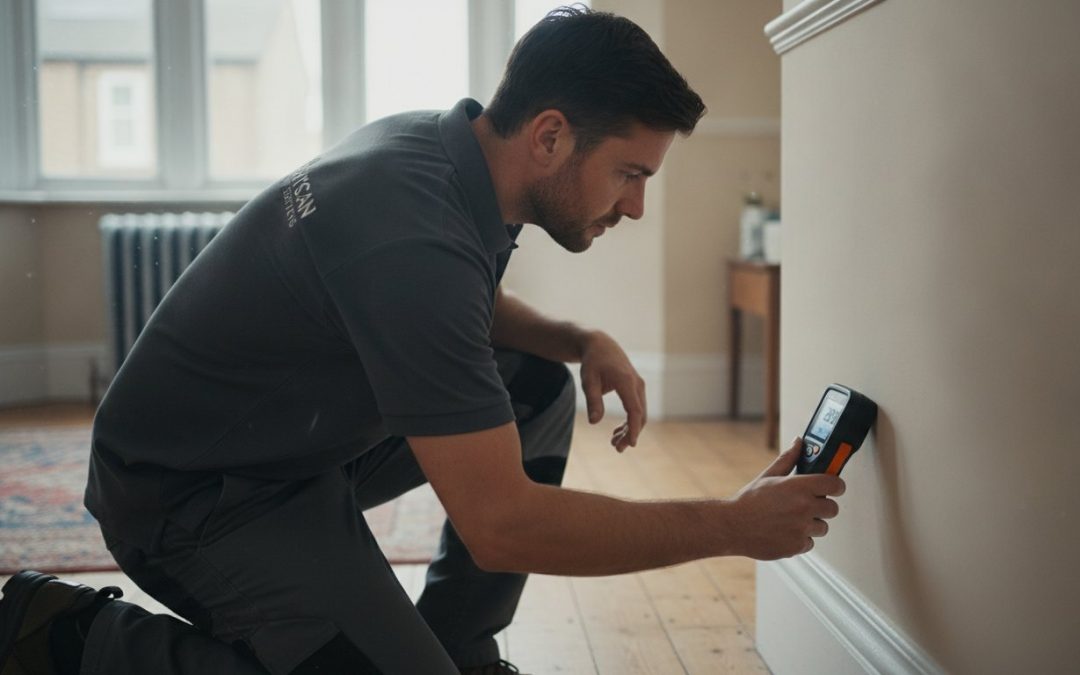
Most damp “treatments” fail because the person diagnosing them was a salesman instead of a specialist surveyor. If you are struggling with persistent mould or conflicting advice from different contractors, you likely feel the stress of a property that refuses to stay dry. Understanding how to find a qualified damp surveyor is the only way to move past temporary patches and secure a permanent solution for your home. With 1.4 million dwellings in England currently affected by moisture issues, the market is saturated with quick fixes that often ignore the underlying structural causes, such as failing wall ties or compromised cavity insulation.
It’s frustrating to invest in expensive chemical damp proofing only to see the damp return a few months later. You deserve a definitive diagnosis that addresses the root cause rather than just the symptoms. This guide explains how to identify genuine technical expertise, verify professional credentials without falling for high-pressure sales tactics, and ensure your survey report is robust enough for insurance or structural planning. We’ll examine the specific diagnostic tools a professional should use and explain why a thorough inspection of your wall ties and cavity health is non-negotiable for a dry, safe home in 2026.
Key Takeaways
- Identify the technical difference between a general property inspector and a specialist structural investigator to ensure the root cause of moisture ingress is correctly diagnosed.
- Learn how to find a qualified damp surveyor by verifying industry-recognised certifications and RICS accreditation, which are essential for mortgage-approved reports.
- Understand why independent, paid surveys provide objective results and help you avoid the common “expert survey” trap used to sell unnecessary chemical treatments.
- Discover the essential steps of a professional investigation, including external envelope assessments and internal moisture mapping using calibrated equipment.
- Recognise the critical link between persistent dampness and structural faults like failing wall ties or defective cavity insulation to ensure a permanent restoration of your home’s integrity.
What is a Qualified Damp Surveyor and Why Do You Need One?
A qualified damp surveyor is a technical professional dedicated to uncovering the origin of moisture within a building’s fabric. Unlike a general home inspector who provides a broad overview of a property’s condition, this specialist focuses on the physics of water movement. They possess a deep understanding of how structural dampness interacts with specific building materials. This expertise is vital for maintaining long-term asset health and ensuring your property remains a safe, dry environment. Surface-level moisture readings are often misleading if they aren’t interpreted within a broader structural context. A high reading on a meter doesn’t automatically mean you need a new damp proof course; it simply indicates that moisture is present. The real value of a specialist lies in their ability to explain why it’s there.
The Difference Between a Salesperson and a Surveyor
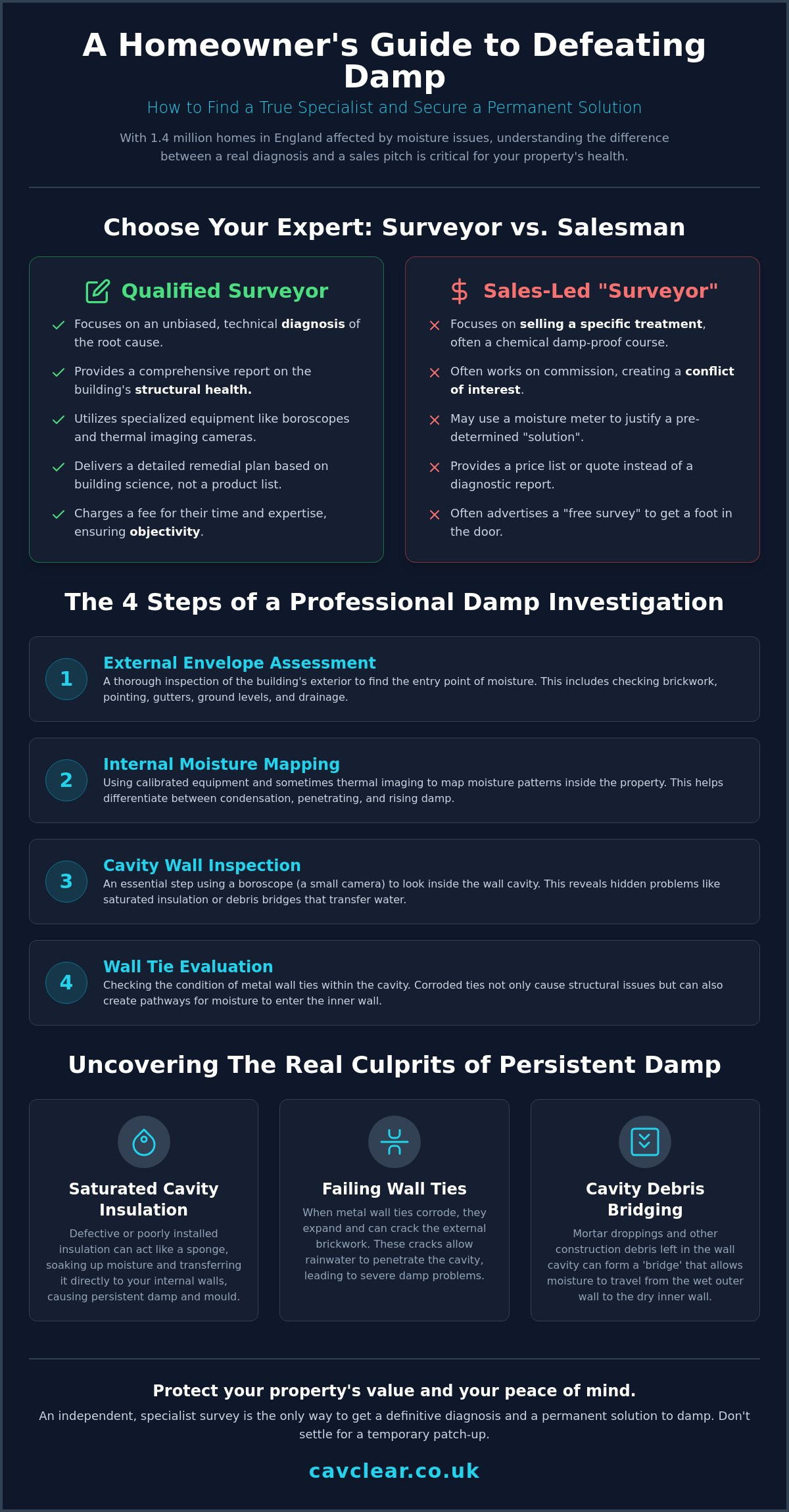
Many homeowners struggle with how to find a qualified damp surveyor because the market is filled with individuals who are essentially sales representatives. These “surveyors” are often incentivised to recommend specific chemical treatments or injection damp proof courses that may not be necessary. You can often spot a salesperson by their focus on a single product rather than a holistic building inspection. In contrast, an objective surveyor provides a detailed report on the building’s condition without a pre-determined product to sell. Investing in an independent survey is a proactive step that protects your property’s value. It ensures you receive an unbiased remedial action plan rather than a simple price list for a one-size-fits-all solution.
Common Issues a Qualified Professional Should Identify
A professional investigation goes beyond the surface of the plaster. While a moisture meter might beep at a damp patch, it won’t explain if the cause is rising damp, penetrating moisture, or internal condensation. A specialist will examine the external envelope of your home, looking for defects in the brickwork, gutters, or ground levels. Crucially, they will assess the internal cavity of the walls. A thorough diagnostic process includes the following steps:
- Identifying the source: Differentiating between rising damp, penetrating damp, and condensation through thermal imaging and moisture mapping.
- Checking cavity health: Using boroscopes to inspect for saturated insulation or debris that bridges the cavity.
- Evaluating wall ties: Inspecting for corrosion or failure in wall ties that can lead to structural instability and moisture ingress.
- Providing a roadmap: Delivering a technical report that outlines the necessary repairs to restore structural integrity.
Knowing how to find a qualified damp surveyor who understands these complexities is the first step toward a permanent fix. By focusing on the structural health of your property, you avoid the cycle of temporary repairs and ensure your home remains an efficient, long-term asset.
Key Qualifications and Professional Standards to Verify
A primary benchmark for mortgage-approved reports is accreditation from the Royal Institution of Chartered Surveyors (RICS). Lenders often require these reports because they follow strict professional standards and ethical guidelines. Beyond RICS, you should confirm the surveyor carries professional indemnity insurance. This insurance isn’t just a formality; it’s a safety net that ensures the surveyor stands by their report. If a diagnosis is proven negligent, you have legal recourse. Professional indemnity insurance demonstrates a commitment to accuracy that uninsured “handymen” simply cannot offer.
Technical Accreditations Explained
Technical certifications are essential because they prove a surveyor has passed formal examinations in building pathology and moisture control. Look for professionals who hold City & Guilds Assured certifications or other high-level industry training. These qualifications require a deep understanding of how water moves through masonry and the physics of internal condensation. When you’re researching how to find a qualified damp surveyor, always ask for proof of these registers. An accredited technician will be happy to provide their certification numbers for your peace of mind.
The Role of Experience in Building Pathology
UK homes vary significantly in construction, from solid-wall Victorian terraces to modern steel-frame buildings with complex cavities. A qualified professional must understand these regional variations across the United Kingdom to provide an accurate diagnosis. Specialist expertise is particularly vital when dealing with niche issues like wall tie corrosion or saturated insulation. A comprehensive wall tie survey conducted by an accredited professional can prevent minor moisture issues from becoming major structural failures. Experience allows a surveyor to see the “story” of a building, identifying how past alterations or poor workmanship might be contributing to current dampness. This level of insight is what separates a true expert from a salesperson with a moisture meter.
Independent Reports vs. Contractor Quotes: Avoiding Bias
Choosing between a paid independent report and a expert contractor quote is often the most significant decision a homeowner makes. When searching for how to find a qualified damp surveyor, it’s easy to be swayed by the promise of a zero-cost inspection. However, these “expert” services are typically offered by companies that profit from the remedial work they recommend. This creates an inherent conflict of interest. A contractor is incentivised to find a problem that their specific product can solve, often leading to the mis-selling of expensive chemical damp proofing. An independent surveyor, conversely, charges for their time and technical expertise. Their goal is to provide an accurate diagnosis, regardless of whether that diagnosis requires a minor maintenance task or a major structural repair.
This objectivity is why mortgage lenders and insurance companies often insist on specialist reports from independent professionals. A diagnostic report acts as a legal and technical safeguard for your property investment. It provides a clear remedial action plan that you can use to obtain competitive quotes from various tradespeople. This approach ensures you aren’t tied to a single contractor’s high-pressure sales tactics or limited range of solutions. By paying for a survey, you are buying the truth about your property’s condition rather than a sales pitch.
When to Choose an Independent Damp Surveyor
Impartiality is crucial when you are buying or selling a home across the United Kingdom. Mortgage lenders frequently reject contractor quotes because they lack the objective rigour of a specialist report. If you are disputing previous poor workmanship or dealing with an insurance matter, a neutral third party is essential. Independent experts are also the best choice for complex cases where previous “fixes” have failed. They look for the source of the moisture rather than just the surface symptoms, ensuring that any investment in repairs is well-spent.
Evaluating the Survey Report Quality
A professional report should be a technical document, not a two-page quote. It must go beyond simple observations and include moisture maps that track the spread of dampness throughout the building fabric. You should look for evidence of site-specific analysis rather than generic, copy-pasted recommendations. A high-quality report identifies specific structural defects that lead to moisture ingress. For example, it might link internal dampness to external masonry failure or a specific need for wall tie replacement to restore structural stability. If a report suggests a generic chemical injection without explaining the physics of the moisture ingress, it is likely a sales tool rather than a professional diagnosis.
The Step-by-Step Process of a Professional Damp Investigation
A professional investigation begins long before a surveyor enters your property. A methodical approach is the hallmark of technical expertise, starting with a meticulous review of the building envelope. Your surveyor should examine the condition of the external masonry, the integrity of the guttering system, and the height of the ground levels relative to the damp proof course. These external factors are frequently the primary drivers of internal moisture issues. Understanding how to find a qualified damp surveyor means looking for a professional who treats the building as a complete system rather than focusing solely on a single damp patch in a living room.
Once the external assessment is complete, the process moves indoors for internal moisture mapping. This phase involves using calibrated equipment to track the spread of moisture across walls and floors. By plotting these readings, a surveyor can visualise the movement of water through the building fabric, which helps to distinguish between rising damp and penetrating moisture. Environmental monitoring is also essential during this stage. By measuring ambient humidity and surface temperatures, a specialist can rule out condensation as the primary cause, ensuring the remedial plan targets the correct structural fault.
Tools of the Trade: What Your Surveyor Should Be Using
The accuracy of a diagnosis depends heavily on the tools employed. A qualified professional should use a protimeter to obtain deep-wall moisture readings, but they must interpret these results with caution. Surface readings alone can be misleading. High-quality investigations often incorporate thermal imaging to identify cold bridges or hidden pipe leaks that are invisible to the naked eye. Borescope cameras are another vital tool, allowing for a non-destructive inspection of the wall cavity to check for debris or failed insulation that might be bridging the gap and transferring moisture to the inner leaf.
Structural Integrity Checks: The Missing Link
A comprehensive investigation must look beneath the surface to evaluate the hidden components of your home. If a surveyor suspects that moisture is bypassing the cavity, they should recommend a specialist wall tie survey to check for corrosion or failure. Corroding ties can expand and crack mortar joints, creating direct pathways for water to enter the property. Surface moisture is often just a symptom of deeper structural failure. When you are researching how to find a qualified damp surveyor, ensure they have the capability to perform these diagnostic structural checks. Professional cavity wall surveys identify these hidden issues before they escalate into major repairs, protecting both your home’s structural integrity and its long-term market value. The final report should tie all these findings together, delivering a clear, evidence-based remedial action plan that avoids generic treatments.
Why Structural Expertise is Essential for Permanent Damp Solutions
Permanent damp resolution is impossible without a thorough understanding of a property’s structural health. While many contractors focus on chemical injections or surface treatments, these are often temporary patches for deeper issues. If your wall ties are failing or your cavity insulation is saturated, moisture will continue to bypass your building’s primary defences. Understanding how to find a qualified damp surveyor who prioritises structural investigation over product sales is the only way to protect your home’s future value. A specialist who ignores the condition of your cavity wall is providing an incomplete diagnosis that will likely lead to repeated repair costs and persistent environmental issues.
Structural faults such as wall tie corrosion can compromise the stability of the masonry, creating cracks that allow penetrating damp to take hold. Similarly, defective cavity insulation acts as a bridge, drawing moisture from the external leaf to the internal plaster. By addressing these root causes, you restore the property’s efficiency and safety. This holistic approach ensures that the fix is permanent, providing the peace of mind that comes with a structurally sound asset. Identifying these faults requires a diagnostic mindset that looks beyond what is visible on the surface of the walls.
The Risks of Overlooking Cavity Wall Health
Failed insulation is a primary driver of persistent penetrating damp and toxic mould growth in modern UK homes. When insulation becomes wet, it loses its thermal properties and begins to hold moisture against the inner leaf of the wall. It is vital to remember that you should never install retrospective cavity wall insulation in an at-risk property, as this often exacerbates existing moisture problems and leads to wall tie corrosion. If you suspect your home is suffering from these issues, consult our complete guide to cavity wall insulation removal to understand the extraction process and its benefits for your property’s health.
Ensuring a Permanent Fix with CavClear
CavClear’s accredited technicians provide a comprehensive view of property health across the entire United Kingdom. Our methodology focuses on clean, non-disruptive structural investigations that identify the exact source of moisture ingress. We provide detailed reports that prioritise long-term structural integrity rather than quick, cosmetic fixes. By choosing a specialist with deep technical expertise in cavity health and wall tie replacement, you ensure that your property remains dry and efficient for years to come. Knowing how to find a qualified damp surveyor with this level of structural focus is the first step toward a healthy home. Book a professional damp and structural investigation with CavClear today to secure a definitive diagnosis and a permanent resolution for your home.
Protecting Your Property’s Future with Expert Diagnosis
A permanent solution to dampness starts with a diagnostic mindset that prioritises structural integrity over superficial fixes. By understanding how to find a qualified damp surveyor, you ensure that your property receives an unbiased assessment rooted in technical standards rather than sales targets. Verifying professional certifications and insisting on a thorough inspection of the building envelope, including wall ties and cavity health, are the most effective ways to protect your home’s long-term asset value. You deserve a clear roadmap that addresses the root cause of moisture ingress once and for all.
Once a survey identifies necessary structural repairs, engaging a specialist in building restoration is crucial for a long-lasting result; for an example of expertise in this field, learn more about CGC – CACHETAS GENERAL CONSTRUCTION.
Our accredited specialist technicians provide nationwide UK service coverage, delivering the detailed technical reporting and remedial planning necessary to resolve moisture issues for good. It’s time to move past temporary patches and invest in the structural health of your property. Secure your property’s future with a professional damp and structural investigation from CavClear. Taking proactive steps today ensures a dry, efficient, and structurally sound home for the years ahead.
Frequently Asked Questions
How much does a professional damp survey cost in the UK?
A basic damp survey in the UK typically costs between £150 and £300; however, comprehensive investigations using advanced tools like thermal imaging can range from £200 to £500. For those purchasing a home, a specialist report for mortgage purposes usually costs between £200 and £400. These fees reflect the time and technical expertise required to provide an unbiased diagnosis rather than a sales quote.
Is a expert damp survey really expert or just a sales pitch?
Most “expert” damp surveys are conducted by contractors who use the inspection as a sales opportunity to recommend expensive chemical treatments. In contrast, a paid survey from an independent professional ensures you receive an objective diagnosis based on building physics. Paying for expertise is often the most cost-effective way to avoid unnecessary and ineffective repairs that don’t address the root cause of moisture ingress.
What qualifications should I look for in a damp surveyor?
You should look for surveyors with recognised technical certifications such as City & Guilds Assured qualifications or RICS accreditation. These credentials prove the individual has passed formal examinations in building pathology and moisture control. When researching how to find a qualified damp surveyor, always verify that they hold professional indemnity insurance, which ensures they are accountable for the accuracy of their technical findings.
Can a damp survey be done during a house purchase?
Damp surveys are a standard part of the house purchase process and are frequently requested by mortgage lenders when a general survey identifies moisture issues. A specialist report provides a clear understanding of potential structural repairs before you commit to the purchase. This documentation is essential for negotiating repair costs or ensuring the property meets the necessary standards for structural integrity and safety.
How long does a professional damp investigation take to complete?
A thorough professional investigation typically takes between one and three hours to complete depending on the size and complexity of the property. The surveyor needs this time to conduct an external assessment of the building envelope before moving inside for moisture mapping. A rushed inspection often misses subtle structural defects, such as failing wall ties or debris within the cavity, which are critical for a permanent fix.
Will a damp surveyor need to damage my walls during the inspection?
Professional damp investigations are predominantly non-destructive and use advanced technology to see behind the wall surface. Surveyors utilise protimeters to measure moisture levels and thermal imaging cameras to identify cold bridges. If a cavity inspection is required, a specialist will use a borescope camera through a small hole in a mortar joint; this ensures the structural fabric remains undisturbed while gathering vital diagnostic data.
What is the difference between a damp surveyor and a damp-proofing contractor?
A damp surveyor is a diagnostic specialist who identifies the root cause of moisture, whereas a contractor is focused on selling specific remedial products. Surveyors provide a technical report that serves as a roadmap for repairs, which you can then use to tender for work from multiple tradespeople. This distinction is vital when learning how to find a qualified damp surveyor who will provide objective advice rather than a biased sales pitch.
What happens if the damp survey finds structural issues like wall tie corrosion?
If structural issues like wall tie corrosion are identified, the surveyor will recommend a specialist wall tie survey to determine the extent of the failure. Corroding ties can expand and crack masonry, creating direct pathways for penetrating damp. Addressing these structural faults is a prerequisite for any permanent damp-proofing solution; failing to fix the underlying structure ensures that moisture problems will eventually return and worsen.
Recent Comments