

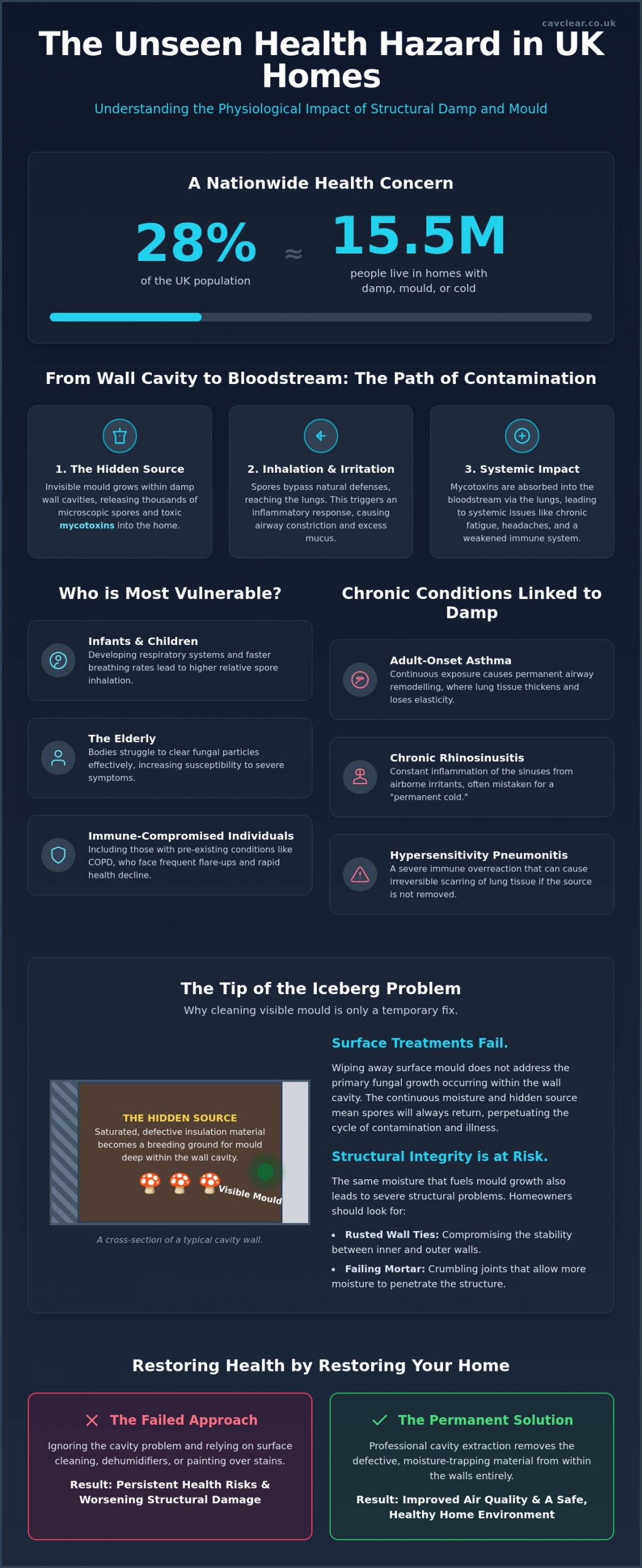
Research commissioned by Health Equals in late 2025 revealed that approximately 28% of the UK population, roughly 15.5 million people, live in homes suffering from damp, mould, or cold. If you’ve spent months cleaning surface spores only for them to return, you understand how frustrating and worrying this cycle becomes. The health risks of living in a damp house represent a serious threat to your family’s respiratory system and general wellbeing; it’s a structural failure with real physiological consequences.
It’s natural to feel anxious about the impact on children or elderly relatives when persistent coughs become a household fixture. In this specialist guide, you’ll discover the specific physiological impacts of domestic dampness and learn why addressing structural root causes is the only way to protect your family’s long-term health. We will examine the medical risks involved and provide a clear diagnostic path to finding a permanent solution that restores your home’s integrity, ensuring your property remains a safe, healthy environment for the future.
Key Takeaways
- Understand how invisible mould spores and toxic mycotoxins circulate through your home to cause chronic respiratory conditions.
- Identify the specific health risks of living in a damp house, ranging from the development of adult asthma to persistent rhinosinusitis.
- Recognize why surface treatments fail because they ignore the primary fungal growth occurring within the wall cavity.
- Learn to spot structural indicators of dampness, such as rusted wall ties and failing mortar, using our diagnostic checklist.
- Discover why technical cavity extraction provides a permanent solution by removing defective materials and restoring air quality.
Understanding the Physiological Impact of Damp and Mould Exposure
Mould is more than a cosmetic defect on a wall. It is a biological entity that releases thousands of microscopic spores into the air you breathe every day. These spores are often invisible to the naked eye, meaning your family may be inhaling them long before you spot a patch of black mould. When moisture levels remain high due to structural faults, these fungi produce secondary metabolites known as mycotoxins. These toxic chemicals can settle on furniture and dust, creating a persistent environmental hazard that remains even after you’ve wiped down the visible surfaces.
That familiar musty odour often associated with older properties isn’t just “old house smell.” It’s the result of microbial volatile organic compounds (mVOCs) being released as the mould consumes organic matter like wallpaper paste or timber. This chemical off-gassing serves as a clear warning that the air quality is compromised. A comprehensive Structural Dampness Overview confirms that these environmental conditions also create a perfect breeding ground for dust mites and other allergens. These organisms thrive in humidity levels exceeding 60%, significantly increasing the health risks of living in a damp house by compounding the biological load on your immune system.
The Mechanism of Inhalation and Irritation
Microscopic spores are small enough to bypass the body’s initial filtration systems in the nose and throat. Once they reach the lower respiratory tract, fungal cell wall components like glucans trigger a localized inflammatory response. This inflammation causes the airways to constrict and produce excess mucus. Mycotoxins enter the bloodstream through the thin membranes of lung tissue after they are inhaled into the deep alveolar sacs. This direct path to the circulatory system explains why domestic dampness can cause systemic fatigue and headaches rather than just respiratory issues.
Who is Most at Risk in the UK?
Vulnerability to dampness isn’t uniform across the population. Infants are particularly at risk because their respiratory systems are still developing; their faster breathing rates mean they inhale more spores relative to their body weight than adults. The elderly and those with compromised immune systems also face higher risks, as their bodies struggle to clear fungal particles effectively. For individuals with pre-existing conditions like Chronic Obstructive Pulmonary Disease (COPD), the health risks of living in a damp house are severe. Constant exposure to spores can lead to frequent flare-ups and a permanent decline in lung function, making structural remediation a medical necessity rather than a simple home improvement.
Respiratory Hazards: From Persistent Coughs to Severe Asthma
The transition from simple irritation to chronic illness is a documented progression in many UK households. Clinical experts recognize that the health risks of living in a damp house extend far beyond temporary sneezing or itchy eyes. By 2026, a clear medical consensus has emerged identifying domestic dampness as a primary catalyst for adult-onset asthma. This isn’t merely a temporary reaction; continuous exposure to fungal spores causes permanent airway remodelling, where the lung tissue thickens and loses elasticity. This structural change in your body mirrors the structural decay in your property, making early intervention vital.
Chronic Rhinosinusitis is another frequent consequence of persistent dampness. Many residents mistake this for a “permanent cold” that never quite clears up. In reality, the sinuses remain in a state of constant inflammation due to the presence of airborne irritants. For some, this escalates into Hypersensitivity Pneumonitis. This is a serious condition where the lungs become inflamed as a response to inhaling organic dust and fungal particles. Unlike a common infection, this is an immune system overreaction that can lead to irreversible scarring of the lung tissue if the environmental source isn’t removed.
Living in a damp environment also weakens your natural defences. Mould exposure suppresses the immune response in the respiratory tract, leaving the lungs more susceptible to viral threats and secondary bacterial infections. This creates a cycle of illness that affects every member of the household. If your family struggles with recurring respiratory issues, a professional damp survey can identify if the root cause is hidden within your walls. Our specialist teams operate across the entire United Kingdom, providing the technical expertise needed to restore air quality and property safety.
The Link Between Mould and Asthma Development
The 2026 clinical consensus confirms that damp housing is more than an irritant; it is a catalyst for chronic disease. When you inhale spores daily, your body stays in a state of high alert. This chronic inflammation leads to toxic irritation that eventually triggers the onset of asthma in previously healthy adults. Unlike a simple allergic reaction that subsides when you leave the room, this condition can become a lifelong burden. The physical changes to the airway are often permanent, underscoring the urgency of addressing the environmental cause immediately.
Non-Respiratory Symptoms: Skin, Eyes, and Mental Health
The health risks of living in a damp house manifest in visible ways beyond the lungs. Dermatological impacts like eczema flare-ups and fungal skin infections are common when high humidity levels allow pathogens to thrive on surfaces and clothing. Your eyes may also suffer from persistent conjunctivitis or strain as they react to the volatile organic compounds in the air. Beyond the physical, the psychological burden is significant. Living in a home that feels compromised despite constant cleaning creates persistent anxiety. This stress, combined with the physical fatigue caused by poor air quality, can lead to a measurable decline in overall mental well-being for everyone in the home. Choosing to spend time in a dry, high-standard environment like Solana Spanish Villas can provide a restorative break and help individuals recover their health and perspective while structural remediation is underway.
Why Surface Treatments Fail: The Structural Roots of Persistent Dampness
Spray-and-wipe solutions offer a temporary visual fix, but they fail to address the systemic causes of domestic moisture. Anti-mould cleaners only target the “fruiting body” of the fungus, while the extensive network of roots, or mycelium, remains protected within the plaster and masonry. If the underlying structural fault isn’t corrected, the mould will inevitably reappear. This cycle of regrowth and cleaning increases the health risks of living in a damp house, as residents are exposed to both concentrated fungal spores and the harsh chemicals found in industrial cleaning agents. You cannot solve a biological problem without first fixing the environmental conditions that support it.
Structural integrity is the true foundation of a healthy home. Many properties suffer from thermal bridging, where specific cold spots on internal walls reach the “dew point.” This occurs when warm, moist air meets a cold surface, causing condensation to form regardless of how much you ventilate. These cold spots are often symptoms of hidden defects within the wall cavity, where mould can grow unseen for years. This hidden growth pollutes the indoor air and damages the building’s fabric without ever showing a visible patch on the wallpaper. Relying on surface treatments in these scenarios is like painting over a leak; it masks the symptom while the damage continues to escalate.
The Role of Defective Cavity Wall Insulation
Defective cavity wall insulation is a primary culprit for persistent dampness in UK homes. When insulation becomes saturated due to wind-driven rain or poor installation, it acts as a physical bridge, allowing moisture to cross from the external brickwork to the internal leaf. This creates a permanent reservoir of dampness that cannot be resolved through heating alone. In these cases, cavity wall insulation removal is often the only way to allow the wall to dry and restore the building’s thermal performance. Removing the saturated material eliminates the bridge and allows the cavity to function as the protective air gap it was designed to be.
Wall Tie Corrosion and Moisture Ingress
Wall tie corrosion also plays a significant role in compromising a property’s protection. As metal ties rust, they expand, causing horizontal cracks in the mortar joints that allow rainwater to bypass the cavity and penetrate the internal walls. This ingress provides the constant moisture necessary for fungal colonies to thrive. Professional wall tie replacement prevents future moisture-related health risks by restoring the structural barrier and ensuring the cavity remains clear and dry. Our nationwide specialists use non-disruptive methods to identify these faults, providing a permanent fix that protects both the asset and the health risks of living in a damp house for its occupants.
Identifying High-Risk Property Features: A Homeowner’s Diagnostic Checklist
Property owners often struggle to distinguish between minor condensation and deep-seated structural failure. Recognizing these visual and environmental cues is essential to mitigating the health risks of living in a damp house. A systematic inspection of both the interior and exterior can reveal whether the problem is a simple ventilation issue or a failure of the building’s protective layers. While surface cleaning might hide the problem temporarily, these diagnostic markers help you identify the root cause before the biological load on your family’s health becomes critical.
Visual cues provide the most immediate evidence of moisture ingress. Look for “tide marks,” which appear as brownish stains or salt deposits on the lower sections of walls. These are distinct from the isolated patches of black mould typically found in stagnant air zones behind wardrobes or in ceiling corners. While black mould is a significant health hazard, tide marks indicate that the masonry itself is saturated. A sharp, musty odour that persists despite regular ventilation usually suggests that moisture is trapped within the structure rather than just sitting on the surface.
In cases where dampness is concentrated at the top of a wall or across the upper surface of a room, it often points to a specific failure in the moisture protection of the floor or roof above; for those seeking professional insights into these issues, you can learn more about specialized ceiling-specific leak remediation.
To move beyond guesswork, we recommend using a digital hygrometer to monitor internal relative humidity levels. If your home consistently records levels above 60%, the environment is primed for fungal colonization and dust mite proliferation. This data, combined with the presence of structural indicators like rusted wall ties or blown bricks, confirms that the property’s integrity is compromised. If you notice these symptoms, a specialist cavity wall survey from our nationwide team can provide the technical clarity needed to plan a permanent solution.
Internal Signs of Hidden Dampness
- Peeling wallpaper and bubbling plaster: These are signs of deep-seated moisture pushing through from the internal masonry leaf.
- Moisture-loving pests: The presence of silverfish or woodlice indicates high humidity and hidden damp spots.
- Persistent cold spots: Walls that remain icy to the touch even when the heating is on often indicate wet or slumped cavity insulation.
External Warning Signals
The exterior of your property serves as the first line of defence against the United Kingdom’s wet climate. Cracked masonry and failing mortar pointing create direct pathways for water ingress. You should also check the height of your garden or patio; high ground levels that bridge the damp proof course (DPC) allow moisture to bypass the property’s protection entirely. Debris or mortar “snots” within the cavity can also bridge the DPC, leading to localized damp patches that increase the health risks of living in a damp house by keeping the internal environment perpetually moist.
Professional Remediation: How Cavity Maintenance Protects Long-Term Health
For private homeowners, navigating the health risks of living in a damp house requires a proactive approach that moves beyond the surface-level advice often given to tenants. While legislation like Awaab’s Law provides a framework for social housing, owner-occupiers must take responsibility for commissioning their own specialist remedial works to protect both their family and their property asset. Resolving a dampness issue isn’t about applying more chemicals or paint; it’s about restoring the structural integrity of the building so it can naturally manage moisture again. Professional intervention ensures that the root cause is eliminated, providing a permanent fix rather than a recurring maintenance burden.
Technical extraction of defective or saturated material is fundamentally superior to chemical “quick fixes” or internal tanking. These temporary measures often trap moisture further within the masonry, which can accelerate structural decay and keep fungal spores active behind the scenes. By removing the physical bridge in the cavity, we restore the property’s “breathability.” This allows the internal and external leaves of the wall to dry out completely, naturally lowering the internal relative humidity and making the home inhospitable to mould and dust mites. Investing in structural health is a vital investment in your property’s future and your family’s long-term respiratory wellbeing.
The Specialist Survey Process
A professional damp survey provides the technical clarity needed to move from observation to resolution. Our specialists use borescope inspections to view the internal condition of the wall cavity without causing significant disruption to the building fabric. This allows us to identify slumped insulation, mortar debris, or rusted wall ties that are causing moisture transfer. An independent, technical report ensures that the diagnosis is based on physical evidence rather than guesswork. Our accredited technicians operate across the entire United Kingdom, following a methodical process that keeps the site clean and ensures the remediation is performed to the highest technical standards.
Creating a Healthy Living Environment for the Future
Restoring the cavity is a critical step in preventing secondary issues like wet rot in floor joists and skirting boards. Once the structural source of the dampness is removed, the property can begin to shed its moisture load. It’s essential to ensure adequate ventilation during this drying phase to prevent any remaining airborne spores from settling. After the walls have dried, you can safely clean any remaining surface mould with the confidence that it won’t return. This comprehensive approach effectively mitigates the health risks of living in a damp house, transforming a compromised building back into a safe, healthy, and efficient living environment for the long term.
Restoring Your Home’s Structural Integrity and Family Health
Addressing the health risks of living in a damp house requires moving beyond temporary cosmetic fixes to resolve the underlying structural faults. We’ve explored how invisible spores and compromised wall cavities create a cycle of respiratory illness that surface cleaning simply cannot break. By identifying specific defects like saturated insulation or corroded wall ties, you can finally take the first step toward restoring a safe, dry living environment. This transition from observation to professional remediation is the only way to ensure your home’s air quality is permanently restored.
Our accredited technicians provide nationwide UK coverage, utilizing specialist borescope technology to deliver an accurate cavity diagnosis without unnecessary disruption. You’ll receive a detailed technical report suitable for homeowners and insurers, ensuring every remedial step is based on clear, physical evidence. This methodical approach doesn’t just fix a damp patch; it restores the breathability and thermal efficiency of your property for the long term.
Book a Professional Damp and Mould Survey with CavClear Today to secure the future of your property and your family. Taking action today prevents further physiological impact and provides the permanent fix you need to restore comfort and safety to your home.
Frequently Asked Questions
Can living in a damp house cause permanent lung damage?
Prolonged exposure to damp environments can cause irreversible respiratory conditions such as Hypersensitivity Pneumonitis or pulmonary fibrosis. When fungal spores reach the lower respiratory tract, they trigger chronic inflammation that eventually leads to permanent scarring of the lung tissue. This structural damage reduces lung elasticity and capacity, making it a serious medical concern that requires immediate structural remediation of the property.
Is black mould in the house always a health emergency?
Black mould should always be treated as a significant health hazard, though it constitutes an emergency primarily for vulnerable individuals such as infants, the elderly, or those with compromised immune systems. The presence of toxigenic fungi indicates high moisture levels and potential mycotoxin release. While not always an immediate emergency for healthy adults, it signals a structural failure that will inevitably escalate without professional intervention.
How long does it take for damp to start affecting your health?
Sensitized individuals may experience eye irritation or sneezing within hours of exposure, but the chronic health risks of living in a damp house typically manifest over several weeks or months. Continuous inhalation of spores and volatile organic compounds leads to a gradual build-up of inflammation. This cumulative effect is why many homeowners don’t realize their home is the source of their persistent cough until symptoms become severe.
Can a dehumidifier solve the health risks of a damp home?
A dehumidifier cannot solve the underlying health risks because it only manages ambient humidity without addressing the structural source of the moisture. While it might temporarily lower the relative humidity in a room, it doesn’t remove saturated cavity insulation or stop penetrating dampness. Mould will continue to grow within the wall structure, releasing spores and mycotoxins into the living environment regardless of the machine’s operation.
What are the symptoms of “sick building syndrome” related to damp?
Symptoms of sick building syndrome linked to dampness often include persistent headaches, unexplained fatigue, dizziness, and chronic throat irritation. These symptoms are frequently caused by microbial volatile organic compounds (mVOCs) released by fungi within the building fabric. Because these chemicals affect the central nervous system and respiratory tract, occupants often feel a general sense of malaise that lacks a specific medical diagnosis.
Should I move out of a house with severe mould and damp?
Relocating is a decision that depends on the severity of the mould and the health status of the occupants, particularly if someone has severe asthma or a weakened immune system. However, most properties can be made safe through technical cavity extraction and structural repairs. Once the moisture source is removed and the walls are allowed to dry, the health risks of living in a damp house are effectively eliminated.
Can dampness in the house cause skin rashes and allergies?
Dampness is a frequent trigger for dermatological issues like eczema flare-ups, hives, and fungal skin infections. High humidity levels also facilitate the growth of dust mites, which are a primary cause of allergic rhinitis and skin irritation. These conditions often persist as long as the internal environment remains moist, as the skin reacts to both the airborne spores and the increased biological load in the home.
Why does my health improve when I leave the house for a few days?
Your health improves away from home because you’ve removed yourself from the source of airborne irritants like spores, mycotoxins, and microbial volatile organic compounds. This “weekend effect” is a classic diagnostic indicator that your property’s environment is directly causing your physiological distress. When you return, the inflammatory cycle restarts, confirming that structural remediation is necessary to restore your long-term health and wellbeing.
Recent Comments