
Did you know that over 1.4 million homes across England are currently struggling with damp issues, with period properties often bearing the brunt of hidden structural moisture? It’s natural to feel a sense of dread when a general surveyor identifies a damp patch in a house you’re hoping to call home. You’re likely facing conflicting advice from estate agents and generalists, leaving you worried that your dream property might actually be a structural money pit.
A specialist damp survey before buying an old house is the only way to gain a clear, technical understanding of what’s happening inside the walls. This expert guide will show you how independent diagnostics protect your investment by uncovering the true causes of moisture, from wall tie corrosion to compromised cavities. We’ll explore the latest 2026 standards for property health and explain how a methodical, technical approach ensures your investment remains secure, dry, and comfortable for the long term.
Key Takeaways
- Understand why a specialist damp survey before buying an old house is critical for identifying structural moisture issues that standard RICS reports often overlook.
- Learn how failing wall ties and saturated cavity wall insulation create bridges for moisture, leading to penetrating damp and structural degradation.
- Discover the diagnostic process involved in a borescope cavity inspection to see exactly what is happening inside the wall structure.
- Differentiate between simple maintenance tasks and serious structural faults to ensure you don’t overpay for a property or its repairs.
- Find out why professional cavity extraction is a vital investment in restoring the long-term health and efficiency of a period property.
Why a Damp Survey is Essential When Buying a Period Property
Buying an old house is an investment in character, but it’s also a commitment to a structure that has likely faced decades of environmental stress. Standard surveys often fail to capture the full picture of a building’s health. A specialist damp survey before buying an old house provides the technical depth required to identify specific faults. It moves beyond surface-level observations to assess the actual condition of the building’s fabric. In 2026, buyers need more than a “pass” or “fail” on a survey report; they require a diagnostic breakdown of how the property manages moisture.
Many period properties feature early cavity wall designs or solid brickwork that behave differently than modern constructions. Structural dampness can manifest as rising, penetrating, or condensation-based moisture, but the surface signs are often misleading. For instance, a damp patch on an internal wall might be caused by failing wall ties or debris within the cavity rather than a simple plumbing leak. Without a specialist’s eye, these issues remain hidden until they cause significant damage.
The Limitations of a Standard Homebuyer Survey
RICS Level 2 or 3 reports are primarily visual inspections. When a general surveyor detects moisture, they typically record it as a high reading on a handheld meter and advise “further investigation.” They don’t have the equipment or the specific mandate to look inside the wall. A technical investigation uses tools like borescopes to inspect the wall cavity. This identifies physical defects such as bridge-points or saturated insulation that a visual survey simply cannot see. Relying on a general report leaves you vulnerable to misdiagnosis and unnecessary remedial costs.
Protecting Your Property Investment
Ignoring moisture issues during the purchase phase is a significant financial risk. Lenders may refuse a mortgage or place a retention on funds if they suspect structural instability. By commissioning a specialized damp survey before buying an old house, you obtain a factual report that serves as a basis for price negotiations. It transforms a vague fear of a “money pit” into a manageable list of technical requirements. This proactive step ensures the long-term structural integrity of the asset. It prevents the stress of discovering major faults after you’ve already moved in and started decorating.
Our nationwide team focuses on identifying the root cause of the problem. We don’t just look at the wet plaster; we look at the cavity and the structural ties that hold the house together. This methodical approach provides the clarity you need to make an informed decision about your future home.
Identifying Structural Causes: Cavity Wall Issues and Failing Wall Ties
A building’s cavity was originally designed as a clear air space to prevent moisture from crossing the external leaf to the internal walls. When this space remains clear, the property stays dry through natural drainage and airflow. However, many older properties have had their cavities filled with retrospective insulation or contain debris from the original construction. These obstructions create physical bridges that allow water to bypass the protective outer layer. Identifying these hidden defects is a core component of a damp survey before buying an old house, as surface-level moisture readings cannot explain why a wall is failing structurally.
Wall ties are the invisible skeleton of a cavity wall property, as they hold the two leaves of masonry together. Properties built before 1981 often used mild steel ties that were inadequately protected against corrosion. Over time, exposure to moisture causes these metal components to rust and expand. This expansion creates a powerful force within the mortar joints, leading to visible horizontal cracking along the outer leaf. If left unaddressed, the outer wall can bulge or even collapse under extreme weather conditions.
The Danger of Saturated Cavity Insulation
Retrospectively installed insulation, such as mineral wool or foam, can become a significant liability if it gets wet. Unlike modern breathable systems, these materials often trap moisture against the internal masonry. This saturation leads to persistent penetrating damp and a noticeable drop in thermal efficiency. You might notice internal cold spots or mould growth that returns despite cleaning. In these instances, cavity wall insulation removal is often the only permanent solution to restore the wall’s intended function. For those seeking expert advice on damp in period homes, it’s well-documented that managing breathability is far more effective than simply applying waterproof coatings to the exterior.
Wall Tie Failure in Older Homes
Specialist surveyors use borescopes to look inside the cavity and assess the level of oxidation on the ties. This diagnostic step is essential because a standard homebuyer report will only note the presence of a crack without explaining the structural failure behind it. A comprehensive wall tie survey is critical for any buyer considering a cavity wall property of a certain age. It provides a factual assessment of the building’s stability, allowing you to plan for necessary repairs before they escalate. If you suspect your potential purchase has these issues, arranging a professional cavity wall survey can prevent a minor defect from becoming a major structural repair.
Specialist Surveys vs. General Homebuyer Reports
A standard RICS Homebuyer Report or Building Survey is a valuable tool for identifying visible defects, but it often stops at the surface of the wall. When a general surveyor encounters moisture, their primary tool is a handheld conductivity meter. These devices only measure surface moisture and cannot distinguish between condensation, penetrating damp, or structural failure within the cavity. To understand the true health of a property, a damp survey before buying an old house must involve a deeper, technical diagnostic process that looks behind the plaster and masonry.
The distinction between a general observation and a specialist investigation lies in the methodology. A specialist doesn’t just record that a wall is “wet”; they determine why it is wet by examining the building’s hidden components. This level of detail is essential for period properties where original architectural features might be compromised by modern interventions. Obtaining an independent, technical view is the only way to ensure that remedial recommendations are based on structural facts rather than a desire to sell specific damp-proofing products.
What Happens During a Specialist Damp Investigation?
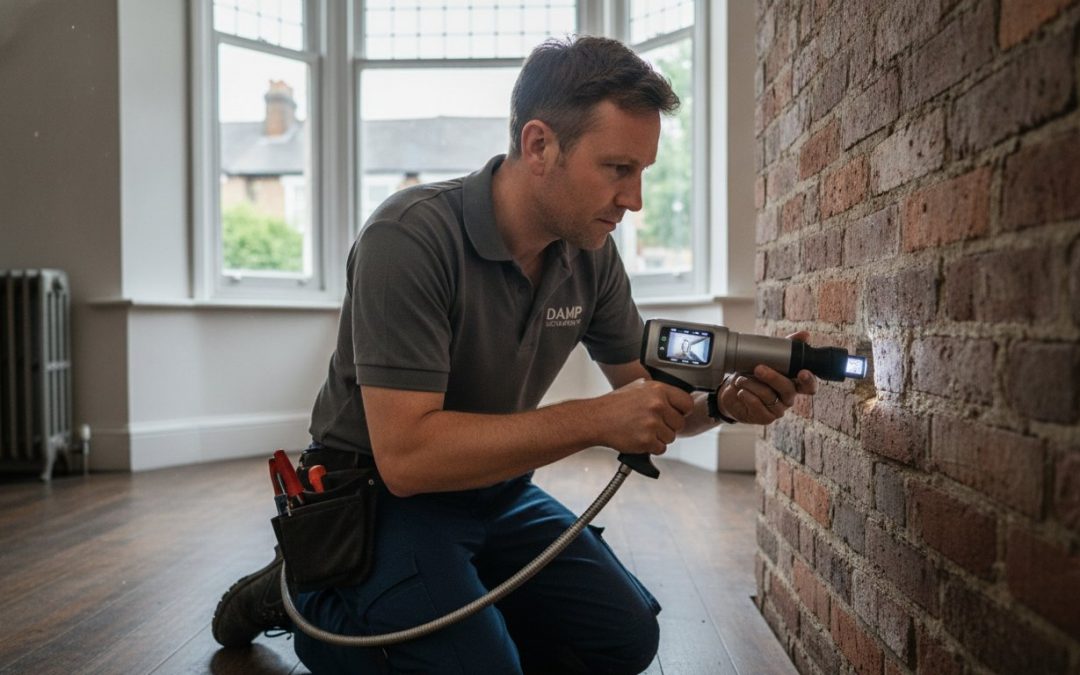
During a technical inspection, we use high-definition borescopes to look directly into the wall cavity. This allows us to check for debris, failing wall ties, or saturated insulation that may be bridging the gap between the two leaves of masonry. We also employ thermal imaging cameras to identify cold spots and bridging points that are invisible to the naked eye. This data-driven approach is supplemented by a physical inspection of the external envelope, including the condition of the pointing, the integrity of the guttering, and the functionality of the sub-floor ventilation. These steps ensure every environmental and structural factor is accounted for.
Understanding Professional Reporting Standards
A professional report should provide a clear diagnostic conclusion, not a vague list of possibilities. It must move beyond “high readings” to explain the specific mechanism of moisture ingress. You should receive a documented remedial action plan that outlines exactly what work is required, why it is necessary, and a realistic timeline for resolution. This level of clarity is why you should insist on a professional damp survey before exchanging contracts. Having a factual, technical document allows you to proceed with confidence or renegotiate the purchase price based on verified repair costs. It turns an unknown risk into a calculated investment in the property’s future health.
Our nationwide specialists provide these detailed assessments across the UK, ensuring that every buyer has access to high-level technical expertise. We take pride in delivering reports that prioritize the structural integrity of the home and the long-term comfort of its occupants.

What to Do When a Survey Highlights Damp Issues
Receiving a report that flags moisture concerns in a period property can be a stressful experience, but it shouldn’t lead to an immediate withdrawal from the sale. Most damp issues are solvable once you understand the underlying technical cause. The first step is to categorize the findings into maintenance-led issues, such as blocked gutters, or fundamental structural faults, such as cavity bridges. A specialist damp survey before buying an old house provides the diagnostic clarity needed to make this distinction without relying on guesswork.
Once the issues are identified, you must follow a methodical path to resolution. This begins with obtaining a specialist quote for the specific remedial works required, followed by presenting these technical findings to the seller and estate agent. By using a professional remedial plan, you can negotiate the purchase price based on verified repair costs rather than vague estimates. This ensures that the financial burden of restoring the property’s integrity does not fall solely on you after the exchange of contracts.
Negotiating with Confidence
A technical report serves as a powerful negotiation tool. It provides a factual basis for a price reduction by detailing the exact structural failures within the property. Attempting to “fix it yourself” with internal waterproof paints or DIY sealants is rarely a viable solution for structural moisture. These superficial treatments often trap water within the masonry, accelerating the decay of wall ties and timber. You must identify true structural deal-breakers early in the process. If a damp survey before buying an old house reveals widespread structural instability that the seller is unwilling to acknowledge, it allows you to walk away before making a costly mistake.
Distinguishing Between Types of Damp
It is vital to understand that the solution for penetrating damp is vastly different from the remedies for condensation. Penetrating damp typically indicates a failure in the building’s envelope, such as saturated insulation or compromised masonry. If left unaddressed, persistent moisture leads to the growth of black mould, which presents a significant risk to both the property’s asset value and the health of its occupants. You should also inspect external maintenance points, including downpipes and ground levels, to ensure they aren’t bridging the damp-proof course. If you have received a survey report flagging moisture concerns, arrange a professional cavity wall survey to determine the true state of the property’s structure before you commit to the purchase.
Finally, ensure that any agreed-upon remedial work is carried out by accredited technicians after the sale is finalized. This gives you long-term assurance that the repairs meet modern technical standards and will protect the property for decades to come.
Professional Remedial Solutions for Long-Term Property Health
A common error when addressing moisture in period properties is the application of “quick fixes” like waterproof internal paints or tanking slurries. These products only mask the symptoms of moisture. They fail to address the underlying structural cause identified during a damp survey before buying an old house. By trapping water within the masonry, these superficial treatments can actually accelerate the decay of timber and the oxidation of wall ties. A professional remedial approach focuses on restoring the building’s natural ability to manage moisture, ensuring the structure remains dry and stable for the long term.
The most effective solution for penetrating damp often involves restoring the wall cavity to its original, clear state. When a cavity is filled with saturated or defective insulation, it acts as a permanent bridge for moisture. Professional insulation extraction removes these wet materials, allowing the internal leaf of the property to dry out naturally. This process is a vital investment in the property’s future health, as it eliminates the source of the problem rather than just hiding the damp patches on the surface.
Restoring Structural Integrity
If your survey identifies wall tie corrosion, structural stabilization is required to prevent the outer leaf of masonry from shifting or cracking. Modern wall tie replacement involves the installation of stainless steel ties that are resistant to future corrosion. Technicians use non-disruptive methods to insert these new ties into the existing mortar joints, providing a permanent fix without damaging the property’s aesthetic. This methodology ensures the building remains “breathable” and structurally sound. By addressing these core faults, you protect the asset’s value and prevent the need for more invasive repairs in the future.
Why CavClear is the Trusted Specialist
CavClear is a nationwide specialist dedicated to the restoration of UK homes through technical excellence. We maintain a professional and methodical approach to every project, focusing on clean and non-disruptive methodology. Our expertise covers the following essential services:
- Cavity Wall Insulation Removal: Restoring airflow and preventing moisture bridging.
- Wall Tie Replacement: Ensuring the long-term structural stability of older brickwork.
- Cavity Extraction: Removing debris that compromises the building’s envelope.
We understand the stress that structural issues cause. Our role is to provide a calm, expert solution that restores comfort and security to your potential new home. Every project we undertake is backed by technical certification and a focus on long-term assurances. We don’t just perform repairs; we provide a vital investment in the property’s structural health, ensuring a permanent fix that allows you to move forward with your purchase in total confidence.
Secure Your Investment with Technical Clarity
Purchasing a period property is a significant commitment that requires a clear understanding of its structural health. Relying on surface-level moisture readings often leads to misdiagnosis and unnecessary stress. A professional damp survey before buying an old house provides the diagnostic depth needed to identify the root causes of moisture, such as wall tie oxidation or cavity obstructions. By moving from speculation to technical fact, you ensure your future home is structurally sound and protected from long-term degradation.
Our team of accredited technical specialists provides nationwide UK coverage, delivering detailed structural and moisture reporting that empowers you to negotiate with confidence. We focus on restoring the integrity of the building envelope, ensuring your investment remains a safe and comfortable environment. Don’t leave your property’s future to chance when expert diagnostics are available. We provide the technical evidence required to transform a potential “money pit” into a secure, long-term asset; for homeowners in the London and Essex areas ready to begin the next phase of restoration, you can learn more about GMS UK Tiling Expert Ltd for specialist tiling and renovation services.
Book a Specialist Technical Survey with CavClear Today to obtain the professional clarity your investment deserves. With the right technical approach, your dream home will be a secure and dry environment for years to come.
Frequently Asked Questions
How much does a damp survey cost when buying a house in 2026?
A basic visual inspection in 2026 typically costs between £150 and £300, while a comprehensive independent damp survey ranges from £200 to £600. For complex cases requiring invasive checks or laboratory analysis, a specialist investigation can exceed £1,200. Investing in a damp survey before buying an old house ensures you have a factual basis for negotiation and helps you avoid unforeseen remedial costs after completion.
Is a damp survey different from a timber and damp survey?
Can I get a mortgage if the survey shows damp?
Lenders may refuse a mortgage or place a financial retention on the loan if a survey identifies severe structural moisture or instability. A specialist report provides the lender with a clear remedial plan and verified costs, which can often resolve their concerns. Providing a professional diagnostic report demonstrates that the issue is manageable and that you have a proactive strategy for property maintenance.
How long does a specialist damp survey take to complete?
A specialist damp investigation typically takes between one and three hours to complete, depending on the property size and the complexity of the issues. This timeframe allows for a methodical inspection of the external masonry, sub-floor ventilation, and internal wall surfaces. Technicians also require time to perform borescope inspections of the wall cavities to identify hidden structural faults.
Should the seller or the buyer pay for the damp survey?
The buyer usually pays for the survey because the report serves as their personal protection against investing in a defective property. While a seller might provide their own report, an independent survey commissioned by the buyer ensures an unbiased assessment of the building’s health. This technical document becomes your property, allowing you to use the findings for price negotiations or as a guide for future repairs.
What are the most common causes of damp in houses built before 1950?
Houses built before 1950 often suffer from penetrating damp caused by debris within the cavity or the failure of early wall tie designs. Solid wall properties from this era lack the protective air gap of modern homes, making them susceptible to moisture ingress if external pointing is compromised. Inadequate sub-floor ventilation is another common factor that leads to rising moisture and timber decay in older floor joists.
Will a damp survey find mould behind furniture or under floors?
Specialist surveys identify mould and moisture in hidden areas by using thermal imaging and borescope cameras. These tools detect cold bridging and condensation points behind large furniture items without the need for disruptive movement. A damp survey before buying an old house also assesses the void beneath suspended floors to ensure that damp isn’t compromising the structural timbers or insulation.
What happens if I ignore the damp survey recommendations?
Ignoring survey recommendations leads to progressive structural degradation, including the corrosion of wall ties and the decay of internal joinery. Persistent moisture also encourages the growth of mould, which can impact the health of occupants and reduce the property’s eventual resale value. Addressing these faults early prevents a minor maintenance issue from escalating into a major structural repair that requires invasive remedial work.
Recent Comments