

Could a “expert” damp inspection actually be the most expensive mistake you make for your property’s future? Many homeowners face intense pressure from mortgage lenders to provide specialist documentation, which often leads to confusion regarding the actual cost of a damp and timber report. You likely feel the weight of uncertainty regarding hidden structural issues and the fear of being sold remedial work you don’t actually need. We understand that protecting your investment requires more than a quick glance; it demands a technical, mortgage-approved roadmap.
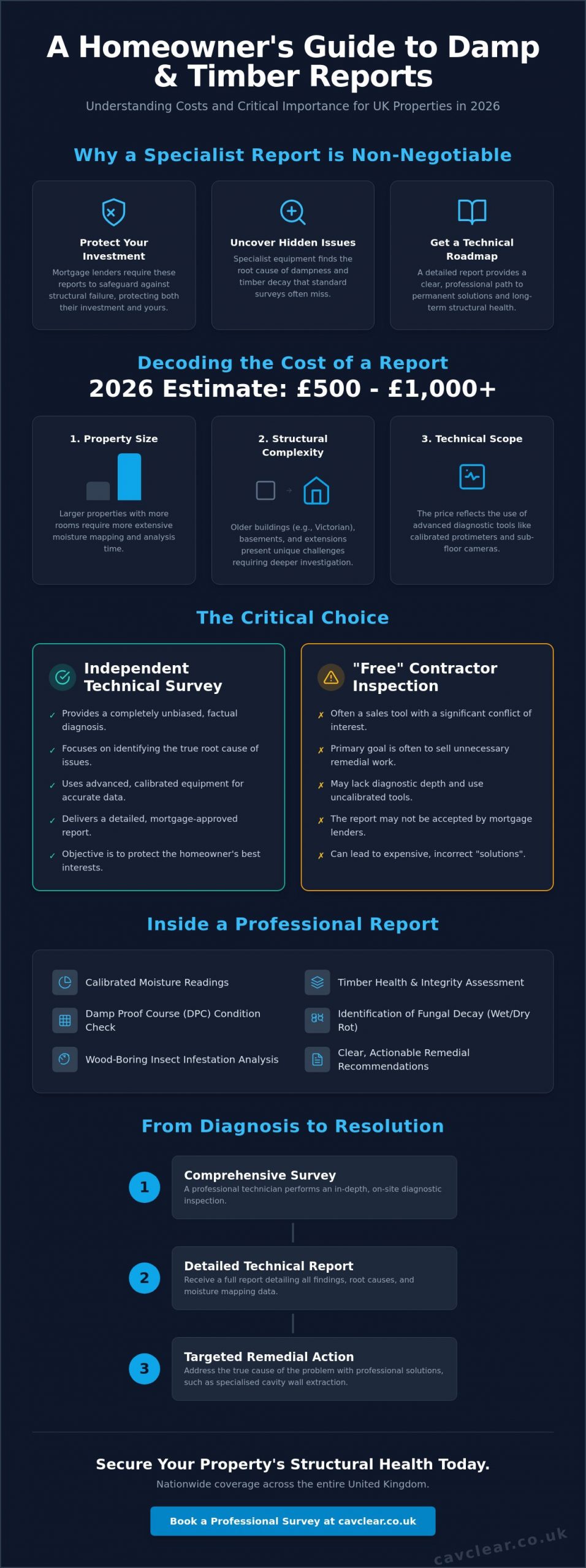
This guide details current pricing for 2026, where a comprehensive survey typically ranges from £500 to over £1,000 depending on your property’s size and complexity. You’ll discover the specific factors that influence these professional fees and how a specialist survey secures your home’s structural integrity. We’ll explain how current regulations like Awaab’s Law and the updated HHSRS standards impact the depth of reporting required for modern UK properties. By the end of this article, you’ll have a clear understanding of survey fees and a professional path toward permanent structural health.
Key Takeaways
- Understand why mortgage lenders require technical inspections to protect structural value and how these reports pinpoint specific moisture ingress sources.
- Learn how property size and the complexity of moisture mapping determine the total cost of a damp and timber report for UK homeowners in 2026.
- Discover the critical difference between unbiased technical surveys and “expert” inspections designed to sell unnecessary remedial products.
- Identify the essential components of a professional report, including calibrated moisture readings and detailed timber health assessments.
- Gain a clear roadmap for moving from diagnostic findings to professional remedial actions, such as specialized cavity wall insulation extraction.
What is a Damp and Timber Report and Why is it Required?
A damp and timber report is a formal technical inspection conducted by accredited technicians to identify moisture ingress and wood-boring infestations. It serves as a vital diagnostic tool for property owners who need to understand the true condition of their building’s fabric. Lenders frequently request these reports as a mandatory condition of a mortgage offer because they must protect their financial investment against the risk of structural failure. In the current 2026 property market, this report acts as a critical legal and technical safeguard for transactions, ensuring that structural defects don’t remain hidden until after a sale is finalized.
This specialist assessment differs significantly from a standard homebuyer survey. While a general surveyor might note the presence of moisture, a damp and timber specialist uses advanced diagnostic equipment to find the root cause. Technicians utilize calibrated protimeters to measure moisture levels deep within masonry and deploy sub-floor cameras to inspect areas that are usually inaccessible. This level of detail is necessary to identify Structural damp before it compromises the building’s stability. Understanding the cost of a damp and timber report is the first step in moving from property uncertainty to a professional, technical resolution.
The Distinction Between Damp and Timber Assessments
Damp analysis focuses primarily on the building envelope. This includes a methodical check of the masonry, the integrity of the damp proof course (DPC), and the current condition of the cavity walls. Technicians look for specific faults that lead to rising or penetrating damp. Conversely, timber assessments focus on the property’s internal skeletal structure. Specialists probe floor joists and roof timbers to search for active fungal decay, such as dry or wet rot, or wood-boring insect activity. Combining these assessments into a single report is more cost-effective for the property owner. It provides a holistic view of how moisture levels interact with timber components, preventing the need for separate call-out fees for different specialists.
When Should You Commission a Specialist Report?
Property owners across the UK should commission a specialist report during the home-buying process if a general surveyor flags potential moisture issues. It’s also essential when visible symptoms appear, such as salt staining, peeling wallpaper, or crumbling plaster. These signs often indicate deep-seated moisture problems that require immediate technical attention rather than cosmetic fixes. Furthermore, a report is a prerequisite before planning significant structural wall repairs or cavity wall insulation removal projects. Knowing the cost of a damp and timber report early allows you to budget for these necessary technical evaluations as part of your long-term asset maintenance strategy.
Key Factors That Influence Damp and Timber Survey Pricing
Determining the cost of a damp and timber report requires an understanding of the technical labor and specialized equipment involved in a professional inspection. Prices aren’t uniform because every property presents a unique structural profile. A one-bedroom apartment naturally demands less diagnostic time than a five-bedroom detached residence. Each room requires individual moisture mapping, where a technician establishes a moisture profile for every structural wall to identify hidden anomalies. This methodical approach ensures that no area of moisture ingress is overlooked, protecting the long-term health of the building fabric.
Property Size and Structural Complexity
Large properties increase the time spent on-site because they contain more data points for an accurate moisture profile. A technician must probe multiple floor joists and roof timbers to ensure structural integrity across the entire building envelope. Complex structures, particularly those with basement levels or modern extensions, present unique challenges that require additional expertise. Victorian properties often require a deeper inspection depth than modern builds due to their traditional construction methods and the potential for failed historical damp proofing. Following RICS guidance on moisture investigation, specialists must account for these structural variations to provide an accurate diagnosis that mortgage lenders will accept.
Technical Scope and Equipment Requirements
The technical scope of the inspection significantly influences the final price. A basic visual inspection is less intensive than an invasive survey that requires lifting floorboards to inspect sub-floor voids. Specialists use high-precision tools like hygrometers and protimeters to establish a baseline for structural wall health. For properties with cavity walls, a comprehensive damp survey must include a review of the wall cavity. This often involves using endoscopes to check for debris or failed insulation that causes moisture bridging. If you suspect your property has hidden issues, arranging a professional cavity wall survey can prevent long-term structural decay and wall tie corrosion.
Accessibility is another critical factor. If roof spaces or sub-floor voids are restricted, technicians may need more time or specialized equipment to complete the timber probing. In 2026, professional reports must also include a formal remedial action plan. This document provides a technical roadmap for repairs rather than just identifying faults. Our nationwide service ensures that homeowners across the United Kingdom receive consistent, high-level standards regardless of their location. This comprehensive approach justifies the cost of a damp and timber report as a vital investment in your property’s future market value and safety.
Independent Specialist Surveys vs. “no-obligation” Damp Inspections
Homeowners often encounter advertisements for “expert” damp inspections, particularly when they’re sensitive to the cost of a damp and timber report during a stressful property purchase. These offers usually come from contractors who specialize in selling specific remedial products, such as chemical damp-proofing treatments. It’s vital to recognize that a expert inspection is rarely a technical diagnostic survey; it’s a sales lead. By contrast, a paid report from accredited technicians provides an unbiased technical overview without a sales agenda. This document focuses on the structural health of the building rather than the quota of a sales team.
The danger of misdiagnosis is a significant concern for property owners. “no-obligation” advice often leads to unnecessary or entirely incorrect remedial work that fails to address the root cause of moisture ingress. While the cost of a damp and timber report is an upfront expense, it carries professional weight that banks, insurers, and legal professionals accept. The upfront fee for an independent damp surveyor often prevents thousands in future errors by ensuring the correct technical remedy is applied from the start.
The Hidden Risks of Sales-Led Inspections
Contractors might recommend a new damp proof course (DPC) when the actual issue is failed cavity insulation or blocked air bricks. This type of biased advice negatively impacts your property value during a sale, as savvy buyers and their surveyors will spot the ineffective “fix.” Furthermore, these non-formal quotes lack professional indemnity insurance. If the recommended work fails to solve the structural issue, the homeowner is often left with no legal recourse and a property that continues to deteriorate.
The Value of an Unbiased Technical Document
A professional report identifies the true root cause of moisture, such as wall tie corrosion or debris-filled cavities. It provides a detailed remedial action plan that prioritizes structural integrity and long-term asset health. Lenders only accept reports from established specialists with technical property inspection credentials because they require an objective assessment of risk. Following expert Damp and mould advice ensures that your property remains a safe and comfortable environment. This technical document serves as a roadmap for necessary repairs, allowing you to invest in targeted solutions like professional cavity extraction rather than broad, ineffective treatments.
What Information a Professional Damp and Timber Report Includes
A professional damp and timber report is a comprehensive technical document that justifies the cost of a damp and timber report through scientific data and expert observation. It provides a definitive breakdown of the building’s environmental and structural status. Unlike a basic survey, this report includes detailed moisture readings across all inspected walls, using calibrated diagnostic tools to establish precise saturation levels. It identifies specific damp types, such as rising damp or penetrating damp originating from external masonry faults. This clarity is essential for property owners who need a prioritized list of remedial recommendations to restore their home’s structural health.
Moisture Mapping and Wall Cavity Analysis
Technicians use moisture mapping to track water through the building envelope, pinpointing exact entry points. This process often involves a thorough cavity wall inspection to identify why specific walls are holding moisture. We frequently find that debris or failed insulation material within the cavity acts as a bridge for water. We never recommend the installation of retrospective cavity wall insulation as a solution to dampness. Such installations often exacerbate moisture problems and lead to wall tie corrosion. If your report identifies saturated insulation, you should book a professional cavity extraction service to prevent further damage.
Timber Infestation and Fungal Decay Assessment
The timber assessment provides a full evaluation of structural wood health, specifically looking for wet rot or dry rot. It’s critical to differentiate between the common furniture beetle and more destructive structural pests that compromise safety. Technicians identify the specific environmental conditions, such as poor ventilation or high humidity, that allow dry rot to flourish. They pay close attention to joist ends and wall plates in direct contact with damp masonry, as these are the most vulnerable points in a property’s skeletal structure.
Structural Integrity and Wall Tie Evaluation
A thorough report also evaluates the condition of wall ties, which secure the external leaf to the internal structure. Surveyors look for hidden signs of corrosion within the cavity that could lead to wall bulging or collapse. If the inspection reveals significant deterioration, the report will specify the need for wall tie replacement to maintain structural stability. This evaluation links the overall health of the property’s exterior to its long-term safety. Investing in the cost of a damp and timber report ensures these structural elements are verified by a technical specialist, protecting your property’s market value.
Beyond the Survey: Moving from Inspection to Remedial Action
Accredited technicians ensure that every repair meets modern technical standards. This technical rigor is especially important when dealing with the property’s external leaf and internal skeletal structure. CavClear’s nationwide approach delivers permanent solutions based on specific survey findings. We operate across the entire United Kingdom, providing a consistent standard of care regardless of your location. By following the scientific recommendations in your report, you move away from temporary “quick fixes” toward a proactive investment in your property’s long-term asset health.
Specialist Insulation Extraction and Wall Repairs
Removing defective cavity wall insulation is often the primary fix for penetrating damp. When insulation material becomes saturated, it loses its thermal properties and begins to transfer moisture from the outer leaf to the inner walls. Our specialists use a methodical process to clear the wall cavity entirely. This allows the structure to breathe and dry naturally, which is the only way to resolve deep-seated dampness. We ensure the removal process is clean and non-disruptive. A clear cavity is a dry cavity. This technical intervention stops the cycle of moisture retention and protects your wall ties from accelerated corrosion.
Securing Your Property’s Future Value
A professional fix provides long-term assurance for future buyers. When you can present a technical report alongside proof of expert remedial work, you remove the uncertainty that often stalls property transactions. There’s a direct relationship between structural integrity and energy efficiency. A dry, healthy home is easier to heat and maintain than one struggling with moisture ingress. The final cost of a damp and timber report is a small price to pay for the peace of mind it brings. Booking your nationwide technical property inspection with a trusted specialist is the most effective way to protect your investment. Take the first step toward a permanent fix by arranging a professional cavity wall survey today.
Securing Your Property’s Structural Integrity
Understanding the cost of a damp and timber report is the first step toward safeguarding your most significant asset. We’ve explored how a technical, independent survey provides the mortgage-approved clarity you need to avoid the pitfalls of sales-led inspections. By identifying the root causes of moisture ingress, such as failed cavity insulation or wall tie corrosion, you can move forward with a precise remedial plan that restores your home’s comfort and value. This professional roadmap ensures you don’t spend money on unnecessary treatments that fail to address the underlying structural issues.
Our accredited technicians operate nationwide, providing clear, technical reporting for homeowners and lenders across the United Kingdom. We specialize in structural wall repairs and professional insulation extraction, ensuring your property meets modern technical standards and remains a healthy environment. Book a professional technical property inspection with CavClear Ltd today to secure a permanent fix for your home. Taking proactive steps today ensures your property remains dry, safe, and structurally sound for years to come.
Frequently Asked Questions
How long does a damp and timber survey take to complete?
A specialist damp and timber survey typically takes between two and four hours to complete. This duration varies based on the property’s size and the accessibility of sub-floor voids and roof spaces. Larger detached homes require more data points for moisture mapping and timber probing than smaller flats or terraced houses.
Who is responsible for paying for the damp and timber report during a house sale?
The prospective buyer usually covers the cost of a damp and timber report because mortgage lenders often demand it as a condition of the loan offer. However, some sellers choose to commission a report themselves. This proactive approach demonstrates the property’s structural integrity and prevents unexpected delays during the conveyancing process.
Is a damp and timber report the same as a homebuyer’s survey?
No, a damp and timber report is a specialist technical inspection that focuses exclusively on moisture ingress and wood-boring infestations. A standard homebuyer’s survey provides a general overview of the property’s condition. It lacks the calibrated diagnostic tools and invasive techniques, such as sub-floor camera inspections, used by specialist technicians.
How long is a specialist damp and timber report valid for?
Most specialist reports remain valid for three to six months. Environmental conditions and moisture levels can change rapidly, particularly in properties with failed cavity insulation or masonry faults. Lenders typically require a recent assessment to ensure the cost of a damp and timber report provides a reliable snapshot of the property’s current health.
Will a mortgage lender accept a report from a non-accredited surveyor?
Mortgage lenders generally reject reports from non-accredited surveyors. They require technical documentation from qualified specialists to ensure the findings are accurate and the remedial plan is sound. Using an accredited nationwide provider ensures your report meets the strict criteria set by financial institutions and protects their investment.
Can I get a damp and timber report for a basement or cellar?
What happens if the report identifies serious structural wall tie issues?
If the report identifies serious structural issues, it will recommend a formal wall tie replacement project. Corrosion in these ties compromises the stability of the external leaf. Addressing this promptly prevents wall bulging and maintains the long-term safety of the property’s fabric, as outlined in the remedial action plan.
Do I need to be present at the property during the specialist inspection?
You don’t need to be present during the inspection as long as the technician has full access to all rooms, roof spaces, and sub-floor voids. However, being available at the end of the survey is often helpful. It allows the specialist to provide an immediate verbal summary of their technical observations before the final document is issued.
Recent Comments