
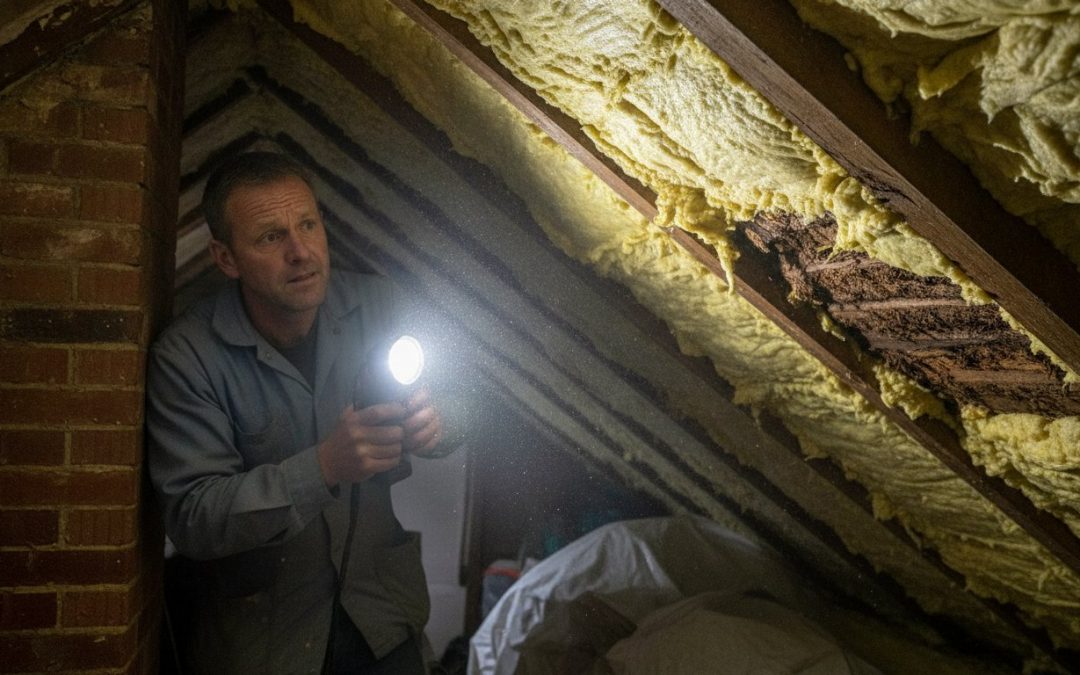
Did you know that as of 2026, approximately 75% of the UK’s major mortgage providers now reject or severely restrict applications for properties containing spray foam insulation? For many homeowners, what began as an attempt to improve energy efficiency has evolved into a significant financial and structural burden. It’s incredibly stressful to see a property sale collapse or be told your home is currently un-mortgageable, especially when you’re faced with conflicting advice from original installers.
We understand the anxiety caused by the threat of hidden timber rot and the potential for wall tie failure behind these foam barriers. This article will help you understand the specific spray foam insulation problems UK properties are experiencing and provide a clear path toward restoring your home’s structural integrity. We’ll explore why lenders have hardened their stance, how to identify specific risks to your roof and walls, and the professional extraction methodologies required to protect your asset’s long-term health and value. By focusing on technical standards and proper remedial action, you can move from uncertainty to a permanent resolution.
Key Takeaways
- Understand why approximately 75% of UK mortgage lenders now reject properties with spray foam, often resulting in a “nil value” valuation during surveys.
- Learn the technical link between polyurethane foam and structural decay, specifically how it traps moisture to cause timber rot and wall tie corrosion.
- Identify the early warning signs of spray foam insulation problems UK homeowners face, such as internal damp patches or persistent musty odours in the loft.
- Discover the professional methodology for non-disruptive insulation extraction, which clears cavities and roof structures to restore vital ventilation.
- Restore your property’s marketability and structural integrity by securing the detailed technical reporting required by lenders and insurers.
The State of Spray Foam Insulation Problems in the UK (2026)
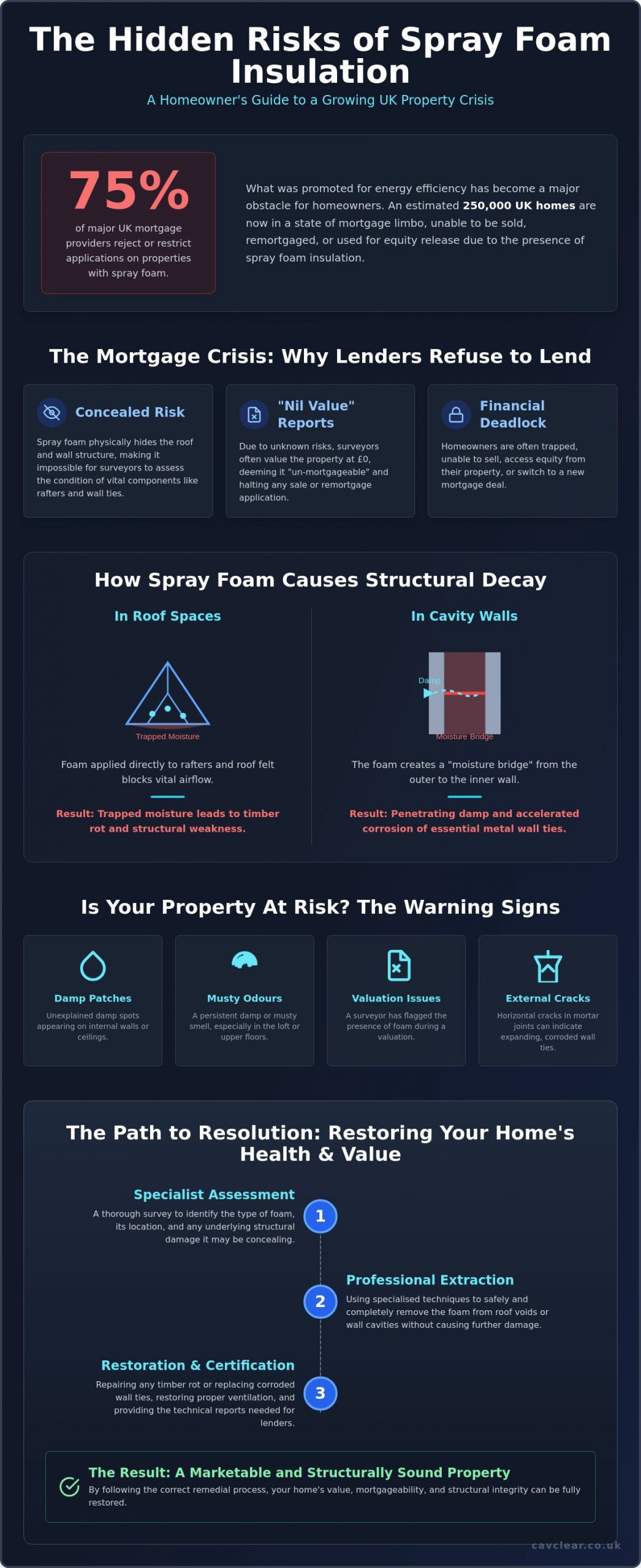
Spray foam (expanding foam in the UK) is a liquid polyurethane insulation that expands and hardens immediately after application. While marketed as a rapid solution for thermal efficiency, it has created a significant legacy of structural and financial complications across the country. By 2026, the situation has reached a tipping point for homeowners. What was once a case-by-case assessment by banks has shifted into a widespread policy of rejection. Approximately 75% of major UK mortgage providers now decline applications on properties where this material is present, leaving an estimated 250,000 homes in a state of mortgage limbo.
Why Lenders Are Rejecting Spray Foam Properties
Surveyors frequently apply an “un-mortgageable” tag to these homes because the foam prevents them from fulfilling their professional duty of care. This stance has a direct impact on equity release and remortgaging options, often trapping long-term homeowners in properties they cannot sell or borrow against. Lenders view spray foam as a concealed risk because it physically hides the roof or wall structure, making it impossible to verify the condition of the asset they are securing. Without a clear view of the rafters or the cavity, the financial risk is deemed too high for standard lending criteria.
The Difference Between Roof and Cavity Wall Installations
In roof spaces, spray foam often coats the rafters and the underside of the felt. This restricts vital ventilation and leads to timber decay. The risks are even more pronounced in wall structures. Retrospective cavity wall insulation using spray foam is never recommended by structural specialists due to the high probability of interstitial condensation. Unlike traditional mineral wool or bead insulation, which allows for some drainage and airflow, foam creates a monolithic block. This block can act as a bridge for penetrating damp and significantly accelerate wall tie corrosion, compromising the stability of the entire building. Professional extraction is the only reliable way to restore the ventilation and structural integrity of these properties.
Structural Decay: How Spray Foam Causes Damp and Wall Tie Failure
The application of spray foam creates a specific set of environmental conditions that often lead to structural degradation. Interstitial condensation occurs when warm, moisture-laden air from inside the home migrates through the building fabric and reaches a dew point behind the insulation layer. Because spray foam forms a tight seal, this moisture becomes trapped against the masonry or timber. In UK cavity walls, the foam frequently acts as a physical bridge. It allows water to track from the external brickwork directly to the internal leaf, bypassing the protective air gap intended to prevent penetrating damp. This moisture retention is a primary driver of the spray foam insulation problems UK homeowners report during building surveys.
A critical but often overlooked risk involves the mild steel wall ties that hold the property’s structure together. When these ties are encased in polyurethane foam, they’re exposed to a high-moisture environment without the benefit of airflow. This accelerates the oxidation process, leading to rapid corrosion. As the ties rust, they expand, which can cause horizontal cracking in the mortar joints and eventually compromise the stability of the outer leaf. This structural decline is one reason why many find it difficult to remortgage or sell properties once the installation is discovered. Identifying these issues early through a specialist cavity wall survey is essential for long-term asset health.
Wall Tie Corrosion and Structural Integrity
Wall ties are essential for maintaining the stability of a cavity wall system by tethering the two leaves of masonry together. When foam is present, performing a standard wall tie replacement is physically impossible. The hardened material prevents technicians from accessing the ties or installing new ones correctly. Signs of distress often include bulging brickwork or visible cracks, but the foam can mask these symptoms until the damage is severe. We never recommend retrospective cavity wall insulation because it fundamentally alters the wall’s ability to manage moisture and protect these vital metal components.
Timber Rot and Hygroscopic Moisture Retention
In roof spaces, closed-cell foam creates a vapour barrier that prevents rafters from drying out naturally. This lack of breathability creates a breeding ground for fungi, leading to a transition from simple dampness to structural wet rot. Even open-cell foam, which is marketed as breathable, is hygroscopic. If a minor roof leak occurs, the foam acts like a sponge, holding water against the timber for extended periods. This constant saturation accelerates decay far more rapidly than an exposed timber would experience in a ventilated loft, making professional extraction the only viable route to restoration.
The Financial Impact: Mortgage Rejections and Property Devaluation
By 2026, the financial implications of spray foam have shifted from a minor inconvenience to a full-scale property crisis. Statistics from July 2026 indicate that approximately 75% of the UK’s major mortgage providers now decline or severely restrict applications on homes with this insulation. This hardening of the lending landscape has led to a surge in “Zero Value” valuations. When a valuer encounters spray foam, they frequently assign a nil value to the property. This isn’t a statement that the house is worthless, but a declaration that the lender cannot secure a loan against it until the risk is removed and the structure is inspected.
Homeowners often feel blindsided by these rejections, especially when they were told the product was BBA certified at the point of sale. While a certificate might validate the chemical composition of the foam, it doesn’t account for the specific spray foam insulation problems UK lenders prioritise. Banks are concerned with the long-term health of the asset, not just the quality of the insulation material. A certificate doesn’t negate the fact that the foam conceals the roof timbers or cavity wall ties, leaving the lender with an unquantifiable structural risk.
Delaying extraction often proves to be a costly mistake. If moisture is trapped against the building fabric, the resulting timber decay or wall tie corrosion worsens every month. This increases the eventual restoration costs significantly. Removing the foam is a technical necessity, but if you wait until the rafters have rotted or the outer leaf of masonry has started to bow, the remedial bill will include extensive structural repairs alongside the extraction service.
The Surveyor’s Perspective on Risk Assessment
During a RICS Level 2 or Level 3 survey, a professional’s primary duty is to identify risks that could affect the property’s value or safety. Spray foam is a major red flag because it creates a “concealment” issue. Surveyors cannot verify the condition of the timber rafters or the metal wall ties behind a layer of hardened polyurethane. Because they cannot see the structure, they cannot guarantee its integrity. This usually results in a recommendation for a specialist professional damp survey to assess the extent of moisture retention before any lending can proceed.
Equity Release and the Retirement Crisis
Equity release providers are currently the most stringent part of the market regarding spray foam. For older homeowners relying on property wealth to fund care or retirement, a spray foam installation can be devastating. Almost all equity release lenders currently refuse to lend against these homes. To resolve this, homeowners must often provide a technical dossier proving the foam has been professionally extracted. This documentation, including pre- and post-extraction reports, is vital for restoring the property’s status as a lendable asset.
Identifying the Problem: Signs Your Spray Foam Is Failing
Recognising the early symptoms of failure is essential to preventing long-term structural damage. While the insulation is often hidden behind plasterboard or within a roof’s pitch, its impact on the building fabric manifests in several distinct ways. Internal damp patches on ceilings or high-level walls are frequent indicators of moisture being trapped by the foam layer. If you notice persistent staining that doesn’t correspond to a clear external leak, it’s likely that interstitial condensation is accumulating behind the polyurethane. This environment often produces a distinct musty smell, which signals that mould growth is occurring in unventilated spaces where the foam meets the timber or masonry.
External indicators are equally telling, particularly regarding the stability of your walls. If the foam was injected into the cavity, it can cause the outer leaf of the building to behave unpredictably. Look for horizontal cracking in the mortar joints or any subtle bulging in the brickwork. These are classic signs of wall tie failure, where corroding metal ties are expanding and pushing the masonry apart. Because these spray foam insulation problems UK properties face are often obscured from view, a professional cavity wall survey is the only way to accurately diagnose the condition of your hidden structural components.
It’s important to act when these signs first appear rather than waiting for a surveyor to flag them during a house sale. Early detection allows for a controlled remedial plan that preserves the property’s value. If you’re concerned about the condition of your insulation, you should book a professional inspection to ensure your home remains structurally sound and mortgageable.
Technical Inspection Methods
Our accredited technicians use non-disruptive methodologies to assess the extent of the issue. Endoscopic investigations involve inserting a small camera through existing apertures or tiny drilled holes to see inside the cavity or behind the roof foam. This allows us to inspect the condition of the wall ties and timbers directly. We also utilise moisture mapping to identify cold spots and thermal bridging. These technical nouns define a precise diagnostic process that moves beyond guesswork, providing the factual evidence required by lenders to understand the property’s true condition.
The Danger of ‘Cowboy’ Removal Companies
The rise in mortgage rejections has unfortunately led to an increase in unqualified “cowboy” removal firms. Aggressive or manual removal techniques can cause significant damage to fragile roof rafters or heritage brickwork. Specialist extraction requires specific machinery and a methodical approach to ensure every trace of the material is cleared without compromising the structure. A professional remedial report must be detailed and transparent, documenting the methodology used and the final condition of the building. This level of professional rigor is what ultimately satisfies mortgage lenders and restores your property’s marketability.
The Solution: Specialist Extraction and Structural Restoration
Once you have identified the specific spray foam insulation problems UK lenders have flagged, the priority shifts to professional remediation. Clearing the property of this material is not a simple DIY task; it requires a methodical approach to ensure the building fabric isn’t compromised during the process. Specialist extraction is the only reliable way to restore the property’s market value and structural safety. As a nationwide specialist, we provide the technical expertise required to clear these materials from homes across the entire United Kingdom, ensuring the property returns to a lendable condition.
The process of professional cavity wall insulation removal focuses on restoring the building’s natural ventilation. We utilize a non-disruptive methodology that avoids the need for major structural demolition. By accessing the cavity through small, precisely drilled apertures, we can break down the hardened foam without damaging the surrounding masonry. This technical precision is what distinguishes a professional remedial service from aggressive, uncertified removal attempts that often leave homeowners with further repair bills.
Step-by-Step Remedial Extraction
Our accredited technicians begin each project with site preparation and the safety containment of foam particulates. This step is vital to prevent chemical dust from entering the living environment. We then perform mechanical extraction, using specialized tools to break the polyurethane bonds within the cavity. High-powered vacuum systems remove the debris immediately. A final inspection using endoscopic cameras is mandatory. This ensures no ‘pockets’ of foam remain in hard-to-reach areas, such as around window lintels or floor joists, where they could continue to trap moisture and cause future damp issues.
Restoring the Building Envelope
Removing the foam is only the first phase of a successful restoration. Because the material often hides or accelerates damage, structural restoration must follow. This frequently involves wall tie replacement to address any mild steel ties that have corroded while encased in the foam. We also ensure that all weep holes and air bricks are cleared to restore the vital airflow that keeps the cavity dry. Providing future buyers and lenders with a comprehensive documentation pack, including pre- and post-extraction reports, is the final step in restoring your property’s asset value. Professional remediation through specialist extraction transforms an ‘un-mortgageable’ property back into a structurally sound, safe home that meets the rigorous standards of UK lenders.
Restoring Your Property’s Marketability and Structural Health
Addressing the spray foam insulation problems UK property owners face in 2026 requires a methodical and technical response. While the challenges of mortgage rejections and hidden structural decay are significant, they aren’t insurmountable. By choosing professional extraction, you eliminate the moisture-trap risks that threaten your timber and masonry. This process ensures that vital ventilation is restored to your building’s envelope, protecting your home from further degradation and restoring its natural breathability.
As a nationwide specialist, we provide the accredited technical surveyors and comprehensive remedial reporting that lenders and insurers demand. This detailed documentation acts as a vital investment in your property’s long-term health, effectively transforming a structural liability back into a secure, lendable asset. You don’t have to navigate these complex structural issues alone; expert assistance is available to guide you through each stage of the remediation process.
Book a specialist survey to assess your property’s structural health to begin the restoration process today. With the right expert support and professional methodology, you can successfully protect your property’s value and secure its future for years to come.
Frequently Asked Questions
Is spray foam insulation illegal in the UK?
Spray foam insulation is legal to install in the UK, provided the work complies with Building Regulations Part L regarding thermal performance and U-values. However, legality doesn’t guarantee mortgageability or structural safety. Many homeowners find that while their installation was technically legal, it still creates significant spray foam insulation problems UK lenders refuse to overlook during standard property valuations.
Will spray foam insulation stop me from selling my house in 2026?
It can certainly complicate or stall a property sale in 2026. Because many surveyors now assign a “nil value” to homes with foam, buyers often find it impossible to secure the necessary financing from major banks. This frequently forces sellers to have the material professionally extracted before a transaction can proceed to completion and the property’s value is restored.
Can spray foam insulation be removed from a cavity wall?
Yes, specialist technicians can remove spray foam from cavity walls using non-disruptive extraction methodologies. This involves breaking down the hardened material through small, precisely drilled holes in the external masonry leaf. High-powered vacuum systems then clear the debris from the void, ensuring the cavity is fully restored to its original, ventilated state without damaging the building fabric.
Does spray foam insulation cause wall tie corrosion?
It frequently leads to accelerated wall tie corrosion by trapping interstitial condensation against the metal components. The foam creates a high-moisture environment that triggers rapid oxidation of mild steel ties, which lack the airflow needed to stay dry. This structural damage often requires professional wall tie replacement once the foam has been successfully extracted to ensure the building’s long-term stability.
How much does it cost to remove spray foam insulation in the UK?
The cost of removal depends on several technical factors, including the type of foam, the access requirements, and the total surface area involved. Because every property structure is unique, professional firms determine the price following a detailed technical survey of the site. It is important to view professional extraction as a vital investment in restoring your home’s marketability and structural integrity.
Can I get a mortgage on a house with spray foam insulation?
Securing a mortgage is currently very challenging for properties with spray foam. Most major UK lenders have tightened their criteria significantly as of 2026, often requiring the complete removal of the foam and a comprehensive structural report before they’ll consider an application. Some providers currently maintain a blanket ban on these installations regardless of the foam type.
What is the difference between open-cell and closed-cell spray foam problems?
Closed-cell foam creates a rigid vapour barrier that can trap moisture directly against roof timbers, often leading to wet rot. Open-cell foam is softer and technically more breathable, but it acts like a sponge if a minor roof leak occurs. Both types present a major issue for RICS surveyors because they physically conceal the underlying structure from a visual inspection.
How do I know if my spray foam is causing damp?
Early signs include damp patches on internal walls, ceiling staining, or a persistent musty odour in the loft or cavity. You might also notice horizontal cracking in the external mortar joints or subtle bulging in the brickwork. If you suspect an issue, booking a specialist survey is the only way to verify moisture levels and structural health behind the foam layer.
Recent Comments