
The most expensive structural repair is often the one you cannot see until the damage is already done. It is deeply unsettling to watch damp patches reappear on your internal walls despite repeated attempts at maintenance. You have likely received conflicting advice from various contractors, leaving you unsure whether you are facing a simple guttering issue or more serious wall tie corrosion. We understand that your home is your most significant asset; protecting its structural integrity requires technical facts rather than guesswork.
By commissioning a professional cavity wall survey, you secure a technical and unbiased assessment of your property’s internal condition. This diagnostic process identifies hidden risks, such as insulation slumped within the cavity or failing structural ties, without any conflict of interest. This guide details how a non-disruptive borescope inspection provides the clarity you need to move forward. We will explore the methodical process that uncovers the root cause of damp and provides a precise roadmap for necessary remedial works. Our focus remains on restoring the comfort of your home and ensuring its long-term asset health through proven, specialist expertise.
Key Takeaways
- Learn how a non-disruptive borescope inspection provides a high-definition view of your property’s internal structure to identify hidden faults.
- Understand why a professional cavity wall survey is essential for uncovering debris or wall tie corrosion that standard building surveys often overlook.
- Discover the value of independent diagnostics in providing an unbiased report expert from the sales agendas of insulation installation companies.
- Recognise the specific red flags, such as persistent damp patches or musty odours, that indicate your cavity requires immediate specialist attention.
- Gain a clear, prioritised roadmap for remedial works designed to restore your home’s comfort and protect its long-term asset health.
What is an Independent Cavity Wall Survey?
A professional cavity wall survey is a highly specialised technical inspection designed to examine the hidden void between the internal and external leaves of a property’s walls. While most homeowners are familiar with standard building surveys, these typically only scratch the surface. An independent survey goes deeper; it utilises intrusive technology to provide a factual record of the cavity’s internal condition. This process is essential for understanding what is a cavity wall and why it might be failing to protect your home from the elements.
By remaining independent, the surveyor has no interest in selling you new insulation or related products. This ensures the data you receive is unbiased and focused entirely on structural integrity and environmental safety. The resulting report provides a clear view of insulation levels, the physical state of wall ties, and the presence of any debris that could be causing moisture transfer. It acts as a vital diagnostic tool for any property owner facing persistent damp or structural concerns.
The Scope of a Specialist Cavity Inspection
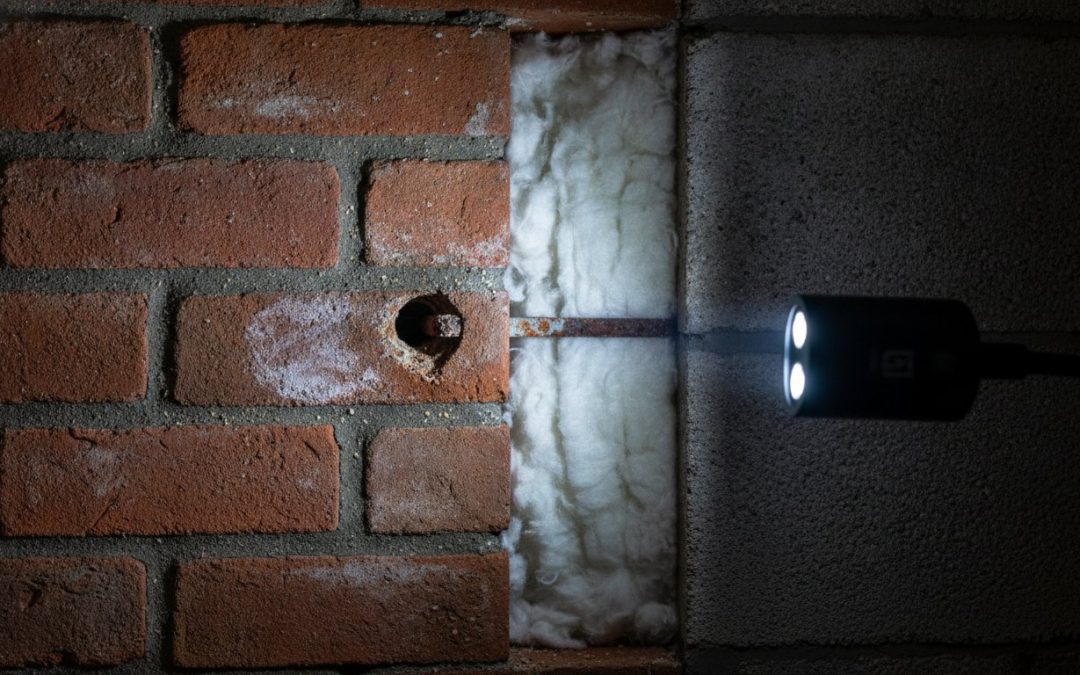
A specialist inspection follows a methodical diagnostic process to ensure no detail is overlooked. Technicians assess the current physical state of any existing insulation material to determine if it has become saturated, slumped, or degraded over time. They also perform a detailed examination of the wall ties, looking for signs of ferrous oxide, commonly known as rust, or structural thinning that could compromise the building’s stability. Finally, the survey identifies “bridging” within the cavity. This occurs when mortar droppings or construction rubble accumulate, creating a physical path for moisture to travel from the outer leaf to your internal walls.
Standard Building Survey vs. Cavity Specialist
Many property owners mistakenly assume that a standard RICS survey or a general damp survey will uncover cavity issues. However, these are typically visual-only inspections. A general surveyor might note a damp patch, but they cannot confirm if the cause is a blocked cavity without seeing inside it. According to the technical definition of What is a Cavity Wall?, the void must remain clear to function correctly. A specialist report uses borescope cameras to provide visual proof of the cavity’s health, making it a far more reliable tool for diagnosing complex structural faults. In many property transactions, especially those involving older homes or properties with suspected insulation failure, a specialist report is now a mandatory requirement for lenders or insurers. It provides the technical assurance that a standard visual check simply cannot offer.
The Technical Process: How a Borescope Inspection Works
A professional cavity wall survey relies on precision borescope technology to provide a definitive view of your property’s internal health. Unlike traditional surveys that rely on visual assumptions, this technical process allows us to see exactly what is happening inside the structure. Technicians begin by drilling small, discreet boreholes into the external mortar joints. These holes are typically no larger than 12mm in diameter, ensuring the structural integrity of the brickwork remains intact throughout the inspection.
Through these access points, we insert high-definition flexible cameras known as borescopes. These devices navigate the cavity void, allowing the surveyor to capture clear photographic evidence of insulation settlement, debris accumulation, or wall tie corrosion. This visual data is essential for diagnosing the root cause of damp or structural movement. Once the inspection concludes, we seal the boreholes with professional-grade mortar. We take great care to match the colour and texture of your existing masonry, making the intervention virtually invisible to the naked eye.
Step-by-Step Methodology for Property Owners
The inspection begins with a comprehensive external assessment of the building. We look for “hot spots” such as damp staining, spalling brickwork, or stepped cracking that might indicate internal issues. Following this, we insert the camera systematically at various heights and intervals across each elevation. This methodical approach ensures we don’t miss localised defects that a random sampling might overlook. During the process, we perform real-time analysis of the cavity environment. We check moisture levels and airflow to determine if the void is still functioning as an effective thermal break or if it has become a bridge for environmental moisture.
What the Surveyor Looks For Inside the Walls
Inside the cavity, our technicians specifically look for saturated insulation material. When insulation becomes wet, it fails as a thermal barrier and instead facilitates moisture transfer from the outer leaf to the inner leaf. We also examine the condition of the wall ties, looking for “snots”-large clumps of mortar that have fallen during construction-and signs of rust. These bridges are often the primary cause of penetrating damp in older UK homes.
The camera frequently reveals evidence of previous poor workmanship, such as incomplete insulation coverage or the presence of construction rubble. These findings often mirror the problems described in official government guidance on CWI issues, which details the long-term risks of faulty installations. If you are concerned about persistent damp or structural signs, securing a specialist cavity investigation provides the technical facts needed to protect your property’s future.
Why Independence Matters: Independent vs. Installer-Led Surveys
Securing a professional cavity wall survey isn’t just about finding a fault; it’s about ensuring the person diagnosing the problem has no financial stake in the solution. There’s an inherent conflict of interest when an insulation installation company performs the assessment. Their business model relies on selling and installing material, which often leads to recommendations that prioritize sales over structural necessity. In contrast, an independent specialist provides a factual, unbiased record of the cavity’s condition. This transparency is vital because the correct remedial action is frequently the removal of existing material rather than the addition of more.
An independent report focuses on long-term structural health. By separating the diagnostic phase from the repair phase, property owners receive data they can trust. This data-driven approach ensures that any recommended works are based on technical requirements, like clearing a bridge or replacing a corroded tie, rather than a desire to sell a specific product. This methodology treats your property as a long-term asset, not a short-term project. As a nationwide specialist, we provide these detailed assessments across the entire United Kingdom, ensuring every homeowner has access to expert, unbiased diagnostics.
The Risks of Biased Advice
Biased advice can lead to catastrophic property damage. We’ve seen many cases where installation companies recommend “topping up” insulation in a cavity that’s already failing. This practice is dangerous. If the existing material is damp or the cavity is blocked with rubble, adding more insulation simply traps moisture against the inner leaf. This leads to persistent penetrating damp and mould growth. CavClear never recommends the installation of retrospective cavity wall insulation because the risks to the building’s fabric are too significant.
These biased assessments often overlook the fundamental physics of a cavity wall. The void is designed to prevent moisture from crossing from the outer leaf to the inner leaf. When an installer suggests filling this gap without verifying the condition of the wall ties or the cleanliness of the cavity, they’re ignoring potential structural bridges. This neglect can cause the wall ties to corrode faster, leading to expensive structural thinning and eventual leaf separation. A biased survey that ignores these risks can result in thousands of pounds in unnecessary repair costs later.
The Value of a Certified Remedial Action Plan
The primary output of an independent inspection is a certified remedial action plan. This document acts as a professional roadmap for restoring your home’s integrity. If the survey identifies saturated or slumped material, it provides the technical justification needed for cavity wall insulation removal. Having this professional documentation is essential during property transactions. It proves to potential buyers and lenders that structural issues have been correctly diagnosed and addressed by specialists. This report also allows you to secure accurate, comparable quotes for structural repairs, ensuring you only pay for work that’s strictly necessary.
Signs Your Property Requires a Specialist Cavity Investigation
Identifying the early warning signs of cavity failure is essential for preventing long-term structural damage and protecting your health. Many property owners first notice internal damp patches appearing on upper floors or concentrated around window reveals. These symptoms are rarely related to plumbing; they usually indicate that the cavity’s protective void has been compromised. You might also notice a persistent smell of musty air or the visible growth of black mould, which thrives in the humid conditions created by trapped moisture.
Structural indicators are equally critical. Look for horizontal cracking in your mortar joints, particularly at regular intervals. This often signals that the internal wall ties are expanding due to corrosion, a process that can eventually push the brickwork apart. Additionally, if your internal walls feel significantly colder than the rest of the room despite the heating being active, you’re likely experiencing thermal bridging. A professional cavity wall survey is the only way to confirm these suspicions with technical certainty, moving beyond visual guesswork to provide a definitive diagnosis.
Identifying Penetrating Damp and Thermal Bridging
When insulation material becomes saturated, it ceases to be a thermal barrier and instead acts as a bridge. This bridge allows environmental moisture to travel from the outer leaf directly to the inner leaf of your home. Unlike rising damp, which is limited to the ground floor, penetrating damp can occur anywhere on the elevation. It’s often caused by cavity debris or construction rubble that has settled at the bottom of the void or on the wall ties themselves. A professional investigation distinguishes these issues from simple condensation, ensuring you don’t invest in the wrong repairs.
Structural Warning Signs: Wall Tie Failure
Wall tie failure is a progressive issue that begins long before visible structural movement occurs. As steel ties corrode, they develop a layer of ferrous oxide that’s significantly thicker than the original metal. This expansion exerts immense pressure on the mortar beds, leading to the horizontal cracking mentioned earlier. If left unaddressed, this corrosion can lead to the total failure of the ties, compromising the stability of the outer brick leaf. Proactive wall tie replacement is far more cost-effective than rebuilding a collapsed wall. If you’ve noticed these red flags, we recommend booking a professional cavity wall survey to assess your property’s structural integrity today.
From Survey to Solution: Professional Remedial Recommendations
After your professional cavity wall survey is finalised, you’ll receive a technical report that converts complex data into a clear remedial roadmap. This document often uses specific terminology like “capillary action” or “interstitial condensation.” In simple terms, these phrases describe how moisture moves through your walls and where it settles. Our specialist team demystifies these findings, helping you prioritise works that address immediate structural risks or severe damp issues. We ensure that you understand the technical faults before proceeding with any professional remedy.
We categorise our recommendations to help you manage your property maintenance effectively. For example, evidence of wall tie thinning or significant insulation saturation requires immediate attention to stop further decay. Conversely, minor debris in a non-critical area might only require long-term monitoring. This logical progression from observation to recommendation ensures your investment is directed toward the most vital areas of property preservation. Our focus is always on the restoration of comfort and the long-term health of the building fabric.
The Process of Cavity Cleaning and Extraction
Modern technology allows us to perform the clean removal of defective insulation with minimal disruption to your daily life. We use high-powered extraction systems combined with compressed air to pull saturated or degraded materials from the void. This methodology is entirely self-contained; we capture all waste material and remove it from your property immediately. The goal is to return the building to its original design specification by ensuring the cavity is 100% clear. A vacant void allows for natural ventilation, which is the most reliable way to keep the inner leaf of your home dry and structurally sound.
Ensuring Nationwide Quality and Assurance
Consistency is a hallmark of our service. As a nationwide specialist, we provide the same high-level standards whether you’re in a city centre or a rural coastal location. This national UK reach means we have the resources to deploy accredited technicians who are specifically trained in insulation extraction and structural repairs. We don’t rely on general builders; we use specialists who take pride in rectifying the poor workmanship of others. This expertise is a vital investment in your property’s future, moving it away from the risks of damp and toward a permanent fix.
Every remedial contract concludes with a final sign-off and a dry, healthy living environment. We provide the technical assurance that the root cause of your damp or structural concern has been fully resolved. By restoring the cavity to a clear, functional state, we ensure your home remains a safe and valuable asset for years to come. This methodical diagnostic and resolution process, starting with a professional cavity wall survey, is the only way to achieve long-term property health without the need for recurring repairs.
Following the restoration of your home’s structural integrity, you may want to consider further sustainability improvements. MarGav Solar offers professional consultancy and installation of solar panel systems, helping you maximize the energy potential of your newly efficient property.
Securing Your Property’s Structural Future
Identifying the true cause of damp or structural movement is the essential first step toward a permanent fix. An independent inspection removes the guesswork by providing a high-definition view of your building’s internal leaves. This diagnostic process ensures that any recommended remedial works are based on technical necessity rather than a sales agenda. By commissioning a professional cavity wall survey, you’re making a vital investment in your home’s long-term asset health and efficiency. To complement these findings with a broader energy-saving strategy, Madison May Consulting Ltd offers specialist retrofit consultancy to help homeowners and landlords improve property performance.
Our accredited specialist technicians provide nationwide UK coverage, delivering detailed technical reports that include professional remedial action plans. We specialise in non-disruptive insulation extraction and wall tie repair, ensuring your home is restored to its original design specification with minimal disruption. It’s time to move past temporary patches and secure a definitive resolution for your property’s health.
Book your nationwide independent cavity wall survey with CavClear today to restore comfort and structural integrity to your home. You don’t have to tolerate persistent damp; a clear, expert-led solution is available to protect your property for years to come.
Frequently Asked Questions
How much does an independent cavity wall survey cost in the UK?
CavClear confirms the inspection scope and fee before booking. The report records accessible conditions, findings, photographs, limitations and recommendations. CavClear may also quote for recommended remedial work; customers can use the report when considering their options.
Will a borescope survey cause damage to my property’s brickwork?
No, the process is non-disruptive and designed to be virtually invisible upon completion. Technicians drill small boreholes, usually around 12mm in diameter, into the mortar joints rather than the bricks themselves. Once the camera inspection is complete, we seal these points with professional grade mortar matched to your existing masonry to maintain the aesthetic and structural integrity of your home.
How long does a typical cavity wall inspection take to complete?
A thorough inspection usually takes between one and three hours to complete for a standard residential property. This timeframe allows the technician to assess each elevation systematically and capture high definition footage from various heights and intervals. Larger detached houses or properties with complex extensions may require additional time to ensure full coverage of the cavity void.
Can a cavity survey identify why my house feels damp and cold?
Yes, the survey identifies technical faults like slumped insulation or debris bridges that cause cold spots and moisture transfer. By seeing inside the wall, we can determine if your insulation has become saturated or if construction rubble is allowing water to cross from the outer leaf. This diagnostic clarity is the first step toward restoring thermal efficiency and comfort.
Do I need a cavity wall survey if I am buying a house?
It is highly recommended to include a specialist cavity inspection when purchasing a property built with cavity walls. Standard homebuyer reports often miss internal defects like corroded wall ties or failing insulation that aren’t visible from the surface. Identifying these issues before you exchange contracts allows you to understand the true structural health and potential remedial liabilities of your investment.
Is it possible to see the wall ties during a borescope inspection?
Yes, the high definition camera provides a clear view of the wall ties’ physical condition within the void. We look for signs of ferrous oxide expansion or structural thinning that indicate the ties are reaching the end of their functional life. This visual evidence is crucial for determining if a wall tie replacement is necessary to prevent the external leaf from becoming unstable.
What happens if the survey finds that my insulation is wet?
If the survey identifies saturated insulation, the material must be extracted to prevent further damp issues and structural decay. Wet insulation loses its thermal properties and instead acts as a bridge for moisture to reach your internal walls. Our technicians will provide a detailed remedial plan for the clean extraction of the material to allow the cavity to dry naturally.
Do you provide a written report after the cavity wall survey?
Yes, every inspection concludes with a comprehensive technical report delivered to the property owner. This document includes photographic evidence from the borescope and a prioritised remedial action plan based on the findings. It serves as a factual record of your property’s condition, which is essential for insurance purposes, property sales, or planning necessary structural maintenance.
Recent Comments