
Could the very material meant to keep your home warm actually be the reason your property sale collapses? It’s a stressful position to be in, especially when estate agents and surveyors give you conflicting advice about the state of your loft or cavity walls. You want a smooth transaction at full market value, but the reality is that problematic materials often stand between you and a completed contract.
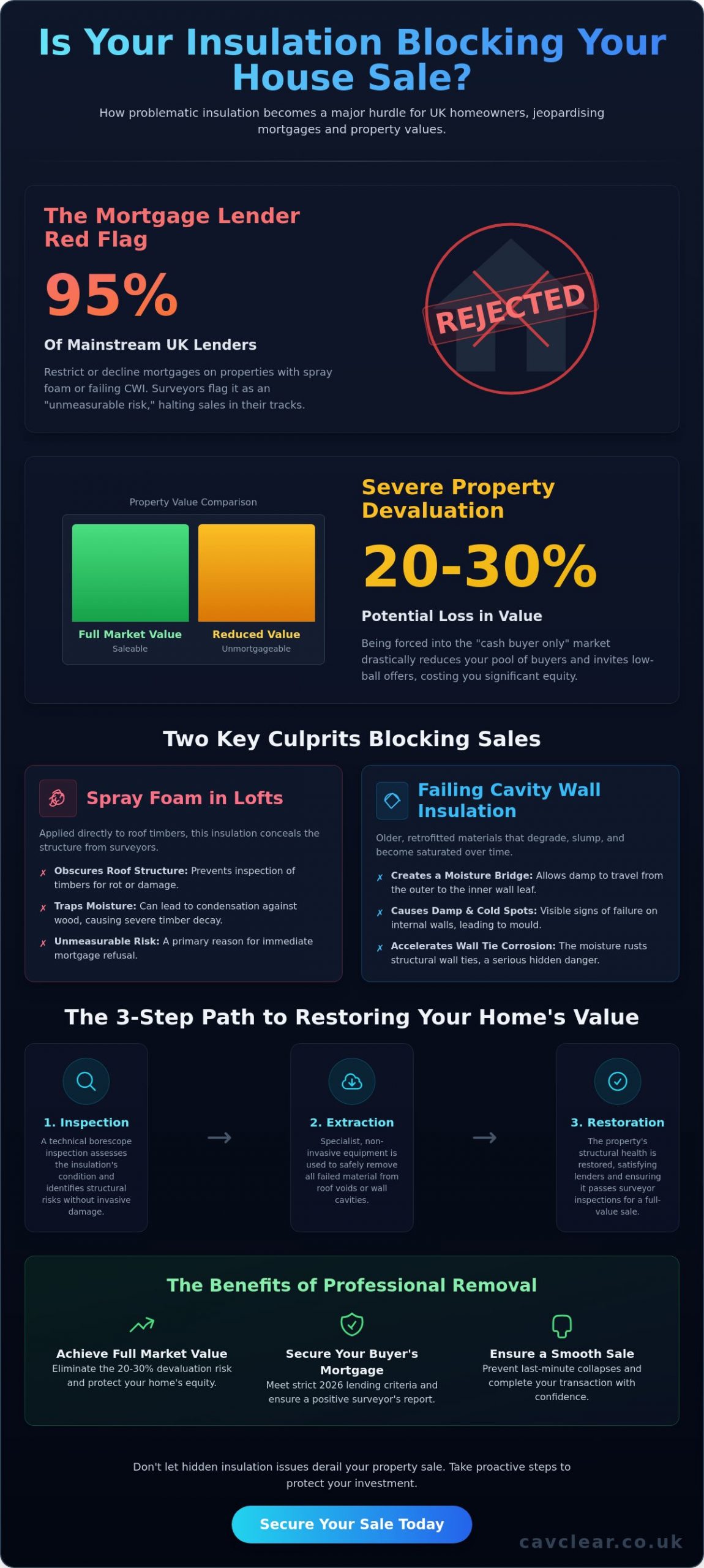
If you’re asking “should I remove insulation before selling my house,” you aren’t alone. With approximately 95% of mainstream UK mortgage lenders now restricting loans on properties with spray foam, professional extraction has become a vital “sale-enabling” step rather than just a maintenance task. Homes with these issues can see a devaluation of 20-30%, making a specialist removal the only reliable way to secure a buyer’s mortgage and protect your equity.
Discover how problematic insulation affects your property sale and why specialist removal is the most direct path to a successful, stress-expert completion. This guide examines the current 2026 lending landscape, the risks of structural decay, and the methodical process we use to restore your home’s health and value.
Key Takeaways
- Understand the definitive answer to “should I remove insulation before selling my house” to ensure your property meets the strict 2026 lending criteria required for a successful sale.
- Learn to identify the warning signs of failing cavity wall insulation, such as internal dampness and cold spots, which often signal underlying structural issues.
- Discover the critical link between moisture-saturated insulation and accelerated wall tie corrosion, and how this hidden damage can devalue your home by up to 30%.
- Explore our specialist, non-invasive extraction process that restores your property’s health through strategic access points and technical borescope inspections.
- Gain peace of mind with a clear path toward securing a buyer’s mortgage and achieving a full-valuation sale through accredited nationwide expertise.
Why Insulation is Currently Blocking UK House Sales
The UK property market has undergone a significant transformation in how it evaluates energy efficiency. While thermal upgrades were once seen as purely beneficial, modern lending criteria in 2026 have become much more stringent. Many homeowners now find themselves asking, “should I remove insulation before selling my house” after receiving a disappointing survey report. The core issue lies in mortgageability. This term defines whether a property is suitable security for a bank’s loan. If a surveyor cannot verify the condition of the timber or the internal leaf of a wall, they often categorize the risk as unmeasurable.
Traditional Cavity wall construction was designed to allow a building to breathe and manage moisture. When this space is filled with retrospective materials that have since failed or become saturated, it creates a structural liability rather than an asset. The Royal Institution of Chartered Surveyors (RICS) provides clear guidance that encourages surveyors to flag any material that conceals the structural integrity of a home. This shift means that features originally marketed as energy efficient are now frequently viewed as defects that must be rectified before a sale can proceed. Identifying the difference between functional insulation and a defective installation is now a standard part of the pre-sale process.
The Mortgage Lender Red Flag
Major UK banks are increasingly risk-averse regarding certain insulation types, particularly spray foam. Approximately 95% of mainstream lenders have policies that restrict or outright decline applications on properties where the roof structure is obscured. Surveyors simply cannot see what is happening behind the material. This lack of transparency creates an unmeasurable risk of timber decay or moisture retention. When a mortgage is declined at the final stages of a sale, it doesn’t just affect the seller; it can cause an entire property chain to collapse, leading to significant financial and emotional distress. Our nationwide specialist team often steps in at this stage to provide the necessary extraction that satisfies these lending requirements.
The Impact on Property Valuation
The presence of problematic insulation can lead to a severe property devaluation, often ranging between 20% and 30% according to current market data. If a house is deemed unmortgageable, the seller is forced into the cash buyer only trap. This drastically reduces the pool of potential buyers and invites low-ball offers. Investing in a specialist cavity extraction or foam removal often yields a 100% return on investment by restoring the property’s full market value. It’s a proactive step that transforms a stalled sale into a successful completion, ensuring your home passes even the most rigorous 2026 surveyor inspections with peace of mind.
Identifying Problematic Insulation: Spray Foam vs. Cavity Walls
Homeowners often confuse loft spray foam with cavity wall insulation, yet both can present significant hurdles during a property transaction. When you ask, “should I remove insulation before selling my house,” the answer depends on the material’s condition and the specific risks it poses to the building’s fabric. While loft foam affects the roof structure, cavity wall insulation (CWI) resides within the external walls. Both can become structural liabilities if they fail to perform as intended. Identifying the presence of these materials early allows you to address potential mortgage blockers before they derail your sale.
Identifying defective CWI requires a keen eye for specific symptoms. Common signs include persistent cold spots on internal walls, localized patches of damp, and crumbling mortar joints on the exterior. These issues often arise from “retrofitted” insulation installed in previous decades. Over time, materials like mineral wool or urea-formaldehyde foam can slump or become saturated with moisture. This creates a bridge for water to travel from the outer brickwork to the inner leaf, bypassing the protective air gap. To understand the structural implications, it’s vital to know what is a cavity wall and why its original design relies on an empty, ventilated space. Deciding “should I remove insulation before selling my house” often comes down to whether these structural compromises are already present.
The Spray Foam Crisis in Lofts
Spray foam insulation, particularly the closed-cell variety, poses a severe risk to timber roof structures. By adhering directly to the underside of the roof, it traps moisture against the wood, which can lead to rapid structural rot. This material also makes it impossible for surveyors to inspect the condition of the roof tiles and battens. Because the risk is hidden, approximately 95% of mainstream lenders now view spray foam as a reason to decline mortgage applications. Even if the installation appears correct, the lack of visibility often leads to a “zero valuation” on the property, making professional extraction a necessity for sellers.
Defective Cavity Wall Insulation (CWI)
Defective CWI is an equally pressing issue that can block a sale. When insulation bridges the cavity, it effectively turns a dual-skin wall into a solid one, allowing external rainwater to track directly into the living space. Saturated wool or bead insulation loses its thermal efficiency and instead acts as a wet sponge against your wall ties. This moisture accelerates corrosion, potentially compromising the stability of the entire building. If you suspect your property is suffering from these issues, arranging a specialist cavity wall survey is the most effective way to diagnose the problem and plan a resolution. A clear cavity is essential for preventing damp and ensuring your home remains mortgageable in the 2026 market.
Structural Risks: Damp, Mould, and Wall Tie Failure
The structural health of your property depends on a clear, dry cavity. When moisture becomes trapped within insulation materials, it transitions from a thermal barrier into a serious structural threat. Many homeowners ask, “should I remove insulation before selling my house” when they notice the first signs of damp or musty odors. The reality is that waiting until a surveyor flags the issue can be far more costly. Saturated insulation creates a persistent moisture reservoir that attacks the very components holding your home together. This moisture doesn’t just affect your comfort; it actively degrades the building’s fabric.
Wall Tie Corrosion and Stability
Wall ties are essential metal connectors that secure the outer brick leaf to the internal structure of your home. In many older UK properties, these were originally manufactured from mild steel. When cavity insulation becomes wet due to driving rain or poor installation, it creates a highly corrosive environment for these ties. This moisture accelerates the oxidation process, leading to wall tie failure and potentially causing the outer wall to bulge or lean. In these cases, wall tie replacement becomes a mandatory remedial action alongside the extraction of the defective material. Addressing these structural risks early ensures your property remains stable and meets modern safety standards.
The Damp and Mould Cycle
Visible black mould on internal walls is frequently a symptom of insulation bridging. This occurs when the material allows water to track across the cavity, cooling the internal wall and creating the perfect conditions for condensation and fungal growth. Simply cleaning the surface or redecorating is a temporary measure. If the saturated insulation remains, the cycle will continue indefinitely. Additionally, wet insulation often leaves behind “hygroscopic salts” within the brickwork. These salts naturally attract moisture from the air, ensuring the walls stay damp even during dry spells. This chemical contamination can be mistaken for rising damp, leading to incorrect and expensive treatments that fail to solve the underlying problem.
Securing a damp survey is the first step toward a successful sale. It provides the technical evidence needed to answer the question, “should I remove insulation before selling my house?” with confidence. By resolving these issues before they reach a lender’s desk, you maintain control over the transaction and avoid the stress of a collapsed chain. Specialist extraction restores the building’s natural moisture management, protecting the long-term health of the property and restoring the comfort of your living environment.
The Specialist Extraction Process: What Homeowners Should Expect
The specialist extraction process is designed to be methodical and non-invasive. Deciding should I remove insulation before selling my house is the first step toward a successful sale, but understanding the physical process provides the necessary peace of mind to proceed. We prioritize the structural integrity of your home throughout every phase of the extraction. Our nationwide teams follow a rigorous five-step protocol to ensure your property is restored to its original, healthy state.
When considering should I remove insulation before selling my house, homeowners are often concerned about the potential for mess. Our process begins with a detailed borescope inspection. This involves inserting a small camera into the cavity through tiny holes in the mortar to map out the location of debris and saturated material. Once the survey is complete, our technicians create strategic extraction points. We use non-invasive techniques that avoid the need to remove whole bricks or disturb internal plaster. By using high-pressure compressed air and industrial vacuums, we draw the defective material out of the cavity. This closed-system approach ensures that dust and debris are contained within our equipment rather than being released into your garden. We then perform a final borescope check to ensure the cavity is 100% clear. Finally, we professionally re-point the access holes using mortar that matches your existing brickwork.
Minimal Disruption Techniques
Modern extraction methods have evolved to be incredibly clean. You don’t have to worry about your home becoming a construction site. For a standard semi-detached property, the entire extraction process typically takes between one and two days. Because we work entirely from the outside, there is no need for you to clear internal rooms or worry about dust inside your living space. Our specialized vacuums are powerful enough to remove heavy, wet debris while remaining quiet enough to minimize disturbance to your neighbors.
Verification and Reporting
A successful property sale in 2026 requires more than just the removal of the material; it requires proof. We provide a “clear cavity” certificate and a comprehensive post-extraction report. This document includes photographic evidence of the empty cavity, which is often a mandatory requirement for a buyer’s solicitor or mortgage lender. Providing this transparency can actually increase buyer confidence, as it proves the property’s structural risks have been professionally mitigated. This documentation is your guarantee that the house is now fully mortgageable and safe for the next owner.
If you are ready to secure your sale and protect your property’s value, book a specialist cavity wall survey today to receive a fixed-price quotation for extraction.
Securing Your Sale with CavClear Specialist Services
A property flagged for defective insulation doesn’t have to remain a liability. Our mission at CavClear is to transition your home from a flagged structural risk back into a certified, saleable asset. When you ask, “should I remove insulation before selling my house,” you’re looking for more than a simple yes or no; you need a solution that satisfies buyers, solicitors, and mortgage lenders alike. We provide the technical weight required to overcome the strictest 2026 surveyor reports. By focusing on structural integrity and transparent reporting, we ensure your transaction stays on track.
Comprehensive Property Inspections
Many companies offer surface-level checks, but these often lack the detail needed to clear a mortgage red flag. Our specialist surveys combine insulation assessments with wall tie and damp inspections to provide a holistic view of your property’s health. We use advanced diagnostic tools to map moisture levels and inspect cavity conditions through non-invasive borescope entry. This data-driven approach allows us to produce the precise technical documentation that lenders demand. We take a no-nonsense path to remedial works, ensuring every structural concern is identified and addressed in a single, professional report. This provides the clarity needed to satisfy even the most cautious surveyors.
National Coverage for UK Homeowners
CavClear operates as a nationwide specialist, providing expert extraction services across the entire United Kingdom. Using a specialist contractor is vital because general builders often lack the industrial vacuums and high-pressure equipment required for a clean, complete extraction. Our accredited technicians are specifically trained in property preservation, ensuring that every grain of debris is removed without compromising your home’s fabric. We don’t just clear the cavity; we restore the moisture management and structural integrity of your property. This gives you the confidence to move forward with your sale at its full market valuation.
For homeowners in Scotland looking to ensure any future energy-efficiency upgrades meet the highest safety standards, ScotTherm Insulation provides specialized loft and underfloor services that focus on structural health and long-term protection.
Don’t let a surveyor’s report stall your progress or devalue your equity. A professional extraction is a vital investment that removes the obstacles between you and a completed contract. Book your specialist survey today to secure your house sale and gain the peace of mind that comes with a guaranteed, permanent fix for your property’s future.
Taking Control of Your Property Sale
Navigating a house sale with problematic insulation doesn’t have to be a source of constant anxiety. The shift in 2026 lending criteria means that professional extraction is often the only path to securing a buyer’s mortgage and protecting your equity. If you’re currently asking, “should I remove insulation before selling my house,” remember that a clear cavity is a vital asset. Addressing these structural concerns now prevents the 20-30% devaluations that occur when properties are deemed unmortgageable.
Our accredited technicians provide nationwide UK coverage, using specialist borescope technology to deliver the precise inspections lenders require. We provide comprehensive structural reports that turn a “flagged” property into a certified, saleable home. You don’t have to face the stress of a collapsed chain alone. Our methodical, clean extraction process restores your property’s health and ensures a smooth transaction at full market value.
While resolving structural issues is paramount, achieving a premium sale price often requires impeccable presentation; companies like Maintain Clean Ltd provide the high-end property cleaning and maintenance services that help homes stand out in a competitive market.
Secure your house sale with a specialist insulation survey from CavClear. You can move forward with absolute confidence, knowing your home is structurally sound and ready for a successful completion.
Frequently Asked Questions
Will removing spray foam insulation damage my roof?
Specialist removal protects your roof from the moisture-induced rot that spray foam often causes. While the foam adheres strongly to timbers, accredited technicians use precise techniques to separate the material without compromising the structural integrity of the rafters or battens. Clearing this material is the only way to allow a surveyor to inspect the roof’s condition. This is a mandatory requirement for most UK lenders in 2026 to ensure the building is safe.
How much does cavity wall insulation removal cost in 2026?
Costs depend on the type of material and the size of your property. For example, professional spray foam removal for a three-bedroom detached house typically averages around £3,200. Cavity wall extraction prices are calculated based on the total wall area and the accessibility of the site. Investing in this work often yields a full return by restoring the 20-30% property value lost when a home is flagged as unmortgageable.
Can I sell my house with spray foam if I have a cash buyer?
You can sell to a cash buyer, but you should expect a significantly lower offer to reflect the structural risks. Cash buyers often use the presence of spray foam as a negotiation tool, requesting price drops of 20% or more to cover future removal costs. Even without a lender involved, a surveyor will likely flag the material as a risk. This can cause sophisticated investors to withdraw from the transaction entirely.
How long does it take to clear a cavity wall of old insulation?
Most extractions for a standard semi-detached property take between one and two days to complete. Larger detached homes or properties with complex access may take slightly longer. Our teams work entirely from the exterior, ensuring the process is efficient and non-invasive. We follow a strict protocol of borescope inspections before and after the work to verify that the cavity is 100% clear of all residual debris.
Do I need a survey before removing insulation for a sale?
A technical survey is essential to identify the specific type of material and the extent of any structural damage. When asking should I remove insulation before selling my house, a professional inspection provides the definitive answer through borescope evidence. This survey allows us to detect underlying issues like wall tie corrosion or saturated debris. It ensures the extraction plan is tailored to your home’s unique requirements and satisfies buyer solicitors.
What happens if I don’t remove flagged insulation before listing my house?
Leaving flagged insulation in place often leads to a collapsed sale once the buyer’s surveyor identifies the risk. Approximately 95% of mainstream lenders may restrict lending on such properties, meaning your buyer’s mortgage application will likely be declined. This can stall your property chain and force you to re-list the house at a lower price. Often, you’re left with “cash only” purchasers who demand heavy discounts on the valuation.
Is the extraction process messy for my garden or driveway?
The extraction process is designed to be clean and non-invasive for your external spaces. We use powerful industrial vacuums and high-pressure compressed air to draw the material directly from the cavity into sealed containers. This closed-system approach prevents dust or saturated debris from spilling onto your garden or driveway. After the extraction is finished, we professionally re-point the small access holes to match your existing mortar joints and brickwork.
Will removing insulation make my energy bills go up significantly?
Removing saturated or defective insulation often improves your home’s thermal performance by eliminating damp cold spots. Wet insulation acts as a thermal bridge, drawing heat out of the building rather than retaining it. By restoring the clear air gap in your cavity walls, you allow the property to manage moisture naturally. This prevents the internal dampness that makes a home feel colder and much more expensive to heat during the winter.
Recent Comments