
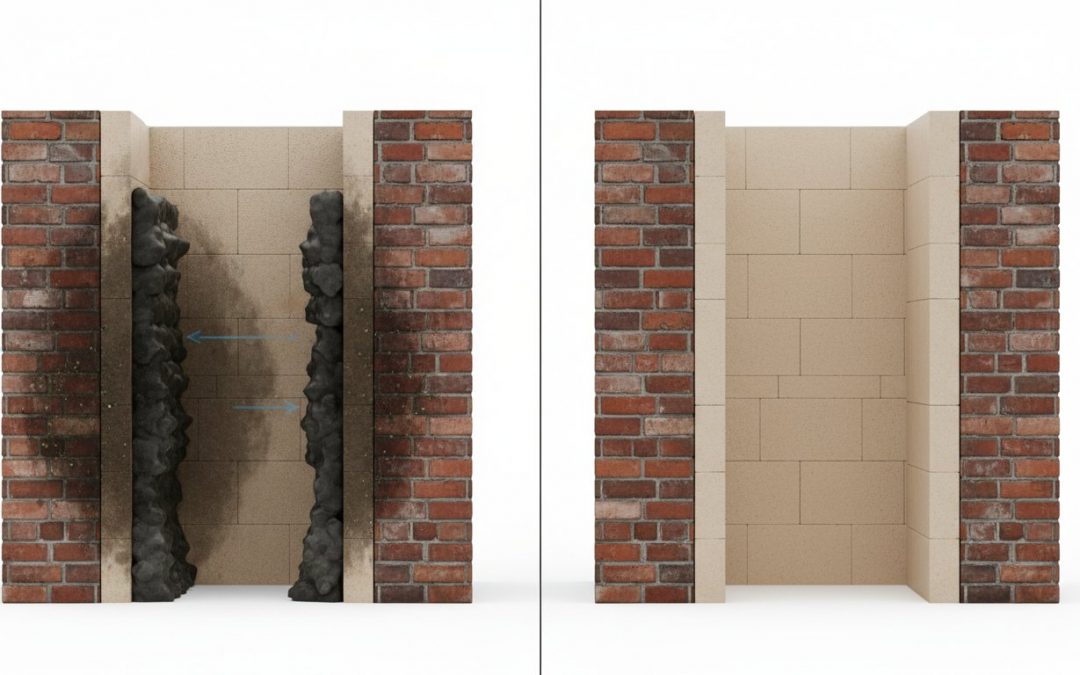
Your property’s wall cavity is a critical structural feature designed to manage moisture, not a storage space for absorbent materials. When this gap is filled with defective material, it transforms from a protective barrier into a moisture bridge that saturates your internal walls. You likely invested in insulation to lower bills and stay warm, but now you’re facing persistent black mould and a musty smell that won’t shift. It’s frustrating to see your property’s value threatened by the very thing meant to protect it. Many homeowners ask us, will removing insulation solve my damp problem, especially when they realize their insulation is saturated with debris or water.
This specialist guide explains why extracting defective cavity wall insulation is often the only permanent way to restore your home’s structural integrity and eliminate damp for good. We’ll examine the technical reasons behind insulation failure, the professional extraction process, and how a £150 to £300 specialist survey provides the clarity you need to protect your investment. Discover how to return your home to a dry, healthy environment while securing its long-term thermal efficiency and comfort.
Key Takeaways
- Learn why your home’s cavity was originally designed as a vital drainage system and how filling it disrupts this natural moisture management.
- Understand why the answer to “will removing insulation solve my damp problem” is often yes, as extraction removes the physical bridge allowing water to penetrate your internal walls.
- Discover why cosmetic fixes like damp-proof paint fail to address the root cause of saturated material trapped deep within your masonry.
- Explore the non-invasive extraction process that uses specialized industrial vacuums to clear your cavity without compromising your property’s structural integrity.
- Gain insight into how a clear cavity allows your property to breathe again, protecting your home’s long-term value and eliminating persistent mould growth.
The Original Purpose of Your Property’s Wall Cavity
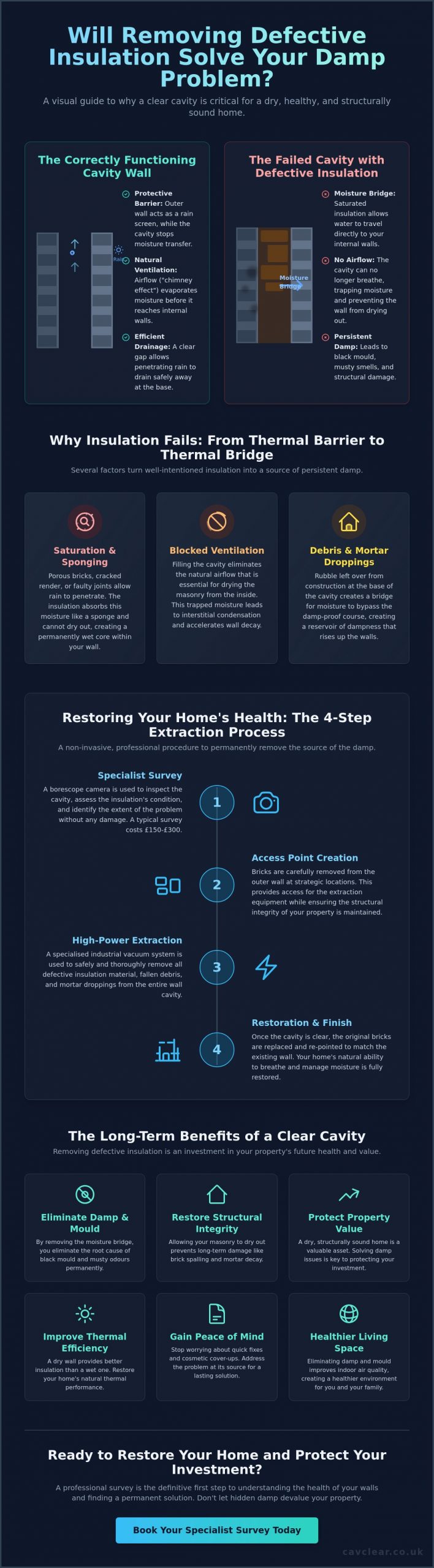
UK construction standards transitioned toward cavity wall design in the late 19th and early 20th centuries to address the challenges of the British climate. Before this shift, solid wall properties allowed rainwater to soak directly through the masonry to the interior. To understand why your home is struggling with moisture today, we must look at The Original Purpose of Your Property’s Wall Cavity. Architects designed these buildings using the rain-screen principle. This engineering approach treats the outer leaf of brickwork as a sacrificial barrier that takes the brunt of wind-driven rain, while the cavity serves as a dedicated drainage channel and ventilation zone.
A clear cavity allows air to circulate expertly. This movement creates a chimney effect that evaporates residual moisture naturally before it can reach the inner leaf. Many property owners ask, will removing insulation solve my damp problem, once they understand that the cavity was never intended to be an airtight, filled space. When you introduce material into this gap, you remove the wall’s ability to breathe and drain, effectively turning a protective void into a moisture bridge.
The Cavity as a Protective Moisture Barrier
The standard 50mm to 100mm gap in a traditional wall is specifically sized to prevent capillary action. This is the process where water travels through narrow spaces without the assistance of gravity. By maintaining a physical break between the external and internal brick layers, the design ensures that moisture cannot “jump” across the gap. It’s essential to understand what is a cavity wall to appreciate its role as a structural moisture barrier. Specialist wall ties hold these two layers together, and they are designed with drips or twists to ensure any water that does reach them falls to the bottom of the cavity rather than traveling toward your living room walls.
How Retrofitted Insulation Disrupts Natural Ventilation
Filling this gap with retrospective insulation stops the natural airflow that keeps your masonry dry. In regions across the United Kingdom exposed to heavy wind-driven rain, the outer leaf can become completely saturated. Without the chimney effect to dry the bricks from the inside out, the insulation material begins to act like a sponge. It absorbs water and holds it against the inner leaf for weeks or months. At this stage, the insulation ceases to be a thermal benefit and becomes a structural liability. It creates a permanent moisture path that leads to the black mould and musty smells you’re experiencing. Restoring the cavity to its original, empty state is the only way to re-establish this vital ventilation system.
How Defective Insulation Causes Persistent Damp Issues
When cavity wall insulation fails, it stops acting as a thermal barrier and starts acting as a sponge. This saturation occurs when the external leaf of the property becomes compromised by cracks in the render or porous mortar joints. Once the material inside the cavity is wet, it cannot dry out due to the lack of airflow. This often leads to interstitial condensation, where moisture forms deep inside the wall structure at the point where warm internal air meets the cold, saturated insulation. Homeowners frequently ask us, will removing insulation solve my damp problem, as they realize that no amount of internal ventilation can dry out a wall that is soaked from within. You can find more detail on these systemic failures in the government guidance on faulty CWI.
Debris at the base of the cavity, such as mortar droppings from the original build, exacerbates these issues. This debris creates bridges at the foot of the wall, trapping moisture and preventing it from escaping through weep holes. When combined with saturated insulation, this creates a permanent reservoir of dampness. This environment is the primary cause of black mould, which thrives on the damp, cold surfaces of your internal walls. Because the moisture is held within the structure, simply cleaning the surface will never provide a long term fix.
Saturated Insulation as a Thermal Bridge
Wet insulation is a highly effective conductor of cold. While dry insulation traps air to keep heat in, saturated material allows external cold to pass directly through to your internal plaster. This creates localized cold spots where mould growth is most aggressive. You might find that increasing your heating only worsens the issue; the temperature difference between the warm room air and the expertzing, wet wall accelerates condensation. If you suspect your insulation is saturated, a professional cavity survey is the first step toward restoring your home’s comfort.
Material Failure: Fibre, Foam, and Debris
Different materials fail in distinct ways. Mineral wool (fibre) is particularly prone to slumping. Over time, gravity pulls the wet, heavy fibres to the bottom of the wall, leaving large uninsulated voids at the top and pockets of concentrated moisture at the base. Urea-Formaldehyde foam, common in older installations, often degrades and shrinks over decades. This creates gaps that allow moisture to bypass the barrier. In some cases, the breaking down foam can release unpleasant odours or fine dust into the living space. EPS beads, while less absorbent, can still fail if the bonding agent breaks down. This causes the beads to spill into areas where they shouldn’t be, such as under floorboards or into air bricks, further restricting the property’s vital ventilation.
Why Surface Treatments Cannot Resolve Internal Cavity Failures
Homeowners often spend hundreds of pounds on specialist paints and internal renders in a desperate attempt to stop moisture. While these products are marketed to provide a barrier, they only address the symptoms of damp rather than the root cause. If you’re asking, will removing insulation solve my damp problem, it’s because you’ve likely noticed that surface treatments aren’t working. These “damp-proof” paints often trap moisture within the masonry, preventing the wall from drying out and eventually causing the internal plaster to bubble and fail. This process, known as “blowing,” occurs when the hydrostatic pressure of the trapped water forces the decorative finish away from the brickwork.
Internal rendering is equally futile when the external leaf is still transferring water across a saturated cavity. It’s vital to distinguish between condensation and penetrating damp. Condensation is a management issue involving internal humidity, but penetrating damp is a structural failure. When defective insulation acts as a bridge, water moves expertly from the outside in. Even high quality external water repellent creams fail to protect a property if the cavity is blocked. These creams reduce the porosity of the outer brick, but they cannot stop the moisture already held within the saturated insulation from migrating inward.
The Limitations of Damp-Proof Paints and Internal Rendering
Applying a waterproof coating to an internal wall that is already wet creates a moisture sandwich. The water remains trapped between the external brickwork and the new internal barrier. This often leads to accelerated timber decay in floor joists and skirting boards as the moisture seeks an alternative exit. Instead of masking the issue, professional cavity wall insulation removal provides a permanent solution. It restores the original 50mm void, allowing the structure to dry naturally and preventing the recurrence of mould.
Why Increased Ventilation Won’t Dry Saturated Cavities
Many homeowners invest in Positive Input Ventilation (PIV) systems or high-powered extractor fans. While these are excellent for managing surface condensation, they cannot reach the moisture trapped inside your walls. Saturated mineral wool or degraded foam can hold gallons of water. Without airflow within the cavity itself, this material can take years to dry. You cannot ventilate your way out of a structural moisture bridge. The source of the saturation must be physically extracted before the building’s thermal equilibrium can be restored. Determining if and how will removing insulation solve my damp problem starts with a specialist survey, typically costing between £150 and £300, which can confirm if the moisture is coming from within the cavity rather than the air inside your rooms.
The Professional Process of Cavity Wall Insulation Extraction
The extraction process is a methodical engineering task rather than a demolition job. We use specialized equipment to ensure the property remains intact while the failing material is completely removed. Many homeowners worry about the disruption, but the reality is a clean, external process that targets the source of moisture without entering your living rooms. If you’re wondering, will removing insulation solve my damp problem, the answer lies in the precision of this extraction. By removing the saturated bridge, we allow the masonry to begin its natural drying phase immediately. It’s a surgical approach that restores the wall’s original design and function.
Modern Suction Techniques and Non-Invasive Access
Our specialists follow a strict three step protocol to ensure every pocket of debris is cleared. This process is designed to be as non-invasive as possible, focusing on the external skin of the property. We don’t need to remove large sections of brickwork; instead, we work through strategic access points.
- Step 1: We remove specific bricks at the base of the wall to create extraction points. Small injection holes are also drilled in a calculated pattern across the elevations to provide access for compressed air.
- Step 2: High pressure air is used to agitate the insulation material. This is crucial for mineral wool that has slumped and compacted, or for foam that has adhered to the inner leaf.
- Step 3: An industrial vacuum system extracts the loosened material. The debris travels through sealed hoses directly into heavy duty bags, ensuring no dust or saturated fibre contaminates your garden or driveway.
Site cleanliness is a priority for our teams. Once the extraction is complete, we use borescope cameras to inspect the void. This visual verification ensures the cavity is 100% clear before we replace the bricks and match the mortar to your existing finish. If you need a professional assessment of your property’s condition, you can book a specialist cavity survey today.
Post-Extraction Cleaning and Structural Wall Tie Inspections
The most critical part of any extraction is clearing the cavity tray at the bottom of the wall. This is where moisture laden debris often collects, blocking air bricks and causing rising damp symptoms. A clear cavity tray ensures that any future moisture that penetrates the outer leaf can drain away through weep holes as intended. However, the damage caused by wet insulation often extends beyond the material itself. Saturated insulation creates a corrosive environment for metal components within the wall structure.
Wet material held against the wall ties for years significantly accelerates the oxidation process. This can lead to structural instability as the ties weaken and expand. We always recommend a wall tie replacement survey following an extraction. Identifying and rectifying tie corrosion early protects your property’s structural integrity and prevents the need for more expensive repairs in the future. Restoring the cavity is about more than just removing damp; it’s about returning the building to its original design standards.
Restoring Structural Integrity and Long-Term Property Health
Restoring a wall cavity to its original, empty state is a vital investment in the long-term health of your property. Once the saturated material is removed, the natural drying process begins, allowing your masonry to return to its intended thermal performance. A clear cavity restores the building’s original ventilation system, which is the only way to ensure the structure breathes as architects intended. For many homeowners across the United Kingdom, the question of will removing insulation solve my damp problem finds its answer in the immediate improvement of air quality and the permanent cessation of mould growth. Removing the moisture bridge is the first step toward a healthier living environment.
CavClear provides a nationwide service for these specialist extractions, ensuring that every property receives the same high standard of care regardless of location. We understand that the goal is not just to fix a single patch of damp, but to protect the entire building from future structural decay. By returning the walls to their original design specifications, you eliminate the risk of interstitial condensation and the slow degradation of your internal plasterwork and timber fittings.
The Importance of a Specialist Damp and Cavity Survey
A visual check of external walls is never sufficient to diagnose cavity failure accurately. A professional damp survey involves the use of high-definition borescope cameras to look inside the void. This allows our specialists to identify saturated fibre, slumped wool, or degraded foam that remains hidden to the naked eye. These technical reports provide concrete evidence of the cavity’s condition, which is essential for insurance purposes or when planning long-term property maintenance. A specialist survey, which typically costs between £150 and £300, ensures you aren’t guessing about the cause of your damp but acting on verified data.
Protecting Property Value and Preventing Mould Recurrence
Property value is directly linked to structural health and maintenance history. In 2026, mortgage lenders and surveyors have become increasingly wary of properties with failing cavity wall insulation. A damp home is a high-risk asset. Failing to address internal moisture can lead to a significant reduction in resale value or even a refused mortgage application during the survey stage. Clearing the cavity is a proactive measure that protects your investment and ensures the property remains mortgageable.
By choosing accredited dampness specialists, you secure the peace of mind that comes with a guaranteed, clear cavity. Our non-invasive extraction techniques ensure that your home is restored without the need for costly structural repairs later. The result is a dry, warm, and healthy home that maintains its value for decades to come. If you suspect your insulation is failing, professional extraction is the only permanent solution to restore your home’s integrity.
Secure Your Home’s Structural Health Today
Persistent damp and mould aren’t just aesthetic issues; they’re symptoms of a structural failure deep within your walls. We’ve explored how a clear cavity serves as a vital drainage system and why defective insulation transforms that space into a damaging moisture bridge. Surface-level fixes like damp-proof paint fail because they leave the saturated source inside your masonry. When homeowners ask us, will removing insulation solve my damp problem, the technical evidence consistently points toward professional extraction as the only permanent remedy to restore your home’s original design and thermal performance.
CavClear provides nationwide UK coverage with accredited specialist technicians who use non-invasive industrial vacuum systems. We provide comprehensive technical survey reports that offer a clear path to a dry, healthy living environment. Don’t let failing insulation compromise your property’s value or your family’s comfort. It’s time to return your home to the safe, dry haven it was designed to be. Book Your Specialist Cavity Survey with CavClear Today and take the first step toward a permanent solution.
Frequently Asked Questions
Will removing cavity wall insulation make my house colder?
Saturated insulation acts as a thermal bridge, conducting cold directly from the external brickwork to your internal walls. While dry insulation is designed to retain heat, wet material loses its thermal properties and actually accelerates heat loss. Removing the defective material restores the original air gap, which is a significantly better insulator than waterlogged fibre or degraded foam.
How long does the extraction process typically take for a standard semi-detached home?
A professional extraction for a semi-detached property usually takes between one and two working days to complete. The exact timeframe depends on the type of material being removed and the total wall area of the building. Our specialists use industrial suction units to ensure the cavity is cleared efficiently without causing unnecessary delays.
Can I remove cavity wall insulation myself as a DIY project?
You shouldn’t attempt to remove cavity insulation as a DIY task because it requires specialized industrial equipment and technical expertise. Manual attempts often leave significant amounts of debris in the cavity tray and around wall ties. This remaining material continues to trap moisture, which leads to permanent damp issues and potential structural damage that is expensive to rectify.
What are the most common signs that my insulation has failed?
The most frequent indicators of failure include persistent black mould, musty smells, and localized cold spots on your internal walls. You might also notice wallpaper peeling or paint bubbling in specific areas where the insulation is saturated. If you’re asking, will removing insulation solve my damp problem, these symptoms typically confirm that the material has reached a point of total saturation.
Does the removal process create a lot of mess inside the house?
The extraction process is entirely external and creates no mess or dust inside your living areas. Technicians access the cavity from the outside of the property, pulling the material through small holes directly into sealed bags. We prioritize site cleanliness and ensure all extracted waste is removed from your property for professional disposal at the end of the job.
Will my damp walls dry out immediately after the insulation is removed?
Drying is a gradual process that can take several weeks or even months depending on the level of saturation. Once the moisture bridge is removed, natural airflow returns to the cavity and the masonry begins to reach equilibrium. You’ll notice the damp smells fading and the mould growth stopping as the structural moisture levels steadily decrease.
How much does cavity wall insulation extraction cost in the UK?
Average costs for extraction range between £1,600 and £2,600 for most residential properties in the UK. For a typical semi-detached home, the estimated cost is around £1,680, while a detached property averages approximately £2,520. These figures break down to a rate of roughly £21.50 per square meter for a professional service.
Can wet insulation cause my wall ties to rust and fail?
Saturated insulation creates a highly corrosive environment that significantly accelerates the oxidation of metal wall ties. Over time, this rust causes the ties to expand and weaken, which can lead to horizontal cracking in your mortar and structural instability. We always recommend a specialist survey to assess the condition of your ties once the wet insulation has been extracted.
Recent Comments