
The cheapest quote for insulation removal often becomes the most expensive mistake a homeowner can make. Hiring an unverified worker to drill into your property can lead to blocked cavities and permanent structural damage that costs thousands of pounds to repair. You’ve likely spent months battling persistent damp patches and black mould, feeling frustrated that your home’s comfort is declining. It’s exhausting to deal with the stress of a deteriorating property while worrying about the cost of a botched job. With industry data suggesting that 1 in 4 UK cavity wall installations may fail due to improper materials or exposure, finding accredited insulation removal contractors is the only way to ensure a safe, permanent resolution.
This guide provides the framework you need to identify and select qualified specialists. You’ll learn how to verify technical credentials, understand the extraction process, and ensure your walls are cleared of all debris using non-invasive suction methods. We’ll examine the specific standards that guarantee a professional result, the red flags to avoid during a site survey, and the steps required to return your property to a dry, thermally efficient state.
Key Takeaways
- Understand why cavity wall extraction is a specialist remedial engineering task that requires specific expertise beyond the capabilities of general builders.
- Master the process of finding accredited insulation removal contractors by verifying essential credentials such as TrustMark registration and NVQ Level 2 qualifications.
- Discover the technical requirements for a professional extraction, including the use of industrial-grade vacuum units to ensure a clean and non-invasive removal process.
- Learn why a comprehensive technical survey is the critical first step in identifying structural faults and assessing the condition of your property’s wall ties.
- Secure your home’s structural integrity and long-term health by partnering with a nationwide specialist dedicated to performing remedial works the right way.
Why Specialist Accreditation Matters for Cavity Wall Extraction
Specialist insulation removal is a remedial engineering process that requires precision and technical expertise. It’s not a task for general builders or DIY enthusiasts. The process involves the systematic extraction of failed materials from within the building’s envelope, a task that demands specific industrial machinery and a deep understanding of structural physics. When homeowners begin the process of finding accredited insulation removal contractors, they’re looking for professionals who treat the home as a complex system rather than just a construction site.
A standard Cavity wall serves a vital purpose in UK properties built after the 1920s. It provides a protective air gap that prevents water from penetrating the inner leaf of the building. When insulation is incorrectly installed or becomes saturated, it destroys this protective barrier. This failure leads to thermal bridges and interstitial condensation, where moisture trapped inside the wall causes hidden rot and mould. Accredited contractors use borescope inspections to map these failures before work begins, ensuring the property’s long-term value is protected through a transparent, documented recovery process.
The Risks of Unqualified Extraction
Hiring unqualified tradespeople for cavity clearances often leads to permanent structural issues. Unskilled operators frequently use incorrect drilling patterns that weaken the mortar bond or apply excessive air pressure that can blow out the internal leaf of the brickwork. Incomplete debris removal is another common failure, leaving behind pockets of wet material that continue to cause damp. Bridging is the primary cause of damp transfer, occurring when debris or saturated insulation creates a physical bridge across the cavity that allows water to migrate from the outer leaf to the inner leaf. Without the specialist vacuum equipment used by accredited firms, these “damp pockets” remain trapped, making any internal redecoration a waste of money.
Restoring Thermal Efficiency and Comfort
Removing wet or degraded insulation is the only effective way to stop persistent damp in a cavity wall. Saturated mineral wool acts like a cold sponge, pulling heat out of the home and increasing energy bills by up to 30% in some extreme cases. Once the specialist extraction is complete, the property transitions from having a compromised, damp-heavy wall to a clear, functional air gap. This restoration allows the building to breathe again. Homeowners typically notice a significant improvement in ambient temperature stability and a reduction in musty odours within weeks of the procedure. By investing in professional removal, you ensure the home’s thermal envelope operates exactly as it was designed to, providing a permanent solution to a technical fault.
Key Standards and Qualifications to Verify
Selecting a specialist to handle your property’s structural health requires more than a cursory glance at a website. You need to verify specific credentials that prove a firm’s ability to handle complex extraction tasks. When finding accredited insulation removal contractors, your first step should be checking for TrustMark registration. This government-endorsed scheme ensures a business has undergone thorough vetting for technical competence and fair trading practices. It provides a layer of financial protection and access to a clear dispute resolution process, which is vital if complications arise during the project.
TrustMark and Government-Endorsed Standards
A TrustMark status indicates that a contractor follows a code of conduct focused on consumer protection. You can verify a firm’s current standing by searching the official TrustMark register. This prevents the risk of hiring rogue traders who lack necessary oversight. Reliable specialists also adhere to the National Occupational Standards for cavity clearance. These standards dictate the precise methods required to ensure a cavity is 100% expert of debris, preventing future damp issues. You can find more details on the wider framework of Accreditation for Insulation to understand the regulatory landscape in the UK.
Ask the contractor for current insurance details and confirm what the cover relates to. Check that the proposed work, staff competence and working arrangements suit the project. Insurance requirements depend on the work and contract; a general article cannot establish a universal minimum.
Technical Qualifications for On-Site Technicians
The company logo matters, but the individual technician’s training determines the final quality of the job. You should look for teams where the lead operative holds an NVQ Level 2 in Insulation and Building Treatments (Extraction). This qualification proves they understand the physics of moisture movement and the mechanics of safe material removal. It’s not enough to simply own a vacuum machine; technicians must be trained in specialized extraction equipment to avoid damaging wall ties or internal plasterwork. Because of the risks involved, cavity wall insulation removal requires specific remedial expertise to ensure the property’s breathability is fully restored.
If you’re concerned about the state of your home’s cavities, you can book a professional survey to get an expert assessment of the required works. We operate as a nationwide specialist, ensuring every homeowner has access to these high standards of care regardless of their location in the UK. Professional extraction is about restoration, not just removal. By checking for these specific qualifications, you ensure your home is in safe hands.
Evaluating the Professional Extraction Process
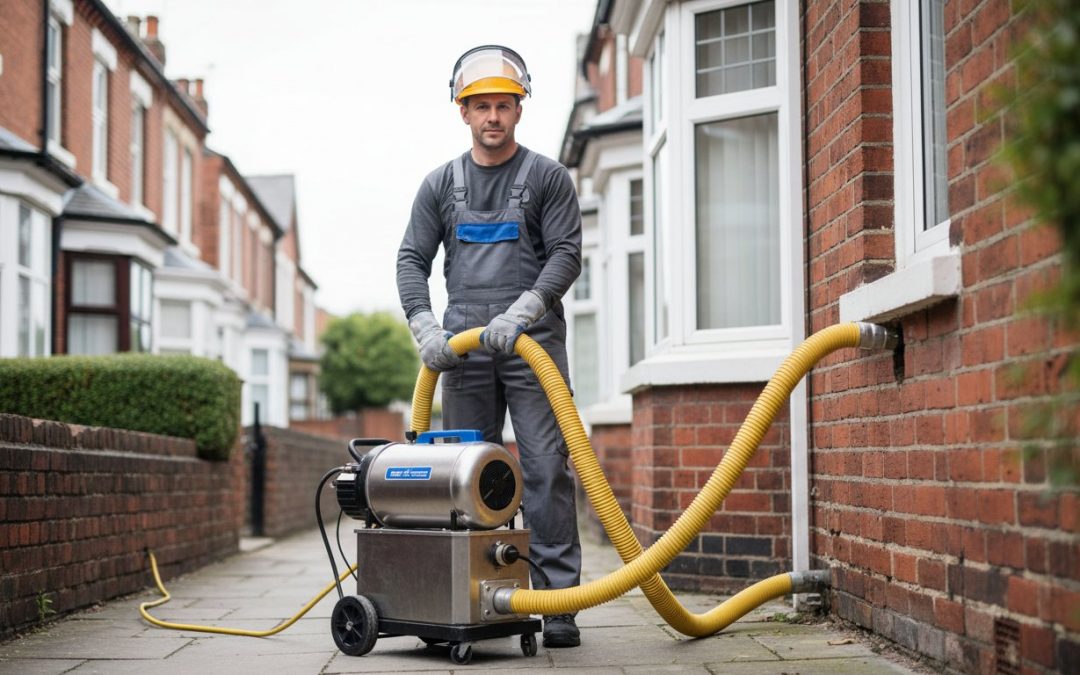
A professional extraction is a precision engineering task that prioritises the structural integrity of your home. When you’re finding accredited insulation removal contractors, you must look for specialists who treat property restoration as a non-invasive science. The goal isn’t just to pull material out; it’s to return the wall cavity to its original, breathable state without causing secondary damage. This requires industrial-grade vacuum extraction units capable of sustained high-pressure suction. These machines are significantly more powerful than standard commercial vacuums, often moving thousands of cubic feet of air per minute to ensure no heavy, damp clusters remain lodged behind wall ties.
Proper waste management is equally vital. Contaminated materials, often saturated with moisture or affected by microbial growth, must be bagged immediately at the extraction point. This prevents debris from blowing across your garden or entering the local environment. A specialist’s service is only complete when they provide a final clearance certificate. This document, backed by a thorough borescope inspection, confirms that 100% of the redundant material has been removed. It serves as your guarantee that the cavity is clear and the risk of interstitial condensation is eliminated.
Red Flags vs. Professional Techniques
Homeowners should be wary of contractors who skip the diagnostic phase. A major red flag is the absence of borescope cameras. These optical tools are the only way to see inside the wall to identify obstructions or internal rubble. Professional standards dictate a systematic drilling pattern, usually involving 25mm holes spaced strategically to ensure total coverage. Specialists take pride in their finishing work, matching mortar colours and brick dust to ensure the property remains aesthetically identical to its pre-extraction state. If a contractor suggests a “random” drilling approach, it’s a sign of poor workmanship that could leave cold spots in your walls.
Equipment and Site Management
The extraction process relies on high-volume air compressors to dislodge settled or bonded material. This “blow-out” phase is technical; it requires a balanced pressure system to push debris toward the vacuum nozzle without forcing dust into the living space. Specialists use high-density brushes and directional nozzles to clear the base of the cavity, where debris often collects around damp-proof courses. Site management includes protecting the property with ground sheets and ensuring all drill holes are sealed with weather-resistant materials. A professional team leaves the property clean, watertight, and ready for its next stage of life, ensuring your investment in the home’s future is protected.
The Role of Technical Surveys in Successful Removal
A pre-extraction survey is the most critical step in protecting your property’s structural integrity. While a sales quote focuses on price, a technical survey report functions as a diagnostic blueprint. When homeowners are finding accredited insulation removal contractors, they should prioritize firms that treat the survey as a forensic investigation rather than a formality. This process identifies the root cause of the failure, ensuring the extraction addresses the actual problem rather than just the symptoms. Specialists use thermal imaging to detect cold spots where insulation has settled, providing a non-invasive view of the home’s thermal performance.
The difference between a basic quote and a professional survey is significant. A technical report includes photographic evidence, moisture readings, and a clear scope of work. It prevents unexpected costs by identifying issues like rubble in the cavity or restricted access points before the project begins. This transparency ensures that the extraction is permanent and effective.
Borescope Inspections: Seeing Inside the Walls
Technicians use high-definition borescopes to inspect the internal environment of the property. By inserting a small camera through existing mortar joints, they can identify if the material is slumped, wet, or incorrectly installed. This visual confirmation is vital for understanding what is a cavity wall and how it is currently performing. The inspection also highlights obstructions like mortar “snots” or construction debris that could trap moisture. Documenting these conditions ensures the extraction team uses the correct pressure and suction settings for a clean removal.
Wall Tie Integrity and Damp Assessment
Wet insulation often leads to hidden structural damage. When insulation stays damp, it holds moisture against the metal wall ties that hold your home together. This leads to accelerated corrosion and eventual tie failure. Integrating wall tie replacement assessments into the survey is a standard safety protocol for accredited specialists. Furthermore, a comprehensive damp survey should accompany every extraction to identify if the moisture has penetrated the inner leaf of the building. This results in a detailed remedial action plan that gives homeowners a clear path toward a dry, energy-efficient home.
Finding accredited insulation removal contractors who provide these in-depth diagnostics is the only way to guarantee a successful outcome. Without a technical survey, you risk leaving debris behind or overlooking structural faults that could cost thousands to repair later.
Ensure your home is assessed by a specialist. Book a technical cavity survey with CavClear today to protect your property’s future.
Securing Your Property’s Future with CavClear
Protecting the structural integrity of your home requires a methodical approach that prioritizes long-term health over temporary fixes. CavClear operates with a commitment to professional rigor, ensuring that every extraction we perform restores the building to its original design specifications. When homeowners begin the process of finding accredited insulation removal contractors, they often discover that the difference between a standard job and a specialist restoration lies in the equipment used and the attention to detail provided during the survey phase.
A Nationwide Specialist Approach
CavClear delivers specialist remedial services to homeowners across the entire United Kingdom. We don’t view our work as a simple extraction process; we view it as a total property restoration. Our teams focus on the “right way” to clear a cavity, which involves removing 100% of the saturated or degraded material and the associated debris that often settles at the base of the wall. This thoroughness is vital because even a small amount of leftover material can create a bridge for moisture to cross from the outer leaf to the inner leaf of your masonry.
We actively avoid the “quick-fix” mentality that has plagued the industry for years. Many general builders might offer to pull out insulation, but they often lack the industrial-grade vacuum systems and borescope cameras needed to verify the results. Our specialist status means we understand the technical nuances of different wall types and the specific risks associated with debris accumulation. By choosing a nationwide expert, you ensure your home receives a consistent standard of care regardless of your location.
The CavClear Guarantee of Quality
Our remedial process is designed to be clean and non-invasive, minimizing disruption to your daily life. We use localized extraction points that are carefully refilled and colour-matched to your existing mortar, leaving the exterior of your property looking untouched. Once the work is complete, we provide a comprehensive professional report. These documents are essential for homeowners who may need to demonstrate the property’s structural health to insurers or prospective buyers in the future. A clear cavity is a fundamental requirement for maintaining thermal efficiency and preventing the return of damp and mold.
We stand behind our work with robust guarantees that provide the peace of mind you deserve. Our technicians use high-definition internal inspections to confirm that the cavity is completely clear before we sign off on any project. This evidence-based approach removes the guesswork from property maintenance. If you’ve identified signs of damp or suspect your insulation has failed, the first step toward a permanent solution is a technical assessment. You can schedule your professional cavity survey with CavClear today to secure the future of your property.
Securing Your Home’s Structural Integrity
Protecting your property starts with identifying the underlying causes of damp and debris buildup within the cavity. You’ve seen that a professional extraction process requires more than just basic equipment; it demands a methodical approach backed by rigorous technical surveys. These surveys ensure that every trace of failed material is identified before work begins. This precision prevents long term damage to your wall ties and internal finishes, which often results from moisture retention in the cavity. Expert extraction is the only way to restore the natural ventilation your property needs to stay dry.
When it comes to finding accredited insulation removal contractors, your priority should be verified expertise and a commitment to restoring your home’s thermal efficiency. CavClear provides nationwide UK coverage with a team of accredited technicians who specialize in structural damp and wall tie restoration. We don’t just remove old insulation; we provide a permanent resolution that safeguards your home for the future. Our specialists focus on clean, non-invasive techniques that respect the structural integrity of your building while delivering measurable results for your peace of mind.
Take the first step toward a dry, healthy home today. Book a specialist technical survey with CavClear to ensure your property remains a safe and comfortable investment for years to come. Your home deserves the protection of a specialist team dedicated to quality workmanship.
Frequently Asked Questions
How do I know if my cavity wall insulation needs to be removed?
Signs that your insulation is failing include internal damp patches, persistent mould growth, or a noticeable drop in thermal efficiency. If you observe cold spots on walls or peeling wallpaper, it’s often a sign that the material has slumped or become saturated. A specialist uses borescope inspections to confirm the presence of debris or wet material within the 50mm or 75mm cavity space.
Is there an official register for accredited insulation removal contractors?
There isn’t a single government-run register, but you should look for contractors registered with TrustMark or those holding NVQ Level 2 in Insulation and Extraction. When finding accredited insulation removal contractors, verify their membership in trade bodies that require strict adherence to British Standards like BS 8233. This ensures the business follows 100% of the safety protocols required for structural integrity.
What qualifications should I ask to see before hiring a specialist?
Ask about relevant training, experience, risk assessments and method statements for the proposed work. Verify any claimed accreditation with its issuing organisation and confirm the arrangements for supervision and quality checks.
Can a general builder remove cavity wall insulation safely?
No, a general builder typically lacks the industrial-grade vacuum machinery and borescope equipment needed for a thorough extraction. Specialists use high-powered suction systems to ensure no debris remains, which prevents future damp bridges. Using an unaccredited generalist often leads to incomplete removal, leaving 15% to 20% of the material trapped in corners or around wall ties, which continues to cause damp issues.
How much does a professional insulation extraction survey cost?
CavClear confirms the survey scope and fee for the property before booking. The report records findings, photographs, limitations and recommendations, with a quotation for relevant works where required.
Will the removal process cause damage to my external brickwork?
The process is non-invasive and involves drilling small holes, usually 22mm to 25mm in diameter, into the mortar joints. These holes are similar to those made during the initial installation. Once the extraction is complete, a specialist refills these gaps with colour-matched mortar. This ensures the repair is invisible to the naked eye and the structural integrity of your masonry remains perfectly intact.
How long does the average insulation removal take for a UK home?
A standard three-bedroom semi-detached house typically takes 1 to 2 days to complete. Larger detached properties or homes with complex accessibility issues might require 3 full days of onsite work. This timeframe includes the initial setup, the full extraction of all debris, and the final site clean-up. Our nationwide teams work efficiently to restore your property’s comfort with minimal disruption to your daily routine.
What happens if the insulation is left in the walls when it is wet?
Wet insulation acts as a bridge that allows moisture to travel from the outer leaf of brickwork to the inner walls. This leads to persistent damp, black mould, and the eventual corrosion of steel wall ties. If left for more than 12 months, the damp can compromise the structural integrity of the building and significantly reduce the resale value of the property due to surveyor red flags.
Recent Comments