
Saturated mineral fibre can hold up to 10 times its own weight in water, which effectively turns your home’s thermal layer into a damp sponge that accelerates wall tie corrosion. If you’re struggling with these issues, professional fibre insulation extraction is the necessary step to stop moisture from bridging into your living space. It’s exhausting to deal with persistent black mould and rising heating costs when your insulation is no longer fit for purpose. You likely feel that despite keeping the heating on, the cold and damp simply won’t shift from your masonry. This moisture bridge doesn’t just impact your comfort; it actively threatens the structural stability of your property.
This specialist guide explains the technical process required to restore your property’s health and prevent long term structural damage. You’ll learn about the specialist equipment we use to clear debris and the technical standards required to ensure your cavity walls are completely dry and breathable again. We’ll walk you through the entire process, from the initial site assessment to the final clearance that gives you back your peace of mind. By the end, you’ll understand how a clear cavity serves as a vital investment in your home’s future.
Key Takeaways
- Understand how saturated mineral wool and glass fibre act as a sponge, transferring moisture across the cavity and compromising your property’s internal walls.
- Learn why professional fibre insulation extraction requires industrial-grade vacuum systems and compressed air to ensure every trace of defective material is safely removed.
- Discover the technical risks of using non-specialist contractors and why standard domestic equipment is insufficient for handling saturated insulation.
- Identify how restoring natural airflow within the cavity prevents future damp issues and protects the long-term structural integrity of your home.
- Recognise the importance of accredited specialist standards in achieving a permanent, non-invasive solution for a healthy and comfortable living environment.
Understanding Professional Fibre Insulation Extraction and Why it Fails
Professional fibre insulation extraction is a specialist remedial process designed to remove degraded or incorrectly installed materials from a property’s wall envelope. In the UK, the two most common types of insulation found in these spaces are mineral wool and glass fibre. While these materials were originally intended to improve thermal performance, they’ve a finite lifecycle. Over 25 to 30 years, the binders within the fibre often break down, leading to a loss of structural integrity. Once the material fails to provide a consistent thermal barrier, it transitions from an asset into a liability that can cause significant structural dampness.
Standard Cavity Wall Construction relies on a clear air gap to prevent moisture from transferring from the external leaf to the internal leaf of a building. When fibre insulation is introduced, it bridges this gap. If the material becomes saturated or settles, it creates a pathway for water. Professional intervention becomes necessary because failed fibre cannot be “fixed” in situ; it must be completely extracted to restore the building’s original design function and protect its structural health.
The Mechanics of Fibre Insulation Failure
Fibre insulation often fails through a process called slumping. This occurs when the material loses its loft or is affected by moisture, causing it to settle at the bottom of the cavity. This creates vacant cold spots at the top of the walls, leading to uneven surface temperatures and condensation. Fibre slumping creates a fragmented thermal barrier that accelerates heat loss and facilitates moisture bridge formation across the cavity. These gaps aren’t just inefficient; they’re the primary cause of localized damp issues that plague older properties across the United Kingdom.
Identifying the Need for Specialist Extraction
Homeowners should look for specific indicators of insulation failure. Internally, this often manifests as dark patches of black mould, peeling wallpaper, or a persistent musty smell. Externally, look for cracked mortar joints or “spalling” brickwork, where the brick face flakes off due to expertze-thaw cycles in water-logged walls. A professional survey is the only way to confirm these issues with certainty. Using borescope cameras, specialists can inspect the internal cavity state without invasive demolition. This diagnostic approach ensures that professional fibre insulation extraction is only recommended when the material is definitively compromised, providing a clear path to restoring property comfort.
Choosing a nationwide specialist ensures that the extraction is performed using high-volume suction machinery that removes every trace of debris. This is a vital investment in the home’s future, as leaving even small amounts of wet fibre behind can lead to ongoing damp problems. By addressing the root cause of the failure, property owners can secure long-term structural integrity and peace of mind.
The Hidden Risks of Saturated Mineral Wool and Glass Fibre
Mineral wool and glass fibre insulation are effective thermal barriers when dry, but they become a significant liability once moisture enters the cavity. These materials possess a fibrous structure that acts like a sponge, trapping water within the wall. Unlike modern materials designed to shed water, mineral wool retains moisture indefinitely. This leads to capillary action, a process where water travels across the cavity from the saturated outer leaf to the inner leaf, directly compromising the dry environment of your home.
When insulation becomes sodden, it loses its thermal resistance entirely. Wet fibre actually becomes a thermal bridge that draws heat out of the property. This results in cold internal wall surfaces, which are the primary catalyst for condensation and heat loss. Our team utilizes specialized suction technology for professional fibre insulation extraction, ensuring all contaminated material is removed to restore the building’s thermal performance. Adhering to Insulation Best Practices ensures that the building envelope remains breathable and dry, preventing the recurring costs associated with inefficient heating and damp repairs.
Moisture Transfer and Internal Property Damage
A functional cavity wall is designed to provide a clear air gap that prevents damp from reaching the interior. Saturated fibre bypasses this design by creating a physical bridge for moisture to migrate. This constant dampness creates the perfect breeding ground for black mould, which often appears on internal walls within 21 days of the insulation becoming compromised. Over time, this moisture causes internal plasterwork to crumble and can lead to the rot of timber window frames, necessitating expensive and extensive decorative repairs.
Structural Integrity and Wall Tie Failure
The presence of wet insulation creates a permanent, humid environment that is highly corrosive to metal components. Steel wall ties, which hold the inner and outer leaves of your home together, are particularly vulnerable. When these ties are encased in damp mineral wool, they begin to oxidise and expand. This expansion leads to horizontal cracking in the mortar joints and eventually weakens the connection between the two walls.
In many cases, a specialist must perform a wall tie replacement alongside the professional fibre insulation extraction to ensure the building remains safe. The corrosion of these essential metal fixings poses a severe risk of structural instability, as the outer leaf can eventually become detached from the main frame of the property. If you suspect your insulation is wet, you should arrange a technical survey to assess the condition of your cavity and ties before the damage escalates.
The Technical Process: How Specialists Extract Defective Fibre
The success of a professional fibre insulation extraction depends on a methodical, multi-stage approach. Accredited technicians begin every project with a comprehensive site preparation and safety assessment. This initial phase ensures the property is protected and that all work complies with health and safety regulations. Specialists identify the locations of all services, such as gas pipes and electrical cables, before any equipment is activated.
Technicians follow a strict protocol to isolate the work area. This prevents dust or debris from entering the living spaces of the home. By using a systematic extraction plan, specialists ensure the structural integrity of the building remains the priority throughout the day.
Specialist Equipment and Non-Invasive Techniques
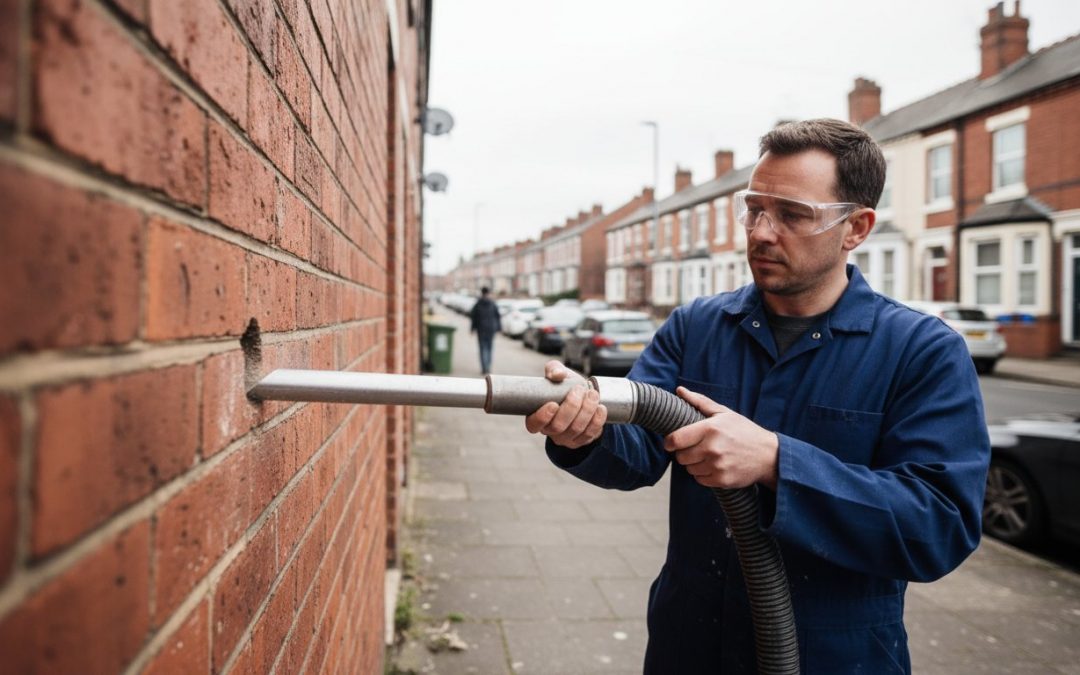
Standard domestic vacuums cannot handle the density of wet or compacted mineral wool. Specialists utilize industrial-grade suction units, often mounted on heavy-duty vehicles, which generate enough power to pull material from the full height of a two-storey cavity. These machines connect to the wall via flexible hoses through small, 25mm diameter holes drilled into the mortar joints.
To ensure 100% clearance, technicians use directional air tools. These tools deliver high-velocity compressed air at 100 psi into the cavity to agitate settled fibres and break down clumps that have adhered to wall ties. Once the extraction is underway, specialists use boroscope cameras to inspect the void. These optical devices provide a clear view of the cavity, allowing the team to verify that no bridges or debris remain. This visual confirmation is vital for restoring the “clear cavity” status required for proper moisture management.
Brick Removal and Masonry Restoration
While most of the professional fibre insulation extraction
Specialist Extraction vs. General Building Repairs: Why Methodology Matters
General building contractors often approach insulation removal as a standard demolition task. This is a mistake. Professional fibre insulation extraction requires high-velocity suction equipment capable of moving heavy, wet materials over significant vertical distances. A standard industrial vacuum lacks the static lift needed for saturated mineral wool. When mineral wool absorbs water, its weight increases significantly. A single cubic metre of dry insulation might weigh 20kg; however, once saturated, that weight can exceed 100kg. Specialist machinery is the only way to ensure the cavity is truly empty.
Many non-specialists attempt “patch” extraction. They only remove the material they can easily reach through a few displaced bricks. This leaves pockets of damp insulation suspended by wall ties or snagged on mortar snots. These remnants act as sponges. They hold moisture against the inner leaf of the property, which leads to localized damp patches that appear 6 to 12 months after the supposed “fix.” Investing in professional fibre insulation extraction prevents these recurring failures by clearing the entire cavity from the top of the wall down to the DPC.
The Consequences of Incomplete Extraction
Leaving even 5% of debris behind creates a moisture bridge. This allows damp to transfer from the outer leaf to the inner wall. Incomplete work often blocks weep holes and air bricks. These 75mm openings are vital for property ventilation. If they’re obstructed, interstitial condensation builds up within the structure. Homeowners who opt for “patch” repairs often find themselves paying twice. They pay for the initial cheap removal and then for a specialist to fix the resulting damp issues later. Our data shows that 30% of our instructions involve rectifying failed attempts by general builders who lacked the correct equipment.
Standards and Accreditations in the Extraction Industry
Technicians must understand the structural implications of removing material from a cavity. Every property is different. A specialist team provides a detailed technical report that outlines the exact state of the wall ties and the level of debris found. This documentation is essential for property records and future sales. Our nationwide teams focus on restoring the building’s original design intent. We don’t just pull out material; we ensure the cavity is clear, the wall ties are inspected, and the ventilation is restored. A comprehensive, long-term guarantee ensures that the property remains dry and structurally sound for decades to come.
Book a professional cavity survey to identify the exact cause of your damp issues and receive a specialist remedial plan.

Restoring Structural Integrity and Long-Term Property Health
Removing degraded or saturated material is the primary step toward reclaiming your home’s structural health. When mineral wool or glass fibre becomes wet, it stays wet. This creates a permanent moisture bridge between your external and internal walls. Choosing professional fibre insulation extraction breaks this cycle, allowing your masonry to dry out and regain its natural thermal properties. A dry wall is a functional wall; a saturated one is a liability that accelerates the decay of wall ties and internal finishes.
The benefits of a clear cavity extend beyond simple moisture control. Once the void is empty, natural airflow returns. This breathability is essential for the longevity of UK masonry. It prevents the stagnant conditions that allow black mould to flourish. By integrating this process with a wider strategy for cavity wall insulation removal, you ensure a total solution for the property. This isn’t just a quick fix. It’s a specialist restoration of the building’s original design.
The “Clear Cavity” Philosophy for UK Homes
UK properties are built to withstand a maritime climate. With some regions seeing over 1,400mm of annual rainfall, the 50mm to 100mm gap between your walls serves a vital purpose. It’s a drainage and ventilation zone. Rain penetrates the outer leaf of brickwork, runs down the inside face, and exits through weep holes. Retrospective insulation often blocks this path. Our philosophy focuses on restoring this essential empty space.
- Thermal Recovery: Dry bricks provide better natural insulation than wet ones.
- Structural Safety: Preventing wall tie corrosion by removing damp debris.
- Condensation Control: Eliminating cold spots caused by slumped or wet fibre.
Moving away from the risks of retrospective installations is a financial necessity. A property with documented damp issues can see its market value drop by 10% to 15%. Specialist extraction protects your investment. It ensures that when you come to sell or remortgage, the building’s survey will reflect a healthy, dry structure. We provide the documentation required to prove the cavity is clear and the property is sound.
Your Next Steps Toward a Healthy Home
Don’t guess the condition of your walls. The first step is always a professional survey. Our specialists use high-definition borescope cameras to inspect the cavity through small, non-invasive drill holes. This allows us to see exactly where the fibre has settled or where water is entering. You’ll receive a clear remedial action plan that outlines the professional fibre insulation extraction process tailored to your specific house type.
Achieving peace of mind requires a methodical approach. We don’t use guesswork. Every extraction we perform across the United Kingdom follows strict safety and quality protocols. We clear the entire void, including the difficult-to-reach areas below the damp proof course. This specialist attention to detail ensures the problem won’t return. It’s a permanent fix for a better, healthier home.
Secure Your Property’s Future with Expert Extraction
Leaving saturated mineral wool or glass fibre within your walls compromises your home’s structural integrity. It leads to persistent damp and can accelerate the corrosion of wall ties. A specialist approach ensures the complete removal of all debris, which general building repairs often overlook. CavClear provides professional fibre insulation extraction through a network of accredited technicians covering the entire United Kingdom. We use specialist high-powered extraction technology to restore your property’s thermal efficiency and protect its long-term health.
Every project includes a comprehensive structural report and a guarantee for your peace of mind. Our teams focus on a non-invasive process that prioritises safety and cleanliness throughout the extraction. This methodical removal is essential for any property suffering from failed insulation or moisture ingress. Restoring your home shouldn’t be a gamble. Taking action now prevents the escalation of moisture-related damage and secures your investment for years to come. You deserve a dry, healthy home that stands the test of time.
Book a Professional Fibre Extraction Survey with CavClear Today
Frequently Asked Questions
Why is professional fibre insulation extraction better than a DIY approach?
Professional extraction ensures the complete removal of debris and prevents structural damage that DIY attempts often cause. Specialist equipment like industrial vacuums and compressed air tools are necessary to clear the cavity without leaving pockets of damp material. Industry data shows that improper removal often leaves 15% of material behind, which continues to bridge moisture and cause persistent damp issues inside your home.
How long does the extraction process typically take for a standard property?
A standard three-bedroom semi-detached property typically takes between one and two days to complete. Our specialists work methodically to ensure every section of the wall is clear before moving to the next. This timeline includes the initial setup, the extraction process itself, and a final site clearance. We focus on a thorough clean to ensure your property’s structural integrity is fully restored.
Will removing the fibre insulation make my house colder?
Removing saturated fibre insulation often improves the perceived warmth of a home by eliminating the cold bridge effect caused by wet material. While dry insulation retains heat, wet fibre pulls heat away from the inner wall. Once the cavity is clear and dry, the internal wall temperature can increase by 2 or 3 degrees Celsius, which significantly reduces the risk of black mould growth.
Is the extraction process messy or disruptive to my daily life?
The professional fibre insulation extraction process is non-invasive and contained entirely outside the property. Our specialists use high-powered vacuum units that pull the material directly into sealed bags through small holes drilled in the mortar joints. We ensure all external debris is cleared and the brickwork is repointed to match your existing mortar, meaning there’s no need for you to leave your home.
Should I install new insulation after the old fibre is extracted?
We don’t recommend the installation of retrospective cavity wall insulation due to the high risk of future dampness and structural issues. UK properties often rely on the clear air gap in a cavity wall to prevent moisture from crossing from the outer to the inner leaf. Maintaining a clear, ventilated cavity is the most effective way to ensure long-term property health and prevent wall tie corrosion.
How can I tell if my cavity wall insulation is saturated without a survey?
You can identify saturated insulation by checking for cold spots on internal walls or visible damp patches that appear after heavy rainfall. If your home’s humidity levels exceed 60% consistently or you notice a persistent musty smell, these are strong indicators of moisture retention. In 80% of cases, saturated insulation issues manifest as internal dampness before the material is visible at the wall base.
Can wet fibre insulation cause permanent damage to my wall ties?
Yes, wet fibre insulation causes permanent corrosion to wall ties by holding moisture against the metal for prolonged periods. This accelerated oxidation can weaken the structural bond between your wall leaves within 5 to 10 years of the insulation becoming saturated. Professional fibre insulation extraction removes this moisture source, halting the corrosion process and protecting the stability of your home for the long term.
What happens to the extracted material after it is removed from my walls?
All extracted material is bagged securely on-site and transported to an accredited waste management facility for responsible disposal. We follow strict environmental regulations to ensure that old, contaminated fibre is handled safely. Our nationwide service includes full waste disposal documentation, providing you with total peace of mind that the material is handled according to current UK waste standards.
Recent Comments