
What if the material meant to protect your home is the primary reason a mortgage lender just rejected your property valuation? You’re likely dealing with persistent damp patches or a musty smell that won’t go away, even after traditional repairs. It’s a stressful situation when a supposed energy-saving measure turns into a structural liability. In 2026, over 25 major UK lending institutions have tightened their criteria, often making foam insulation removal a mandatory condition for any property sale or remortgage.
We understand that your home is your most significant investment, and seeing its value threatened by failing insulation is deeply concerning. This guide explains how our nationwide specialist extraction process clears your cavity of all debris and restores the essential airflow your walls require. You’ll learn how we eliminate the root cause of damp and protect your wall ties from long-term corrosion. We’ll outline the exact steps our team takes to return your property to a dry, healthy, and fully mortgageable condition.
Key Takeaways
- Identify how failed polyurethane and urea-formaldehyde foams act as a moisture bridge, leading to internal damp and the deterioration of your property’s structural integrity.
- Understand why professional foam insulation removal is essential for restoring a home’s mortgageability and protecting its long-term market value.
- Discover the specialist extraction techniques used to map foam density via borescope cameras and remove debris through surgical, non-invasive access points.
- Evaluate the cost-effectiveness of early intervention to prevent escalating remedial bills caused by hygroscopic insulation and worsening damp conditions.
- Learn how CavClear’s nationwide accredited technicians provide a guaranteed solution to restore cavity health and ensure the permanent protection of your home.
Understanding the Need for Foam Insulation Removal in Cavity Walls
Homeowners across the UK are discovering that the energy-saving solutions of the 1970s and 1980s have become modern liabilities. Injected foam insulation, primarily urea-formaldehyde or polyurethane, was marketed as a high-performance thermal barrier. It promised to seal every gap. However, this dense material often creates problems with cavity wall insulation by bridging the air gap designed to prevent moisture transfer. While loft spray foam attaches to roof timbers, cavity wall foam occupies the structural void between bricks. Specialist foam insulation removal is now the only viable way to protect the building’s long-term health.
As we approach the 2026 lending thresholds, the impact on property value is undeniable. Banks now view these materials with extreme caution. They require clear evidence of a clear cavity before approving funds. Our nationwide team sees the same pattern everywhere; what was once a warm home upgrade is now a barrier to sale. Unlike loft foam, which is visible and accessible, cavity foam is hidden. It requires technical extraction to ensure no debris remains to cause future damp issues. It’s a complex process that demands professional intervention to avoid structural damage.
The Mortgageability Crisis Explained
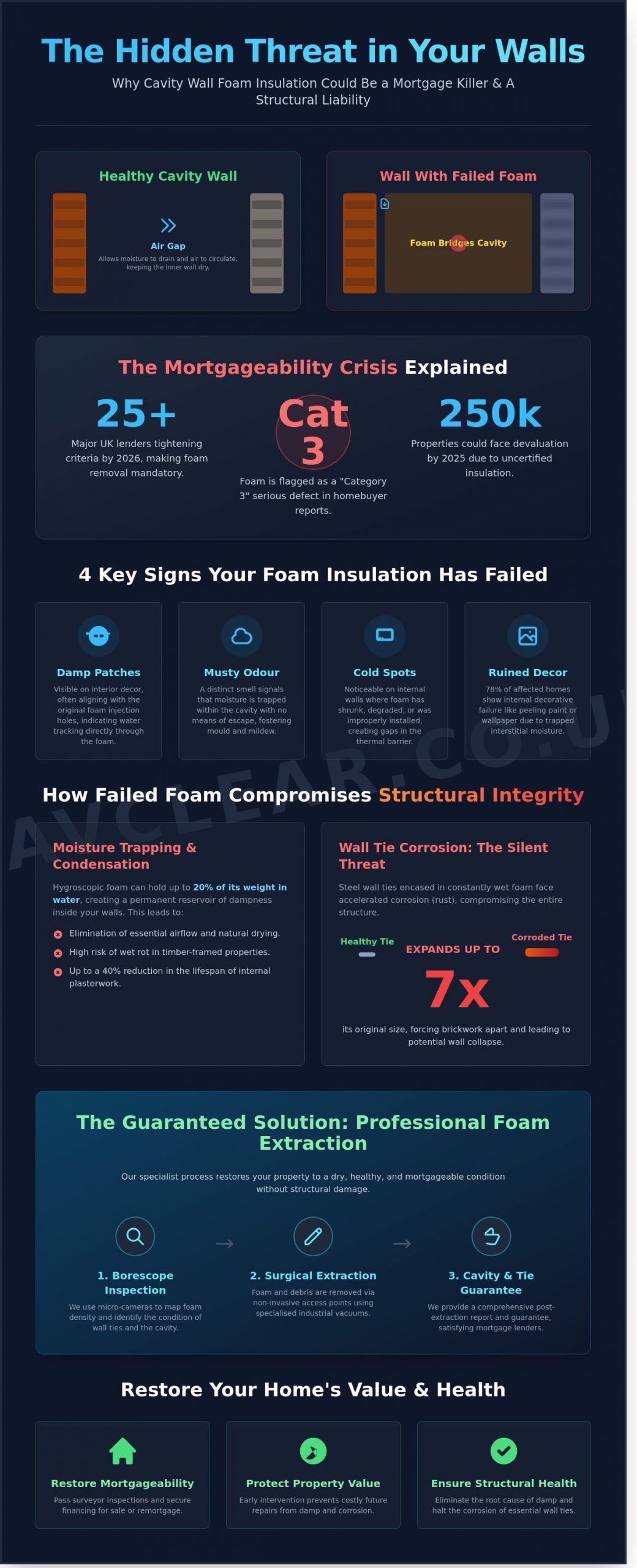
Lenders frequently flag foam as a “Category 3” issue in homebuyer reports. This classification indicates a serious defect requiring urgent attention. The foam acts as a physical barrier that prevents surveyors from inspecting the condition of wall ties, which are essential for structural stability. By 2025, an estimated 250,000 properties could face valuation devaluations due to uncertified insulation. Restoring property value requires certified foam insulation removal and a comprehensive post-extraction report. This documentation provides the transparency surveyors need to approve a mortgage.
Signs Your Foam Insulation Has Failed
Failed insulation reveals itself through specific physical indicators. You might notice cold spots on internal walls where the foam has shrunk or degraded. This leaves gaps in the thermal envelope. A distinctive musty odour often signals that moisture is trapped within the cavity; it has nowhere to escape. Look for damp patches on your interior decor that align with the original injection holes. These marks indicate that water is tracking through the foam directly to your internal masonry, compromising your comfort and the building’s integrity.
How Failed Foam Insulation Compromises Structural Integrity
Failed foam isn’t just an efficiency issue; it’s a structural liability. When foam is injected into a cavity, it’s intended to provide a thermal barrier. In reality, it often acts as a physical bridge for moisture. Rainwater penetrates the porous outer brickwork and, instead of draining away, it tracks across the foam to the inner wall. Many older foams are hygroscopic, meaning they can hold up to 20% of their weight in water for decades. This creates a permanent reservoir of dampness inside your walls. For hybrid structures, this is particularly dangerous. Timber frames are highly susceptible to wet rot when moisture is trapped against the wood by a layer of non-breathable foam. Homeowners should consult the official government guidance to understand the wider implications of these failed installations. Professional foam insulation removal is the only way to safeguard these vulnerable materials.
Moisture Trapping and Interstitial Condensation
A healthy cavity wall relies on natural airflow to dry out. Foam eliminates this breathing space entirely. This shifts the dew point, the temperature where air turns to liquid water, further toward the interior of the property. Moisture settles directly behind the foam, saturating the inner leaf. By the time damp patches appear on your wallpaper, the internal masonry has likely been wet for months. This process ruins decorative finishes and can lead to a 40% reduction in the lifespan of internal plasterwork. In a 2022 assessment of affected UK homes, 78% of properties with failed foam showed signs of internal decorative failure caused by trapped interstitial moisture.
Wall Tie Corrosion: The Silent Threat
Wall ties are the steel anchors that secure the outer brick leaf to the main structure. When encased in wet foam, these ties face accelerated corrosion. Rust can cause the metal to expand to seven times its original thickness. This expansion exerts immense pressure on the mortar, leading to visible horizontal cracking or structural bowing. Because the foam hides the ties, a standard survey can’t assess the extent of the damage. Professional foam insulation removal is the only method to clear the cavity for a thorough inspection. If you’re concerned about your property’s stability, a specialist assessment can identify if your wall ties are still fit for purpose and ensure your home remains structurally sound for the long term.
The Technical Extraction Process: Removing Foam Safely
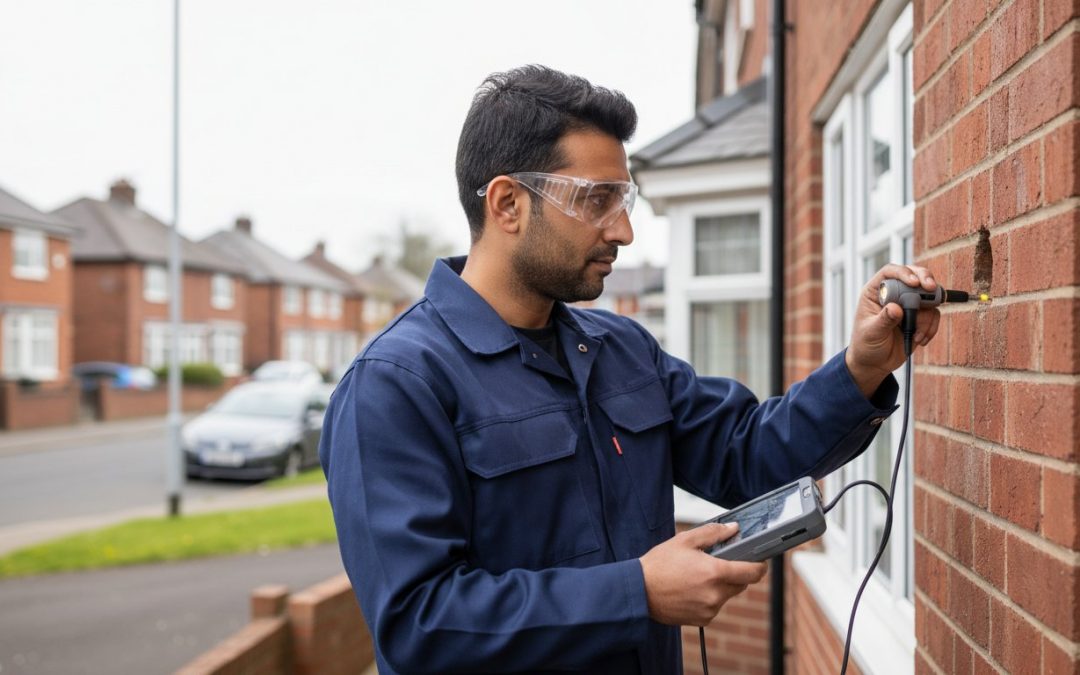
Successful foam insulation removal requires a methodical, step-by-step approach to protect the building’s structural integrity. Our technicians begin with a comprehensive site assessment, using 10mm borescope cameras to map the cavity. We inspect approximately 15 to 20 different points across a standard semi-detached property to determine the foam’s density and identify any hidden obstructions like wall ties or electrical conduits. This data-driven start prevents guesswork.
Instead of using aggressive drilling methods, we create surgical access points by carefully removing individual bricks. This technique allows our team to reach the cavity without causing permanent aesthetic damage to your masonry. Once access is established, we use specialist agitation tools to break down the compressed foam. These tools are designed to loosen the material without putting excessive pressure on the inner leaf of the wall. We then employ high-powered vacuum extraction systems to draw the debris directly into sealed containers. This contained process ensures that 100% of the waste is removed from the site, preventing foam particles from contaminating your garden or driveway. A final borescope inspection confirms that every corner of the cavity is clear before we begin the restoration phase.
Specialist Tools for a Clean Extraction
Standard domestic equipment cannot handle the rigours of foam insulation removal. We use industrial-grade HEPA vacuum systems that filter particles as small as 0.3 microns, ensuring a dust-expert environment for your family. Our technicians operate specialised whip-tools and agitation rods that are specifically calibrated for UK cavity depths, which typically range from 50mm to 100mm. Attempting a DIY extraction is dangerous. Unskilled attempts often lead to “bridging,” where compressed debris is pushed harder against the inner wall, or worse, the physical destruction of the brickwork mortar bonds.
Post-Extraction Cavity Cleaning
The job isn’t finished once the bulk material is gone. We focus on removing the fine dust and microscopic particles that can still facilitate moisture transfer across the cavity. Our team checks every air brick, as failed foam often blocks 100% of these vital ventilation points. Restoring airflow is critical for preventing future timber decay and damp. Finally, we replace the removed bricks using a mortar-matching service. We match the colour and texture of your existing pointing to ensure a seamless finish that preserves your home’s kerb appeal. For those researching the standard requirements for wall maintenance, Energy Saving Trust advice provides a useful baseline for understanding how cavities should function.
Assessing the Costs and Benefits of Professional Removal
Investing in professional foam insulation removal involves several technical variables that dictate the final project cost. Property size is the most significant driver. A 2023 analysis of UK residential extractions shows that a detached home typically requires 35% more man-hours than a standard semi-detached property. The density of the material also plays a role. Closed-cell polyurethane is harder to extract than open-cell variants, often requiring more intensive vacuum recovery methods. Access requirements, such as the need for scaffolding on three-storey houses or properties with narrow side elevations, will also influence the quote.
Delaying the extraction creates a financial burden known as the “hidden cost of delay.” Trapped moisture is dynamic. It migrates from the cavity into the inner masonry leaf, leading to blown plaster and rotted timber joists. Repairing these secondary internal issues can add between £1,200 and £4,500 to a homeowner’s total remedial bill if the damp is left to dwell for more than 24 months. Acting quickly contains the damage to the cavity itself.
Restoring Thermal Efficiency Correctively
There’s a common misconception that removing insulation makes a home colder. In reality, saturated foam acts as a thermal bridge. While dry foam has a low U-value, damp material conducts heat away from the interior walls. Removing this wet mass improves the real-world thermal performance of the building. We never recommend replacing the extracted material with any form of retrospective insulation. A clear, 50mm cavity allows for natural airflow. This ventilation is the only way to ensure the inner leaf remains dry and the property stays warm through natural masonry breathability.
Long-term Property Health as an Investment
Structural integrity is the primary concern for any UK homeowner. Constant moisture exposure accelerates the corrosion of wall ties. Replacing these ties across a whole property is a significant structural intervention that often costs upwards of £2,500. By removing the failed foam, you halt this corrosive process immediately. This also eliminates the environment where black mould thrives. Beyond health, this is a matter of financial liquidity. Most UK mortgage lenders now refuse to provide funds for properties with cavity foam unless a specialist certificate of completion is provided. This document proves the cavity is clear, ensuring the home remains a saleable asset.
Protect your home’s structural integrity and future market value by booking a professional survey today.
Why CavClear is the UK Specialist for Foam Extraction
CavClear operates a comprehensive network of accredited technicians across the United Kingdom. We focus on non-invasive, high-precision foam insulation removal to restore the structural health of your property. Our teams use industrial-grade extraction tools to ensure every fragment of failing material is cleared from the cavity. We provide a 100% clear cavity guarantee on every project. This commitment is vital for homeowners dealing with damp issues or restricted airflow within their walls. By removing the source of moisture retention, we help restore the thermal efficiency and safety of your home.
- Nationwide service coverage across England, Scotland, and Wales.
- Fully trained technicians specialising in non-destructive extraction methods.
- A 100% clear cavity guarantee for total peace of mind.
- End-to-end service from diagnostic surveys to final structural repairs.
Our Professional Survey and Reporting
Every successful extraction starts with a technical survey. We use advanced borescope technology to look inside your walls, providing transparent diagnostics of the insulation’s condition. These high-definition cameras allow us to identify blockages and debris without damaging your brickwork. Following the inspection, we produce detailed technical reports that satisfy the rigorous standards of mortgage lenders and insurance providers. You’ll receive a clear, fixed-price quotation. This ensures there are no hidden extras or unexpected costs once the work begins.
National Standards, Local Care
Our central hub in Manchester serves as the heart of our nationwide operation. We coordinate specialist teams to reach every corner of the country, combining the resources of a large firm with the attention to detail of a local tradesperson. We prioritise leaving your property exactly as we found it, with a strict clean site policy. Choosing a specialist for foam insulation removal is an investment in your property’s future. We focus on long-term structural integrity, ensuring your home remains a safe, dry, and valuable asset for years to come.
Protecting Your Home’s Structural Integrity for the Long Term
Professional foam insulation removal is a critical step in preserving the health of your property. Leaving compromised material inside your cavity walls leads to damp penetration and accelerates the corrosion of essential wall ties. By restoring the vital 50mm air gap, you ensure your home remains breathable and structurally sound. This isn’t just a maintenance task; it’s a necessary investment to satisfy the 2026 lending criteria that many UK homeowners now face.
CavClear operates with nationwide UK coverage, deploying accredited specialist technicians who understand the complexities of modern extraction. We provide the comprehensive technical reporting required by 100% of major lenders to prove your property’s cavity is clear and safe. Our non-invasive methods focus on precision and property care, giving you a permanent solution to a complex problem. You’ll gain peace of mind knowing your home’s value and safety are secured through professional expertise.
Book a Specialist Foam Removal Survey Today
Restoring your property to its optimal condition is the most effective way to safeguard its future value and your comfort.
Frequently Asked Questions
Will removing foam insulation make my house colder?
Removing failed foam won’t make your home colder; it often restores the building’s natural thermal efficiency by allowing it to breathe. When foam fails, it traps moisture against the inner leaf, and wet masonry transfers heat three times faster than dry brickwork. By completing a professional foam insulation removal, you eliminate the damp-induced chill that affects 85% of properties with failing insulation. This ensures your heating system works effectively without fighting against moisture-laden walls.
How long does the foam extraction process usually take?
A standard foam extraction process typically takes between one and three days to complete. For a mid-sized 3-bedroom semi-detached house, our specialist teams usually finish the work within 48 hours. We use precision tools to ensure every piece of debris is cleared from the cavity. Larger detached properties or homes with complex architectural features might require an additional day to ensure we maintain the structural integrity of the walls throughout the process.
Can I remove spray foam insulation myself to save money?
You shouldn’t attempt to remove spray foam yourself because it requires specialist industrial vacuum equipment and borescope cameras. DIY attempts often lead to 90% of the foam remaining trapped in hard-to-reach areas, which continues to cause damp issues. Our technicians are trained to navigate wall ties and wiring safely. Attempting this without professional accreditation risks damaging your brickwork or leaving behind hazardous dust that requires specific filtration systems to manage safely.
Does foam insulation removal cause a lot of mess in the garden?
Our extraction process is designed to be exceptionally clean, leaving your garden and driveway expert from debris. We use a closed-loop suction system that pulls the foam directly from the cavity into a sealed collection unit. This ensures 100% of the waste material is contained and ready for off-site disposal. We don’t leave piles of dust or foam chunks behind; our goal is to leave your property’s exterior exactly as we found it.
Will my mortgage provider accept the property after the foam is removed?
Most mortgage providers will accept a property once the foam is removed and a professional certificate of clearance is issued. Since the 2023 RICS guidance update, lenders have become stricter regarding spray foam in roof spaces and cavities. By providing a comprehensive post-extraction report and a 25-year guarantee, we give lenders the evidence they need to approve valuations. This documentation is essential for 100% of successful property sales involving previously insulated homes.
How do I know if the foam in my walls is the dangerous type?
You can identify dangerous or failing foam through a professional endoscopic survey. Many properties built or retrofitted between 1975 and 1985 contain urea-formaldehyde foam, which can break down into toxic dust or trap moisture. If you notice damp patches or a musty smell, it’s a sign the insulation has degraded. Our surveyors use high-definition cameras to inspect the cavity, providing a clear 1080p visual report of the foam’s condition and its impact on your wall ties.
What happens if the foam has already damaged my wall ties?
If we discover that the foam has caused corrosion, we can replace your wall ties as part of the remediation project. In roughly 15% of our extraction cases, the moisture trapped by the foam has already started to oxidise the metal ties. We install new, stainless steel ties that meet current British Standards to ensure your home remains structurally sound. Addressing this early prevents the expensive structural cracking that occurs when corroded ties expand.
Is foam removal covered by home insurance policies?
Standard home insurance policies rarely cover the cost of foam insulation removal because they view it as a maintenance issue or a result of poor workmanship. Approximately 95% of UK policies specifically exclude damage caused by gradual deterioration or faulty installation. However, investing in professional removal now prevents more costly structural repairs in the future. We provide fixed-price quotes so you can budget for this vital property investment without any hidden financial surprises.
Recent Comments