
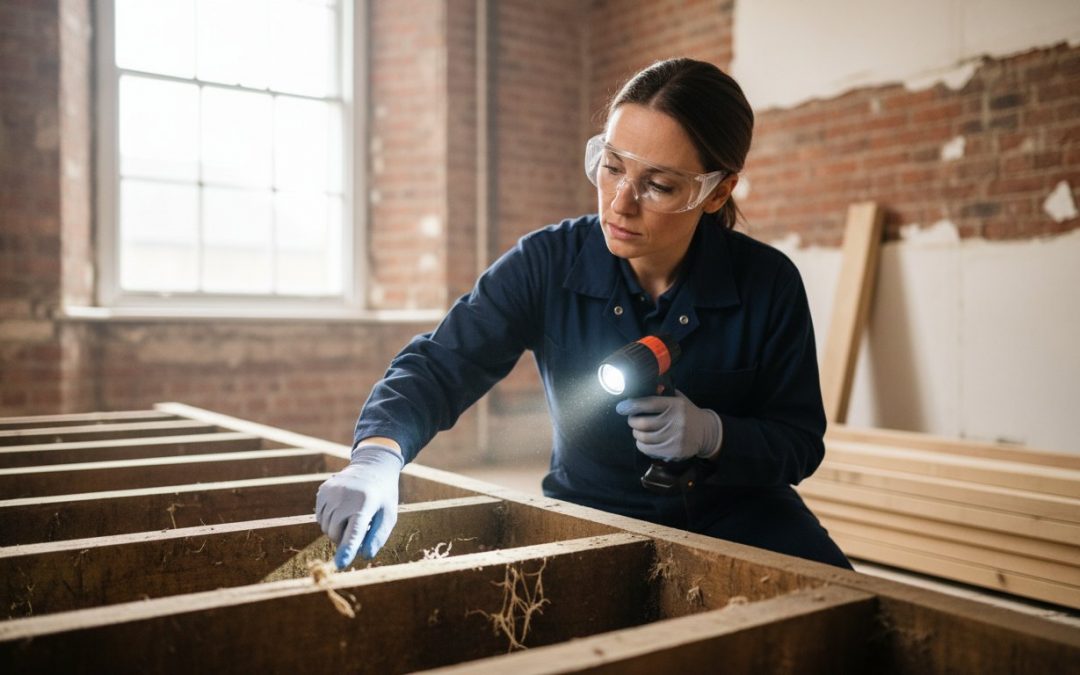
A single dry rot outbreak can spread through timber and masonry at a rate of 4mm per day, often causing over £15,000 in structural damage before you notice the first signs of decay. It’s natural to feel anxious about the escalating costs of repair or the risk of a general builder misidentifying the fungus as simple wet rot. You’re right to demand a solution that addresses the underlying moisture source rather than just masking the symptoms. By consulting a professional dry rot specialist, you’ll receive a definitive diagnosis and a permanent remedial strategy that restores your property’s safety. This guide outlines our methodical approach to fungal identification, the use of specialist masonry sterilisants, and the structural timber replacements needed to protect your home for the next 30 years.
Key Takeaways
- Understand why engaging a professional dry rot specialist is vital for differentiating between surface-level damp and the destructive, wood-destroying fungus known as Serpula lacrymans.
- Learn how hidden cavity wall defects and failing wall ties create the specific moisture-rich environments that allow fungal decay to compromise your home’s structural integrity.
- Identify the critical warning signs of an active outbreak, including the presence of rust-coloured spores and the distinct, musty odour that signals a growing colony.
- Discover the “Source First” remedial strategy that prioritises stopping water ingress to ensure long-term protection and prevent the risk of future recurrence.
- Recognise how specialist debris extraction and professional structural repairs provide a permanent fix, restoring the safety and comfort of your property.
Why a Dry Rot Specialist is Essential for Your Property’s Integrity
Dry rot, scientifically known as Serpula lacrymans, is a wood-destroying fungus that creates structural instability by consuming the cellulose that gives timber its strength. It thrives in damp, unventilated conditions where moisture levels in wood exceed 20%. Identifying the problem early is vital, as the fungus acts as a silent destroyer within the hidden voids of a building. Understanding What is Dry Rot? is the first step in protecting your home from a biological threat that requires professional environmental control to eradicate.
The Aggressive Nature of Serpula Lacrymans
The primary danger of dry rot lies in its unique ability to transport moisture from damp areas to dry timber. This allows the fungus to spread across entire floors and through multiple rooms, even if the wood was previously in good condition. Unlike wet rot, which stays confined to the source of a leak, dry rot develops thick grey strands called mycelium. These strands can grow through brickwork and mortar to find new timber sources. In a 2022 study of UK period properties, fungal growth was found to travel up to 4 metres away from the original damp source by moving through porous masonry. Dry rot is a biological threat that requires professional environmental control to eradicate.
Specialist Knowledge vs. General Building Repairs
General builders often lack the specific diagnostic training required to handle fungal outbreaks. While a contractor might suggest replacing the affected timber and applying a surface-level chemical spray, this approach fails to address the microscopic spores and mycelium strands that reside deep within the mortar joints. A dry rot specialist approaches the problem with technical precision, focusing on the root cause rather than just the symptoms. They use advanced diagnostic tools to ensure the treatment is comprehensive and permanent.
- Sub-floor cameras: These allow for the inspection of joists and wall plates without removing floorboards, minimising disruption to your home.
- High-precision moisture meters: Specialists use these to map the exact moisture profile of a wall, identifying the hidden leaks that sustain the fungus.
- Thermal imaging: This technology detects cold spots and hidden damp patches behind plaster that the naked eye cannot see.
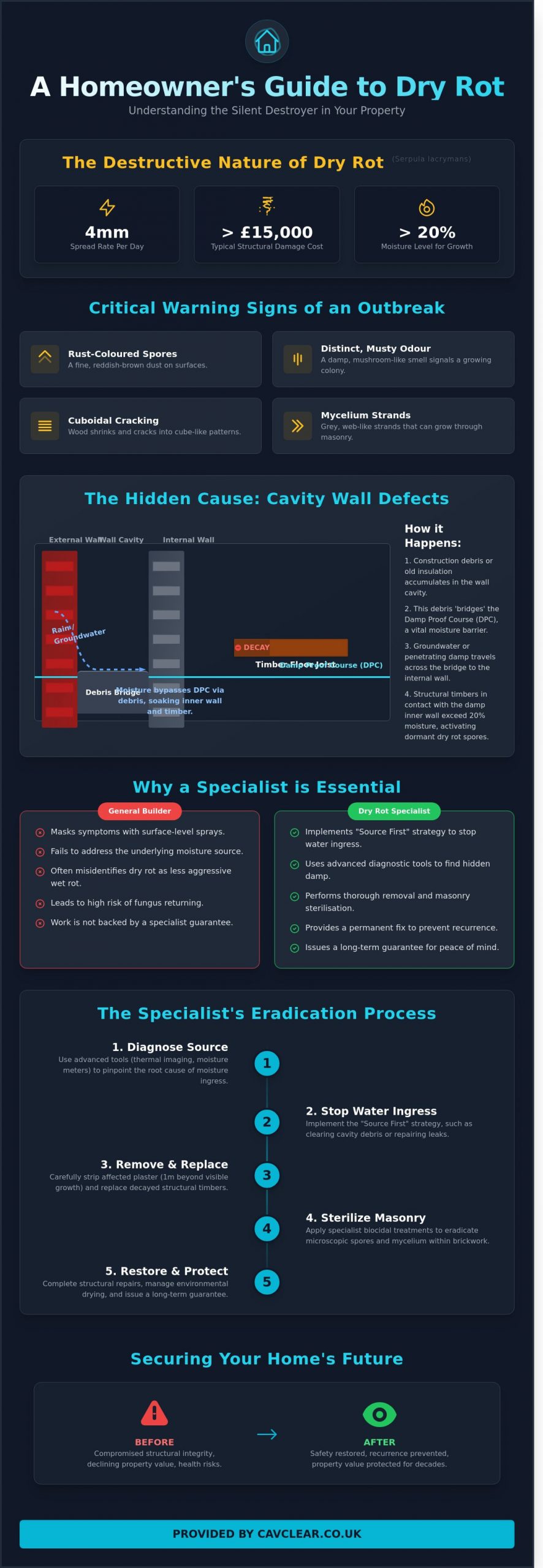
Surface-level “DIY” treatments or standard fungicidal sprays are almost always ineffective against Serpula lacrymans. If you don’t remove the environmental conditions that allow the fungus to grow, it will return. A dry rot specialist will implement a programme of environmental drying and masonry sterilisation. This involves stripping back plaster at least 1 metre beyond the last visible sign of growth to ensure no mycelium remains. Without this level of rigour, the fungus can remain dormant for years before reactivating when conditions change.
An accredited survey is also a vital financial safeguard for your property. When you sell a home, mortgage lenders and insurers require evidence that structural issues have been resolved by a recognised expert. A specialist report provides a documented trail of the repairs and usually includes a long-term guarantee. In the current UK housing market, an uncertified dry rot issue can devalue a property by more than £15,000 or cause a sale to collapse entirely. Investing in professional expertise ensures your home remains a safe, marketable asset for the future.
The Hidden Connection: Cavity Wall Defects and Dry Rot Outbreaks
Dry rot, or Serpula lacrymans, requires a specific set of conditions to colonise a property. While it’s often associated with old, damp basements, many modern UK homes suffer outbreaks due to hidden defects within the cavity wall. When a cavity is clear, it acts as a vital break that prevents moisture from travelling from the external brickwork to the internal timber frame or floor joists. If this gap is compromised, the structural timbers of the home are immediately at risk.
Debris often accumulates at the base of these cavities during the original construction or through later renovations. If this rubble reaches a height that surpasses the damp proof course, it creates a bridge. This allows groundwater to bypass the home’s primary moisture barrier and soak into the inner leaf. Once the moisture content in timber hits 20%, dry rot spores germinate. A qualified dry rot specialist will investigate these hidden voids to identify the true source of the ingress rather than just treating the visible symptoms.
Airflow is the second line of defence against fungal growth. Blocked air bricks or restricted cavities lead to stagnant, humid air. This creates the “perfect storm” for dry rot to thrive. Following the Building Research Establishment guidance ensures that these structural voids remain ventilated and dry. Without this ventilation, even minor leaks from a gutter or window sill can lead to a catastrophic outbreak that spreads through masonry via microscopic hyphae.
How Faulty Cavity Insulation Fuels Fungus
Retrospective cavity wall insulation is a leading cause of damp-related timber decay in the UK. When materials like mineral wool or bonded beads are injected into a property that isn’t suited for them, the results are often damaging. Saturated insulation acts as a massive reservoir; it holds moisture against the internal leaf of the wall for months on end. This constant dampness transfers directly to timber wall plates and joist ends, providing the consistent water supply dry rot needs to grow.
In many 1970s semi-detached homes, we’ve found that insulation has slumped to the bottom of the wall. This creates cold spots and traps moisture in areas where it cannot evaporate. Extracting this wet material is a critical first step in any remedial plan. You can’t treat the fungus effectively while a “wet sponge” is still sitting inside your walls. Taking a proactive approach to cavity cleaning and extraction is often the only way to safeguard the building’s long-term health and ensure the rot doesn’t return.
Wall Tie Corrosion and Structural Moisture
Structural integrity and moisture control are inextricably linked. Wall ties are the steel components that hold the inner and outer leaves of a cavity wall together. When these ties begin to rust, they expand to several times their original thickness. This expansion is powerful enough to lift the mortar beds, causing horizontal cracks to appear across the external masonry. These cracks act as funnels for wind-driven rain, allowing water to pour into the cavity during every storm.
Once water enters the cavity through these structural gaps, it bypasses the DPC and saturates the internal timber. A comprehensive wall tie survey is a vital part of any dry rot investigation. It’s not enough to just treat the wood; the dry rot specialist must ensure the external envelope is sealed. If ties are failing, the resulting structural movement can break the internal seals that keep rot spores out of the floor voids. Replacing corroded ties and repointing the affected areas provides the security needed to prevent a recurrence and restore the home’s comfort.
Identifying the Signs: When to Call a Dry Rot Expert
Detecting dry rot (Serpula lacrymans) early is vital for maintaining the structural integrity of your home. Unlike wet rot, dry rot can travel through masonry and mortar to find new timber sources. This makes it a significant threat to UK properties built before 1950, where timber joists often sit directly in contact with damp brickwork. If you notice a fine, rust-coloured dust settling on horizontal surfaces, you’re likely looking at millions of fungal spores. These spores originate from a fruiting body, which resembles a fleshy, pancake-like mushroom with a distinct orange or ochre centre. This growth emits a heavy, damp, and musty odour that persists even after you’ve aired out the room.
The wood itself undergoes visible transformations that indicate a loss of structural strength. It often turns a dark brown colour and becomes incredibly brittle. You might see “cuboidal cracking,” where the timber splits into distinct cubes roughly 25mm to 50mm in size. This occurs because the fungus consumes the cellulose, leaving only the brittle lignin behind. To understand the biological background of this process, you can read more about What is Dry Rot? via this detailed resource. If your floorboards feel springy or you notice salt streaks, known as efflorescence, on your internal masonry, it’s time to consult a dry rot specialist to prevent further degradation.
Secondary signs often appear before the fungus becomes visible. Peeling wallpaper or bubbling paint can indicate that the underlying plaster is saturated, providing the perfect conditions for a fungal colony to thrive. Because dry rot can survive in masonry, it often hides behind skirting boards and under floorboards for months before a homeowner notices a problem. As a nationwide provider, CavClear operates across the entire United Kingdom to help residents identify these hidden risks before they lead to structural failure.
The Stages of Fungal Decay
Dry rot progresses through four specific stages. It begins with microscopic spores that germinate in timber with a moisture content above 20%. The first visible sign is often hyphae; these are fine, white, cobweb-like strands that infiltrate the wood fibres. As the infestation matures, these strands consolidate into mycelium. This grey, skin-like growth can spread across non-organic surfaces like plaster or brick. The final stage is the fruiting body, a reproductive organ that pumps fresh spores into the air to start the cycle elsewhere in the property.
The Professional Survey Process
A CavClear dry rot specialist follows a methodical diagnostic path to ensure your home’s safety. Our surveyors use moisture meters and thermal imaging to identify damp pockets within the building fabric without causing unnecessary damage. We don’t just look at the visible rot; we map the entire “attack zone.” This involves checking at least 1 metre beyond the last visible sign of infection to ensure no dormant mycelium remains. We then produce a detailed remedial action plan. This document identifies the moisture source, such as a leaking pipe or blocked cavity, and specifies the exact timber treatments required to restore structural health. This professional approach ensures the fix is permanent and your property remains protected for years to come.
Remedial Strategies: How Specialists Eradicate Dry Rot Permanently
Effective remediation begins with the “Source First” principle. A qualified dry rot specialist prioritises identifying and stopping the water ingress before any chemical treatment starts. Industry data suggests that 92% of dry rot outbreaks in UK homes are triggered by localised dampness from defective plumbing, blocked gutters, or failing render. Without addressing these root causes, any repair remains temporary. Once the moisture source is eliminated, the environment becomes hostile to the Serpula lacrymans fungus, though active intervention is still required to remove the existing infection.
The removal process must be clinical to prevent cross-contamination. Specialists bag and seal infected timbers within the affected room to avoid spreading microscopic spores through the rest of the property. This safety-conscious approach ensures that the fungal “seeds” don’t settle in other damp pockets of the building. We focus on restoring the structural integrity of the home by ensuring every trace of the mycelium is physically extracted or chemically neutralised.
Timber and Masonry Sterilisation Techniques
Surface spraying is insufficient for a permanent fix because dry rot hyphae can travel through mortar joints and behind plaster. A dry rot specialist uses high-pressure irrigation to inject fungicidal fluids into the masonry, reaching deep within the brickwork where spores often hide. We apply specialised fungicidal pastes to the ends of remaining timbers to provide a concentrated zone of protection. Professional sterilisation creates a chemical barrier that prevents future fungal germination.
Structural Timber Replacement
This stage begins with the careful removal of all floor coverings to expose the damaged joists and subfloor. This is a critical preparatory step that requires a methodical approach to prevent spreading spores. As an example of the detailed work involved, the Dutch firm Vincent Oosterveen Vloerverwijdering Specialist provides guidance on this process, highlighting the professional standards needed even for the initial removal.
When replacing joists or floorboards, we follow a strict “overlap” protocol. This involves cutting back infected timber at least 500mm beyond the last visible sign of decay to ensure no microscopic strands remain. We only use pre-treated, vacuum-pressured timbers that resist future fungal attacks. These new components are isolated from masonry using physical damp-proof membranes or joist hangers. This prevents “bridge” dampness from reaching the new wood, maintaining the long-term health of your floors and roofs.
Improving the environmental conditions is the final step in our restoration programme. We often find that poor sub-floor ventilation allows stagnant, moist air to accumulate, which provides the ideal 20% moisture content dry rot requires to thrive. By installing high-flow air bricks to meet the standard of 1500mm² per metre run of wall, we increase cross-ventilation. This technical adjustment lowers the relative humidity within the property’s structure, ensuring the timber remains too dry for fungal growth to ever return. Our focus on thermal efficiency and moisture control transforms a vulnerable house into a resilient home.
If you suspect your property has been compromised by fungal decay, you need an expert assessment to protect your home’s structural integrity. Contact our specialist team today for a professional survey and a permanent solution.
Securing Your Home’s Future with Professional Structural Repairs
Eliminating a rot outbreak requires more than surface-level treatments. It demands a methodical approach to structural restoration that addresses the environmental conditions allowing fungi to thrive. When a property suffers from significant timber decay, the surrounding masonry often harbours the moisture and debris that will fuel future issues. Engaging a dry rot specialist ensures that these hidden risks are identified and neutralised through professional extraction and stabilisation techniques. We focus on restoring the building to its original design specifications, ensuring your home remains a safe and dry environment for decades to come.
Structural repairs are not merely about replacing damaged wood. They involve a comprehensive assessment of the wall cavity and the metal fixings that hold the property together. Our nationwide teams operate across the United Kingdom, applying technical rigour to every project to ensure that once the rot is gone, it stays gone. This proactive strategy protects your investment and prevents the recurring costs associated with incomplete remedial attempts.
The Importance of Specialist Cavity Extraction
Debris often accumulates at the base of a wall cavity, sometimes reaching heights of 200mm or more. This buildup creates a physical bridge over the damp-proof course, allowing moisture to travel from the external leaf to the internal skin of the building. CavClear utilizes high-powered, non-invasive vacuum extraction technology to clear these voids through small, temporary entry points. This process removes 99% of saturated insulation, mortar droppings, and organic matter that otherwise act as a reservoir for damp.
A clean cavity is essential for the thermal health of a UK home. By restoring the 50mm air gap required for natural ventilation, we allow the masonry to breathe and dry out effectively. This prevents the stagnant, humid conditions that dry rot spores require to germinate. Research indicates that clearing a blocked cavity can improve a wall’s thermal performance by up to 15%, as dry masonry is a significantly better insulator than damp-laden brickwork.
Stabilising the Property with Wall Tie Replacement
High moisture levels associated with rot outbreaks often accelerate the corrosion of internal wall ties. In properties built between 1920 and 1981, these ties were typically made of mild steel. When exposed to damp, they undergo iron oxide expansion, which can exert enough pressure to crack mortar joints and cause the outer leaf of masonry to bulge. As a dry rot specialist, we assess the condition of these ties during the repair process.
- Precision Installation: We install 304 or 316-grade stainless steel ties that are resistant to corrosion.
- Structural Integrity: New ties ensure the internal and external walls act as a single, stable unit.
- Minimal Disruption: Modern techniques allow us to replace ties from the exterior, meaning you don’t need to vacate the property during the works.
Long-Term Guarantees and Property Health
A specialist guarantee is more than just a piece of paper; it’s a commitment to the permanence of the repair. Our guarantees cover both the quality of the materials used and the standard of the workmanship for up to 25 years. This long-term protection is a vital asset for any homeowner. If you decide to sell your property, a professional certificate from a recognised specialist is often a mandatory requirement for RICS surveyors and mortgage lenders. It proves that the structural issues were addressed correctly rather than being masked by cosmetic fixes.
Our approach prioritises transparency and professional rigour. We provide detailed reports that document the extraction process and the stabilisation measures taken. This creates a clear “health record” for your home, giving future buyers confidence in the building’s structural soundness. To protect your home from the devastating effects of timber decay and damp, you should act quickly at the first sign of trouble.
Book your specialist dry rot survey with CavClear today to ensure your property receives the expert care it deserves.
Secure Your Home’s Future with Professional Intervention
Dry rot isn’t just a surface issue; it’s a progressive structural threat that can compromise timber integrity by 50% in under six months. Addressing the root cause, such as moisture trapped by cavity wall defects, is the only way to prevent a recurring outbreak. Engaging a qualified dry rot specialist ensures a methodical approach to eradication, moving beyond temporary fixes to permanent structural restoration.
CavClear operates a nationwide network of accredited technicians who provide detailed structural reports and 20-year guarantees on all remedial works. We’ve successfully treated over 5,000 UK properties, focusing on precise diagnostics and non-invasive extraction techniques that protect your home’s market value. Our team delivers the technical rigor needed to restore safety and comfort to your living space without the need for alarmist tactics. You can trust our experts to handle the complexities of fungal decay and structural repair with absolute transparency.
Request a Professional Dry Rot Survey from CavClear
Take the first step toward a dry, secure home today.
Frequently Asked Questions
Is dry rot dangerous to live with?
Dry rot poses a significant risk to your property’s structural integrity and can impact respiratory health. The fungus, Serpula lacrymans, consumes the cellulose within timber, which often leads to a 50% reduction in the load-bearing capacity of floor joists. While the fungus itself isn’t toxic, the high volume of spores released can trigger reactions in the 12% of the UK population living with asthma. Ensuring a safe living environment requires immediate professional intervention to stop the spread.
How much does a dry rot specialist survey cost?
A professional survey from a dry rot specialist typically costs between £200 and £400 for a standard three-bedroom semi-detached home. This fee covers a comprehensive inspection of sub-floor voids, roof timbers, and masonry to identify the extent of the fungal growth. You’ll receive a technical report detailing the required remedial works, which provides the necessary peace of mind before you commit to a full treatment plan.
Can dry rot spread to my neighbours house?
Dry rot can certainly spread to an adjoining property by travelling through party walls and porous masonry. The fungal strands, known as hyphae, are capable of growing through brickwork at a rate of 1 metre per year to find new sources of timber. If you live in a terraced or semi-detached house, a localised outbreak can quickly become a shared structural issue. Early detection is vital to prevent the fungus from crossing property boundaries.
What is the difference between wet rot and dry rot?
The primary difference lies in the moisture levels required for growth and the fungus’s ability to spread. Wet rot typically requires a timber moisture content of 40% to 50% and stays confined to the damp area. In contrast, dry rot can thrive at just 20% moisture and travels through non-timber materials like plaster and brick. Identifying the specific species is a task for a dry rot specialist, as the treatment protocols for each vary significantly.
Will my home insurance cover dry rot treatment?
Most standard UK home insurance policies don’t cover dry rot treatment because insurers classify it as a maintenance issue rather than an accidental event. Approximately 95% of policies exclude damage caused by gradual deterioration or fungal growth. However, if the rot resulted directly from a sudden pipe burst that was covered by your policy, you might be able to secure funding for the repairs. You should review your specific policy wording for exclusions.
For property investors or business owners facing these substantial, uninsured costs, it may be necessary to explore Business Loans to fund the essential repairs and protect their assets.
How long does it take to treat a dry rot outbreak?
A standard domestic treatment typically takes between 3 and 7 days to complete, depending on the severity of the infection. The process involves removing all affected timber plus a 1 metre safety margin of sound wood to ensure no spores remain. Specialists also apply fungicidal masonry sterilisation to the surrounding walls. This methodical approach ensures the structural integrity of your home is restored and the fungus is permanently eradicated.
Can I sell a house that has had dry rot?
You can sell a property that has previously suffered from dry rot, provided you have a valid long-term guarantee for the remedial work. Most mortgage lenders require a 20 or 30 year guarantee from a recognised specialist before they’ll approve a loan on the property. Being transparent about the history of the building and providing the full technical report helps maintain the property’s market value. It shows buyers that the issue was handled correctly.
Does dry rot only affect old houses?
Dry rot isn’t exclusive to heritage buildings and can affect any property where timber meets excess moisture. Statistics show that roughly 15% of dry rot cases occur in homes built after 1990, often due to poor sub-floor ventilation or plumbing leaks. New builds aren’t immune if the timber moisture content rises above 20%. Maintaining your property’s exterior and ensuring good airflow is the best way to prevent an outbreak regardless of the building’s age.
Recent Comments