
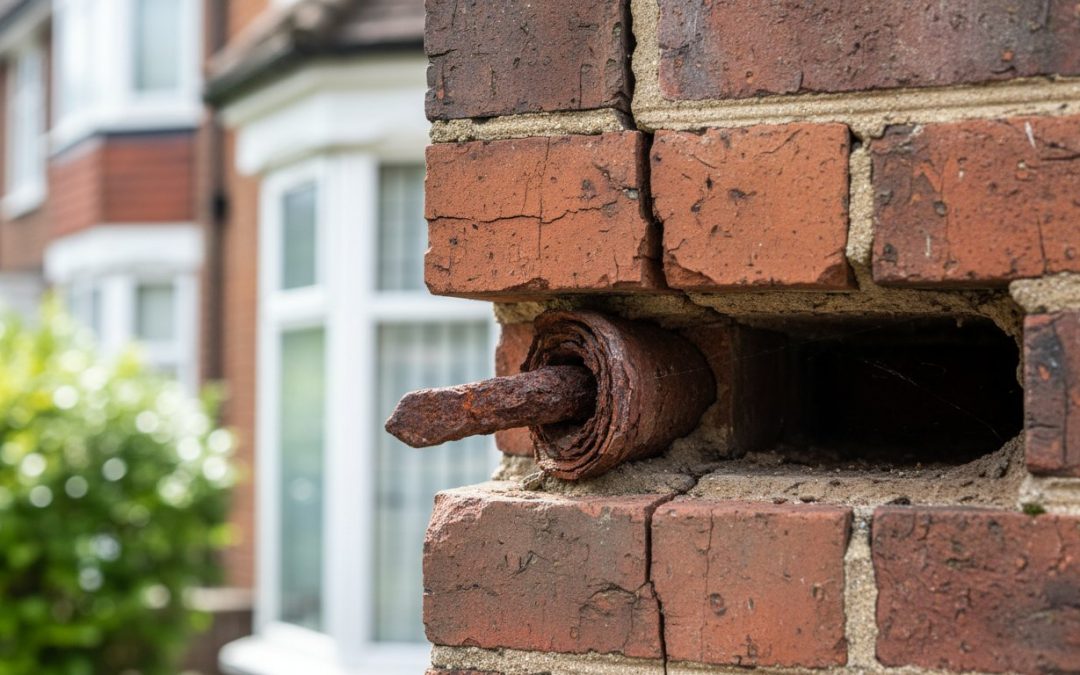
An estimated 10 million homes across the UK are currently at risk of structural instability due to a component no larger than a dinner fork. If you’ve noticed horizontal cracks in your masonry or a slight bulge in your external brickwork, you’re likely asking what happens if wall ties fail and whether your property remains safe. It’s completely natural to feel overwhelmed by technical survey terminology or the fear of a sudden structural collapse. Your home is your most significant asset, and seeing signs of distress in the brickwork is a legitimate cause for concern.
We provide a clear, professional perspective on these structural risks to help you move from uncertainty to a reliable solution. You’ll learn how corroding steel can physically force your cavity walls apart, often causing more damage through expansion than through the tie snapping itself. This article outlines the specific warning signs to look for and explains how a specialist wall tie survey identifies hidden faults before they escalate. By the end, you’ll have the confidence to choose a methodology that ensures the long-term health and safety of your property.
Key Takeaways
- Recognize early warning signs such as horizontal mortar cracking and masonry lifting caused by the physical expansion of rusting metal.
- Understand the severe structural consequences and what happens if wall ties fail, including the risk of outer leaf collapse and compromised weatherproofing.
- Discover why retrospective cavity wall insulation often accelerates metal tie corrosion and how its professional removal can preserve your property’s integrity.
- Learn about the non-disruptive diagnostic methods, such as borescope inspections, used to accurately assess the condition of your wall ties without damaging brickwork.
- Establish a clear path toward professional wall tie replacement to secure the long-term safety and structural stability of your home.
Understanding Cavity Wall Ties and the Mechanism of Failure
Cavity walls are a standard feature of British architecture, designed to keep interiors dry by providing a physical break between masonry layers. However, this internal gap creates a hidden environment where metal components are vulnerable to the elements. Wall ties act as essential structural connectors that bridge the space between the inner and outer leaf of masonry. Historically, builders used materials ranging from cast iron to galvanised steel. While Understanding Cavity Wall Ties is vital for any homeowner, it’s equally important to know that older materials have a finite lifespan. Across the United Kingdom, properties built before 1981 are at higher risk because the zinc coating used during that era was significantly less robust than modern standards.
The Structural Role of the Inner and Outer Leaf
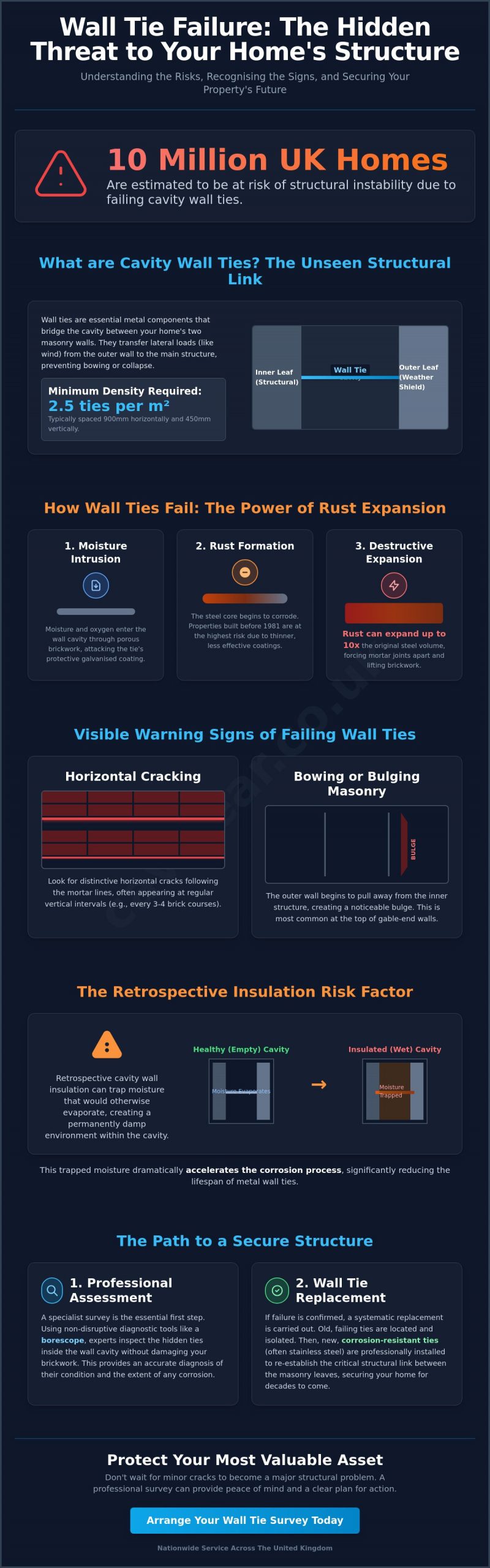
In a cavity wall system, the inner leaf carries the weight of the roof and floors, while the outer leaf provides a weather-protective skin. Wall ties transfer lateral loads, such as wind pressure, from the outer leaf to the load-bearing inner leaf. This connection prevents the external wall from bowing or collapsing under environmental stress. For a standard cavity wall, industry standards require a minimum density of 2.5 wall ties per square metre. We typically find these spaced at 900mm intervals horizontally and 450mm vertically. Modern properties rely on this connection more heavily than older solid-wall constructions, which used sheer mass to maintain stability.
The Chemistry of Corrosion: Why Ties Fail
Moisture and oxygen naturally enter the wall cavity through porous bricks, mortar joints, or driving rain. When these elements react with galvanised steel, oxidation occurs. This chemical process slowly consumes the protective zinc layer and eventually attacks the steel core itself. Homeowners often ask what happens if wall ties fail, and the answer lies in the specific mechanism of degradation. While some wire ties may simply snap and leave the wall unsupported, strip ties usually cause damage through expansion. Rust expansion is the process where corroding steel occupies up to ten times its original volume. This massive increase in size exerts immense pressure on the surrounding mortar, physically forcing the brickwork apart. Because strip ties installed between 1964 and 1981 have an estimated lifespan of just 23 to 46 years, many properties are now reaching a critical point where structural integrity is compromised.
Visible Signs: How to Identify Failing Wall Ties
Identifying the early indicators of structural distress is the first step toward securing your home. While the internal mechanism of corrosion happens out of sight, the physical changes to your brickwork are often predictable. For many homeowners, the primary concern is what happens if wall ties fail, and the answer usually begins with visible distortions in the mortar lines. These symptoms serve as a diagnostic map for specialists to determine the severity of the issue.
Horizontal Cracking and Mortar Joint Expansion
The most common sign of failure is horizontal cracking that occurs at regular intervals. Because ties were typically installed every three to four courses of brickwork, the expansion of rusting metal forces these specific joints apart. This differs from structural settlement cracks, which often run vertically or diagonally across bricks. Expansion cracks follow the mortar line because the rust is physically lifting the masonry above it. You might also notice “stepped” cracking. This indicates lateral movement, suggesting the outer leaf is beginning to shift independently of the inner structure. If you spot these patterns, arranging a professional wall tie survey is the most reliable way to confirm the underlying cause.
Bowing and Bulging of the External Masonry
When ties lose their ability to provide a structural bond, the two leaves of the wall begin to act independently. This leads to leaf separation, where the outer skin of the building starts to bow outward. This bulging is most frequently seen at the top of gable ends or directly under the eaves. These areas have less weight pressing down on them, making it easier for wind pressure to pull the unanchored masonry away. These sections are particularly vulnerable during high winds or extreme weather events, as the wall can move suddenly without warning. A Professional Assessment and Replacement strategy is essential to stabilize these areas before the movement becomes irreversible.
Beyond the brickwork itself, you should look for secondary indicators of failure. Corroding ties can cause lintels to sag or window frames to separate from the masonry as the wall shifts. In some cases, the expansion of the ties creates gaps that allow moisture to penetrate the cavity more easily. This often results in internal damp patches that appear to have no obvious source. Recognizing these signs early allows you to address the problem before it escalates into a major structural failure.
The Structural Risks: What Happens if Wall Ties Fail?
If you’re wondering what happens if wall ties fail, you’re likely concerned about the physical stability of your home. The risks extend far beyond minor cosmetic issues. When the connection between the two masonry leaves breaks down, the entire integrity of the what is a cavity wall system is compromised. This isn’t just a technical fault; it’s a structural liability that significantly impacts property value. Surveyors are increasingly diligent during property transactions, and evidence of unaddressed causes of wall tie failure can stall a sale or lead to substantial price reductions.
Catastrophic Wall Collapse and Safety Risks
The most severe outcome is the total collapse of the outer leaf of masonry. This often occurs because of wind suction. When wind passes over a building, it creates a vacuum effect that pulls on the external walls. Without functional ties to anchor the outer leaf to the load-bearing inner structure, the wall can bow or buckle. Collapse often happens without warning once a “critical mass” of ties has corroded. This poses a direct danger to occupants and the public, as hundreds of kilograms of brickwork can fall onto walkways or gardens. Because the failure is often hidden within the cavity, a wall that looks stable today could be on the verge of failure during the next storm.
Compromised Weatherproofing and Damp Ingress
Tie failure also destroys your home’s ability to stay dry. As the metal expands and cracks the mortar joints, it creates direct pathways for driving rain to enter the cavity. This moisture bridges the gap that was intended to keep the inner wall dry. Persistent dampness within the wall often leads to the growth of black mould on internal surfaces, which presents health risks and degrades plasterwork. We always advise that structural repairs must be completed before internal damp treatments. Treating the mould without fixing the wall ties only addresses the symptom, not the source. Failing to address what happens if wall ties fail at this stage ensures that dampness will return regardless of how many times you redecorate.
Ignoring these early signs leads to exponentially higher remedial costs later. What begins as a targeted replacement of specific ties can quickly escalate into a full-scale wall reconstruction if the masonry becomes too distorted. Addressing the issue early preserves the long-term health of your asset and ensures the safety of everyone nearby. It’s a vital investment in the property’s future that prevents a manageable repair from turning into a structural emergency.
The Impact of Retrospective Cavity Wall Insulation on Tie Health
Retrospective cavity wall insulation is often marketed as a simple energy-saving measure, yet its impact on structural metalwork is frequently overlooked. For properties built between 1964 and 1981, the presence of older galvanised steel ties makes the addition of insulation particularly risky. When you consider what happens if wall ties fail, you must account for how the internal environment of the cavity changes once it’s filled. A clear cavity allows air to circulate and moisture to evaporate. Filling this space with mineral wool or bonded beads removes this natural ventilation, often trapping dampness against the very components holding your walls together.
The Moisture Bridge Effect
Saturated insulation material acts as a physical bridge for moisture. In a healthy cavity, water that penetrates the outer leaf should run down the internal face and exit through weep holes. When insulation is present, it absorbs this water and holds it in direct contact with the metal ties. This constant exposure to moisture and oxygen creates a permanent corrosive environment. Some older insulation types can even trigger chemical reactions that strip away the protective zinc coating on galvanised ties. Understanding what happens if wall ties fail in these damp conditions is critical, as the insulation masks the visual signs of decay until the damage is advanced. Maintaining a clear cavity is the only way to ensure the long-term health of your property’s structural ties.
Identifying Insulation-Related Corrosion
Debris and mortar droppings left at the bottom of the cavity during construction can also collect moisture when buried in insulation, accelerating corrosion at the base of the wall. Identifying these issues requires a specialist approach. Because the ties are buried, a visual inspection from the outside is insufficient. We use borescope technology to look inside the cavity, providing a clear view of the ties’ condition without the need for disruptive brick removal. If the insulation is found to be damp or causing tie degradation, cavity wall insulation removal becomes an essential first step.
Removing defective material allows the cavity to breathe again and slows the rate of metal decay. If you suspect your insulation is compromising your home’s stability, arranging a professional cavity wall insulation extraction is the most effective way to protect your structural ties and prevent future masonry failure.
Professional Assessment and Wall Tie Replacement
While understanding what happens if wall ties fail is the first step, moving toward a technical resolution is essential for property safety. Structural issues rarely resolve themselves; instead, they progress until the stability of the masonry is fundamentally compromised. A specialist wall tie replacement survey provides a factual basis for remedial action. This diagnostic process moves beyond surface observations to examine the hidden condition of the metalwork within the cavity. Our nationwide coverage ensures that property owners across the United Kingdom have access to expert assessments that prioritize long-term asset health over temporary fixes.
The Wall Tie Survey and Diagnostic Process
A technical inspection by an accredited surveyor follows a methodical diagnostic path to map the extent of the damage. We use high-accuracy metal detectors to locate every tie within the wall, ensuring that the density meets modern safety standards. Borescope technology then allows for a visual verification of corrosion levels through small, discreet holes in the mortar joints. This process provides a clear picture of the structural health of the building without the need for destructive masonry removal. A professional report provides the necessary evidence for insurers or mortgage lenders, confirming that the property is structurally sound or outlining the specific steps required for restoration.
Installing Remedial Wall Ties
Once the survey confirms the failure, the installation of remedial ties restores the structural bond between the inner and outer leaves. We typically use high-grade stainless steel ties, which offer permanent resistance to corrosion even in harsh coastal environments. Depending on the masonry type, we select either mechanical expansion ties or resin-bonded fixings to anchor the walls securely. A critical part of our methodology involves isolating or removing the old, corroded ties. This prevents further rust expansion from continuing to force the brickwork apart. Our technicians prioritize a clean, non-disruptive methodology that preserves the property’s aesthetic while ensuring its future stability.
A professional assessment removes the guesswork from structural maintenance, providing a clear roadmap for those worried about what happens if wall ties fail on a larger scale. By addressing the root cause of masonry movement, we restore the comfort and security of your home. This proactive approach isn’t just a repair; it’s a vital investment in the property’s future. We sign off every project with a focus on long-term assurances, making the promise of a permanent fix a central part of our service. You’ll gain the confidence that your home remains a safe, stable, and valuable asset for years to come.
Securing the Structural Integrity of Your Home
Ignoring the early indicators of masonry distress often leads to irreversible damage. Understanding what happens if wall ties fail allows you to intervene before a manageable repair escalates into a catastrophic collapse or severe damp ingress. By recognizing the impact of horizontal cracking and the hidden risks posed by saturated insulation, you can take the necessary steps to protect your property. Structural stability isn’t just about immediate safety; it’s a vital investment in the property’s long-term health.
We deploy accredited technicians across the United Kingdom to provide specialist, non-disruptive structural remedial works. Our team delivers detailed technical reports that satisfy the requirements of both homeowners and insurers. Whether you’ve noticed bulging brickwork or suspect that moisture-trapping insulation is accelerating metal decay, we provide the expert solutions needed to restore comfort. Book a Professional Wall Tie Survey with CavClear today to ensure your property remains a safe and secure environment for the future. You can regain peace of mind with a permanent fix from a trusted regional expert.
Frequently Asked Questions
How long do wall ties typically last in a UK property?
The lifespan of wall ties depends on the material used and the construction date. For properties built between 1964 and 1981, strip ties typically last between 23 and 46 years, while wire ties may only last 13 to 26 years. Modern stainless steel ties offer a much longer service life, often outlasting the building itself. Earlier galvanisation standards were significantly less robust than those used today.
Can wall tie failure cause a house to collapse suddenly?
Sudden structural collapse is rare but possible once a critical mass of ties has failed within a specific area. Usually, the wall provides warning signs like bulging or horizontal cracking before a total failure occurs. However, extreme weather or high winds can trigger a collapse in an already weakened wall. Addressing what happens if wall ties fail early prevents these catastrophic safety risks to occupants and the public.
Is wall tie replacement typically covered by standard home insurance policies?
Standard home insurance policies rarely cover wall tie replacement because they often view the issue as gradual deterioration or a maintenance matter. Most policies focus on sudden, accidental damage rather than the slow corrosion of metal components over decades. You should check your specific policy wording for exclusions. Proactive maintenance remains the homeowner’s responsibility to ensure the long-term structural integrity of the property.
What is the main cause of wall tie failure in older buildings?
The primary cause of failure is the corrosion of the metal ties, particularly in homes built before 1981. During this period, the zinc coating on galvanised steel ties was thinner and less durable than modern standards. Exposure to oxygen and moisture within the cavity causes the metal to oxidise. This process leads to rust expansion, which physically forces the masonry apart and creates visible cracking.
Can you check the condition of wall ties without removing bricks?
Technicians use non-destructive methods to assess tie condition without removing any masonry. We employ metal detectors to map the location of existing ties and borescope technology to look inside the cavity. By inserting a small camera through a hole in the mortar joint, we can visually inspect the level of corrosion. This methodology is clean and efficient, allowing for an accurate diagnosis while preserving the property’s appearance.
What is the difference between a mechanical tie and a resin tie?
Mechanical ties use an expansion mechanism to grip the inner and outer leaves, making them suitable for solid brick or concrete. Resin ties use a chemical adhesive to bond a new stainless steel tie into the masonry, which is often preferred for softer brickwork or unstable substrates. Both options provide a permanent structural connection. A specialist survey determines the most appropriate tie type for your specific property requirements.
How much does it cost to replace wall ties in a standard semi-detached house?
The cost of wall tie replacement varies significantly based on the property size, the number of ties required, and the type of masonry. Factors such as the height of the building and the need for access equipment also influence the final investment. For a detailed assessment, homeowners should commission a specialist survey. This provides a technical report tailored to the property’s specific structural needs and failure levels.
Why does retrospective cavity wall insulation make wall tie failure more likely?
Retrospective cavity wall insulation can accelerate what happens if wall ties fail by trapping moisture against the metalwork. In a clear cavity, moisture evaporates through natural ventilation. Insulation acts as a bridge, holding damp material in direct contact with the ties and speeding up the oxidation process. This is why we often recommend cavity wall insulation extraction before performing structural repairs to ensure a dry environment.
Recent Comments