
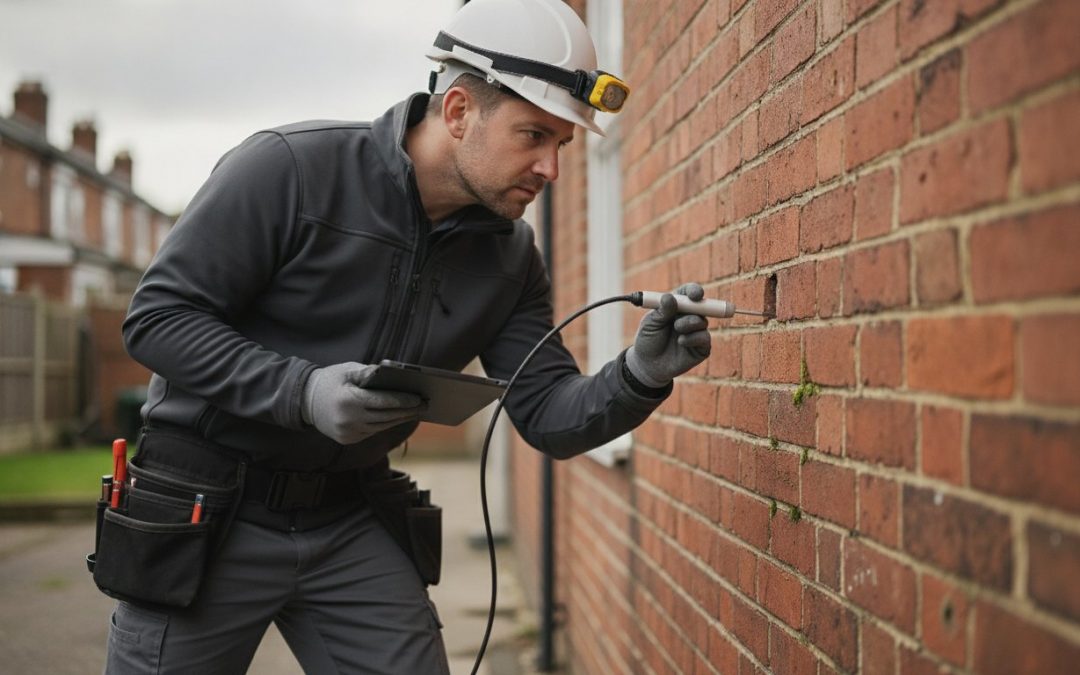
Could a “expert” visual inspection actually be the most expensive mistake you make for your home’s structural safety? When you notice signs of masonry distress, the uncertainty surrounding a professional wall tie survey cost often leads to hesitation. It’s natural to worry that a low-cost quote might just be a precursor to a high-pressure sales pitch for unnecessary repairs. You need clarity on what you’re paying for and why a specialized diagnostic approach is essential for your peace of mind.
We understand that structural issues are stressful and that you require a solution rooted in technical expertise rather than guesswork. This guide provides a clear breakdown of the factors that influence the price of a professional inspection, from the use of high-definition borescopes to the detailed reporting required by mortgage lenders. You’ll learn how nationwide specialists use BRE technical standards to assess your property’s health accurately. We’ll explore the diagnostic process that moves from initial observation to a professional recommendation, ensuring your home remains safe and sound for the long term.
Key Takeaways
- Learn why a specialized structural diagnostic is a vital investment for maintaining the long-term integrity and safety of your property.
- Understand how non-disruptive technologies, such as high-resolution borescopes and metal detectors, provide an accurate view of internal wall conditions.
- Identify the specific variables, including property size and elevation access, that determine the total wall tie survey cost for your home.
- Gain the ability to interpret technical corrosion grades (1 to 4) to prioritize necessary remedial actions based on structural urgency.
- Discover the benefits of utilizing a nationwide specialist to secure professional reports that satisfy the requirements of insurers and mortgage lenders.
What is a Wall Tie Survey and Why is it a Vital Investment?
A wall tie survey is a specialized structural diagnostic designed to evaluate the condition of the metal fixings that secure your property’s external masonry. To understand why this process is necessary, it helps to first define What is a Cavity Wall Tie? and its role in your home. These components act as the essential link between the inner and outer leaves of a cavity wall, ensuring the structure remains stable under wind loads and environmental stress. While some might view the wall tie survey cost as an additional expense, it’s actually a protective investment. An unbiased assessment identifies whether remedial work is truly required, preventing you from paying for extensive repairs based on a superficial or biased visual check.
The Hidden Danger of Wall Tie Corrosion
When wall ties begin to fail, they often do so silently within the cavity. Corrosion occurs as the protective zinc or bitumen coating on older ties breaks down, allowing the steel to oxidize. This chemical reaction causes the metal to expand significantly, which creates enough pressure to lift mortar joints and cause horizontal cracking. In severe cases, this expansion leads to “blown” bricks where the face of the masonry snaps off. Ignoring these warning signs puts the long-term health of your property at risk. Mortgage lenders and insurance providers frequently demand a professional survey before approving a sale or policy, as they require documented proof of structural integrity.
Professional Surveys vs. Informal Inspections
Relying on an informal walk-around by a general builder is a risky strategy for any property owner. General contractors often lack the specialized equipment required to see inside the wall without causing damage. A professional specialist utilizes high-resolution borescopes and electronic metal detectors to locate and inspect ties with precision. This non-destructive methodology provides a clear, evidence-based record of the wall’s internal state. By choosing a nationwide specialist like CavClear, you receive a formal technical report that serves as a legal and technical record of your home’s health. This level of transparency ensures that any recommended actions are based on facts rather than assumptions, making the initial wall tie survey cost a vital step in maintaining your asset’s value.
Technical Inspection Methods: How Specialists Identify Failing Ties
Unlike a general property check, a professional structural assessment relies on diagnostic technology to provide an accurate diagnosis. The primary driver of the wall tie survey cost is the deployment of specialized tools that allow a technician to see what is happening inside the cavity without removing bricks. These methods are essential for identifying Signs of Wall Tie Failure before they manifest as visible masonry cracks or structural movement. By using high-resolution equipment, specialists can differentiate between surface discoloration and deep-seated oxidation that compromises the building’s stability.
Borescope Inspections: Seeing Inside the Cavity
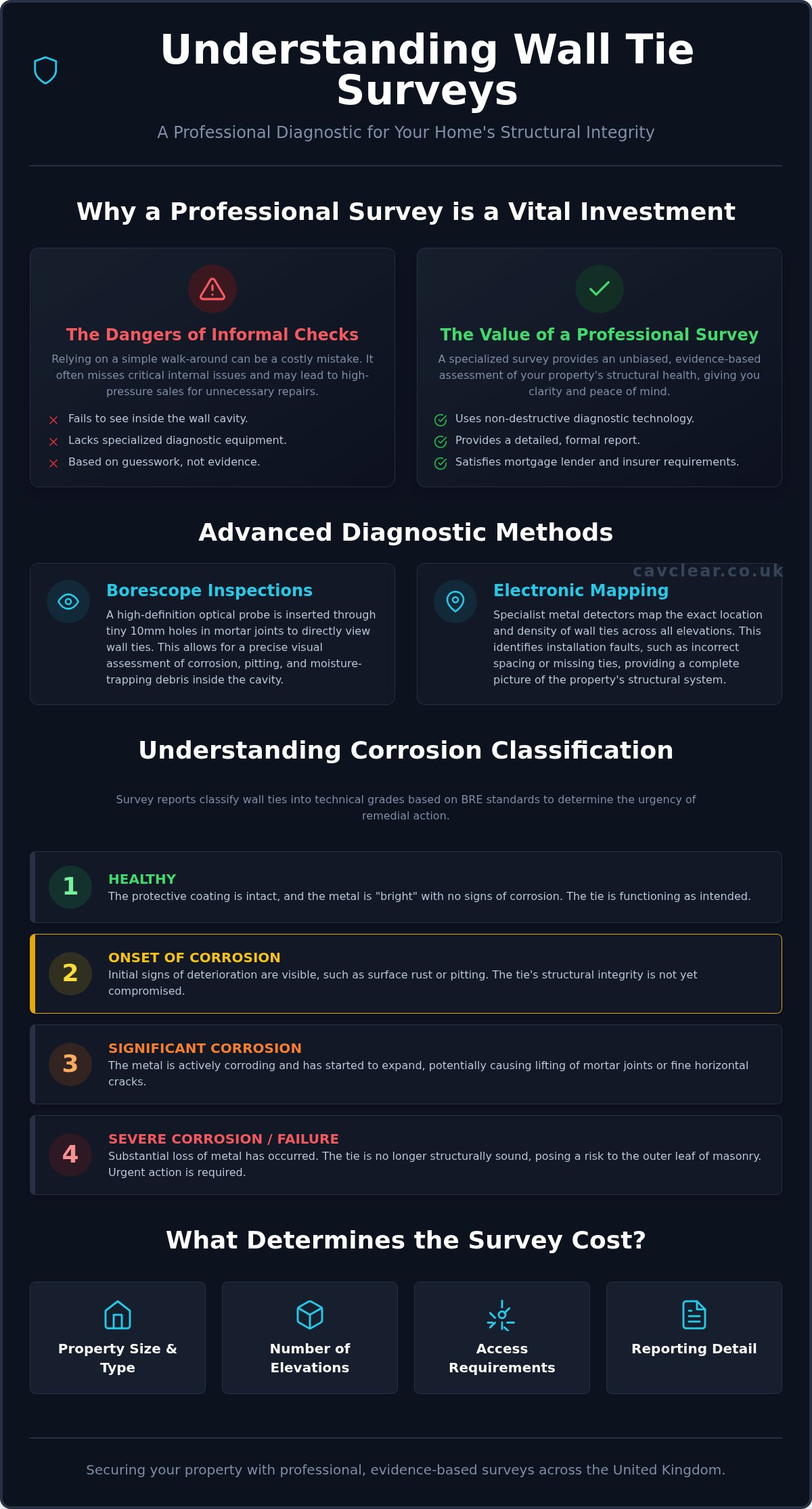
Specialists use high-definition borescopes to conduct a visual audit of the internal wall environment. The process involves drilling small, 10mm holes into the mortar joints at strategic intervals across the elevation. The technician inserts an optical probe to examine the ties directly. They look for “bright” metal, which indicates a healthy tie, or “pitted” surfaces, which signal the onset of corrosion. This method also identifies if debris or poorly installed insulation is trapping moisture against the metal, a factor that significantly accelerates the decay of the zinc coating. Endoscopic photography documents these findings, providing visual evidence for the final report.
Non-Destructive Testing and Mapping
Electronic metal detectors are used to map the location and density of every tie across the elevations. This is vital because many properties built before the 1980s suffer from original installation faults, such as ties being spaced too far apart or missing entirely in high-wind areas like gables. By mapping these patterns, the specialist determines if a failure is localized to one area or if the entire property requires attention. This detailed mapping ensures the final report is accurate and helps justify the wall tie survey cost by providing a roadmap for targeted remedial work rather than a “one size fits all” approach.
In some cases, specialists may also test the masonry for carbonation or salt levels. These chemical factors influence how quickly metal components degrade. By gathering this data, the technician provides a more precise timeline for when repairs might become critical. If you are concerned about the stability of your elevations, arranging a professional wall tie survey is the most reliable way to secure a factual assessment of your property’s future health. This methodical approach ensures that every structural detail is accounted for, providing the clarity needed to make informed decisions about your home.
Factors Influencing the Cost of a Professional Structural Survey
Determining the final wall tie survey cost depends on several technical variables unique to your property. A specialist doesn’t simply apply a flat rate because the time and equipment required to provide an accurate diagnosis change based on the building’s architecture. To ensure a thorough assessment, a technician must evaluate every accessible elevation, which requires a methodical approach that scales with the size of the structure. By understanding these variables, you’ll gain a clearer picture of why a professional diagnostic is a necessary investment in your property’s long-term health.
Scale and Complexity of the Property
The physical footprint of your home is the most significant factor in the survey process. A standard terraced house typically features two elevations for inspection, whereas a large detached home has four. Each additional elevation increases the number of inspection points required to map the internal tie pattern accurately. Multi-storey structures also introduce accessibility challenges. If the technician needs to reach high gables or upper-floor cavities, they may require specialist ladders or mobile access towers to perform the work safely. Commercial buildings or high-occupancy residential blocks often require even more extensive sampling to satisfy safety regulations and insurance standards. Additionally, the type of masonry affects the complexity of the task. Stone-faced properties or those with irregular flint work require more time to locate suitable drilling points in the mortar joints compared to standard brickwork.
Reporting and Documentation Requirements
The level of detail you require in the final report also influences the wall tie survey cost. While a basic assessment might confirm the presence of corrosion, a comprehensive structural report provides a detailed roadmap for the building’s future. These professional documents typically include:
- High-definition photographic evidence captured via borescope to show the exact state of individual ties.
- Digital mapping of the property’s elevations to identify the density and spacing of existing fixings.
- Corrosion classification based on technical standards, which helps prioritize remedial actions.
- A clear structural action plan that outlines the necessary steps to restore the property’s integrity.
This level of documentation is often a mandatory requirement for mortgage lenders or insurers during a property transaction. Having a formal technical record facilitates smoother sales by removing the uncertainty that visual signs of masonry cracking can cause. A detailed report from a nationwide specialist like CavClear ensures that all parties have a transparent, evidence-based understanding of the building’s condition. This proactive approach prevents the stress of unexpected structural failures and provides the long-term assurance that your asset remains secure.
Understanding Your Survey Report and Corrosion Classification
The technical report you receive is the primary output of the wall tie survey cost. It transforms raw data from borescopes and metal detectors into a clear diagnostic roadmap for your property’s maintenance. A specialist document provides more than just a pass or fail result; it classifies the condition of your wall ties using an established grading system. This precision allows you to distinguish between minor surface oxidation and critical structural failure. By understanding these classifications, you can plan your maintenance budget effectively and avoid the stress of reactive, emergency repairs.
The Corrosion Grading Scale
Surveyors categorize tie health into four primary grades to determine the urgency of remedial action. This systematic approach ensures that recommendations are based on technical evidence rather than guesswork.
- Grade 1: The tie shows minimal oxidation. The original protective coating is largely intact, and there’s no immediate risk to structural stability.
- Grade 2: Visible pitting or surface rust is present. While the tie still functions, it requires periodic monitoring or localized repairs to prevent further decay.
- Grade 3: Advanced corrosion has occurred. The metal has lost a significant portion of its cross-section, which compromises its ability to hold the wall leaves together.
- Grade 4: Total failure. The tie is either snapped or so heavily oxidized that it no longer provides any structural restraint.
A key benefit of a specialist survey is the identification of “false positives.” General inspectors might see surface rust and assume a full replacement is necessary. Our technicians use technical standards to determine if the rust is truly structural or merely aesthetic. This expert distinction potentially saves you from the expense of unnecessary work while ensuring your home remains safe.
Remedial Recommendations and Action Plans
Once the grading is complete, the report outlines a specific action plan. It details the exact type of remedial fixings required to restore integrity. If the survey identifies Grade 3 or 4 failure, the specialist will recommend a comprehensive wall tie replacement using high-quality stainless steel alternatives. These modern fixings offer long-term resistance to the damp conditions that often cause original ties to fail.
The report also addresses environmental factors within the cavity. If the inspection reveals that debris or dampness is accelerating metal decay, the specialist will recommend extraction to protect the new fixings. This holistic approach ensures that the root cause of the issue is resolved, providing a permanent fix rather than a temporary patch. To ensure your home meets current safety standards and satisfies lender requirements, you should book a professional structural survey with a nationwide specialist who understands the complexities of UK masonry.
Securing Your Property with CavClear’s National Survey Services
Choosing a specialist with nationwide reach ensures that your property receives an inspection based on consistent technical standards. CavClear operates across the United Kingdom, providing homeowners with the reliability of a national firm combined with the precise expertise required for complex structural diagnostics. We focus on the long-term health of your property to ensure that the initial wall tie survey cost translates into a lasting investment in structural integrity. Our team avoids the flowery marketing speak common in the industry, opting instead for a vocabulary rooted in technical standards and property maintenance.
Expertise and Reliability Across the UK
Our accredited technicians employ a clean and non-disruptive methodology. We understand that your home is your most valuable asset, so we prioritize the restoration of comfort without causing unnecessary mess or damage to your facade. Our inspections focus on providing hard facts rather than using alarmist language to pressure you into immediate repairs. This transparency helps you understand the actual state of your masonry, allowing for a methodical and logical approach to property maintenance. We emphasize structural efficiency, ensuring that the inner and outer leaves of your walls work together as intended to resist environmental stressors. By choosing a specialist who takes pride in rectifying the poor workmanship of others, you secure a professional remedy that stands the test of time.
Next Steps for Homeowners and Property Managers
Preparing for a structural inspection is a straightforward process. We recommend clearing any significant obstructions from the external walls, such as heavy garden furniture or dense climbing plants, to allow our technicians to reach all elevations safely. During the visit, you can expect a professional environment where technical faults are identified and explained with maximum clarity. The surveyor will use the non-destructive tools discussed in previous sections, including high-resolution borescopes and electronic detectors, to map your wall ties without disrupting your daily routine. This diagnostic process moves steadily from observation to recommendation, ensuring you aren’t overwhelmed by technical jargon.
Protecting your property investment starts with an accurate, evidence-based diagnosis. Whether you are a homeowner or a property manager, securing a professional assessment is the first step toward long-term peace of mind. You should contact our team today to discuss your specific requirements and receive a transparent overview of the wall tie survey cost for your building type. Our commitment to technical standards and structural safety ensures that your property remains a secure, high-value asset for years to come. We provide the formal documentation required to satisfy lenders and insurers, giving you the confidence that your property’s future is in expert hands. To help specialist firms maintain these high standards of professional delivery, learn more about Yellow Rose Consultants and their dedicated support for the property surveying sector.
Maintaining the stability of your masonry requires a methodical approach that prioritizes technical facts over assumptions. A professional diagnostic provides the transparency needed to distinguish between minor surface oxidation and critical structural failure. By understanding the specific variables that influence the wall tie survey cost, you can make an informed decision that protects your property’s long-term asset health. This process ensures your home remains stable and your investment stays secure against environmental stress.
Our specialist accredited technicians provide nationwide UK coverage, delivering detailed structural reporting that satisfies the requirements of both mortgage lenders and insurance providers. We use non-disruptive technology to provide a clear, evidence-based action plan for your elevations. Don’t leave your home’s safety to chance or rely on informal visual checks that often miss internal decay. You can Book a Professional Wall Tie Survey with CavClear to receive a comprehensive assessment of your property’s condition. Taking this proactive step restores your comfort and guarantees that your home remains a safe, high-value asset for years to come.
Frequently Asked Questions
Is a wall tie survey necessary for every older property?
A wall tie survey is highly recommended for any cavity wall property built before 1981, as these buildings typically used galvanized mild steel ties prone to corrosion. While not every property will have immediate issues, the risk of failure increases with age and exposure to maritime or industrial environments. Assessing the internal condition of your masonry is a vital step in maintaining long-term asset health and preventing sudden structural deterioration.
How long does a professional wall tie inspection typically take?
A standard professional wall tie inspection typically takes between two and four hours to complete. The exact duration depends on the size of the property and the number of elevations that require mapping. During this time, the technician drills small inspection holes, uses a high-resolution borescope to examine internal components, and maps the density of the existing ties. Larger detached homes or multi-storey buildings naturally require more time to ensure a comprehensive diagnosis.
What are the most common signs that my wall ties are failing?
The most frequent indicators of failure include horizontal cracking along mortar joints and the bulging of the external masonry leaf. As metal ties corrode, they expand to several times their original size, creating enough pressure to lift bricks and snap mortar bonds. You might also notice “blown” brick faces where the expansion has caused the masonry surface to flake off. Identifying these signs early through a professional assessment helps you manage the wall tie survey cost effectively.
Can I perform my own wall tie check using a DIY borescope?
Performing a DIY check is not recommended because consumer-grade equipment often lacks the resolution needed to identify early-stage pitting or carbonation. Professional specialists use calibrated tools to classify corrosion according to established technical grades (1 to 4). A DIY report carries no weight with mortgage lenders or insurance providers. A formal technical document from an accredited nationwide specialist is required to provide the legal and structural assurances necessary for property transactions and long-term security.
Will a wall tie survey cause any damage to my brickwork?
The survey process is designed to be clean and non-disruptive, causing no permanent damage to your home’s facade. Technicians drill discreet 10mm holes into the mortar joints rather than the bricks themselves. Once the borescope inspection is finished, these holes are professionally made good using a mortar that matches your existing masonry. This methodology ensures that the aesthetic integrity of your building is preserved while providing the specialist with a clear view of the internal wall cavity.
How long is a wall tie survey report valid for mortgage purposes?
Most mortgage lenders and insurance companies consider a structural survey report to be valid for a period of six to twelve months. Because corrosion is a progressive chemical process, older reports may not accurately reflect the current state of the masonry. If you are in the process of selling or refinancing your home, providing a recent, professional report ensures that all parties have confidence in the building’s stability and helps prevent delays during the legal exchange.
What happens if the survey reveals that my wall ties are in good condition?
If the inspection confirms that your fixings are healthy, you will receive a formal technical record documenting their condition. This “clean bill of health” is an incredibly valuable asset when selling your property, as it proactively answers structural questions from potential buyers or surveyors. It provides the reassurance that no immediate remedial work is required, allowing you to focus on routine maintenance rather than worrying about the hidden threat of wall tie failure.
Does the presence of cavity wall insulation affect the survey cost?
The presence of insulation can influence the total wall tie survey cost because it often obstructs the technician’s view inside the cavity. To get an accurate reading, the specialist may need to create more inspection points or use specialized probes to clear small areas of the material. While this adds complexity to the diagnostic process, it is essential for ensuring that the ties are thoroughly examined despite the presence of internal obstructions that could hide localized corrosion.
Recent Comments