
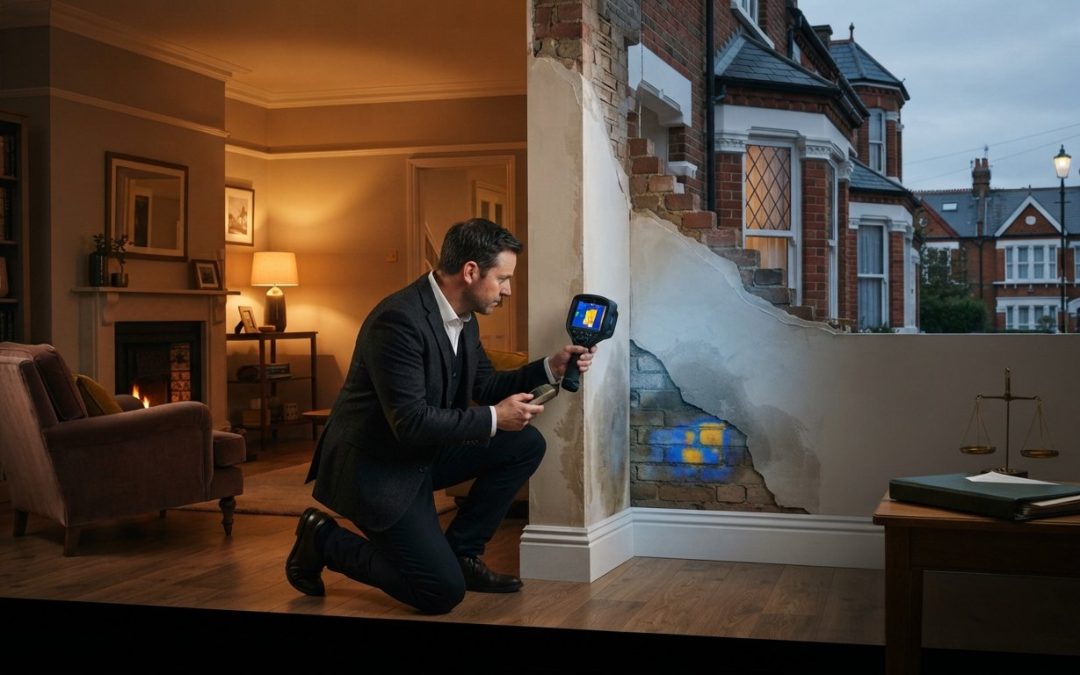
A fresh coat of paint might hide a damp patch from a casual viewer, but it won’t protect you from a High Court judge. Many homeowners believe that staying silent about moisture ingress is a harmless shortcut to completion, yet the legal consequences of not declaring known damp issues when selling a house have never been more severe. With the introduction of the mandatory TA6 Property Information Form (6th edition) in March 2026, the margin for error has disappeared. Sellers are now under a strict legal obligation to provide transparent data regarding structural integrity and environmental faults.
It’s understandable to feel anxious that a damp survey might derail your sale or lead to a lower offer. This guide explains the exact risks you face under the Misrepresentation Act 1967 and how modern diagnostic tools make concealment nearly impossible. You’ll learn how to navigate the latest disclosure requirements, understand the potential for contract rescission, and discover a professional methodology for resolving these issues before they become a liability. We’ll outline a clear path to ensuring your property meets technical standards, allowing you to sell with confidence and long-term legal security.
Key Takeaways
- Understand how the mandatory 2026 TA6 Property Information Form shifts legal responsibility onto the seller for disclosing all known environmental faults.
- Identify the severe legal and financial consequences of not declaring known damp issues when selling a house, ranging from court-ordered repair costs to full contract rescission.
- Learn why cosmetic cover-ups are ineffective against modern surveyor tools like thermal imaging and high-sensitivity moisture meters.
- Discover how commissioning a specialist pre-sale survey and remedial action plan can prevent your property transaction from collapsing at the survey stage.
- Protect your long-term asset health by addressing underlying structural causes, such as wall tie corrosion or failed insulation, before listing your home on the market.
Legal Obligations: The TA6 Form and the Law of Misrepresentation
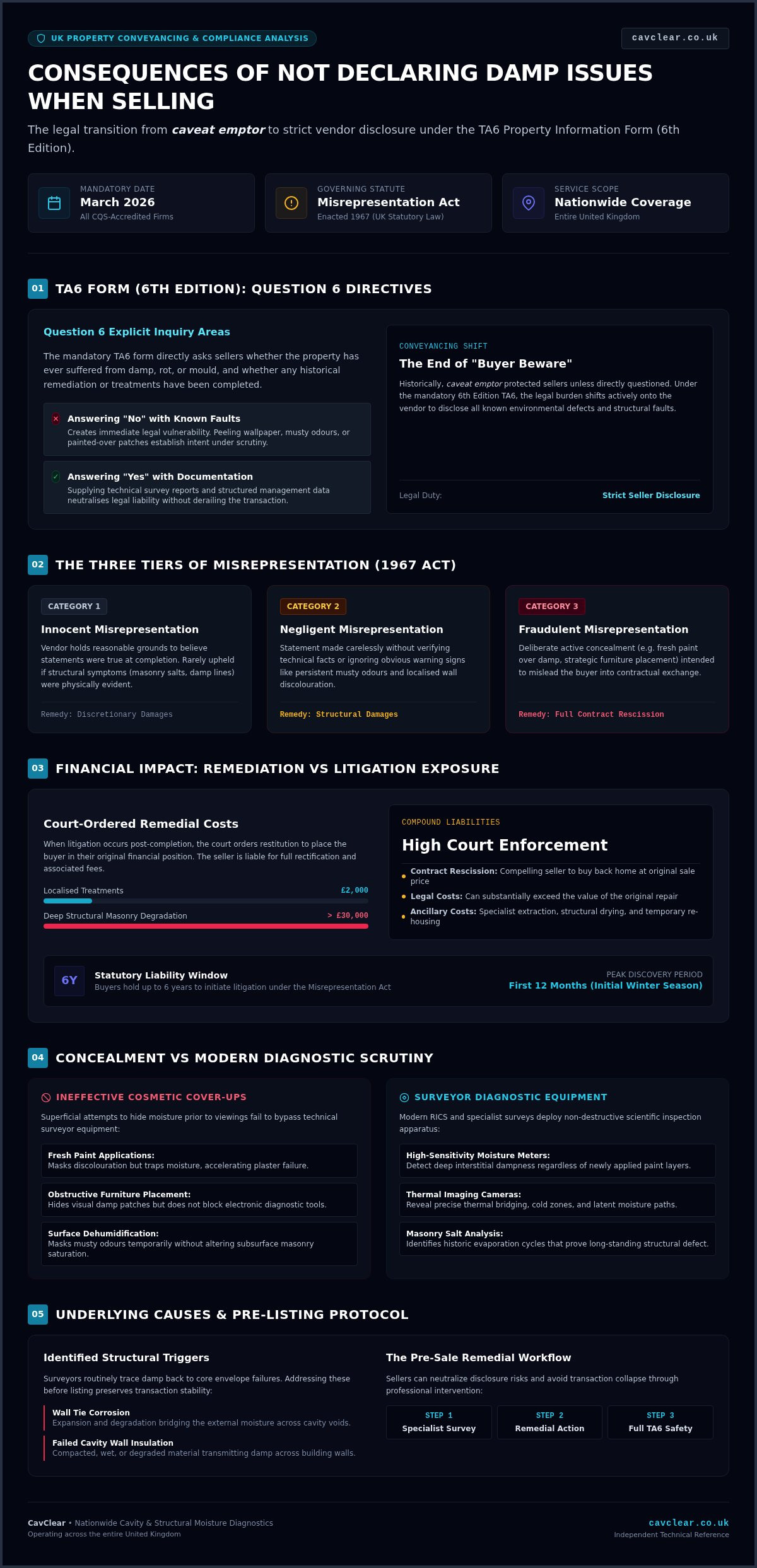
The TA6 Property Information Form serves as the cornerstone of the UK conveyancing process. As of March 2026, the 6th edition is mandatory for all CQS-accredited firms. This document requires sellers to provide factual, honest answers regarding the property’s condition. While the principle of “caveat emptor” (buyer beware) historically placed the burden of discovery on the purchaser, modern regulations have shifted this responsibility. Sellers must now explicitly declare environmental defects and structural faults. Failing to do so leads to the severe consequences of not declaring known damp issues when selling a house, which often manifest as expensive litigation once the buyer moves in.
The Misrepresentation Act 1967 provides the statutory framework for these disputes. It categorises false statements into three types: innocent, negligent, and fraudulent. If a seller masks a damp patch with furniture or applies fresh paint without disclosure, they move from a simple omission into the territory of fraudulent misrepresentation. This legal statute allows buyers to seek substantial damages or even the full rescission of the contract. In extreme cases, a court can compel the seller to buy back the property at the original purchase price while also covering the buyer’s legal costs.
Understanding Your Duty of Care as a Seller
Claiming ignorance is rarely a successful defence in a modern property dispute. If structural evidence, such as high moisture readings or masonry salt deposits, suggests a long-term issue, a court may decide that the seller should have reasonably known about the fault. Active concealment demonstrates a clear intent to deceive. Under the Misrepresentation Act, a seller is legally liable for any false statement of fact that induces a buyer to enter into a contract. This liability remains active even after the keys have been handed over, as many damp issues only become apparent during the first winter following a sale.
The TA6 Form: Question 6 and Damp Disclosure
Question 6 of the TA6 form specifically targets damp, rot, and mould. It asks whether the property has been affected by these issues and whether any treatments have been carried out. Answering “No” when you’ve noticed peeling wallpaper or a musty smell creates a direct legal vulnerability. Conversely, answering “Yes” doesn’t have to ruin a sale. By providing professional documentation, such as a cavity wall survey or a technical report, you demonstrate that the issue is being managed. Transparent reporting from a nationwide specialist provides the buyer with the security they need to proceed, effectively neutralising the consequences of not declaring known damp issues when selling a house.
The Financial and Legal Repercussions of Non-Disclosure
The financial consequences of not declaring known damp issues when selling a house often extend far beyond the immediate cost of a repair. If a buyer discovers concealed moisture ingress after the exchange of contracts, the seller faces significant liability. Litigation in the UK property market is increasing as buyers gain access to more sophisticated diagnostic tools. When a court finds a seller liable, they may be ordered to pay for full remedial works, which typically range from £2,000 for localised treatments to over £30,000 for deep structural masonry degradation. These costs are often compounded by legal fees that can easily exceed the value of the original repair.
Transparency is the most effective way to protect your investment. When damp is identified early, it can be managed through professional remediation. Attempting to hide these faults creates a high-risk scenario where the eventual settlement costs far more than the initial fix. Sellers should review the statutory remedies under the Misrepresentation Act to understand the full weight of their financial exposure before listing a property.
Post-Completion Legal Liability
Buyers typically have up to six years to initiate legal action for misrepresentation, though most issues are identified within the first twelve months of occupancy. The legal goal of restitution is to return the buyer to their original financial position. This includes covering the costs of specialist extraction, structural drying, and potentially temporary re-housing if the property is deemed uninhabitable. Proactively commissioning a detailed technical report allows you to address these faults transparently before they escalate into a courtroom dispute.
Devaluation and Mortgage Rejection
Discovery during the survey stage often triggers aggressive price renegotiations. RICS surveyors frequently flag moisture issues that lead to mortgage lenders imposing retentions. A lender might withhold between £5,000 and £30,000 of the agreed loan until specialist works are completed. In severe cases involving wet rot or masonry decay, a “zero valuation” is issued. This effectively kills the sale and can cause an entire housing chain to collapse. Properties that fail multiple surveys acquire a market stigma, often resulting in a final sale price 10% to 20% lower than the initial valuation. In extreme situations involving structural decay, the devaluation can reach 50% of the property’s market value.
Why ‘Covering Up’ Damp Issues Fails Under Professional Scrutiny
Many sellers attempt to mask visual defects using anti-mould paint or heavy wallpaper, but these superficial efforts rarely survive a professional inspection. The consequences of not declaring known damp issues when selling a house become undeniable when a surveyor identifies active moisture trapped behind a fresh coat of paint. Modern diagnostic equipment allows specialists to see through cosmetic layers to identify the thermal anomalies and high conductivity zones that signal structural dampness. Attempting to hide these faults often raises immediate suspicion, leading to more invasive investigations that can compromise the entire sale.
The Science of Damp Detection
Professional surveyors utilise a suite of non-destructive tools to verify the integrity of a property’s envelope. Thermal imaging cameras detect cold spots where moisture is evaporating, while protimeters measure the electrical resistance within masonry to identify sub-surface dampness. These tools easily distinguish between surface condensation and deep-seated structural issues like penetrating damp. If you suspect your property has moisture issues, commissioning an independent damp survey before listing provides a transparent technical baseline. This proactive approach aligns with the disclosure requirements of the Law Society TA6 Property Information Form, ensuring you provide accurate data to prospective buyers rather than relying on ineffective cosmetic fixes.
Hidden Structural Triggers
Dampness is rarely an isolated problem; it’s typically a symptom of a deeper structural failure. In many UK homes, moisture ingress is caused by defects within the wall’s internal structure that cannot be seen from the garden or the living room. Common triggers include:
- Wall Tie Corrosion: When metal ties rust, they expand and create cracks in the mortar, allowing water to bridge the gap to the internal leaf.
- Defective Cavity Insulation: Retrospective insulation that has slumped or become wet acts as a sponge, holding water against the inner wall and causing persistent penetrating damp.
- Mortar Debris: “Snots” or debris dropped during original construction can bridge the cavity, creating a direct pathway for liquid water.
Understanding what is a wall cavity and how it’s designed to function is essential for diagnosing these faults correctly. When insulation fails or wall ties degrade, the cavity’s ability to manage moisture is compromised. A specialist inspection involves using borescopes to look inside the walls, providing photographic evidence of the fault. This level of detail is exactly what RICS surveyors look for, making it impossible to hide significant issues through simple redecoration. Addressing these root causes through professional extraction or replacement is the only way to ensure long-term asset health and a compliant sale.
How to Protect Your Sale: Professional Surveys and Remedial Action
Taking a proactive approach is the most effective way to avoid the consequences of not declaring known damp issues when selling a house. Instead of waiting for a buyer’s surveyor to flag a fault during the final stages of a transaction, commissioning your own specialist report puts you in control of the narrative. This transparency prevents the sale from collapsing and protects you from the legal liabilities discussed in previous sections. By identifying and addressing moisture triggers early, you transform a potential deal-breaker into a managed technical resolution.
Commissioning a Specialist Property Inspection
A standard homebuyer’s report is often too broad to accurately diagnose the source of moisture ingress. These general surveys frequently recommend “further investigation,” which can cause panic for buyers and lenders alike. A specialist damp and cavity survey uses borescope cameras to inspect the internal wall structure and moisture mapping to pinpoint exact failure zones. Your technical report should provide a clear Remedial Action Plan, detailing the specific structural repairs required. Choosing a nationwide specialist with accredited technicians ensures that your documentation carries the necessary authority to satisfy high-level RICS inspections and mortgage valuations.
The Remediation Process
Executing the necessary repairs before listing your property is the most secure strategy for maintaining your asking price. In many UK homes built with cavity walls, the primary cause of persistent damp is defective or wet insulation. Professional cavity wall insulation removal eliminates the saturated material that acts as a bridge for moisture to reach your internal masonry. If the survey identifies that the building’s structural envelope is compromised, wall tie replacement restores the necessary connection between the inner and outer leaves of the wall. A professional guarantee on these works provides the buyer with absolute peace of mind that the property is structurally sound and permanently protected against future damp ingress.
Specialist reports and completion certificates allow you to justify your valuation with evidence. You aren’t selling a property with hidden defects; you’re offering a home that has been professionally audited and restored to a high technical standard. This evidence-based approach is far more persuasive to mortgage lenders than a simple verbal assurance. To secure your sale and protect your investment, book a specialist cavity wall survey to identify any hidden risks before they impact your transaction.
Ensuring a Compliant Sale with CavClear’s Nationwide Specialist Services
Navigating the complexities of property law requires more than just a cautious approach; it demands technical certainty. To mitigate the consequences of not declaring known damp issues when selling a house, property owners must rely on professional audits that stand up to legal and financial scrutiny. CavClear provides nationwide specialist services across the entire United Kingdom, ensuring that every homeowner has access to the highest technical standards of damp survey and structural remediation. By identifying the root cause of moisture ingress, we provide the factual basis needed for a transparent and compliant transaction.
Why Professional Integrity Matters in Property Sales
When a solicitor reviews a TA6 form, they look for evidence of due diligence. A clear technical audit trail from an accredited specialist provides the necessary validation for both buyers and their legal representatives. Relying on uncertified “handyman” repairs often results in temporary fixes that fail to address the underlying cause, such as wall tie corrosion or wet insulation. These inadequate repairs can lead to post-completion disputes if the issue resurfaces shortly after the buyer moves in. CavClear prioritises long-term asset health by using industry-leading methodologies to rectify poor workmanship and restore the property’s structural integrity, effectively neutralising the consequences of not declaring known damp issues when selling a house.
Securing Your Property’s Future
Our nationwide coverage ensures a consistent standard of excellence, whether you’re selling a Victorian terrace or a modern detached home. We specialise in cavity wall insulation extraction and wall tie replacement, providing detailed technical reporting that serves as the definitive “remedial action plan” for your sale. Our methodology is designed to be clean and non-disruptive, allowing you to address structural faults without compromising your daily routine or the aesthetic appeal of your home. This professional approach transforms a potential liability into a verified asset, giving you the confidence to list your property at its true market value.
By choosing a permanent fix over a cosmetic mask, you protect your property’s value and your own legal standing. To ensure your transaction proceeds without delay and to satisfy the most rigorous of buyer surveys, contact CavClear for a professional damp survey to secure your sale. We provide the technical expertise and long-term assurances required to make your property’s future as secure as its structure.
Secure Your Property Transaction with Technical Transparency
The 2026 conveyancing landscape leaves no room for ambiguity regarding structural moisture. As we’ve discussed, the consequences of not declaring known damp issues when selling a house include severe financial penalties and the potential for contract rescission under the Misrepresentation Act. Relying on cosmetic fixes is a high-risk strategy that modern diagnostic tools will almost certainly defeat. Instead, providing a transparent technical report demonstrates professional integrity and protects your market valuation from aggressive renegotiations.
Addressing root causes such as defective insulation or wall tie failure before listing ensures a compliant sale and supports long-term asset health. CavClear provides nationwide specialist coverage with accredited technical surveyors who deliver detailed remedial action plans. This evidence-based approach satisfies mortgage lenders and gives prospective buyers the confidence to proceed with the transaction. By choosing professional remediation over concealment, you transform a potential legal liability into a verified structural asset.
Take the first step toward a secure and stress-expert sale. Book a Professional Damp and Structural Survey with CavClear to identify any hidden risks and restore your property’s structural integrity. You can move forward with the peace of mind that your investment is fully protected.
Frequently Asked Questions
Do I have to declare damp if I have already fixed the problem?
You are legally required to declare historical damp issues even if they’ve been resolved. The TA6 Property Information Form specifically asks if the property has been affected by damp or rot and requires details of any treatments carried out. Providing evidence of professional remediation, such as a completion certificate for insulation extraction, actually builds buyer trust. It demonstrates that you’ve managed the property’s structural integrity effectively rather than ignoring a known fault.
Can a buyer sue me for damp after they have moved in?
A buyer can initiate legal action if they discover concealed damp issues after completion. Under the Misrepresentation Act 1967, sellers are liable for false statements or omissions that induce a sale. If evidence suggests you were aware of the moisture ingress but failed to disclose it, you may face court-ordered damages. These costs often cover full structural repairs and legal fees, which are significant consequences of not declaring known damp issues when selling a house.
What happens if my surveyor missed damp but the buyer’s surveyor found it?
If a buyer’s surveyor identifies damp that your initial report missed, it often leads to immediate price renegotiations or mortgage retentions. Lenders may withhold funds until a specialist survey is conducted. This situation highlights the importance of commissioning a technical inspection from a specialist contractor early in the process. A detailed report allows you to address the fault or adjust your asking price before the transaction reaches a critical stage.
Is damp considered a structural defect when selling a house?
Damp is frequently classified as a structural defect because it often indicates a failure in the building’s envelope. For example, penetrating damp can be caused by corroded wall ties or saturated cavity insulation. These issues compromise the stability and thermal efficiency of the masonry. In the eyes of RICS surveyors and mortgage lenders, untreated moisture ingress is a serious concern that requires a professional remedial action plan to ensure the property’s long-term safety.
Should I lower my asking price if I declare damp issues?
Declaring damp doesn’t automatically mean you must lower your asking price, provided you have a professional resolution in place. By presenting a specialist survey and a quote for remedial works, you maintain control over the negotiation. Buyers are often willing to proceed at the full price if they see a clear path to a permanent fix. Transparency prevents the aggressive devaluation that usually occurs when a buyer discovers hidden faults during their own survey.
How much does a professional damp survey typically cost in 2026?
Professional damp survey costs in 2026 depend on the property’s size and the depth of the technical investigation required. While prices vary across the UK, commissioning a specialist report is a necessary investment to protect your transaction. It provides a formal audit of the property’s condition, which is far more cost-effective than facing post-sale litigation or a collapsed housing chain. Contact a nationwide specialist for a tailored quote based on your specific requirements.
What is the most common cause of damp in UK cavity wall properties?
The most common cause of damp in UK cavity wall properties is defective or saturated cavity insulation. When insulation material fails or slumps, it acts as a bridge for moisture to travel from the outer leaf to the inner wall. This causes persistent penetrating damp and internal mould growth. Other factors include wall tie corrosion and debris within the cavity, both of which require professional extraction and structural repair to resolve the underlying issue.
Can I sell a house with damp to a cash buyer without declaring it?
Selling to a cash buyer doesn’t exempt you from your legal disclosure duties. You’re still required to provide honest answers on the TA6 Property Information Form. The consequences of not declaring known damp issues when selling a house remain active even without a lender’s survey. If the buyer identifies the concealment after moving in, they can pursue you for misrepresentation, potentially leading to significant financial penalties or the rescission of the contract. However, as long as faults are disclosed upfront, selling directly to specialised cash buyers can offer a viable alternative to the open market; to see how direct property buyers evaluate and acquire homes, you can discover Covenant Properties.
Recent Comments