
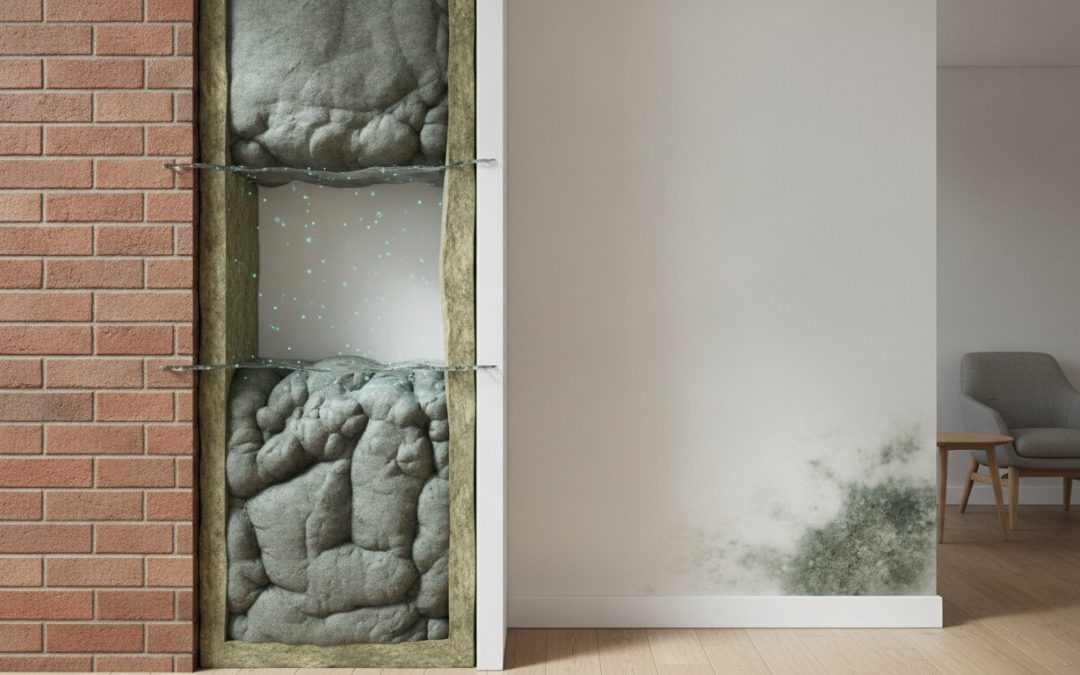
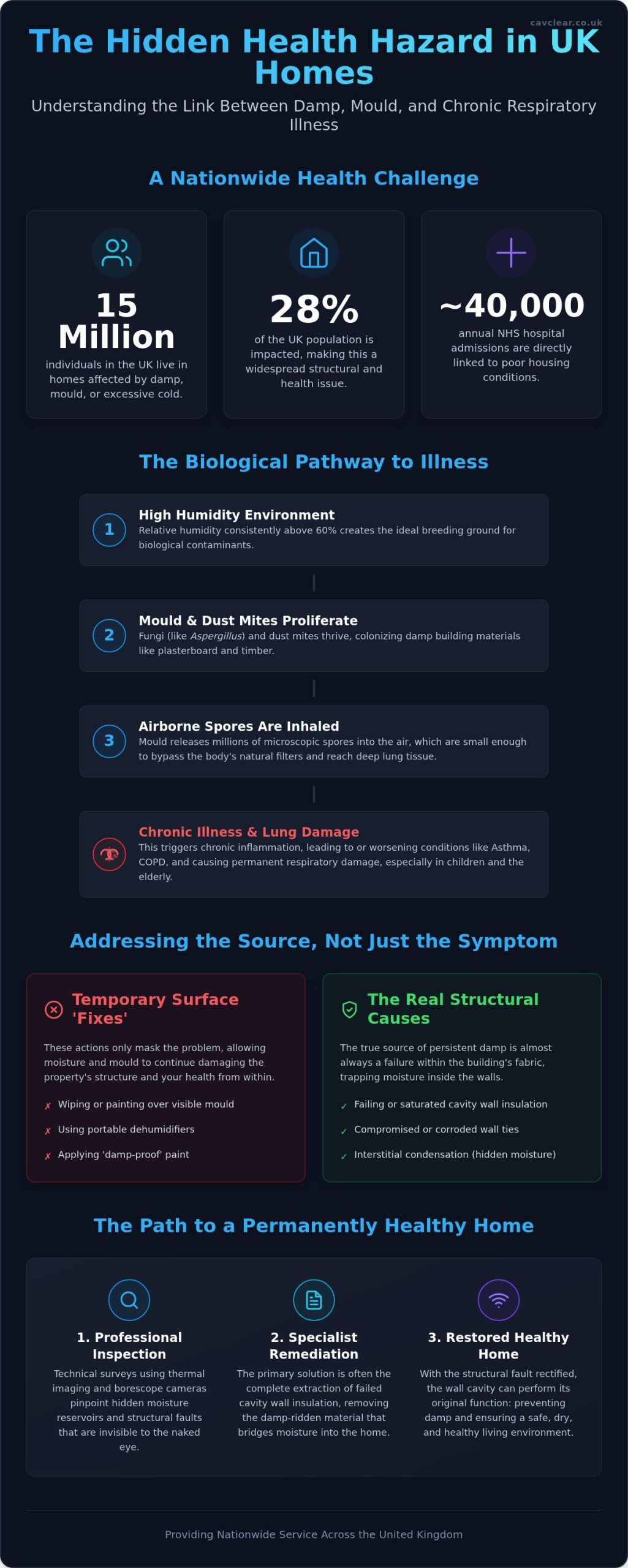
Approximately 28% of people in the UK, an estimated 15 million individuals, currently report living in homes affected by damp, mould, or excessive cold. This statistic represents more than just a maintenance headache; it’s a significant public health challenge that contributes to nearly 40,000 NHS hospital admissions annually. You’re likely tired of the persistent respiratory irritation and the cycle of cleaning surface mould that inevitably returns. It’s natural to feel concerned about the long-term damage these spores might be doing to your family’s health, especially when quick fixes fail to address the underlying structural issues.
This article explores the direct link between damp housing and chronic respiratory illness UK, providing a clear scientific breakdown of how moisture-laden environments impact lung function. We’ll move past temporary treatments to identify the structural root causes, such as failing cavity wall insulation or compromised wall ties, that allow moisture to bridge into your living space. By the end, you’ll have a reliable plan for permanent damp removal. We focus on restoring your property’s structural integrity to ensure your home remains a safe, dry environment for years to come.
Key Takeaways
- Understand the scientific link between damp housing and chronic respiratory illness UK, specifically how elevated indoor humidity triggers long-term conditions like asthma and COPD.
- Learn how airborne mould spores and Volatile Organic Compounds (VOCs) from damp building materials directly compromise respiratory safety.
- Identify why obstructed wall cavities and failing insulation are the primary structural drivers of persistent internal moisture in UK properties.
- Discover how technical inspections using thermal imaging and borescope cameras pinpoint hidden faults that surface-level damp treatments often miss.
- Explore the process of cavity wall insulation extraction as a permanent solution to restore structural integrity and safeguard occupant health.
Understanding the Link Between Damp Housing and Chronic Respiratory Illness
High indoor humidity is more than a comfort issue; it’s a structural failure with severe biological consequences. When relative humidity consistently exceeds 60%, it provides the ideal environment for mould colonies and dust mites to thrive. These biological triggers are central to the link between damp housing and chronic respiratory illness UK. For many residents, the presence of damp leads to persistent inflammation of the airways, which can exacerbate or even initiate long-term conditions like asthma and Chronic Obstructive Pulmonary Disease (COPD).
The UK’s aging housing stock combined with a wet maritime climate makes properties particularly susceptible to moisture ingress. Many homes suffer from Structural causes of damp, such as penetrating moisture caused by defective external masonry or failing wall ties. Simply wiping away surface mould or using dehumidifiers offers only a temporary reprieve. These actions fail to address the moisture trapped within the building fabric, meaning the health risk remains until the structural fault is rectified through professional remediation.
The Impact of Damp on Vulnerable Occupants
Children and the elderly are at the highest risk because their immune systems are either developing or potentially compromised. Prolonged exposure often starts with mild symptoms, such as a persistent cough or itchy eyes, but can quickly progress into permanent lung damage. Respiratory sensitization occurs when the immune system becomes over-reactive to mould spores following prolonged exposure to a damp environment. Once this sensitization happens, even small amounts of mould can trigger severe respiratory distress, leading to a lifetime of medical management.
Economic and Personal Costs of Poor Indoor Air Quality
Living in a damp environment carries significant hidden costs. Beyond the obvious emotional stress, families face increased expenditure on medications and frequent time off work or school due to illness. Treating these symptoms without fixing the property is an inefficient cycle that drains personal resources. Investing in a professional property survey allows for the identification of hidden moisture reservoirs before they cause irreversible health damage. Maintaining structural health is a direct investment in the long-term well-being of every resident, ensuring the home remains a safe asset rather than a health liability.
The Biological Mechanism: How Damp and Mould Affect Lung Health
The link between damp housing and chronic respiratory illness UK is fundamentally driven by the way the human body reacts to microscopic fungal invaders. Mould species such as Stachybotrys chartarum and Aspergillus utilize a lifecycle that relies on the colonization of organic matter, such as the paper backing on plasterboard or timber frames, provided there is a constant moisture source. These fungi reproduce by releasing millions of microscopic spores into the air. When these spores are inhaled, they trigger a defensive inflammatory response. This chronic inflammation of the bronchial tubes is a primary cause of long-term respiratory impairment.
A critical factor in property-related health issues is interstitial condensation. This occurs when moisture-laden air penetrates the wall fabric and condenses within the cavity or behind internal finishes. This process creates a hidden breeding ground for toxins that is often invisible to the naked eye. If you suspect hidden damp is affecting your family’s health, a professional cavity wall survey can identify these concealed moisture reservoirs before the structural damage escalates.
Mould Spores and Allergenic Triggers
Mould spores are remarkably resilient and small enough to bypass the nose and throat’s natural filtration systems. Once they reach the deep lung tissue, they can cause significant allergenic distress and persistent wheezing. While visible mould on window sills is a clear warning sign, the most dangerous fungal growth often occurs behind plasterboard or within saturated insulation. High humidity also supports dust mite populations. These microscopic pests thrive in damp conditions, adding a secondary layer of allergenic triggers that worsen chronic congestion.
Chemical Off-gassing from Damp Materials
Dampness does not just foster biological growth; it causes the chemical degradation of building materials. High humidity levels trigger the breakdown of wallpaper pastes, carpet glues, and timber treatments. As these materials decompose, they release Volatile Organic Compounds (VOCs) into the indoor air. This chemical off-gassing is a known contributor to “Sick Building Syndrome,” leading to headaches and chronic wheezing.
Damp walls act as a reservoir for environmental pollutants because the cold, moist surfaces attract and trap airborne particulates, creating a concentrated layer of toxins that are repeatedly recirculated throughout the living space. The impact on the most vulnerable residents is well-documented in research on housing and child respiratory health, which highlights how poor conditions lead to increased hospital admissions. Ensuring the structural integrity of the building envelope is the only way to stop this cycle of chemical and biological pollution.
Identifying Structural Causes: Why UK Cavity Walls Harbour Damp
The primary function of a wall cavity is to provide a clear air gap that prevents moisture from the outer leaf of masonry from reaching the inner leaf. When this gap is obstructed, the building’s ability to manage water is compromised. This structural failure is a major factor in the link between damp housing and chronic respiratory illness UK, as it allows liquid water to penetrate the internal living space. Unlike lifestyle-related condensation, structural damp is persistent and cannot be resolved by simply improving ventilation. It requires a technical solution to restore the property’s original defensive design.
Thermal bridging is a common consequence of these obstructions. When a section of the wall becomes colder than the surrounding surfaces due to moisture-saturated materials, it creates a cold spot. Water vapour in the air naturally condenses on these spots, providing the consistent hydration required for mould colonies to flourish. These cold, damp areas often remain hidden behind furniture or within the wall itself, releasing spores into the air long before visible patches appear on the plaster.
The Problem with Defective Cavity Insulation
Many UK properties suffer because their cavities were filled with materials that have since become saturated. Instead of providing warmth, wet insulation acts as a physical bridge. It draws water across the cavity through capillary action, leading to sweating walls and interstitial damp. This is particularly prevalent in high-rainfall areas or coastal regions where wind-driven rain is frequent. In these cases, the only viable solution to protect both the property and the occupants’ health is professional cavity wall insulation removal. This process clears the air gap and allows the masonry to dry out naturally, ending the cycle of dampness.
Wall Tie Corrosion and Moisture Ingress
Wall ties are essential for structural integrity, pinning the two leaves of a cavity wall together. However, in many older UK homes, these metal ties are prone to corrosion. As they rust, they expand to several times their original size. This expansion exerts immense pressure on the mortar, resulting in horizontal cracks along the external brickwork. These cracks serve as direct pathways for moisture ingress, further saturating the wall and feeding the mould growth that triggers respiratory issues. Timely wall tie replacement is necessary to seal the building envelope and restore the property’s defensive barrier against the elements. Addressing these structural faults at the source is the only way to ensure long-term lung health and asset protection.
Professional Property Inspections: The First Step to a Healthier Home
Identifying the biological and structural issues discussed earlier requires more than a simple visual check. A professional damp survey serves as a vital diagnostic tool for both property and health protection. It provides the objective data needed to understand the link between damp housing and chronic respiratory illness UK within your specific home. Without technical evidence, homeowners often spend money on superficial fixes, such as mould-resistant paint, that fail to address the hidden root causes of moisture ingress.
Technicians utilize a suite of advanced tools to see what lies beneath the surface. Thermal imaging cameras identify temperature differentials that highlight where insulation has slumped or become saturated. Moisture meters measure the conductivity of masonry to map out damp patches with precision. Borescope cameras allow for a non-disruptive look inside the wall cavity itself. This methodology enables the surveyor to inspect the condition of wall ties and the presence of debris without the need for significant structural disruption.
The Diagnostic Process for Damp and Mould
It’s vital to distinguish between rising damp, penetrating damp, and simple condensation. While condensation is often related to ventilation, penetrating damp usually signals a structural breach. Specialist professional damp surveys pinpoint the exact failure point, whether it’s a corroded wall tie or a bridge created by defective insulation. Identifying these specifics prevents the misdiagnosis that leads to ineffective and expensive repairs that don’t solve the underlying health hazard.
Evaluating the Health Hazard Level
A technical report categorises the severity of the findings, linking structural faults to the risk of mould proliferation and poor air quality. These reports prioritise remedial works based on their impact on both the building’s integrity and the residents’ respiratory health. Professional reporting provides a clear roadmap for property restoration, ensuring every action taken is a step toward a drier, safer living environment. This structured approach removes the guesswork from property maintenance and focuses on long-term asset health.
Using accredited technicians ensures that the inspection methodology follows rigorous standards. This transparency guarantees that the solution provided is permanent rather than a temporary patch. To ensure your home is expert from hidden moisture and airborne toxins, you should book a comprehensive cavity wall survey with a specialist provider.
Specialist Remediation: Restoring Structural Integrity and Occupant Health
Specialist remediation is the final, essential step in breaking the link between damp housing and chronic respiratory illness UK. Once a technical survey has identified specific points of failure, the focus shifts to restoring the building’s structural integrity. This is not a surface-level cosmetic fix; it’s a methodical engineering process designed to eliminate the moisture reservoirs that fuel mould growth and degrade indoor air quality. By addressing the root cause, property owners ensure a permanent return to a dry, safe environment.
Professional-grade remediation typically involves two primary interventions: cavity wall insulation extraction and wall tie replacement. These technical tasks must be performed by accredited specialists to ensure the building envelope is correctly sealed. Removing saturated materials and replacing corroded metal components restores the property’s natural ability to shed water. This proactive approach stops respiratory triggers at the source, providing a long-term solution that simple cleaning or improved ventilation alone cannot match.
The Benefits of Cavity Wall Insulation Removal
Removing saturated material is the only effective way to eliminate interstitial dampness. When insulation becomes wet, it loses its thermal properties and acts as a conduit for moisture. CavClear utilizes a clean, non-disruptive extraction methodology that removes every trace of contaminated material through small, precisely drilled holes in the external mortar. This process restores the cavity’s original function as a dedicated moisture barrier. Beyond health protection, this work improves the property’s thermal efficiency and protects the long-term asset value by preventing further masonry degradation.
Permanent Solutions for a Healthier Future
Shifting from reactive mould cleaning to proactive structural preservation is a vital investment in your family’s health. While temporary measures might mask the symptoms of damp, they don’t address the biological toxins hiding within the wall fabric. Professional remediation offers the reassurance of long-term guarantees, ensuring the fix is permanent and the property remains a healthy environment. This structural restoration is a one-time investment that pays dividends in quality of life and property longevity. To take the first step toward a drier home, Book a specialist survey with CavClear today.
Securing Your Home and Respiratory Health for the Future
Addressing the link between damp housing and chronic respiratory illness UK requires a shift from superficial cleaning to structural correction. The presence of mould and interstitial condensation is frequently a symptom of failing cavity wall insulation or corroded wall ties. These structural defects allow moisture to bridge into your living space, creating a persistent biological hazard that surface treatments can’t resolve.
Investing in a professional diagnostic survey allows you to identify the root cause of dampness before it leads to irreversible health impairment. Our accredited technicians provide nationwide UK coverage, delivering detailed technical reports with clear remedial action plans. We specialise in non-disruptive cavity wall insulation extraction, a methodology that restores your home’s natural moisture barrier and protects your long-term asset health.
Restoring your property’s integrity is the most effective way to ensure a safe, dry environment for your family. Protect your health and your home with a professional CavClear survey and take the first step toward a permanent structural solution. Your home should be a safe, reliable environment; professional remediation ensures it stays that way.
Frequently Asked Questions
Can damp housing cause permanent respiratory damage?
Chronic exposure to damp environments can lead to irreversible respiratory conditions. Research indicates that persistent inhalation of mould spores causes long-term inflammation of the airways, which may result in permanent lung scarring or the development of chronic asthma. This underscores the critical link between damp housing and chronic respiratory illness UK. Protecting occupants requires identifying and rectifying the structural faults, such as saturated insulation, that allow these biological triggers to persist within the building fabric.
What are the first signs of respiratory illness caused by mould?
The earliest indicators often include persistent coughing, wheezing, and irritation of the eyes or throat. Many residents report symptoms that worsen when indoors and improve when they leave the property for extended periods. These signs suggest that the immune system is reacting to airborne mould spores or volatile organic compounds released by damp materials. Identifying these triggers early through a technical property survey is essential to prevent mild irritation from progressing into more severe chronic lung conditions.
How does defective cavity wall insulation cause damp and mould?
Defective cavity wall insulation causes damp by acting as a physical bridge between the external and internal leaves of masonry. In a healthy wall, the air gap prevents moisture transfer. However, when insulation becomes saturated due to wind-driven rain or structural leaks, it draws liquid water across the cavity via capillary action. This leads to sweating internal walls and interstitial condensation, providing the constant moisture source required for hazardous mould colonies to flourish behind plasterboard and wallpaper.
Is it better to clean mould or remove the insulation entirely?
Cleaning surface mould is a temporary reactive measure that fails to address the underlying moisture source. If the dampness is caused by saturated material within the wall, the only permanent solution is professional cavity wall insulation extraction. Removing the wet material allows the cavity to function as intended, stopping the moisture transfer and preventing mould from returning. This structural remediation is a vital investment in both the property’s health and the occupants’ long-term respiratory well-being and comfort.
How long does it take for health to improve after damp is removed?
Occupants often notice a significant improvement in air quality within days of the moisture source being removed and the property beginning to dry out. While individual recovery times for respiratory symptoms vary, eliminating the constant influx of mould spores and chemical off-gassing allows the body’s inflammatory response to subside. However, permanent structural repairs, such as wall tie replacement or insulation extraction, are necessary to ensure that these health-threatening environmental triggers do not return during the next wet season.
Can failing wall ties lead to dampness inside the house?
Failing wall ties directly contribute to internal dampness by compromising the external masonry. As metal ties corrode, they expand and cause horizontal cracking in the mortar joints. These cracks provide a direct pathway for wind-driven rain to penetrate the cavity and reach the inner wall. Addressing this issue through specialist wall tie replacement seals the building envelope, preventing the moisture ingress that is a key factor in the link between damp housing and chronic respiratory illness UK.
What is included in a professional damp and mould survey?
A professional survey involves a technical assessment of the building’s structural health using advanced diagnostic tools. Our accredited technicians use thermal imaging to detect cold spots, moisture meters to map internal dampness, and borescope cameras to inspect the cavity directly. The resulting report provides a clear remedial action plan, identifying whether the issue stems from saturated insulation, corroded wall ties, or other structural breaches. This diagnostic process is the essential first step toward securing a permanent fix.
Why should I avoid installing new cavity wall insulation if I have damp?
You should avoid installing new cavity wall insulation if your property has existing damp issues because the material can trap moisture against the inner leaf. Adding insulation to a compromised cavity often exacerbates penetrating damp and accelerates wall tie corrosion. Our firm maintains a strong stance against retrospective insulation in these scenarios. Instead, the focus should be on cavity extraction and structural repairs to restore the wall’s natural ability to manage moisture and protect the long-term health of the occupants.
Recent Comments