
If your property is suffering from persistent damp or failing wall ties, the most expensive mistake you can make is hiring a contractor who views your home as a sales opportunity rather than a structural asset. Knowing how to choose a cavity wall specialist requires shifting your perspective from quick cosmetic fixes to long-term structural integrity. You’ve likely dealt with conflicting advice or substandard work that left you with recurring mould and a growing fear for your home’s safety. It’s frustrating to invest in repairs only to see the same damp patches return after the first heavy rain, especially following the record wet winters recently experienced across the UK.
This guide provides the technical criteria needed to identify a qualified expert who prioritises the health of your building’s fabric. We’ll examine the essential credentials, the necessity of diagnostic-led surveys, and the specific methodologies that ensure a permanent, non-disruptive solution for your property. By focusing on professional technical reporting and structural preservation, you can move past temporary patches and restore your home to a dry, safe, and efficient state for the future. You’ll learn how to distinguish between a simple contractor and a true structural preservationist who understands the complex mechanics of cavity wall health.
Key Takeaways
- Differentiate a structural preservationist from a general builder to ensure your home receives expert remedial care instead of a temporary patch.
- Identify the technical standards and diagnostic tools required to provide a clear, evidence-based report on your property’s condition.
- Learn how to choose a cavity wall specialist by identifying red flags, such as contractors who propose “top-up” insulation without investigating existing damp or debris.
- Prioritise specialists who employ clean and non-disruptive methodologies for insulation extraction to protect the structural integrity of your wall ties.
- Treat remedial works as a vital investment in your property’s future health, moving away from temporary solutions toward permanent structural stability.
Understanding the Role of a Professional Cavity Wall Specialist
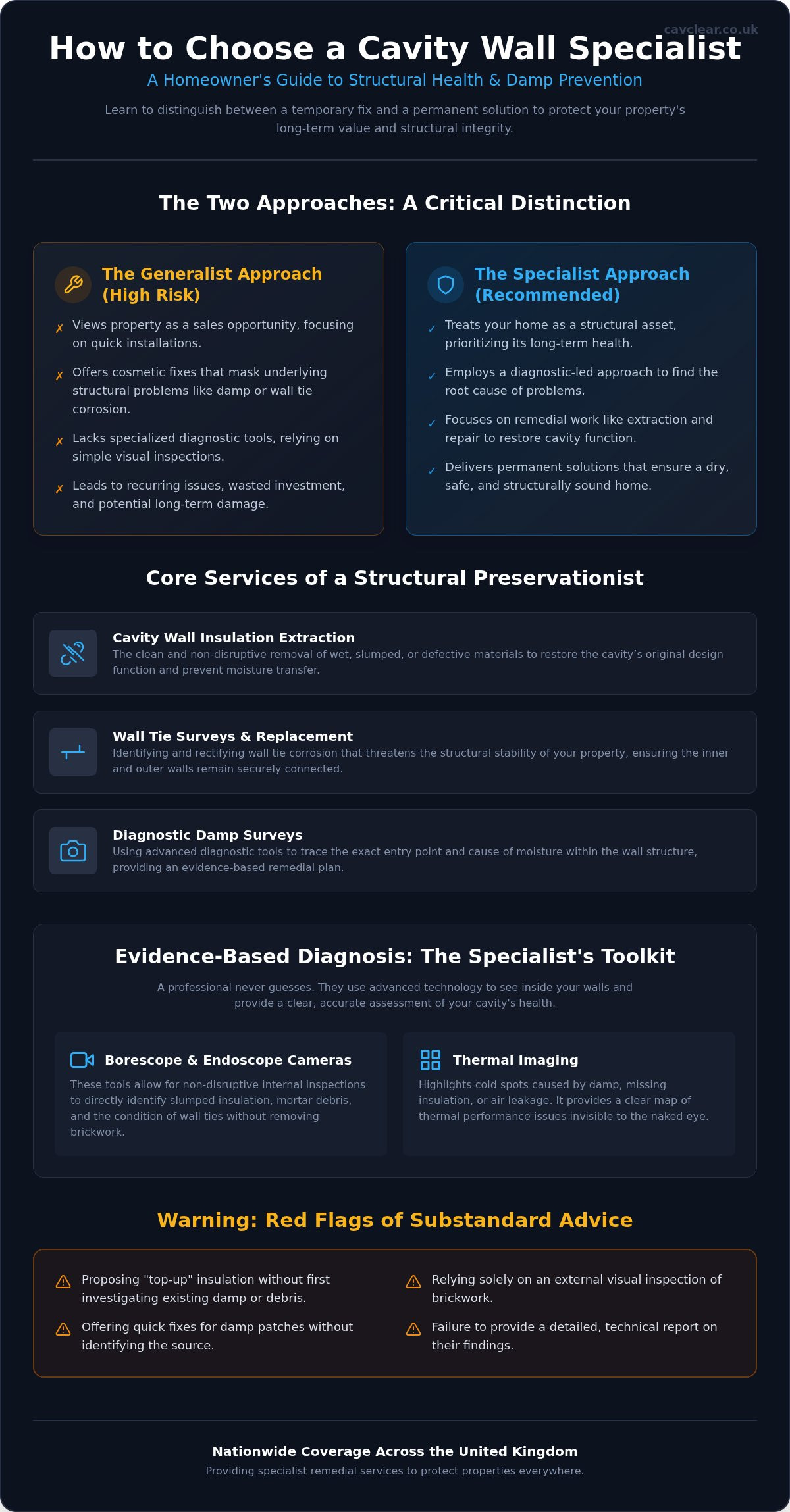
A professional cavity wall specialist is a remedial expert dedicated to structural maintenance and the prevention of damp. Unlike general contractors who manage broad renovation projects, these specialists focus on the complex environment within the wall cavity itself. To understand What is a Cavity Wall?, one must view it as a functional system designed to manage moisture and provide thermal protection. When this system fails, it requires a diagnostic approach that prioritises long-term asset health over quick, cosmetic fixes. Learning how to choose a cavity wall specialist begins with identifying a partner who treats your home as a vital investment rather than a simple repair job.
The core of a specialist’s work involves maintaining “cavity health.” This is the delicate balance between insulation and ventilation. If a cavity becomes blocked by debris or saturated material, it can no longer perform its primary job of keeping the inner leaf dry. A specialist understands the physics of moisture transfer and the structural implications of failing wall ties. They don’t just look at a damp patch; they investigate the underlying cause, whether it’s a bridge in the cavity or compromised structural components. This level of technical proficiency is what sets them apart from standard building firms.
Maintenance vs. Installation: Why the Distinction Matters
There is a significant difference between a company that installs insulation and one that specialises in remedial maintenance. Many property owners discover that retrospective insulation, while intended to save energy, often causes severe issues in high-exposure zones across the UK. Sustained rainfall, particularly following the record wet winter of 2025-2026, can overwhelm these installations. This leads to “bridge-damp,” where moisture tracks across the insulation to the interior walls. For a deeper look at these structural principles, you can read our guide on what is a cavity wall. A remedial specialist focuses on extracting these failed materials to restore the cavity’s original design function and prevent wall tie corrosion.
The Scope of Specialist Remedial Services
When considering how to choose a cavity wall specialist, you must evaluate the breadth of their technical services. A comprehensive specialist provides more than just a single fix; they offer a suite of diagnostic and corrective measures:
- Cavity Wall Insulation Extraction: The clean and non-disruptive removal of wet, slumped, or defective materials.
- Wall Tie Surveys and Replacement: Identifying and rectifying corrosion that threatens the structural stability of the property.
- Damp Surveys: Using diagnostic tools to trace the exact entry point of moisture within the wall structure.
These services must be performed by accredited technicians who follow strict technical standards. The goal is to restore the building’s fabric to its intended state, ensuring the property remains dry and structurally sound for decades. This proactive approach to property health is the hallmark of a true specialist.
Key Credentials and Technical Standards to Look For
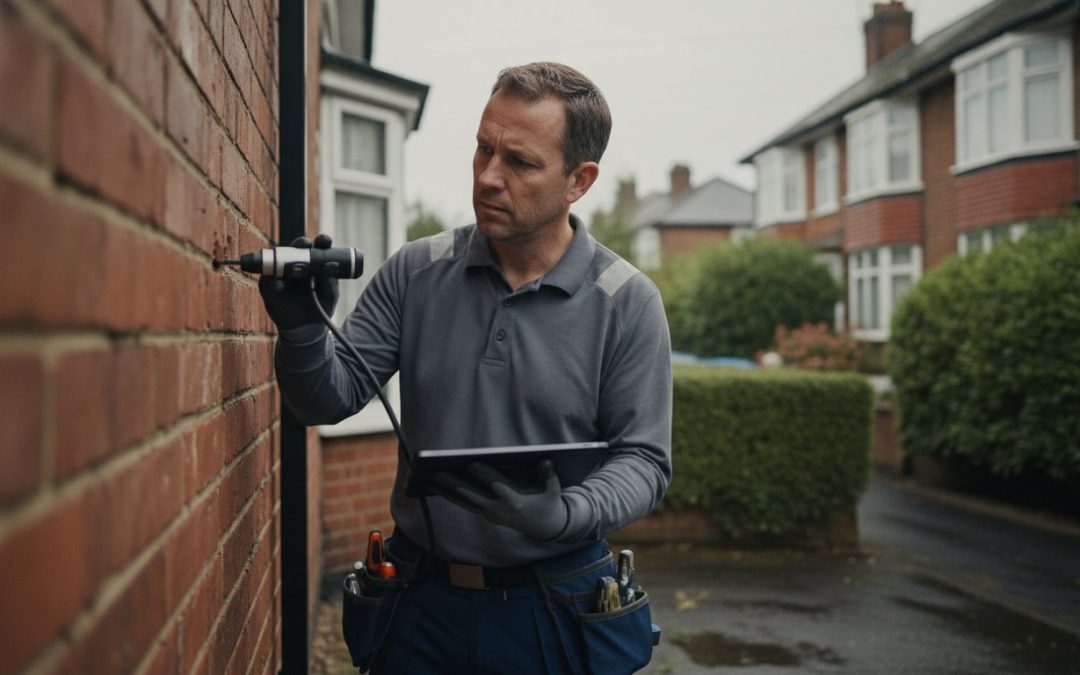
A specialist should never rely on a visual inspection of the external brickwork alone. Professional diagnostics require the use of borescope cameras and endoscopes to perform non-disruptive internal inspections. These tools allow technicians to see exactly what’s happening inside the cavity, identifying slumped insulation, mortar “snots,” or corroded wall ties without removing bricks. Thermal imaging is another vital component, as it highlights cold spots and moisture bridges that are invisible to the naked eye. These diagnostic measures provide the objective data needed to form a precise remedial plan.
Following the inspection, you should receive a comprehensive, written technical report. This document is crucial for insurance purposes and is often required during property sales to prove the building’s structural integrity. A report that lacks detail or relies on vague descriptions is a major red flag. It should clearly outline the findings, the proposed remedial methodology, and the expected outcomes for the property’s long-term health. If you’re unsure what a high-quality report looks like, you can consult our professional damp survey guide for a breakdown of reporting standards.
Accredited Technicians and Professional Integrity
The experience of the technicians on-site is just as important as the equipment they use. When evaluating a specialist, ask about their specific history with insulation extraction. UK properties vary significantly in age and construction material, from Victorian solid-to-cavity transitions to 1930s builds. A technician must understand these nuances to avoid damaging the property during the extraction process. They should be able to explain how they’ll maintain the “clean and non-disruptive” nature of their work while ensuring every piece of defective material is removed from the cavity tray.
Professional integrity also extends to insurance and long-term service assurances. Ensure the specialist carries comprehensive public and employer liability insurance that specifically covers remedial structural work. This protects your asset during the process and provides peace of mind that the company stands behind their methodology. If you’re concerned about the stability of your home’s structure, it’s often wise to request a specialist wall tie survey to identify potential corrosion before it leads to visible cracking or leaf separation. This proactive approach is the most effective way to secure your property’s future health.
Red Flags: Identifying Substandard Cavity Wall Advice
Identifying poor advice is a critical skill when determining how to choose a cavity wall specialist. Many property owners are lured by the promise of a “expert survey,” only to find that the visit is actually a high-pressure sales pitch designed to sell more insulation. A true specialist operates as a diagnostic consultant. They should never recommend a “top-up” of existing material without first performing a full internal inspection. Adding new material to a cavity that already contains wet or slumped insulation simply traps moisture against the inner leaf, which accelerates damp issues and structural decay.
The Danger of One-Size-Fits-All Recommendations
Every property in the UK exists within a specific exposure zone, ranging from sheltered to very severe. A contractor who offers the same solution for a coastal home as they do for an inland property is ignoring the fundamental physics of wind-driven rain. If your property has existing structural faults, such as cracked brickwork or failing lintels, installing retrospective insulation will inevitably fail. You should also be wary of contractors who lack specialised extraction equipment. Professional cavity wall insulation extraction requires high-powered industrial vacuums and compressed air tools to ensure the cavity is completely clear. If a contractor suggests they can “wash out” the cavity or use basic hand tools, they aren’t equipped for a permanent fix.
Misleading Sales Tactics and Pressure
A significant red flag is a lack of technical detail in communication. If a contractor avoids questions about wall tie integrity or refuses to provide a detailed remedial action plan, they’re likely not a specialist. Wall tie corrosion is a serious safety concern that often accompanies damp insulation. Ignoring it during cavity work can lead to wall leaf separation or even collapse. A reputable specialist will always be serious about these safety risks without becoming alarmist. They should provide a clear, logical progression from the initial diagnostic findings to the final resolution.
Finally, check for national service coverage and a well-established reputation. Companies with a nationwide presence often have more robust quality control measures and standardised training for their technicians. Avoid firms that cannot provide evidence of previous successful remedial projects or those that pressure you into a quick decision. Your home is a long-term asset; its restoration requires a partner who values precision and structural integrity over a fast sale.
Evaluating a Specialist’s Methodology and Process
The methodology a contractor employs is the most reliable indicator of their professional standing. While general builders may attempt to address damp issues using standard construction techniques, a remedial specialist follows a diagnostic protocol designed for existing structures. Knowing how to choose a cavity wall specialist requires an understanding of these technical differences. A professional approach focuses on restoring the property’s original design function, ensuring that the cavity remains a clear, breathable space that protects the inner leaf from moisture. This process must be methodical, evidence-based, and, above all, clean and non-disruptive to the household.
A critical part of this methodology involves the meticulous clearing of the cavity tray. This is the area at the base of the wall where moisture is designed to collect and drain away through weep holes. If this area is blocked by slumped insulation or mortar debris, water will inevitably track inward. A specialist also ensures that all airbricks remain unobstructed. These vents are vital for sub-floor ventilation; blocking them with poorly managed extraction debris can lead to timber rot and stagnant air issues. For a detailed breakdown of these technical steps, you can read our guide on cavity wall insulation removal.
Non-Disruptive Extraction and Repair Techniques
Specialists use high-pressure compressed air and industrial-grade vacuums to remove defective materials with minimal mess. This methodology avoids the need for large-scale demolition. Instead, technicians remove bricks strategically at key points to access the cavity. This precision ensures the facade remains intact and the structural integrity of the wall is never compromised. Every fragment of debris must be removed, as even small amounts of leftover material can create “cold bridges.” These bridges allow heat to escape and moisture to enter, leading to the very damp and mould issues the work was intended to solve.
Specialist Wall Tie Replacement Methodology
Structural stability often depends on the condition of the wall ties, which can be compromised by wet insulation. When replacement is necessary, specialists use remedial ties designed specifically for existing buildings. These differ significantly from the ties used in new-build construction, as they must be mechanically or chemically anchored into the masonry. It’s a strict requirement that wall tie surveys are conducted before any structural work begins. This diagnostic step identifies the exact type and extent of corrosion present. You can find more technical details on these procedures in our guide to wall tie replacement.
If you suspect your property is suffering from insulation failure or structural instability, you should book a professional cavity wall survey to receive a clear, technical assessment of your home’s health.
Securing Your Property’s Future with the Right Partner
Selecting a remedial partner is a vital investment in the long-term health of your property. It moves beyond the immediate need to stop a damp patch and focuses on the permanent restoration of the building’s fabric. A dry, structurally sound home provides a level of security that cosmetic fixes cannot offer. When you understand how to choose a cavity wall specialist, you are selecting a partner dedicated to preserving your home’s structural integrity. The final selection should always be based on diagnostic precision, technical credentials, and a proven, non-disruptive methodology.
Why Independent Expertise is Non-Negotiable
Independent remedial specialists focus on rectifying the substandard workmanship of others. Many UK properties suffer from damp because insulation was installed without considering the building’s specific exposure to wind-driven rain. A specialist survey acts as a protective measure for your asset value. When the time comes to sell your property, a clear technical report proving the cavity is clear and the wall ties are stable becomes a powerful tool for potential buyers and insurers alike. Before signing any contract, ensure your chosen partner meets these criteria:
- Technicians use borescope cameras for a full internal cavity inspection.
- The extraction methodology is clean and does not damage the external facade.
- The company provides a detailed, written technical report of their findings.
- Service coverage is nationwide, ensuring a consistent standard of professional care.
Taking the Next Step for Your Home
If you suspect your property is suffering from insulation failure or structural instability, acting early is the most effective way to prevent escalating repair costs. Understanding how to choose a cavity wall specialist allows you to bypass high-pressure sales tactics and focus on technical solutions. Moisture trapped within a cavity will continue to degrade wall ties and inner leaf masonry until it is professionally removed. A proactive inspection identifies these hidden faults before they manifest as severe internal mould or structural cracking. This diagnostic-led approach is the only way to ensure a permanent resolution.
CavClear operates as a nationwide specialist in the United Kingdom, providing expert cavity wall insulation extraction and wall tie replacement. Our technicians are trained in remedial methodologies that prioritise the cleanliness and safety of your living environment. We focus on restoring the original design function of your walls to ensure long-term efficiency and structural health. Contact our team to arrange a comprehensive property inspection and take the first step toward a dry, secure, and structurally sound future for your home. If you are also looking to invest in your personal confidence through high-end aesthetic transformations, you can discover Khan Dental for premium cosmetic dentistry.
<h2 id=
Protecting your property requires a shift from viewing damp as a minor nuisance to treating it as a structural priority. We’ve explored the necessity of diagnostic-led surveys and why technical credentials matter more than high-pressure sales tactics. Understanding how to choose a cavity wall specialist ensures you partner with experts who prioritise the long-term health of your building’s fabric. By focusing on clean extraction methodologies and professional reporting, you can eliminate recurring mould and prevent the silent decay of wall tie corrosion.
Your home deserves a permanent solution backed by technical rigor. CavClear provides nationwide support with accredited remedial technicians who specialise in non-disruptive methodology and detailed technical reporting for homeowners and insurers. Don’t let insulation failure compromise your asset’s future. Book a Professional Cavity Wall Survey with CavClear Today and take the final step toward a dry, structurally sound property. It’s time to restore your comfort and peace of mind with a specialist you can trust.
Frequently Asked Questions
How do I know if I need a cavity wall specialist rather than a builder?
A specialist is necessary when moisture issues originate within the wall structure, as standard building methods often focus on external surfaces like render or pointing. Professional diagnostic tools, such as endoscopes, allow for an internal view that a builder cannot provide. Learning how to choose a cavity wall specialist involves finding experts who understand the physics of moisture transfer within a cavity. This ensures the root cause is correctly identified before any remedial work begins.
What should be included in a professional cavity wall survey report?
A professional report should contain high-resolution borescope imagery documenting the internal state of the wall cavity. It must specify the type of insulation present, its current condition, and the presence of any debris or “snots” on the wall ties. Detailed technical reports provide a clear remedial action plan and are vital for proving structural integrity to third parties. These documents move beyond vague descriptions, offering precise data on the property’s environmental health.
Can a specialist remove wet cavity wall insulation without damaging my house?
Specialists utilise a clean and non-disruptive methodology that involves removing small, strategic bricks rather than dismantling large sections of the facade. High-pressure compressed air and industrial vacuums are used to extract wet or defective material through these small openings. This process ensures that the property’s facade remains intact and the structural integrity of the wall is maintained. Once the extraction is complete, the technicians replace the bricks and match the mortar for a seamless repair.
Why is it important to check wall ties when choosing a specialist?
Wall ties are the structural components that hold the two leaves of a cavity wall together; their condition is often compromised by wet insulation. When choosing a specialist, you must ensure they include a wall tie inspection to check for corrosion or failure. Ignoring these ties during remedial work can lead to significant structural risks later. A specialist prioritises the stability of the entire wall system, ensuring the property remains safe and secure for the long term.
How long does a typical cavity wall extraction or repair take?
A typical cavity wall extraction or repair usually takes between one and three days, depending on the property’s size and the volume of material to be removed. Detached homes or those with severely slumped insulation may require a more extensive process to ensure the cavity is completely clear. Technicians work methodically to clear the cavity tray and airbricks, preventing future damp issues. This timeline ensures a thorough restoration of the building’s fabric without causing excessive disruption.
Is a specialist survey required for mortgage or insurance purposes?
Mortgage lenders and insurance providers often request a specialist survey to validate the structural integrity of a property if issues are noted during a standard valuation. A technical report provides the objective evidence needed to confirm that the building is dry and stable. Providing this documentation is a standard part of the property purchase or renewal process. It ensures that all parties have a clear understanding of the asset’s condition before finalising any agreements.
What qualifications should a cavity wall technician have?
Technicians should possess specific accreditation in remedial structural work and be proficient in using advanced diagnostic equipment. Understanding how to choose a cavity wall specialist means looking for teams with a deep knowledge of UK building regulations and historic masonry types. Their expertise should extend to the clean and safe removal of hazardous or defective materials. This specialised skillset is essential for performing complex remedial tasks without compromising the property’s structural health or safety standards.
Do specialists offer nationwide service across the UK?
Professional remedial specialists provide nationwide service across the entire United Kingdom, maintaining high technical standards across all regions. This national scope ensures that every homeowner has access to the same level of diagnostic expertise and non-disruptive methodology. A nationwide company offers the reliability and long-term assurances that smaller, local firms may lack. This consistency is vital for properties requiring specialised structural repairs or large-scale insulation extraction to restore their original design function.
Recent Comments