
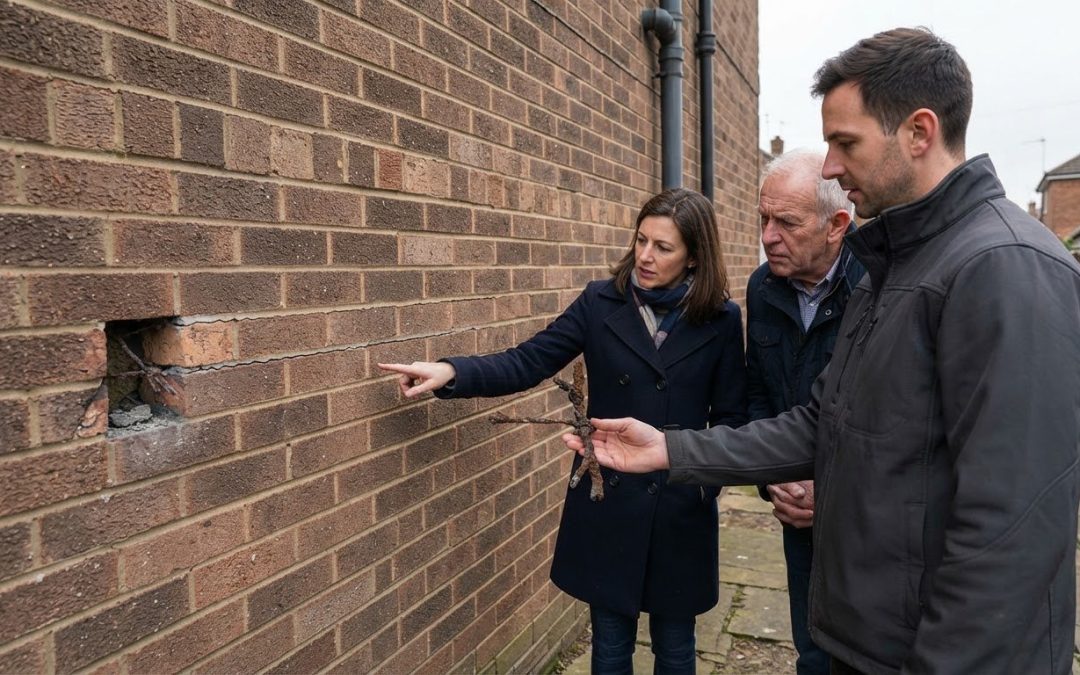
There’s no set reduction when renegotiating the house price after a wall tie survey. You can ask the seller to lower the price or complete specified repairs, but they may refuse. A specialist report and written repair estimates can help you explain the issue and support a realistic proposal.
A survey finding can make an agreed purchase feel uncertain, particularly when cracks or signs of corrosion raise questions about the walls. Separate what the survey has confirmed from what still needs investigation, then base your proposal on the likely remedial work rather than guesswork.
This guide explains how to review the survey, obtain estimates and put a proposal to the seller. It also covers your options if the seller won’t change the price, and how a wall tie specialist can clarify the defect and recommended work.
Key Takeaways
- Use the survey findings to identify the wall tie concern and clarify what needs further assessment before proposing a change.
- You can ask the seller to complete specific repairs or consider a lower sale price; set out clearly which option you prefer.
- Support your request with repair estimates that explain the proposed work and its cost, rather than relying on a broad allowance.
- If the seller refuses, compare the property’s condition and likely remedial work with your budget before deciding how to proceed.
- A specialist wall tie survey or report can help clarify whether ties are failing and what remedial work may be appropriate.
Asking the seller to complete repairs
Across England, Scotland, Wales and Northern Ireland, the repair method should match the identified wall tie defect and the property’s construction. Ask for the proposed scope and technical approach in writing, including which areas need work and how completion will be recorded.
- Ask for a defined repair, not a general promise. Use the survey to describe the reported defect, its location and the recommended next step. For example, ask the seller to arrange replacement of ties identified as defective, with the work guided by a specialist assessment. If the report recommends further investigation, ask for that assessment first. A precise request makes it easier to compare the proposed work with the survey findings.
- Get written estimates before proposing the arrangement. Ask builders or wall tie specialists to assess the findings and provide itemised estimates. Each should describe the affected elevations, proposed repair method, access requirements and any making-good work. Compare two or three estimates for each major issue where practical. Review the scope as well as the total, since different assumptions can produce different proposals.
- Send evidence through the estate agent. Provide the relevant survey pages and estimates, then state whether you’re asking the seller to arrange repairs. Specify the work and the evidence you expect afterwards, such as a written record of the completed work. Keep the request focused on wall tie concerns rather than adding unrelated decorating or routine maintenance. This gives the seller a clear proposal to consider.
- Agree how the work will be documented. Before accepting the seller’s offer to arrange repairs, ask for the contractor’s written scope and a record of completed work. Clarify who will arrange access and how the specialist’s findings will be addressed. If the assessment identifies a different cause or recommends another method, ask for the revised scope in writing. Compare it with the original survey before deciding whether it resolves the concern.
- Decide whether to proceed and arrange repairs yourself. If the seller prefers not to organise the work, consider proceeding and arranging repairs afterwards. Weigh the specialist’s findings, estimates, property condition and available budget. The price depends on the defect, access, extent of replacement and specified remedial work; the exact figure for your case is provided in a quote.
Can You Renegotiate a House Price After a Survey?
Yes, survey findings can support a request to reduce an accepted offer. First assess the evidence, then link any proposed change to the defect and likely remedial work.
-
Assess the Survey Findings
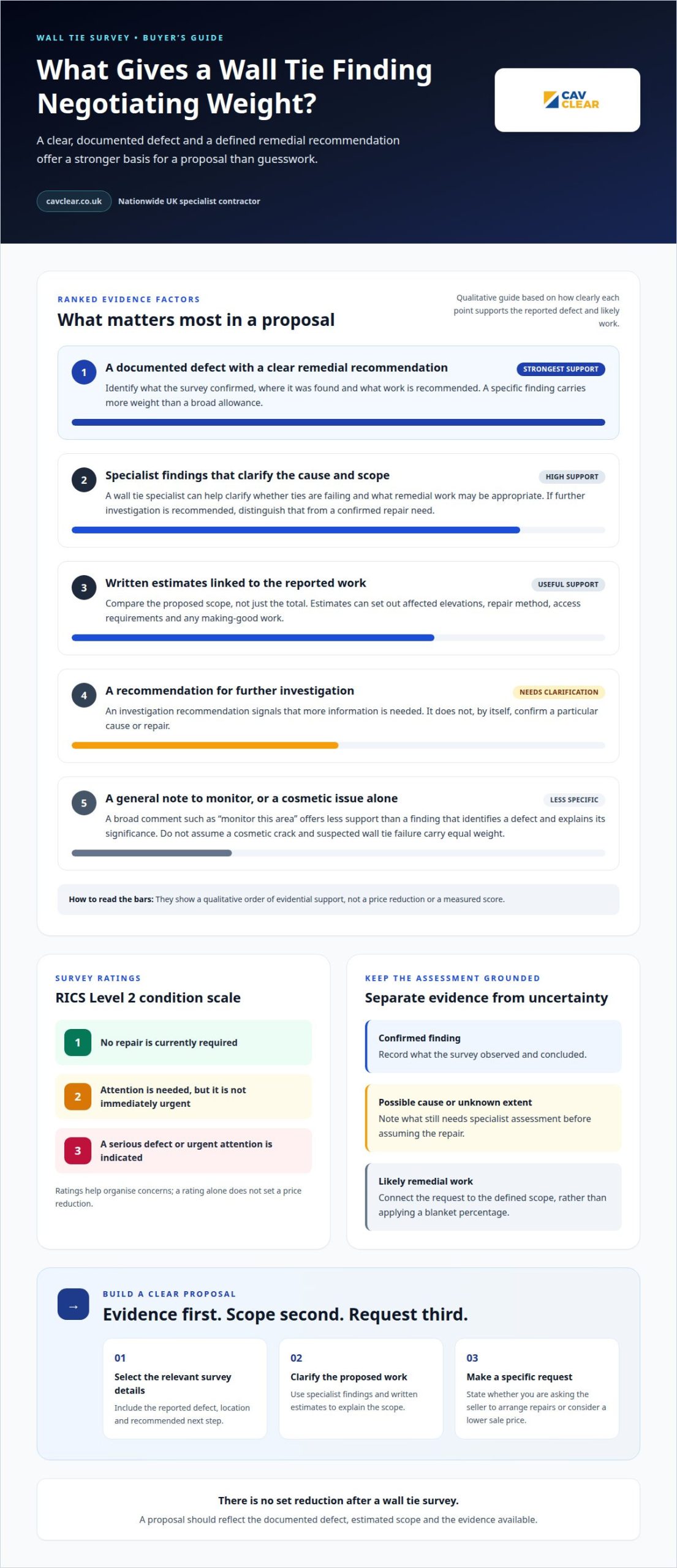
Start by identifying what the surveyor observed, concluded and recommended. A wall tie survey examines the ties connecting the two leaves of a cavity wall. It can identify corrosion or failed ties, as well as signs such as cracking that may need further investigation. Separate confirmed findings from possible causes. If the survey recommends specialist investigation, that recommendation alone does not confirm a particular repair is needed.
-
Sort Findings by Negotiating Relevance
Group findings by urgency, likely impact and the evidence available. A RICS Level 2 Home Survey uses condition ratings from one to three: rating one means no repair is currently required, rating two means attention is needed but isn’t immediately urgent, and rating three signals a serious defect or urgent attention. These ratings help organise concerns, but a rating alone doesn’t set a price reduction.
Distinguish routine maintenance from issues that may affect structural stability or need specialist work. A cosmetic crack and evidence of corroded wall ties, for example, should not automatically carry equal weight. Note which findings need a further report, estimate or explanation before approaching the seller.
-
Identify Findings With Negotiating Weight
Focus on documented defects that affect the property’s condition and have a clear remedial recommendation. Cracking alongside suspected wall tie failure may warrant further assessment, because the cause and extent affect the work required. A general comment such as “monitor this area” offers less support for a revised offer than a finding that identifies a defect and explains its significance.
Wall tie warranties or guarantees can document completed work and any stated cover, but they don’t prove the current condition of every tie or establish a specific resale value. Review the document’s scope, exclusions and transfer terms before treating it as relevant evidence for the purchase.
-
Use Wall Tie Findings to Request a Reduction
Once your evidence is organised, send the relevant survey extracts and specialist findings with a clear revised figure. Explain how the request relates to the identified remedial work, rather than applying a blanket percentage. There’s no set reduction: your proposal should reflect the defect, estimated scope and effect on your decision to buy.
Renegotiating the house price after a wall tie survey is a request, not an automatic outcome. The seller can consider the report, estimates and proposed figure, then accept, refuse or make another proposal. Keep your communication factual and retain the reports supporting each point.
Whether buyers can renegotiate before exchange of contracts
Raise new wall tie findings with the seller while the purchase is still under discussion. Set out the evidence, your proposed change and any information you need before deciding how to proceed.
-
Change the Offer Before Contracts Are Exchanged
Ask the estate agent to present your revised offer alongside the survey findings and repair evidence. State the amount you propose and explain how the identified wall tie work affects your assessment of the property. The seller may decline or suggest another arrangement, so don’t treat the revised figure as agreed until you receive a clear response. Keep the discussion and response in writing.
-
Consider Your Next Step Before Proceeding
Compare the reported defect and recommended work with your budget and plans for the property. If the findings need clarification, arrange a specialist assessment before deciding whether the purchase still suits you. You could also ask the seller to complete defined repairs or proceed with the work planned for later. Base your decision on the wall condition and available evidence.
- Choose the right moment to raise your concerns. Contact the estate agent as soon as you have the survey findings and any supporting assessment. Explain which points are confirmed and which need further investigation. An accepted offer may be recorded as Sold Subject to Contract while the purchase progresses, so clarify that your request responds to new information, not a general change of preference.
- Present one practical proposal. Send the agent the relevant report pages, specialist findings and estimates together. Say whether you’re asking for a lower price or for the seller to arrange specified repairs. For example, link your request to the location and condition of the affected ties rather than simply saying the survey has caused concern. Ask the agent to relay the complete proposal.
- Tell your mortgage lender if the agreed price changes. A revised purchase figure may affect your mortgage documents and the lender’s assessment of the property. Share the updated price and relevant survey information through the lender’s usual process. The lender may consider the property’s value and structural condition when reviewing your application, so don’t assume the earlier figures automatically reflect a changed agreement.
- Compare the options before confirming your decision. Consider the seller’s response, the scope of the wall tie work, available estimates and your budget. If the seller won’t change the price, decide whether the property remains suitable at the agreed figure or whether a repair arrangement would address your concerns. Get any needed clarification before confirming how you wish to proceed.
What if the seller refuses to reduce the price?
A seller may keep the agreed figure despite a wall tie concern. Decide whether to propose repairs instead, proceed at that price or stop pursuing the property.
-
Approach the Seller Through the Estate Agent
Ask the estate agent to present your response and supporting evidence to the seller. Send the relevant survey findings, specialist report and repair estimates together, then state your proposed amount and how it relates to the work identified. Don’t describe cosmetic defects as structural problems; tie each point to evidence and a specific remedial need. This makes your request easier to assess.
-
Respond to a Refusal to Renegotiate
Ask the estate agent to clarify why the seller refused, for example, whether they reject the proposed amount or dispute the repair scope. Respond with focused evidence rather than repeating the same offer. If the report identifies extensive wall tie work, explain which finding supports your position and whether seller-arranged repairs could address the concern instead.
- Review the evidence before making another proposal. Check whether the survey confirms wall tie failure or recommends further investigation. If the cause remains uncertain, a specialist assessment can clarify the defect and likely remedial approach. Don’t present an unverified possibility as a confirmed repair requirement; distinguish established findings from matters that still need assessment.
- Consider asking the seller to arrange repairs. If the seller won’t reduce the price, propose that they complete specific work before the purchase proceeds. Set out the required scope and ask for written details of the completed repairs. This may be practical when the work is clearly defined, but less so if extensive repairs or further investigation are needed.
- Compare proceeding with stopping the purchase. Decide whether the agreed price remains acceptable after considering the report, repair estimates and your budget. If you proceed, plan how to organise the work and manage access to the affected areas. If the property no longer suits your needs or finances, you can decide not to continue. Base your choice on documented findings, not pressure to decide quickly.
- Keep any revised offer specific. If you make another proposal, state the amount, the wall tie findings it addresses and whether you’d accept seller-arranged repairs instead. Ask the estate agent to relay the complete proposal, not just the figure. A clear record helps you compare the seller’s response with the evidence and decide whether the property still meets your needs.
Getting contractor estimates and specialist reports
Before negotiating over wall tie defects, gather the survey, specialist findings and written repair estimates. These documents show what has been identified, what work is proposed and how the scope supports your revised offer.
- Match the evidence to the defect. Collect the original survey and mark each reference to cracking, corrosion, failed ties or recommended further investigation. Add clear photographs of affected elevations, if available, and identify their locations. A crack alone doesn’t establish wall tie failure, so distinguish visible symptoms from the surveyor’s conclusions. This keeps your case focused on findings rather than assumptions.
- Arrange a specialist assessment where needed. If the survey recommends investigation, ask a wall tie specialist to examine the relevant masonry and explain the findings in writing. The report should identify the observed defect, its location and the remedial approach considered appropriate. If the cause remains uncertain, ask the specialist to explain what further inspection is required before treating a repair as established.
- Request comparable written estimates. Where practical, seek two or three estimates for each major issue. Ask each contractor to describe the proposed method, affected areas, access requirements and any making-good included. Compare the scope as well as the total figure: estimates based on different assumptions aren’t a reliable like-for-like comparison. Use an itemised estimate rather than a broad allowance where one is available.
- Check what each estimate leaves out. A wall tie repair proposal should relate to the specialist’s findings, not simply repeat a survey’s general concern. Clarify whether the estimate covers inspection, replacement work, access and reinstatement, where relevant. Note exclusions or assumptions, such as areas that could not be assessed. This helps explain why estimates differ.
- Prepare a concise negotiation pack. Put the relevant survey pages, specialist report and comparable estimates together. Highlight the defect, recommended work and evidence supporting your requested adjustment. Send the documents to the estate agent with a clear explanation of the proposed amount. If a changed purchase price means your mortgage lender needs updated information, provide the revised documents through the appropriate channel.
- Use specialist evidence to make a measured decision. A detailed report can help you decide whether to negotiate, ask the seller to arrange repairs, or proceed with the purchase and organise work afterwards. For a property where wall tie condition needs focused assessment, arrange a wall tie specialist assessment to clarify the findings and recommended remedial approach.
CavClear: Cavity Wall Insulation Removal
CavClear can investigate wall defects identified during a purchase survey through Wall Tie Surveys, Cavity Wall Surveys and Cavity Wall Tie Inspections. If an assessment identifies failing ties, Wall Tie Replacement may address the recommended remedial work. If the findings instead point to defective cavity wall insulation, Cavity Wall Insulation Removal may be appropriate. Identifying the cause matters: wall tie corrosion and insulation-related moisture call for different remedial approaches.
A clear survey report can help you understand the findings, consider repair estimates and explain the issue during purchase discussions. It also provides a practical basis for deciding what further assessment or remedial work may be needed, without assuming every crack has the same cause.
Contact CavClear to discuss a wall tie or cavity wall concern identified in your survey.
Make your next move with confidence
Renegotiating the house price after a wall tie survey is easier when you treat the survey as a starting point for a clear decision, not a verdict on the property. Focus on what the findings mean for the home you’re considering and which questions need answering before you commit further time and money.
Organise your notes, reports and estimates so your next conversation stays specific. If you’re unsure how wall tie concerns relate to the property’s condition, a specialist assessment can help explain the technical issue and possible remedial approach. That clarity can support a measured discussion with the seller, whether you decide to proceed, request repairs or reconsider the purchase.
CavClear can help with wall tie and cavity wall concerns identified during a purchase. Contact CavClear about your wall tie concerns and take the next step with a clearer understanding of the property.
Frequently Asked Questions
Can I use my survey to negotiate if I accepted the property as seen?
Yes, you can ask the seller to reconsider after your survey identifies a concern. Make the request specific: identify the wall tie finding, explain what remains to be assessed and show how it affects your decision. “As seen” doesn’t oblige the seller to agree to a reduction. A focused specialist report can help distinguish a confirmed defect from a recommendation for further investigation.
How does renegotiating affect your mortgage offer?
If the seller accepts a lower price, tell your mortgage lender so the mortgage documents can reflect the revised purchase figure. The lender may review the property’s value and survey findings when deciding how much to lend. For example, a change to the agreed price or new structural information could prompt a reassessment. Keep your lender informed before relying on the original mortgage figures.
Can I pull out of a purchase after a bad survey?
You can decide not to proceed after a concerning survey, but first establish whether contracts have been exchanged. Before exchange, money already spent on a survey or solicitor’s work won’t be reimbursed if you withdraw. If exchange has taken place, contact your solicitor before deciding, as the purchase is then at a different stage. Weigh the findings against repair estimates and your budget.
How much should I reduce a house offer by for wall tie problems?
There’s no fixed reduction for wall tie problems. Base your proposed amount on the confirmed defect, recommended remedial scope and written estimates, rather than applying a standard percentage. A report calling for further inspection, for example, doesn’t support the same calculation as an estimate for defined replacement work. Separate routine maintenance and explain how each figure relates to the work identified.
How should I negotiate with the seller after a wall tie survey identifies problems?
Send the estate agent a concise proposal with the relevant survey pages and supporting estimates. State whether you’re asking for a price change or a specific repair, and explain how the finding supports your request. Don’t attribute every crack to failed ties unless the report supports that conclusion. A clear written proposal gives the seller a defined issue to respond to rather than a general concern.
Can a seller refuse to renegotiate or withdraw from a UK property sale after a survey?
Yes, a seller can refuse to reduce the price, and a request may put the sale at risk. The seller may prefer the original terms to accepting your revised offer or arranging repairs. Consider your alternatives before making a final proposal, including proceeding at the agreed price or withdrawing before exchange. Keep communication through the estate agent clear, factual and in writing.
Can a mortgage lender or buildings insurer be affected by wall tie survey findings?
Yes, wall tie findings may affect a mortgage lender’s assessment of the property’s value or structural condition. A lender could decide the property is worth less than the agreed price, adjust the amount offered, retain funds pending repairs or withdraw an offer. For buildings insurance, give the insurer accurate information about survey findings and completed remedial work. Cover depends on the policy and the property’s condition.
Recent Comments