
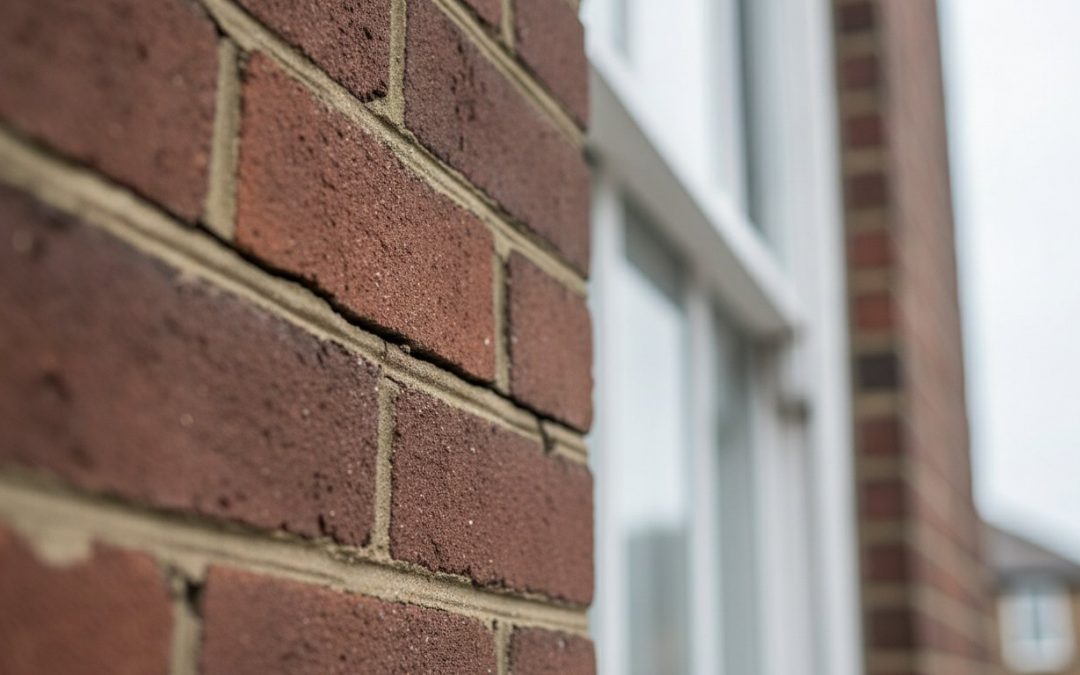
That thin, level line running across your mortar joints isn’t just a sign of your house settling; it’s often the first visible symptom of a structural failure occurring deep inside your masonry. Discovering horizontal cracks in brickwork is an understandably stressful experience for any property owner. It’s natural to fear a sudden wall collapse or worry about damp entering through these open gaps. Many owners also face the anxiety of a misdiagnosis, fearing they might be steered toward expensive and unnecessary foundation work when the true issue lies within the cavity itself.
In this guide, you’ll learn how to identify the underlying structural causes of these fractures, particularly the role of wall tie corrosion in UK properties built between 1920 and 1980. We’ll help you distinguish between minor cosmetic movement and serious structural risks, ensuring you understand exactly when a wall tie issue is the primary culprit. We will preview the professional diagnostic steps required to secure your property’s future, moving from initial observation to a clear path for remediation. By focusing on accurate surveys and technical standards, you can replace uncertainty with a permanent fix that restores your home’s integrity and your peace of mind.
Key Takeaways
- Understand that horizontal cracks in brickwork are often a symptom of “rust jacking,” where corroding wall ties expand and force mortar joints apart.
- Learn why wet or defective cavity wall insulation can accelerate structural damage by trapping moisture against metal ties.
- Discover the importance of a specialist wall tie survey to prevent the expensive misdiagnosis of foundation settlement.
- Identify how professional wall tie replacement provides a permanent, non-disruptive solution that secures your home’s long-term asset health.
What are Horizontal Cracks in Brickwork and Why They Form?
Horizontal cracks in brickwork appear as linear fractures that follow the bed joints of your masonry, often stretching across several metres of a single elevation. While many homeowners immediately fear ground subsidence, these horizontal lines tell a different story. Ground movement typically manifests as diagonal, “stepped” cracks that break through the bricks themselves as the foundation shifts. In contrast, horizontal masonry cracks are a symptom of internal pressure within the mortar bed, frequently caused by the expansion of metal components.
Hairline cracks caused by minor settlement are common in newer builds and usually remain static once the property has bedded in. However, structural horizontal fractures are progressive. They signify that something inside the wall is physically forcing the bricks apart. Because these cracks don’t follow the typical path of foundation failure, they’re frequently misdiagnosed by general builders who lack specialist structural training, leading to expensive and unnecessary remedial suggestions.
Identifying the ‘Pattern of Six’
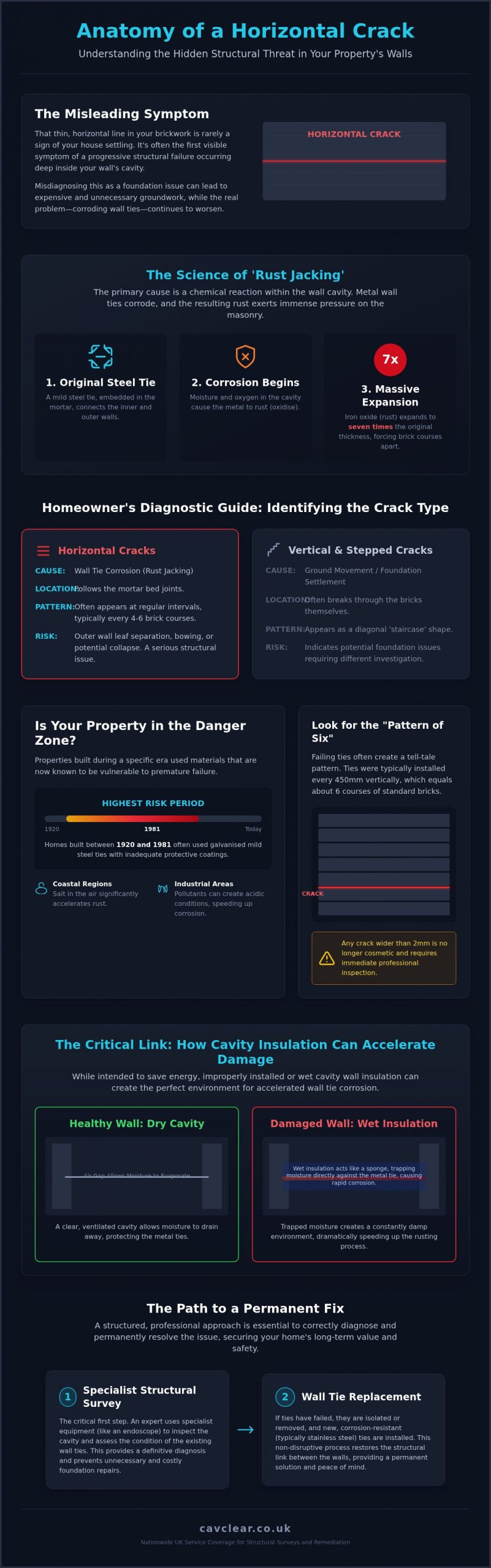
Specialists often look for a specific “Pattern of Six” when diagnosing structural issues in UK homes. In properties built from the 1950s to the 1980s, Cavity wall ties were typically installed every 450mm vertically, which equates to every 6 courses of standard brickwork. If you notice fractures appearing at regular intervals of 4 to 6 courses, it’s a strong indicator that the internal metalwork is failing. These cracks often align with internal floor joists or the horizontal rows of ties. You should measure the width of any fracture you find; once a crack exceeds 2mm, it has moved beyond a cosmetic concern and requires a professional inspection to ensure the wall remains stable.
The Anatomy of a Cavity Wall Crack
It’s vital to understand how your home is built to interpret these signs correctly. Most modern UK homes utilise a twin-skin construction. You can read more about this in our guide on what is a cavity wall. The “outer leaf” you see from the street serves as a protective, non-load-bearing skin. Because it’s thinner than the internal load-bearing wall, it’s more susceptible to the pressures of expanding metal. While internal plaster cracks might suggest foundation issues, horizontal cracks on the exterior usually point to a failure within the cavity itself, where moisture and oxygen have begun to degrade the structural ties. This outer skin relies on those ties for stability; without them, the wall can bow or even collapse under wind pressure.
The Science of ‘Rust Jacking’: How Wall Tie Corrosion Forces Bricks Apart
While many assume horizontal cracks in brickwork are caused by the ground moving, the reality is often a chemical reaction occurring within the walls. Mild steel wall ties, commonly used in mid-century UK construction, react with moisture and oxygen to form iron oxide. This process is technically known as oxidation. Rust isn’t just a surface stain; it’s a physical transformation that generates immense pressure.
Iron oxide can expand to seven times the thickness of the original metal. This incredible force is powerful enough to lift an entire leaf of masonry, creating the characteristic horizontal fractures homeowners see. As the tie expands, it loses its structural grip. This leads to a dangerous phenomenon called “leaf separation,” where the outer wall is no longer securely anchored to the inner structure. Understanding these Common Problems with Brick Masonry is the first step toward securing your property’s future. If you’ve spotted these signs, booking a professional wall tie survey is the most reliable way to assess the damage.
Why Older UK Properties are at Higher Risk
Building regulations have evolved significantly to address these structural vulnerabilities. Before 1981, many homes were built using galvanised mild steel ties. The British Standards Institute increased the required zinc coating thickness threefold in 1981, but properties built between 1920 and 1981 remain in the “danger zone” for premature failure. Aggressive environments, such as coastal regions with high salt content or industrial areas with high pollution, accelerate the corrosion rate. In these conditions, the life expectancy of older ties can drop to as little as 12 to 26 years.
The Progressive Nature of Corrosion
Wall tie failure doesn’t happen overnight; it follows a predictable, escalating path. Recognising the stage of failure is vital for timely intervention:
- Stage 1: Hairline mortar cracks appear, sometimes accompanied by minor rust staining on the external brickwork.
- Stage 2: Visible horizontal splitting becomes apparent. You might notice “pillowing,” where the mortar joints bulge outward as the metal underneath expands.
- Stage 3: Significant structural instability occurs. The ties have snapped or lost all grip, and the outer leaf is at risk of collapse during high winds.
Ignoring these signs doesn’t just lead to cosmetic issues. It compromises the structural safety of your home. A specialist can identify the exact stage of corrosion, allowing for a targeted remedial solution that prevents the need for more invasive rebuilding work later.
Horizontal vs. Vertical Cracks: A Homeowner’s Diagnostic Guide
Identifying the orientation of a fracture is the first step in a structural triage process. While many property owners instinctively fear the worst, the direction of the crack provides a technical roadmap to the underlying fault. Vertical cracks, for instance, often appear near window openings or at the ends of long walls. These are typically linked to thermal expansion or the failure of a steel or concrete lintel. Stepped cracks, which follow the mortar joints diagonally like a staircase, are the classic signature of subsidence or foundation movement.
In contrast, horizontal cracks in brickwork are the primary indicator of wall tie corrosion or rust jacking. Unlike diagonal cracks that suggest the ground is dropping, horizontal lines suggest the wall itself is being pushed upward or outward from within the cavity. Referencing Common Problems with Brick Masonry helps illustrate how different stressors manifest; while moisture can cause many issues, the specific horizontal pattern is almost unique to metal expansion. This distinction is vital because the remedy for a foundation issue is vastly different from the solution required for a cavity wall failure.
When to Worry: The Danger Signs
Certain visual cues indicate that a crack has transitioned from a minor fault to a serious safety risk. If you notice horizontal cracks in brickwork are wider at the top of the wall than at the bottom, it’s a sign that the outer leaf is leaning outward. This happens when the wall ties have lost their structural grip entirely. In severe cases, you might see visible daylight through the fracture or notice the masonry pulling away from window frames. You should also look for dark, metallic staining around the crack line. This is the physical evidence of iron oxide leaching out of the cavity, confirming that rust jacking is actively destabilising your home.
Non-Structural Causes of Horizontal Cracking
Not every horizontal line is a result of wall tie failure. In very long runs of masonry, thermal movement can cause fractures if the original builder failed to include sufficient expansion joints. Another possibility is sulfate attack. This occurs in older properties when sulfates in the bricks react with the tricalcium aluminate in the cement, causing the mortar bed to expand and crack. Because moisture is the catalyst for both sulfate attack and wall tie corrosion, we often recommend a professional damp survey to rule out external water ingress. Identifying whether the expansion is chemical or mechanical is vital for choosing the correct remedial path.
The Critical Link: How Cavity Insulation Accelerates Structural Cracking
While cavity wall insulation is designed to improve thermal efficiency, it often plays a hidden role in the development of structural fractures. In many UK properties, defective or wet insulation creates a “moisture bridge” between the external and internal leaves. A cavity is intended to be a clear air space that prevents water ingress. When this space is filled with saturated material, moisture is held directly against the metal wall ties for prolonged periods.
This creates what specialists call the “incubator effect.” The insulation traps humidity and water against mild steel ties, drastically accelerating the oxidation process. Because the metal cannot dry out, it rusts much faster than it would in a clear, ventilated cavity. You’ll often find that horizontal cracks in brickwork are most prevalent on South-West facing elevations. These weather-beaten walls receive the highest volume of driving rain, which saturates the insulation and triggers the expansion of the ties within.
Debris at the bottom of the cavity also contributes to this failure. Mortar droppings or clumps of settled insulation can collect at the base, trapping water at the damp-proof course level. This leads to “base-level” tie failure, which can destabilise the entire height of the wall skin from the ground up. If you suspect your insulation is compromised, you should book a professional cavity wall survey to inspect the internal condition of your masonry.
Why Insulation Removal is Often Necessary
Correcting the structural issue requires more than just replacing the metalwork. If the saturated material remains inside the wall, the new remedial ties will immediately be subjected to the same corrosive environment. The process of extracting wet material is vital to allow the cavity to breathe and dry naturally. You can learn more about the methodology in our guide to cavity wall insulation removal. Clearing the cavity ensures the long-term asset health of your property by removing the catalyst for future corrosion.
Preventing Damp and Mould Growth
The relationship between structural integrity and internal comfort is direct. Open horizontal cracks in brickwork act as funnels, allowing driving rain to bypass the outer leaf and saturate the insulation further. This moisture eventually reaches the inner leaf, leading to internal damp patches and black mould growth. Simply “patching” the external crack with mortar is a temporary, cosmetic fix. Without removing the wet insulation, the moisture remains trapped, and the internal pressure from the expanding ties will eventually force the new mortar out again. A permanent resolution requires addressing the moisture source within the cavity itself.
Professional Remediation: From Structural Survey to Wall Tie Replacement
The diagnostic process begins with non-invasive technology to confirm the internal state of your masonry. We use high-accuracy metal detectors to map the existing tie pattern and identify any missing or incorrectly spaced components. Once located, we use borescopes; these are small cameras inserted through tiny drill holes in the mortar that allow us to visually inspect the condition of the metal. This visual evidence is crucial. It allows us to see the level of oxidation and determine if the horizontal cracks in brickwork are indeed caused by rust jacking or another structural fault.
Guessing the cause of a crack is a dangerous and expensive gamble for any property owner. Many general builders see a fracture and immediately suggest foundation underpinning, which is a significant and often unnecessary expense. However, if the issue is actually wall tie failure, underpinning won’t stop the cracks from growing. The CavClear approach focuses on accurate mapping and structural integrity reporting. By identifying the specific technical fault through a professional wall tie survey, we provide a targeted solution that avoids unnecessary work and secures the property’s future value.
Professional remedial work does more than just close a gap; it restores the structural safety of the building. These repairs are a vital investment in the property’s long-term asset health. When you address the root cause of the horizontal cracks in brickwork, you eliminate the risk of sudden leaf separation or wall collapse. This methodical approach ensures that the property remains a safe, comfortable, and marketable asset for decades to come.
The Wall Tie Replacement Process
Once we’ve confirmed wall tie failure, the remedial process involves the precision installation of stainless steel ties. These ties are designed to be corrosion-resistant and comply with BS EN 845-1:2013 standards. You can find detailed technical specifications in our comprehensive guide to wall tie replacement. A critical step in this process is isolating or removing the original corroded ties. If left active, the old ties will continue to expand. This means the horizontal cracks would persist even after new ties are installed. We neutralise this expanding force to ensure a permanent fix.
Restoring the Masonry Aesthetic
Structural integrity is our priority, but we also understand the importance of your home’s appearance. After the new ties are secured, we perform professional repointing of the horizontal cracks using colour-matched mortar. This ensures the structural “stitch” is invisible and the wall is once again weather-tight. We don’t just leave you with a repaired wall; we provide a comprehensive structural report upon completion. This document serves as vital proof for future surveys or property sales, demonstrating that the asset’s health has been professionally restored and guaranteed by specialist technicians.
Securing Your Property’s Structural Future
Identifying horizontal cracks in brickwork early is the most effective way to prevent escalating repair costs and safeguard your home’s stability. These fractures are rarely simple cosmetic issues; they represent the physical force of expanding metal components and the detrimental impact of wet cavity insulation. By understanding that these patterns point to internal wall tie failure rather than ground movement, you can avoid the high costs of unnecessary foundation work. Professional remediation using stainless steel ties ensures a permanent fix that restores the structural integrity of your masonry.
We provide nationwide UK coverage through our specialist accredited technicians, delivering the expert solutions required to protect your long-term asset health. Our detailed assessments include comprehensive structural reports suitable for insurers and lenders, giving you the documentation needed for future property transactions. Don’t leave your building’s safety to chance. You can Book a Professional Structural Wall Tie Survey today to receive a definitive diagnosis and a clear path toward restoration. Taking action now provides the peace of mind that your home remains a secure and comfortable investment for years to come.
Frequently Asked Questions
Are horizontal cracks in brickwork always structural?
Horizontal cracks in brickwork are almost always indicative of a structural issue rather than a cosmetic one. While vertical or diagonal hairline cracks may result from minor settlement, horizontal fractures typically signify that the internal wall ties are expanding and physically lifting the masonry. This process, known as rust jacking, compromises the bond between the brick leaves. You shouldn’t ignore these patterns, as they represent a progressive failure of the building’s structural integrity.
How much does it cost to repair horizontal cracks in a wall?
The cost of repairing these fractures depends entirely on the underlying cause and the extent of the damage. A specialist structural survey is the first step to avoid unnecessary expenses. Factors influencing the final price include the property’s size, the accessibility of the elevations, and whether the cavity insulation requires extraction. Investing in a professional diagnosis ensures you aren’t paying for foundation work when the issue is actually a cavity wall fault.
Can I just use a crack filler or mortar to fix the problem?
Using a crack filler or simple mortar repointing is a temporary cosmetic fix that fails to address the root cause. If the cracks result from corroding wall ties, the metal will continue to expand with every moisture cycle. This internal pressure eventually forces the new filler or mortar back out, often causing further damage to the surrounding bricks. A permanent solution requires isolating the failing ties and installing stainless steel remedial replacements to stop the movement.
Why do horizontal cracks appear every few rows of bricks?
This regular pattern occurs because wall ties were traditionally installed at specific vertical intervals. In properties built between the 1920s and 1980s, ties were typically spaced every 450mm, which corresponds to every 6 courses of brickwork. When these ties corrode and expand, they force the mortar joints apart at those exact levels. Seeing fractures every few rows is a technical fingerprint that confirms a wall tie failure rather than general ground movement.
Will horizontal cracks in my house affect its resale value?
Yes, visible structural fractures will almost certainly be flagged during a RICS homebuyer’s survey, potentially delaying a sale or leading to price renegotiations. Mortgage lenders often require a specialist structural report and evidence of professional remedial work before approving a loan on an affected property. Addressing the issue proactively with a certified wall tie replacement provides the necessary documentation to reassure buyers and protect your property’s long-term market value.
Can wall tie corrosion lead to the collapse of the entire wall?
In severe cases, wall tie corrosion can lead to the complete collapse of the outer leaf of masonry. As the ties lose their structural grip, the two walls begin to move independently, a process called leaf separation. Without the ties to provide lateral stability, the outer wall becomes vulnerable to high wind pressures and may bow or buckle. Early intervention is vital to prevent this level of structural failure and ensure the safety of the occupants.
How do I know if a crack is caused by subsidence or wall ties?
The orientation of the fracture is the most reliable indicator. Subsidence typically causes diagonal, “stepped” cracks that follow the mortar joints or break through bricks as the foundation drops. Conversely, wall tie failure manifests as horizontal cracks in brickwork that follow the bed joints at regular intervals. A professional survey using a borescope is the only definitive way to confirm the cause by visually inspecting the ties inside the cavity before committing to repairs.
How long does a professional wall tie replacement take to complete?
A standard wall tie replacement for a typical semi-detached home usually takes between one and two days to complete. The process is designed to be non-disruptive, as all work is performed from the exterior of the property. More complex projects involving the extraction of wet cavity insulation or extensive repointing may take longer. Our technicians provide a clear timeline following the initial structural survey to ensure you can plan accordingly for your property’s long-term health.
Recent Comments