
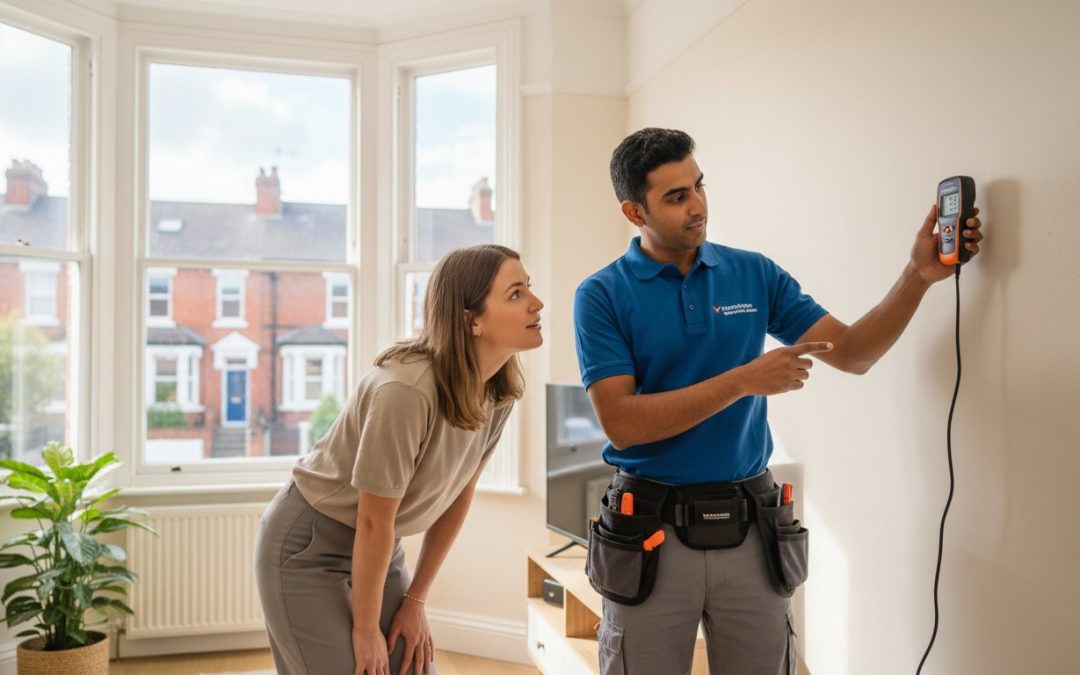
According to a 2025 UK Homeowners Survey, over 19% of damp treatments fail within the first two years, often because the root cause was never correctly identified. That recurring patch of black mould isn’t just an unsightly nuisance; it’s a clear signal that a previous ‘fix’ may have only masked a deeper structural issue, leaving your property and your family’s health at risk.
It’s a frustrating cycle. You clean the affected area, you get conflicting advice from different builders, and you worry constantly about hidden structural decay. The search for trustworthy damp proof specialists near me can feel overwhelming when you don’t know who to believe. This guide is designed to give you that clarity. We will provide the exact criteria to distinguish between a temporary cover-up and a permanent, guaranteed structural solution, ensuring you invest in your home’s long-term health.
We’ll cover the essential qualifications to verify, the critical questions to ask during a survey, and how to assess a quote to confirm the work proposed is a genuine remedy for the underlying defect.
Key Takeaways
-
Accurately identify the source of your damp-whether rising, penetrating, or condensation-to ensure the proposed solution addresses the root cause.
-
Discover how defective cavity wall insulation or trapped debris can create moisture bridges, becoming a hidden but common cause of internal damp.
-
Understand the critical difference between a expert sales quote and a paid technical survey when searching for damp proof specialists near me to avoid costly misdiagnoses.
-
Learn to verify a contractor’s industry accreditations, such as those from TrustMark, to confirm their technical competence and protect your property.
Table of Contents
-
What Should You Expect from Damp Proof Specialists Near You?
-
The Three Pillars of Damp Diagnosis: Rising, Penetrating, and Condensation
-
The "no-obligation Survey" Trap: Why Expert Analysis is a Worthwhile Investment
-
The Hidden Culprit: Why Your Cavity Walls Might Be the Problem
What Should You Expect from Damp Proof Specialists Near You?
Identifying damp in your property is a serious concern, and your first decision is the most critical: who do you call? The difference between a general builder and a certified damp specialist is not just a matter of title; it’s the difference between a temporary fix and a permanent solution that protects your home’s structural integrity. A true specialist prioritizes an accurate diagnosis above all else, ensuring the treatment recommended is the treatment required.
This commitment to a correct diagnosis is particularly vital in the Manchester area. With a rich housing stock ranging from Victorian red-brick terraces to modern constructions, a one-size-fits-all approach is destined to fail. A local expert understands the specific challenges presented by regional building materials and historic construction methods. This is why searching for qualified damp proof specialists near me provides a significant advantage; they bring localised knowledge that a nationwide contractor simply cannot match.
Specialist vs. Generalist: The Crucial Difference
A general builder may correctly identify visible signs of damp, but they often lack the diagnostic tools to pinpoint the precise cause. A common misdiagnosis is treating condensation-related mould as rising damp, a mistake that can lead to costly and unnecessary chemical damp-proof course (DPC) injections. A specialist, by contrast, uses a methodical, evidence-based process.
-
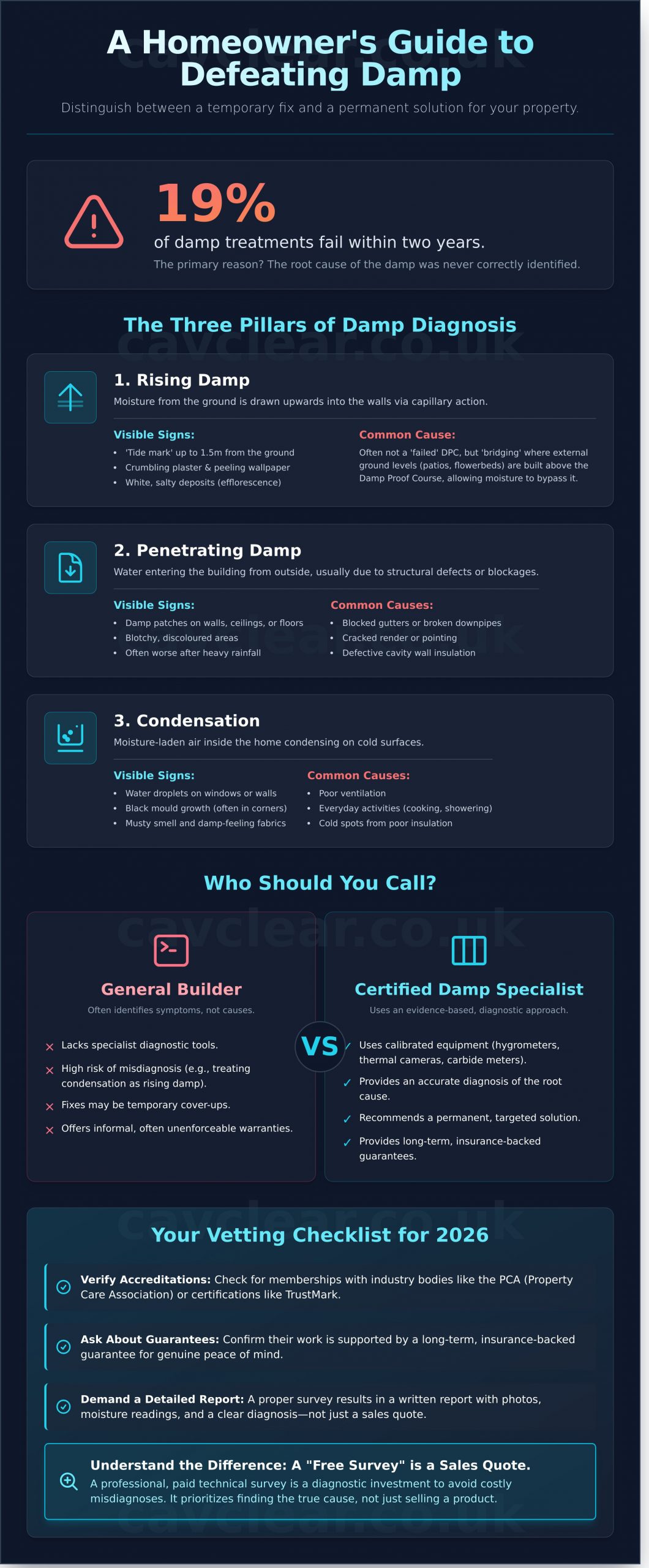
Specialised Equipment: Professionals employ a range of calibrated tools, including digital hygrometers to measure air humidity, thermal imaging cameras to identify cold spots causing condensation, and carbide meters for precise masonry moisture readings.
-
Accurate Diagnosis: This equipment allows a specialist to differentiate between rising damp, penetrating damp (e.g., from faulty gutters), and condensation. This distinction is fundamental to effective treatment.
-
Robust Guarantees: A specialist’s work is typically supported by long-term, insurance-backed guarantees. These policies are specific to the damp proofing system installed, offering you genuine peace of mind that a general builder’s informal warranty cannot provide.
The Diagnostic Approach in 2026
The modern approach to damp investigation has moved far beyond a quick visual check and the use of a simple resistance "damp meter," which can give misleadingly high readings in the presence of conductive materials like foil wallpaper or natural salts in brickwork. A comprehensive survey in 2026 and beyond involves a holistic assessment of your property’s health. This means examining the building’s age, construction type, and external factors like ground levels and drainage.
Understanding the core principles of damp control is essential. For a technical overview, a resource like Wikipedia’s entry on What is Damp Proofing? provides a solid foundation on the methods used to create a barrier against moisture. Ultimately, the most valuable asset you receive from a specialist visit is not a quote, but a detailed written report. This document should contain photographic evidence, precise moisture readings, and a clear explanation of the cause of the damp, followed by a transparently costed set of recommendations. It is your blueprint for restoring your home to a dry, healthy, and safe environment.
The Three Pillars of Damp Diagnosis: Rising, Penetrating, and Condensation
Identifying a damp patch on your wall is the first step; understanding its origin is the critical second. Damp in Manchester properties is rarely a single-source problem. Instead, it’s a complex interplay between three distinct issues: rising damp, penetrating damp, and condensation. An accurate diagnosis is fundamental, as treating the wrong cause is a waste of time and a significant waste of money. Most properties we survey suffer from a combination of these factors, which is why a specialist assessment is not just recommended, it’s essential.
Rising Damp: Fact vs. Fiction
A genuine failed Damp Proof Course (DPC) presents as a ‘tide mark’ of moisture rising from the floor, typically no higher than 1.5 metres. You’ll see crumbling plaster and white, salty deposits called efflorescence. However, the most common issue we find isn’t DPC failure, but ‘bridging’. This occurs when external ground levels, such as new patios or raised flowerbeds, are built higher than the original DPC line. This allows ground moisture to bypass the barrier completely. A chemical DPC injection is only one part of the remedy; it’s ineffective without first removing the external bridging and replacing contaminated internal plaster with a specialist salt-retardant render.
Penetrating Damp and Structural Integrity
Penetrating damp occurs when water breaches the building’s exterior, often creating persistent ‘cold spots’ on internal walls that then attract condensation. The culprits are frequently structural defects. In Manchester’s vast stock of Victorian and Edwardian housing, common entry points for rainwater include:
-
Failing or cracked mortar joints in the brickwork.
-
Porous bricks that have lost their weather resistance over decades.
-
Defective guttering, blocked downpipes, or damaged roof flashing.
Condensation is the most prevalent form of damp in modern homes. It’s an epidemic driven by our efforts to make properties more energy-efficient with double glazing and insulation, which severely reduces natural ventilation. This traps moisture generated from daily activities like cooking, showering, and even breathing. The first signs are steamed-up windows, musty odours, and the eventual growth of black mould (Aspergillus species) in corners and behind furniture where airflow is poor. This is where homeowners looking for damp proof specialists near me must be cautious, as condensation is often misdiagnosed as a more serious structural issue.
The reality is that these issues rarely exist in isolation. A patch of penetrating damp from a faulty downpipe creates a cold wall. This cold surface then becomes a prime location for condensation to form, leading to black mould growth. This is why a one-size-fits-all solution never works. A full diagnostic survey to identify every contributing factor. Understanding the complete picture of your property’s health is the only way to implement a permanent, guaranteed solution.
The "no-obligation Survey" Trap: Why Expert Analysis is a Worthwhile Investment
The offer of a "expert damp survey" often seems like a risk-expert first step for a concerned homeowner. It’s vital, however, to understand the business model behind this offer. A expert survey is rarely a diagnostic service; it is a sales mechanism. A contractor providing a expert assessment is not an impartial analyst. Their primary objective is to identify a problem that their company can be paid to fix, which can lead to a diagnosis that conveniently requires their specific, and often expensive, remedial products.
A genuine technical survey is a professional service, and it has a cost. When you engage independent damp proof specialists near me, you are paying for their time, their qualifications such as Trustmark, and the use of calibrated diagnostic equipment. This fee, typically between £250 and £500 in the Manchester area, buys you an unbiased, evidence-based report. It separates the diagnosis from the treatment, ensuring the recommended work is both necessary and correct. This is the critical difference between a sales quote and a professional analysis.
What a Technical Damp Survey Includes
A professional survey is a methodical investigation, not a 15-minute look with a moisture meter. A qualified surveyor conducts a detailed analysis that includes moisture profiling using carbide meters, salt analysis to differentiate between sources of moisture, a thorough external inspection of rainwater goods, pointing, and ground levels, and internal environment checks to assess ventilation and condensation risk.
The Risk of Misdiagnosis
An incorrect diagnosis is the most expensive mistake a homeowner can make. We have consulted on properties quoted over £4,500 for a chemical damp-proof course (DPC) to treat "rising damp". A subsequent independent survey revealed the issue was penetrating damp from a blocked gutter, a repair costing just £150. This saved the homeowner over £4,350 in completely unnecessary work.
Another frequent error is simply covering up the symptoms. Applying waterproof plaster or a membrane to an internal wall without fixing the external moisture source is a recipe for disaster. This action traps moisture within the wall structure. This can accelerate timber decay, damage brickwork through salt crystallisation, and force the damp to emerge elsewhere. Understanding the root cause is paramount, as detailed in the official UK government guidance on damp and mould, which stresses identifying and rectifying the underlying issue before any other work begins.
When you receive a damp report, look for a clear methodology. Does it contain photographic evidence? Are there diagrams showing moisture readings at different heights? Crucially, does it identify a conclusive source of the moisture? A vague report that simply recommends a DPC injection without proving why it’s needed should be treated with extreme caution. Investing in a paid, independent survey is the most financially prudent step you can take to protect your property and your wallet.
The Hidden Culprit: Why Your Cavity Walls Might Be the Problem
Damp is a symptom, not the root cause. Many homeowners in Manchester invest in damp proof courses or internal plastering, only to see the problem return within months. This happens because the true source of the moisture is often overlooked: the cavity between your home’s inner and outer walls. If you are looking for damp proof specialists near me, it’s vital you choose a firm that understands the complex role of the cavity wall system. Treating the internal wall without addressing a compromised cavity is a guaranteed way to waste both time and money.
The cavity is designed to be an empty space that prevents rainwater from the outer brickwork reaching the inner wall. However, this void can become compromised. Mortar droppings left during construction and other debris can accumulate, forming a "moisture bridge" that allows water to track directly across to your internal walls, causing persistent damp patches. This issue is significantly worsened by failing cavity wall insulation.
Failing Cavity Wall Insulation (CWI)
Installed to improve thermal efficiency, CWI can unfortunately become a major liability. Once wet, certain types of insulation, particularly mineral wool fibre, break down and slump to the bottom of the cavity. This saturated mass acts like a sponge, holding rainwater against your inner brickwork. Signs that your CWI has failed include:
-
Persistent damp patches on walls, especially after rainfall.
-
Peeling wallpaper and blistering paint.
-
A noticeable musty smell inside the property.
-
Increased heating bills, as the wet insulation offers a negative thermal value.
The only correct solution is a full, professional CWI extraction. This process removes the source of the damp, allowing the cavity to function as it was originally designed.
Wall Tie Replacement and Remedial Work
Wall ties are essential metal components that hold the two leaves of your home’s brickwork together, ensuring structural stability. When the cavity holds moisture, these steel ties begin to corrode. Corroding steel can expand to over seven times its original thickness, a process known as "rust jacking." This expansion exerts immense pressure on the brickwork, causing distinctive horizontal cracking along the mortar lines and providing a new entry point for water. Left untreated, wall tie failure can compromise the structural integrity of your entire property.
This is why a proper diagnosis is non-negotiable. Before any work is recommended, a specialist must conduct a boroscopic inspection to view the state of the cavity, the insulation, and the wall ties. This is the CavClear approach: we survey first to provide a definitive diagnosis, ensuring the recommended treatment is the correct one for the long-term health of your home. If you suspect your cavity is the issue, book a specialist cavity wall survey today.
Choosing the Right Specialist: A Vetting Checklist for 2026
Selecting a damp proofing company is a significant decision that directly impacts your property’s structural integrity and value. The wrong choice can lead to ineffective treatments, recurring damp, and wasted investment. To protect your home, it’s essential to perform thorough due diligence. This checklist provides a clear, methodical framework for vetting potential contractors, ensuring you partner with a genuine expert who can provide a lasting solution.
Your goal is to find a company that not only identifies symptoms but diagnoses the root cause with precision. Use these four critical checks to filter out unqualified providers and secure a reliable partner for your property.
- Review Recent Case Studies: Ask for detailed case studies of projects completed within the last 12 months on properties similar to yours, whether it’s a Victorian terrace in Didsbury or a 1970s build in Stockport. A credible specialist will provide reports that include initial moisture readings, photographic evidence from a boroscope inspection, a summary of the remedial work, and post-completion data to verify the problem was solved.
Critical Questions to Ask Your Surveyor
During the initial consultation, a professional surveyor will welcome detailed questions. Use these to gauge their expertise and the thoroughness of their planned survey:
-
"Will you be checking the wall cavity during the survey? If so, how?"
-
"What specific diagnostic equipment, beyond a basic moisture meter, will you use onsite?"
-
"Do you provide a full, itemised breakdown of all remedial recommendations and associated costs?"
Why CavClear is the UK’s Trusted Specialist
When searching for damp proof specialists near me, it’s vital to choose a firm whose standards meet every point on this checklist. CavClear was founded on a commitment to providing a "Right First Time" solution, focusing on the structural root cause of damp to deliver permanent peace of mind. Our TrustMark-accredited technicians combine national expertise with local Manchester knowledge, ensuring every diagnosis is precise and every treatment is effective. We don’t just patch over damp; we solve the underlying issues, like failed cavity wall insulation, that cause it. Book your professional damp and mould survey with CavClear and let our specialists protect your home’s future.
Securing Your Home Against Damp in 2026 and Beyond
Protecting your property begins with a precise diagnosis, not a sales pitch. Remember that many damp issues, particularly those originating from blocked or saturated cavity walls, are often misidentified during a superficial ‘expert’ survey. An incorrect assessment leads to ineffective treatments that fail to address the root cause, costing you more in the long term. Your search for reliable damp proof specialists near me should therefore end with a team committed to technical accuracy.
At CavClear, we provide methodical, evidence-based solutions. As specialists in non-invasive cavity extraction, we are accredited by leading UK industry bodies and our work is supported by comprehensive, insurance-backed guarantees for your complete peace of mind. Don’t settle for guesswork when your home’s structural integrity is at stake. Take the definitive step toward a dry, healthy, and energy-efficient property. Secure your property’s future with a CavClear expert survey and invest in a permanent solution.
Frequently Asked Questions About Damp Proofing
How much does a professional damp survey cost in 2026?
A professional damp survey in 2026 is projected to cost between £250 and £600 in the Manchester area. This price reflects a comprehensive assessment by a qualified surveyor, not a expert quote from a contractor. The cost typically covers the use of specialist diagnostic tools and results in a detailed written report that identifies the root cause and specific type of damp affecting your property. This initial investment ensures any recommended treatment is both necessary and correct.
Can I fix damp myself or do I always need a specialist?
You can manage minor condensation issues yourself through improved ventilation and lifestyle changes. However, problems like rising or penetrating damp require professional intervention. Misdiagnosing the source of damp can lead to ineffective, costly repairs that don’t solve the underlying problem and may cause further structural damage. If you suspect anything more than simple surface condensation, engaging one of the qualified damp proof specialists near me is the safest and most effective course of action for your home.
What is the difference between a damp proof course and a damp proof membrane?
A Damp Proof Course (DPC) is a horizontal barrier, often a chemical injection or physical layer, installed in the lower part of a wall to block groundwater from rising. Its purpose is to specifically combat rising damp. In contrast, a Damp Proof Membrane (DPM) is a waterproof sheet, typically made of polyethylene, applied to floors or walls. A DPM provides a barrier against moisture from the ground or penetrating damp from external walls, making it a versatile solution for different damp issues.
Is black mould always caused by damp proofing failure?
No, black mould is not always caused by a failed damp proof course. The most common cause, accounting for over 80% of residential cases, is condensation. This occurs when warm, moist air meets a cold surface, like an external wall or window. While rising or penetrating damp can contribute to the moisture that fuels mould growth, poor ventilation is the primary culprit in the vast majority of homes. A specialist can determine the true source of the moisture.
How long does damp proofing treatment typically last?
A correctly installed chemical damp proof course is a permanent solution designed to last for the lifetime of the property. For your complete peace of mind, reputable treatment specialists in the UK provide long-term, insurance-backed guarantees for their work. These guarantees typically last for 20 to 30 years, ensuring the effectiveness of the treatment and protecting your investment in the property’s health. Always confirm the guarantee is offered before work commences.
Will removing cavity wall insulation really stop the damp in my house?
Yes, if your cavity wall insulation has become saturated with water, its removal is a critical step in stopping damp. Wet insulation loses its thermal properties and creates a "moisture bridge" that allows water to penetrate from the outer to the inner wall. A professional cavity extraction process removes this defective material, restores the cavity’s original function, and allows the structure of your home to dry out properly, resolving the damp issue at its source.
What should I do if a damp specialist recommends a chemical injection?
If a specialist recommends a chemical injection DPC, you should first ask for a detailed survey report that provides clear evidence of rising damp. This ensures the diagnosis is accurate and not confused with another issue like condensation or penetrating damp. It’s also vital to verify the specialist is accredited by a recognised trade body, as this confirms they adhere to the highest industry standards for diagnostics and treatment.
Does building insurance cover damp proofing and mould remediation?
Most standard building insurance policies do not cover damp proofing or mould removal that results from gradual deterioration, poor property maintenance, or a pre-existing construction flaw. Coverage is typically reserved for damp that is the direct result of a sudden, insurable event, like water damage from a burst pipe or a severe storm. It’s essential you review your policy documents carefully or speak with your provider to understand the specific exclusions that apply.
Recent Comments