
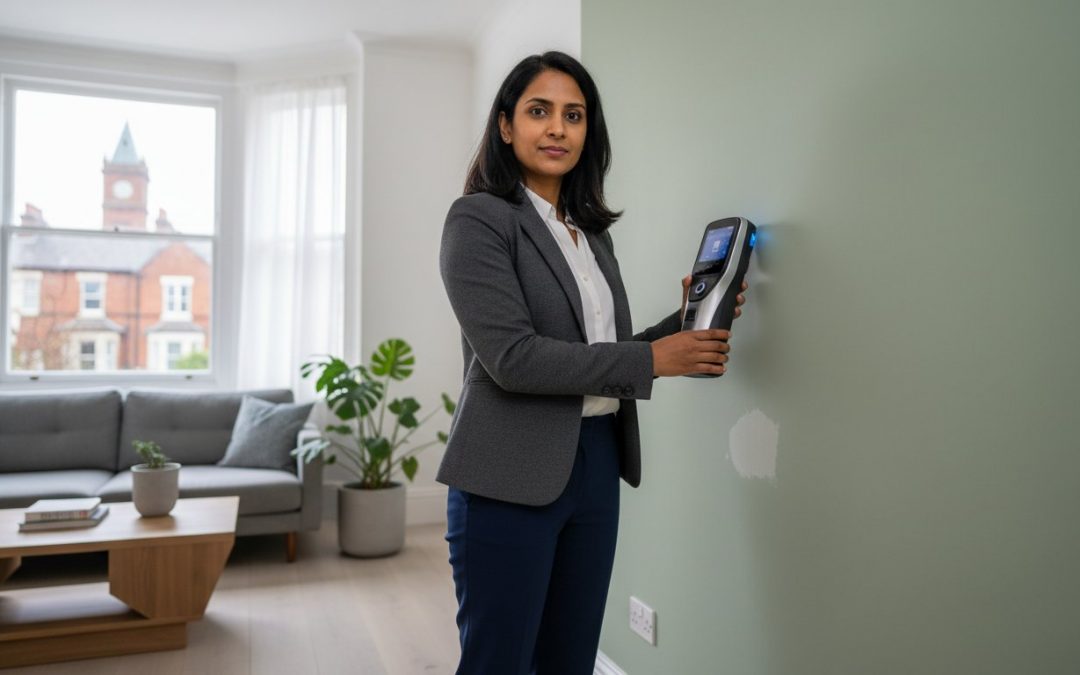
The musty smell in a corner of the room, peeling wallpaper behind the sofa, or the unsettling appearance of dark spots on a ceiling. These are signs that point to a moisture problem within your property, often triggering a spiral of concern. You may worry about the potential cost of repairs, the health implications of mould, and the risk of being sold an expensive, unnecessary treatment. This is precisely where a professional damp investigation provides clarity, replacing guesswork with a definitive diagnosis.
This guide is designed to demystify the entire process for UK homeowners in 2026. We will walk you through exactly what a reputable specialist does, step-by-step, from the initial assessment to the final, detailed report. You will learn how to interpret the findings correctly, understand the crucial differences between types of damp, and know what steps to take to protect the long-term structural integrity of your property. Consider this your roadmap to a trustworthy action plan and lasting peace of mind.
Key Takeaways
-
Understand why a professional survey is the essential first step to correctly diagnose moisture, preventing misdiagnosis and unnecessary expense.
-
Discover the systematic, non-invasive process a qualified surveyor follows during a visit to ensure an accurate assessment of your property.
-
Learn to interpret the results of a professional damp investigation by understanding the key differences between rising damp, penetrating damp, and condensation.
-
Gain clarity on the specific remedies required for common findings, linking the surveyor’s diagnosis directly to the correct course of action for a permanent fix.
-
Recognise the critical signs of a truly qualified specialist and learn why accredited expertise is vital to avoid a disguised sales visit.
Table of Contents
-
Why a Professional Damp Investigation is the First Step to a Dry Home
-
What to Expect During a Damp Investigation: The Surveyor’s Process
-
Decoding the Results: Understanding the Three Main Types of Damp
-
From Diagnosis to Action: Common Findings and Their Solutions
-
Choosing Your Damp Specialist: Why Expertise and Accreditation Matter
Why a Professional Damp Investigation is the First Step to a Dry Home
Discovering damp patches, peeling wallpaper, or a musty smell in your home is rightly a cause for concern. It is a clear signal that your property’s health is compromised, but taking decisive, informed action is the most important response. A professional damp investigation is not merely a quick look; it is a systematic diagnostic process designed to uncover the root cause of moisture ingress and provide a permanent solution.
Ignoring the signs of damp can lead to severe and costly consequences. These include structural decay in timber and brickwork, health problems for your family linked to mould spores, and a significant reduction in your property’s value. Applying a coat of "damp-proof" paint is a common but ineffective reaction. This approach only traps moisture within the wall, often worsening the underlying issue and masking a problem that needs urgent attention. A true solution requires understanding the source, not just hiding the symptom.
The Dangers of Misdiagnosis
Misidentifying the type of damp is a frequent and costly mistake. For example, installing an expensive chemical damp-proof course to treat what is actually a simple condensation problem will waste thousands of pounds and fail to solve the issue. Hidden defects, such as failed or saturated cavity wall insulation, can also create damp patches that mimic other problems and are often missed by non-specialists. A correct diagnosis from the outset is the most cost-effective strategy for protecting your home.
What an Investigation Aims to Achieve
A thorough damp investigation delivers clarity and a clear path forward. A specialist surveyor methodically works to achieve three key objectives, ensuring you receive a guaranteed, long-term solution.
-
Identify the type of damp: The first goal is to accurately determine if the issue is rising damp, penetrating damp, condensation, or a combination of factors. For a detailed Structural dampness overview, this resource provides excellent foundational knowledge on the different classifications.
-
Pinpoint the source: The surveyor will trace the exact pathway of water ingress, whether it’s a bridged damp-proof course, a leaking gutter, defective pointing, or poor ventilation causing surface condensation.
-
Provide actionable recommendations: You will receive a comprehensive report containing evidence-based, targeted solutions to permanently resolve the problem, restoring your home’s structural integrity and your peace of mind.
What to Expect During a Damp Investigation: The Surveyor’s Process
Understanding the methodical process a specialist follows can provide peace of mind. A professional damp investigation is a systematic, non-invasive assessment designed to accurately diagnose the source and extent of a moisture problem. For an average-sized property, you can expect the on-site inspection to last between one and three hours. To ensure a thorough evaluation, our surveyor will require access to all areas of your home, including the loft, cellar or basement, and any rooms showing signs of damp.
Step 1: The External Property Assessment
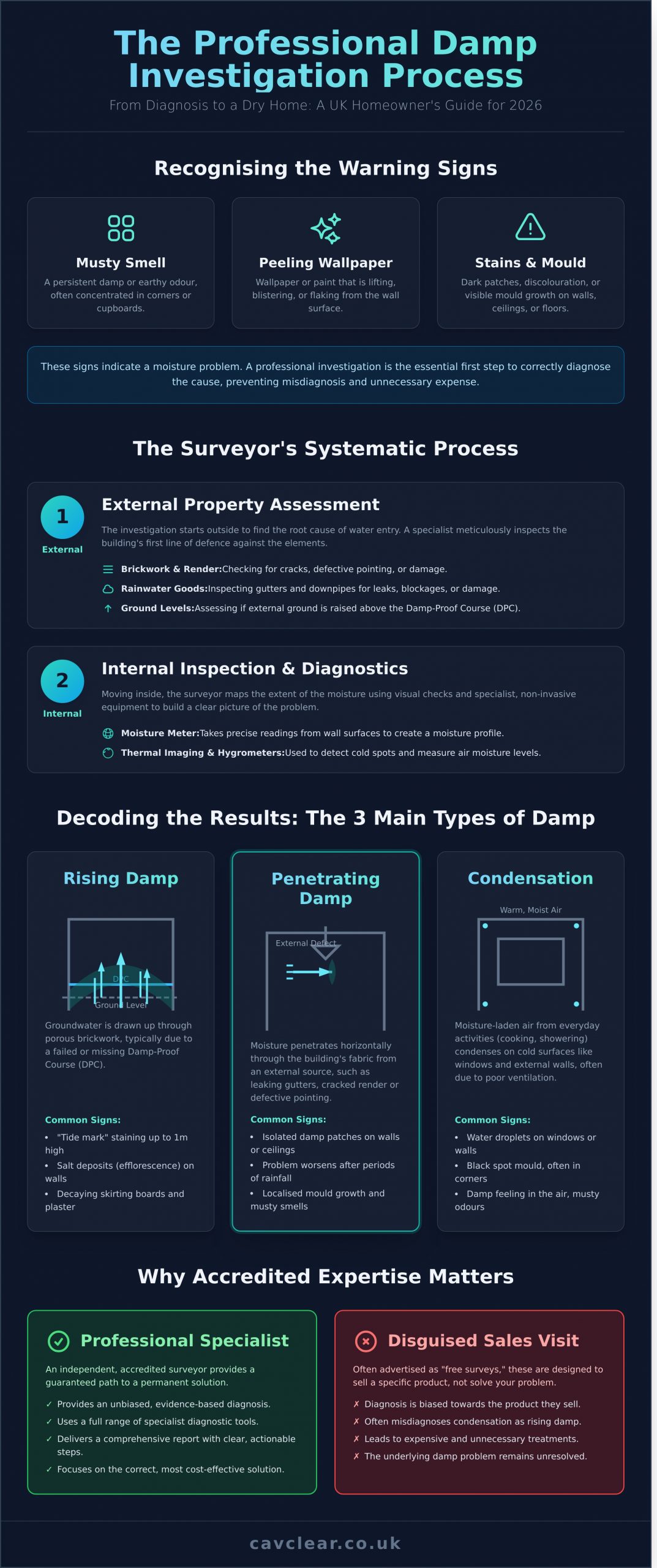
The investigation begins outside. A surveyor systematically examines the building’s exterior to identify potential points of water ingress that are often the root cause of internal damp. This external check is critical for identifying defects that allow moisture to penetrate the property’s structure. Key areas of focus include:
-
Brickwork and Render: Checking for cracks, spalling bricks, or defective pointing that could compromise the building’s weather resistance.
-
Rainwater Goods: Inspecting gutters, downpipes, and hoppers for blockages, leaks, or damage that could cause water to overflow and saturate walls.
-
Ground Levels: Assessing whether external ground levels have been raised above the original damp-proof course (DPC), which can lead to bridging and rising damp.
Step 2: The Internal Inspection and Tools Used
Once the external assessment is complete, the surveyor moves inside to map the effects of moisture. This involves both visual checks for tell-tale signs like mould, peeling wallpaper, and salt deposits (efflorescence), and the use of specialist diagnostic equipment. A calibrated moisture meter is used to take readings from wall surfaces, creating a detailed profile of where moisture is present. For a deeper analysis, the surveyor may also use thermal imaging cameras to detect cold spots indicative of damp, or a hygrometer to measure air moisture levels. The NBS guide to damp causes provides excellent technical detail on the principles behind moisture measurement and its effects on building materials.
Step 3: Compiling the Findings
The final on-site stage involves collating all the evidence gathered. The surveyor will consolidate their notes, moisture meter readings, and photographs from both the internal and external inspections. This data allows them to form a professional, evidence-based conclusion on the type of damp present and, most importantly, its underlying cause. This thorough analysis concludes the on-site phase of the damp investigation and forms the foundation of the comprehensive, easy-to-understand report you will receive, complete with clear recommendations for remedial action.
Decoding the Results: Understanding the Three Main Types of Damp
Once your professional survey is complete, the report will provide a clear diagnosis of the moisture issue affecting your property. Understanding this report is the key to ensuring you only pay for necessary, effective solutions. Most problems identified during a thorough damp investigation fall into one of three distinct categories. By learning to recognise their characteristics, you can engage confidently with specialists and protect your property’s structural integrity and long-term value.
Rising Damp: Moisture from the Ground
Rising damp occurs when groundwater is drawn upwards through the porous materials of a wall, such as bricks and mortar. This is almost always caused by a failed, bridged, or non-existent Damp Proof Course (DPC). It is exclusively a ground-floor issue, identifiable by a characteristic ‘tide mark’ staining the lower section of a wall, typically up to one metre high. Other signs include crumbling plaster, peeling wallpaper, and white, salty deposits on the wall’s surface. A surveyor confirms rising damp by analysing the condition of the DPC and using a resistance meter to map a distinct moisture profile that lessens with height.
Penetrating Damp: Water from Outside
Also known as lateral damp, this issue is caused by water breaching the building’s external fabric and travelling inwards. Unlike rising damp, it can appear at any height on internal walls and ceilings. The primary signs are isolated patches of damp that feel cold and wet to the touch, which often worsen significantly after periods of heavy rain. Common causes include:
-
Faulty or degraded brickwork pointing
-
Blocked gutters or leaking downpipes
-
Cracked rendering or faulty seals around windows
-
Leaks from internal plumbing, which can be hard to pinpoint. For these kinds of hidden issues, dedicated repair specialists like Viktor’s Plumbing Services are essential for a permanent fix.
-
Failed cavity wall insulation that has become saturated
Saturated insulation can create a ‘thermal bridge’ for moisture to pass from the outer to the inner leaf of the wall. As specialists in cavity wall extraction, this is a problem Cav Clear Ltd is expertly equipped to diagnose and resolve permanently.
Condensation: Moisture from Inside
Condensation is the most common form of damp in UK homes. It is not a structural defect but an issue of excess airborne moisture combined with inadequate ventilation. This moisture-rich air comes into contact with cold surfaces-such as windows or poorly insulated external walls-and condenses back into water droplets. The most obvious signs are streaming windows, musty smells, and the growth of black mould (Aspergillus niger), particularly in corners and behind furniture where air circulation is poor. Addressing condensation is vital, not just for your property, but also due to the significant health risks of indoor dampness and mould exposure. A proper damp investigation will identify this and recommend improvements to ventilation, not expensive and unnecessary building work.
From Diagnosis to Action: Common Findings and Their Solutions
A professional report from a damp investigation is more than just a diagnosis; it is a clear roadmap to restoring your property’s health. Understanding the link between the surveyor’s findings and the required remedial work is crucial for making informed decisions. For every issue identified, there is a proven, professional solution designed to provide a permanent fix and restore your peace of mind.
Below are some of the most common findings and the specific actions required to resolve them correctly.
Finding: Damp Caused by Defective Cavity Wall Insulation
If the survey identifies that your cavity wall insulation has become saturated with water, it is no longer providing any thermal benefit. Instead, it slumps to the bottom of the cavity, creating a bridge for moisture to track across to your internal walls, causing damp and mould. The only correct solution is the specialist extraction of the failed material. This process completely clears the cavity, allowing it to dry out and function as it was originally designed, protecting your home’s structure.
Finding: Penetrating Damp from Failing Wall Ties or Brickwork
Your survey may reveal that water is penetrating the outer brickwork due to corroded wall ties or defective mortar joints. This not only causes persistent damp patches internally but can also compromise your property’s structural integrity. The remedy involves a two-stage process: replacing the failing ties with new stainless steel ones and repointing the degraded mortar. This specialist work restores the essential stability of your walls and creates a robust barrier against further water ingress.
Finding: High Readings Indicating a Failed Damp-Proof Course
High moisture readings at the base of ground-floor walls are a classic sign of a failed or non-existent damp-proof course (DPC), leading to rising damp. The modern, effective solution is the installation of a new chemical DPC. This involves injecting a specialist cream into the mortar course, which permeates the masonry to form a powerful, continuous waterproof barrier. This permanently stops moisture from rising up through the walls from the ground.
Each of these findings requires a specific skill set to rectify correctly. A thorough report will not only identify the problem but also detail the precise steps needed for a guaranteed solution. Get a clear action plan with a CavClear damp investigation.
Choosing Your Damp Specialist: Why Expertise and Accreditation Matter
Once you understand the survey process, the final and most critical step is selecting the right company. The quality of your damp survey directly determines the effectiveness of any remedial work. A misdiagnosis not only fails to solve the problem but can also lead to unnecessary expense and further damage to your property’s structural integrity.
Be cautious of companies offering a ‘expert survey’. This is often not a comprehensive diagnostic service but a sales visit in disguise, designed to sell a specific, pre-determined solution like a chemical damp-proof course. A genuine, professional damp investigation is a service you pay for, and the detailed, unbiased report it produces is an invaluable tool for securing accurate quotes and ensuring the correct work is carried out.
What to Look for in a Damp Investigation Company
To protect your investment and ensure you receive an accurate diagnosis, look for a company that demonstrates clear evidence of professionalism and expertise. Key indicators include:
-
Transparent Pricing: A reputable specialist will have a clear, upfront fee for their survey. This fee covers the surveyor’s time and expertise, ensuring the advice you receive is impartial and focused solely on identifying the true cause of the damp.
-
Insurance and Guarantees: The company should hold public liability and professional indemnity insurance. Furthermore, any remedial work they propose should be backed by a meaningful, long-term guarantee for your complete peace of mind.
Finding reliable professionals you can trust during a stressful home situation is key, whether it’s tackling damp or dealing with an unexpected lockout. For homeowners also considering their property’s security and emergency access needs, you can discover SaveMeLocksmith as a resource for fast, 24/7 assistance.
The CavClear Commitment: A Thorough and Honest Assessment
At CavClear, we are specialists in diagnosing and resolving complex damp issues, particularly those originating within cavity walls that are often missed by general builders. Our approach is founded on providing a permanent solution, not a temporary fix.
Our accredited technicians conduct a thorough and methodical damp investigation to provide you with a comprehensive, no-obligation report. This document clearly explains our findings, details the underlying causes of moisture, and outlines a precise plan for remediation. We aim to restore the health of your property and the comfort of your home. For an expert assessment that you can trust, take the first step towards a permanent solution.
Book your professional damp investigation with CavClear today.
Your Path to a Damp-no-obligation Home Starts Here
Understanding the complexities of damp is the first step toward resolving it permanently. As we’ve explored, identifying the precise cause-whether rising damp, penetration, or condensation-is non-negotiable for effective treatment. An incorrect diagnosis leads to costly repairs that fail to protect your property’s structural integrity. This is why a professional damp investigation is not an expense, but a critical investment in your home’s long-term health.
We deliver detailed, evidence-based reports that pinpoint the source of moisture, followed by guaranteed remedial solutions to restore your peace of mind.
Schedule your comprehensive damp investigation with our accredited experts. Take the definitive step towards a dry, healthy, and structurally sound home today.
Frequently Asked Questions About Damp Investigations
How much does a professional damp investigation cost in the UK?
The cost for a professional damp investigation in the UK typically ranges from £250 to £600. The final price depends on factors such as the size and age of your property, the complexity of the suspected issues, and the specific qualifications of the surveyor. While this may seem like a significant outlay, it is a crucial investment. An accurate, independent diagnosis prevents far more expensive costs associated with incorrect remedial work and ensures you only pay for the solutions you truly need.
How long does a damp investigation and report take?
The on-site inspection for a standard residential property usually takes between two to four hours. This allows our specialists to conduct a thorough assessment using a range of diagnostic equipment. Following the visit, we compile a comprehensive written report detailing our findings and recommendations. You can expect to receive this detailed document within three to five working days, providing you with a clear and actionable plan to restore your property’s health and your peace of mind.
Can I carry out my own damp investigation?
While homeowners can identify visible signs like mould or tidemarks, a proper diagnosis requires specialist expertise and equipment. A professional uses calibrated moisture meters, thermal imaging cameras, and an in-depth knowledge of building pathology to pinpoint the true source of moisture ingress. A DIY assessment often leads to misdiagnosis, for example, confusing condensation with rising damp. This can result in unnecessary, costly, and ineffective treatments that fail to resolve the underlying structural issue.
Will a damp investigation cause any damage to my property?
A professional damp investigation is overwhelmingly non-invasive. Our surveyors treat your home with the utmost respect, relying on visual inspections and readings from surface-level equipment. In very specific circumstances, a more detailed analysis might require taking a small, discreet plaster sample or drilling a tiny hole for a borescope. However, this is only ever carried out with your explicit permission and any disturbance is kept to an absolute minimum and is easily rectified.
Is a damp survey the same as a damp investigation?
The terms are often used interchangeably, but there is a critical distinction. A "expert survey" is frequently offered by a contractor who profits from selling a specific solution, like a chemical damp-proof course. A professional damp investigation, however, is a comprehensive diagnostic service performed by an independent, qualified surveyor. Their sole objective is to accurately identify the root cause of the damp, providing you with an unbiased report and impartial recommendations for the correct remedial action.
What’s the difference between a expert survey and a paid damp investigation?
A expert survey is typically a sales tool used by companies that provide remedial treatments. Their assessment may be biased towards finding a problem that their product can solve. A paid damp investigation is fundamentally different because you are paying for impartial, expert advice. An independent surveyor has no vested interest in the remedial work. Their fee covers a thorough, evidence-based assessment of your property, ensuring the final report is unbiased and recommends only necessary, effective solutions.
Does a damp investigation report come with a guarantee?
The investigation report itself is a professional diagnostic document backed by the surveyor’s expertise and professional indemnity insurance. The guarantee applies to the remedial work that is subsequently carried out based on the report’s recommendations. By commissioning a high-quality investigation, you ensure the recommended work is correct, and when completed by a reputable contractor, this work should come with a long-term guarantee, providing a permanent solution to your damp problem.
What happens if the investigation finds multiple types of damp?
It is not uncommon for a property to be affected by more than one type of damp, such as having both penetrating damp and a condensation issue. A comprehensive investigation will identify and differentiate each problem. Our detailed report will outline the specific cause of each type of damp and provide a clear, prioritised action plan. This methodical approach ensures that all moisture sources are tackled correctly, restoring the structural integrity and comfort of your home in a logical, effective manner.
Recent Comments