

A history of damp does not mean every mark needs repairing before a sale. Preparing a house with a history of damp for sale starts with finding out whether moisture is still present, what is causing it and which repairs would address the cause rather than just cover the symptoms.
It is understandable to worry that unresolved damp could put buyers off or lead to unexpected repair costs. A clear assessment helps distinguish active problems from historic damage, establish the likely scope of work and decide what to repair before marketing the property.
This article explains how to assess common signs of damp, what can affect remedial costs and how to organise records of past issues and completed work for prospective buyers. It also covers when a specialist cavity wall inspection may help, particularly if moisture could be linked to defective cavity wall insulation or failing wall ties.
Key Takeaways
- Identify the source of moisture before deciding which repairs are worthwhile; covering visible marks alone may leave the underlying problem unresolved.
- Forecast remediation costs by defining the cause, extent of damage and work required, then account for those costs when setting an asking price.
- Distinguish rising damp, penetrating damp and condensation by considering the pattern of damage and the conditions around the affected area.
- Keep a clear record of damp assessments, completed repairs and recommendations so buyers can understand the property’s history.
- Consider a specialist cavity wall survey if damp may be linked to defective insulation or failing wall ties.
How can you obtain reliable quotes and forecast the true costs of damp remediation?
A damp history can affect buyer confidence, a survey valuation and mortgage assessment if moisture, unresolved causes or repair costs are unclear. Separate diagnosis from treatment, then use the findings to set a realistic asking price. If you are preparing a house with a history of damp for sale, written estimates can help ground that decision.
Comparing Remediation Quotes
A remediation quote sets out proposed work and its cost, helping you compare scope as well as price. The HomeOwners Alliance advises getting at least three quotes for damp work. Ask each quote to identify the moisture source, affected areas, recommended treatment and associated making-good work. For example, a proposal for a damp wall should explain whether it includes investigating external defects, repairing mortar or treating internal finishes.
Compare the same tasks across each written estimate. A lower total may cover less work, so check whether diagnosis, source repairs and reinstatement are included. This helps you budget for the actual repair plan, rather than an unexplained figure. Keep estimates with the survey report so you can match each proposed task to a recorded finding. Costs depend on the property, investigation required and scope of remedial work.
Survey and Treatment Costs
A damp survey investigates the condition and possible cause; a treatment estimate prices the proposed repair. Survey and remedial costs are property-specific. The property’s size, construction, access, affected areas and investigation requirements all influence the work involved. Budget for diagnosis separately from treatment, as survey findings help define the repair scope and identify which tasks address the cause.
Repair estimates vary with the type and complexity of work. A localised defect requiring source repairs and internal making-good is a different scope from a complex retrofit in a heritage property. Ask for diagnosis, treatment and related repairs to be itemised. For example, an estimate might separate external mortar repairs from internal plaster work, showing which tasks address water entry and which restore finishes.
Before comparing estimates, check that each covers the same areas and proposed tasks. If one includes an inspection for external defects and another covers only internal treatment, the totals are not a like-for-like comparison. Written details show what each recommendation covers and where further work may be needed.
Budgeting for Repairs
A repair budget estimates the cost of addressing identified damp before you set the sale price. Buyers may consider both the visible condition and any outstanding work. Use survey findings and written estimates to decide whether to complete repairs before marketing or account for them in your asking price. When preparing a house with a history of damp for sale, match each allowance to a defined task.
Separate investigation, work on the moisture source, treatment and reinstatement of finishes. A property needing rainwater repairs and internal plaster work has different cost components from one requiring a complex heritage retrofit. Keep estimates and reports together. They provide a clear basis for explaining how you set the asking price and which repairs remain outstanding.
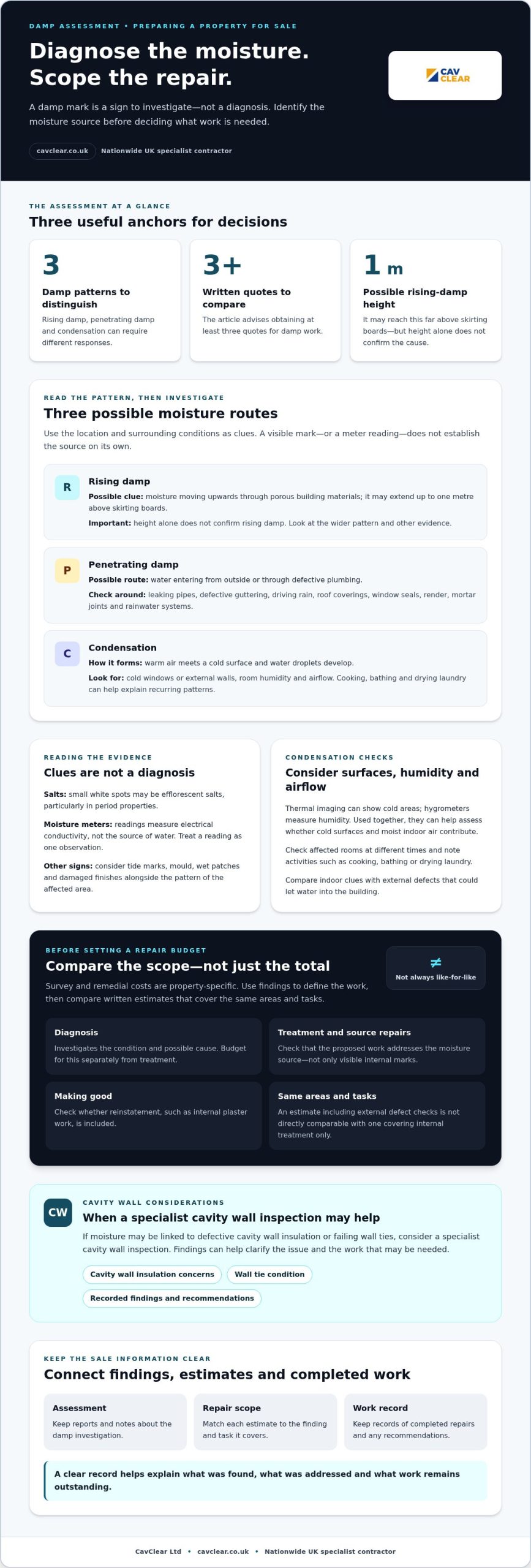
Rising damp, penetrating damp and condensation-related damp
Different moisture patterns can point to different causes, so establish what is happening before choosing treatment. Rising damp, penetrating damp and condensation each need a response suited to their source.
Types of Damp
Rising damp occurs when groundwater moves upwards through porous building materials, while penetrating damp enters from outside or through defective plumbing. Condensation forms when warm air meets a cold surface and water droplets develop. These causes matter because the same mark on a wall can call for very different repairs.
Rising damp may reach one metre above the skirting boards, but height alone does not confirm the cause. Penetrating damp can follow a leaking pipe, defective guttering or driving rain. Condensation often appears on cold surfaces, including windows and external walls. Compare the location and pattern of marks with nearby building defects and room conditions.
In a period property, small white spots may be efflorescent salts. Salts can also affect moisture-meter readings because these meters measure electrical conductivity, not the source of water. Treat a reading as one observation, not a diagnosis. Look for other signs, such as tide marks, mould, wet patches or damaged finishes.
Tracing Condensation Causes
Investigating condensation means looking at how cold surfaces, indoor humidity and airflow interact. This helps distinguish surface condensation from water entering through the building fabric. For example, droplets on a cold window after cooking point to indoor moisture meeting a cool surface, while damp below defective guttering suggests an external water route.
Thermal imaging cameras can show cold areas, while hygrometers measure humidity. Used together, they help assess whether cold surfaces and moist indoor air are contributing to condensation. Check affected rooms at different times and note activities such as cooking, bathing or drying laundry. A recurring patch in a poorly ventilated bathroom can provide a useful clue.
Inspect the outside too: defective roof coverings, window seals, render, mortar joints and rainwater systems can let water in. In traditional buildings, localised severe damage is broadly associated with liquid water, while widespread, evenly distributed signs may relate to microclimatic conditions. Neither pattern replaces an assessment of the building and its materials.
Managing Condensation and Moisture
Reducing condensation involves controlling indoor moisture and improving airflow, while repairing any separate source of water ingress. Open windows, use extractor fans and keep air moving around affected rooms. A dehumidifier can help manage indoor moisture, but it will not repair a leaking pipe or defective roof covering.
Heating also affects cold surfaces. In period homes, more consistent heating, improved ventilation and small changes to daily routines can resolve condensation in many cases. Use extractor fans while bathing or cooking, and avoid drying wet laundry in a poorly ventilated room. Marks may return if the moisture source remains.
Match repairs to the cause: clear rainwater systems, repair damaged roofs or cracked masonry, and address faulty plumbing. Keep surfaces permeable where the construction relies on moisture movement, particularly in traditional buildings with solid walls, lime mortar or plaster. If damp returns despite ventilation and maintenance, investigate the underlying cause instead of covering the stain.
Remedial works, including ventilation and damp proofing
Choose remedial work to suit the building’s construction and the source of moisture. A repair suited to a modern cavity wall may not be appropriate for an older solid-wall property.
Damp-Proof Courses and Membranes
A damp-proof course is a barrier intended to limit moisture moving through a wall, while a damp-proof membrane separates a floor or wall from moisture. Their presence or absence matters when planning repairs, especially in older homes. In newer UK houses, a damp-proof course is typically built into a wall 15 centimetres above ground level.
Many older properties, particularly those built before 1875, have no physical damp-proof course. Damp-proof courses were not widely used until the late Victorian period, and some period homes were never designed to depend on one. Don’t assume that damp near the floor proves a course has failed. Check the age and construction, external ground levels, drainage and the materials surrounding the affected area.
Traditional buildings often rely on solid brick or stone walls, lime mortar and breathable finishes to manage moisture. Cement render, gypsum plaster and impermeable paint can restrict evaporation, leaving moisture trapped in the fabric. Chemical damp-proof course injection is rarely appropriate for pre-1919 buildings and can cause more harm than good. Match proposed work to the wall’s materials instead of applying a standard treatment.
Ventilation and Damp-Proofing Work
Ventilation work improves airflow, while damp-proofing work addresses moisture movement or entry. Keep these tasks distinct: an extractor fan will not repair a leaking roof, and a membrane will not remove indoor humidity. For condensation, consider airflow, heating and how affected rooms are used. For penetrating damp, inspect the roof, rainwater goods, masonry and plumbing.
In older houses with suspended timber floors, keep airbricks clear and sub-floor voids ventilated. Blocked airbricks can restrict airflow beneath the floor, where moisture may contribute to timber decay. Check whether external ground levels, dense render or hard plaster are also affecting the wall. A sound repair plan addresses each relevant cause rather than concealing a damp patch.
Allow wet masonry to dry before judging the finished result. After lime plaster base coats, the described drying period is 3 months. Historic salts may remain in plaster and masonry after the original moisture source has been resolved, so a mark does not automatically mean water is still entering. Record the work completed and distinguish remaining historic staining from active moisture.
Historic windows need careful treatment too. Repair, refit or adjust existing windows before considering replacement or double glazing. Historic England tests of historic buildings found window leakage of 10 to 15 per cent. Draught-proofing can improve comfort, but preserve suitable ventilation rather than sealing the house indiscriminately. The repair record can help explain the property’s condition during a valuation.
Disclosing damp issues to buyers
Give prospective buyers a clear account of known damp, past investigations and completed repairs. A history of rising damp, condensation or water entering through external defects is easier to understand when the facts, dates and supporting records are presented together. Do not describe a stain as resolved if only the surface finish has changed.
Prepare a simple record for each affected area. Note where the moisture appeared, when it was first identified, what the inspection found and what work followed. For example, distinguish a ground-floor mark associated with high external ground levels from condensation previously seen around a bedroom window. If the cause remains uncertain, record the findings accurately rather than assigning a diagnosis.
Organise relevant documents in a single pack. A damp report can record affected areas, possible causes and recommended remedial actions. Add invoices, before-and-after photographs, and details of materials or treatments used. If chemical damp-proofing or plaster work was completed, identify the work and its location; do not suggest that a treatment proves the original diagnosis was correct.
- Inspection records: Include the report date, rooms inspected and findings about moisture or building defects.
- Repair documents: Note work to roofs, rainwater goods, mortar, plumbing, ventilation or internal finishes.
- Current observations: Describe any remaining staining, salt marks, mould or damp patches without exaggeration.
- Supporting evidence: Keep relevant photographs, invoices and written recommendations beside the related repair entry.
This level of detail helps buyers distinguish historic staining from an unresolved source of moisture. A repaired leaking pipe and an old discoloured plaster patch are different from a recurring wet area with no identified cause. State what was repaired, where it was repaired and whether any signs have returned. Keep the account factual and consistent with the inspection documents.
Construction details can explain why a past treatment needs context. A period property may not have a physical damp-proof course, and traditional walls can respond differently from modern construction. If a report discusses rising damp, include its findings and recommendations rather than presenting a chemical treatment as proof. Mention relevant ground levels, blocked ventilation or external defects where the report identifies them.
Before viewings, organise documents by date and affected area, then provide the same clear account to each interested buyer. This avoids conflicting explanations and shows which repairs are complete and which recommendations remain outstanding. A concise record, supported by a damp report and repair documents, gives the property’s history a practical, transparent context.
Should you get an independent damp survey before selling a house?
An independent damp survey can identify the extent of moisture and investigate its underlying cause before buyers assess the property. It can be particularly useful when damp keeps returning, visible tide marks or salt deposits remain, or a homebuyer survey flags possible moisture. A clear assessment can distinguish active defects from historic staining and help you explain what the house needs.
A RICS Home Survey Level 2 or Level 3 Building Survey can flag signs of damp, but surveyors do not usually investigate the root cause in detail. A specialist dampness survey can examine the moisture source, affected areas, structural timbers and whether remedial treatment is genuinely required. For example, a report might distinguish condensation around a cold external wall from water entering through defective rainwater goods.
That distinction matters when planning repairs or presenting the property. A report should record where damp appears, its likely cause and recommended remedial actions. It can also identify whether timber is affected and whether visible damage appears active or historic. If the findings point to a roof defect, plumbing leak or blocked ventilation, the response differs from treatment for moisture rising through porous materials.
For a period property, construction materials need careful consideration. A pre-1919 house may have solid walls, lime mortar or no physical damp-proof course. High moisture-meter readings in old masonry can result from salts, since meters measure electrical conductivity rather than identify the water source. An assessment should consider the building’s materials and moisture patterns, not rely on one reading alone.
Use the report to prepare a practical record for prospective buyers. Keep the findings with photographs, repair invoices and details of completed work. If the survey identifies an unresolved defect, record it separately from finished repairs. This gives buyers a clearer picture than repainting a marked wall without documenting its history.
An independent assessment is especially useful when damp signs persist despite basic ventilation or maintenance improvements, or when a previous report gives no clear cause. If the inspection points to a cavity wall issue, such as damp associated with insulation or concerns about wall ties, a cavity wall survey can investigate that part of the building fabric. The key outcome is a written explanation that connects observed damage with likely causes and proportionate remedial recommendations.
CavClear: Cavity Wall Insulation Removal
CavClear investigates damp linked to defective cavity wall insulation and carries out cavity wall insulation removal where required. If an inspection points instead to cracking or movement in the masonry, a Wall Tie Survey can assess the ties’ condition and whether replacement is recommended. A cavity wall survey can help clarify defects within the wall system and identify suitable remedial work.
These specialist investigations are relevant when damp persists despite attention to visible external or internal causes, or when a property report raises concerns about cavity walls. Findings can help you understand the issue and explain recommended work to prospective buyers.
Contact CavClear to discuss a cavity wall concern and the relevant survey or remedial service.
Move Forward with a Clear Repair Plan
When preparing a house with a history of damp for sale, focus on the property’s long-term condition, not just its appearance. A properly understood cavity-wall issue deserves attention as part of that plan, particularly if moisture and masonry concerns remain after other repairs.
Where evidence points to a cavity-wall defect, CavClear offers Cavity Wall Insulation Removal, Wall Tie Surveys and Wall Tie Replacement. These specialist services address problematic insulation and failing ties, which can contribute to damp or cracking. The appropriate next step depends on the property’s cavity-wall findings.
Focus on durable remedial work and a clear record of decisions. This gives you a practical basis for moving from assessment to preparing the property for its next owner, without relying on cosmetic changes to represent the building’s condition. For sellers already looking ahead to their next purchase or considering a move abroad, europeanlistings.com offers a curated selection of hand-picked homes across southern Europe.
Contact CavClear about damp to discuss a cavity-wall concern. A considered next step puts the property’s condition first and helps you move forward with confidence.
Frequently Asked Questions
Do I need to fix issues found in the survey before selling?
No. You can decide whether to repair a survey finding before marketing the property. Consider whether it identifies an active source of moisture, damage that could worsen, or a historic mark with no current moisture. For example, repairing a leaking gutter may prevent continued water entry, while a documented old stain may need explanation rather than replacement plaster. Use the report and repair estimates to weigh the work against your sale plans.
What damp problems should be investigated before selling a house in the UK?
Investigate recurring damp patches, mould, salt deposits, damaged plaster, soft timber and signs of water entering the building. Check external features such as roof coverings, gutters, downpipes, mortar joints and window seals, alongside plumbing and room ventilation. Consider cavity-wall defects too if damp occurs with cold spots or affected insulation. The aim is to identify the moisture source and any related damage, rather than treating every visible mark as the same problem.
How can you identify the cause of damp, condensation or mould in a property?
Compare the location and pattern of moisture with building defects and room conditions. Condensation commonly appears on cold surfaces, while a plumbing leak or defective roof may create a localised wet area. Thermal imaging and humidity measurements can help investigate cold surfaces and indoor moisture. In older masonry, salts can affect electrical moisture-meter readings, so a reading alone cannot identify the source. Note when marks appear and whether they return after changes to ventilation.
What damp repairs are worth completing before putting a house on the market?
Prioritise work that addresses an identified moisture source or prevents further damage. Examples include repairing a leaking pipe, clearing defective rainwater goods, fixing damaged roof coverings or restoring ventilation where condensation is present. Cosmetic replastering or repainting alone may hide marks without resolving the cause. Compare the recommended scope with your sale plans, and keep records showing what was repaired, where work took place and which issues remain.
How much do common damp surveys and repairs cost in the UK?
Costs depend on the investigation required, the property’s construction, affected areas and recommended remedial work. A survey and a treatment estimate are separate: investigation identifies likely causes, while a repair quotation sets out the proposed work. Ask for the scope to distinguish source repairs, treatment and reinstatement. Specialist cavity-wall surveys and remedial work are priced according to the property and requirements, so no single figure applies to every house.
What documents and guarantees should sellers provide for past damp repairs?
Give buyers relevant inspection reports, written recommendations, invoices and photographs showing the affected area or completed work. Include repair dates and distinguish finished work from outstanding recommendations. If a contractor issued a written guarantee or warranty, provide the document and its terms; do not describe cover beyond what it says. For example, pair an invoice for gutter repairs with photographs or a report identifying the original water-entry point.
Do UK sellers have to disclose a history of damp to buyers?
For a transparent sale, tell buyers about known damp and relevant past repairs rather than relying on fresh paint to convey the property’s condition. Share reports and explain whether the issue was treated, whether symptoms have returned and what recommendations remain. For example, distinguish a repaired plumbing leak from a recurring damp patch with no established cause. Keep your account factual and consistent with the documents you provide.
How must damp or mould issues be described on the TA6 property information form?
Give accurate, factual answers and avoid guessing at a technical cause. State where damp or mould appeared, whether it is historic or recurring, what investigations took place and what repairs followed. If a report identifies condensation but does not establish another cause, use that finding rather than labelling it rising damp. Keep the form consistent with reports, invoices and other records shared with buyers.
Recent Comments