
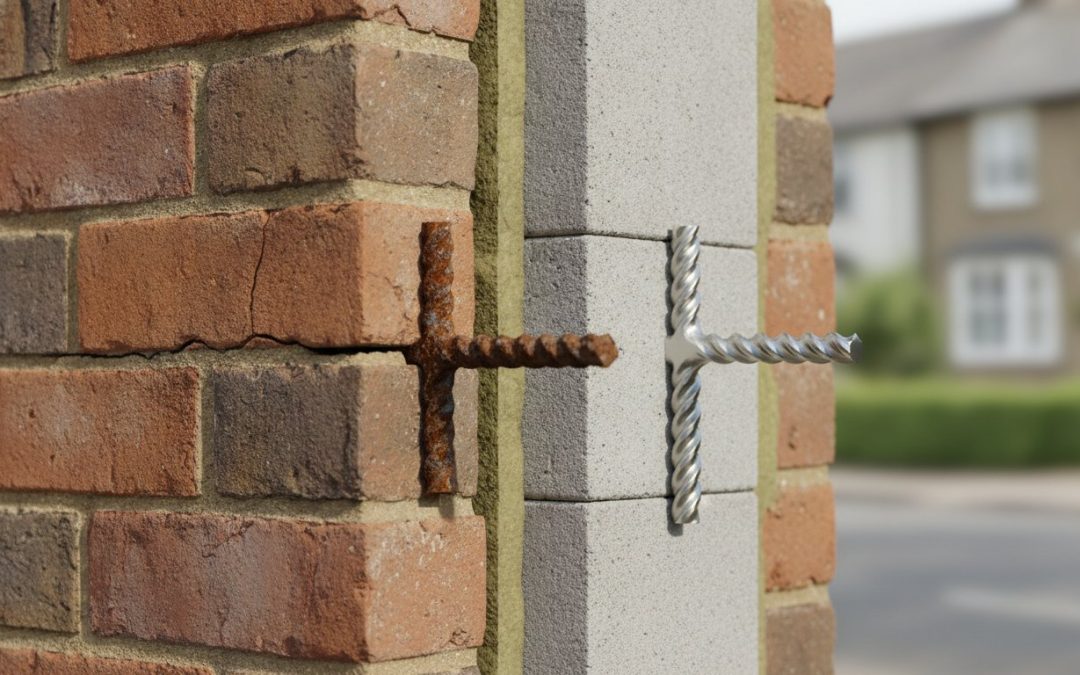
Your property’s structural stability often depends on components you will never see until they begin to fail. It’s a stressful realization when you notice a slight bulge in your brickwork or receive conflicting reports from different surveyors. You’re likely worried about the possibility of a sudden collapse or the significant mess that major structural repairs might leave behind. We understand that these concerns are overwhelming, especially when the health of your largest asset is at stake.
Consulting a wall tie replacement specialist is the only way to move beyond guesswork and secure a definitive, technical diagnosis. This article explains how a specialist approach identifies hidden structural risks and provides permanent, non-disruptive solutions that restore your property’s value. You’ll discover the underlying causes of tie corrosion, the importance of detailed inspections, and how our nationwide UK team ensures a clean repair process. By focusing on long-term asset health and technical precision, we help you transition from structural uncertainty to total peace of mind. This methodical guide outlines the steps needed to protect your home for the future.
Key Takeaways
- Learn to identify the early warning signs of failure, such as horizontal cracking caused by expanding rust or wall bulging that indicates a loss of lateral restraint.
- Understand why a specialist survey using high-definition borescopes and metal detection is essential for an accurate, non-invasive diagnosis of your property’s internal condition.
- Discover why hiring a wall tie replacement specialist is critical for accessing specialized tools and ensuring a permanent, non-disruptive solution that general builders may overlook.
- Explore the two-step remedial methodology involving the installation of corrosion-resistant stainless steel ties and the isolation of original failing components.
- Realize how technical precision and a methodical repair process protect your property’s long-term asset health and restore structural peace of mind.
What is a Wall Tie Replacement Specialist?
A wall tie replacement specialist is a dedicated contractor who focuses exclusively on the diagnostic and remedial aspects of cavity wall integrity. Unlike a general builder who manages visible construction projects, a specialist uses a methodical approach to identify and rectify faults hidden deep within the masonry. This role is essential for property preservation because failing ties often remain invisible until structural damage is significant. By hiring a specialist, you ensure that your property benefits from technical precision and high-level standards that protect long-term asset value. As a nationwide company, we provide consistent expertise across the entire United Kingdom, ensuring that every repair adheres to rigorous safety benchmarks regardless of the property’s age or location.
The Essential Role of Cavity Wall Ties
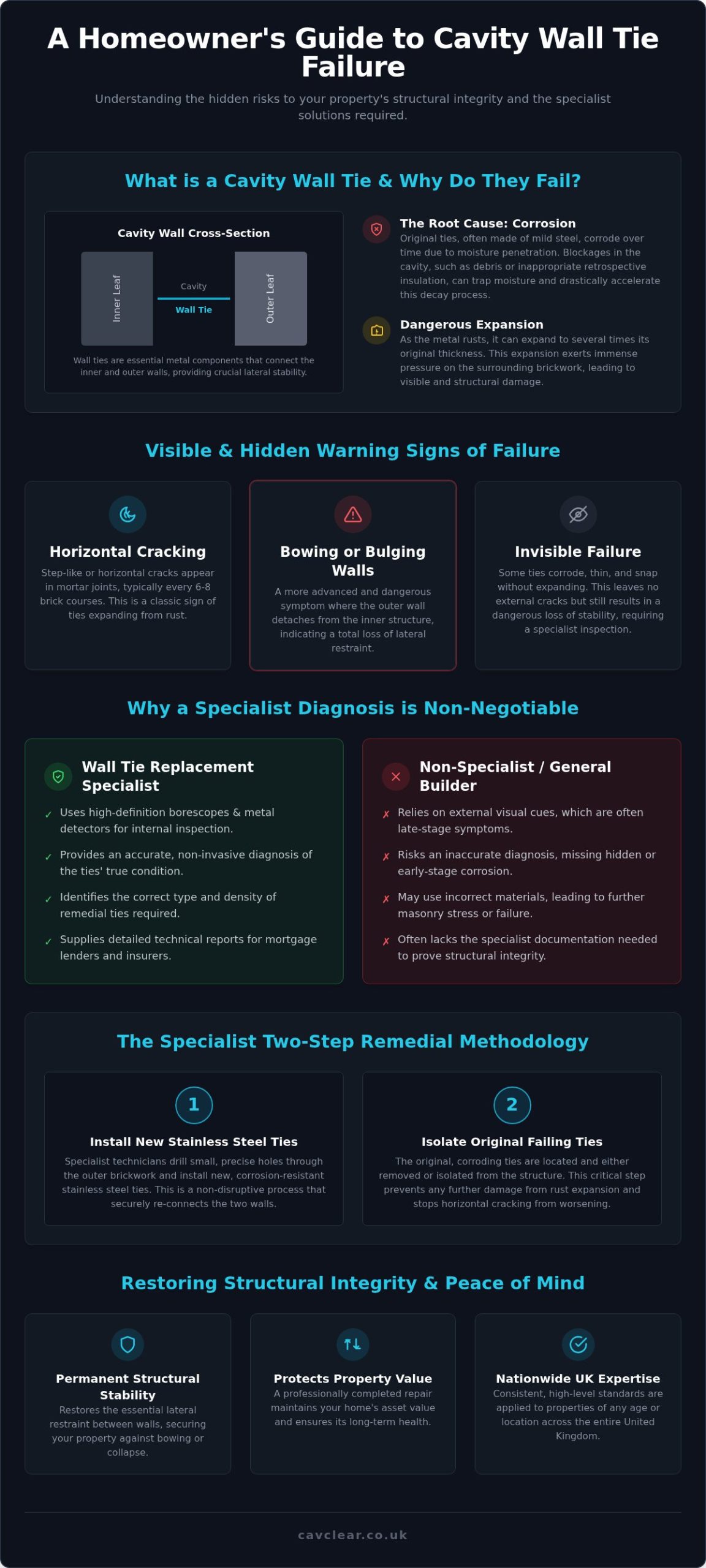
To understand the necessity of expert intervention, homeowners often ask: What are cavity wall ties? These components are vital metal connectors that bridge the gap between the internal load-bearing wall and the external masonry leaf. They provide lateral restraint, which prevents the outer wall from bowing or collapsing under wind pressure or the weight of the structure. This architectural setup creates a specific space known as the cavity. For a detailed explanation of this design, you can read our guide: What is a Cavity Wall? The Homeowner’s Guide to UK Property Structure. It’s critical that this cavity remains clear of debris and retrospective insulation. Blockages or moisture-trapping materials accelerate the corrosion of original ties, leading to a loss of structural stability over time.
Why General Builders May Miss Critical Signs
Many property owners assume a standard building contractor can handle structural repairs. However, general builders often rely on external visual cues like cracking, which only appear in the advanced stages of failure. A wall tie replacement specialist uses advanced diagnostic tools, such as high-definition borescopes and metal detectors, to see inside the cavity. This allows for a precise assessment of the ties’ physical condition without causing unnecessary damage to your brickwork. There are several risks when using non-specialists for this work:
- Inaccurate Diagnosis: Generalists may miss the early signs of corrosion or fail to identify the correct tie density required for your property.
- Incorrect Materials: Using the wrong type of remedial tie can lead to further masonry stress or premature failure.
- Lack of Documentation: Specialists provide detailed technical reports. This professional evidence is often required by insurers and mortgage lenders to prove that the property’s structural integrity is fully restored.
By choosing a specialist, you avoid the mess and disruption of “over-repairing” and receive a non-disruptive solution that focuses on permanent asset health.
Identifying the Symptoms of Failing Cavity Wall Ties
Recognizing the symptoms of wall tie failure is the first step toward securing your property’s future. The most common indicator is horizontal cracking along the mortar bed joints. This occurs because original mild steel ties undergo a chemical change when they corrode. As iron oxide forms, the metal expands to several times its original thickness. This physical expansion exerts massive upward pressure on the masonry, forcing the mortar joints apart. You will typically see these cracks appearing at regular intervals, usually every six to eight brick courses, corresponding to the original tie positions.
Bowing or bulging walls represent a more advanced and dangerous stage of failure. This symptom indicates a complete loss of lateral restraint. When ties snap or lose their grip, the outer masonry leaf is no longer tethered to the internal structure. It becomes susceptible to wind suction and the weight of the roof, leading to visible curves in the brickwork. In some cases, you might notice the lifting of roof edges or internal dampness where the moving wall has compromised the weather seal. However, ties can fail “invisibly” without any external cracking if the metal has thinned and snapped rather than expanded. A wall tie replacement specialist is required to identify these hidden risks before they lead to a collapse.
The Link Between Corrosion and Cavity Insulation
Retrospective cavity wall insulation is a significant contributor to accelerated tie decay. These materials often trap moisture within the cavity, holding it directly against the metal ties. This creates a permanently damp environment that triggers rapid oxidation. We maintain a firm stance against the installation of retrospective insulation due to these structural and environmental risks. If your property already has insulation, a specialist wall tie survey can determine if it’s currently compromising your structural integrity.
Visual Red Flags for Homeowners
Homeowners should distinguish between different types of masonry damage to avoid confusion. While step-cracking often points to foundation issues, horizontal bed-joint cracking is the hallmark of tie expansion. You should also look for rusted tie ends that have become visible through the mortar. These small red-brown stains are clear evidence of internal corrosion. If you notice these signs, it’s vital to act quickly to prevent further masonry damage. For a broader look at how internal cavity issues manifest externally, read our guide on Signs of Cavity Wall Insulation Problems in Your Home. Our nationwide team provides the technical precision needed to diagnose these red flags and implement a permanent, non-disruptive solution.
The Diagnostic Process: Why a Specialist Wall Tie Survey is Essential
A thorough diagnostic process is the foundation of any successful structural repair. While a general surveyor might identify external cracks, a wall tie replacement specialist uses precision equipment to determine the exact internal condition of the masonry. Relying on visual evidence alone is risky because Wall tie failure often progresses internally long before the brickwork shows distress. Our methodology involves a three-stage technical inspection: metal detection, borescope investigation, and mortar sampling. This systematic approach ensures that we identify the root cause of the problem rather than just treating the visible symptoms.
High-definition borescope cameras allow us to see directly into the cavity. We drill small, 10mm holes into the mortar joints to insert the camera, which provides a clear view of the ties’ physical state. This process reveals the presence of rust, the loss of sectional area, or the total detachment of the tie from the mortar bed. Simultaneously, we use deep-scan metal detectors to map the hidden tie pattern across every elevation. This mapping ensures we don’t just find the failed ties; it also identifies areas where the original installation was sparse or non-compliant with modern safety standards.
Mapping the Existing Wall Tie Pattern
Mapping is critical because historical building practices often resulted in inconsistent tie placement. Current standards recommend a minimum density of 2.5 ties per square metre. Our technicians verify if your property meets these requirements by checking the horizontal spacing, typically 900mm, and the vertical spacing, which is usually 450mm. We also identify missing ties in vulnerable areas, such as around window openings or at roof gables, where lateral restraint is most needed. This data-driven approach allows us to specify a remedial plan that is tailored to your building’s specific height and location.
The Non-Invasive Nature of Specialist Inspections
We prioritize a clean and non-disruptive methodology during every inspection. By using existing mortar joints for access, we ensure that the diagnostic phase leaves no permanent marks on your brickwork. The result of this process is a comprehensive technical report that serves as an essential document for property transactions. If your property shows signs of moisture ingress, we may also recommend our Professional Damp Survey Guide: Costs, Process, and Expert Reports for 2026 to ensure the environment within the cavity is correctly managed. This evidence-based approach provides the long-term assurances required by mortgage lenders and insurers, proving that your property is structurally sound.
Remedial Solutions and the Replacement Methodology
A wall tie replacement specialist implements a multi-stage remedial strategy that addresses both the immediate loss of lateral restraint and the ongoing threat posed by corroded components. The process begins with the installation of new remedial ties at the correct density and pattern identified during the diagnostic survey. However, simply adding new ties is insufficient for long-term protection. We perform a critical second step: the isolation of the original failing ties. This involves locating each corroded tie and either cutting it back or using a protective sleeve. This ensures that the continued expansion of the rusting metal does not cause further horizontal cracking in your masonry, a step often overlooked by general contractors.
Once the structure is stabilized, our technicians focus on restoring the property’s aesthetic. We use specialist pointing and mortar tinting to ensure that the small access holes match the existing mortar joints perfectly. In cases where significant structural movement has already occurred, we integrate crack stitching techniques. This involves bonding stainless steel helical bars into the bed joints to bridge cracks and redistribute structural loads across the wall. This comprehensive approach is detailed in our guide on Wall Tie Replacement: The Essential Guide to Structural Stability in 2026. By following this methodical process, we provide a permanent solution that protects your property’s value.
Choosing the Correct Remedial Tie Type
Selecting the right tie depends on the specific condition and material of the masonry leaves. Mechanical expansion ties provide a fast, non-disruptive fix for solid brickwork. Conversely, resin-fix ties are preferred for weaker substrates or perforated bricks where a chemical bond is necessary for security. We exclusively specify 304 or 316 grade stainless steel for these components. These materials offer superior resistance to corrosion, ensuring that the new ties provide adequate lateral restraint for the lifetime of the building.
The Importance of Cavity Cleaning
A clear cavity is essential for preventing future damp issues and maintaining the health of the structure. During the replacement process, we ensure that any mortar droppings or debris within the cavity are removed. This prevents the formation of moisture bridges that can lead to internal dampness or cold spots. Our nationwide team uses a clean and non-disruptive methodology, ensuring that your work site remains tidy while we deliver technical precision across the UK. If you are ready to secure your property, you can book a professional wall tie survey to receive a definitive technical diagnosis.
Securing Your Property’s Future with CavClear
Choosing a wall tie replacement specialist is about more than just fixing a visible crack; it’s about making a vital investment in your property’s future. We understand that structural faults cause significant stress, but our methodical approach is designed to restore both your brickwork and your peace of mind. By focusing on technical precision and long-term asset health, we ensure that your property remains a safe, stable, and valuable environment. We replace the confusion of differing surveyor opinions with a single, authoritative diagnosis that prioritizes safety and structural certainty above all else.
Nationwide Expertise, Professional Standards
Our status as a nationwide contractor allows us to deliver consistent, high-quality remedial work across the entire UK. Choosing a nationwide wall tie replacement specialist ensures that you receive the same elite level of technical reporting and repair quality regardless of your location. Unlike local generalists who might offer a “quick-fix” that only masks the problem, we adhere to rigorous national building standards in every project we undertake. We frequently rectify the poor workmanship of others, often stepping in when previous repairs have failed because original ties weren’t isolated or the wrong remedial components were used. A specialist diagnostic report from our team provides the definitive evidence required to prove your property’s structural health to mortgage lenders, insurers, and future buyers.
The Value of Structural Integrity
Protecting the structural integrity of your home is the most effective way to preserve its market value over the long term. When wall ties fail, the resulting movement compromises the weather-tightness of the building. This often leads to secondary issues like damp penetration and mould growth, which can severely impact the internal environment and the health of the occupants. Our clean and non-disruptive methodology ensures that these risks are mitigated without the need for extensive, messy construction work. We treat your property with the professional rigor it deserves, ensuring that every remedial tie is installed with exactness to provide permanent lateral restraint and structural stability.
Moving from structural concern to structural certainty is a straightforward process when you work with our accredited technicians. We provide a transparent, no-nonsense service that prioritizes the safety and longevity of your masonry. If you’ve noticed horizontal cracking, bulging walls, or have concerns about the age of your property, don’t wait for the problem to escalate into a structural emergency. Contact CavClear for a professional wall tie survey to secure your property’s future today.
Restore Your Property’s Structural Stability
Structural integrity is the foundation of your property’s value and safety. We have explored how horizontal cracking and bulging walls are not just aesthetic issues but clear indicators of internal metal fatigue. A wall tie replacement specialist provides the technical precision necessary to look beyond the brickwork and identify the root cause of these failures. By utilizing advanced borescopes and metal detection, our team ensures that every repair is based on hard evidence rather than guesswork.
Securing your home involves more than just adding new ties. It requires a methodical approach that includes isolating original corroded components to prevent ongoing masonry damage. Our specialist accredited technicians offer nationwide UK coverage, delivering detailed technical reporting that validates the health of your asset for years to come. This professional rigor transforms structural uncertainty into long-term peace of mind. You don’t have to face property damage alone. Our expert team is ready to provide the calm, expert solutions your home requires. Book a Professional Wall Tie Survey with CavClear today to protect your investment and restore your comfort. We look forward to helping you secure your property’s future.
Frequently Asked Questions
What are the signs of cavity wall tie failure?
The primary indicators include horizontal cracking along mortar joints, bulging brickwork, and the lifting of roof edges. These symptoms occur because original mild steel ties expand significantly as they rust, exerting massive upward pressure on the masonry. In some instances, the failure is invisible, with ties snapping due to thinning rather than expansion. Identifying these signs early is vital to prevent structural collapse and maintain the long-term health of your property’s exterior.
How much does a specialist wall tie survey cost?
Professional survey and reporting fees are determined by the scale of the property and the depth of the technical inspection required. These inspections involve accredited technicians using specialized equipment to produce formal documentation and remedial action plans. While you might find general industry price ranges online, a specialist quote provides a fixed cost for a definitive technical diagnosis. This investment ensures you have the evidence needed for insurers or future property transactions.
Is it necessary to replace all the wall ties in a house?
A full replacement is often the most secure long-term investment for your property. A wall tie replacement specialist uses metal detection to map the existing pattern and density across all elevations. If the original ties are failing due to widespread corrosion, replacing the entire system ensures consistent lateral restraint. Localized repairs might address immediate concerns, but a comprehensive approach prevents future issues and provides the long-term assurances needed for asset health.
How long does the wall tie replacement process take?
The duration of the remedial process depends on the scale of the building and the volume of ties requiring replacement. A typical project often spans several days as technicians must carefully install new ties and isolate original components across every elevation. We prioritize a clean and non-disruptive methodology to ensure the work is completed efficiently without compromising quality. This methodical approach ensures your property’s structural integrity is restored with minimal impact on your daily routine.
Will replacing wall ties affect the appearance of my brickwork?
A specialist approach ensures that remedial work is virtually invisible once completed. We drill small access holes into the mortar joints rather than the bricks to install the new stainless steel ties. Once the original ties are isolated, we use color-matched mortar for pointing to finish the site. This methodical process ensures the aesthetic of your property is maintained while its structural stability and lateral restraint are fully restored for the future.
Can I sell a house with wall tie issues?
Selling a property with known structural faults is challenging and often leads to mortgage rejections for potential buyers. Most surveyors will flag signs of failure, such as horizontal cracking or bulging walls, during a homebuyer’s report. To secure the sale and protect the property’s market value, you should obtain a specialist diagnostic report and complete any necessary remedial works. This professional documentation provides the structural certainty required by lenders and insurers.
Why should I choose a specialist over a general builder?
Choosing a wall tie replacement specialist ensures you have access to specific diagnostic tools, such as high-definition borescopes and metal detectors, that general builders don’t typically carry. Specialists understand the technical requirements for different masonry substrates and ensure that original ties are correctly isolated to prevent further cracking. Generalists often miss hidden corrosion or use incorrect remedial components, which can lead to future failure. Our accredited technicians provide the technical precision needed for permanent structural fixes.
What happens if I ignore failing wall ties?
Ignoring the signs of failure leads to progressive structural instability and the eventual risk of wall collapse. As ties continue to corrode and expand, they force masonry apart, allowing moisture to enter the cavity. This environment often causes secondary issues like damp penetration and mould growth. Over time, the outer masonry leaf can bow outward, making the property unsafe and significantly reducing its long-term asset value and structural integrity.
Arrange a cavity wall tie survey
Start with an inspection of the accessible masonry and sampled wall ties. CavClear provides a written report with photographs, findings, limitations and recommendations, with a quotation for repairs where required. We can also inspect insulated cavities using an agreed access method.
Arrange a cavity wall tie survey or send your property and access details. Call 0333 220 2463.
Recent Comments