
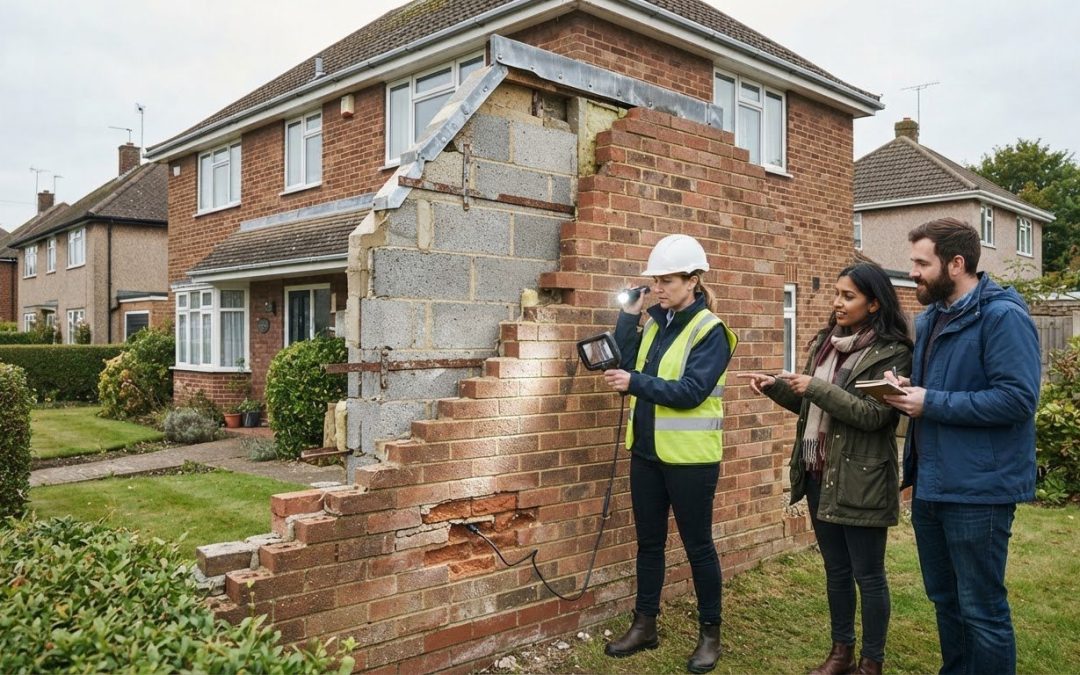
A warning about wall tie issues flagged on a homebuyer survey is a reason to investigate, not proof that the wall is failing. Wall ties connect the inner and outer masonry leaves of a cavity wall. Corrosion or failure can contribute to cracking and outward movement, but a specialist inspection is needed to establish the condition of the ties and whether remedial work is required.
It’s understandable to feel concerned when a survey raises a structural issue, especially while you’re deciding whether to proceed with a purchase. The key is to find out what the surveyor observed and whether further investigation supports a wall tie problem.
This article explains what remedial wall ties do, which visible signs can prompt further investigation and how a specialist survey assesses suspected failure. It also covers how confirmed defects may affect a sale, so you can understand the findings and consider your next steps calmly.
Key Takeaways
- Age and tie material can help explain risk: older cavity-wall homes may have mild steel ties that corrode over time.
- Look out for horizontal cracking along mortar joints, bulging brickwork or signs that the outer wall is moving.
- A specialist survey can investigate suspected failure using visual checks and closer inspection inside the cavity.
- Clarify whether the survey has identified visible warning signs or confirmed a tie problem before deciding on remedial work.
- When damp or insulation problems may be affecting the cavity, a cavity wall survey can help identify whether further investigation or remedial work is appropriate.
Which properties are most at risk of wall tie failure?
Age and tie material help explain why some UK cavity walls face greater corrosion risk. Homes built in particular periods may have older metal ties, but age alone cannot confirm failure.
Age and Material Risks
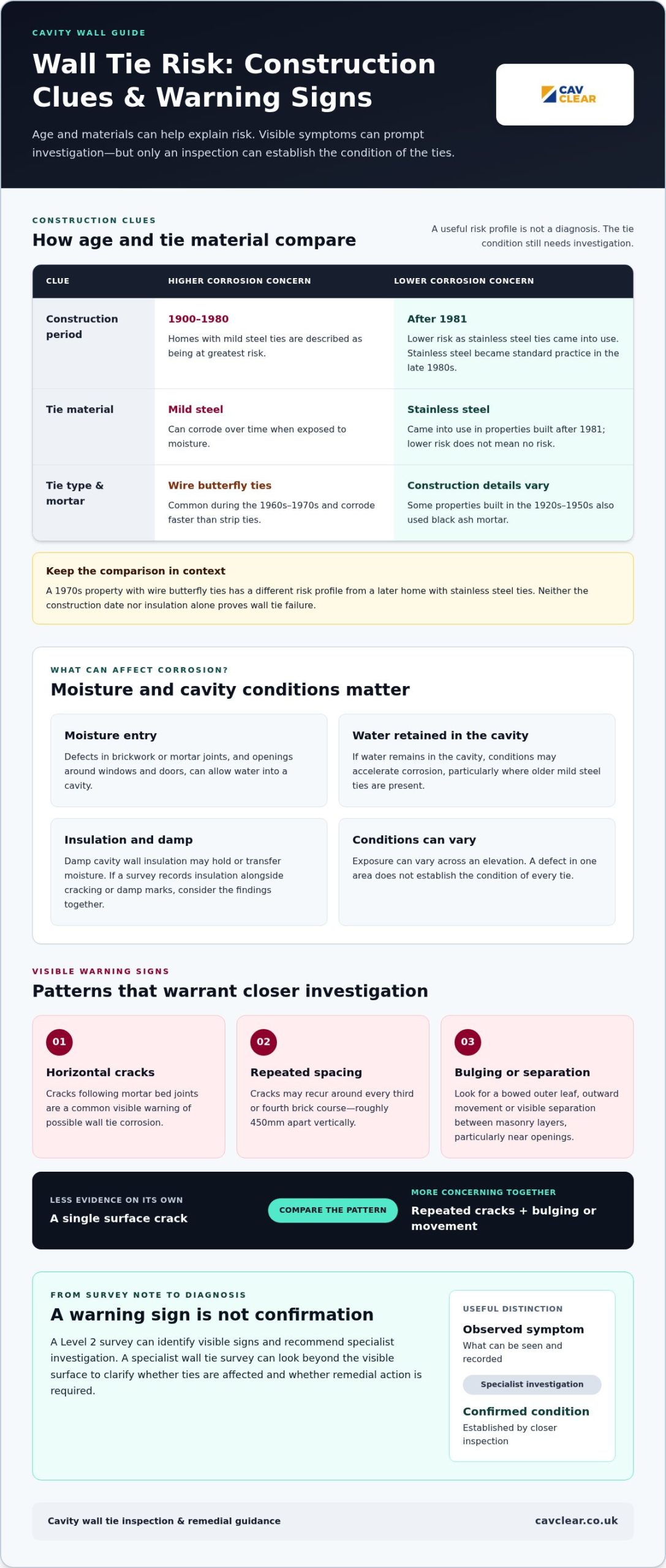
Wall ties in many older cavity walls were made from mild steel, which can corrode over time. UK cavity wall construction became standard from the 1920s onwards, and homes built between 1900 and 1980 with mild steel ties are at greatest risk. For a buyer, the construction period is a useful clue, not a diagnosis.
Properties built after 1981 are at lower risk because stainless steel ties came into use, with stainless steel becoming standard practice in the late 1980s. Risk is not absent in newer homes. Some properties built in the 1920s to 1950s also used black ash mortar, while wire butterfly ties were common during the 1960s-1970s and corrode faster than strip ties.
Causes of Tie Corrosion
Wall tie corrosion occurs when metal ties are exposed to moisture and gradually lose strength. The tie material, mortar around it and conditions within the cavity can all affect corrosion. For a homebuyer, these factors are useful context, but only an inspection can establish whether the ties have been affected.
Moisture can enter a cavity through defects in brickwork, mortar joints or openings around windows and doors. If water remains in the cavity, it may create conditions that accelerate corrosion, particularly where older mild steel ties are present. Exposure can vary across an elevation, so a defect in one area does not establish the condition of every tie.
Cavity wall insulation may be relevant if it allows moisture to reach metal ties. Damp insulation can hold or transfer moisture within the cavity, increasing concern about susceptible ties. If a survey records insulation alongside cracking or damp marks, consider the findings together rather than assuming each issue has a separate cause.
Construction details also matter. Tie ends sit within mortar joints, and the cavity separates the inner and outer masonry leaves. Poor drainage, water penetration or mortar that retains moisture can expose embedded metal to damp conditions. In walls with older mild steel ties, this may contribute to corrosion and reduced restraint between the leaves.
For buyers, compare the home’s age and materials with the survey’s observations. A 1970s property with wire butterfly ties presents a different risk profile from a later home with stainless steel ties. Neither construction date nor insulation alone proves wall tie failure; the condition of the ties and surrounding cavity requires investigation.
Which Warning Signs Signal Remedial Wall Tie Problems?
Wall tie failure can contribute to cracking, outward movement of the outer brickwork and, in serious cases, structural instability. The significance depends on the extent of corrosion and movement, so visible signs must be assessed in context.
Cracking, Bulging and Wall Separation
Horizontal cracks following mortar bed joints are a common visible warning of possible wall tie corrosion. They may recur around every third or fourth course of bricks, roughly 450mm apart vertically. That pattern matters because repeated cracking can indicate a problem affecting several ties, rather than one isolated defect.
Corroding ties can expand and put pressure on the surrounding masonry, contributing to cracks or outward movement. Look for signs such as a bowed outer leaf, particularly near openings like windows and doors. A crack alone does not prove tie failure, but repeated cracking alongside bulging warrants closer investigation.
Signs Noted During a Survey
A surveyor may record horizontal mortar-joint cracks, a bulging outer leaf or visible separation between masonry layers. A Level 2 survey can identify visible signs of cavity wall tie failure and recommend specialist investigation where needed. The report’s wording helps distinguish an observed symptom from a confirmed defect.
Compare the survey notes with the location and pattern of visible damage. Cracks across several courses combined with outward movement on the same elevation present different evidence from a single hairline crack. Damp marks or moisture around brickwork may also need attention, but do not by themselves prove tie corrosion.
Consider the full elevation, not just one isolated patch. Repeated horizontal cracks at similar intervals, bulging brickwork and signs of separation are more concerning together than a single surface crack. Note whether the survey describes the outer leaf as uneven or displaced, and whether it recommends specialist investigation.
The extent and distribution of visible damage, together with evidence of movement, help determine how serious a concern may be. Cracks that widen, recur along mortar joints or appear alongside a bowed wall need a clearer diagnosis. A recommendation for specialist investigation means the cavity should be examined; it does not prove that every tie has failed.
Record the wording and location of each defect before discussing next steps. A specialist wall tie survey can investigate suspected tie problems beyond the visible surface and help clarify whether remedial action is required.
Visual inspection, metal detection and borescope surveys
A wall tie investigation combines visible observations with checks inside the cavity. Each method provides different information about the masonry leaves and any remedial work that may be needed.
Visual Inspection and Metal Detection
A visual inspection records brickwork movement, cracking, mortar condition and defects around openings. These observations help identify the elevations or areas that may need closer examination.
Metal detection can help locate ties behind the outer leaf, but it cannot show their full condition. Readings need to be considered alongside visible evidence and, where appropriate, direct inspection inside the cavity. Finding metal does not, by itself, establish that a tie is still providing effective restraint.
For example, horizontal cracks may prompt targeted checks near the affected mortar joints. Comparing those locations with areas that show less visible damage can help build a clearer picture of the concern.
Sampling and Inspection Holes
Representative sampling involves examining selected locations to assess tie condition across a wall. The inspection points should relate to the building’s construction and visible defects. One opening cannot establish the condition of every tie.
A borescope inspection typically uses a 10mm-diameter hole through a mortar joint in the outer leaf. An endoscope passed through the hole gives a view inside the cavity, where the tie and surrounding materials can be examined. The small access point allows direct inspection without removing a section of brickwork.
Location matters. Checks near a crack, around an opening or on a separate elevation may reveal different cavity conditions. Findings from several selected points can be considered together, while recognising that sampling does not provide a view of every tie in the property.
Survey Reporting
A useful survey report records the inspection findings, including endoscopic observations, photographs and recommendations for remedial action. This helps buyers understand what was inspected and what the findings indicate.
Photographs can show what was observed through each access point, while written notes connect those observations to the relevant part of the wall. The report should distinguish visible symptoms from findings inside the cavity, so that any next steps are based on evidence rather than assumption.
After the inspection, the access holes are filled. For a buyer, the locations, images and recommendations in the report help clarify whether further investigation or remedial work is indicated, and which parts of the wall need attention.
Can I sell a house with wall tie failure?
A house with wall tie failure can still be sold, but confirmed defects and remedial work may affect a buyer’s assessment. A residential wall tie survey typically takes one to two hours on site.
When wall tie issues are flagged on a homebuyer survey, treat the wording as a prompt to understand the findings, not proof that every tie has failed. Mortgage decisions, valuations and insurance terms can depend on the reported condition and evidence of repairs. Buyers and sellers can discuss how to handle any necessary work as part of the purchase.
Repair and Replacement Duration
Replacement duration depends on the property and the extent of the work, which matters when planning a purchase or move. Wall tie replacement for a standard UK semi-detached house typically takes 3-5 days; a detached property typically takes 5-7 days.
Replacement stainless steel ties can be fitted through small holes without removing brickwork. The time required still depends on the building and the affected walls. A survey helps establish the scope of work, allowing a buyer to understand the likely requirements before planning around repairs.
Failed wall ties need replacement to maintain wall integrity, according to the UK Government. Keep the survey report and any remedial records together after work. Read any guarantee for its stated duration, scope and conditions rather than assuming it covers every future issue.
Effects on Mortgages, Value and Insurance
A survey finding may influence how a lender views a property, particularly if it records active movement or recommends remedial work. Any effect on valuation depends on the extent of the defect, the available evidence and whether repairs have been completed and documented.
Insurance terms depend on the property and policy. Review the available condition information and understand how existing wall damage or completed repairs are treated. Horizontal cracking alone does not establish the full condition of a cavity wall, so a specialist report can provide more specific findings.
Clear records show what was inspected, what work took place and whether the original concern was addressed. Survey findings and repair documentation give lenders, valuers and insurers more useful detail than a brief note about cracks or tie failure.
Repair Costs and Buyer Negotiations
There is no universal rule making either the buyer or seller responsible for repair costs in every purchase. The parties can discuss whether the seller completes the work, the buyer arranges it after completion, or the agreed sale terms reflect the remedial requirements.
Use the survey findings to keep that discussion specific. For example, distinguish confirmed failed ties from visible horizontal cracking that still needs investigation. If a homebuyer survey flags suspected wall tie failure, clarify the evidence and scope of any required work before deciding how to proceed.
Replacement requirements vary according to the number and location of affected ties, access to the wall and the extent of movement. Establishing these details before agreeing a course of action helps buyers assess the practical implications alongside the property’s condition.
Wall tie concerns flagged in homebuyer reports
A homebuyer report may identify visible signs of wall tie trouble without confirming the condition of every tie. When a survey flags wall tie issues, read its observations and recommendations carefully rather than treating them as proof that all ties have failed.
What do different RICS survey levels say about wall tie concerns? A Level 2 survey can identify visible signs of cavity wall tie failure and recommend specialist investigation. A RICS Level 3 Building Survey provides a detailed assessment of structural defects, including cavity wall tie issues.
Check what evidence the report records. It may describe horizontal cracking, a bulging outer leaf or cracks around openings. These observations identify where the surveyor saw a concern, but do not establish the condition of hidden ties throughout the property. If the findings are unclear, focus on the location, wording and recommended next step.
Construction age can add useful context. A property built before 1985 may have original mild steel ties, which are prone to hidden corrosion. That background can support further investigation, but the property’s age and tie material alone don’t confirm that replacement is needed.
The UK Government identifies corroded or missing wall ties and a bulging outer leaf as cavity wall issues that may need re-inspection. If the report notes one of these conditions, check whether it identifies the affected area and recommends closer inspection of the cavity. This helps distinguish visible symptoms from findings established by examining the ties directly.
A report may mention the possible scale of remedial work. For example, a three-bedroom UK semi-detached house might need 300-500 replacement wall ties. This is an illustration, not a standard allowance. The number required depends on the property’s condition and inspection findings.
Before deciding what the report means for your purchase, identify the visible defect, its location and the surveyor’s recommended next step. If the report describes suspected corrosion rather than a verified tie condition, a specialist investigation can provide more specific evidence. Keep those findings with the homebuyer report for a clearer understanding of the property.
If a report raises concerns about tie condition, arrange a specialist wall tie survey to investigate the cavity and clarify the findings.
CavClear: Cavity Wall Insulation Removal
CavClear provides cavity wall surveys and Wall Tie Surveys to investigate concerns identified in a homebuyer report. If an inspection finds failed ties, Wall Tie Replacement can address the defect. Where defective, damp or problematic insulation is causing issues, Cavity Wall Insulation Removal may be appropriate.
The right next step depends on the evidence. A specialist survey can assess the cavity and ties, helping distinguish visible symptoms from defects that need remedial work. If a report mentions both damp and wall tie concerns, investigating the cavity can help clarify how the issues relate.
Share the survey findings when discussing your property so the investigation can focus on the concerns recorded in the report. Contact CavClear to discuss your homebuyer survey and possible next steps.
Move from survey concern to a clear decision
When wall tie issues are flagged on a homebuyer survey, turn the report’s observations into a clearer picture of the property’s condition. Keep the survey findings and any specialist inspection records together, so you can make decisions based on evidence rather than uncertainty.
If you’re still weighing up a purchase, focus on what further investigation could clarify and how any recommended work fits your plans. A measured assessment can help you understand the issue, discuss it with the relevant people and decide how to proceed with greater confidence.
CavClear can help you consider the appropriate next step for wall tie concerns. Contact CavClear about wall ties to discuss your property.
A well-informed decision starts with understanding what the survey has actually found. When you’re ready, arrange a specialist survey with CavClear to get clearer information about the concern and possible next steps.
Frequently Asked Questions
What Are Remedial Wall Ties and Why Are They Crucial?
Remedial wall ties are replacement connectors used when existing ties have failed or lost strength. They help maintain the connection between the inner and outer leaves of cavity masonry, supporting the wall’s integrity. For example, if an inspection confirms corroded ties behind a cracked elevation, replacement can restore restraint between the leaves. The appropriate work depends on the inspection findings and the surrounding brickwork.
How much does wall tie replacement cost?
Wall tie replacement has no single price because the work is assessed for each property. The number and location of affected ties, access and the extent of remedial work all influence the scope and fee. A property-specific quotation follows an assessment of these requirements. For a buyer, a survey identifying the location and condition of affected ties is more useful for budgeting than a general estimate.
Quick Reference: Should You Book a Wall Tie Survey?
Consider a specialist survey if a homebuyer report recommends further investigation, or if the property has recurring masonry cracks or visible wall movement. A survey is also useful when you need to clarify whether a reported concern requires remedial work before deciding on a purchase. Keep the report available so the inspection can focus on its recorded observations, rather than assuming an older cavity-wall property is defective.
What Specific Indicators Should Trigger a Survey?
Repeated cracks along mortar joints, a wall that appears to bow, or separation around an opening are practical reasons to seek closer investigation. Note each crack’s location and direction, and photograph the same areas over time to record visible change. A single crack can have causes other than tie failure, so its pattern and relationship to other movement matter when deciding what needs inspection.
Can Non-Experts Address Wall Tie Challenges?
You can record visible changes, but you cannot reliably determine the condition of ties hidden inside a cavity. Avoid drilling into mortar joints or attempting repairs based only on surface cracking. A metal detector can help locate metal, but a reading alone does not show whether a tie is sound. Specialist investigation provides evidence to guide remedial decisions and helps avoid work based on guesswork.
How Do Remedial Wall Tie Options Compare?
The appropriate response depends on what an inspection finds. A wall tie survey can establish whether further investigation is needed; confirmed failed ties may require wall tie replacement. If cavity wall insulation is also associated with moisture concerns, the cavity condition needs assessment before deciding whether removal is relevant. These are distinct interventions, not automatic alternatives, and the findings should guide which work, if any, addresses the identified defect.
What are wall ties and what problems can affect them in UK homes?
Wall ties are metal connectors embedded in mortar joints that hold the inner and outer masonry leaves of a cavity wall together. In UK homes, corrosion can weaken older metal ties; ties can also be missing or no longer provide effective restraint. Moisture in the cavity may contribute to corrosion, and insulation that bridges moisture to ties may increase concern. An inspection establishes whether these factors have affected the property.
What signs of wall tie failure should a homebuyer survey look for?
A homebuyer survey should note patterns of horizontal cracking, visible bowing or separation in the outer brick leaf, and where those signs occur. The location matters: movement near a window opening may need recording separately from cracking elsewhere on the elevation. A Level 2 survey can identify visible signs and recommend specialist investigation; a Level 3 survey gives a more detailed assessment of structural defects.
Recent Comments