
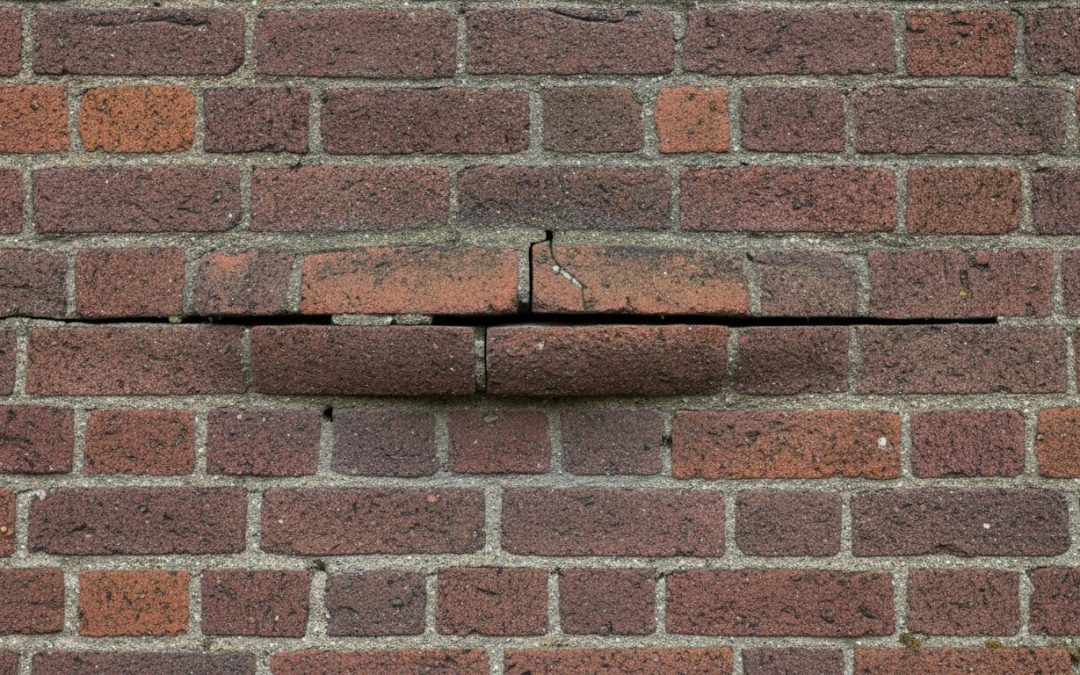
Could the invisible steel components within your walls be slowly compromising your home’s safety? For properties built before 1981, the risk of wall tie corrosion is a significant concern because the galvanized steel used during that era often has a limited lifespan. This chemical process is frequently hidden from view, yet it possesses the strength to cause visible bulging or horizontal cracking in your masonry as the rusting metal expands.
It’s natural to feel concerned when you spot these symptoms, especially when faced with conflicting advice about the severity of the issue. You want to protect your investment and ensure your family’s safety without the fear of sudden structural failure. We understand that property maintenance is about more than just repairs; it’s about restoring your peace of mind and the long-term health of your asset.
This article provides a logical roadmap to help you identify the signs of failure and understand the risks involved. You’ll discover how professional surveys use specialist equipment to diagnose the problem accurately and learn about the non-disruptive structural solutions available to secure your property. We’ll also explain why certain modern insulation practices can accelerate this damage and how a methodical approach to replacement protects your home’s integrity for decades to come.
Key Takeaways
- Learn why older mild steel ties are prone to failure and how modern stainless steel standards ensure long-term structural stability.
- Understand how retrospective cavity insulation can trap moisture and accelerate wall tie corrosion, leading to hidden damage within your masonry.
- Discover how to identify early warning signs like horizontal mortar cracking or bulging brickwork before they lead to serious structural instability.
- Find out why a professional survey using specialist borescope equipment is essential for accurately diagnosing the condition of your ties.
- Learn how a methodical replacement process provides a permanent structural solution that restores your property’s value and safety.
What is Wall Tie Corrosion and Why Does it Occur?
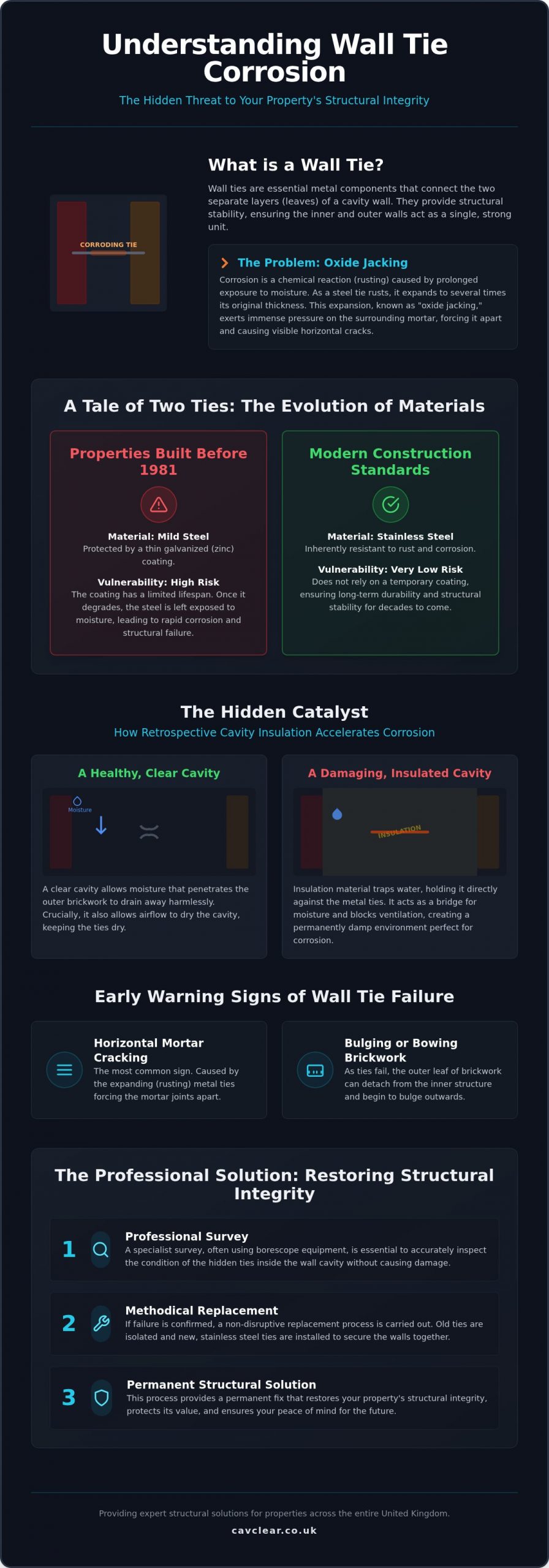
Modern UK properties are typically constructed using cavity walls; two separate layers of masonry with a hollow space between them. To ensure these walls act as a single, stable unit, they’re joined by cavity wall ties. These essential structural connectors transmit lateral loads between the internal and external leaves, preventing the outer wall from bowing or collapsing. When these metal components begin to degrade, the structural integrity of the entire building is compromised.
The core issue behind wall tie corrosion is a chemical process known as oxidation. This occurs when the steel ties are exposed to moisture and oxygen over prolonged periods. During this reaction, the metal reverts to its natural state of iron oxide, or rust. While this sounds like a simple surface issue, the chemical change fundamentally alters the physical properties of the tie, weakening the bond between the brickwork leaves and threatening the building’s stability.
The Evolution of Cavity Wall Tie Materials
UK housing stock built prior to 1981 relied heavily on mild steel ties. To protect these from the elements, manufacturers applied a thin layer of zinc, known as galvanization. However, time has proven that these early coatings often provide insufficient long-term protection against the damp conditions found within a wall cavity. Once the zinc layer sacrifices itself, the underlying steel is left vulnerable to the environment.
In contrast, modern construction standards now mandate the use of austenitic stainless steel. These ties are inherently resistant to environmental moisture and don’t rely on a temporary coating for their longevity. For property owners, understanding the age of their building is the first step in assessing whether their home contains the high-risk mild steel variants that are prone to failure.
Environmental Factors That Trigger Corrosion
Several external conditions accelerate the degradation of metal ties. Exposure to driving rain is a primary catalyst, especially in properties with porous mortar that allows water to seep through to the cavity. In coastal regions, salt air significantly increases the rate of chemical reaction, often shortening the life expectancy of galvanized ties compared to those in inland areas. When moisture reaches the tie, the oxidation process begins in earnest.
As the metal rusts, it undergoes a physical transformation that damages the surrounding masonry. Oxide jacking is the primary cause of horizontal masonry cracking, occurring when corroding metal expands to several times its original thickness. This expansion exerts immense pressure on the mortar joints, forcing them apart and creating the characteristic cracks that signal a need for professional intervention. Addressing wall tie corrosion early prevents these minor cracks from evolving into significant structural instability.
The Hidden Catalyst: How Cavity Wall Insulation Accelerates Corrosion
While environmental factors like salt air and driving rain provide the fuel for structural decay, retrospective cavity wall insulation often acts as the primary catalyst. A clear cavity is a functional design feature intended to keep the inner leaf of a property dry. By filling this space with insulation materials, the wall’s natural ability to manage moisture is fundamentally compromised. This intervention creates a high-risk environment where wall tie corrosion can flourish undetected behind the masonry.
The insulation material frequently serves as a physical bridge for moisture to cross from the outer brickwork to the inner leaf. In an empty cavity, water seeping through porous bricks or mortar simply drains away. However, when mineral wool or foam is present, it can trap and hold this water directly against the metal ties. This constant contact with saturated material prevents the protective zinc coating from performing its job, leading to a much faster rate of oxidation than would occur in a ventilated space.
The lack of internal ventilation is equally damaging. Clear cavities rely on steady airflow to dry out condensation and incidental moisture. Insulation chokes this airflow, creating a permanently damp microclimate. This case study of wall tie failure highlights how moisture retention within wall assemblies leads to significant structural compromise. Without the ability to dry out, even the highest quality galvanized ties will eventually succumb to the relentless damp.
Moisture Bridging and the Cavity Environment
In high-exposure zones across the UK, mineral wool and foam insulation are particularly susceptible to saturation. Once these materials absorb water, they become heavy, sodden masses that cannot dry out naturally. This saturated state doesn’t just reduce thermal efficiency; it ensures the structural metalwork is bathed in moisture 24 hours a day. For properties showing signs of distress, Cavity wall insulation removal is often the only viable path to protecting the building’s future.
Why Insulation Removal is Often the First Step
Attempting to treat wall tie corrosion while leaving damp insulation in the cavity is a temporary patch rather than a permanent fix. Saturated insulation will continue to harbor moisture, potentially affecting the new installation and causing internal damp issues. Removing the defective material restores the cavity’s original “drain and dry” function, creating a healthy environment for the masonry. We recommend starting with a professional cavity wall survey to accurately assess the condition of your insulation and ties before any remedial work begins. If you’re concerned about the state of your property’s exterior, speaking with a nationwide specialist can provide the clarity you need to move forward.
Identifying the Symptoms of Failing Cavity Wall Ties
Spotting the early warning signs of structural distress is vital for maintaining your property’s safety. While the oxidation process happens inside the cavity, it eventually forces the external masonry to react. The most recognizable symptom of wall tie corrosion is horizontal cracking along the mortar joints. These cracks typically appear at regular intervals, often every four to six brick courses, as the expanding rust from the embedded ties exerts upward pressure on the brickwork. This expansion, previously described as oxide jacking, creates a distinctive pattern that differentiates it from other types of masonry failure.
You might notice these cracks appearing first at the top of a wall or near the gable end. This occurs because the upper sections of a building experience the greatest wind loading and have less weight from above to hold the masonry in place. As the ties weaken, the outer leaf begins to detach from the inner structural leaf. This detachment often leads to a visible “bulging” or bowing effect, where the wall appears to curve outward. If you stand at the corner of your property and look along the face of the brickwork, any deviations from a flat, vertical plane are a serious cause for concern.
It is important to understand that not all tie types provide these clear visual warnings. Properties built with lightweight wire ties, such as “butterfly” ties, may show no external cracking at all. These thinner ties can corrode until they snap completely, leaving the outer leaf entirely unsupported without any mortar displacement. In these cases, a professional survey is the only way to confirm the wall’s stability.
Visual Indicators in External Masonry
Distinguishing between structural failure and simple settlement is a technical task. While settlement cracks often run diagonally, wall tie failure typically follows the horizontal bed joints. Other indicators include the lifting of window sills or the displacement of lintels above doors and windows. You should also check for internal symptoms. Unexplained damp patches can occur when a corroding tie allows water to bridge the cavity, and in severe cases, you may see the internal plasterwork separating from the wall as the two leaves of masonry move independently.
The Risk of Sudden Structural Failure
The primary danger of neglected corrosion is the risk of a sudden collapse. When the outer leaf is no longer securely tied to the inner leaf, it becomes a expert-standing skin of masonry. High wind pressure can create a vacuum effect that pulls this unstable leaf outward, leading to catastrophic failure. Beyond the immediate safety risks, failing ties significantly impact property value. Most surveyors will flag these issues during a home purchase, making it difficult for buyers to secure a mortgage until a specialist Wall tie replacement program is completed. Addressing these symptoms early ensures your home remains a safe, mortgageable asset.
The Professional Wall Tie Survey and Replacement Process
Determining the exact state of your building’s structural framework requires more than a visual inspection. While external cracking provides a clue, a professional survey provides the scientific confirmation needed to plan a remedial strategy. Specialist technicians use high-sensitivity metal detectors to map the exact location and density of the existing ties. This mapping ensures that any remedial work targets the areas of greatest risk while confirming whether the original installation met the required safety standards.
Once located, we perform a borescopic inspection. This involves drilling small, 10mm holes into the mortar joints to insert a high-definition camera. This allows for the visual confirmation of the degree of wall tie corrosion without the need for invasive masonry removal. We can see exactly how much metal section loss has occurred and whether the ties are still providing structural restraint. This diagnostic process moves from observation to recommendation with technical precision.
What to Expect During a Specialist Survey
Borescopic investigations are designed to be entirely non-disruptive, leaving your home’s exterior virtually untouched. Following the inspection, you’ll receive a detailed technical report. This document is a vital asset; it provides the evidence required by insurance companies or mortgage lenders to prove the property is structurally sound. For a broader understanding of property health, you may also find our professional damp survey guide helpful in identifying related environmental issues that could accelerate metal degradation.
Remedial Tie Installation Techniques
Remedial work involves the installation of new, austenitic stainless steel ties that are built to last. We typically use either mechanical expansion ties, which grip the masonry through torque, or resin-bonded anchors that use a chemical adhesive for a permanent bond. A critical step that general builders often overlook is the isolation of the old, failing ties. We fit these corroding components with foam sleeves or physically disconnect them from the outer leaf. This prevents ongoing wall tie corrosion and further oxide jacking from damaging the masonry. Finally, we use a process called pointing over. By matching the existing mortar color, we ensure the repair remains virtually invisible to the naked eye.
If you suspect your property is at risk, booking a professional wall tie survey with our nationwide team is the most reliable way to secure your home’s future.
Protecting Your Property’s Structural Integrity for the Future
Addressing wall tie corrosion is not merely about fixing a cosmetic crack; it’s a fundamental investment in your property’s structural health. A professional wall tie replacement program provides a permanent structural fix that secures the outer leaf of your masonry for decades. Unlike temporary patches or superficial pointing, installing stainless steel remedial ties restores the original design intent of the building. This ensures that the inner and outer walls act as a single, stable unit once again, capable of withstanding the lateral loads and wind pressures they were designed to manage.
Maintaining a clear, ventilated cavity is central to this long-term protection. As we’ve explored, the presence of trapped moisture is the primary driver of metal degradation. By ensuring the cavity remains an empty, breathable space, you allow the masonry to manage moisture naturally. This proactive approach prevents the recurrence of damp issues and protects the new installation from the environmental stresses that compromised the original galvanized ties. Taking action at the first sign of distress is also a logical financial decision. Early intervention prevents the need for expensive masonry reconstruction or the total rebuilding of elevations that have bowed beyond the point of simple repair.
The Long-Term Value of Specialist Repairs
A specialist repair does more than just stabilize a wall; it provides the documentation necessary for future property transactions. When you eventually decide to sell your home, having a structural certification from a nationwide expert is a powerful asset. It gives potential buyers and mortgage lenders the confidence that the building is safe and that the work was performed to high technical standards. For property owners dealing with complex moisture issues, consulting with dampness specialists ensures that every environmental factor affecting your home’s integrity is addressed. These repairs are clean, efficient, and non-disruptive, designed to restore your comfort and peace of mind.
Next Steps for Homeowners
We advise homeowners to be cautious of general builders who may offer to repoint cracks without performing a proper borescopic investigation. Without the correct specialist equipment, it’s impossible to confirm the condition of the metalwork inside the wall. Choosing a specialist ensures that the underlying cause of the problem is identified and rectified correctly the first time. CavClear operates as a nationwide partner for structural restoration, combining regional expertise with high-level professional standards. If you’ve noticed horizontal cracking or bulging in your brickwork, the most responsible path forward is to contact CavClear for a professional wall tie inspection. Our methodical survey process will provide the clarity you need to protect your property’s future value and safety.
Secure Your Home’s Structural Future
Protecting your property from structural decay requires a methodical approach that moves beyond temporary fixes. You’ve discovered that wall tie corrosion is often an invisible process, significantly accelerated by moisture-trapping insulation and harsh environmental conditions. By identifying symptoms like horizontal cracking or bulging masonry early, you can prevent the need for expensive reconstruction while restoring your home’s long-term market value.
Our accredited structural technicians provide the technical precision needed to diagnose and rectify these faults with minimal disruption. We deliver comprehensive technical reports that serve as vital evidence for insurers and mortgage lenders, ensuring your asset remains protected. With nationwide UK coverage, we bring specialist borescopic equipment and professional rigor directly to your door to provide a permanent structural solution.
Don’t leave your building’s stability to chance. Book a Specialist Wall Tie Survey with CavClear today to receive a definitive assessment of your property’s health. We’re here to help you restore the comfort and safety of your home with expert solutions you can trust.
Frequently Asked Questions
How much does a wall tie survey cost in the UK?
The cost of a technical survey depends on the size of your property and the complexity of the reporting required. Generally, professional fees cover the use of specialist borescopic equipment and the expertise of an accredited technician to map and inspect the ties. This investment is essential for accurately diagnosing structural issues before they become catastrophic, providing a clear, logical roadmap for any necessary remedial work.
Can I sell my house if it has wall tie corrosion?
You can sell a house with structural issues, but wall tie corrosion often complicates the transaction process. Most home surveyors will identify signs of failure during their inspection, which can lead to mortgage lenders refusing funds until repairs are completed. To ensure a smooth sale, it’s advisable to have a professional survey and a structural certificate ready for potential buyers to demonstrate the property’s long-term integrity.
How long do remedial wall ties last?
Remedial wall ties manufactured from high-grade austenitic stainless steel are designed to last for the remaining life of the building. Unlike the original galvanized steel ties used in older UK housing stock, stainless steel is inherently resistant to the damp conditions found within a wall cavity. This makes the replacement a permanent structural fix rather than a temporary measure, ensuring your property remains safe and stable for decades.
Is wall tie corrosion covered by standard home insurance?
Standard home insurance policies typically exclude wall tie corrosion from their coverage. Insurers generally view the degradation of metal ties as a gradual maintenance issue or wear and tear rather than a sudden, accidental event. Because the damage occurs over several years, property owners are usually responsible for the cost of surveys and repairs. It’s best to check your specific policy wording for any structural maintenance clauses.
What happens if I ignore signs of wall tie failure?
Neglecting the symptoms of wall tie failure can lead to severe structural consequences. Over time, the outer leaf of masonry may detach completely from the inner leaf, causing significant bowing or even a total collapse during high winds. The expansion of rusting ties can also cause widespread cracking that necessitates expensive masonry reconstruction. Early intervention is the most cost-effective way to preserve your home’s safety and long-term asset value.
How long does the wall tie replacement process take?
The time required for replacement depends on the scale of the property and the number of elevations being treated. For most standard terraced or semi-detached homes, the process is typically completed within one to three working days. Our technicians focus on a non-disruptive methodology, ensuring the work is clean and efficient. The speed of the project doesn’t compromise the professional rigor required for a permanent structural fix.
Does cavity wall insulation cause wall ties to rust?
Retrospective cavity wall insulation often accelerates the rusting process of older galvanized ties. The material can act as a bridge that allows moisture to travel from the outer leaf directly to the metalwork. Additionally, insulation prevents the natural airflow required to dry out the cavity, creating a permanently damp environment. This is why we advocate for the removal of saturated insulation before performing any structural remedial work on the ties.
Can wall tie failure be fixed without replacing the bricks?
Specialist remedial techniques allow us to fix wall tie failure without the need for extensive brick replacement. We install new stainless steel ties through small holes drilled into the mortar joints, which are then pointed over to be virtually invisible. The original, corroded ties are isolated to prevent further expansion damage. Bricks only need replacing if the wall has already bowed or suffered significant structural displacement beyond the point of stabilization.
Arrange a cavity wall tie survey
Start with an inspection of the accessible masonry and sampled wall ties. CavClear provides a written report with photographs, findings, limitations and recommendations, with a quotation for repairs where required. We can also inspect insulated cavities using an agreed access method.
Arrange a cavity wall tie survey or send your property and access details. Call 0333 220 2463.
Recent Comments