
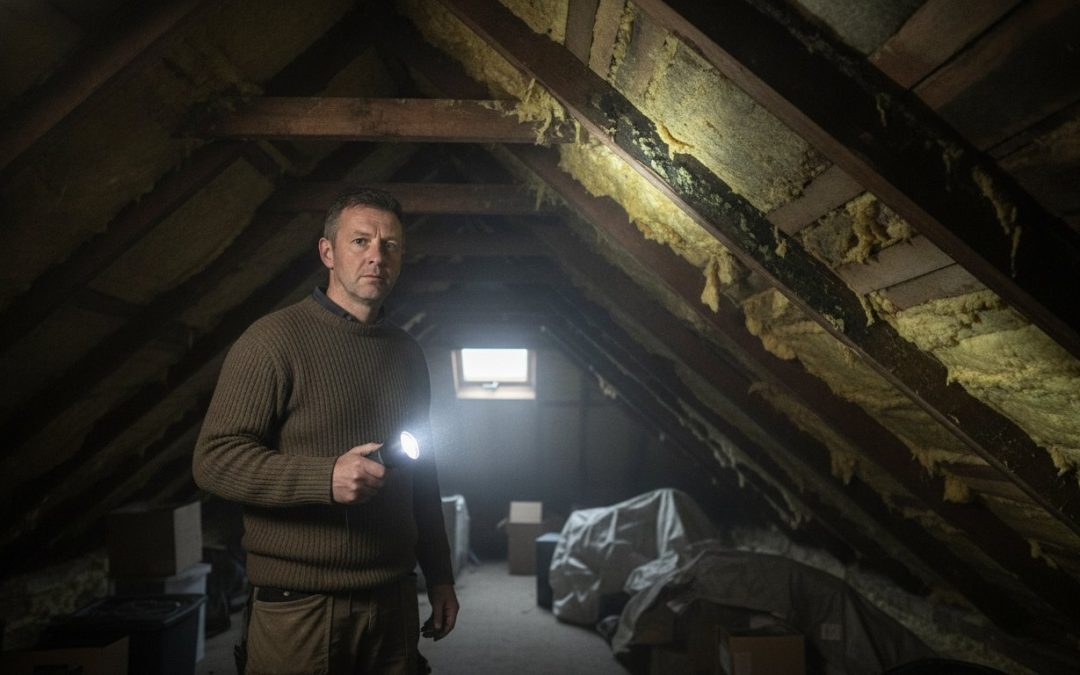
Did you know that an estimated 250,000 UK homes currently contain spray foam insulation that could render them unmortgageable or devalued by up to 15%? Identifying the signs of failing foam insulation is now a critical task for any homeowner facing recurring black mould or structural concerns. It’s a stressful reality when an installation intended to save energy starts causing hidden timber decay. You’re likely worried about the health of your roof and why your property has suddenly become difficult to sell or remortgage; these concerns are valid and require a technical response.
This guide provides the clarity you need to protect your property’s structural integrity and its long-term market value. We’ll show you exactly how to spot the warning signs of moisture entrapment and timber rot before they become catastrophic. You’ll gain a clear understanding of why these defects occur and learn about the professional, non-disruptive path toward remedial extraction. By the end of this article, you’ll know whether your insulation has failed and how to restore your home to a safe, mortgageable condition.
Key Takeaways
- Identify specific damp and mould patterns, such as mid-wall cold spots, that suggest insulation has slumped or failed.
- Recognise the structural signs of failing foam insulation, including timber rafter decay and accelerated oxidisation of wall ties.
- Understand the current mortgage landscape where UK lenders may restrict or reject applications on properties with defective foam.
- Learn why a professional survey is the only reliable method to inspect the structural fabric hidden behind insulation layers.
- Discover the methodology for non-disruptive extraction to restore your property’s health and long-term asset value.
Understanding Failing Foam Insulation in UK Properties
Failing foam isn’t just an insulation material that has lost its thermal efficiency. In a professional context, we define it as any insulation that has become a structural liability or is actively causing damage to the property fabric. It’s a serious issue that often goes unnoticed until the signs of failing foam insulation manifest as damp patches or structural instability. When foam fails, it stops being a solution and starts being a catalyst for property decay.
Property owners should distinguish between the two primary types found in UK homes. Spray foam insulation is typically applied to the underside of roof pitches, while injected urea-formaldehyde or polyurethane foams are found within wall cavities. Both materials can fail due to several factors, including chemical degradation over time, poor mixing ratios during the initial installation, or being applied to a property that was technically unsuitable for the product. Many of these foams are non-breathable, which means they trap moisture against the very structural elements they were meant to protect.
The Difference Between Open-Cell and Closed-Cell Failure
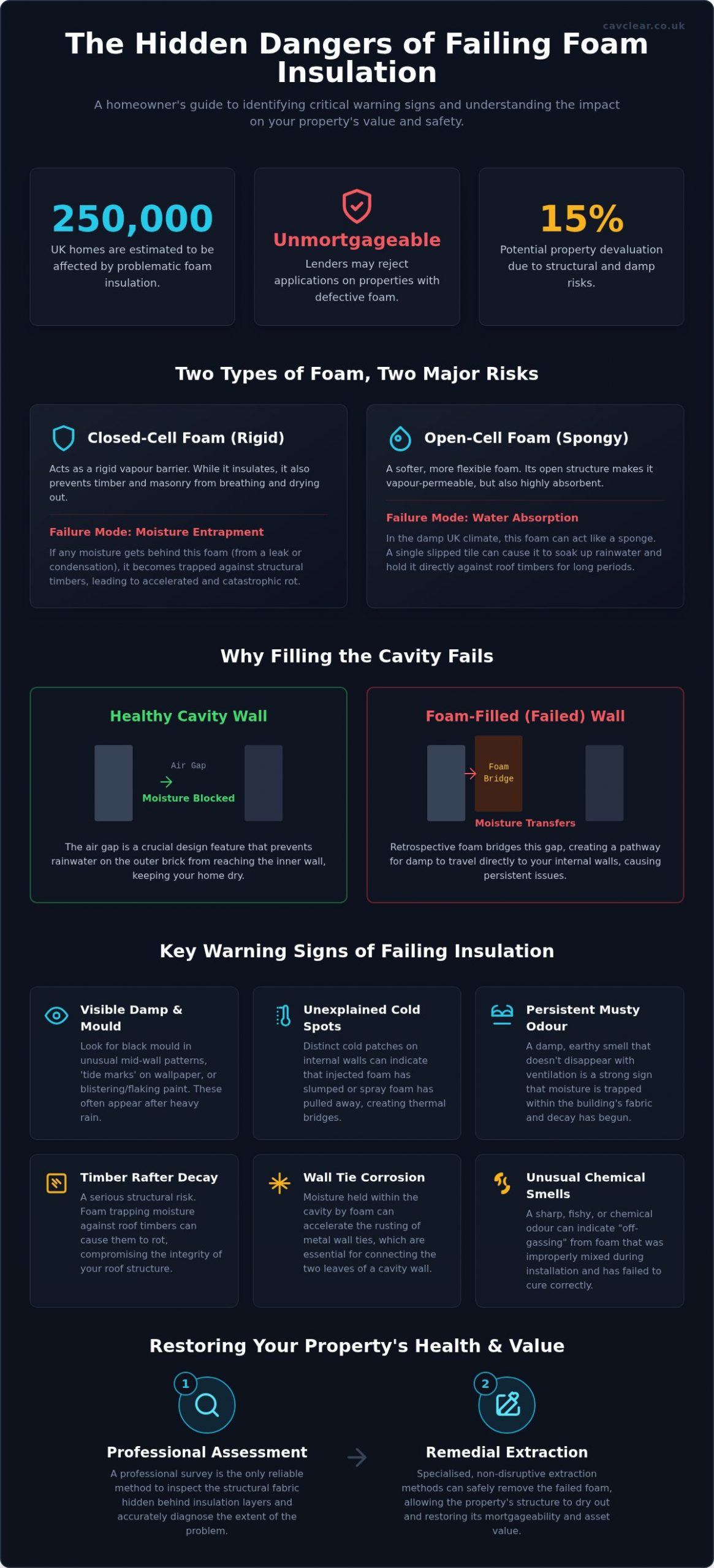
Closed-cell foam is a rigid material that acts as a total vapour barrier. While this sounds effective for insulation, it prevents timber rafters and masonry from drying out naturally. If moisture finds its way behind a closed-cell layer, it remains trapped against the wood, leading to rapid rot. Open-cell foam is softer and more flexible, but it presents a different risk. In the damp UK climate, open-cell foam can act like a sponge. If a roof tile slips or a leak occurs, the foam absorbs the water and holds it in direct contact with the roof timbers for extended periods.
Why Retrospective Foam Installation Often Fails
To understand why these installations fail, you must first understand what is a cavity wall and its purpose. The cavity was designed as a clear air space to prevent moisture from travelling from the external brickwork to the internal leaf. Filling this gap with foam often bridges that gap. In many UK properties, especially those in high-exposure coastal or rainy areas, the foam becomes a highway for water. Instead of managing moisture, the foam allows it to seep through to your internal decorations, causing the persistent damp issues many homeowners now face. Most older UK homes simply weren’t designed to have their ventilation gaps filled with these materials.
Primary Indicators: Damp, Mould, and Condensation Patterns
Early detection of environmental changes inside your home is the most effective way to identify the signs of failing foam insulation. Unlike standard damp issues, which often cluster in corners or at floor level, defective insulation creates specific thermal anomalies. You might notice distinct cold spots on your internal walls. These occur when injected foam slumps within the cavity or when spray foam pulls away from roof timbers, leaving uninsulated gaps that attract condensation.
Persistent black mould appearing in unusual, mid-wall patterns is a significant red flag. This growth often coincides with periods of driving rain, suggesting the foam is bridging the cavity and allowing moisture to travel from the outer leaf directly to your internal plaster. If you detect a musty odour that doesn’t clear with ventilation, it’s likely that moisture is being held against the building’s fabric.
The Role of Interstitial Condensation
Interstitial condensation is a technical term for moisture that forms inside the wall structure itself, specifically at the point where the foam meets the masonry. This hidden moisture is particularly dangerous because it remains invisible until it causes significant damage. You should look for tell-tale tide marks on wallpaper or paintwork that has started to blister and flake. These symptoms often result from the foam’s inability to allow the building to breathe, which has a direct impact on property sales and mortgage applications across the UK.
Sensory Warning Signs: Odours and Textures
The scent of failing insulation provides specific clues about the nature of the fault. A fishy or sharp chemical smell usually indicates off-gassing from foam that was improperly mixed during installation. Conversely, a damp, earthy smell suggests that the insulation has already begun to trap moisture, leading to timber or masonry decay. If you can access the material, check its texture. Foam that feels gooey, soft, or tacky to the touch has suffered a failed chemical cure and will never provide the intended thermal benefit. Visible shrinkage gaps between the foam and the wall allow cold air to circulate, negating the insulation’s purpose. These physical changes are clear signs of failing foam insulation that require immediate attention. If you’ve observed these patterns, a professional cavity wall survey can confirm the extent of the issue.
Structural Warning Signs: Timber Decay and Wall Tie Issues
While internal dampness is a primary concern, the most severe signs of failing foam insulation are often hidden from plain sight. These involve the gradual degradation of the building’s structural skeleton. When foam is injected into a cavity or sprayed onto roof timbers, it creates an environment where moisture is no longer managed by natural air circulation. Instead, it becomes trapped against critical metal and wood components, initiating a silent process of decay that can compromise the safety of your home.
Externally, you should inspect your masonry for horizontal cracking in the mortar joints. This is frequently a physical symptom of internal metal expansion. If you observe these cracks, it suggests the internal structures are under stress, often due to the insulation material interfering with the property’s natural moisture regulation and causing concealed components to fail.
Wall Tie Corrosion and Cavity Foam
Metal wall ties are the essential fixings that hold the inner and outer leaves of a cavity wall together. In a healthy property, these ties remain dry and functional for decades. However, when a cavity is filled with non-breathable foam, moisture is held in direct contact with these metal rods. This creates a highly corrosive, humid micro-climate that accelerates oxidisation. As the ties rust, they expand and lose their structural grip. This process doesn’t just damage the ties; the expansion can actually lift the mortar joints, eventually leading to the outer leaf of masonry becoming unstable or bowing outwards.
Timber Integrity in Roof Spaces
In the roof, the risks are equally significant. Spray foam applied directly to rafters prevents the vital visual inspections required by mortgage surveyors and structural engineers. This concealment often masks the early stages of wet rot or dry rot. We often encounter “dark rot,” where timber appears sound on the surface but is decaying from the inside out due to trapped humidity. Because the foam adheres so tightly to the wood, the moisture has nowhere to evaporate, forcing it deep into the grain. Over time, this internal degradation reduces the load-bearing capacity of your roof supports. Identifying these structural signs of failing foam insulation early is the only way to prevent total timber failure and avoid the necessity of a full roof replacement.
The Impact on Property Value and Mortgageability
The presence of certain insulation materials has become a significant hurdle in the UK property market. Many mainstream lenders now view properties with spray foam as high-risk assets. This caution stems from the fact that foam often conceals the structural fabric, making it impossible for a valuer to verify the condition of roof timbers or wall ties. While the insulation was likely installed to improve efficiency, its presence often leads to mortgage rejections or significant devaluations. Research from 2026 indicates that affected properties can face a price reduction between 5% and 15% to account for the risk and potential removal costs.
Identifying the signs of failing foam insulation early is vital for maintaining your home’s equity. If a surveyor cannot physically inspect the substrate behind the foam, they will often recommend a “nil valuation” until the material is removed or a specialist report is provided. To satisfy these strict lending criteria, professional damp surveys and structural inspections are required to provide the technical evidence that lenders demand.
Why Surveyors Flag Foam Insulation
The Importance of Technical Reporting
General homebuyer reports are rarely detailed enough to overturn a lender’s initial caution. A professional remedial report must offer a diagnostic overview, often utilising borescope inspections to view the cavity or the space behind the foam. This specialist approach provides the clarity needed to prove whether the insulation is defective or if the underlying structure remains sound. If you’re planning to sell or remortgage, you should arrange a professional wall tie survey or insulation inspection to ensure your property meets modern lending standards.
Professional Assessment and Remedial Extraction
Once you’ve identified the signs of failing foam insulation, the priority shifts from observation to professional intervention. Attempting to “patch” or ignore the material only allows moisture issues to worsen over time. We maintain that cavity wall insulation removal is the only safe and permanent way to restore your property’s original moisture management function. This process removes the physical bridge that allows water to cross the cavity, effectively halting the cycle of damp and decay.
Our remedial extraction process is designed to be controlled, clean, and entirely non-disruptive to your home’s interior. We use specialised vacuum-assisted technology to draw the defective material out through small, precisely drilled holes in the external mortar joints. This methodology ensures that the building’s fabric is protected while the failing foam is systematically removed. The goal is to leave the cavity clean and unobstructed, allowing for a return to natural ventilation and structural stability.
The Diagnostic Process
A professional assessment doesn’t rely on guesswork. We utilise thermal imaging to map out thermal bridging and identify exactly where the insulation has slumped or failed. This is followed by a visual confirmation using high-resolution cameras. A borescope inspection is a minimally invasive way to view the internal state of a cavity wall. It allows our technicians to see the condition of the foam and the level of moisture entrapment without removing bricks. We always recommend a “whole-house” approach during this phase. Because insulation is often installed as a single system, the signs of failing foam insulation in one area usually indicate that the entire installation is compromised and requires a full extraction to prevent future issues.
Restoring Structural Health
The extraction of defective foam is only the first step in restoring your property’s health. After the vacuum process is complete, we meticulously clean the cavity of any remaining debris or chemical residue that could continue to hold moisture. This stage is vital because it allows for a clear inspection of the metal wall ties. Once the foam “bridge” is gone, we can accurately assess whether the ties require replacement due to oxidisation. You should view this removal not as a loss of insulation, but as a vital investment in the property’s future longevity and marketability. By restoring the cavity to its intended state, you secure the structural integrity of the masonry and ensure the building remains a safe, mortgageable asset for years to come.
Securing Your Property’s Structural Future
Identifying the signs of failing foam insulation is the first step toward safeguarding your home from long-term structural decay and financial devaluation. Defective insulation traps moisture that leads to wall tie corrosion and timber rot, often rendering a property unmortgageable in the current UK market. Ignoring these indicators won’t resolve the underlying technical faults; instead, it allows moisture to continue its silent degradation of your masonry and timbers. Restoring your home’s original cavity function is a vital investment that ensures both safety and marketability.
CavClear provides nationwide coverage across the UK, employing accredited technicians who specialise in structural remedial works and wall tie replacement. We deliver detailed technical reports designed to satisfy both homeowners and lenders, ensuring you have the evidence required to protect your property’s value. Our non-disruptive extraction methodology focuses on returning your property to its optimal state with precision and care. Don’t let failing insulation compromise your asset’s health any longer. Book a Professional Cavity Survey with CavClear Today and take the definitive path toward a dry, structurally sound home.
Frequently Asked Questions
Can I remove failing foam insulation myself?
You shouldn’t attempt to remove failed insulation yourself. The process requires high-powered vacuum equipment and borescope cameras to ensure the cavity is entirely clear. DIY removal is often incomplete and can accidentally damage metal wall ties or masonry. Professional extraction ensures the building’s structural integrity is maintained while removing all chemical residues that could continue to hold moisture against your internal walls.
How long does it take to extract foam from a cavity wall?
For a typical UK semi-detached home, the extraction process usually takes between one and two days. Larger detached properties or those with high-density closed-cell foam may require up to three days. Our technicians work methodically to ensure every section of the cavity is cleared. This timeframe includes the initial setup, the vacuum-assisted removal, and a final borescope inspection to verify that no debris remains.
Will removing the insulation make my house colder?
You might notice a slight change in heat retention, but failing foam often makes a house feel colder because damp walls lose heat faster than dry ones. Removing the signs of failing foam insulation allows your masonry to dry out, which actually improves the building’s natural thermal performance. Once the cavity is clear and dry, you can explore safer, breathable insulation options that don’t risk your property’s structural health.
Is all foam insulation bad for a property?
Foam insulation isn’t inherently “bad,” but it’s often fundamentally unsuitable for the traditional construction of many UK homes. Problems arise when it’s installed in properties with high exposure to driving rain or where ventilation is critical. If the foam isn’t breathable, it prevents the building from managing moisture naturally. This leads to the structural decay and mortgageability issues we’ve discussed throughout this guide.
How much does a professional damp and insulation survey cost?
The cost of a professional survey depends on the size of your property and the complexity of the diagnostic tools required, such as thermal imaging or borescope cameras. Because every home is different, we recommend contacting a specialist for a property-specific assessment. A professional report provides the technical evidence lenders and surveyors need to verify the structural health of your walls and roof timbers.
Can failing foam insulation cause health problems?
Yes, failing foam can indirectly impact your health by creating an environment where black mould thrives. When foam traps moisture, it creates damp patches on internal walls that become breeding grounds for mould spores. These spores are known to cause respiratory irritation, asthma flare-ups, and other allergic reactions. Removing the source of the dampness is the only way to permanently improve the air quality inside your home.
What happens if I leave failing foam in my walls?
Leaving failed foam in place allows moisture to remain trapped against your home’s structural skeleton. Over time, this leads to irreversible timber rot in the roof or severe wall tie corrosion in the cavity. These issues don’t just cause damp; they compromise the safety of the building. Furthermore, the property will remain difficult to sell or remortgage as lenders continue to tighten their criteria regarding signs of failing foam insulation.
Will my insurance cover the cost of insulation removal?
Standard UK home insurance policies rarely cover the cost of insulation removal. Most insurers categorise the failure of insulation as a maintenance issue or the result of poor workmanship, both of which are typically excluded from coverage. It’s essential to review your specific policy documents or speak with your provider. However, many homeowners find that the investment in removal is recovered through the restoration of their property’s market value.
Recent Comments