

Is your mortgage approval hanging by a thread because of a single word in a valuation report? For many UK homeowners, the request for a specialist survey triggers immediate anxiety about hidden structural costs and exactly what does a damp and timber report cover. It’s completely natural to feel overwhelmed when faced with technical jargon like “hygroscopic salts” or “Serpula lacrymans” while you’re trying to secure a property sale.
We understand that you need clear, professional answers to protect your investment. This guide explains the specific details of the inspection process, moving beyond surface-level observations to provide a diagnostic of your home’s structural health. You’ll learn how surveyors identify moisture sources, assess the integrity of floor joists, and why inspecting the cavity is as vital as checking the internal walls. By the end, you’ll have the knowledge required to satisfy lender requirements and ensure your property remains a sound, long-term asset.
Key Takeaways
- Understand precisely what does a damp and timber report cover, ensuring you can identify if a property is structurally sound before committing to a purchase.
- Learn to differentiate between various moisture sources, such as rising damp and penetrating damp, to determine the most effective technical solution for your home.
- Identify the signs of fungal decay and wood-boring insect infestations that could compromise the integrity of your floor joists and roof timbers.
- Discover why a thorough inspection must include the cavity wall and wall ties to prevent long-term structural failure and recurring environmental issues.
- Satisfy mortgage lender requirements by obtaining a professional diagnostic report that moves beyond surface-level observations to recommend permanent remedial actions.
Understanding the Purpose of a Damp and Timber Report
A damp and timber report is a structural necessity for property preservation, serving as the definitive diagnostic record of a building’s environmental health. While a standard valuation might flag a damp patch, this specialist inspection focuses on the technical causes of moisture ingress and the resulting integrity of structural wood. Mortgage lenders or RICS surveyors typically trigger these requests when they identify symptoms that suggest deeper issues. They require professional assurance that the property remains a secure asset before finalizing a loan or sale.
A diagnostic approach moves beyond identifying surface-level dampness. It seeks the underlying mechanism of failure, whether that is a breached damp proof course or poor sub-floor ventilation. By consulting a Structural dampness overview, surveyors can correlate moisture patterns with building design to provide a permanent solution rather than a temporary patch. Understanding what does a damp and timber report cover is the first step in moving from property anxiety to structural certainty.
Diagnostic Tools Used During the Inspection
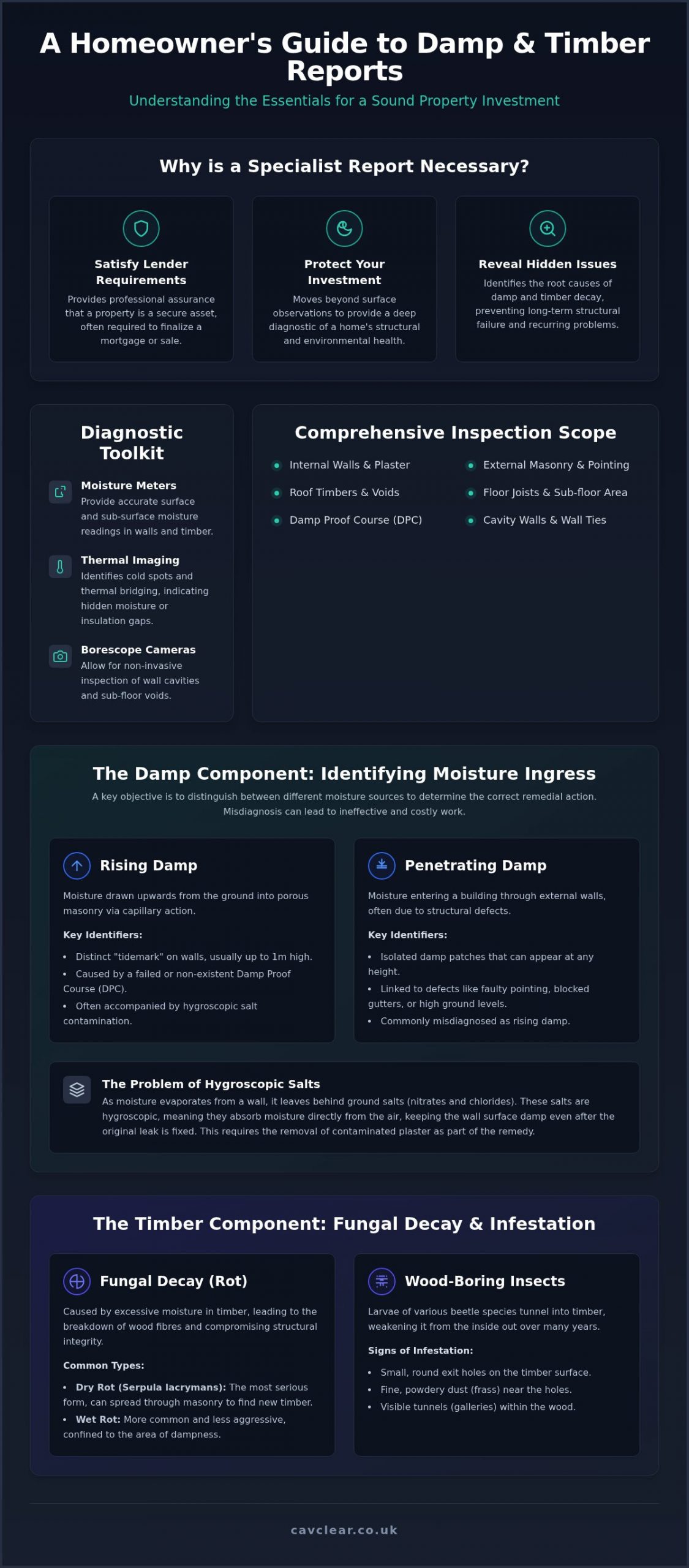
Modern specialist surveys prioritise a non-invasive methodology to protect the property’s aesthetic while gathering deep-seated data. Technicians use Protimeters for accurate surface and sub-surface moisture readings. Thermal imaging cameras identify cold spots and thermal bridging, which often indicate hidden condensation or insulation gaps. Borescope cameras represent a significant advancement in diagnostic technology. These small, flexible lenses allow for the inspection of wall cavities and floor voids through tiny, non-disruptive pilot holes. This ensures we can verify the condition of wall ties or the health of joist ends without invasive structural work.
The Scope of a Professional Inspection
A professional inspection examines the building as a complete system. Surveyors check internal walls for salt contamination and external masonry for defective pointing or guttering. They scrutinise roof timbers for signs of wood-boring insects and floor joists for fungal decay like dry or wet rot. The assessment includes a detailed look at the existing damp proof course (DPC) to ensure it sits at the correct height relative to external ground levels. This thorough scope identifies risks to the building’s primary structure, from the skirting boards to the ridge tiles, ensuring your investment remains sound and habitable. When clients ask what does a damp and timber report cover, they quickly realise it is a vital safeguard for the property’s long-term asset health.
The Damp Component: Identifying Moisture and Ingress
The “damp” portion of a specialist survey is a rigorous diagnostic process. A primary objective is distinguishing between active moisture ingress and historic staining. Historic marks often remain visible long after a fault has been repaired; however, active damp requires immediate intervention to prevent structural decay. When asking what does a damp and timber report cover, homeowners should expect a “whole building” assessment as outlined in the RICS joint position statement on moisture. This approach ensures that surveyors don’t just treat symptoms, but identify the root cause of the environmental imbalance.
Rising Damp vs. Penetrating Damp
Surveyors look for specific markers to categorise moisture. Rising damp is characterised by capillary action, where water travels upwards through porous masonry. This often leaves a distinct “tidemark” on internal walls, usually reaching about one metre in height. In contrast, penetrating damp is frequently the result of external defects such as failing masonry, defective pointing, or blocked guttering. In many UK properties, penetrating damp is misdiagnosed as rising damp. This occurs when external ground levels have been raised over time, effectively breaching the original damp proof course (DPC) and allowing water to bypass the structural barrier. Identifying these differences is critical because the remedy for a breached DPC differs significantly from the solution for a failing cavity wall.
Hygroscopic Salts and Wall Finishes
A significant part of what does a damp and timber report cover involves the analysis of hygroscopic salts. As moisture moves through a wall, it carries nitrates and chlorides from the ground. When the water evaporates at the surface, these salts remain embedded in the plasterwork. These chemicals are “hygroscopic”, meaning they actively draw moisture from the air, even on dry days. Simply drying out a wall is insufficient if these salts remain. The contaminated plaster must be removed and replaced with a salt-neutralising render to ensure a permanent fix. For a detailed breakdown of this process, you can read our Damp survey guide.
Condensation and mould growth also fall under the surveyor’s remit. They assess ventilation rates and lifestyle factors to determine if the issue is structural or environmental. If you suspect your cavity walls are contributing to these moisture levels, a specialist cavity wall survey can provide the technical clarity you need to protect your home’s long-term health.
The Timber Component: Fungal Decay and Infestation
The timber component of a specialist survey focuses on the biological threats that thrive in high-moisture environments. While the previous section detailed how water enters a building, this stage assesses the damage caused to the property’s skeleton. When determining what does a damp and timber report cover, homeowners must understand that a surveyor is looking for more than just surface staining. They are evaluating the structural integrity of load-bearing joists, wall plates, and rafters that may have been compromised by prolonged exposure to moisture. This diagnostic process is vital for ensuring the long-term safety and asset health of your home.
Identifying Dry Rot and Wet Rot
Fungal decay represents a significant risk to property value and structural stability. Serpula lacrymans, commonly known as dry rot, is the most aggressive form of wood-destroying fungus found in the UK. It is unique because its mycelium can travel through masonry to reach new timber sources, spreading the decay far from the original moisture leak. Surveyors identify dry rot by its distinct “mushroom” scent and the characteristic cuboidal cracking of the wood. This fungus thrives in unventilated voids where the moisture content is consistently above 20 percent.
In contrast, Wet rot is more common but is typically less invasive if caught early. It usually remains localised to the source of dampness, such as a leaking pipe or a failing window sill. While it still causes structural softening, it does not possess the ability to spread through the building’s fabric like dry rot. A professional report will categorise these decays accurately to ensure the remedial path is proportionate to the threat. This distinction prevents homeowners from overpaying for extensive treatments when a localised repair is sufficient.
Woodworm and Beetle Infestations
Wood-boring insects are another primary focus of the timber inspection. Surveyors look for “frass”, which is the fine bore dust produced by larvae as they consume the wood. They also record the presence of exit holes, which indicate that an adult beetle has emerged. Identifying whether an infestation is active or historic is vital for avoiding unnecessary chemical treatments. Fresh frass and light-coloured exit holes usually suggest an active colony that requires professional intervention.
The Common Furniture Beetle is the most frequent culprit, often found in floorboards and loft timbers. However, the Deathwatch Beetle poses a greater risk to large structural hardwoods, particularly if they are already softened by fungal decay. A specialist report provides the technical clarity needed to determine if the “woodworm” is a current threat to the building’s stability or merely a remnant of past environmental issues. By addressing these biological factors, the report ensures your property remains a safe, permanent asset.
Structural Integrity: Cavity Walls and Wall Ties
A thorough inspection must look beyond the internal plaster to the hidden components of the building’s envelope. The cavity between your property’s inner and outer leaves serves as the primary defence against penetrating damp. When homeowners ask what does a damp and timber report cover, they often overlook the structural health of this void. A specialist surveyor evaluates the condition of wall ties; these metal components are essential for ensuring the two leaves of masonry remain stable and securely connected. If these ties fail, the structural integrity of the entire wall is compromised.
We believe that a property’s long-term asset health depends on the performance of these hidden elements. A report that ignores the cavity is incomplete. It fails to address the root cause of many moisture issues. By identifying faults early, you can prevent minor dampness from escalating into a significant structural repair. This proactive approach restores comfort and protects your property investment.
Wall Tie Corrosion and Structural Stability
Wall tie failure often presents through visible external symptoms. You may notice horizontal cracks in the mortar joints or bulging sections of masonry. These issues occur because original mild steel ties are prone to corrosion. As the metal rusts, it expands to several times its original thickness. This physical expansion forces the mortar apart and lifts the outer leaf of the building. In severe cases, this can lead to the collapse of the external wall during high winds. This is why wall tie replacement is a critical remedial action often identified in a professional diagnostic report.
The Problem with Defective Cavity Insulation
Retrospective cavity insulation can inadvertently bridge the gap designed to keep your home dry. If the insulation becomes saturated due to external masonry defects, it acts as a conduit for moisture to travel directly to your internal walls. We frequently find that damp patches on upper floors are caused by wet insulation within the cavity rather than plumbing leaks or rising damp. Defective cavity wall insulation bridges the gap and causes damp that is difficult to resolve without professional extraction. Specialist cavity wall surveys use borescopes to identify these blockages, providing a level of detail that general surveys often miss. If you are concerned about structural movement or persistent damp, contact us for a specialist cavity wall tie inspection to ensure your home remains stable and dry.
Interpreting the Report and Remedial Action
A professional damp and timber report serves as a strategic roadmap for property preservation. It categorises every finding by severity, allowing you to distinguish between urgent structural threats and routine maintenance. When reviewing what does a damp and timber report cover, you should find a clear prioritisation of tasks. High-priority findings, such as active Serpula lacrymans or failing wall ties, require immediate intervention to halt asset deterioration. Lower-priority items might include minor condensation issues that you can resolve through improved ventilation or lifestyle adjustments.
The recommendations section outlines the specific technical solutions required to restore structural integrity. This might involve cavity wall insulation extraction to remove moisture-bridging materials or the installation of new wall ties to stabilise masonry. Every recommendation should include an estimated timeline and a clear scope of work. This transparency ensures you understand the necessary investment required to secure the building’s future and restore the comfort of your home. A professional report doesn’t just list faults; it provides the methodology for a permanent fix.
Satisfying Mortgage Lender Requirements
Mortgage lenders often apply a financial retention to a loan if a general valuation flags potential moisture issues. A specialist report is the most effective way to remove these retentions and progress your property sale. Because our technicians use specialist diagnostic equipment, our findings provide the professional assurance that banks and building societies require. You can also use this document as a powerful negotiation tool during a purchase. If the report identifies significant faults, it provides a factual basis for adjusting the sale price to cover the cost of remedial works, protecting you from unexpected structural costs after completion.
Next Steps with CavClear
We provide a nationwide service focused on the clean and non-disruptive restoration of property health. Our team specialises in identifying the root causes of dampness and providing permanent structural remedies, from wall tie replacement to cavity wall surveys. We take pride in rectifying poor workmanship and ensuring your home meets the highest technical standards for long-term asset health. To secure the future of your property, book your professional survey today and ensure you’re receiving the expert guidance your investment deserves.
Securing Your Property’s Future
Understanding exactly what does a damp and timber report cover is the most effective way to eliminate uncertainty during a property transaction. This specialist diagnostic tool moves beyond surface-level observations to identify the root causes of moisture ingress and evaluate the structural health of your home’s timber and masonry. By addressing issues like wall tie corrosion or fungal decay before they escalate, you protect your long-term asset health and ensure the safety of the building’s occupants. These reports satisfy lender requirements and provide a clear, technical roadmap for any necessary remedial works.
CavClear provides nationwide UK coverage with accredited specialist technicians who deliver comprehensive structural and damp diagnostics. We focus on providing permanent solutions that restore comfort and structural integrity through a clean and non-disruptive methodology. Our expertise ensures that your property remains a sound investment for years to come. Secure your property with a professional CavClear survey. You can move forward with your property sale or renovation with complete confidence in your home’s structural soundness and environmental safety.
Frequently Asked Questions
How much does a damp and timber report cost in 2026?
A standard specialist report typically costs between £150 and £400, though this can rise to £600 or more for complex detached properties. In London and the South East, prices generally sit at the higher end of this range. For example, a survey for a 3-bedroom terraced house is approximately £400. These fees ensure you receive a professional diagnostic rather than a surface-level visual inspection.
How long does a damp and timber survey take to complete?
A typical inspection takes between one and three hours to complete, depending on the property’s size and the complexity of the issues identified. Surveyors require sufficient time to test moisture levels across various rooms and inspect sub-floor voids or roof timbers. Larger homes or those with significant structural concerns may require longer to ensure a thorough diagnostic of the building’s envelope and hidden cavities.
Is a damp and timber report the same as a homebuyer survey?
No, a homebuyer survey is a general overview of a property’s condition, whereas a damp and timber report is a specialist diagnostic tool. While a RICS surveyor might flag a “damp patch”, they won’t always identify the root cause. This specialist report explains exactly what does a damp and timber report cover, focusing specifically on moisture ingress mechanisms and the structural integrity of the wood.
Will a damp and timber report satisfy my mortgage lender?
Yes, a specialist report from an accredited surveyor is usually the only way to satisfy a lender’s retention requirements. Mortgage providers need professional assurance that the property’s structural health is sound before releasing funds. Providing a detailed report that identifies specific faults and provides a clear methodology for repair demonstrates that the investment is protected and the property remains a sound, habitable asset.
Do I need to be present during the damp and timber inspection?
You don’t need to be present, but the surveyor must have full access to all areas of the property, including lofts and sub-floor hatches. It’s often helpful if the homeowner or agent is available to answer questions about the building’s history or recent maintenance. Ensuring that furniture is moved away from damp-affected walls allows for more accurate moisture readings and a more comprehensive diagnostic of the masonry.
What happens if the report identifies dry rot?
Identifying dry rot (Serpula lacrymans) triggers a requirement for urgent remedial action to prevent the fungus from spreading through the masonry. The report will outline a specific methodology for treatment, which typically involves removing infected timbers and sterilising the surrounding area. Because dry rot is aggressive, early intervention is vital for property preservation and maintaining the long-term structural integrity of your floor joists and roof timbers.
Can a damp and timber report help me negotiate a house price?
Yes, this document serves as a powerful negotiation tool by providing a factual basis for price adjustments. If the survey identifies significant issues like wall tie corrosion or penetrating damp, you can use the estimated repair costs to justify a lower purchase price. This ensures that you aren’t left with unexpected structural costs after completion, making it a vital safeguard for your property investment and future budget.
Is a damp and timber report valid for a specific period?
Most mortgage lenders and legal professionals consider a report valid for three to six months. Environmental conditions and structural faults can change over time, so an older report may not accurately reflect the property’s current health. If you are asking what does a damp and timber report cover during a slow property sale, you might need a re-inspection to satisfy a lender’s current requirements and ensure long-term assurances.
Recent Comments