
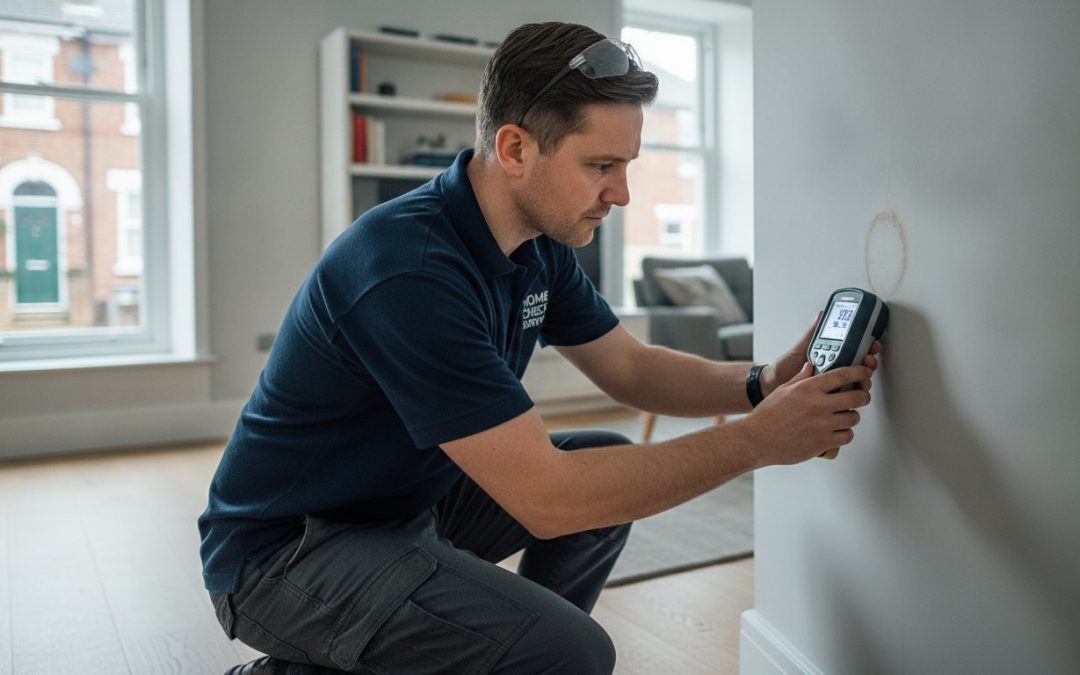
Why do insurers reject so many moisture-related reports even when the structural damage is visible to the naked eye? You’ve likely felt the stress of discovering a damp patch, only to worry that a policy’s “gradual deterioration” clause will leave you responsible for the repairs. It’s frustrating to navigate technical terms like causation and water ingress while your property’s structural integrity is at risk. Understanding what evidence do insurers need for a damp claim is the essential first step toward a professional resolution. This guide details the precise technical documentation and structural evidence required to validate your case. We explain how a specialist survey identifies the specific trigger event, such as wall tie corrosion or defective insulation, to differentiate between sudden damage and long-term decay. As a specialist provider covering the entire UK, we focus on the methodical diagnostic evidence that insurers require to restore your property’s safety and comfort.
Key Takeaways
- Learn why insurers prioritise identifying the technical cause of moisture over visible symptoms to prevent rejections under “gradual deterioration” clauses.
- Discover exactly what evidence do insurers need for a damp claim, including high-resolution photographic proof and technical moisture mapping.
- Understand how non-invasive cavity inspections can pinpoint hidden structural failures like saturated insulation or wall tie corrosion.
- Gain a clear understanding of “causation” and how to link property damage directly to specific, sudden structural events.
- Find out how specialist remedial reports from nationwide experts provide the authoritative documentation needed to validate your property’s moisture issues.
Understanding Insurance Requirements for Property Dampness and Moisture Issues
Property owners often feel overwhelmed when moisture affects their home’s structural integrity. It’s vital to understand that insurance policies typically split coverage into buildings and contents. Buildings insurance protects the physical structure, such as walls and roofs, while contents insurance covers your personal belongings. When moisture strikes, insurers prioritise the underlying cause rather than the visible symptoms. They aren’t just looking at the mould on your wallpaper; they want to know exactly how that water entered the building. Acting quickly is essential. Delaying a professional inspection can lead to further deterioration, which might give an insurer grounds to refuse support. Standard home surveys often lack the technical depth required for these situations. They identify that damp exists but rarely provide the granular data needed to prove a specific failure.
Defining the Insured Event in Damp Cases
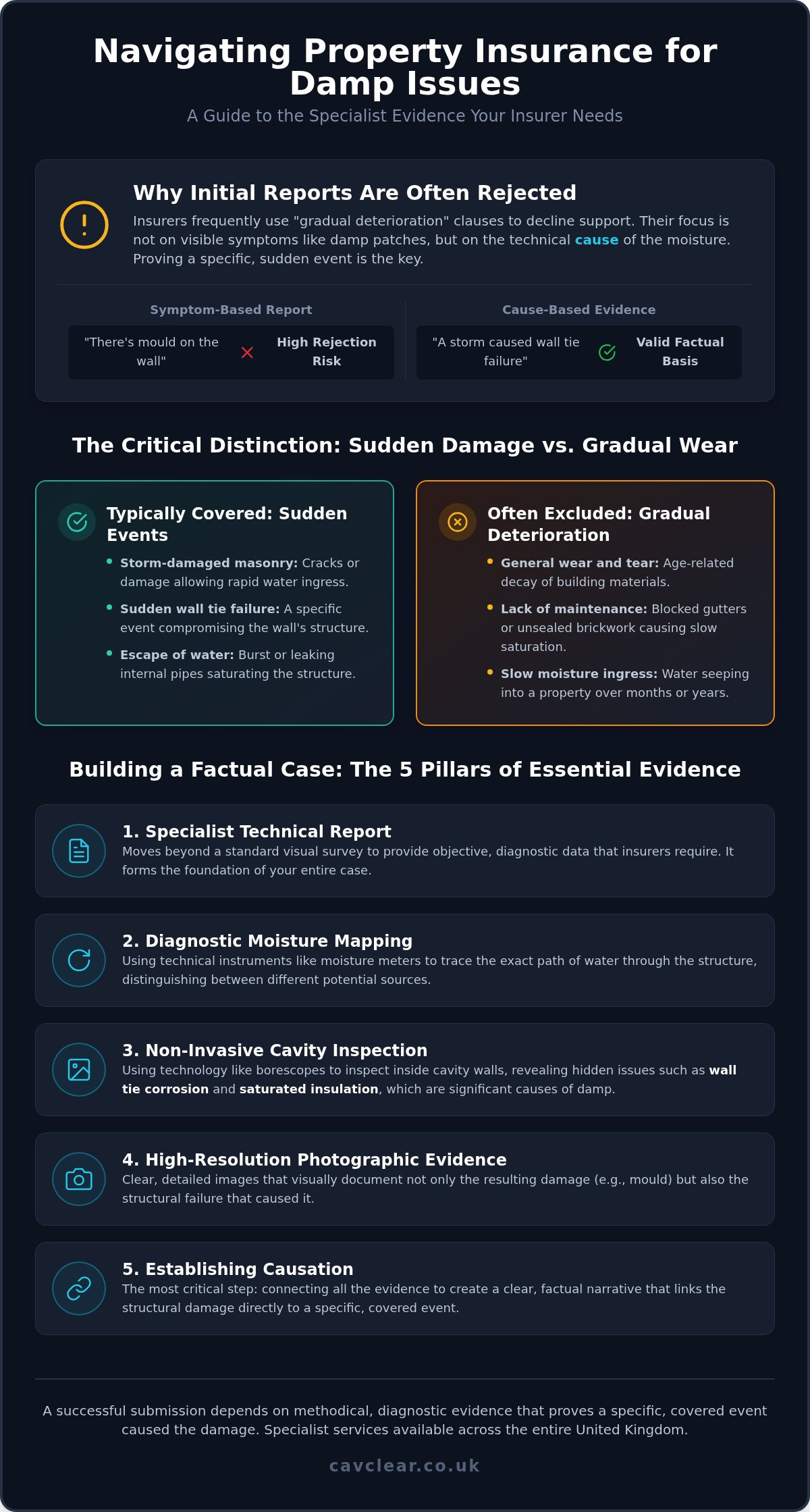
Insurance policies are designed to cover specific “perils” such as storms, floods, or a sudden escape of water. Understanding Water Damage involves recognising that most standard policies exclude “gradual ingress.” This is where moisture seeps into a property over months or years due to poor maintenance or slow-acting structural faults. If an insurer determines the damage is a result of wear and tear, they’ll likely reject the report. A specialist technical report is the only way to identify the precise moment a structural fault occurred. By pinpointing a specific event, like a storm damaging masonry or a sudden wall tie failure, you provide the factual basis for a successful submission.
The Burden of Proof: Why Homeowners Need Specialist Data
The responsibility for proving that a covered event caused the damage lies with the homeowner. Simply showing an assessor visible mould is rarely sufficient because mould is a secondary symptom, not the primary cause. Insurers require objective data that links the damage to a covered risk. This is where a damp survey becomes invaluable. These surveys use non-invasive technology to map moisture levels and inspect the internal state of cavity walls. When asking what evidence do insurers need for a damp claim, the answer is always technical proof of causation. Professional documentation provides the specific measurements and structural analysis that standard visual inspections ignore. This data removes the guesswork and presents a clear, factual narrative of how the property’s integrity was compromised.
Proving Causation: Distinguishing Between Sudden Damage and Gradual Wear
Insurers categorise property issues into two distinct groups: sudden, accidental events and gradual deterioration. A sudden event might involve storm-damaged masonry where high winds have compromised the outer leaf of a wall, or a burst internal pipe that has saturated a floor. These are typically covered because they represent an unforeseen accident. In contrast, gradual wear involves issues like rising damp caused by an aged damp-proof course or general brickwork decay over decades. These are usually excluded as they fall under “lack of maintenance.” When property owners ask what evidence do insurers need for a damp claim, the focus must shift from the mould itself to the specific mechanism of failure.
Insurers often use the maintenance clause to decline property cases when the homeowner cannot prove a specific trigger. If you simply present a damp wall without explaining how the water entered the structure, the insurer may assume it’s a long-term maintenance failure. To succeed, you must provide technical data that identifies the exact pathway of moisture. Gathering what evidence do insurers need for a damp claim involves more than taking photos; it requires a diagnostic approach to the building’s envelope to differentiate between a one-off event and a slow-acting fault.
Identifying “Escape of Water” vs. Penetrating Damp
Distinguishing between an internal leak and external water ingress requires precision. Technicians use moisture meters and hygrometers to track water pathways through the structure. For instance, if moisture levels are highest around a specific external crack following a heavy storm, this points toward penetrating damp caused by a sudden defect. Conversely, an “escape of water” refers to internal plumbing failures. Proving a leak is hidden within a cavity wall often requires a specialist inspection to check the void for standing water or saturated materials. Documenting these external defects immediately after a weather event is vital for establishing a timeline of damage.
Structural Faults That May Be Covered by Policy Terms
Certain structural failures occur suddenly enough to qualify for coverage under standard policy terms. Failing wall ties are a primary example; as they corrode and expand, they can cause sudden horizontal cracks that allow water to bypass the cavity. Similarly, defective cavity wall insulation can become a bridge for moisture. If a storm forces water through the outer leaf and into the insulation, the material can hold that moisture against the inner wall, leading to rapid mould growth. In the context of UK building insurance, causation is the technical proof that links a specific, sudden, and accidental event directly to the resulting property damage. Identifying these specific faults ensures that your report focuses on structural integrity. If you suspect your property has been compromised by such failures, a professional wall tie survey can provide the definitive evidence required for your insurer.
Essential Documentation: What Your Insurer Expects in a Specialist Report
Insurers don’t just want a list of property issues; they require a technical narrative supported by objective data. High-resolution photographic evidence is the foundation of any successful submission. These images must capture both the internal symptoms, such as peeling plaster or staining, and the external structural defects like cracked mortar or blocked cavities. Without this visual link, the report lacks the logical progression needed to prove causation. A professional report bridges the gap between seeing a problem and understanding its structural origin. It positions the homeowner as a proactive property steward rather than someone reacting to long-term neglect.
Detailed moisture maps provide the spatial data that visual inspections lack. These maps illustrate the concentration of moisture across a wall’s surface, helping to identify the specific point of entry. By documenting the spread and intensity of dampness, we can prove how a structural failure led to the current state of the property. This level of detail is essential for protecting the long-term health of the asset. It ensures that the proposed remedy isn’t just a temporary fix but a vital investment in the building’s future structural integrity.
Technical Components of a Professional Survey Report
A methodical diagnostic process includes several technical layers that insurers find persuasive. Borescope inspections are particularly valuable because they allow us to see inside the cavity without disrupting the masonry. This non-invasive methodology reveals the state of wall ties and the presence of saturated insulation. Thermal imaging further supports these findings by highlighting temperature variances that indicate hidden moisture pockets. We also perform salt analysis and moisture profile readings for masonry. By testing for hygroscopic salts, we can determine if the moisture is coming from the ground or from penetrating rain. A clear timeline is also essential. Documenting when the issue first appeared helps establish that the damage was a result of a specific event rather than years of poor maintenance.
The Importance of Independent Specialist Advice
General building contractors often provide vague estimates rather than diagnostic reports. Insurers frequently disregard these documents because they lack the technical rigor required to validate a case. Seeking out dampness specialists ensures your documentation follows a strict diagnostic methodology. This approach is rooted in technical standards and property maintenance rather than guesswork. When considering what evidence do insurers need for a damp claim, it’s clear that professional credentials and a methodical flow are the most persuasive elements you can provide. Our nationwide team provides these authoritative reports to homeowners across the UK, ensuring every structural fault is linked to its specific technical solution. This transparency builds trust with insurers and provides a clear path toward restoring your home’s comfort and safety.
How Cavity Wall Inspections Provide Definitive Evidence of Structural Failure
The cavity void is the most critical area of a building’s envelope, yet it remains hidden from standard visual inspections. When internal moisture appears, the source is frequently located within this gap between the masonry leaves. Identifying technical faults here is paramount when determining what evidence do insurers need for a damp claim. Standard reports often fail because they only document the surface damage. Using borescope technology allows our technicians to capture high-definition imagery of the internal cavity conditions, providing the structural proof that insurers require. This methodology is non-disruptive and focuses on identifying the root cause of moisture ingress without guesswork.
Capturing these internal conditions is the only way to prove that the moisture is the result of a structural event rather than general condensation. Insurers look for specific failures, and a clear view inside the wall provides the technical data to support your case. By documenting the exact state of the cavity, we move from observation to recommendation in a methodical, educational flow. This transparency ensures that the property’s long-term asset health is prioritised through a permanent structural fix.
Evidence of Defective Cavity Wall Insulation
Saturated wool or foam insulation acts as a physical bridge, allowing water to travel from the external leaf directly to the internal walls. This process bypasses the building’s natural drainage system and leads to rapid mould growth and structural decay. Proving that insulation has failed or was incorrectly installed requires technical evidence of its current state. Saturated material loses its thermal properties and holds moisture against the inner leaf indefinitely. In these cases, cavity wall insulation removal is the only method to restore the property’s health and prevent long-term deterioration. This extraction process is vital for allowing the structure to breathe and dry naturally, ensuring the restoration of comfort.
Wall Tie Corrosion and Structural Stability
Wall tie corrosion is a significant structural event that compromises the stability of the entire building. As steel ties oxidise, they expand to several times their original size, creating horizontal cracks in the mortar joints. These cracks provide a direct pathway for driving rain to enter the property. Documenting these fissures alongside borescope footage of the corroded ties provides the technical proof that wall tie replacement is necessary for safety. This isn’t simple wear; it is a structural failure that can lead to sudden masonry displacement during high wind loads. Our nationwide team provides the detailed inspections required to validate these structural repairs across the UK. If you are concerned about the integrity of your masonry, you can book a specialist cavity survey to secure the professional documentation your property needs.
Specialist Remedial Reports: Why CavClear is the Trusted Choice for Property Documentation
CavClear provides the precise technical documentation that property owners across the United Kingdom require to validate structural and environmental issues. Our reports are built on a foundation of factual evidence and technical rigor, ensuring that every identified fault is linked to a specific remedial solution. Understanding what evidence do insurers need for a damp claim ensures your documentation meets the rigorous standards of your provider. We remove the guesswork from property inspections by focusing on the underlying structural causes rather than just the visible symptoms. This methodical approach provides a clear, logical path toward restoring the integrity of your home.
Our nationwide expertise allows us to support homeowners from every corner of the UK. We specialise in identifying the complex interactions between cavity wall conditions and internal moisture levels. By providing an authoritative diagnostic report, we help you secure your property’s future. Our focus remains on the long-term health of your asset, framing our remedial recommendations as a vital investment in the building’s efficiency and structural stability. This commitment to transparency and professional rigor makes our documentation a reliable resource for property owners facing moisture-related challenges.
Our Methodology: Clean, Professional, and Accurate
We employ a diagnostic process that prioritises accuracy and property safety. Our technicians use advanced tools, such as high-definition borescopes and thermal imaging, to perform non-invasive inspections. This methodology allows us to see inside the cavity void without causing disruption to the masonry or internal finishes. By capturing the actual state of wall ties and insulation, we provide the definitive proof required to justify structural repairs. Our reports are designed to be functional and direct, stating facts about technical faults with maximum clarity. This helps homeowners communicate effectively with their insurance providers, ensuring that the technical reality of the property’s condition is fully understood. We take pride in rectifying poor workmanship and providing a standard of documentation that reflects our high-level industry credentials.
Next Steps for Your Property Assessment
Delaying a structural survey often leads to higher repair costs as moisture continues to compromise the building’s envelope. Saturated insulation and corroding wall ties don’t improve over time; they actively degrade the masonry and internal comfort of your home. Booking a comprehensive structural survey with our team is the first step toward a permanent fix. We provide a clear, low-pressure path toward a resolution, moving from detailed observation to professional recommendation. This proactive approach ensures that your home remains a safe and secure environment. Choosing a specialist for your remedial report provides the peace of mind that comes from knowing your property’s health is in expert hands. We focus on delivering long-term assurances, making the restoration of your home’s structural integrity our primary objective.
Securing Your Property’s Future with Technical Evidence
Success in addressing property moisture depends on shifting the focus from visible mould to the underlying structural cause. Proving a specific trigger event, such as a storm-damaged wall or a sudden wall tie failure, is the most effective way to differentiate between accidental damage and gradual deterioration. Specialist diagnostic reports provide the spatial data and internal cavity imagery that insurers require to validate the state of your home. By documenting the exact mechanism of water ingress, you move beyond guesswork toward a permanent structural resolution. Understanding what evidence do insurers need for a damp claim allows you to present a factual, technical narrative that prioritises the long-term health of your asset. Our accredited specialist technicians provide detailed technical reporting for structural integrity across the entire United Kingdom. Don’t let hidden moisture compromise your home’s safety and value any longer. Book a specialist survey to secure your property’s structural evidence today. We look forward to helping you restore the comfort and integrity of your property.
Frequently Asked Questions
Does home insurance cover damp and mould caused by condensation?
Standard home insurance policies typically exclude damp and mould caused by condensation. Insurers generally categorise condensation as a lifestyle or maintenance issue related to inadequate ventilation rather than a structural failure. Coverage is usually reserved for moisture issues resulting from a sudden, accidental event like a burst pipe. To distinguish condensation from structural ingress, you must provide technical data that identifies a specific defect in the building’s envelope.
What is the “gradual deterioration” clause in property insurance?
The “gradual deterioration” clause refers to property damage that occurs slowly over time due to wear, tear, or a lack of maintenance. Insurers use this clause to exclude coverage for issues like seeping damp or rotting timber that has developed over months. Establishing a clear timeline and identifying a specific trigger event is vital when determining what evidence do insurers need for a damp claim to prove the damage was sudden.
How much does a specialist damp report cost for insurance purposes?
In the UK, a professional damp survey typically ranges from £150 to £600 depending on the property size and the depth of the inspection required. A basic visual check is at the lower end of the scale, while comprehensive surveys involving thermal imaging or borescope technology are more expensive. Investing in a detailed technical report ensures the root cause of moisture is accurately identified for a professional property assessment.
Can I use a general builder for an insurance-standard damp survey?
A general builder’s estimate is rarely sufficient for insurance purposes because it often lacks the necessary diagnostic rigor. Insurers require a technical report from a specialist who uses calibrated diagnostic tools to prove causation. While a builder might identify that a wall is wet, they often fail to provide the moisture mapping or salt analysis needed. Professional documentation from an accredited technician carries significantly more weight during the assessment process.
Will my insurer pay for cavity wall insulation removal?
Insurers may cover cavity wall insulation extraction if the saturation was caused by a sudden, insured peril such as a storm. If driving rain entered the cavity through storm-damaged masonry and compromised the insulation, the removal is often considered part of the necessary remedial work. However, if the insulation has failed due to poor installation or gradual seeping over many years, it is typically excluded from standard policies.
How do I prove that a storm caused the damp in my property?
Proving storm damage requires linking internal moisture directly to specific external defects caused by high winds or heavy rainfall. You should provide high-resolution photos of displaced roof tiles, cracked masonry, or damaged guttering immediately following the event. A specialist report using borescope technology can then confirm that water entered through these specific points, providing the technical proof that the damage was sudden and accidental rather than a maintenance failure.
What happens if an insurer rejects my damp report?
If an insurer rejects your report, you should review their specific reasons and consider obtaining a more detailed technical second opinion. Rejections often occur because the initial documentation was too vague or failed to prove a specific trigger event. Providing more granular data, such as borescope footage of internal cavity conditions, can help clarify what evidence do insurers need for a damp claim to be reconsidered and validated.
Is rising damp ever covered by standard buildings insurance?
Rising damp is almost never covered by standard buildings insurance as it is considered a maintenance issue or a result of gradual deterioration. Most policies exclude damage resulting from a failed or absent damp-proof course. However, if the damp symptoms are actually caused by a sudden event like a burst internal pipe, it may be covered. A specialist survey is required to distinguish between these two very different moisture sources.
Recent Comments