
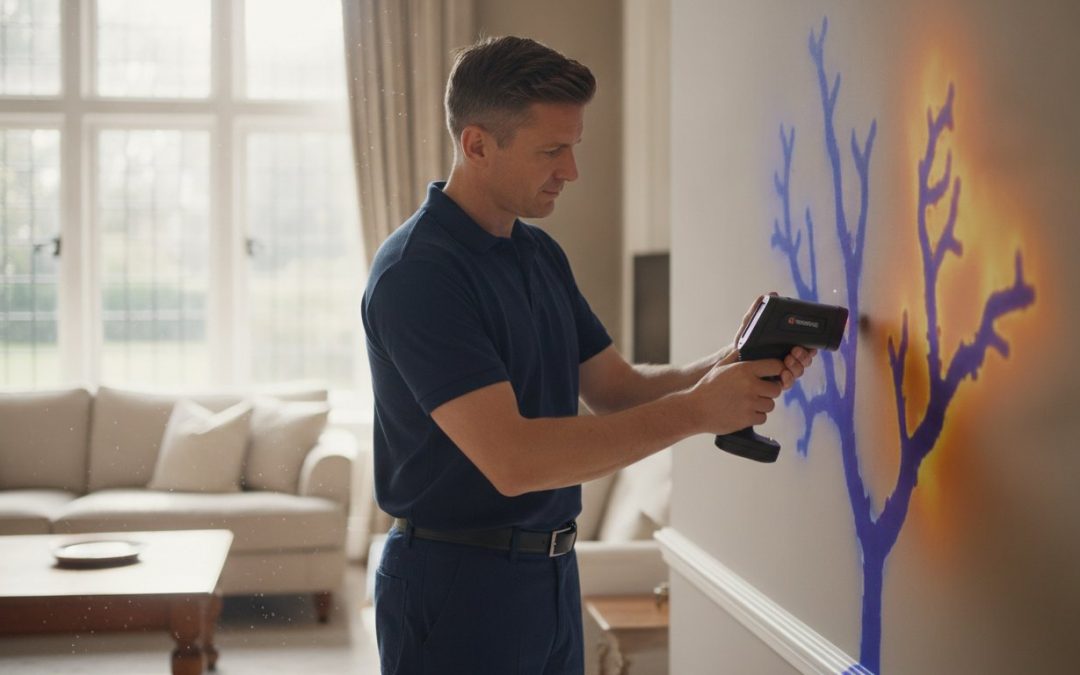
Treating dampness as a cosmetic issue is a structural error that leads to recurring property damage. If you’ve been searching for professional mould removal specialists to resolve persistent damp, you’ve likely found that surface scrubbing and ventilation don’t address the underlying technical fault. With approximately 900,000 homes in England currently affected by damp, the move from temporary fixes to specialist remedial action is essential for protecting your property’s long-term asset health.
It’s frustrating to deal with musty odours and the anxiety of declining property value caused by cold, wet walls. You’re looking for a permanent resolution that restores a dry, healthy living environment. This 2026 guide explains the technical causes of moisture ingress, specifically how defective materials within the wall cavity can compromise structural integrity. We’ll preview the methodical extraction processes and formal technical reporting used by a specialist contractor to ensure your home remains comfortable and mould-expert for the future.
Key Takeaways
- Learn why professional damp treatment requires a multi-stage diagnostic approach to identify structural faults rather than simply masking surface symptoms.
- Understand the technical differences between rising and penetrating damp to pinpoint exactly where your property’s moisture defences have failed.
- Discover how compromised cavity walls often serve as a bridge for moisture, necessitating specialist mould removal manchester services that address the root cause of the problem.
- See how advanced tools like thermal imaging and moisture meters allow technicians to map hidden damp patterns and provide a formal technical report.
- Identify why removing defective cavity wall insulation is a vital step in restoring internal comfort and securing the long-term asset health of your home.
Understanding Professional Damp Treatment in UK Properties
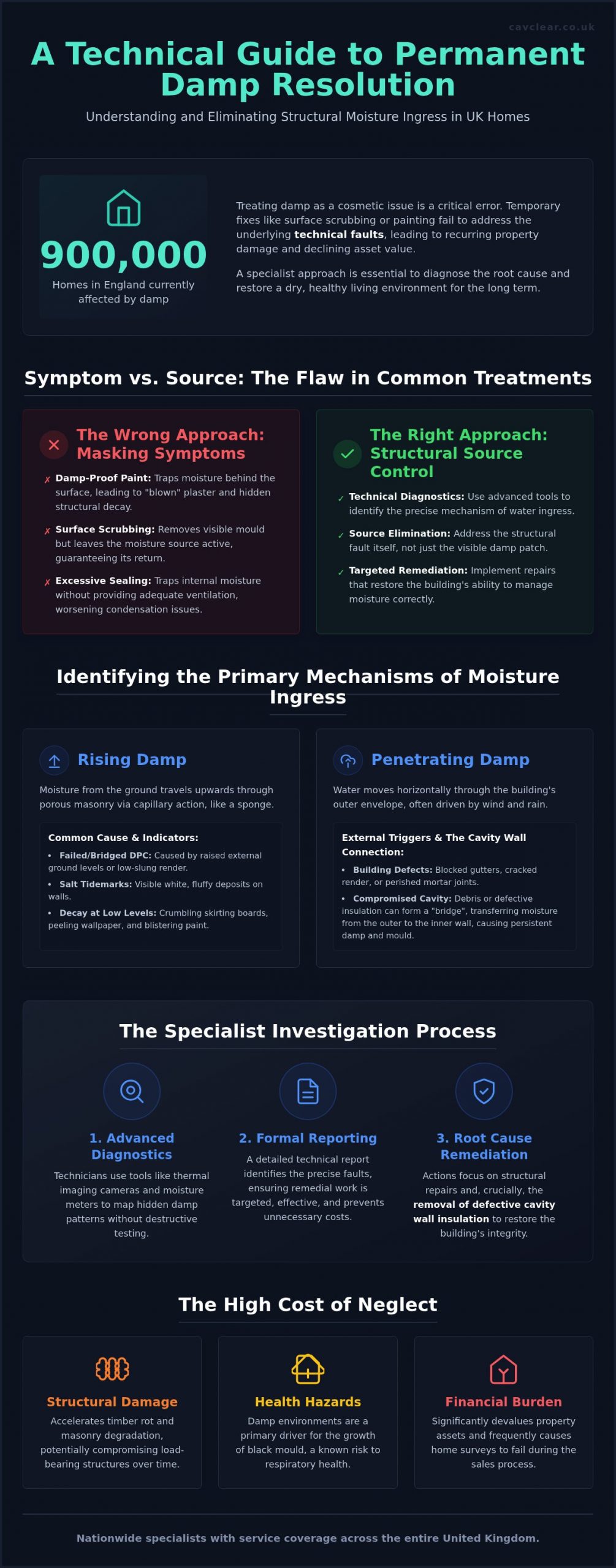
Professional damp treatment is a multi-stage technical process designed to restore a building’s structural integrity. It’s not a quick fix. It involves a rigorous diagnostic phase, the total elimination of the moisture source, and targeted remedial repair. For many homeowners, the journey begins when they require mould removal manchester specialists to address visible fungal growth, but the solution must go deeper than the surface. Many property owners attempt to mask issues with damp-proof paint, but this approach fails because it ignores the structural cause. True preservation requires structural source control to stop water ingress at its origin.
Modern UK properties are particularly susceptible to moisture issues due to specific construction methods and the British climate. Whether it’s a Victorian terrace or a mid-century cavity wall build, the way materials interact with environmental humidity determines the property’s health. As a nationwide specialist contractor, we’ve seen how Structural dampness can take hold if left unchecked. Professional surveys are vital here. They prevent homeowners from spending money on unnecessary remedial works by identifying the precise technical fault before any physical work begins.
The Consequences of Untreated Dampness
Persistent moisture isn’t just an eyesore; it’s a threat to the building’s skeleton. Water ingress accelerates timber rot and leads to masonry degradation, which can eventually compromise load-bearing elements. Beyond the bricks and mortar, there’s a significant link between damp environments and the growth of black mould. This environmental health hazard is a primary driver for property owners seeking mould removal manchester experts to protect their families. Neglecting these issues also carries a heavy financial burden. Dampness devalues property assets and frequently causes home surveys to fail during the sales process, leading to collapsed chains or forced price reductions.
Why General Building Repairs Often Fail
Most general building repairs fail because they treat the symptom rather than the mechanism of moisture ingress. Applying a waterproof coating over a damp patch might hide the stain, but the water continues to accumulate behind the surface, which leads to “blown” plaster or accelerated rot. Similarly, modern efforts to improve energy efficiency sometimes involve sealing a building too tightly. Without proper ventilation, this traps moisture inside and creates a greenhouse effect. A specific challenge involves salt contamination. Hygroscopic salts are mineral deposits left behind by evaporating moisture that actively draw water from the atmosphere, ensuring a wall remains damp even after the original leak is repaired.
Identifying the Primary Mechanisms of Moisture Ingress
Properties rarely suffer from a single, isolated moisture issue. Instead, technical faults often overlap to create a complex environment of dampness. For instance, a failure in the external masonry might allow water to saturate the wall, which then lowers the internal surface temperature and triggers condensation. This interaction is why experts in mould removal manchester often find that addressing only the visible fungal growth is insufficient. A permanent fix requires identifying whether the moisture is entering through the ground, the walls, or the air itself.
Rising Damp and DPC Failure
Rising damp occurs via capillary action, where moisture from the ground travels upward through porous masonry like water through a sponge. A functional damp proof course acts as an impermeable barrier to stop this vertical movement. However, this system fails if the DPC is “bridged.” This typically happens when external ground levels are raised by new garden beds or patios, or when external render is applied too low. Homeowners should look for salt tidemarks, peeling wallpaper, and crumbling skirting boards as primary indicators of this fault.
Penetrating Damp and External Vulnerabilities
Penetrating damp is usually the result of external structural triggers that allow water to move horizontally through the building envelope. Blocked or leaking gutters, cracked render, and perished mortar joints allow wind-driven rain to bypass the outer leaf of masonry. In a healthy cavity wall, this moisture should drain away harmlessly. Problems arise when the cavity is compromised by debris or poorly installed materials, creating a bridge that transfers water directly to the internal leaf. If you’ve noticed damp patches that worsen after heavy rain, you might need professional cavity wall tie inspections to check for these structural bridges.
Condensation is the most common cause of mould removal manchester call-outs in 2026. It occurs when internal humidity reaches the “dew point.” This is the specific temperature at which air can no longer hold water vapour, causing it to liquefy on cold surfaces. Modern living habits, such as drying clothes indoors or inadequate extraction in bathrooms, significantly increase humidity levels. When this moisture meets a wall made cold by penetrating damp or missing insulation, black mould thrives. Effectively managing this requires a balance of thermal performance and controlled ventilation to ensure moisture doesn’t become trapped within the living space.
Why Cavity Wall Defects are the Root Cause of Persistent Mould
To understand why damp persists despite surface cleaning, you must first understand what is a cavity wall and its role in UK property protection. A cavity wall consists of two masonry leaves separated by a hollow space. This gap is a primary defence against moisture, designed to be an empty, ventilating area that prevents water from the outer leaf reaching the interior of your home. When this space is clear, any water that penetrates the outer bricks simply drains down the internal face of the external leaf and exits through weep holes. However, when this cavity is compromised, the protective barrier vanishes.
The “bridge” concept is the technical explanation for most structural dampness issues. When debris, mortar droppings, or insulation materials fill the cavity, they create a physical path for liquid water to travel across. This allows moisture to bypass the air gap and saturate the internal leaf of the wall. Property owners seeking mould removal manchester services often find that their internal walls are wet because of these hidden bridges. As a nationwide specialist contractor, we frequently identify these faults as the primary driver behind recurring fungal growth and cold spots.
A serious technical warning must be issued regarding retrospective cavity wall insulation. While intended to improve thermal performance, filling a cavity that was designed to be empty often leads to severe dampness and wall tie corrosion. We strongly advise against this practice. The insulation material can become a permanent bridge for moisture, turning a ventilating gap into a saturated reservoir that compromises the building envelope.
The Dangers of Defective Cavity Wall Insulation
When insulation materials in the cavity become wet, they act as a thermal bridge and a moisture reservoir. Instead of keeping heat in, the saturated material holds water directly against the internal masonry. This leads to visible signs of failure such as localised mould, sweating walls, and distinct cold spots that are impossible to warm with standard heating. Retrospective cavity wall insulation is often the root cause of penetrating damp. Once the material is compromised, it cannot dry out naturally, necessitating professional extraction to restore the property’s health.
Wall Tie Corrosion and Moisture Ingress
Wall ties are essential structural components that lock the two leaves of a cavity wall together to ensure stability. When moisture is trapped within the cavity due to debris or wet insulation, these metal ties are subjected to prolonged dampness. This leads to iron oxide expansion, more commonly known as rust. As the ties corrode, they expand with significant force, which can crack mortar joints and cause the outer leaf of the building to bulge or bow. Addressing this requires wall tie replacement to secure the long-term structural integrity and safety of the asset.
Executing a Specialist Technical Damp Investigation
A visual inspection is never sufficient for a professional structural diagnosis. While homeowners often focus on the visible signs that necessitate mould removal manchester, a surface-level look cannot identify the hidden mechanisms of moisture ingress. Relying solely on what the eye can see often leads to misdiagnosis, resulting in expensive repairs that fail to solve the underlying problem. A specialist investigation uses non-invasive technology to map moisture patterns and see through the building’s fabric to find the true source of the fault.
Specialist technicians employ thermal imaging cameras to identify thermal bridges and cold spots where condensation is likely to occur. This technology reveals temperature differentials that are invisible to the naked eye. To quantify the problem, we use moisture meters, such as protimeters, to measure the electrical resistance within the masonry. These readings provide a data-driven map of high-moisture zones, allowing for a precise understanding of how water is moving through the property. Without this technical data, any remedial plan is based on guesswork rather than evidence.
The most critical part of the investigation involves looking inside the wall itself. Using a borescope, a technician inserts a small camera into the cavity through a discreet hole in the mortar joint. This process allows us to inspect the state of the wall ties, check for debris bridges, and evaluate the condition of any existing insulation. It provides the definitive proof required to determine if a structural fault or defective material is causing the dampness. You can secure the future of your property by booking a detailed cavity wall survey to uncover these hidden issues.
The Steps of a Professional Damp Survey
- External Audit: We begin by checking the building envelope, including the roof, gutters, downpipes, and the condition of the masonry and mortar joints.
- Internal Mapping: Technicians use protimeters across internal walls to identify the exact boundaries of moisture saturation and salt contamination.
- Cavity Inspection: Using high-definition borescope cameras, we verify the presence of debris or wet insulation that may be bridging the cavity.
Understanding Your Remedial Report
A professional investigation concludes with a formal technical report rather than a simple sales quote. This document should clearly identify the source of the dampness, not just the symptoms like black mould. It distinguishes between provisional advice and a structured remedial action plan designed for long-term asset health. This report serves as a vital legal document for property owners, providing evidence of the building’s condition for insurers, mortgage lenders, or future buyers. It ensures that every penny spent on remediation is targeted at a verified structural fault, preventing the waste of resources on ineffective surface treatments.
Sustainable Remediation and Structural Repairs for Asset Health
Permanent results in property preservation depend entirely on source-first remediation. If you don’t eliminate the underlying cause of moisture ingress, any surface treatments will eventually fail. For many property owners who have struggled with recurring fungal growth, the final step in effective mould removal manchester is often a structural one. We focus on restoring the building’s natural defences by ensuring the cavity functions exactly as it was designed: as a clear, ventilating buffer zone between the environment and your living space.
One of the most vital damp treatments for modern UK homes is cavity wall insulation removal. As established in previous sections, saturated insulation acts as a permanent bridge for moisture. Removing this material is the only way to stop penetrating damp at its source and allow the internal masonry to dry out completely. Once the cavity is clear, the risk of moisture transfer is eliminated, creating a stable environment where mould can no longer thrive.
Specialist Insulation Extraction Methodology
Specialists use a non-disruptive, vacuum-based extraction process to clear compromised cavities. We remove specific bricks at the base of the wall to create a controlled exit point for the waste. High-pressure air tools then break down the saturated or defective material within the wall, which is immediately drawn out by a powerful industrial vacuum system. This methodology ensures the workspace remains clean and prevents dust or debris from entering the property’s interior.
Clearing the cavity is the only way to permanently stop bridging damp. After the bulk of the insulation is extracted, we perform a thorough post-extraction cavity clean. This involves removing accumulated rubble and “mortar snots” that have fallen during the building’s original construction. By leaving the cavity completely empty, we restore the air gap required for moisture to drain away harmlessly, protecting the property’s long-term asset health.
Structural Wall Tie Replacement and Protection
If a technical investigation has identified corrosion, we install remedial ties to restore structural integrity. We use non-corrosive stainless steel alternatives because they are the only permanent solution for the moisture-heavy environments common in the UK. Unlike original galvanised steel ties, stainless steel won’t expand with rust, ensuring that the masonry leaves remain securely locked together without the risk of future cracking or bulging.
The final phase of remediation involves professional masonry repairs. We repoint the external leaf and seal any borescope inspection holes to ensure the building envelope is weather-tight. After these structural repairs are complete, it’s vital to allow the building to breathe. This natural drying-out period, combined with the work of mould removal manchester specialists, ensures that the property returns to a state of internal comfort and structural safety that lasts for decades.
Securing Your Property’s Structural Future
Securing your home’s future requires moving beyond temporary fixes to address the technical mechanisms of moisture ingress. We’ve established that persistent damp is often a structural failure rather than a lifestyle issue, frequently rooted in compromised cavity walls or corroded ties. By choosing a specialist who uses borescope inspections and moisture mapping, you ensure that remedial work targets the actual fault. This data-driven approach is the only way to achieve a dry, healthy living environment while protecting your home’s long-term asset health.
While surface cleaning might offer temporary relief, professional mould removal manchester specialists focus on the structural failures that allow moisture to persist. CavClear provides nationwide service across the UK, deploying accredited specialist technicians who use clean, non-disruptive extraction technology to restore your property. Transitioning to a permanent fix starts with a professional diagnosis that values structural integrity over cosmetic patches.
Book a Technical Damp and Structural Survey with CavClear to restore your home’s comfort and security today. It’s time to invest in a permanent solution that preserves your property for the years ahead.
Frequently Asked Questions
How much does a professional damp survey cost in the UK?
A professional damp survey in the UK typically costs between £150 and £400 for a standard residential property. For more comprehensive investigations that include thermal imaging or detailed technical reports for property purchases, the fee generally ranges from £200 to £500. These surveys are a vital investment because they provide a data-driven diagnosis that prevents you from spending money on incorrect or unnecessary remedial works.
Can mould be permanently cured without re-plastering?
Mould can be permanently cured without re-plastering only if the underlying moisture source is fully eliminated and the existing plaster hasn’t been contaminated by hygroscopic salts. If mineral salts have leached into the plaster, they will continue to draw moisture from the air even after the structural fault is fixed. In such instances, specialists in mould removal manchester must replace the contaminated plaster to ensure a dry, healthy internal finish.
Is damp treatment covered by standard home insurance policies?
Standard home insurance policies usually don’t cover damp treatment because it’s often categorized as gradual deterioration or a maintenance issue. Insurance typically only covers “escape of water” events, such as a burst pipe or sudden storm damage to a roof. It’s important to review your specific policy documents to see if you have additional coverage for structural defects or accidental damage that might apply to your situation.
What is the most common cause of mould in properties with cavity walls?
The most common cause of mould in cavity wall properties is the presence of a “bridge” that allows moisture to cross the internal air gap. This bridge is often created by accumulated construction debris or defective cavity wall insulation that has become saturated. These materials act as a conduit, transferring water from the external leaf directly to the internal walls of your home and creating the cold, damp conditions mould requires to thrive.
Does removing defective cavity wall insulation actually stop damp?
Removing defective cavity wall insulation is an effective damp treatment because it restores the building’s original design and eliminates the moisture bridge. Once the saturated material is extracted, the cavity returns to being a ventilating space that prevents water ingress. This process allows the internal masonry to dry out completely and stops the reservoir effect that keeps your walls cold and wet.
How long does it take for walls to dry out after damp treatment?
The standard rule of thumb for drying out masonry is one month for every inch of wall thickness once the moisture source has been removed. For a typical UK brick wall, this process can take several months to complete fully. You can help manage this period by maintaining a consistent ambient temperature and ensuring adequate ventilation, which helps the moisture evaporate without causing secondary issues like salt crystallisation.
What is the difference between a damp survey and a general homebuyer report?
A general homebuyer report is a visual inspection that identifies obvious symptoms, while a specialist damp survey is a technical investigation into the root cause of a problem. Specialists use advanced tools like moisture meters, thermal imaging, and borescope cameras to look inside the wall cavity. This provides a level of structural detail that a standard surveyor cannot offer, ensuring that any mould removal manchester plan is based on technical evidence.
Is it safe to live in a house while damp treatment is being carried out?
It is perfectly safe to live in your home while specialist damp treatment is being performed, especially when using modern extraction methods. Specialist contractors use vacuum-based technology that contains all dust and debris at the source, ensuring a clean and non-disruptive process. This methodology allows you to maintain your daily routine while the structural health and internal comfort of your property are being professionally restored.
Recent Comments