
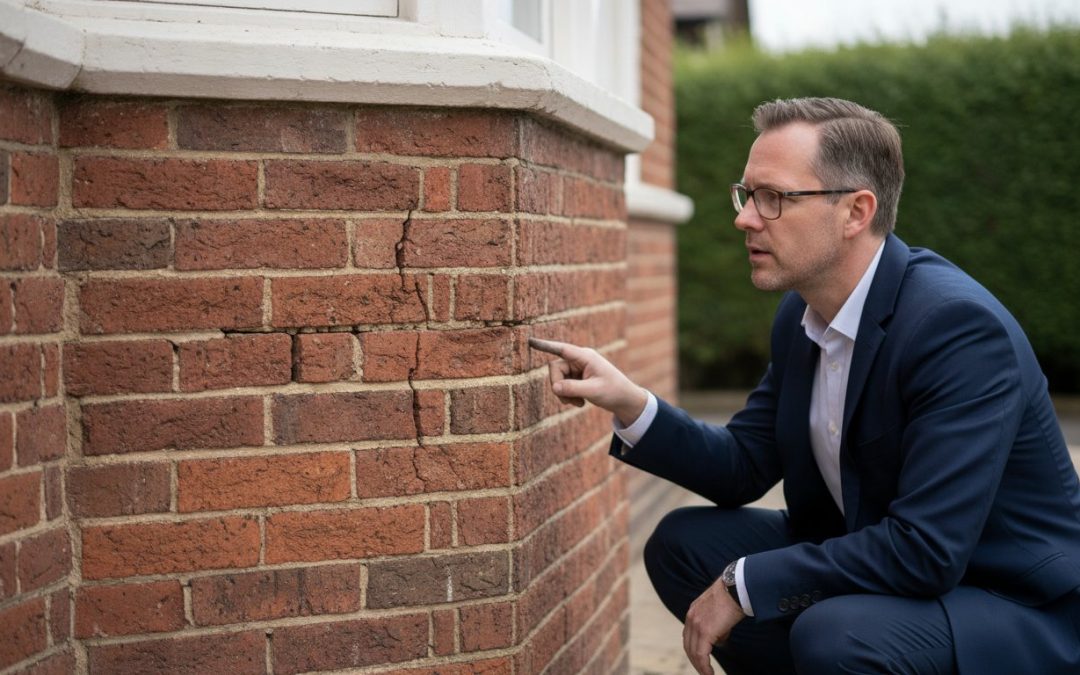
A thin crack in your mortar isn’t always a sign of natural settling; it’s often the first visible symptom of a hidden internal decay that threatens the very stability of your home. It’s natural to feel anxious when you spot changes in your brickwork, especially when you can’t tell the difference between a harmless cosmetic flaw and a serious structural risk. You’re right to prioritize the safety and value of your property, particularly if your home was built between the 1920s and early 1980s when less durable mild steel ties were frequently used. Identifying the early signs of wall tie failure is the first step in preventing a more significant structural compromise.
This guide will help you accurately recognize these warning signals, explaining exactly what causes metal corrosion within your cavity walls and how moisture penetration accelerates this process. We’ll provide a clear checklist of symptoms, from bulging masonry to specific horizontal cracking patterns, and outline the professional methodology required to restore your home’s structural integrity. By the end of this article, you’ll have the confidence to choose a specialist survey and secure a permanent fix for your property’s long-term health.
Key Takeaways
- Learn to distinguish between minor cosmetic cracks and the specific horizontal patterns that indicate underlying structural instability.
- Understand how to recognize the early signs of wall tie failure before internal corrosion leads to the visible bulging or bowing of your external masonry.
- Discover why retrospective cavity wall insulation often acts as a moisture bridge, significantly accelerating the oxidation of metal ties within the cavity.
- Evaluate the long-term structural risks of ignoring failing connectors, including the increased potential for outer leaf collapse during severe weather events.
- Find out how professional borescope inspections and metal detection mapping provide a non-disruptive, accurate diagnosis of your property’s internal health.
Understanding Wall Tie Failure in UK Cavity Walls
Wall ties are essential yet invisible components of modern UK homes. These small metal connectors bridge the air gap between the inner and outer leaves of a building. By Understanding Wall Ties and their function, homeowners can better appreciate how they secure the outer brick facade to the main structural frame. Despite their importance, wall tie failure is often a hidden crisis. Because these components are embedded within the mortar and shielded by the brickwork, corrosion can persist for decades without any external clues. By the time a property owner notices the first signs of wall tie failure, the internal damage is usually quite advanced.
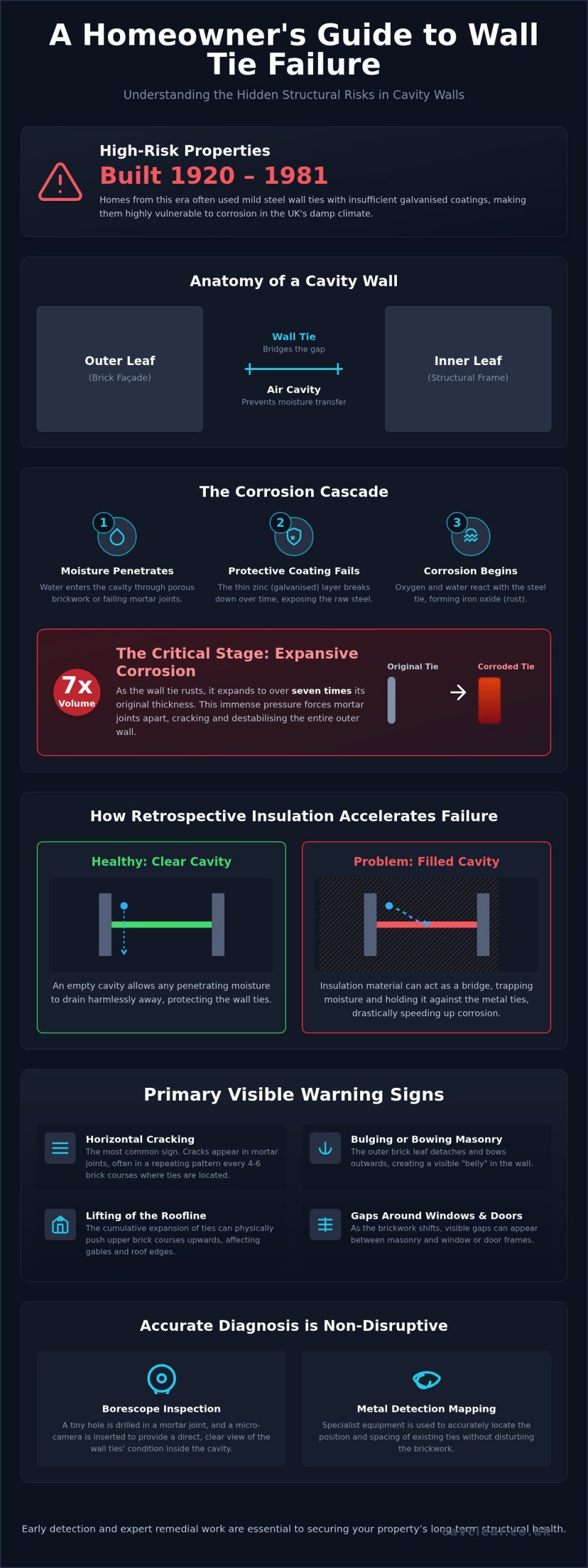
Properties constructed between 1920 and 1981 are at the highest risk. During this period, the industry standard for galvanised coatings on mild steel ties was often insufficient to withstand long term exposure to the UK’s damp climate. While these ties were intended to last, the protective zinc layer eventually breaks down. This leaves the raw steel vulnerable to oxygen and water, initiating a slow but destructive chemical reaction. This is not just a cosmetic issue; it is a fundamental threat to the building’s envelope.
The Role of a Cavity Wall
To understand why these ties are so vital, it’s necessary to look at what is a cavity wall and how it functions. A cavity wall consists of two separate layers of masonry with an air space between them. This design prevents moisture from transferring from the exterior to the interior. However, this separation makes the outer leaf inherently unstable on its own. Wall ties act as the skeleton of the structure, ensuring the two leaves behave as a single, rigid structural unit. Your home’s stability depends on these unseen components to resist wind pressure and maintain vertical alignment.
Why Wall Ties Corrode
Corrosion typically begins when moisture reaches the metal surface. In some older properties, the use of black ash mortar accelerates this process significantly. This material contains high levels of chemicals that create a particularly aggressive environment for metal. When steel ties oxidise, they undergo a physical transformation known as expansive corrosion. Expansive corrosion is defined by the process where iron oxide occupies a volume up to seven times greater than the original steel tie. This massive increase in thickness exerts immense pressure on the surrounding mortar, eventually forcing the brickwork apart and creating the visible signs of wall tie failure that specialists look for during a survey.
Primary Visible Signs of Wall Tie Failure
While the corrosion process begins deep within the cavity, the external masonry eventually exhibits specific patterns of distress. Recognizing these Signs of Wall Tie Failure early allows you to address the issue before it compromises your home’s safety. The most common indicators are not random; they relate directly to the physical expansion of the metal ties as they oxidise and force the mortar joints apart. This expansion creates internal pressure that the rigid brickwork simply cannot contain.
- Horizontal Cracking: These typically appear in the mortar bed joints where the ties are embedded.
- Bulging or Bowing: This occurs when the outer leaf physically detaches and moves away from the inner leaf.
- Lifting of the Roofline: The cumulative expansion of multiple ties can actually push the upper courses of brickwork upwards.
- Internal Cracking: In severe cases, the movement of the outer leaf begins to pull on the inner structural leaf, causing internal plaster to crack.
- Lintel and Window Separation: You might notice visible gaps appearing around window frames or doors as the masonry shifts.
Identifying Horizontal Mortar Cracking
Homeowners often mistake horizontal cracks for simple settlement. However, settlement cracks are usually vertical or diagonal, following the path of least resistance through the bricks. In contrast, tie failure produces a repeating pattern of horizontal cracks. Because ties are typically installed every 450mm vertically, you’ll often see cracks every 4 to 6 courses of brickwork. This uniformity is a classic symptom of expansive corrosion. If you spot this pattern, it’s advisable to arrange a specialist survey to assess the internal condition of the ties.
Wall Bulging and Detachment
A “bellied” or bulging wall is a more advanced sign of structural instability. You can often identify this by sighting down the length of the wall from a corner. If the brickwork appears to curve outward, the ties have likely snapped or lost their grip on one of the leaves. This leaves the outer leaf acting as a expert-standing wall, which is highly dangerous during high winds or storm events. This type of bulging often occurs at the mid-height of a gable end, where the wall has the least amount of lateral support from the internal floor joists. Specialists use precise measuring tools to determine the extent of this lean and recommend the correct remedial ties to restore structural integrity.
How Cavity Wall Insulation Accelerates Tie Corrosion
While previous sections focused on what you can see from the street, the most aggressive driver of structural decay is often hidden behind the brickwork. Retrospective cavity wall insulation, though installed with good intentions, frequently acts as a moisture bridge. In a clear cavity, any water that penetrates the outer leaf simply drops to the bottom and escapes through weep holes. When the cavity is filled with insulation, this moisture is trapped. It travels across the material and settles directly on the metal connectors. This creates a permanent moisture trap, significantly increasing the risk that you’ll eventually see the external signs of wall tie failure.
Ties in “wet” cavities fail at a much faster rate than those in clear, ventilated spaces. When mineral wool or foam becomes saturated, it holds water against the steel for extended periods. This constant exposure accelerates the oxidation process, turning the protective zinc coating into a sacrificial layer that quickly disappears. Once the raw steel is exposed, rust takes hold. Because the insulation obscures the view, you might have significant structural issues occurring internally even if the exterior mortar joints look relatively sound for a time.
At CavClear, our stance is rooted in structural safety. We don’t recommend retrospective insulation because of these specific risks. In many cases, we advise a full extraction to protect the building’s long term health. A dry, clear cavity is the only way to ensure that moisture doesn’t compromise the metal skeleton of your home.
The Impact of Wet Insulation
Saturated insulation creates a “damp wrap” around the metal. This environment is ideal for the chemical breakdown of the tie’s structural integrity. Penetrating damp doesn’t just cause internal mould; it initiates the slow decay of the building’s skeleton. A clear cavity is essential for tie longevity because it allows for natural airflow and ensures that moisture cannot bridge the gap between the two masonry leaves. Without this air gap, the signs of wall tie failure will likely manifest much sooner than expected.
The Solution: Extraction and Replacement
For properties suffering from these issues, cavity wall insulation removal is often the first necessary step in structural preservation. Installing new remedial ties into a saturated environment is counterproductive. We ensure the cavity is entirely clean before proceeding with any structural repairs. This methodology restores the original design intent of the building. By returning the cavity to its clear state, we provide the dry environment required for long term asset health. For homeowners seeking Specialist Surveys and Remedial Solutions, understanding this link between damp insulation and tie decay is vital for a permanent fix.
Ignoring the early signs of wall tie failure is a decision that often leads to progressive structural instability. Wall tie corrosion is not a static problem; it’s a dynamic process that worsens over time. When a single tie fails, the structural load it once supported is transferred to the surrounding connectors. These adjacent ties, typically already compromised by the same damp conditions, are rarely capable of handling this additional stress. This creates a domino effect where the rate of failure accelerates across the entire elevation of the building.
Catastrophic Failure Scenarios
In advanced cases, this instability leads to what specialists describe as a “peeling” effect. This occurs when large sections of the outer brick leaf physically detach from the inner structural leaf. Gable ends are particularly susceptible to this type of sudden collapse because they lack the lateral restraint provided by floor joists at higher levels. During severe UK storm events, the wind suction on a detached outer leaf can be enough to pull the masonry away entirely. This represents a significant safety risk to both the occupants of the property and the general public, often requiring emergency structural intervention.
Beyond the threat of collapse, shifting masonry causes extensive secondary damage to the building’s envelope. As the outer leaf moves, it can distort window and door frames, leading to drafts and persistent water ingress. You may also notice the roofline lifting as the expansive force of corroding ties pushes the upper courses of brickwork against the wall plate. Internally, this movement manifests as cracking in the plasterwork as the structural leaves of the wall are pulled in opposing directions.
Impact on Property Value
From a financial standpoint, evidence of tie corrosion is a major red flag on RICS Homebuyer Reports. Mortgage lenders frequently refuse to release funds until a specialist survey confirms the structural integrity of the masonry. Attempting “patch-up” repairs, such as simply repointing horizontal cracks, is a strategy that rarely survives a professional inspection. These cosmetic fixes don’t address the underlying oxidation and can actually make the eventual repair more complex. Conversely, investing in professional remedial solutions involving the installation of stainless steel ties provides the long-term assurances needed to restore market confidence. A specialist certificate of completion serves as a vital document during property transactions, proving that the home is a safe and secure investment. If you’ve noticed symptoms of movement in your masonry, you should arrange a professional wall tie survey to protect your property’s future value.
Specialist Surveys and Remedial Solutions
Once you’ve identified potential signs of wall tie failure, a professional technical diagnosis is the only way to confirm the extent of the internal damage. A visual inspection from the ground is rarely sufficient for a complete structural assessment. Specialist surveys use non-destructive technology to look inside the cavity, providing a clear picture of the internal conditions without the need to remove masonry. We employ high-resolution borescope cameras inserted through small drill holes in the mortar joints. This allows our technicians to view the ties directly and check for the presence of rust or the expansive corrosion that threatens your home’s stability.
Metal detection and mapping follow the visual inspection. We use precision detectors to locate every existing tie across an elevation. This helps us determine if the density of the ties meets current building regulations. Mapping the ties ensures we can identify areas where the original installation was inadequate or where previous poor workmanship has left the wall vulnerable. Our nationwide teams provide these detailed inspections across the United Kingdom, ensuring consistent standards of safety for every property owner.
Isolation of failed ties is a critical part of the remedial process. Simply adding new ties isn’t enough; the old, corroding ties must be isolated to prevent further damage. If left alone, their continued expansion will keep forcing the mortar joints apart, leading to the recurring cracking patterns mentioned earlier in this guide. We use specific isolation sleeves or removal techniques to ensure these old components no longer exert pressure on the masonry.
What to Expect During a Wall Tie Survey
The Wall Tie Replacement Process
The actual replacement involves drilling into the leaves and inserting new, corrosion-resistant stainless steel helical or resin-bonded ties. We perform pull-out strength tests on a sample of the new ties to verify they’ve achieved a secure structural bond. Our technicians take great care with the final finish, ensuring the mortar used to seal the drill holes matches your existing brickwork for a seamless repair. This process restores the structural unit of your walls and provides the permanent fix necessary for your property’s future stability.
Securing Your Property’s Structural Future
Our team provides nationwide structural expertise to help you navigate these technical challenges with confidence. We combine the skill of accredited UK technicians with comprehensive technical reporting to deliver a clear path toward a permanent resolution. Restoring your home’s stability doesn’t have to be a source of stress when you have access to specialized diagnostic tools and proven remedial methodologies. We’re here to help you protect your investment and restore the long-term health of your building envelope. Book a Professional Wall Tie Survey with CavClear Today and take the first step toward a secure, stable home.
Frequently Asked Questions
How long do wall ties typically last in a UK property?
Wall ties in UK properties built before the 1980s typically have a lifespan of 15 to 20 years. These older components were often made from mild steel with thin galvanised coatings that eventually succumb to corrosion. Modern stainless steel ties, which became the industry standard in the 1980s, are much more durable and have an expected lifespan of over 50 years.
Can I check for wall tie failure myself without a professional?
You can identify external signs of wall tie failure such as horizontal mortar cracks or bulging brickwork, but a definitive diagnosis requires specialist equipment. Professional technicians use borescopes to view the ties inside the cavity and metal detectors to map their density. These technical inspections are necessary to confirm if the internal metal skeleton of your home is still structurally sound.
Is wall tie failure covered by standard buildings insurance?
Standard buildings insurance policies rarely cover wall tie failure because it’s usually categorised as a gradual maintenance issue rather than sudden, accidental damage. Most providers view metal corrosion as a predictable result of aging or prolonged exposure to moisture. It’s best to check your specific policy wording, though structural repairs of this nature are typically the homeowner’s responsibility.
How much does a wall tie survey usually cost for a semi-detached house?
The cost of a specialist survey depends on the size of the property and the number of elevations that require inspection. While industry rates vary, a survey is a vital investment that provides a detailed technical report on your home’s structural health. Our nationwide teams provide these inspections across the United Kingdom to help property owners avoid the much higher costs associated with masonry collapse.
Will wall tie replacement cause damage to my internal decorations?
Wall tie replacement is a non-disruptive process that doesn’t affect your internal decorations. Technicians work entirely from the exterior of the property, drilling small holes into the mortar joints to install remedial ties. Because the work doesn’t involve the inner leaf’s internal face, your wallpaper, paintwork, and plaster remain undisturbed throughout the installation and repair process.
How many wall ties are needed per square metre for a safe wall?
Current UK building regulations require a minimum density of 2.5 wall ties per square metre for cavity walls where both leaves are at least 90mm thick. This specific spacing ensures the two layers of masonry act as a single structural unit. During a survey, technicians verify if your property meets these standards to ensure the wall can resist wind pressure and vertical loads safely.
What is the difference between a wall tie survey and a general damp survey?
A general damp survey identifies moisture sources and salt contamination, whereas a wall tie survey focuses specifically on the physical condition of structural metal connectors. While dampness can accelerate tie corrosion, a specialised inspection uses metal detection and borescopes to assess the integrity of the ties themselves. Both are important for property health, but only a tie survey confirms structural stability.
Can wall tie failure be fixed without replacing the entire wall?
Yes, wall tie failure can be resolved without the need for rebuilding the entire masonry structure. Remedial techniques involve installing new stainless steel ties through the external leaf to securely reconnect the two layers of masonry. Once these are secured and the old, corroded ties are isolated to prevent further expansion, the structural integrity of the wall is fully restored.
Recent Comments