
Did you know that 1.4 million homes in England are currently battling damp issues? According to the 2024-2025 English Housing Survey, this represents the highest rate recorded in five years. If you’re struggling with cold internal walls or recurring mould, learning how to check for damp in cavity walls is essential to protect your property’s structure. You’ve likely felt the frustration of moisture that returns no matter how much you clean. It’s stressful to worry about structural integrity when you can’t see the source of the problem.
This diagnostic guide will help you identify the hidden signs of moisture within your property’s structure and explain why certain insulation materials can fail. We’ll provide a clear list of symptoms to monitor and walk you through the professional methodology used to diagnose and resolve these issues. By the end of this article, you’ll know exactly which technical steps are necessary to ensure the long-term health and efficiency of your asset.
Key Takeaways
- Identify internal indicators like localized cold spots and salt staining that signal a failure in your wall’s moisture barrier.
- Learn how to check for damp in cavity walls by understanding the role of professional borescope inspections in revealing hidden debris and insulation faults.
- Understand why “blown-in” insulation can act as a bridge for water, compromising your property’s thermal efficiency and structural health.
- Discover why restoring the original air gap through professional extraction is the most effective way to provide long-term protection against penetrating damp.
- Recognize how detailed technical surveys help prevent wall tie corrosion, safeguarding your home’s structural integrity and market value.
Recognizing Internal and External Signs of Damp in Cavity Walls
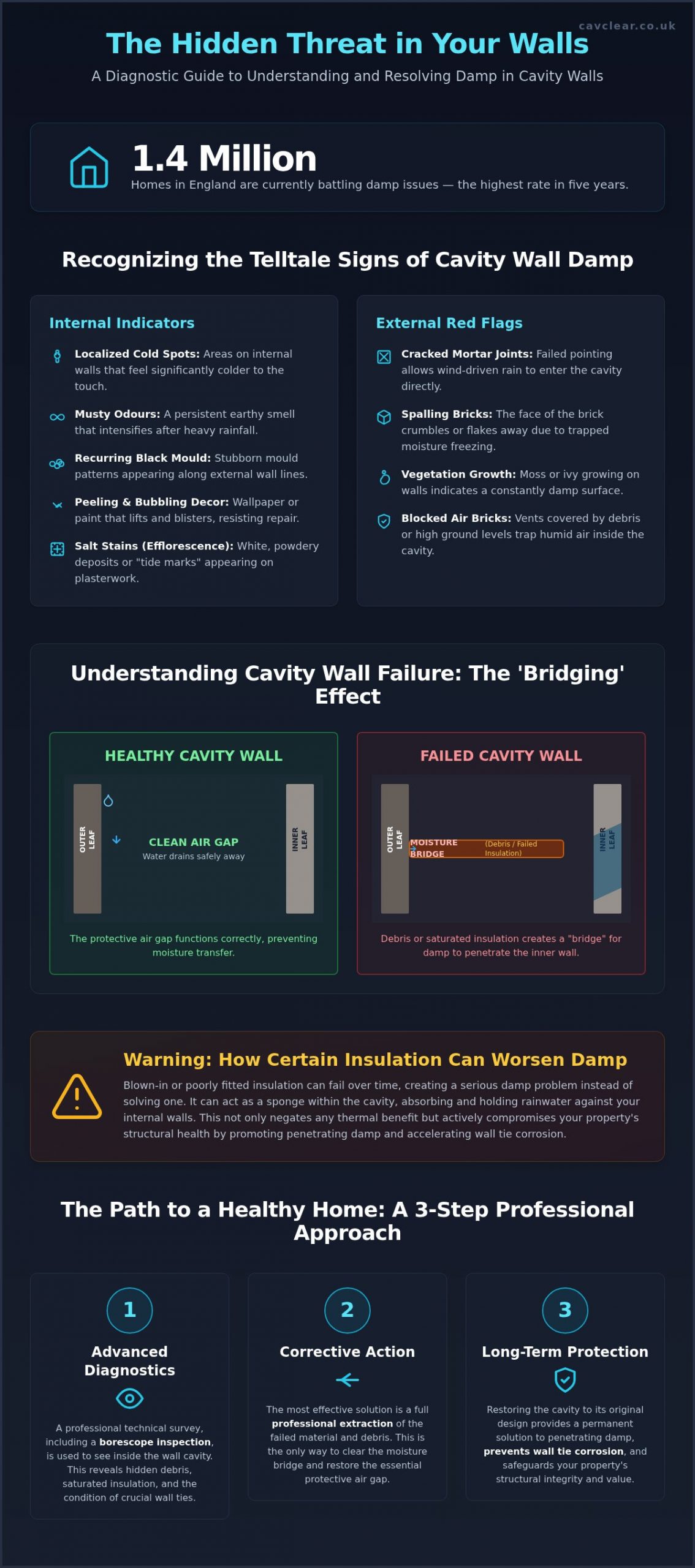
Property owners often mistake structural dampness for simple condensation, leading to ineffective treatments. Knowing how to check for damp in cavity walls allows you to distinguish between minor lifestyle issues and serious structural failures. Unlike surface condensation, which typically fluctuates with humidity levels and appears in corners or behind furniture, cavity-related dampness remains persistent. You should look for localized cold spots on internal walls. These areas often feel significantly colder to the touch than the surrounding masonry, indicating that internal insulation is saturated or that debris has bridged the structural gap.
Odour is another reliable indicator of a failing system. If you notice a musty, earthy smell that intensifies during or immediately after heavy rainfall, it’s a sign that rainwater is penetrating the outer leaf and reaching the inner wall. This process is often linked to the fundamental design of the building. Understanding the Mechanics: How Cavity Walls Fail helps explain why this gap is vital; when it’s compromised, moisture travels expertly across the structure instead of draining away safely. You might also notice recurring black mould that appears in specific, stubborn patterns along external wall lines, even in rooms that are well-ventilated.
Visual Red Flags on Interior Decor
Diagnostic indicators often appear on the lower half of your walls, where moisture tends to accumulate. You might observe peeling wallpaper or bubbling paint that resists traditional repair efforts. Darkened patches on carpets or floorboards near the room’s perimeter suggest that water is pooling at the base of the cavity. If your skirting boards show signs of warping or discoloration, moisture is likely trapped behind the timber, leading to potential rot. A key technical sign is the appearance of tide marks or white, powdery deposits known as efflorescence. Hygroscopic salts are minerals found in building materials that migrate to the surface of plasterwork; they actively absorb moisture from the atmospheric air, ensuring that damp patches remain visible even during dry spells.
Identifying External Masonry and Mortar Failures
The external leaf of your property serves as the first line of defence against the British weather. When this layer fails, the cavity becomes a reservoir for moisture rather than a protective barrier. Check for these specific faults:
- Cracks in the mortar joints: Failed pointing provides a direct path for wind-driven rain to enter the cavity.
- Spalling bricks: This occurs when the brick face crumbles due to the expansion of expertzing water trapped within the masonry.
- Vegetation growth: Moss or ivy indicates that the wall remains constantly damp and provides a root-hold for plants.
- Blocked air bricks: Vents that have been covered by high ground levels or debris prevent the cavity from “breathing,” trapping humid air inside.
Understanding the Mechanics: How Cavity Walls Fail and Cause Damp
The design of a cavity wall serves a specific protective function. It creates a physical break between the external masonry and the internal living space. This air gap ensures that any rainwater penetrating the outer leaf drains away before reaching the interior. However, structural failures often compromise this barrier. Understanding how to check for damp in cavity walls requires a look at the hidden mechanics within this gap. In the UK, properties are categorized into exposure zones based on the severity of wind-driven rain. Homes in coastal or elevated areas face significantly higher pressure, making the integrity of the cavity even more critical for long-term asset health.
Modern living standards have also increased the burden on older property designs. We now heat our homes more consistently and seal them more tightly than in previous decades. This change in thermal dynamics can exacerbate existing structural faults. If you suspect your home is failing to manage moisture, a professional survey can provide the technical clarity needed to plan a permanent fix. A thorough inspection remains the most reliable method for identifying these structural failures before they escalate.
The Concept of “Bridging” in the Wall Cavity
A primary cause of moisture ingress is “bridging,” where a physical object connects the two leaves of the wall. During original construction, mortar droppings, often called “snots,” can fall and accumulate on wall ties or at the base of the cavity. These deposits act as a capillary bridge, allowing liquid water to travel directly from the wet outer brickwork to the dry inner leaf. Assessing Damp in Cavity Walls involves identifying these internal obstructions that bypass the intended air gap protection. This issue is frequently worsened by insulation that has slumped or was incorrectly installed. You can learn more about the fundamental structure in our guide on what is a cavity wall.
Wall Tie Corrosion and Structural Tell-Tales
Metal wall ties are the structural anchors that hold the two leaves together. When moisture remains trapped in the cavity due to poor ventilation or failed insulation, these ties begin to oxidize. As the metal rusts, it expands to several times its original thickness. This expansion exerts immense pressure on the surrounding mortar, often resulting in visible horizontal cracking along the external brickwork. If left unaddressed, the outer leaf may bulge or even detach from the rest of the building. Identifying these signs early is vital. If you notice these cracking patterns, consulting a wall tie replacement specialist is a necessary step to restore structural stability and stop moisture pathways.
The Link Between Defective Insulation and Persistent Dampness
While the original intention of cavity wall insulation was to improve thermal efficiency, the reality for many UK homeowners is a significant increase in moisture-related issues. At CavClear, we maintain a strict professional stance against retrospective cavity wall insulation. This process involves injecting materials into an existing structure, which often disrupts the vital air gap protection discussed earlier. When you’re investigating how to check for damp in cavity walls, you must consider the condition of the material sitting between your bricks. “Blown-in” materials, such as mineral wool or bonded beads, can act as a structural sponge when they become wet, holding moisture directly against the inner leaf of your property.
This saturation leads to a phenomenon known as interstitial condensation. This occurs when warm, moist air from inside the home penetrates the wall and reaches its dew point within the insulation layer itself. Because the moisture is trapped inside the material, it cannot evaporate, leading to a permanent state of dampness that degrades the building’s fabric. Over time, this constant presence of water accelerates the oxidation of wall ties and poses a severe threat to any structural timber embedded in the masonry. Ensuring the long-term health of your home requires a clear understanding of these internal dynamics.
Why Retrospective Cavity Insulation Often Fails
Not every property is a suitable candidate for cavity filling. Timber-framed buildings and homes located in high-exposure coastal zones are particularly vulnerable to failure when their cavities are obstructed. Achieving a completely void-expert fill during a retrospective installation is technically impossible due to internal obstructions like mortar snots and wall ties, which inevitably lead to cold spots and moisture accumulation. These gaps create “cold bridges” where temperature differences cause moisture to manifest as surface dampness. Because of these inherent risks to structural integrity and the high probability of future damp issues, we do not recommend the installation of new retrospective cavity wall insulation.
Identifying Saturated Insulation Symptoms
If you suspect your insulation is failing, there are several diagnostic signs to monitor. Walls that feel noticeably colder to the touch than other internal surfaces, even when the heating is active, suggest that the insulation has lost its thermal properties due to water ingress. You may also notice a sharp increase in indoor humidity levels, which often results in secondary black mould solutions being required for the affected areas. When these symptoms persist, the most effective technical remedy is a professional cavity wall insulation removal. This process restores the building’s natural ability to manage moisture by reinstating the protective air gap.
Advanced Diagnostic Techniques for Inspecting Wall Cavities
A standard visual inspection is often insufficient for a definitive cavity wall diagnosis because it only identifies the symptoms, not the underlying cause. When homeowners attempt to determine how to check for damp in cavity walls, they frequently rely on basic pin-type moisture meters. While these tools measure electrical resistance on the surface of the plaster, they cannot distinguish between condensation and moisture migrating from within the cavity. Misusing these devices often leads to a misdiagnosis, resulting in surface treatments that fail to address the structural fault. A professional investigation uses a combination of internal imaging and moisture mapping to provide a complete technical picture.
Obtaining an independent, professional report is a vital step for property owners, especially when dealing with insurers or prospective buyers. These reports document the specific nature of the failure and provide a clear, evidence-based remedial plan. During a comprehensive damp survey, technicians evaluate the property’s exposure, masonry condition, and internal environment to identify the precise pathway of moisture ingress. This methodical approach ensures that the resulting recommendations focus on long-term structural health rather than temporary aesthetic fixes.
Borescope Inspections: Seeing Inside the Wall
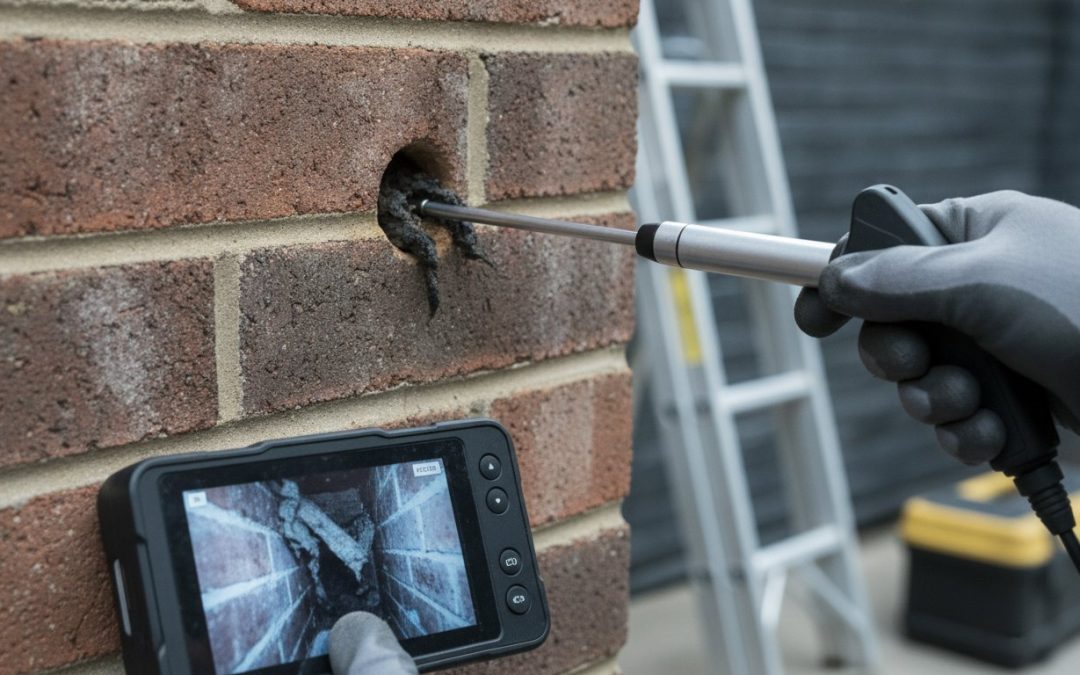
The borescope is the most critical tool in a specialist’s diagnostic kit. This process involves drilling small, discreet holes into the mortar joints, typically around 10mm to 12mm in diameter, to insert a high-definition camera probe. This technique allows the surveyor to inspect the internal state of the cavity without causing structural disruption. Technicians look for specific indicators of failure, including mortar debris on wall ties, the presence of standing water, and the condition of any existing insulation. Digital images captured during the borescope inspection provide undeniable proof of cavity failure and are the only reliable way to confirm if insulation has become saturated. If you suspect your property’s moisture barrier is compromised, you can book a professional cavity wall survey to receive a detailed internal assessment.
Thermal Imaging and Moisture Mapping
Advanced infrared cameras allow surveyors to identify temperature variances across a wall’s surface that are invisible to the naked eye. These thermal images highlight “cold bridges” where internal insulation is missing or saturated, as wet materials conduct heat more rapidly than dry ones. By creating a moisture map of the property, technicians can track the exact path of ingress and determine how external weather patterns affect internal dampness. Surface damp often results from localized condensation, whereas internal cavity moisture stems from structural bridging or saturated fill material. Compiling these technical findings into a remedial plan ensures that the extraction process targets the exact areas of failure, restoring the property’s thermal efficiency and protecting its future value.
Restoring Structural Integrity: Professional Remedial Solutions
Identifying a structural failure is the first stage in protecting your property’s future. Once you understand how to check for damp in cavity walls and have confirmed that your home’s moisture barrier is compromised, the focus must shift to a permanent technical resolution. Simply cleaning mould or repainting internal surfaces does not address the underlying cause of the dampness. Restoring the original air gap is the only effective way to stop the capillary action that allows water to travel across the cavity. By choosing a nationwide specialist with accredited technicians, you ensure that the remedial work restores both the structural integrity and the thermal efficiency of your asset; for broader improvements, Eco Renovate provides whole-house retrofit services that can further enhance your property’s performance.
Correcting these faults is a vital investment in the property’s long-term health. Saturated insulation and corroded wall ties are not just aesthetic issues; they represent a significant risk to the building’s fabric and its market value. A methodical remedial plan provides the reassurance that the problem has been solved at its source, rather than merely hidden. Professional repairs ensure that the property can once again manage moisture naturally, providing a safe and comfortable environment for the occupants.
The Process of Cavity Wall Insulation Extraction
The most effective way to resolve persistent dampness is through a methodical cavity wall insulation removal. We use high-powered industrial vacuums to extract saturated or defective material from the bottom of the wall. This process involves creating small, discreet access points in the mortar joints, ensuring the procedure remains non-disruptive for the homeowner. Our technicians ensure the cavity is 100% clear of all debris, including old insulation and mortar “snots” that may have been present since construction. Reinstating this clear air gap is essential for restoring the building’s protective moisture break.
Wall Tie Surveys and Remedial Replacement
Structural stability depends on the integrity of the wall ties that hold the two leaves of masonry together. If a survey identifies that the original ties have oxidized or failed due to moisture exposure, remedial replacement is necessary. We install high-quality remedial ties to secure the structure, choosing between mechanical expansion ties or chemical resin ties based on the specific masonry type. A professional survey is always the first step in any structural repair, as it determines the exact density and type of ties required for your property. You should contact CavClear for a professional property survey to receive a detailed technical report and a clear path toward restoring your home’s structural health.
Secure Your Home Against Structural Dampness
Understanding how to check for damp in cavity walls is the first step in safeguarding your property’s value and structural integrity. You’ve seen how localized cold spots and external masonry failures signal deeper issues within the wall cavity. Relying on surface-level fixes only masks the problem; a true resolution requires identifying the specific bridging or insulation failure occurring internally. Our team focuses on restoring the vital air gap that modern living and defective installations often compromise, ensuring your home remains dry and efficient.
Our accredited specialist technicians provide nationwide UK coverage, delivering detailed technical reports with professional remedial recommendations. We specialize in non-disruptive insulation extraction and structural wall tie replacement to restore your home’s natural moisture protection. To ensure your property’s long-term asset health and avoid the risks of deteriorating masonry, Book a Professional Cavity Wall Survey with CavClear today. Taking these technical steps now prevents further deterioration and restores the comfort and security of your living environment. We’re here to help you protect your investment with professional, no-nonsense solutions.
Frequently Asked Questions
How can I tell if my cavity wall insulation is wet?
You can identify wet insulation by observing persistent cold spots on internal walls that don’t warm up even when your heating is active. Saturated material loses its thermal resistance and acts as a bridge for moisture. A musty odour that intensifies during heavy rain is another strong indicator that the fill material has absorbed water. Definitive confirmation requires a borescope inspection to view the state of the material directly.
Will damp in my cavity walls cause structural damage?
Yes, prolonged moisture within a cavity causes the oxidation of metal wall ties, which leads to structural instability. As these ties rust, they expand and can cause horizontal cracking in your external mortar joints. If left unaddressed, this can eventually result in the detachment of the outer leaf of masonry. This compromises the safety of the entire building and reduces the long-term value of your asset.
Can I check for cavity wall damp myself?
While you can perform a visual inspection for surface indicators like salt staining or peeling paint, learning how to check for damp in cavity walls effectively requires specialist equipment. Homeowners cannot see inside the structure without a borescope. Professional surveys identify hidden debris and saturated insulation that surface-level checks will always miss. These technical inspections provide a reliable diagnostic report that is essential for planning a permanent fix.
Is mould always a sign of a cavity wall problem?
Mould isn’t always caused by a cavity fault; it’s often a result of poor ventilation and internal condensation. However, if black mould appears in consistent patterns along the lines of your external walls despite adequate heating, it suggests a structural bridge or saturated insulation. A professional survey distinguishes between lifestyle-related condensation and serious moisture ingress from within the cavity, ensuring you don’t waste money on the wrong treatment.
How long does a professional cavity wall survey take?
A comprehensive cavity wall survey typically takes between one and two hours to complete, depending on the size and complexity of the property. During this time, technicians perform borescope inspections and thermal mapping to assess the internal condition of the walls. This non-disruptive process provides the technical data needed to create a detailed remedial action plan. It’s a vital investment in the future health and efficiency of your home.
What is the most common cause of damp in UK cavity walls?
The most common cause is the bridging of the cavity, often caused by incorrectly installed retrospective insulation or mortar debris from original construction. These materials create a physical path for rainwater to travel from the outer leaf to the inner leaf. In the UK’s high-exposure zones, wind-driven rain penetrates the masonry and quickly saturates any unsuitable material sitting within the gap. This bypasses the building’s natural moisture protection.
Can cavity wall damp be fixed without removing the insulation?
No, if the insulation has become saturated or is acting as a bridge, extraction is the only permanent solution. Surface treatments or damp-proof injections cannot dry out wet material trapped inside a wall. Removing the defective insulation restores the protective air gap, which is essential for the building’s natural moisture management. This process is the only way to ensure the long-term structural health and thermal performance of your property.
Recent Comments