
With one in five properties across the country currently affected by moisture issues, diagnosing condensation dampness UK wide has become a critical priority for maintaining structural integrity. You’ve likely spent significant time and money on mould sprays or dehumidifiers, only to find the black spots returning as soon as the temperature drops. It’s exhausting to deal with cold rooms that refuse to hold heat, especially when general builders offer conflicting advice that fails to address the root cause.
We understand that recurring damp is more than a cosmetic nuisance; it’s a sign that your home’s thermal envelope may be compromised. This professional guide will help you accurately identify the source of moisture and determine if your issues stem from daily habits or structural failures like defective wall insulation. You’ll learn the specific indicators of cold-bridging and the methodical steps required to achieve a permanent fix that restores comfort and protects your property’s long-term value.
Key Takeaways
- Understand how relative humidity and dew points interact to create moisture on internal surfaces during the colder months.
- Learn the visual and olfactory markers essential for diagnosing condensation dampness UK wide, from water beads to persistent musty odours.
- Discover why professional thermal imaging is superior to standard moisture meters for identifying structural “cold bridges” within your walls.
- Identify when recurring mould is actually caused by saturated cavity wall insulation rather than just occupant lifestyle.
- Establish a clear path toward a permanent solution through professional surveys and targeted structural remediation of the building envelope.
What is Condensation Dampness and Why Does it Occur?
Condensation dampness is a physical reaction that occurs when warm, moisture laden air meets a surface at a lower temperature. When this air cools rapidly, it reaches its saturation point and releases excess water. In the context of What is Structural Dampness?, condensation is frequently the primary cause of internal moisture issues. While many homeowners view it as a minor inconvenience, it represents a genuine threat to the health of the building fabric if left unaddressed. Effective diagnosing condensation dampness UK wide requires an understanding that this isn’t merely steam on a window, but a complex interaction between temperature, humidity, and structural performance.
Relative humidity plays a central role in this process. It measures the percentage of water vapour the air holds relative to the maximum amount it could hold at that specific temperature. Warm air has a much higher capacity for moisture than cold air. During a typical UK winter, we heat our homes to stay comfortable, which increases the air’s ability to carry water. When this warm air hits a cold external wall or a window pane, the air temperature drops and the relative humidity hits 100 percent. This forces liquid water to form on the surface. This is why the problem is almost exclusively a cold weather phenomenon in the United Kingdom.
It’s also vital to distinguish between two types of condensation:
- Surface Condensation: The visible moisture that forms on non-absorbent surfaces like glass, or soaks into wallpaper and plaster, eventually leading to black mould growth.
- Interstitial Condensation: A more hidden danger where moisture forms inside the wall structure itself. This happens when water vapour passes through porous internal finishes and meets a cold layer within the cavity.
Thermal bridging is the most common structural driver of localised damp spots. This occurs when a specific part of the wall, such as a metal wall tie or a gap in the insulation, conducts heat out of the building faster than the surrounding area. These cold spots become magnets for moisture, regardless of how much you heat the rest of the room.
The Science of the Dew Point in UK Homes
The dew point is the temperature where air can no longer hold water vapour. In a standard UK home, if your room is 20 degrees Celsius with 60 percent humidity, the dew point is approximately 12 degrees. Any surface in that room colder than 12 degrees will attract condensation. Common cold spots include window reveals, external corners where airflow is restricted, and the areas of wall hidden behind heavy furniture. These zones are often several degrees cooler than the rest of the room, making them the first places where mould will colonise.
Lifestyle vs. Structural Drivers
Daily activities like cooking, showering, and drying clothes on radiators naturally release several litres of water into the air every day. While these lifestyle factors contribute to the moisture load, they aren’t always the root cause of a damp problem. If your walls have sufficient thermal resistance, the moisture should remain in the air until it’s ventilated out. However, many modern homes are now so sealed for energy efficiency that they lack natural breathability. When this airtightness is combined with structural cold spots, the building’s performance fails. We often find that when diagnosing condensation dampness UK homeowners are unfairly blamed for lifestyle issues when the reality is a fundamental failure in the wall’s ability to retain heat.
Key Signs of Condensation Dampness in Your Property
Recognising the early symptoms of moisture ingress is the first step in protecting your home’s structural integrity. While some signs are obvious, others require a more forensic approach to distinguish between environmental humidity and structural failure. When diagnosing condensation dampness UK homeowners often first notice water beads forming on non-absorbent surfaces like window glass or gloss-painted woodwork. This surface water eventually migrates into porous materials, leading to damp patches on wallpaper that feel cold and tacky to the touch. If left unaddressed, these patches will eventually lead to the deterioration of internal plasterwork and the failure of decorative finishes.
A persistent, musty odour is another reliable indicator. This smell is the result of microbial volatile organic compounds (mVOCs) released by mould and bacteria as they colonise stagnant moisture. Unlike the earthy smell of rising damp, condensation-related odours are often localised to areas with poor airflow, such as the corners of rooms or behind large wardrobes. If you find yourself constantly cleaning surfaces only for the scent to return, the moisture is likely embedded deeper than the surface layer of the wall.
Identifying Black Mould Patterns
Black mould, specifically species like Aspergillus or Stachybotrys, has a distinct preference for condensation. This is because condensation consists of pure distilled water, whereas rising damp carries ground salts that can inhibit certain mould growths. You can read more about the specific health implications and removal strategies in our guide on Black Mould in UK Homes: Causes, Risks, and Permanent Solutions. One specific pattern to look for is “ghosting.” This occurs when mould follows the internal frame of the building or the positions of wall ties, highlighting exactly where thermal bridging is coldest. While treating mould in your home is a necessary temporary measure, it won’t stop the cycle if the underlying structural cold spot remains.
Physical Indicators Beyond the Walls
Evidence of a moisture problem isn’t always found on the masonry. Homeowners should monitor several secondary indicators that suggest the internal environment is reaching its dew point too frequently:
- Window Condensation: Heavy pooling of water on the inside of window panes every morning, which eventually rots timber frames or damages uPVC seals.
- Wardrobes and Furniture: Dampness on clothes, leather shoes, or bags stored in cupboards positioned against external walls.
- Secondary Damage: Peeling paint, lifting floorboards near walls, and the rusting of metal fixings.
Prolonged exposure to this environment can even lead to the corrosion of wall ties within the cavity. If you notice these symptoms across multiple rooms, a professional cavity wall survey is the most reliable way to determine if the issue is structural. Ignoring these signs can lead to long-term damage that reduces the overall value of your asset.
Professional Methodology for Diagnosing Dampness
Accurate diagnosing condensation dampness UK wide requires moving beyond visual surface inspections. While surface markers provide essential clues, they don’t reveal the underlying physics of the building envelope or the hidden state of the cavity. Professionals use a suite of calibrated instruments to map moisture patterns and thermal performance across the entire structure. This methodical approach ensures that we don’t simply treat a symptom while a structural root cause continues to degrade the property’s value and integrity.
Professional surveyors also deploy electronic hygrometers to monitor the internal environment over an extended period. These devices track air temperature and relative humidity through various diurnal cycles. This data logging is vital because it reveals how the property handles moisture during the coldest hours of the night when heating systems might be powered down. If the internal environment remains consistently above the dew point threshold, even with high moisture production, it points toward a ventilation failure. Conversely, if the air is dry but the walls are wet, the fault is almost certainly structural.
The Limitations of Resistance Meters
Many homeowners purchase inexpensive “prong” moisture meters, but these devices often provide misleading data in a domestic setting. These meters measure electrical resistance. They can’t distinguish between liquid water, conductive salts, or even the foil backing found on modern plasterboard. A high reading on a DIY meter doesn’t always indicate rising damp; it often reflects surface-level moisture from condensation or hygroscopic salts left behind by previous damp issues. To avoid an expensive misdiagnosis, you should commission a professional damp survey that uses multiple diagnostic methods to cross-reference moisture levels with thermal data.
Thermal Imaging and Borescope Inspections
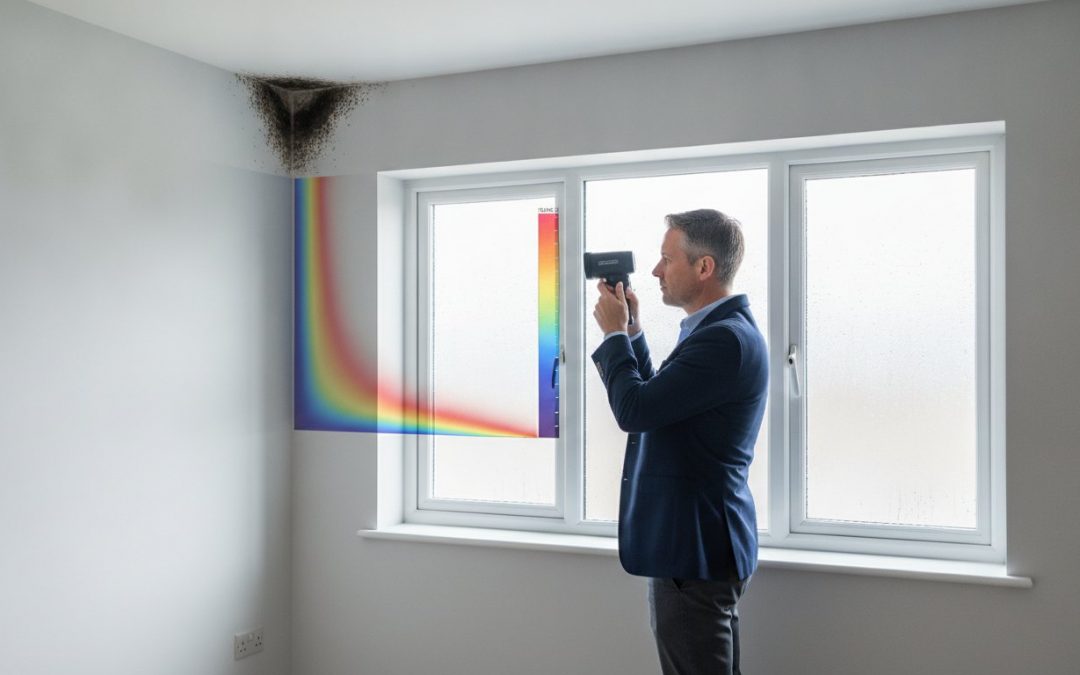
Advanced technology provides the most definitive evidence when diagnosing condensation dampness UK properties. Infrared cameras allow us to see thermal bridging in real-time. These cameras highlight specific cold spots where insulation is missing, slumped, or saturated with water. A cold spot on a thermal image often correlates exactly with a patch of black mould, proving that the wall’s thermal resistance has failed. To confirm these findings, we use borescopes. By inserting a small camera into the cavity through a discreet drill hole, we can visually inspect the state of the wall ties and the condition of any existing insulation. Seeing inside the wall is the only way to confirm a structural cause and rule out simple lifestyle factors. This non-invasive approach provides a high-level standard of transparency and ensures the proposed remedy is based on hard evidence.

The Hidden Cause: When Defective Insulation Mimics Condensation
A common misconception in the property industry is that internal moisture is always the result of the occupant’s lifestyle. While ventilation is important, many homeowners find that black mould persists despite following every piece of advice regarding cooking and laundry. When diagnosing condensation dampness UK properties often reveal a more systemic failure: defective cavity wall insulation. If the material inside your walls has become saturated or has slumped over time, it stops acting as a thermal barrier and begins to function as a bridge for cold and moisture.
The United Kingdom is divided into specific exposure zones based on the severity of wind-driven rain. In high-exposure areas, retrospective cavity insulation often fails because the external leaf of the wall cannot dry out sufficiently. Once moisture penetrates the outer masonry, it’s absorbed by the insulation material. This saturated mass then sits directly against the internal leaf, creating a permanent cold spot that remains below the dew point regardless of how high you turn up the heating. This is why many problems that appear to be simple condensation are actually structural insulation failures that require a technical remedy.
Why Wet Insulation is Worse Than No Insulation
Wet insulation is significantly more damaging than having an empty cavity. While an empty cavity allows for natural airflow and drainage, wet material loses all thermal resistance and actively draws heat away from the living space. This thermal siphoning effect keeps internal wall temperatures low, making surface condensation inevitable. In these cases, cavity wall insulation removal is often the only permanent solution to restore the building’s thermal performance and protect the internal finishes.
Wall Tie Corrosion and Moisture
Moisture trapped within a defective cavity doesn’t just affect the internal air quality; it attacks the building’s structural skeleton. Original metal wall ties are particularly vulnerable to the prolonged damp conditions caused by wet insulation. As these ties corrode, they expand, which can lead to horizontal cracking in mortar joints or even the bulging of the external brickwork. If you notice damp patches alongside structural cracking, commissioning a wall tie survey is essential to ensure the stability of your home. If you suspect your insulation is failing, we recommend a professional cavity wall inspection to identify the root cause before structural damage worsens.
Remedial Actions and Permanent Solutions
Achieving a dry, healthy home requires a transition from temporary management to permanent structural remediation. Once the process of diagnosing condensation dampness UK homeowners face is complete, the focus must shift to restoring the building’s original design intent. A methodical four-step approach ensures that the root cause is eliminated rather than merely masked by cosmetic finishes.
- Step 1: Professional Survey. Before commissioning any work, you must have a definitive diagnosis that separates occupant lifestyle from structural failure. This prevents wasting money on ventilation systems if the real issue is saturated masonry.
- Step 2: Structural Repairs. Ensure the external envelope is watertight. This includes repairing leaking gutters, repointing failed mortar joints, and addressing any wall tie corrosion identified during the inspection.
- Step 3: Cavity Extraction. If defective or wet insulation is present, it must be removed. Restoring a “clear” cavity is the only way to re-establish the thermal break between the internal and external leaves of the wall.
- Step 4: Controlled Ventilation. Only after the walls are dry and thermally efficient should you implement mechanical ventilation. These systems work far more effectively when they aren’t fighting a constant source of structural moisture; for expert installation of ventilation systems, check out TGK Electrical Ltd.
Professional Extraction vs. Surface Treatments
Next Steps for UK Homeowners
Living with persistent mould and cold rooms is a significant source of stress, but it’s a problem with a clear technical solution. We encourage you to seek an independent inspection that looks beyond surface symptoms to evaluate the health of your wall cavity. Addressing these issues now prevents the progression of wall tie corrosion and the further degradation of your internal finishes, which can be far more costly to repair in the future. Our nationwide team provides the professional rigour and technical standards required to deliver a permanent fix. To begin the process of restoring your home’s comfort and value, book a professional damp and mould survey with CavClear today.
Restoring Your Home’s Structural Health and Comfort
Accurately diagnosing condensation dampness UK wide is the only way to ensure your property remains a healthy, valuable asset. We’ve established that while lifestyle factors contribute to moisture levels, persistent dampness often signals a failure in the building’s thermal envelope. Whether the issue is caused by cold-bridging or saturated cavity insulation, relying on surface treatments like anti-mould paint will only delay the necessary structural repairs. A permanent solution requires a methodical approach that prioritises the integrity of the wall cavity and the restoration of natural breathability.
Our expert technicians specialise in cavity extraction and structural surveys, providing the clarity needed to resolve complex damp issues. We offer nationwide service coverage across the United Kingdom, delivering detailed technical reports with specific remedial recommendations tailored to your property. By identifying the root cause now, you protect your home from long-term damage and restore the comfort your family deserves. Take the first step toward a dry, mould-expert environment by choosing a specialist who values precision and technical reliability.
Request a Professional Damp Survey from CavClear and secure the future of your property today.
Frequently Asked Questions
Is it condensation or rising damp?
Condensation is identified by its appearance at various heights and the presence of black mould. Rising damp is restricted to the lower metre of the ground floor and leaves distinct salt tide marks. Condensation typically forms on cold surfaces where airflow is restricted; rising damp is a capillary action from the ground. Identifying these markers correctly prevents you from commissioning expensive and unnecessary treatments.
Can I diagnose condensation dampness myself?
You can identify the visual symptoms, but a definitive diagnosis requires professional equipment. Determining if the moisture is caused by lifestyle habits or structural failures, like saturated cavity insulation, is essential for a permanent fix. Diagnosing condensation dampness UK properties involves using thermal imaging and borescopes to see what’s happening inside the wall structure. This process moves beyond surface observations to find the actual source.
Why is there mould in my bedroom corners?
Corners are natural “cold spots” because they have reduced airflow and a higher surface-area-to-volume ratio for heat loss. If mould returns despite improved ventilation, it often indicates a structural bridge or a gap in your cavity wall insulation. These cold zones drop below the dew point, causing water vapour to liquefy and support fungal growth. Identifying these thermal failures is vital for maintaining the building’s asset health.
Will a dehumidifier fix my damp problem?
A dehumidifier only manages the symptoms by extracting moisture from the air. It won’t resolve the underlying structural cause, such as a cold bridge or saturated masonry. While it may provide temporary relief, the walls will remain cold and prone to moisture as soon as the machine is turned off. You need a structural solution to address why the wall surface is reaching the dew point.
How much does a damp survey cost in the UK?
The cost of a professional survey varies based on the size of the property and the complexity of the diagnostic tools required. A detailed technical report provides a clear remedial action plan, which often saves you significant money by preventing incorrect or unnecessary repairs. Investing in an accurate diagnosis ensures that your property value and structural integrity are protected over the long term.
Does cavity wall insulation cause dampness?
Saturated or incorrectly installed cavity wall insulation is a frequent cause of internal dampness. When the material becomes wet, it creates a thermal bridge that leads to cold spots and persistent mould growth on internal walls. Diagnosing condensation dampness UK homes often reveals that removing defective insulation is the only way to restore the building’s thermal performance. This extraction process is non-disruptive and restores the cavity’s original function.
Recent Comments