
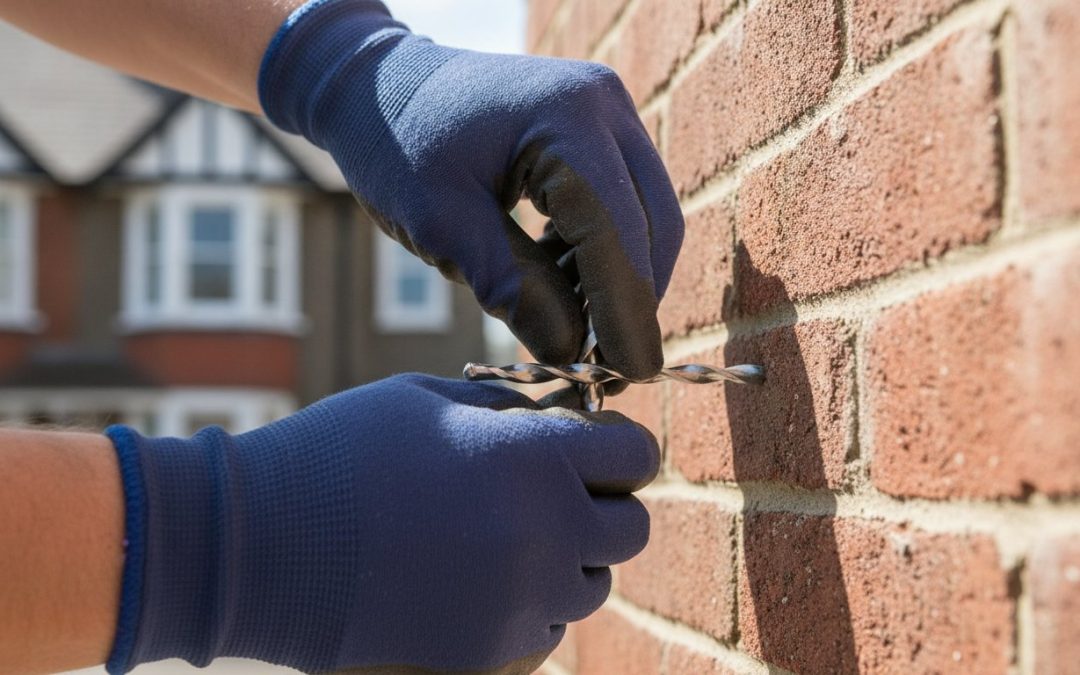
A single incorrectly placed wall tie can be the difference between a stable home and a structural emergency. If you’ve recently noticed horizontal cracking or bulging brickwork, it’s natural to feel anxious about the safety of your property. You might even worry that previous remedial work didn’t meet the necessary technical standards. These concerns are valid because common wall tie installation mistakes, such as improper spacing or insufficient embedment, can leave a building vulnerable to movement or even collapse.
We understand that navigating technical specifications like PD 6697:2019 or BS EN 845-1:2013 is confusing for many homeowners. This article explains the critical errors that compromise structural repairs and shows you how to ensure your property remains sound for the long term. You’ll learn why a minimum density of 2.5 ties per square metre is vital and how professional isolation of old ties prevents further damage. By the end of this guide, you’ll know exactly how to identify defective workmanship and what a specialist must do to restore your home’s integrity.
Key Takeaways
- Understand why wall tie remediation is a precision structural task that carries significant liability, making it unsuitable for DIY or general building attempts.
- Learn how to identify common wall tie installation mistakes such as incorrect hole diameters or insufficient embedment depths that compromise mechanical grip.
- Discover why simply installing new ties is insufficient if corroded original ties aren’t isolated to prevent “wall tie jacking” and ongoing masonry damage.
- Explore how cavity debris and saturated insulation can bridge moisture to the inner leaf, undermining the effectiveness and longevity of new structural ties.
- Recognize the importance of specialist pull-out testing and professional surveys to verify that remedial work meets the required safety standards for long-term stability.
The Risks of Improper Wall Tie Installation and DIY Attempts
Remedial wall ties are essential structural components designed to restore the stability of existing buildings. Unlike original ties bedded into mortar during construction, remedial versions are precision-engineered anchors installed into the masonry later in the building’s life. While many property owners are comfortable with standard home maintenance, wall tie replacement carries significant structural liability. It isn’t a standard DIY project. If a repair is performed incorrectly, the homeowner remains legally and physically responsible for the building’s safety and any future failures.
Hiring a general builder who lacks specialist structural training often leads to common wall tie installation mistakes. These contractors may not possess the calibrated testing equipment required to verify that a tie has achieved its necessary load-bearing capacity. Without specific expertise, a builder might install ties at the wrong density or fail to account for the specific compressive strength of your masonry. This lack of precision doesn’t just waste money; it leaves the underlying structural issue unresolved while providing a false sense of security. To avoid these pitfalls, it is vital to work with construction professionals who understand structural integrity; for those planning larger renovations or new builds, you can learn more about Willmac Group and their commitment to high-quality standards.
Structural Integrity and Public Safety
The primary function of a wall tie is to link the inner and outer leaves of a cavity wall so they act as a single structural unit. When this link fails, the outer leaf becomes detached and unstable. This creates a severe risk of total wall collapse, especially during high wind events or structural shifts. In extreme cases, the entire brick facade can peel away from the building. Understanding what cavity wall ties are and how they maintain the link between masonry leaves is vital for any property owner facing these issues.
Why ‘Generic’ Fixes Fail in Specialist Masonry
Masonry is rarely uniform across different properties. Buildings across the United Kingdom use various combinations of brick, blockwork, or stone, each with unique density and porosity. A “one-size-fits-all” approach to ties usually results in poor pull-out resistance because the anchor cannot grip the specific substrate effectively. We define wall tie failure as the loss of structural connection between the masonry skins. Using generic fixings instead of specified helical or resin systems often accelerates this failure. Specialist remediation ensures that every tie is matched to the specific masonry type, providing a permanent fix that protects the long-term health of the asset.
Critical Technical Mistakes in Remedial Wall Tie Placement
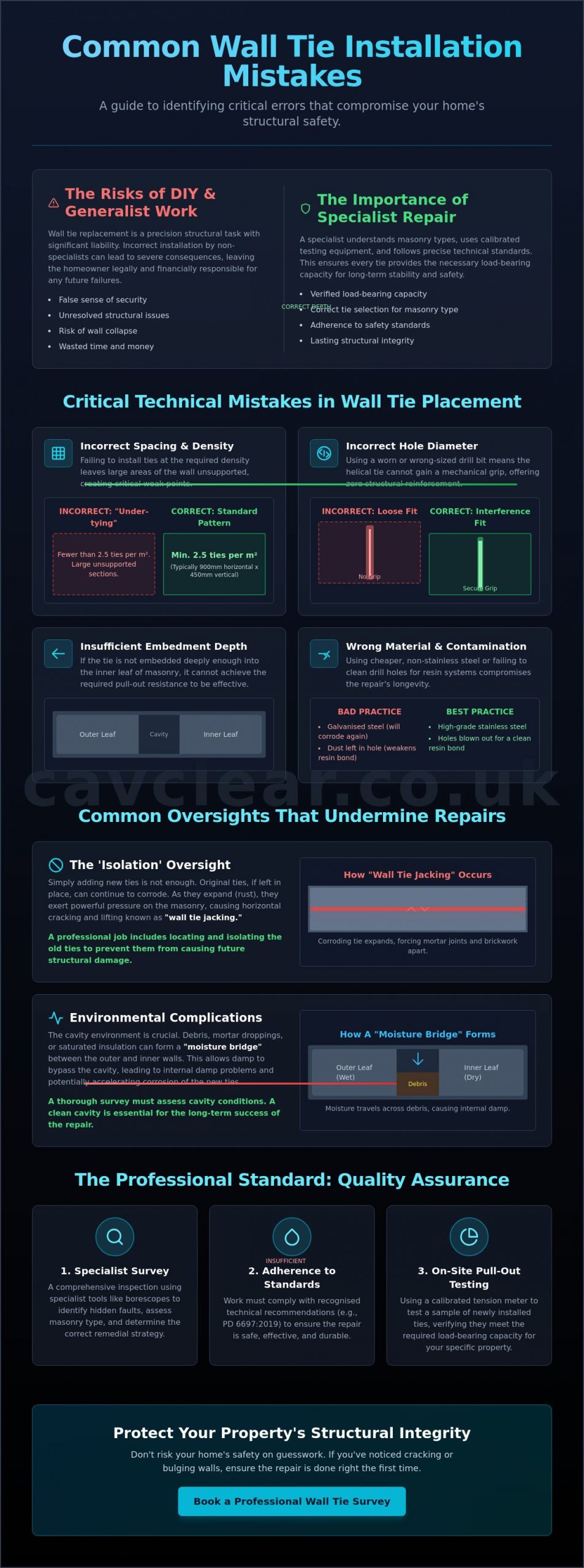
Precision is the foundation of structural remediation. When installing helical or resin-fix ties, a fraction of a millimetre determines whether the repair succeeds or fails. One of the most common wall tie installation mistakes involves the correlation between the pilot hole diameter and the mechanical grip of the tie. If a technician uses a worn drill bit or the wrong size entirely, the tie cannot ‘bite’ into the masonry. This results in a connection that looks correct from the outside but offers zero structural reinforcement. Helical ties rely on a precise interference fit to transfer loads between the leaves, so any deviation in the drilling process renders the tie ineffective.
Material selection is equally critical for the long-term health of your property. We only use high-grade stainless steel because galvanised steel is susceptible to the same corrosion that caused the original problem. Using cheaper materials is a technical oversight that compromises the structural integrity of the building. For resin-based systems, a clean environment is non-negotiable. If the installer fails to blow out the dust from the pilot hole, the resin bonds to loose debris rather than the solid masonry. This creates a weak point where the tie can simply slide out under pressure. If you are concerned about existing work, a professional wall tie survey can identify these hidden faults before they lead to visible signs of wall tie failure.
Incorrect Spacing and Pattern Distribution
Standard spacing for most UK homes follows a staggered pattern of 900mm horizontally and 450mm vertically. This ensures a density of 2.5 ties per square metre, providing uniform lateral support across the entire elevation. ‘Under-tying’ occurs when a contractor skips rows or increases the distance between fixings to save time, leaving the wall leaf vulnerable to bulging. Perimeters are also frequently neglected during poor installations. Specialist standards require ties to be installed within 225mm of every window and door opening to manage the increased stress at these structural breaks. Failing to follow this pattern is one of the common wall tie installation mistakes that leads to localized masonry movement.
Inadequate Embedment Depth and Pilot Hole Errors
A remedial tie must achieve a minimum embedment depth of 50mm to 70mm within the inner leaf to be effective. Drilling too shallow prevents the tie from reaching the solid core of the inner masonry, meaning it lacks the required pull-out strength. Conversely, over-drilling is a frequent error where the technician drills right through the inner leaf or creates a void too large for the anchor to engage. Both mistakes significantly reduce the tie’s load-bearing capacity, making the wall leaf less stable than intended. We use depth-gauged equipment to ensure every tie reaches the exact specification required for your specific wall type.
The ‘Isolation’ Oversight: Neglecting Corroded Existing Ties
Installing new wall ties is only half of a successful structural repair. A frequent error we see during inspections of previous work is the failure to address the original, deteriorating ties. These common wall tie installation mistakes often occur because general contractors focus solely on the addition of new fixings while ignoring the destructive potential of the old ones. When original galvanised steel ties are left untreated in the mortar bed, they continue to oxidise. This process doesn’t stop just because a new stainless steel tie is located nearby. The existing corrosion remains an active threat to the masonry’s stability.
The result is a phenomenon called “wall tie jacking.” As the metal corrodes, it converts into iron oxide, which occupies a significantly larger volume than the original steel. This expansion generates immense pressure within the mortar joints, leading to distinct horizontal cracking patterns that mirror the original tie spacing. Ignoring this growth is a critical oversight that leads to ongoing structural instability despite the presence of new ties. Understanding the various causes of wall tie failure helps property owners recognize why a dual-action approach is necessary to protect their investment.
Why Isolation or Extraction is Non-Negotiable
To stop the damage caused by existing corrosion, a specialist must either isolate or extract the old ties. Isolation involves locating the original ties with a metal detector, exposing them, and then foam-wrapping or removing the outer end of the tie. This creates a physical void that allows the rust to expand without exerting pressure on the brickwork. In cases of severe corrosion or thin masonry, full extraction may be required to prevent further cracking. This meticulous step is a standard part of our professional wall tie replacement process, ensuring that the repair is permanent rather than a temporary fix.
Expansion Damage: The Jacking Effect of Rust
Rust isn’t just a surface stain; it’s a structural force. Iron oxide can expand to several times the thickness of the original steel, creating a “jacking” effect. This expansion literally lifts the bricks above the tie, widening the mortar joints and compromising the wall’s ability to carry vertical loads. Over time, these cracks allow more moisture to enter the cavity, which accelerates the corrosion of any remaining metal. Failing to account for this expansion is among the common wall tie installation mistakes that lead to recurring maintenance costs and eventual structural failure. We ensure the property’s long-term asset health by neutralising this threat during the remediation phase.
Environmental Factors: Debris and Insulation Complications
The internal environment of a wall is just as important as the technical placement of the ties themselves. Even high-specification stainless steel fixings can be undermined by poor cavity conditions. One of the common wall tie installation mistakes we frequently encounter is the failure to clear debris or saturated material from the cavity before proceeding with structural repairs. A cavity that isn’t clean cannot function as a moisture barrier. This oversight often leads to recurring damp issues and accelerated corrosion of the very components meant to stabilise the building. Ensuring the cavity remains an empty, breathable space is vital for long-term structural integrity.
Mortar droppings, often called “snots,” frequently accumulate on wall ties during construction or subsequent building work. These droppings create a physical bridge that allows water to travel from the external leaf to the internal masonry. When this happens, the wall ties remain in a constant state of dampness. A bridged cavity doesn’t just cause internal damp; it provides the exact conditions needed for rapid metal degradation. Understanding what is a wall cavity helps homeowners appreciate why maintaining a clear 50mm air gap is essential for property health across the United Kingdom.
The Impact of Contaminated Cavities
Debris at the base of a wall is another significant risk factor. When mortar and rubble build up above the damp proof course (DPC), moisture can bypass the building’s natural defences. This moisture often saturates the lower wall ties first. If a technician installs remedial ties into a cavity filled with rubble, the new fixings are immediately exposed to high humidity levels. We ensure that cavities are clear of such obstructions to protect the structural health of the property. Ignoring the state of the cavity base is one of the common wall tie installation mistakes that leads to premature failure of remedial work.
Why Insulation Extraction Often Precedes Tie Work
We maintain a firm stance against retrospective cavity wall insulation because it is a primary driver of structural corrosion. These materials often become saturated, holding moisture directly against the wall ties for years. Installing remedial ties into wet insulation is a futile exercise. The damp environment will eventually compromise the bond, especially in resin-fix systems. This is why cavity wall insulation removal is often a non-negotiable first step in our remediation process. By extracting contaminated or failing insulation, we restore the cavity to its original, dry state. This ensures that new structural ties remain functional for decades. If you’re concerned about the condition of your insulation, you should book a professional cavity wall survey to assess the internal environment before investing in structural repairs.
Professional Standards: Testing and Quality Assurance
A visual inspection is never enough to confirm the structural stability of a cavity wall. One of the most common wall tie installation mistakes is assuming that because a tie is present, it is functioning correctly. Professional remediation requires empirical evidence that the tie has achieved a secure bond with the masonry. We use high-grade stainless steel, typically 304 or 316 grade, to ensure the replacement system resists corrosion for the remaining life of the building. Using inferior materials is a technical failure that compromises long-term safety and asset health.
A formal report should follow every project. This document serves as a record of the materials used, the patterns followed, and the results of the mandatory testing. Property owners should insist on this level of transparency to protect their asset’s value and ensure future buyers can verify the building’s structural integrity. Specialist wall tie surveys provide the initial diagnostic data needed to design these precise remedial strategies, moving the process from observation to a verified structural solution.
The Necessity of Pre- and Post-Installation Pull Testing
Pull testing is the only way to verify the mechanical or chemical grip of a remedial tie. We use a calibrated tension gauge to apply a specific load to the tie, measuring its resistance to withdrawal. According to technical guidance in BRE Digest 401, at least 10 ties should be tested for a small project, while larger projects require a 5% sample size. For most buildings under 30 metres high, the minimum tensile proof load is 1kN. Failing to perform these tests is a major red flag. It indicates a contractor may be hiding common wall tie installation mistakes that could lead to future structural movement or masonry detachment.
Selecting a Specialist Structural Contractor
Wall tie work is a precision engineering task that requires a nationwide specialist with accredited technicians. A general builder might offer a lower price, but they often lack the specialist equipment to perform the necessary cavity wall tie inspections. Choosing a specialist ensures that the remediation follows the correct methodology, from the initial survey to the final pull test. We provide comprehensive structural assurances that focus on long-term stability rather than quick, superficial fixes. This professional approach restores both the building’s integrity and the owner’s peace of mind across the entire United Kingdom.
Securing Your Home with Professional Standards
Our accredited specialist technicians offer nationwide service coverage across the UK, providing expert structural reports and precise remedial recommendations tailored to your building’s needs. We take pride in rectifying poor workmanship and restoring the structural integrity of your asset. Book a Professional Wall Tie Survey with CavClear Today to receive a transparent assessment of your masonry’s condition. We’re ready to provide the expert solutions you need to keep your property safe and sound for years to come.
Frequently Asked Questions
How do I know if my wall ties have been installed incorrectly?
Visible indicators like horizontal cracking in the mortar joints or bulging brickwork often signal a failed installation. If you notice new cracks appearing shortly after a repair, it is likely the ties haven’t achieved a secure mechanical grip. A specialist can use an endoscope to look inside the cavity and confirm if the ties are correctly bedded or if they’ve missed the inner leaf entirely.
Can I install remedial wall ties myself to save money?
You should never attempt wall tie installation as a DIY project because of the severe structural liability involved. Professional remediation requires calibrated drilling equipment and pull-testing gauges that aren’t available to the average homeowner. An amateur mistake can lead to total wall collapse during a storm, and most property insurance policies won’t cover structural damage caused by uncertified workmanship.
Is it a mistake to leave the old wall ties in the wall?
Leaving original, corroded ties untreated is a critical oversight that undermines new repairs. Even if you install high-quality stainless steel replacements, the old galvanised ties will continue to rust and expand. This expansion generates enough pressure to lift the masonry, creating horizontal cracks that compromise the building’s stability. We always recommend isolating or extracting the original ties to stop this destructive process.
What happens if the wall ties are spaced too far apart?
Spacing ties too far apart is one of the common wall tie installation mistakes that results in “under-tying” the structure. This error leaves the outer leaf without sufficient lateral support, making it susceptible to bulging or peeling away under wind pressure. To meet British Standards, ties must be installed at a density of 2.5 per square metre to ensure the two leaves act as a single unit.
Why is my wall still cracking after new wall ties were installed?
Ongoing cracking usually suggests that the installer failed to isolate the original corroding ties or that the new ties have insufficient embedment. If the old ties are still expanding, they’ll continue to “jack” the bricks apart despite the new fixings. Alternatively, if the new ties were installed into weak mortar without proper testing, they might be sliding out, allowing the wall to move further.
Can cavity wall insulation cause new wall ties to fail?
Saturated retrospective insulation is a major risk factor because it holds moisture directly against the wall ties. This constant dampness can accelerate corrosion in lower-grade metals and weaken the bond of resin-fix systems. We often find that common wall tie installation mistakes include ignoring the state of the insulation, which is why we recommend extraction before performing any structural tie work.
What is a pull test and why is it important for wall ties?
A pull test is a quality assurance procedure that uses a calibrated gauge to measure a tie’s resistance to being pulled out. It is the only way to verify that a tie has achieved its required tensile proof load, typically 1kN for most domestic properties. Without this test, there’s no empirical proof that the tie is actually holding the two leaves of your wall together securely.
How deep should remedial wall ties be drilled into the brickwork?
Remedial ties must achieve a minimum embedment depth of 50mm to 70mm within the inner leaf to provide adequate structural grip. Drilling too shallow is a frequent error that prevents the tie from reaching the solid core of the masonry. Our technicians use depth-gauged drills to ensure every tie reaches the precise specification required for the specific density of your property’s brickwork.
Recent Comments