
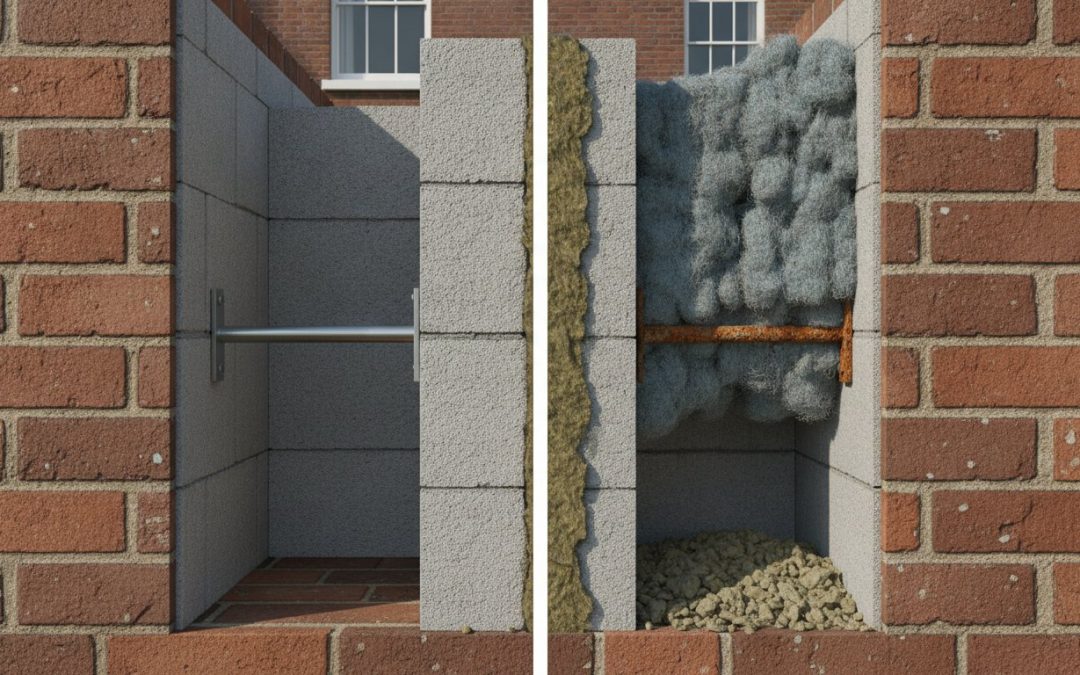
Your home’s most significant structural threats are often the ones you cannot see until the damage manifests as damp patches or crumbling mortar. You’ve likely spent winters battling persistent mould or feeling a draft that no amount of heating seems to fix, leading to a natural concern about what’s happening inside your walls. Investing in a professional cavity wall survey is the only way to move beyond guesswork and understand the true condition of your property’s hidden voids.
It’s common to feel anxious about hidden wall tie corrosion or the possibility that existing insulation is causing more harm than good. This guide will show you how a detailed inspection identifies structural faults and damp issues to protect your property’s long-term health. We’ll examine the technical process of borescope assessments, the signs of failing masonry supports, and the professional roadmap required to restore your home’s structural integrity and environmental comfort. By following the correct methodology, you can ensure a permanent fix that preserves your asset for the future.
Key Takeaways
- Understand how a professional cavity wall survey acts as a diagnostic health check to identify hidden debris and bridged damp proof courses.
- Learn about the non-destructive inspection techniques, including borescope assessments, used to visualize the internal condition of your property’s walls.
- Discover why maintaining a clear cavity is vital for preventing moisture transfer and how to identify failing wall ties before they cause significant damage.
- Gain clarity on why retrospective insulation often leads to persistent dampness and how to assess if existing materials are compromising your home’s health.
- Establish a clear path for professional remedial repairs that focus on restoring your property to its original structural design and efficiency.
What is a Cavity Wall Survey and Why is it Necessary?
A cavity wall survey is a technical diagnostic procedure designed to evaluate the internal environment of a property’s walls. Unlike a surface level appraisal, this inspection focuses on the void between the internal and external leaves of masonry. This space is critical for the property’s health because it serves as a barrier against moisture. A standard Cavity wall relies on a clear, unobstructed path for air to circulate and for any moisture that enters the outer leaf to drain away safely without reaching the interior of the home.
When this wall cavity becomes compromised by debris, fallen mortar, or incorrectly installed insulation, the structural integrity of the building is at risk. A specialist survey is essential for identifying bridged damp proof courses (DPC) and internal “snots” of mortar that allow water to track across the void. Acting as a proactive specialist, we view these surveys as a vital investment in long-term asset health. Catching these issues early is a preventative measure that stops small defects from turning into expensive structural repairs.
The Difference Between a General Home Survey and a Specialist Cavity Inspection
General home surveys and mortgage valuations are largely visual assessments of what’s visible to the naked eye. They often miss internal defects because they don’t look inside the wall. A specialist cavity wall survey uses technical equipment, such as high resolution borescopes, to see what is happening in the dark spaces behind your brickwork. While a standard surveyor might note a damp patch, a specialist identifies the exact cause, whether it’s saturated insulation or a physical bridge of rubble. Our nationwide technicians follow the latest BRE 401 updates for 2026 to ensure every inspection meets the highest technical standards.
Signs Your Property Requires an Urgent Inspection
You should monitor your property for specific indicators of cavity failure that require professional attention. Look for these common symptoms:
- Horizontal cracking: Visible cracks in the mortar joints often suggest that metal wall ties are expanding as they rust, which can eventually destabilise the outer leaf.
- Patterned damp: Persistent damp patches on internal walls that mirror the pattern of the external brickwork usually indicate that moisture is crossing a bridge in the cavity.
- Corner mould: Mould growth concentrated in the upper corners of rooms often points to thermal bridging caused by debris or settled insulation materials.
If you notice these signs, it’s a clear indication that the internal cavity environment is no longer functioning as intended. A professional survey provides the roadmap needed to rectify these faults and restore your home’s comfort.
The Specialist Inspection Process: What to Expect
A professional cavity wall survey is a methodical, multi-stage diagnostic process. It begins with a comprehensive external visual appraisal of the property’s envelope. Technicians examine the brickwork for tell-tale signs of distress, such as bulging, cracking, or evidence of past remedial attempts. This initial phase allows us to identify priority areas for internal investigation and ensures the survey targets the most vulnerable sections of the structure. Our nationwide service coverage ensures that homeowners across the UK can access this specialist expertise to safeguard their properties.
Once the external assessment is complete, we employ minimally invasive techniques to access the wall’s interior. This involves drilling small, discrete holes, typically 10mm to 12mm in diameter, into the mortar joints. These entry points are strategically placed to ensure maximum visibility while maintaining the aesthetic integrity of your masonry. After the inspection, these holes are professionally made good with matching mortar, leaving no lasting impact on the building’s appearance. This clean and non-disruptive methodology is a hallmark of our professional standard.
The final output of this process is a formal technical report. This document provides a detailed breakdown of the cavity’s condition, including photographic evidence and a clear roadmap for any necessary remedial actions. This level of transparency ensures you have the facts needed to protect your property’s long-term health. If you are concerned about the state of your property’s hidden voids, you can book a specialist cavity wall survey to obtain professional clarity and peace of mind.
Borescope Technology and Internal Visualisation
Modern borescope technology has revolutionised how we inspect the hidden voids of a building. By inserting high-resolution, flexible cameras through the pre-drilled access points, our technicians obtain a 360-degree view of the cavity. This allows us to spot “snots,” which are large mortar droppings that have fallen during construction and become lodged on wall ties or the damp proof course. These snots act as bridges, allowing moisture to travel from the outer leaf to the inner leaf. Capturing this high-resolution imagery is vital for providing structural evidence for insurance purposes or property transactions.
Thermal Imaging and Moisture Mapping
We supplement visual inspections with advanced thermal imaging and moisture mapping. Infrared technology detects temperature variances across the wall’s surface, highlighting cold spots where insulation may have slumped or where debris has accumulated. These thermal anomalies often correlate with moisture ingress points that aren’t yet visible on internal plaster. By combining thermal data with borescope findings, we create a complete diagnostic profile of the wall. This dual-layered approach ensures that no hidden fault goes undetected, allowing for a precise and effective remedial plan that restores your home’s comfort.
Identifying Structural and Damp Issues Within the Cavity
A clear cavity is the primary defence against moisture ingress in a modern UK property. When the void between the inner and external leaves becomes obstructed, the wall loses its ability to breathe and drain. A comprehensive cavity wall survey identifies these hidden obstructions before they manifest as visible damage. Common culprits include fallen mortar from the construction phase, building rubble, or incorrectly installed insulation that has become saturated. These materials create a physical bridge, allowing water to track directly from the weather-exposed outer leaf to the internal living space.
Early detection is critical. When moisture is trapped within the cavity, it accelerates the degradation of structural components. A survey pinpointing the exact location of these faults allows for targeted remedial action, preventing the need for more invasive and expensive repairs later. Our technicians specialize in rectifying the poor workmanship of the past to restore your property’s health and ensure its long-term asset value.
For property owners who also need to address fire safety requirements within their buildings, National Fire Ltd offers expert installation of cavity fire barriers, ensuring that these hidden voids do not facilitate the spread of fire.
Wall Tie Corrosion and Structural Stability
Wall ties are the invisible skeleton of your home, bonding the two leaves of masonry together. Most properties built before 1981 used galvanised steel ties that are susceptible to rust over time. As these ties corrode, they undergo a chemical change that causes them to expand to several times their original thickness. This expansion exerts immense pressure on the mortar joints, often lifting the brickwork and causing visible horizontal cracking.
Identifying this progression early through wall tie replacement surveys is vital for maintaining structural integrity. There are two primary modes of failure: expansion and snapping. While expansion causes the masonry to lift and crack, snapping occurs when the tie thins and breaks, leaving the outer leaf unanchored and prone to bulging or collapse during high winds. A technical inspection determines the density and condition of these ties, providing a clear data-driven assessment of your home’s stability.
Bridged Cavities and Penetrating Damp
Penetrating damp is frequently caused by debris accumulating at the base of the wall. When rubble or mortar “snots” build up, they often rise above the level of the damp proof course (DPC). This creates a bypass that allows ground moisture to travel upward into the internal leaf. While some resources, such as this Energy Saving Trust guide to cavity wall insulation, discuss the general principles of wall performance, they often don’t emphasize the severe risks of internal bridging.
Many homeowners mistakenly believe that repointing external brickwork will solve damp issues. However, if the cavity is internally bridged by mortar droppings or wet insulation, the moisture will continue to bypass the DPC regardless of the external finish. Only a professional cavity wall survey can confirm the presence of these internal bridges. Once identified, the remedial plan focuses on clearing the void to restore the property’s original design intent. This process ensures the long-term protection of the building’s fabric and the comfort of its inhabitants.
Assessing the Condition of Cavity Wall Insulation
Retrospective insulation is a leading cause of dampness in many UK homes. While these materials were originally intended to improve thermal efficiency, they often create significant environmental issues when installed in unsuitable properties or coastal areas. A professional cavity wall survey is the only reliable method to determine if these materials are currently compromising your home’s health. Our accredited technicians use borescope inspections to check for “voids” where insulation has settled over time or was never filled correctly during the initial installation. These gaps create cold spots on internal walls, leading to localized condensation and mould growth.
Wet or saturated insulation acts as a permanent bridge for moisture to enter the home. Once the material loses its ability to repel water, it holds moisture against the inner leaf of the property, effectively bypassing the building’s natural defences. This assessment is a critical step in determining whether cavity wall insulation removal is necessary to protect the structure. If you’re experiencing persistent damp despite your heating being on, you can request a specialist cavity wall survey to identify the root cause of the failure.
The Risks of Saturated or Slumped Insulation
Different insulation materials react poorly to moisture in varied ways. Mineral wool and certain foam products can hold water like a sponge, staying damp for months or even years. This constant presence of water has a devastating impact on internal timber components and metal wall ties, accelerating rot and corrosion. Topping up existing insulation is almost always the wrong solution for damp walls; adding more material to a compromised cavity only traps more moisture and worsens the structural pressure. Our methodology focuses on identifying these saturated zones to provide a clear path toward a permanent remedy.
When Removal is the Only Professional Solution
We decide to recommend extraction based on technical criteria, such as the level of moisture saturation and the presence of debris within the material. The goal of clearing the cavity is to restore the building’s natural breathability, allowing the internal and external leaves to dry out independently. This process is non-disruptive and essential for properties where the insulation has reached the end of its functional lifespan. Insulation becomes a structural liability the moment its presence facilitates moisture transfer or accelerates the chemical corrosion of essential wall ties. Restoring the void to its original design intent is often the only way to ensure the long-term asset health of the property.
Professional Remedial Action and Asset Protection
A specialist cavity wall survey serves as the critical first step in a professional damp survey protocol. It provides the empirical data required to move from observation to a definitive resolution. Our remedial plans focus on a single, clear objective: restoring your property to its original design intent. This means ensuring the cavity is clear of debris, the wall ties are structurally sound, and the masonry can breathe exactly as the original architect intended. By identifying the root cause of environmental failure within the wall’s skeleton, we prevent the need for invasive and expensive internal re-plastering or timber treatment later.
Our nationwide expertise ensures that all repairs meet modern structural standards and the latest BRE 401 updates for 2026. We don’t just patch up symptoms; we solve the underlying technical fault. This specialist approach provides long-term assurances that your home remains a safe, dry, and comfortable environment. We take pride in rectifying the poor workmanship of the past, positioning our services as a vital investment in your property’s future health rather than just a quick fix.
Interpreting Your Specialist Survey Report
A technical report should be transparent, no-nonsense, and highly actionable. We categorize all findings into priority levels. This allows you to differentiate between remedial works that are urgent for structural safety and those that require ongoing monitoring. This document is an invaluable tool when negotiating a property purchase or sale. It provides an objective, data-driven assessment of your home’s condition that only a specialist cavity wall survey can provide. It’s essential to hire accredited technicians for the subsequent work to ensure the methodology remains non-disruptive and technically sound throughout the extraction or repair process.
Long-term Benefits for Property Value and Health
Resolving cavity issues provides permanent protection against the environmental conditions that lead to black mould. When the cavity is clear and the wall ties are functional, the outer leaf remains stable and the inner leaf stays protected from moisture ingress. This restoration of the cavity void also restores the property’s natural thermal efficiency. Dry masonry is a significantly better insulator than saturated brickwork. Allowing your walls to dry out naturally is a key component of long-term asset protection. This methodical approach ensures the structural longevity of your home while restoring the environmental comfort you expect from your living space.
Securing Your Property’s Structural Future
Protecting the structural integrity of your home requires a move away from surface level observations toward a data-driven diagnostic approach. A comprehensive cavity wall survey provides the technical clarity needed to identify hidden debris, wall tie corrosion, and the saturated insulation materials that compromise your property’s health. By understanding the specific internal conditions of your masonry, you can move forward with a remedial roadmap that targets the root cause of dampness and instability rather than just treating the symptoms. This methodical process is the only way to ensure a permanent fix for your asset.
Our accredited specialist technicians provide nationwide UK service coverage, delivering detailed technical reporting that serves as a vital investment in your property’s future. We focus on restoring the original design intent of your building through clean, non-disruptive methodologies that rectify the poor workmanship of the past. You can book a professional cavity wall survey with CavClear today to secure your property’s long-term asset health and restore internal comfort. Taking this proactive step ensures your masonry remains a reliable barrier against the elements for many years to come.
Frequently Asked Questions
How much does a cavity wall survey cost in the UK?
The cost of a professional inspection depends on the size of your property and the complexity of the elevations being assessed. While basic visual appraisals exist, a technical cavity wall survey involves the use of high-resolution borescopes and the production of a formal diagnostic report. You should request a quote from a specialist provider to ensure the price reflects the specific requirements of your building’s construction type.
Is a cavity wall survey messy or disruptive to my home?
The process is designed to be clean and non-disruptive to your daily life. Technicians drill small, discrete holes into the mortar joints, typically around 10mm to 12mm in diameter, to gain camera access. Once the inspection concludes, these holes are professionally made good with matching mortar. Most homeowners find the procedure has no lasting impact on the external appearance of their masonry.
How long does a specialist cavity wall inspection take?
A standard inspection for a semi-detached property usually takes between two and four hours. Larger detached homes or buildings with multiple extensions may require more time to ensure every cavity void is thoroughly checked. The surveyor needs access to the entire external perimeter to perform a comprehensive assessment of the property’s structural health.
Can I perform a cavity wall survey myself with a DIY camera?
DIY cameras often lack the high-intensity lighting and focal depth required to identify subtle structural faults like early-stage wall tie corrosion. Interpreting the internal environment of a wall requires specialist training to distinguish between harmless construction debris and serious liabilities. A professional report also provides the accredited evidence needed for insurance purposes or property transactions.
Will a survey tell me if my wall ties are failing?
Yes, identifying the condition of your wall ties is a primary objective of the inspection. The surveyor will look for signs of iron oxide expansion, thinning, or snapping that indicate the ties are no longer providing the necessary bond between your wall leaves. This data allows for a proactive cavity wall survey to include a clear roadmap for structural stabilization if failure is detected.
What happens if the survey finds wet insulation in my walls?
If the inspection reveals saturated insulation, the specialist will recommend a remedial plan for extraction. Wet insulation cannot function as a thermal barrier and instead acts as a permanent bridge for moisture to enter your home. Removing the compromised material is the only professional way to restore the cavity’s breathability and protect your internal walls from penetrating damp.
Do I need a cavity wall survey before buying an older house?
Investing in a specialist survey before purchasing an older property is a vital protective measure for your investment. Many period homes suffer from hidden issues like rubble-filled cavities or corroded ties that a standard visual survey will miss. Identifying these technical faults before exchange gives you a clear understanding of any necessary remedial work and the long-term health of the asset.
Beyond structural health, it is essential for buyers and sellers to verify a property’s energy rating; Topplots provides government-approved Energy Performance Certificates to ensure legal compliance during property transactions.
Is a cavity wall survey the same as a damp survey?
A cavity wall survey is a specific technical inspection focused on the void between your internal and external leaves, while a damp survey is a broader assessment of moisture throughout the building. While a cavity inspection is often a component of a damp investigation, it focuses specifically on the structural and environmental conditions within the wall’s skeleton to find the root cause of moisture transfer.
Recent Comments