
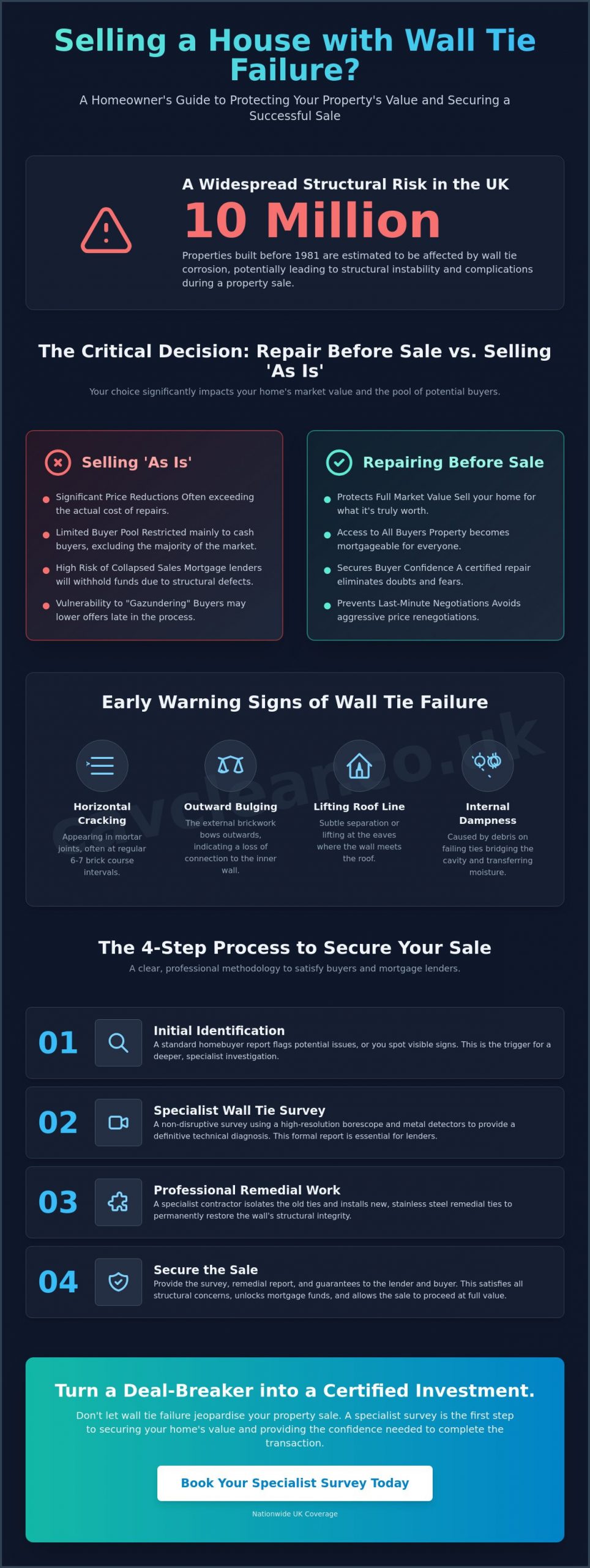
It is estimated that nearly 10 million properties across the United Kingdom, representing almost every cavity-walled structure built before 1981, may be currently affected by structural instability. If you are in the process of moving, discovering this issue can feel like a significant roadblock. You are likely wondering, can you sell a house with wall tie failure when mortgage lenders are involved? It’s a common concern that often leads to fears of collapsed sales or heavy price retentions.
We understand that structural terminology can be confusing and stressful for any homeowner. This guide clarifies how wall tie corrosion affects your property’s market value and outlines the professional methodology required to secure buyer confidence. You’ll learn about the importance of a specialist wall tie survey and the technical steps required to restore the integrity of your home. By following the correct remedial standards, you can transform a potential deal-breaker into a certified investment in your property’s long-term health.
Key Takeaways
- Understand that while you can sell a house with wall tie failure, the presence of structural instability often leads to mortgage retentions that can stall or collapse a transaction.
- Learn to identify early warning signs such as horizontal cracking in mortar joints and outward bulging of the brickwork before they are flagged in a building survey.
- Discover why a specialist wall tie survey is the essential first step in providing the technical diagnosis required by lenders to approve a mortgage.
- Compare the financial implications of selling a property “as is” against the benefits of performing professional wall tie replacement to maintain your home’s full market value.
- Identify the importance of instructing a specialist remedial contractor with the correct inspection equipment to ensure a non-disruptive and permanent structural solution.
Can You Sell a House with Wall Tie Failure?
The short answer is yes, you can sell a house with wall tie failure, but the process becomes significantly more complex when a buyer requires a mortgage. Structural integrity is the primary foundation of property valuation; without it, a house is often deemed unlendable in its current state. While a cash buyer might accept the property at a reduced price to account for future remedial works, most transactions rely on high-street lenders who view structural defects as a direct threat to their financial security.
During a standard RICS Homebuyer Report, surveyors are trained to identify specific red flags that indicate subsurface issues. To understand the fundamental role these components play, it helps to ask: What are wall ties? These are essential metal connectors that join the internal and external leaves of a cavity wall, providing the necessary lateral stability to prevent the outer wall from bowing or collapsing. When these ties corrode, the property’s marketability drops because the fault is no longer just cosmetic; it’s a matter of safety and long-term asset health.
The decision regarding can you sell a house with wall tie failure depends largely on your timeline and your willingness to negotiate. If you choose to sell as is, you must be prepared for a limited pool of buyers. Most people moving home don’t want to inherit a structural project, and those who do will expect a price reduction that far exceeds the actual cost of the repair.
Why Mortgage Lenders Care About Wall Ties
Lenders prioritize the long-term security of their investment. If a surveyor identifies potential failure, the underwriter often views the property as a high-risk asset. This typically results in a mortgage retention, where the lender withholds funds until repairs are certified. A professional diagnosis through a specialist Wall Tie Survey is often the only way to satisfy these requirements and prevent a total refusal of the loan.
Saleability vs. Structural Soundness
Visible symptoms like horizontal cracking or bulging masonry create immediate anxiety for buyers. These defects signal deeper problems that often lead to gazundering, where buyers lower their offer late in the process. Addressing these issues early via a professional Cavity Wall Tie Inspection transforms a liability into a managed repair. This proactive approach restores buyer confidence and protects your asking price from aggressive, last-minute renegotiations.
How Wall Tie Failure is Identified During a Sale
Most homeowners first encounter structural concerns through a standard Homebuyer Report. A general surveyor identifies visual anomalies that suggest potential structural movement, but they lack the specialized equipment to see inside the wall cavity. This is a critical junction in the sale process. If you are asking yourself, “can you sell a house with wall tie failure,” you must understand that a surveyor’s suspicion is often enough to halt a mortgage offer until a specialist provides a definitive diagnosis. They observe external symptoms, but a technical inspection is required to confirm the severity and the specific type of tie corrosion involved.
Common indicators include horizontal cracks appearing in the mortar joints, often at regular intervals of six to seven brick courses. You might also notice an outward bulging of the external brick leaf, which indicates the wall is no longer tied securely to the internal structure. These visual cues suggest the internal ties are no longer providing the lateral restraint required by UK Building Regulations. It is important to identify whether the property uses vertical twist ties, which cause significant masonry damage when they fail, or thinner wire ties that might fail without showing obvious external signs.
The Specialist Wall Tie Survey Process
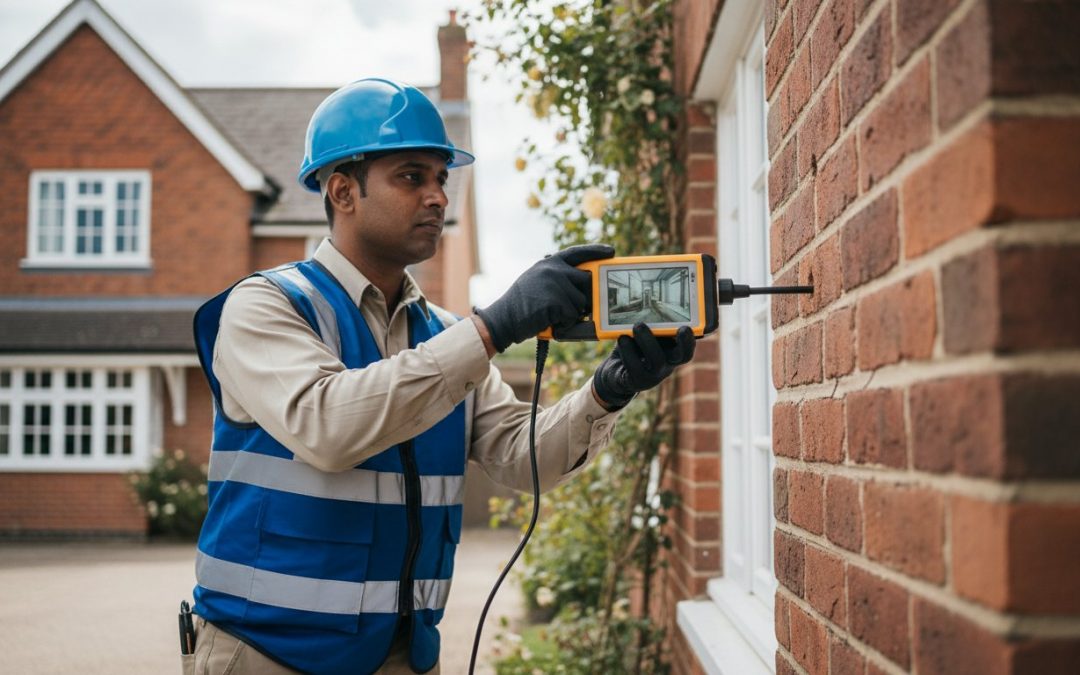
To move past a general surveyor’s “red flag,” you need a specialist Wall Tie Survey. This process involves using high-resolution borescopes inserted through small, non-disruptive drill holes to visually confirm the condition of the ties within the cavity. We also use deep-field metal detectors to map the density and spacing of the existing ties. This data allows us to produce a formal technical report that solicitors and lenders use to verify the property’s structural integrity and the long-term health of the asset.
Signs That Often Trigger a Deeper Investigation
Beyond obvious cracking, other subtle signs can trigger a deeper investigation. A slight lifting of the roof line or the appearance of internal dampness, often caused by debris collecting on failing ties and bridging the cavity, are frequent markers. Cracking that precisely follows the horizontal line of the wall ties in the external masonry is a definitive sign of advanced corrosion. When iron or steel ties corrode, the resulting expansion of the rust layer physically lifts the bricks and forces the mortar joints to crack.
Repairing Before Sale vs. Selling ‘As Is’
Homeowners often face a difficult choice when structural defects come to light. While the question of can you sell a house with wall tie failure is technically answered with a yes, the financial reality is more complex. Choosing to sell the property without addressing the issue often results in a “scare factor” price reduction. Buyers who are unfamiliar with structural repairs tend to overestimate the risks and costs involved, leading them to demand discounts that far exceed the actual price of professional remedial work. This defensive negotiating position can strip significant equity from your sale.
Professional expert guidance on identifying corrosion emphasizes that structural movement is a progressive issue. If you ignore the problem, the evidence of failure becomes more pronounced over time, further damaging your property’s marketability. By performing repairs before the house goes on the market, you take control of the narrative. You shift the property from being a “project” with unknown risks to a certified, structurally sound asset. This transparency is vital for maintaining your asking price and preventing late-stage price renegotiations, often referred to as gazundering.
The Downside of Price Reductions
Reducing your asking price rarely satisfies a mortgage lender. A price drop does not improve the structural integrity of the building; it simply makes a damaged asset cheaper. If a surveyor identifies significant failure, the lender may still impose a mortgage retention or refuse the loan entirely, regardless of the sale price. This can label your property as unmortgageable in the local market, effectively restricting your pool of potential buyers to cash-only investors who will expect even deeper discounts.
The Benefits of Proactive Wall Tie Replacement
Proactive wall tie replacement secures the full market value of your home by removing structural uncertainty. When you provide a buyer with a technical report and a transferable guarantee for the work, you offer them immediate long-term assurance. This documentation is a powerful tool for solicitors and mortgage brokers, as it proves the defect has been rectified to professional standards. It streamlines the conveyancing process and ensures that the question of can you sell a house with wall tie failure never becomes a reason for the chain to collapse.
The 4-Step Process to Secure Your Sale
To move from a flagged building survey to a completed transaction, you need a methodical roadmap. While the question of can you sell a house with wall tie failure is often met with uncertainty, following a professional diagnostic and repair sequence provides the clarity lenders require. This process transforms a structural liability into a certified asset. By following these four steps, you remove the “unknown” factor that often causes buyers to withdraw their offers.
Step 1: Specialist Inspection
The first priority is to move beyond the general observations of a Homebuyer Report. You must instruct accredited technicians to perform detailed Wall Tie Surveys using high-resolution borescope technology. This allows for a visual assessment of the ties within the cavity without damaging the masonry. The resulting report determines the scale of the issue. We identify whether the failure is isolated to a specific elevation or if it is a property-wide concern. This technical diagnosis is the only way to provide a fixed-price quote and satisfy the buyer’s solicitor.
Step 2 & 3: Remediation and Replacement
Once the scale is defined, the physical remediation begins. We use a process of isolation to neutralize old, corroding ties. This is a vital step because simply adding new ties is insufficient; the existing rusting ties will continue to expand and crack the masonry if they aren’t properly treated or isolated. We then install high-grade stainless steel remedial ties to restore the lateral stability of the walls. Choosing a specialist contractor ensures this work is clean and non-disruptive. Our methodology involves small, precise drill holes that are matched to your existing mortar, preserving the aesthetic integrity of your home while fixing the underlying structural fault.
Step 4: Certification for Solicitors
The final step is the most critical for closing the sale. Once the replacement is complete, we issue a formal completion certificate and a long-term guarantee. This documentation is handed directly to the buyer’s solicitor to be included in the property’s legal pack. It provides the long-term assurance that mortgage lenders and insurers demand. This paperwork proves that the property meets modern safety standards and protects the asset’s future health. Having this documentation ready for the lender’s final valuation often prevents the mortgage retentions that stall so many UK house sales. Instructing a professional Wall Tie Replacement service ensures your property is market-ready and fully lendable.
Choosing a Specialist Remedial Contractor
Instructing a general builder to resolve structural defects often leads to complications during the final survey. While many tradespeople are skilled in general construction, they frequently lack the specialized borescope technology and deep-field metal detectors required for accurate Cavity Wall Tie Inspections. When considering can you sell a house with wall tie failure, the quality of the contractor is just as important as the repair itself. Lenders require professional rigor and detailed structural reporting that only a specialist can provide. General builders might suggest patching visible cracks, but without neutralizing the internal corrosion, the expansion of oxide will continue to force masonry apart. This lack of specialized knowledge can lead to recurring issues that a buyer’s second survey will undoubtedly uncover.
We focus on the long-term health of the building, ensuring that every remedial action is a permanent solution rather than a temporary patch. Our approach prioritizes the restoration of lateral stability through methodical, technical standards. By choosing a specialist with nationwide coverage across the entire United Kingdom, you ensure that the documentation provided to solicitors is recognized and respected by major mortgage lenders. This professional authority is essential for moving a property from a failed survey to a successful completion.
Credentials and Professional Standards
Accredited technicians understand the unique stresses placed on UK property structures, particularly in older cavity-walled buildings. A specialist provides a comprehensive remedial action plan that serves as a vital document for both insurance and mortgage purposes. This level of detail confirms that the work adheres to modern safety standards and uses the correct materials, such as high-grade stainless steel. For further guidance on selecting experts for related property issues, see our guide on Choosing the Right Dampness Specialists. This checklist helps you verify that your chosen contractor maintains the high-level standards required to protect your property’s value.
The CavClear Advantage for Home Sellers
CavClear offers a distinct advantage for home sellers by providing expertise that extends beyond simple repairs. Our methodology is designed to be clean and non-disruptive, allowing you to maintain your household routine while we secure your property’s future. We don’t just look at the ties; we identify related issues like defective insulation or dampness that might also jeopardize your sale. This holistic approach ensures that your home is presented as a well-maintained, low-risk asset. We provide the long-term assurances that buyers need to feel confident in their investment. Our team understands the time-sensitive nature of property transactions and works efficiently to provide the certification required to keep your sale on track. Contact our team today for a comprehensive survey to ensure your home remains a lendable and secure asset.
Restoring Market Value and Structural Confidence
Addressing the question of can you sell a house with wall tie failure requires shifting from uncertainty to proactive management. Structural integrity is the foundation of a successful transaction. By choosing professional remediation over defensive price reductions, you protect your equity and satisfy the strict requirements of mortgage lenders. A specialist survey and certified replacement work don’t just fix a wall; they restore the marketability of your home and provide the long-term assurances that keep property chains together.
Our team provides the technical rigor needed to move your sale forward with confidence. With accredited technicians and nationwide UK coverage, we deliver the detailed professional reporting for lenders that general builders cannot provide. This methodology ensures your home remains a safe, efficient, and valuable asset for the new owners. A permanent structural fix is a vital investment in your property’s future health.
Secure your property sale with a professional Wall Tie Survey from CavClear and take the first step toward a seamless completion. You can navigate the selling process with clarity and peace of mind.
Frequently Asked Questions
Can a mortgage be refused because of wall tie failure?
Yes, mortgage lenders frequently refuse a loan or issue a significant retention if a building survey flags structural instability. Lenders view corroded ties as a risk to the security of their investment. To proceed, they usually require a specialist technical report and a fixed-price quote for remedial works to ensure the property meets their underwriting standards.
How much does a specialist wall tie survey cost in 2026?
The cost of a specialist survey depends on the size of the property and the number of elevations requiring inspection. While market rates in 2026 vary, this technical assessment is a vital investment for any seller. You should contact a specialist provider for a quote that reflects the specific requirements of your building and its location.
Will a buyer pull out if wall tie issues are found?
Buyers often withdraw from a sale because they overestimate the complexity and cost of structural repairs. If you are concerned about whether can you sell a house with wall tie failure without losing your buyer, transparency is the best strategy. Providing a professional diagnosis and a clear remediation plan early prevents the “fear factor” from collapsing your property chain.
How long does it take to replace wall ties before a sale?
Replacing wall ties typically takes between one and three days for a standard residential home. The process is performed externally and is designed to be non-disruptive to the occupants. Because the methodology involves small, precise drill holes that are color-matched to your existing mortar, the work can be completed quickly to meet tight exchange deadlines.
Do I have to tell a buyer about wall tie failure?
You have a legal obligation to disclose known structural defects on the Property Information Form (TA6) during the conveyancing process. Failing to disclose wall tie failure can lead to future legal claims for misrepresentation. Providing a specialist survey and a transferable guarantee is the most professional way to handle this disclosure while maintaining buyer confidence.
Is wall tie failure covered by standard buildings insurance?
Standard buildings insurance policies rarely cover the cost of wall tie replacement. Most insurers classify tie corrosion as gradual deterioration or wear and tear, which are common policy exclusions. Since the failure occurs over several decades, it is viewed as a property maintenance issue rather than a sudden, accidental event that would trigger a claim.
What happens if I ignore wall tie failure and try to sell?
Ignoring the issue usually results in the property being flagged as high-risk or unmortgageable during the buyer’s survey. This restricts your market to cash-only buyers who will likely demand a price reduction far exceeding the actual cost of repairs. It also increases the risk of “gazundering,” where buyers lower their offer significantly just before the exchange of contracts.
Can I get a mortgage on a house that has had wall ties replaced?
Yes, you can easily secure a mortgage on a property where wall ties have been professionally replaced and certified. Lenders view a property with a valid completion certificate and a long-term guarantee as a secure asset. This documentation proves the structural integrity has been restored to modern standards, often making the house more lendable than similar properties with original ties.
Recent Comments