
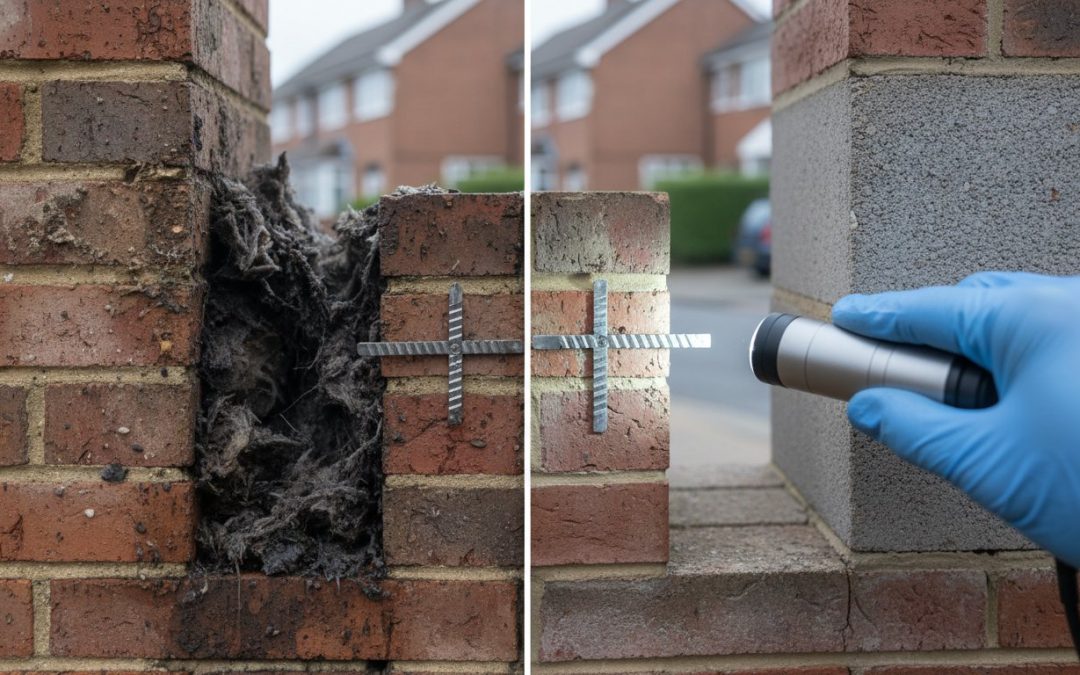
What if the most critical stage of your insulation removal isn’t the extraction itself, but the survey that happens after the machines are switched off? Many homeowners across the UK discover that simply pulling out old material isn’t enough to stop the spread of damp. You deserve to know that every scrap of failed material is gone. It’s natural to feel a sense of distrust if previous contractors have left your property in a state of uncertainty. You want more than just a verbal assurance; you need documented evidence that your home is safe.
By conducting a rigorous post-extraction wall cavity inspection, we provide the transparency you’ve been missing. You’ll learn exactly how this professional assessment prevents recurring damp and verifies the total removal of debris from the 75% of UK properties built with cavity walls. This article outlines the specialist borescope techniques we use to guarantee a clear cavity. We also provide a preview of the remedial repair plans that restore your home’s structural integrity and thermal efficiency in 2026. Our goal is to replace your confusion with a clear, technical roadmap for a dry and healthy future.
Key Takeaways
- Understand why a 100% clear cavity is essential for restoring the air gap and preventing interstitial condensation within your walls.
- Discover how a professional post-extraction wall cavity inspection uses non-invasive borescope technology to provide a systematic view of your property’s internal structure.
- Identify the specific risks of incomplete extraction, including how leftover debris creates moisture bridges that lead to persistent damp.
- Learn why an empty cavity provides the ideal opportunity for a wall tie survey to protect your home from long-term structural corrosion.
- See what a specialist report entails, including high-resolution photographic evidence and a detailed elevation-by-elevation assessment of your home.
What is a Post-Extraction Wall Cavity Inspection?
A post-extraction wall cavity inspection is a rigorous technical assessment performed after the removal of failed insulation. Its primary objective is to verify that the wall cavity is 100% clear of debris. This survey acts as a final quality control measure, ensuring the air gap between the inner and outer leaf of your masonry is fully restored. For many of the 75% of UK properties built with cavity walls, the presence of building insulation has caused more harm than good. A specialist inspection identifies “bridging” points. These are specific areas where leftover material remains stuck to wall ties or rests at the base of the wall. This is a critical step for anyone who has struggled with understanding what is a cavity wall and the moisture issues that follow poor insulation choices.
A professional survey is not a casual observation. It’s a methodical diagnostic process that uses high-definition equipment to map the internal state of your walls. We treat this as a structural validation rather than a simple check-box exercise. By identifying the exact location of any remaining mortar snots or insulation pockets, we prevent the “wicking” effect where moisture travels from the external brickwork to your internal living space. This level of detail is why a specialist approach is necessary for properties built before 1981. These older homes often have wall ties more prone to corrosion when moisture is held against them by residual debris.
The Importance of a Clear Air Gap
The original design of UK homes relies on an empty cavity to manage moisture. This space allows the outer leaf to breathe and prevents rain from penetrating the inner leaf. When an extraction is incomplete, residual material traps water. This leads to localized damp spots that damage internal plaster. A clear cavity ensures natural ventilation keeps the inner leaf dry. This air movement is the primary defense against interstitial condensation.
When Should You Arrange an Inspection?
Timing is essential for protecting your property’s structural health. Arrange a specialist survey immediately following an extraction service to validate the work. It’s also a vital step before purchasing a property where extraction occurred previously. If damp symptoms persist despite a removal project, an inspection reveals if residual debris is the culprit. We provide this service for homeowners across the United Kingdom to ensure documented peace of mind.
The Technical Process of a Professional Cavity Survey
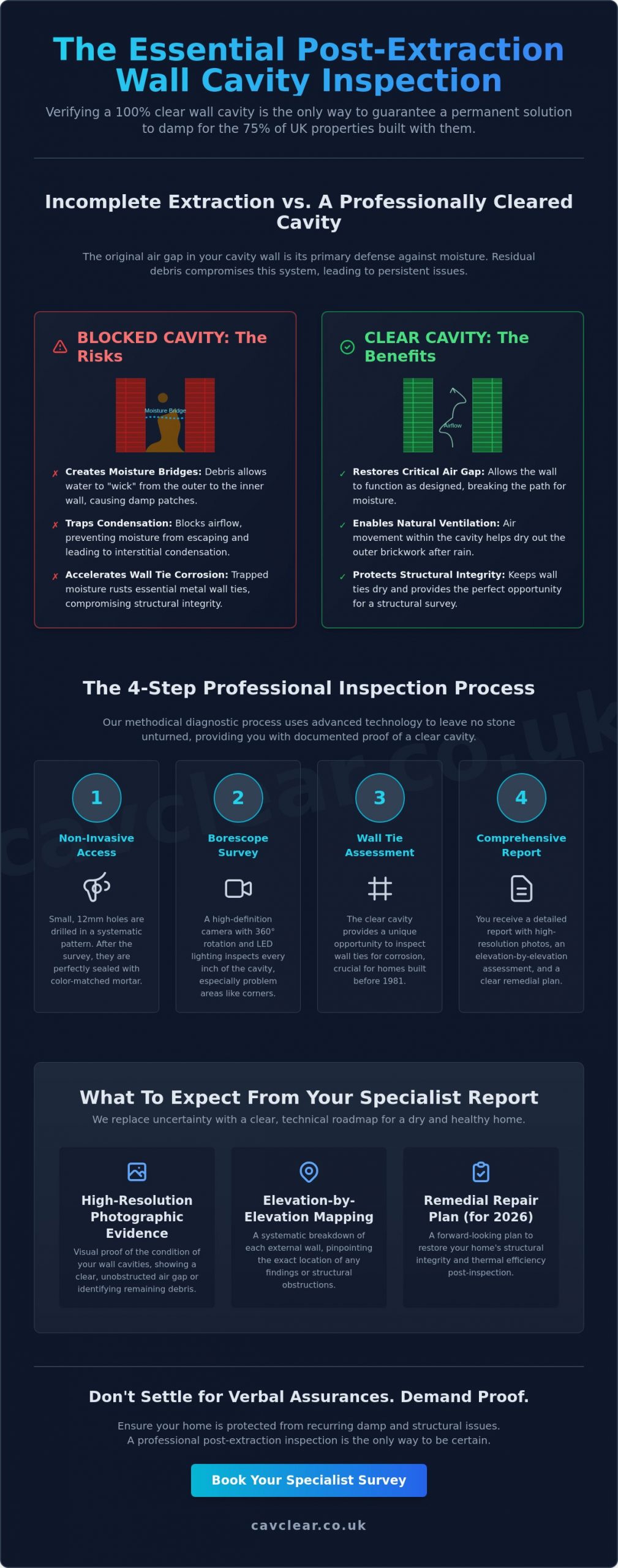
A professional post-extraction wall cavity inspection is a structured engineering assessment that leaves nothing to chance. It’s not a casual walkthrough. It’s a methodical diagnostic process designed to validate the cleanliness of the structural gap. We use advanced, non-invasive borescope technology to navigate the internal environment of your masonry. This involves drilling small, 12mm access points at precise intervals. These holes allow our high-definition cameras to enter the cavity without causing structural damage. Once the inspection is complete, we seal these points with color-matched mortar to maintain the aesthetic integrity of your home.
Technicians follow a rigorous, grid-based pattern across every elevation of the property. This systematic approach ensures we don’t miss “blind spots” where failed insulation often lingers. Corners and the areas directly beneath window sills are notorious for trapping debris. If a contractor hasn’t checked these specific zones, they haven’t performed a complete extraction. We also pay close attention to the damp proof course (DPC) level. Debris that slumps at the base of the wall can bridge the DPC, leading to symptoms of rising damp that are often misdiagnosed. A thorough cavity wall survey is the only way to confirm these areas are clear.
Borescope Technology and Visual Evidence
Modern borescope equipment provides high-resolution visual proof of the cavity’s condition. Specialists use cameras with 360-degree rotation and powerful LED lighting to illuminate the dark recesses between the brick leaves. We record this footage as part of our formal property documentation. This creates a transparent record for the homeowner, showing a clear, unobstructed air gap. Seeing the visual evidence provides the peace of mind that a simple verbal assurance cannot offer. It’s a vital part of the “right way” to handle property maintenance.
Systematic Mapping of the Property
Our mapping process involves checking for structural obstructions that might have hindered the extraction. We examine the condition of the wall ties, ensuring there are the required 2.5 ties per square metre and that they are expert from insulation “snags.” We also verify that external ventilation is fully restored. This includes checking that weep holes and air bricks are not blocked by residual dust or fibers. Restoring this airflow is essential for preventing the build-up of moisture that causes long-term structural decay in the 75% of UK properties with cavity walls.
Common Risks of Incomplete Insulation Removal
Incomplete insulation removal isn’t just a missed detail; it’s a structural liability. When failed material is left behind, it creates a physical bridge across the cavity. This allows moisture to migrate from the saturated outer leaf directly to the inner leaf. A professional post-extraction wall cavity inspection often reveals these “snags” caught on wall ties or mortar projections. These small pockets of debris act like sponges, holding water against the internal masonry. This persistent dampness can lead to the growth of black mould, which presents a significant hygiene risk for occupants. Our specialists frequently find that even a small amount of leftover mineral wool or urea-formaldehyde foam can cause widespread internal damage.
Wet debris is particularly damaging to the metal components of your home. When insulation remains saturated, it accelerates the oxidation process of wall ties. This can lead to premature wall tie failure, compromising the stability of the entire wall structure. Since there should be an average of 2.5 wall ties per square metre, even localized corrosion can weaken the connection between the two leaves of a building. We use high-resolution cameras to verify that every tie is clean and functioning correctly. This is a vital step in protecting the structural integrity of your property for the long term.
The Thermal Bridge Effect
Residual insulation creates inconsistent thermal performance across a wall’s surface. These leftover patches form localized cold spots known as thermal bridges. Because these areas are significantly colder than the surrounding wall, they attract condensation from the warm internal air. This moisture doesn’t just cause aesthetic damage; it actively degrades plaster and wallpaper. Over time, these cold spots reduce the property’s overall thermal efficiency, leading to higher energy costs as heating systems work harder to compensate for the heat loss. A clear cavity is the only way to ensure the wall performs as originally intended.
Debris at the Damp Proof Course
The base of the cavity is the most frequent site for failed extraction. Insulation often slumps at the bottom, accumulating in a dense layer that bypasses the damp proof course (DPC). This allows moisture to “wick” upward into floor timbers and internal skirting boards, causing symptoms that look like rising damp. Without a post-extraction wall cavity inspection, these issues remain hidden until significant damage occurs. Debris at the DPC level effectively turns a home’s primary moisture barrier into a conduit for water penetration.
Integrating Wall Tie Assessments into Your Inspection
The completion of an insulation extraction offers a rare window of visibility into the structural heart of your home. An empty cavity provides the absolute best opportunity for a wall tie replacement survey. When insulation is present, it physically blocks the view, making it impossible to assess the condition of the metal ties that hold your property’s leaves together. By performing a post-extraction wall cavity inspection, specialists can examine the entire length of the tie, from the outer brickwork to the inner leaf. This level of scrutiny is essential because failed insulation is a primary catalyst for metal fatigue.
Failed insulation acts as a reservoir for moisture. This constant damp environment accelerates the corrosion of wall ties, particularly in properties built before the improved standards of 1981. As ties rust, they undergo a process called lamination, where the metal expands to several times its original thickness. This expansion exerts immense pressure on the surrounding mortar, leading to horizontal cracking in the external brickwork. Identifying these “blown” ties early prevents the need for more invasive and expensive structural repairs later. Addressing these issues while the cavity is clear is a proactive investment in your home’s future.
Identifying Corrosion and Structural Fatigue
A high-definition borescope allows technicians to spot the early warning signs of structural fatigue that are invisible from the outside. We look for signs of “pitting” on the tie surface or the presence of red rust, which indicates the protective zinc coating has failed. We also verify that the tie density meets modern safety standards of 2.5 ties per square metre. In many older properties, we find that ties were either spaced too far apart or have corroded to the point of being structurally redundant. Checking these ties while the cavity is clear ensures that any issues are caught before they compromise the building’s stability.
Remedial Action Plans for Structural Health
A comprehensive post-extraction wall cavity inspection report does more than just confirm a clear space; it serves as a blueprint for your home’s future health. If our specialists identify failing ties, we integrate a clear remedial action plan into the final documentation. This often involves the installation of stainless steel remedial ties, which are designed to last the lifetime of the building. Addressing these structural concerns immediately after extraction is highly cost-effective, as the access points are already established. You can book a specialist cavity wall tie inspection to ensure your property remains secure and stable for decades to come.
What to Expect from a CavClear Specialist Report
A CavClear report is a formal technical document that validates the structural health of your property. Unlike generic assessments, our post-extraction wall cavity inspection provides an exhaustive elevation-by-elevation breakdown of every wall. We don’t rely on vague descriptions. Each report includes high-resolution photographic evidence captured by our borescope cameras. This visual proof confirms that the air gap is entirely expert from debris. This transparency is vital for homeowners who have previously been let down by substandard extraction work. It provides the documented proof required to move forward with confidence.
The report serves as an essential tool for long-term maintenance. If our specialists detect residual moisture or structural anomalies, we provide clear, professional recommendations. This may include a damp survey to assess the extent of internal saturation. We also outline any necessary remedial works, such as wall tie replacement or the clearing of blocked air bricks. Every recommendation is designed to restore the thermal efficiency and structural integrity of your home. We treat your property with the seriousness it deserves, focusing on permanent solutions rather than temporary fixes.
Finally, you receive a formal certificate of clearance. This document is a powerful asset during property transactions or insurance renewals. It proves that the cavity is clear and the risk of interstitial condensation is eliminated. In a market where 75% of UK homes feature cavity walls, having documented proof of structural integrity is a significant advantage for property value preservation. It replaces uncertainty with factual, technical data that stands up to professional scrutiny.
Transparency and Professional Accredited Standards
Our nationwide team of technicians operates to a single, high standard across the entire United Kingdom. We provide independent, specialist advice that general building contractors often lack. A specialist understands the nuances of masonry moisture movement and the specific risks associated with failed insulation. This expertise ensures your report is accurate, reliable, and respected by other property professionals. We take pride in our transparent approach, ensuring you understand every technical detail regarding your home’s safety.
Next Steps: From Inspection to Restoration
Once you hold the report, you have the evidence needed to rectify poor workmanship from previous contractors. We guide you through the process of drying out your walls, which can take several months depending on the previous level of saturation. Our final sign-off represents more than just a completed job. It’s the restoration of your home’s comfort and the peace of mind that comes with a guaranteed clear cavity. You can finally rest easy knowing your home is protected from the hidden dangers of trapped debris.
Restoring Property Health and Structural Safety
Your property is likely your most significant investment. Ensuring its long-term health requires more than just removing failed material; it demands technical verification. A professional post-extraction wall cavity inspection serves as the final barrier against recurring damp and structural decay. By utilizing high-definition borescope technology, our specialists confirm that the internal air gap is restored and that wall ties are expert from moisture-trapping debris. This process provides the documented proof needed for property value preservation and structural safety in 2026. It’s the only way to be certain that the 75% of UK homes with cavity walls are truly protected from interstitial condensation.
CavClear provides nationwide coverage across the United Kingdom with a team of accredited technicians. We specialize in failed insulation extraction and structural tie assessments. Our comprehensive reporting covers both structural integrity and damp prevention, giving you a clear roadmap for your home’s recovery. You don’t have to settle for the uncertainty left by previous contractors. Book your specialist post-extraction inspection with CavClear today and take the first step toward a dry, healthy home. Our expert team is ready to help you restore comfort with a permanent, guaranteed solution.
Frequently Asked Questions
How long does a post-extraction wall cavity inspection take?
A standard post-extraction wall cavity inspection typically takes between 2 and 4 hours to complete for an average 3-bedroom semi-detached home. The duration depends on the size of the property and the ease of access to all elevations. Our technicians work methodically to ensure every section of the wall is visually verified through our borescope equipment before providing a final assessment.
Can a borescope inspection detect wall tie corrosion?
Yes, high-definition borescope cameras allow specialists to examine the physical condition of wall ties within the empty cavity. We look for specific signs of degradation, such as red rust or lamination, where the metal begins to expand and flake. Identifying these issues early is essential for maintaining structural stability, especially in properties built before 1981 where ties are more susceptible to failure.
What happens if the inspection finds leftover insulation debris?
If our technicians identify residual material, the report will pinpoint the exact location and volume of the debris. Leftover insulation acts as a moisture bridge that can lead to internal damp and mould growth. We provide a clear remedial plan to clear these specific “snags,” ensuring the 50mm to 100mm air gap is fully restored to its original design specifications.
Is a post-extraction inspection necessary if I don’t have damp?
A post-extraction wall cavity inspection is a vital preventative measure even if visible damp hasn’t appeared yet. Debris can remain trapped for long periods before moisture finally bridges the gap to your internal walls. Validating that the cavity is 100% clear now prevents future structural issues and ensures your home’s thermal performance remains consistent across all elevations.
Do I need to be at home during the cavity wall survey?
We recommend that homeowners are present during the survey to allow our technicians access to internal walls. This internal access is necessary to check for moisture readings and any existing damp symptoms that may correlate with findings inside the cavity. While the physical drilling and camera work occur externally, a full assessment requires a brief inspection of the internal living spaces.
Will the inspection holes damage my external brickwork?
The inspection process is non-invasive and designed to protect the aesthetic integrity of your masonry. Technicians drill small 12mm access points, usually into the mortar joints rather than the bricks themselves. Once the survey is finished, these holes are professionally sealed with a color-matched mortar, making the inspection points virtually invisible to the naked eye once they have dried.
How much does a professional post-extraction inspection cost in 2026?
Based on 2026 industry figures, a specialist survey typically costs between £300 and £600. This price reflects the use of advanced borescope technology and the production of a formal technical report. While a standard home survey might highlight visible issues, this specialist inspection provides the deep-level diagnostic data required to guarantee your wall cavity is completely clear of failed insulation.
Can I use the inspection report for a property sale?
A specialist report is a valuable document during a property sale as it provides documented proof of a clear and healthy cavity. It reassures potential buyers and mortgage lenders that the risks associated with failed insulation have been professionally addressed. Having this evidence on hand can prevent delays in the conveyancing process by proving the structural integrity of your home’s masonry.
Recent Comments