
A saturated wall cavity is a structural emergency that quietly devalues your property every day it remains unaddressed. While it’s tempting to hope the material will dry out naturally, the physical reality is that moisture trapped within your home’s envelope rarely evaporates without specialist intervention. Understanding the specific risks of leaving wet insulation in walls is the first step toward safeguarding your investment and your health. You likely installed insulation to lower your energy bills, so it’s deeply frustrating to deal with recurring black mould and high heating costs despite that initial effort.
We understand the stress that damp causes, but there’s a clear, professional path to resolution. This guide explains how water is 24 times more conductive than air, turning your insulation into a thermal bridge that pulls heat out of your home. You’ll learn why extraction is often the only viable solution to prevent wall tie corrosion and how to restore your property’s structural integrity. We provide a methodical look at the extraction process, ensuring you have the specialist knowledge needed to secure your home’s future comfort and value across the United Kingdom.
Key Takeaways
- Understand why saturated insulation creates a “thermal bridge” that actively pulls heat from your home, making it impossible to dry naturally within a sealed cavity.
- Learn about the severe risks of leaving wet insulation in walls, including the accelerated oxidation of steel wall ties that can lead to horizontal cracking and structural instability.
- Discover how damp insulation serves as a hidden breeding ground for microscopic fungal spores that compromise your indoor air quality and family health.
- Identify the specific visual warning signs and “cold spot” patterns on internal walls that indicate your cavity insulation has failed and requires professional attention.
- Explore why specialist cavity wall extraction is the only permanent remedy to restore your property’s thermal efficiency and protect its long-term structural integrity.
The Physics of Failure: Why Wet Insulation Does Not Dry Out
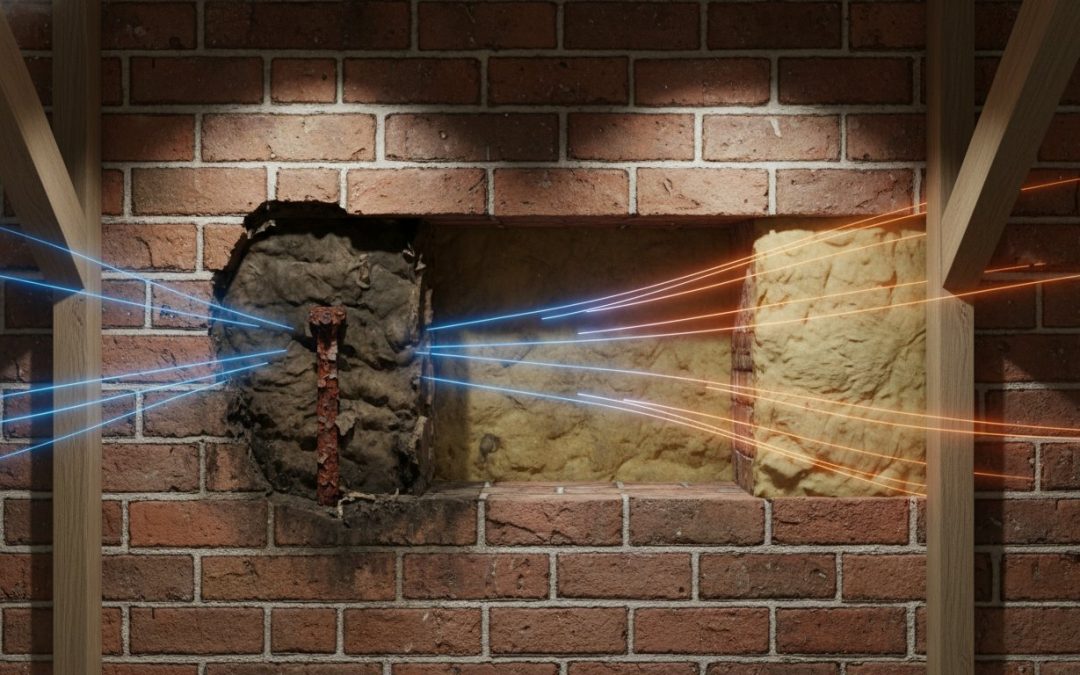
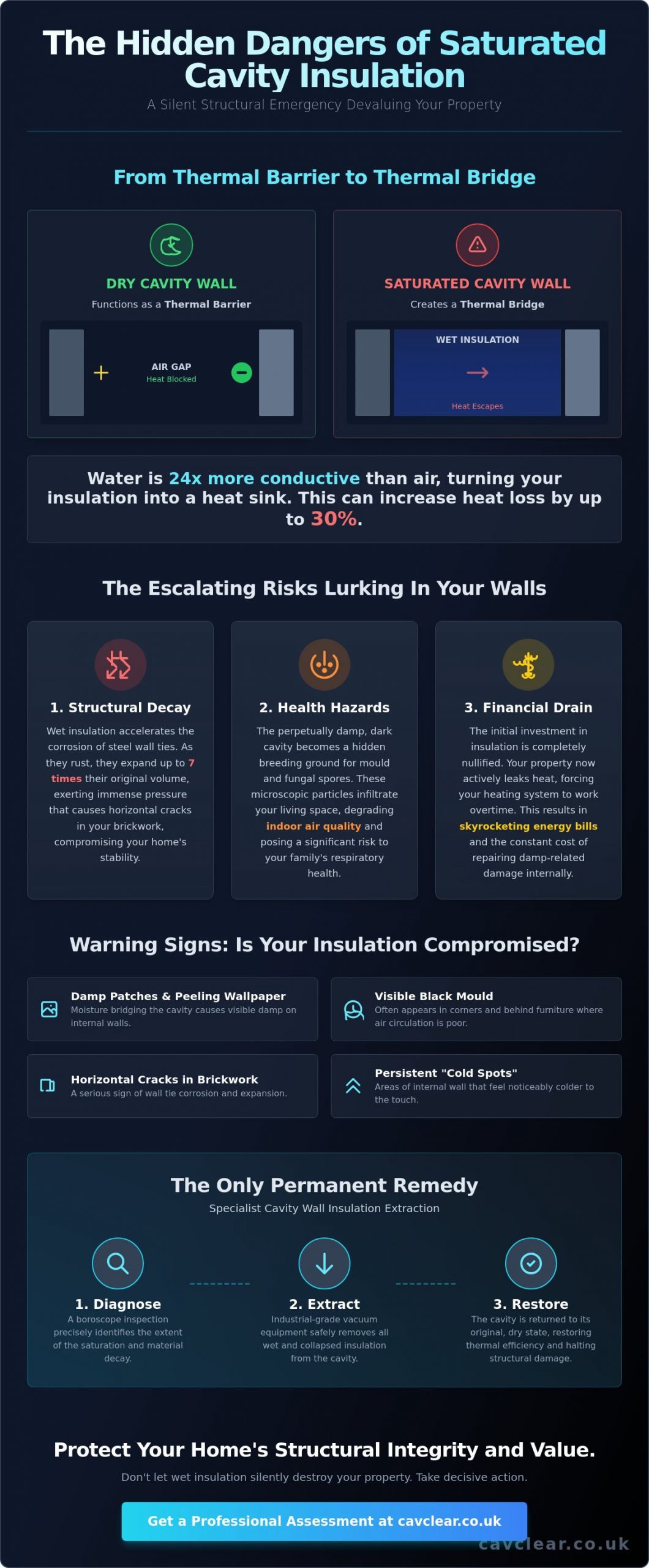
Wet insulation isn’t just a passive failure; it’s an active threat to your home’s structural health. When mineral wool or bonded bead materials become saturated, they transform from a thermal barrier into a thermal bridge. This means the material actively conducts cold from the external leaf of the wall directly to the internal leaf. One of the primary risks of leaving wet insulation in walls is this total collapse of thermal efficiency. Water is a highly effective conductor of heat. While dry air trapped in insulation provides resistance, water-saturated material acts as a heat sink, drawing warmth out of your living spaces at an accelerated rate.
The problem is compounded by the sealed cavity environment. Most UK homes built with cavity walls rely on a clear 50mm air space to manage moisture. Once this space is filled with wet insulation, natural evaporation becomes impossible because there is zero airflow. The moisture remains trapped indefinitely, leading to structural dampness that degrades the building fabric. This stagnant environment prevents the drying process even during the summer months, as the masonry leaves act as a container for the damp mass.
The Creation of a Capillary Bridge
A standard cavity wall uses a 50mm gap to ensure that rainwater hitting the outer bricks cannot reach the inner wall. When insulation material becomes wet, it fills this gap and creates a physical link between the two layers of masonry. This saturated mass allows moisture to travel via capillary action from the outer leaf to the inner leaf. A capillary bridge is a direct path for penetrating damp. This process bypasses the property’s original design, resulting in visible damp patches, salt staining, and degraded internal plasterwork.
Interstitial Condensation and Trapped Moisture
The presence of wet insulation creates a dangerous cycle known as interstitial condensation. This occurs when warm, moist air from inside the home migrates through the wall and hits the cold, saturated insulation. Because the insulation is wet, the temperature drops sharply to the dew point inside the wall itself. Moisture then turns into liquid water, adding to the existing saturation. This cycle repeats every winter, causing the moisture levels to worsen year after year. Understanding what is a cavity wall is essential for homeowners to grasp how this internal structure should ideally function to protect the property from these thermal failures.
- Hygroscopic failure: Materials like mineral wool absorb water and lose 100% of their insulating properties once saturated.
- Structural risk: Constant moisture against wall ties can lead to corrosion and eventual structural instability.
- Energy loss: A wet wall can increase heat loss by up to 30% compared to a dry, empty cavity.
Structural Risks: The Hidden Decay of Wall Ties and Masonry
The risks of leaving wet insulation in walls extend far beyond simple damp patches on your wallpaper. When moisture becomes trapped within a cavity, it transforms the insulation into a saturated sponge that rests directly against the structural components of your home. The most immediate concern involves your wall ties. These steel components hold the internal and external leaves of your masonry together. When they’re encased in damp, often acidic debris, a process of rapid oxidation begins.
As these ties rust, the metal expands. This expansion isn’t minor; iron oxide can occupy up to seven times the volume of the original steel. This physical growth exerts immense pressure on the surrounding mortar, leading to distinct horizontal cracking along the bed joints. Over time, this weakens the stability of the external leaf, potentially leading to a total structural failure if the ties snap or lose their grip. Effective Moisture Control and Ventilation are essential to prevent this cycle of decay from starting, as a dry cavity is the only way to preserve these vital metal fixings.
Symptoms of structural distress caused by wet insulation include:
- Horizontal cracks appearing in the mortar joints at regular intervals.
- Visible bulging or bowing of the external wall leaf.
- Brick faces that have begun to flake or shatter, known as spalling.
- Windows or doors that have become difficult to open due to movement in the lintels.
Wall Tie Corrosion and Structural Stability
Wall tie failure doesn’t happen overnight, but wet insulation accelerates the timeline. In a dry cavity, galvanised ties last many decades. In a saturated environment, they can fail in as little as 12 years. Common symptoms include bulging brickwork or horizontal cracks every six courses. In severe cases, homeowners require professional wall tie replacement to restore safety. A specialist survey is the only way to prevent long-term instability.
Sulphate Attack and Mortar Degradation
The masonry itself isn’t immune to the risks of leaving wet insulation in walls. Constant moisture leaches sulphates from bricks into the mortar. This reaction causes the mortar to expand and eventually crumble. This “sulphate attack” destroys the bond between bricks, making repointing difficult while the wall remains damp. It also causes spalling, where brick faces shatter during winter expertze-thaw cycles. If you suspect a compromised cavity, consulting a cavity extraction specialist can identify the root cause before masonry sustains permanent damage.
Health and Air Quality: Beyond Visible Black Mould
Wet insulation behaves like a hidden petri dish. When mineral wool or bonded beads become saturated, they create a stagnant, dark, and nutrient-rich environment where fungal colonies thrive. These colonies release millions of microscopic spores into the building’s envelope. Because your home isn’t airtight, these spores migrate into the living space through wall vents, gaps in floorboards, and around electrical sockets. One of the primary risks of leaving wet insulation in walls is the silent degradation of your indoor air quality long before you see a single patch of mould on the wallpaper.
Homeowners often notice a persistent, earthy odour that doesn’t disappear with ventilation. This “musty smell” is actually a cocktail of microbial volatile organic compounds (mVOCs). These are chemical byproducts released by fungi and bacteria as they consume the organic matter trapped within your wall cavity. Exposure to these compounds can lead to headaches and nausea, marking a transition from a simple maintenance issue to a genuine health concern. Our specialist teams frequently find that by the time a smell is detectable, the internal cavity is already heavily contaminated.
Respiratory Risks and Household Allergens
Living in a damp environment is directly linked to an increase in respiratory infections. The presence of damp insulation acts as a continuous trigger for people with pre-existing conditions. Research indicates that residents in damp properties have a significantly higher risk of developing asthma or chronic bronchitis. Cleaning the surface of a wall with bleach is only a temporary cosmetic fix. If the saturated insulation remains inside the cavity, the mould will inevitably return as the moisture continues to seep through the masonry. For more specific information on the health implications of different fungi, you can view our guide on black mould. Stachybotrys, often called toxic black mould, is particularly dangerous in domestic settings because it produces mycotoxins that can cause severe allergic reactions and fatigue.
The Impact on Internal Wall Finishes
Moisture trapped in the cavity eventually migrates to the inner leaf of the wall, where it attacks your home’s decorative finishes from behind. This process destroys the structural integrity of plasterboard, causing it to soften and crumble. You might also notice efflorescence, which is a “salting” effect on the internal plaster. This occurs when moisture evaporates and leaves behind white, powdery mineral deposits. These salts push through paint and wallpaper, making it impossible to maintain a clean finish.
Many homeowners fall into a cycle of expensive redecoration. A single room redecoration can easily cost upwards of £500 in materials and labour, yet these efforts are wasted if the underlying dampness isn’t resolved. One of the long-term risks of leaving wet insulation in walls is this recurring financial burden. We believe in doing the job right the first time. Extracting the wet material is a one-time investment that stops the cycle of damage and restores the safety of your home environment.
Identifying the Signs: How to Tell if Your Insulation is Compromised
Identifying compromised insulation requires a methodical approach because the material is hidden within the property’s structure. Homeowners often overlook the early symptoms, yet the risks of leaving wet insulation in walls escalate the longer the moisture remains trapped. While the insulation is out of sight, its failure manifests through specific physical changes in your living environment that indicate the cavity is no longer performing its primary function.
Visual and Sensory Red Flags
A musty, earthy odour is frequently the first sign of trouble. This scent indicates that stagnant water is trapped within the mineral wool or bonded bead, providing a breeding ground for bacteria before mould spores become visible on the surface. You should look for “tide marks” on wallpaper or blistering paintwork, particularly near floor levels or mid-wall sections where moisture has pooled. On the exterior, pay attention to dark, damp patches on the brickwork that persist for 48 hours or more after heavy rainfall. These saturated areas suggest the insulation is holding water against the inner leaf, which creates a direct bridge for moisture to enter your home.
Wet insulation doesn’t just fail to keep heat in; it actively draws heat out. You might notice “cold spots” on internal walls that feel significantly chillier to the touch than the rest of the room. These spots remain cold even when your central heating has been running for several hours. To confirm your suspicions, you can use a simple digital hygrometer. If a specific room consistently shows humidity levels above 65 percent while the rest of the house remains at a healthy 45 percent, it’s a strong indicator that moisture is evaporating from saturated material within the walls. This localized humidity is a primary driver for the risks of leaving wet insulation in walls, as it encourages black mould growth on furniture and fabrics.
The Role of a Professional Damp Survey
A visual inspection can suggest a problem, but it can’t confirm the extent of the saturation or the volume of debris in the cavity. Specialists use borescope cameras to perform a non-invasive check. By drilling a small 10mm hole in the mortar joint, we can see exactly what’s happening inside the cavity without damaging your masonry. This technical precision is vital for determining if the material needs full extraction to restore the property’s health. Referencing a professional damp survey is the essential first step for any homeowner concerned about structural integrity and thermal efficiency.
If you’ve spotted these red flags in your home, contact our specialist team to book a comprehensive cavity inspection and protect your property from long-term damage.
The Specialist Solution: Cavity Wall Insulation Extraction
Addressing the risks of leaving wet insulation in walls requires more than surface-level repairs or dehumidifiers. Once insulation material like mineral wool or bonded bead becomes saturated, it loses its structural integrity and thermal properties. It cannot dry naturally within the enclosed environment of a wall cavity. Specialist extraction provides the only permanent remedy, physically removing the source of dampness to allow the property to breathe again.
The process is designed to be non-invasive and efficient. Technicians access the cavity by drilling small, strategically placed holes in the external mortar joints. These holes, typically 12mm to 25mm in diameter, allow for the complete removal of compromised material without damaging the brickwork. By restoring the original “clear cavity” design of the building, we reinstate the vital ventilation gap that prevents moisture from bridging the gap between the external and internal leaf of the wall.
The Extraction Process Explained
Our technicians use high-pressure compressed air and high-volume industrial vacuum systems to agitate and extract the saturated material. This specialized equipment ensures that 100% of the debris is removed from the cavity base, including the hard-to-reach areas around windows and door frames. We monitor the progress using borescope cameras to confirm the cavity is entirely clear before sealing the injection holes with colour-matched mortar. For a more technical breakdown of these methods, you can view our cavity wall insulation removal guide.
Long-Term Property Protection
A clean, empty cavity is essential for the long-term health of UK homes. Removing wet debris prevents the ongoing corrosion of metal wall ties, which can lead to structural instability if left unaddressed. Following the extraction, a natural drying period allows the masonry to release trapped moisture, eventually restoring the home’s thermal efficiency and reducing heating costs. Our national team provides formal reports and accredited certificates of completion, giving you the peace of mind that the work meets rigorous industry standards. Don’t wait for damp issues to escalate; Contact our specialists for a property inspection to secure your home’s future.
Protecting Your Property’s Structural Integrity
Ignoring damp cavity fill leads to irreversible damage. Wet insulation acts as a bridge for moisture, drawing dampness into the internal leaf and accelerating the corrosion of wall ties. Research from building surveyors confirms that once saturation occurs, natural ventilation within the cavity is eliminated, making self-drying impossible. Understanding the risks of leaving wet insulation in walls is the first step toward safeguarding your home’s value and your family’s health. Our accredited technicians use specialist extraction equipment to remove debris and saturated materials, restoring the essential 50mm air space required for proper cavity function. We provide a nationwide service across the United Kingdom, delivering comprehensive structural reports and clear remedial recommendations for every project. Compromised insulation reduces thermal efficiency and creates environments where black mould thrives. Don’t let hidden damp compromise your masonry or air quality. Taking proactive action now prevents the need for more invasive structural repairs in the future. You’ll regain a dry, efficient, and comfortable home environment.
Book a Specialist Cavity Survey with CavClear
Frequently Asked Questions
Can wet cavity wall insulation ever dry out on its own?
Wet cavity wall insulation will not dry out on its own because the restricted airflow within the wall prevents evaporation. Materials like mineral wool or bonded bead act as a sponge, holding moisture against the internal masonry for years. This creates a permanent bridge for damp to travel into your home. The only way to resolve the issue is through a professional extraction process that clears the cavity entirely.
How long does it take for wet insulation to cause structural damage?
Structural damage typically begins within 90 days of the insulation becoming saturated. Constant moisture accelerates the corrosion of metal wall ties, which are vital for the stability of your property’s walls. If these ties fail, the inner and outer leaves of the masonry can pull apart or bulge. This leads to significant repair costs that far exceed the price of a specialist extraction service.
Is it dangerous to live in a house with wet wall insulation?
Yes, it’s often hazardous because the trapped moisture promotes the growth of toxic black mold. The World Health Organization states that occupants of damp buildings have a 40 percent increased risk of developing asthma or respiratory infections. The risks of leaving wet insulation in walls include the degradation of indoor air quality as mold spores penetrate through the plasterboard and into your living areas.
Will removing wet insulation make my house colder?
Removing saturated insulation usually makes a home feel warmer because wet material conducts cold rather than resisting it. Water conducts heat roughly 25 times faster than air, meaning damp insulation acts as a “cold bridge” that pulls heat out of your rooms. Once we extract the debris and the cavity dries, the natural air gap is restored. This stops the rapid heat loss and helps stabilize your internal temperatures.
How much does it cost to remove wet insulation from a UK home?
The cost for professional cavity extraction in the UK typically ranges from £20 to £45 per square metre. For a standard three-bedroom semi-detached house, owners can expect to pay between £1,800 and £3,800 depending on the material type and the height of the building. These figures are based on 2024 industry averages for the use of specialist suction machinery and the safe disposal of contaminated waste.
Can I just seal the external brickwork to stop the insulation from getting wet?
Sealing the external brickwork is not a recommended solution because it traps the existing moisture inside the cavity. Applying waterproof coatings can also lead to spalling, where the brick face breaks off during the expertze-thaw cycle because the masonry cannot breathe. If the insulation is already damp, it must be removed. Sealing the outside only hides the problem while the internal structure continues to decay.
What are the most common causes of insulation becoming wet in the first place?
Wind-driven rain accounts for approximately 75 percent of wet insulation cases, particularly in properties with degraded mortar or porous bricks. Other frequent causes include leaking gutters, cracked render, or internal plumbing bursts that saturate the wall from the inside. Once moisture enters the cavity, it becomes trapped. Our specialists identify these entry points during the initial survey to ensure the property remains dry after the extraction is complete.
Does home insurance cover the removal of wet cavity wall insulation?
Insurance coverage depends on the specific cause of the dampness, typically favoring “sudden” events like storm damage or a burst pipe. Most insurers do not cover removal if the moisture resulted from gradual wear and tear or a poor original installation. It’s important to check your policy for “accidental damage” or “escape of water” provisions. We provide technical surveys that help homeowners document the extent of the damage for their insurance providers.
Recent Comments